Gambia
Complete Digital Nomad Guide

Policy Stability
Stamped Nomad ExclusiveHow likely visa and immigration policies are to remain unchanged
Quick Facts
Nomad Visa Cost
N/A
Max Stay
3 months
Renewable
Yes
Cost of Living
$800/mo
Avg Internet
10 Mbps
Safety Score
4/10
Healthcare
High
Coworking
Medium
English Friendly
High
Time Zones
GMT
Entry Methods Available
Best For
Navigating Entry Requirements
The Gambia, often called the Smiling Coast of Africa, maintains a relatively open door for travelers. If you are holding a passport from the UK, the EU, or most Commonwealth countries, you are in luck. You can generally enter the country visa-free for up to 90 days. This list also extends to ECOWAS members like Nigeria and Senegal, along with several other nations including Turkey, the UAE, and Indonesia.
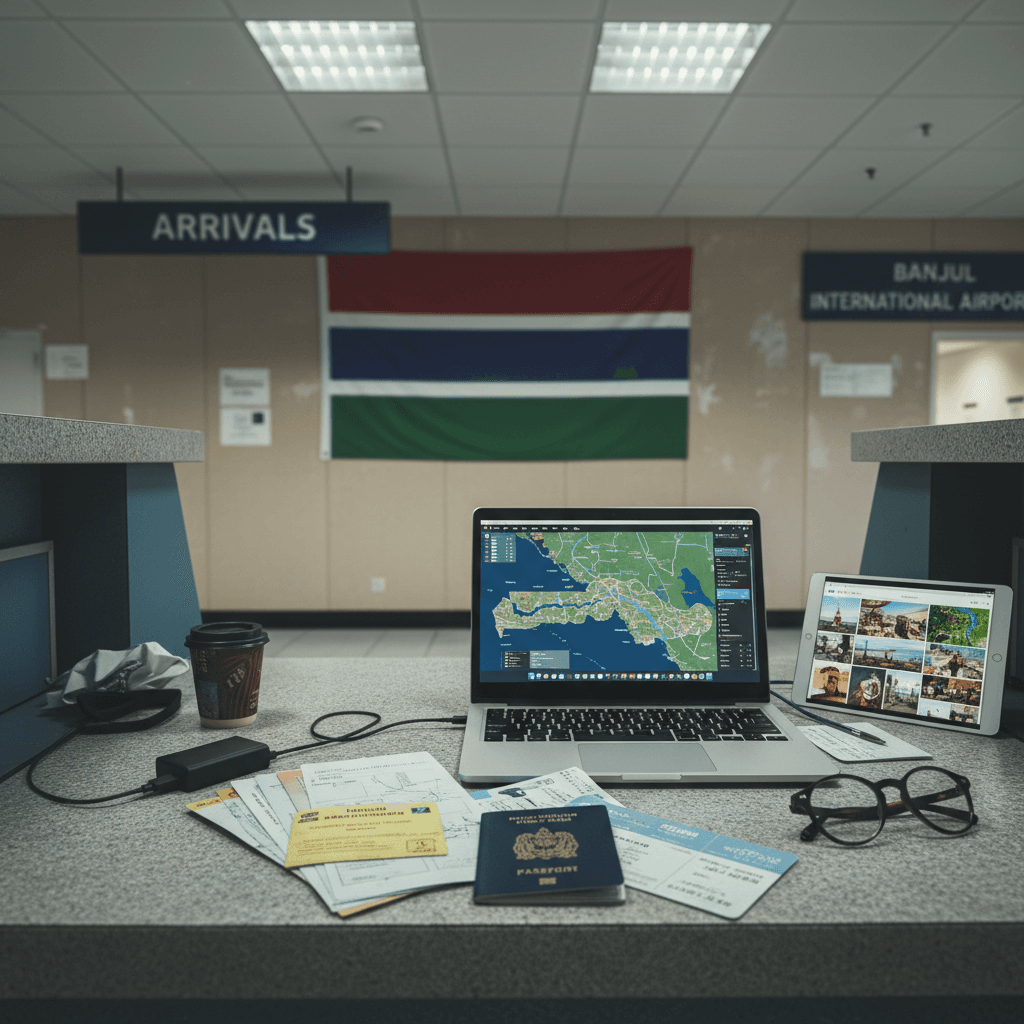
For those who do not fall under the visa-exempt umbrella, the process usually involves a trip to a Gambian diplomatic mission before you fly. If you happen to live in a country without a Gambian embassy, you can often secure a visa on arrival at Banjul International Airport. Just keep in mind that even if you enter visa-free, the immigration department in Banjul technically requires you to submit your passport for "regularization" within 48 hours of landing. It is a minor bureaucratic step, but staying on the right side of local law keeps your stay stress-free.
The Tourist Visa
The standard tourist visa is designed for stays between 30 and 90 days. While the Gambia does not currently offer a specific "digital nomad visa," most remote workers find the tourist entry perfectly sufficient for a season in the sun. You will need to show proof of a return or onward ticket and demonstrate that you have enough funds to support yourself during your stay.
- Validity: Single or multiple entry options are available, with some multiple-entry versions lasting up to 12 months.
- Extensions: If you decide to stay longer, you can apply for an extension at the Department of Immigration in Banjul. You will need to provide proof of your accommodation and pay a processing fee.
- Requirements: A valid passport with at least six months of validity remaining is mandatory.
Business Visits
If you are heading to Banjul for meetings or to scout local investment opportunities, the business visa is your best bet. This falls under the short-visit category and covers you for up to 90 days. The authorities expect you to be a bona fide business person, meaning you are there to consult or trade rather than seek local employment. You might be asked for an invitation letter or proof of business activity, though for many nationalities, the standard visa-free entry also covers these short-term business activities.
Visa on Arrival and Fees
For nationalities like US citizens who typically need a visa, the arrival process at the airport is the most common route. This privilege is generally reserved for those coming from countries without local Gambian representation. Expect to pay roughly $100 to $105 USD for the visa itself. Additionally, every traveler entering or leaving the country must pay a mandatory security fee of $20 USD. This is usually collected in cash, and while they accept US Dollars, having some local Dalasi on hand is never a bad idea.
Important Considerations
Despite what some third-party websites might claim, there is no official, government-sanctioned e-visa system for The Gambia. Stick to official channels, such as embassies or the airport immigration desk, to avoid scams or invalid documentation. The country's immigration policies have remained stable through 2025 and into 2026, so you can plan your trip with a fair amount of certainty regarding the rules.
- Passport Stamps: Always check that your passport is stamped correctly upon entry to avoid issues when you eventually depart.
- Security Fee: The $20 USD fee applies to both arrival and departure, so set aside some cash for your flight home.
- Proof of Funds: While not always checked strictly, having a bank statement or proof of income accessible on your phone can smooth over any questions at the border.
The Current Situation
The Gambia hasn't joined the growing list of countries offering a dedicated digital nomad visa. If you are looking for a sleek online portal specifically for remote workers, you won't find one here yet. However, the "Smiling Coast of Africa" remains accessible for nomads who are willing to use the existing immigration framework to set up their tropical office.
Most nomads enter the country using a Short Visit Visa. This permit is designed for tourists and business travelers and allows for a stay of up to 90 days. It is important to remember that this visa strictly prohibits local employment. Since you are working for a company back home or running your own digital business, you generally fall into a gray area that the Gambian authorities currently tolerate under visitor status.
Entry Requirements and Fees
Depending on your passport, you might be able to enter visa-free or pick up a visa on arrival. Citizens from ECOWAS nations enjoy free movement, while many Western travelers from the UK, EU, and US should double-check current entry requirements before flying. If you do need to apply in advance, you will typically need to provide your passport, a return ticket, and proof of sufficient funds to support yourself without a local job.
- Visa Cost: Fees vary significantly by nationality, but usually range between $20 and $100.
- Duration: Valid for up to 90 days.
- Extension: You can request an extension through the Director General of Immigration in Banjul, though approval for remote work is handled on a case-by-case basis.
Staying Longer: Residence Permits
If three months isn't enough time to soak up the sun in Serekunda or explore the River Gambia, you can look into a Residence Permit. These are renewable every year and require you to apply for an Alien ID card once you are in the country. For a digital nomad, the most straightforward path is the Type A Permit.
- Permit Type A: Designed for retirees or people of independent means. Since you have an outside income, this is your best bet for legal residency without a local employer.
- Permit Type B: This is for skilled workers employed by a Gambian company. It is rarely the right fit for a nomad unless you find a local partner.
- Application Fee: A Type A permit costs approximately D2,500, which is roughly $35 USD.
Applying for residency involves showing proof of maintenance. The immigration department wants to see that you have enough money coming in from abroad to live comfortably without competing for local Gambian jobs.
Taxes and Fine Print
The Gambia generally does not tax foreign-sourced income for people on short-term visitor visas. If you decide to go the residency route and stay for more than 183 days in a year, you might technically become a tax resident. Local enforcement on remote workers is light, but it is smart to keep your financial records organized just in case.
Always respect the expiration date on your entry stamp. Overstaying can lead to fines or complications at the airport when you try to leave. If you plan to stay long-term, start your Residence Permit application at the immigration office in Banjul well before your initial 90 days run out. The process is manual and requires a bit of patience, but the staff are generally helpful if you have your paperwork in order.
Entry Freedom for Digital Nomads
The Gambia is surprisingly accessible for remote workers, especially those from Western and African nations. If you hold a passport from an EU country, the UK, any Commonwealth nation, or an ECOWAS member state, you can generally enter the country visa-free. This exemption typically grants you a stay of up to 90 days, which is plenty of time to test the waters in Banjul or the coastal digital nomad hubs before deciding on a longer stay.
For those who aren't on the exempt list, the process is still relatively straightforward. You can pick up a visa on arrival at Banjul International Airport. This entry permit usually covers you for 28 to 30 days. You will need to pay for this in cash, so make sure you have $100 to $108 USD (or the equivalent in Gambian Dalasi) ready when you land. Don't rely on finding a working ATM before immigration; carry the hard currency with you.
The Embassy Route and Extensions
If you prefer to have your paperwork sorted before you fly, or if you need a longer initial stay, you can apply through a Gambian embassy. These visas are valid for a single entry within three months and allow for a stay of up to 90 days. Be prepared for a steeper price tag; the Gambian Embassy in the US, for example, charges $200 USD for this service. Submit your application at least 10 working days before your flight to avoid any last-minute stress.
If you fall in love with the "Smiling Coast" and want to stay longer than your initial stamp allows, you'll need to visit the Department of Immigration in Banjul. Extensions are handled there on a case-by-case basis. Avoid the temptation to just let your visa expire; while the fine is relatively low at $15 USD per month, overstaying can complicate future visits or lead to unnecessary headaches at the airport when you try to leave.
What to Bring to the Border
Immigration officers are generally relaxed, but they do check for specific documents. Ensure your passport has at least six months of validity remaining and one completely blank page for your entry stamp. You must also show proof of a Yellow Fever vaccination; keep your yellow card with your passport as you will likely be asked for it before you even reach the immigration desk.
Standard entry requirements also include:
- Proof of onward travel, such as a return flight booking.
- Evidence of sufficient funds to support yourself during your stay.
- A valid Yellow Fever certificate.
- A blank passport page for the entry stamp.
A Note on E-Visas
While many neighboring African countries have moved to digital systems, The Gambia currently does not have an official e-visa platform operated by the government. You might see third-party websites offering e-visa services for a fee, but these are private agencies, not official government portals. For now, stick to the visa-on-arrival or the traditional embassy application to ensure your paperwork is legitimate.
Cost Comparison for Entry
- Visa-Free Entry: $0 (Available for EU, UK, Commonwealth, and ECOWAS citizens).
- Visa on Arrival: $100 to $108 USD (Payable in cash only).
- Embassy Visa: Approximately $200 USD (Varies by location).
- Overstay Fine: $15 USD per month.
Making the "Smiling Coast" Your Home Base
Gambia doesn't have a flashy "Digital Nomad Visa" or a "Golden Visa" program to lure you in with marketing fluff. Instead, the country relies on a straightforward, biometric residence permit system. It is a bit old-school, but it works well for those who want to swap the winter chill for the Atlantic breeze. You will primarily be looking at two options: Permit A and Permit B.
Most remote workers and long-term travelers enter on a standard tourist visa or visa-free entry, which usually grants you 28 to 56 days. Once that initial period is winding down, you head to the Gambia Immigration Department to transition into a formal resident. These permits act as your official ID and allow you to re-enter the country without worrying about additional visas.
The Residence Permit A: For the True Nomad
If you are working for a company back home or running an online business with zero local clients, Permit A is your best bet. It is technically designed for retirees and students, but it serves as the de facto choice for remote workers because it explicitly prohibits local employment. You just need to show you have the funds to support yourself without taking a job from a Gambian local.
- The Cost: D5,700 (roughly $81), which includes the mandatory D2,500 Alien Card fee for non-ECOWAS citizens.
- Primary Requirement: Proof of sufficient means, such as a pension statement or a healthy bank balance.
- Validity: One year, renewable annually.
The Residence Permit B: For the Local Entrepreneur
If your plans involve more than just a laptop and a beach chair, you will need Permit B. This is the "economic" permit meant for people opening businesses, investing in local property, or working for a Gambian entity. It requires a bit more paperwork, specifically regarding your tax status with the Gambia Revenue Authority.
- The Cost: D7,700 (roughly $110), including the Alien Card fee.
- Primary Requirement: A GRA payroll tax receipt or proof of business registration (TIN).
- Processing Time: Usually around 5 business days if you have your pre-approval in order.
The Application Process
Don't expect to do this entirely from your couch. While the permits are biometric, the process is very much "in-person." You will need to visit the immigration office after your initial stay extension. The workflow involves paying your fees at Vista Bank, getting your documents authenticated by a Justice of the Peace, and sitting for a brief interview and biometric enrollment.
Make sure you have these items in your folder before you head out:
- Your valid passport with at least six months of validity.
- An attestation letter from your Embassy or High Commission.
- Passport-sized photos (though they will take your biometrics on-site).
- Proof of your current status, like your entry stamp or previous extension.
The Long Game: Permanent Residency
Gambia doesn't offer a specific "Permanent Residency" card right out of the gate. Long-termers simply keep renewing their Permit A or B every year. If you fall in love with the place and decide to stay for the long haul, naturalization is an option after 15 years of continuous residence. If you happen to marry a Gambian citizen, that timeline drops to 7 years. Just keep in mind that the fees for naturalization for non-ECOWAS foreigners have recently climbed to around D75,000.
For most nomads, the annual renewal of Permit A is the path of least resistance. It keeps you legal, gives you a local ID card, and lets you enjoy the West African sun without the stress of constant border runs.
The Financial Reality of Living in The Smiling Coast
Gambia remains one of the most affordable frontiers for digital nomads looking to stretch their dollars while enjoying West African hospitality. While the global economy has seen significant shifts, the cost of living here in 2025 and 2026 stays remarkably low. You can live a basic, local lifestyle for under $400 a month, though most nomads find their sweet spot between $700 and $1,300 depending on how much they prioritize air conditioning and high-speed fiber internet.
The local currency is the Dalasi (GMD). For your planning purposes, the exchange rate generally hovers around 1 GMD to 0.014 USD. It is a cash-heavy society, so while you will track your budget in dollars, expect to carry bundles of Dalasi for your daily market runs and taxi fares.
Banjul: The Capital Experience
Banjul is the administrative heart of the country, located on an island. While it has history and proximity to government offices, it is actually slightly more expensive than its neighbors due to limited housing stock. It is a quieter choice for those who want to avoid the main tourist hubs.
- Budget Tier: ~$365 per month. This covers a basic 1BR apartment ($80 to $120), local street food and market produce ($200), and public transport ($15).
- Comfortable Tier: ~$725 per month. This includes a central 1BR with better amenities ($200 to $300), more frequent visits to expat cafes ($300), and a consistent coworking membership ($100).
- Premium Tier: ~$1,350 per month. For those wanting a fully furnished, modern apartment with reliable AC ($450 to $900), high-end dining ($450), and private car services ($50).
Serekunda and the Senegambia Hub
Most nomads gravitate toward Serekunda, specifically the areas around the Senegambia Strip. It is the country's largest urban center and offers better infrastructure, more gyms, and a denser concentration of cafes. It is also roughly 5% to 6% cheaper than Banjul for housing.
- Budget Tier: ~$345 per month. Rent for a modest setup runs $70 to $110. You will mostly eat local dishes like Domoda or Yassa, which keeps food costs around $200.
- Comfortable Tier: ~$675 per month. This is the "sweet spot" for most. A solid apartment in a nomad-friendly area costs $180 to $250. You will have a $100 budget for coworking and $300 for a mix of cooking and dining out.
- Premium Tier: ~$1,300 per month. This buys you a top-tier furnished apartment ($400 to $800) near the beach, a dedicated desk at a coworking space ($200), and a $450 food budget for international cuisine.
The Hidden Extras: Utilities and Connectivity
Your monthly rent often excludes utilities, so you should set aside an extra $40 to $90 for electricity and internet. Power can be inconsistent, so if you are paying for a premium apartment, ensure it has a backup generator. Data is relatively affordable, but high-speed home fiber is a luxury that will push you toward the higher end of the utility bracket.
Eating like a local is the best way to save. A meal at a local "chop shop" might cost you $2 to $4, while a dinner at a high-end restaurant in the Senegambia area will easily run $15 to $25. Transport is dominated by "shared taxis" and colorful bush taxis called Gelli-Gellis. These are incredibly cheap, usually costing less than $0.50 per trip, whereas a private town trip will cost you $5 to $10 depending on your negotiation skills.
Top 5 Cities for Digital Nomads in Gambia
Gambia offers a unique blend of West African hospitality and a surprisingly low cost of living. While it is still an emerging destination for remote workers, a few specific hubs stand out for their balance of connectivity, social life, and local charm. Here is where you should consider planting your flag.
1. Serekunda
As the largest urban center in the country, Serekunda is the heartbeat of the Gambian nomad scene. It is messy, vibrant, and full of character. If you want to be where the action is, this is your spot. The Kotu township area is particularly popular for its nightlife and concentration of cafes.
- Estimated Monthly Budget: $1,750
- Internet Speeds: Average 20 Mbps
- Vibe: High energy, social, and bustling.
- The Upside: You will find the most consistent social scene and the highest density of restaurants and bars.
- The Downside: Power outages are a daily reality here, especially in Kotu, so a backup battery is mandatory.
2. Banjul
The capital city offers a more "official" infrastructure than the rest of the country. It feels a bit more structured, and the proximity to government buildings and embassies means the internet is often slightly more stable than in the suburbs. The riverfront cafes provide a great backdrop for an afternoon of deep work.
- Estimated Monthly Budget: $1,850 to $1,910
- Internet Speeds: 20-25 Mbps
- Vibe: Professional, historic, and coastal.
- The Upside: This is where you will find the best dedicated coworking spaces like AFB Workspace and The Disruptive Lab.
- The Downside: It is more expensive than other regions and the nomad community is still quite small.
3. Kololi
If your version of "office views" includes white sand and palm trees, Kololi is the winner. Situated along the coast, it is home to the famous Senegambia Strip, which is packed with guesthouses and places to eat. It feels more like a getaway than a concrete jungle.
- Estimated Monthly Budget: $1,200 to $1,400
- Monthly Rent: Approximately $350
- Vibe: Relaxed beach town.
- The Upside: Great proximity to the Abuko Nature Reserve and plenty of beachfront cafes that do not mind you staying for a few hours.
- The Downside: There are fewer formal coworking spaces, so you will be relying heavily on your own mobile hotspot.
4. Farafeni
Farafeni is for the nomad who truly wants to unplug from the "Western" bubble and save a significant amount of money. It is located further inland near the mangrove forests, offering a very authentic look at Gambian life away from the tourist trails.
- Monthly Rent: Approximately $250
- Dinner and a Drink: Around $10
- Vibe: Quiet, rural, and serene.
- The Upside: Extremely affordable and perfect for a "deep work" retreat where distractions are non-existent.
- The Downside: Infrastructure is basic. Do not expect high-speed fiber or fancy lattes here.
5. Georgetown (Janjanbureh)
Located on an island in the Gambia River, Georgetown is steeped in colonial history. It is a fantastic place for history buffs or those who enjoy a slower pace of life. The colonial architecture and river views make for a very inspiring environment.
- Monthly Rent: Approximately $250
- Vibe: Historic and culturally rich.
- The Upside: Incredible weekend trips to sites like James Island Fort and a very welcoming local community.
- The Downside: Internet infrastructure is less developed than the coastal cities, making it a better spot for those with flexible deadlines.
Connectivity and Living Standards
Across all these cities, you need to be prepared for the "Gambian shimmy" when it comes to power and data. While 4G coverage reaches about 93% of urban areas, the actual speeds can fluctuate. The national utility provider, NAWEC, frequently cuts power for several hours at a time. Smart nomads look for rentals that specifically mention backup generators or solar setups.
Living costs remain a major draw. You can find decent one-bedroom apartments for anywhere between $150 and $350 a month. Local meals are incredibly cheap, often under $2, though your budget will climb if you stick to "expat" restaurants in Serekunda or Banjul. Safety is generally high, but keep your wits about you in busy markets or when walking alone late at night.
Connectivity Realities
Working from The Gambia requires a shift in expectations compared to the high-speed hubs of Southeast Asia or Europe. You are looking at average fixed broadband speeds of about 9.6 Mbps download and 7.3 Mbps upload. While these numbers might seem modest, providers like Netpage can reach peaks of 17 Mbps on a good day. It is enough for standard Zoom calls and CMS management, but you will feel the lag if you are trying to upload raw 4K video files.
The real challenge in the Smiling Coast is not just the speed, but the stability. Power outages are a part of life here, and when the grid goes down, the local towers often get congested as everyone switches to mobile data. Most serious nomads prioritize locations with backup generators and dedicated fiber lines to stay productive.
Fiber and Fixed Internet
Fiber optic (FTTH) is the gold standard here, primarily managed by Gamtel through their G-Fiber service. It is mostly concentrated in the Greater Banjul Area, though it is slowly creeping into more rural provinces. If you are setting up a home base, an unlimited 10 Mbps plan starts at roughly 2,500 GMD ($35 USD) per month.
If you are scouting for an Airbnb, specifically ask the host if they have G-Fiber or a Netpage microwave link. Standard ADSL or "unlimited" dongles from smaller providers rarely deliver the consistency needed for a nine-to-five remote role.
Top Coworking Spaces
Because of the aforementioned power and stability issues, coworking spaces are more than just a place to network; they are your insurance policy. These hubs invest in heavy-duty generators and multiple internet backbones to ensure you stay online.
- AFB Workspace: With locations in Kotu, Brusubi, and Kairaba Avenue, this is the most professional setup in the country. They offer high-speed WiFi, ergonomic seating, and meeting rooms.
- The Disruptive Lab: Located in Bakau, this spot has a great community vibe and is a favorite for tech-focused nomads and local entrepreneurs.
- The Hub: Situated on Kairaba Avenue, it provides a reliable environment with flexible desk options and decent coffee nearby.
Membership and Day Pass Costs
Coworking prices are quite affordable by international standards, though they often require a quick WhatsApp message or visit to get the latest "nomad" rates. Most spaces offer daily, weekly, and monthly tiers to keep things flexible.
- Day Pass: 350 to 500 GMD ($5 to $7 USD)
- Monthly Membership: 2,000 to 4,000 GMD ($30 to $60 USD)
- Amenities: Usually includes backup power, printing services, and basic kitchen access.
The Cafe Culture and WiFi
While Banjul and the Senegambia strip have plenty of charming cafes, they are better for answering a few emails than for a deep-work session. Cafe WiFi is notoriously fickle and often shared among dozens of tourists. If you do choose the cafe route, bring a fully charged power bank and your own mobile hotspot. Relying on a cafe's router during a peak lunch rush is a recipe for frustration.
Mobile Data and SIM Cards
Grab a local SIM as soon as you land. Africell and QCell are the two heavy hitters, offering 4G coverage across about 93 percent of urban areas. Starter kits are often free or cost less than a dollar, and you can top up with data bundles as you go. While the 4G speeds usually hover around 8 to 10 Mbps, having a local SIM is the best backup for when your primary fiber line hiccups.
For those who prefer to be connected before they hit the tarmac, eSIM providers like Nomad offer Gambian packages. You can expect to pay anywhere from $8 for 1 GB up to $59 for 10 GB. It is more expensive than local rates but saves you the hassle of finding a kiosk on your first day.
Public vs. Private Realities
The Gambian healthcare system is split between an underfunded public sector and a growing private network. Public facilities are often the only option for locals, but they suffer from chronic shortages of equipment and specialized staff. For a nomad, the public experience usually involves long wait times and basic care that might not meet your expectations for hygiene or efficiency.
Private healthcare is the standard choice for the expat community. These facilities offer modern diagnostics, shorter queues, and staff who are accustomed to working with international patients. While the private sector is significantly more reliable, it is still concentrated in urban hubs. Once you head into the rural provinces, medical resources drop off steeply.
Recommended Hospitals and Clinics
If you need medical attention while based in the Senegambia or Brusubi areas, two names stand out for their reliability and equipment. Africmed International Hospital near Brusubi is a top choice, offering 24/7 ambulance services, X-rays, and specialists in cardiology and orthopedics. They are well-regarded for their diagnostic capabilities.
Medicare Gambia is another heavy hitter, providing emergency care, surgery, and an on-site pharmacy. Both of these facilities stock high-quality medications sourced from the UK, France, and India. While the public Royal Victoria Teaching Hospital handles the most complex trauma cases in the country, the standards of comfort and speed are much lower than its private counterparts.
Health Insurance for Nomads
Don't rely on local public health schemes. Gambia launched a National Health Insurance Scheme (NHIS) in 2021, but it is designed for long-term residents staying 6 months or more and focuses on public access. Most nomads find that international plans like SafetyWing, Nomad Insurance, or April International are the better move. These plans typically cost between $100 and $300 per month.
The most important feature of your insurance will be medical evacuation coverage. In the event of a life-threatening emergency that local clinics can't handle, you will likely need a flight to Senegal or Europe. Local basic plans are available for $10 to $100 per month, but they often have low coverage ceilings and high deductibles that make them impractical for serious issues.
Estimated Medical Costs
Healthcare in Gambia is affordable by Western standards, but you will be expected to pay out-of-pocket at the point of service if you don't have a direct-billing arrangement through your insurer. Here is what to expect for common private services:
- Private Doctor Visit: $20 to $50 (Public visits are roughly $5 to $10)
- Emergency Room Fee: $20 to $50
- Hospital Stay (per night): $20 to $100
- Basic Surgery: $100 to $500
- X-Ray: $10 to $50
- MRI Scan: $100 to $500 (Primarily available in private clinics)
- Normal Childbirth: $50 to $200
Pharmacies and Prescriptions
You will find well-stocked pharmacies in Banjul and the Senegambia tourist strip. Banjul Pharmacy and the in-house dispensaries at Medicare and Africmed are your best bets for authentic medications. They carry a mix of generics and brand names from Europe and India. Always check the expiry dates and packaging before you pay, as storage conditions can vary between shops.
If you take specific maintenance medication, bring a several-month supply and a copy of your prescription. While many drugs are available over the counter, having your paperwork makes it easier to find exact matches or suitable alternatives if a specific brand is out of stock.
Emergency Response
In an emergency, you can dial 116 for an ambulance or 117 for general medical and police assistance. However, public ambulances can be slow to arrive due to traffic and limited vehicle availability. Many expats find it faster to call private providers directly; Medicare can be reached at 7777222 for rapid response.
In many cases, taking a taxi to the nearest private hospital is the fastest way to get help. Because the local infrastructure is basic, having that evacuation insurance is your ultimate safety net for anything more serious than a routine infection or minor injury.
The Local Banking Scene
Opening a bank account in Gambia is a viable move if you plan on staying for more than a few months. Major players like GTBank, Trust Bank, and Ecobank are the most nomad-friendly options. You will need to show up in person at a branch to get things moving. The paperwork is fairly standard but specific: bring your valid passport, a Taxpayer Identification Number (TIN) certificate which costs about D200, and passport-sized photos.
Most banks also ask for a proof of address, such as a tenancy agreement or a utility bill. If you are not a permanent resident, be prepared to show a residence or work permit. Some branches might even ask for a reference letter from someone who already holds an account there. It is a bit of a process, but it makes managing local expenses much smoother if you are settling in for a season.
Using Wise and Revolut
While you cannot actually order a Wise or Revolut card once you are living in Gambia, your existing cards from home are your best friends here. They work well for both point-of-sale transactions in high-end hotels and for pulling cash at ATMs. You will get much better conversion rates than at a traditional bank, though you will still be hit by local machine fees.
Since you cannot renew these cards locally, make sure yours does not expire while you are in the country. If you lose your card, getting a replacement shipped to Banjul can be a logistical headache involving expensive international couriers. Always have a backup physical card from a different provider tucked away in your luggage.
Handling ATMs and Cash
Gambia is still very much a cash-first society. You will find that cards are rarely accepted once you step away from the major tourist hubs or upscale restaurants. When you do find an ATM at Standard Chartered or Ecobank, be prepared for some quirks. Most machines have low withdrawal limits, often between GMD 2,500 and GMD 3,000 per transaction.
- Local ATM Fees: Expect to pay between GMD 150 and GMD 200 (~$2-3 USD) per withdrawal.
- Availability: Machines in the Senegambia area are usually reliable, but they can run out of cash during weekends or public holidays.
- Strategy: Withdraw the maximum amount allowed each time to minimize the impact of the per-transaction fees.
Currency and Exchange
The Gambian Dalasi (GMD) is the only currency used for day-to-day life. While the official rate hovers around GMD 70-71 per USD, it fluctuates. It is smart to carry a "break glass in case of emergency" stash of USD or EUR. Forex bureaus are everywhere in the tourist clusters and usually offer better rates and faster service than the big banks.
Moving Money Into the Country
If you need to move larger sums or pay for a long-term rental, skip the traditional bank wire. They are slow and the fees are daylight robbery. Instead, use digital transfer services which are surprisingly efficient here. Wise is great for sending money directly to local bank accounts with low fees, often around $17 USD for a $1,000 transfer.
For instant cash, Remitly, Xoom, and MoneyGram are the standard. You can send money to yourself and pick it up in dalasi at local branches of Zenith or AGIB. Usually, the cash is ready for pickup within minutes of you hitting "send" on your phone.
The Crypto Situation
If you are looking for a crypto-friendly hub, Gambia is not quite there yet. There are no specific laws regulating Bitcoin or other digital assets. The Central Bank has not banned it, but they certainly have not endorsed it either. There are no local crypto exchanges or Bitcoin ATMs. Most nomads who use crypto here keep their transactions peer-to-peer or use it as a back-end way to fund their international cards like Revolut. Stick to traditional methods for your primary living expenses to avoid any legal gray areas.
Living Legally with the Family
Moving your family to the Smiling Coast is relatively straightforward from a paperwork perspective. If you are a digital nomad or remote worker, you will likely aim for Residential Permit A, which covers residence without local employment. If you plan to work for a Gambian entity, you will need Permit B. The best part for parents is that your children and direct dependents are covered under the primary holder's permit, keeping everyone legal until they reach adulthood.
You do not need to rush the process immediately upon arrival. Non-ECOWAS applicants typically apply after staying for 56 days. You will need valid passports, proof of identity, and an embassy attestation. For those on a work permit, a GRA payroll tax receipt is required. Fees are quite manageable, ranging from D5700 to D7700, which is roughly $80 to $110 USD.
Education Options
Gambia has a surprisingly robust selection of international schools, mostly concentrated around the coastal expat hubs. Your choice will likely depend on your budget and which curriculum you want your kids to follow.
- Banjul American International School (BAIS): This is the premium option, offering an American curriculum. Tuition is on the higher end, ranging from $13,675 to $23,733 annually.
- British International School Gambia (BISG): A popular choice for those seeking the British system. For non-Gambians, junior school (Years 1-6) costs about $2,200 USD per term.
- Marina International School and SBEC International: These are excellent alternatives that provide international standards at different price points.
- Local Private Schools: If you are looking for a more immersive and budget-friendly experience, local private schools cost between $400 and $1,600 per year.
Childcare and Daily Costs
One of the biggest perks of nomad life in Gambia is the affordability of childcare. Private preschool or full-day kindergarten can cost as little as $7 to $10 USD per month. For expat families who prefer personalized care, hiring a household nanny or a private tutor is common. You can expect to pay around $400 monthly for high-quality, full-time help with multiple children.
Best Areas for Families
Most nomad families gravitate toward the coastal regions where amenities are plentiful and the breeze keeps the heat manageable.
- Kotu and Kololi: These areas are famous for family-friendly beaches and safe swimming spots. You will also find QCity here, which has a great playground for the kids.
- Bakau: Known for its botanical gardens and the Kachikally crocodile pool, it offers a mix of culture and relaxation.
- Serekunda: This is the heart of the action with vibrant markets, though it is much busier than the beach towns.
- Banjul: The capital is better for day trips to see cultural sites rather than a primary residence for families.
Healthcare for the Little Ones
If you are staying longer than six months, you should register for the National Health Insurance Scheme (NHIS) online. This gives you access to public facilities like the Edward Francis Small Teaching Hospital. However, public hospitals often face long wait times and resource shortages.
For pediatric care, most expats prefer private facilities like Africmed International Hospital. They offer a higher standard of care and shorter waits. It is highly recommended to maintain a comprehensive international health insurance policy that includes medical evacuation, just in case of serious emergencies.
Safety and Practicalities
Gambia is generally a safe and welcoming place for families, but it requires a bit of common sense. The US government maintains a Level 2 travel advisory, mainly due to petty crime and infrastructure issues. The roads can be a challenge; potholes are frequent and night driving is risky because of poor lighting.
When moving around with kids, stick to registered taxis and keep your car doors locked. Avoid isolated beach stretches or walking in unlit areas after dark. Stick to the populated tourist and residential zones, and you will find the local community to be incredibly protective and friendly toward children.
Staying Streetwise in the Smiling Coast
Gambia earned its nickname for its legendary hospitality, but for a digital nomad, that warmth comes with a side of hustle. While violent crime against foreigners is rare, petty theft is a persistent reality. Markets, crowded beaches, and public transport hubs are hotspots for pickpockets. Most incidents are crimes of opportunity, so keeping your tech out of sight and avoiding isolated areas after dark will solve 90% of your safety concerns.
Recent reports show a slight uptick in armed robberies in 2025, though tourist-heavy zones usually see a higher police presence to deter this. If you are staying in Serrekunda or the Senegambia strip, you will likely feel secure during the day, but it is wise to use reputable taxis rather than walking home late at night. Local nomad reviews often rank safety as a "work in progress," so maintain the same level of vigilance you would in any major global city.
Navigating the "Bumster" Culture
The most common challenge you will face is the "bumster." These are young men who frequent tourist areas, offering everything from guided tours to romantic companionship. Their goal is usually financial support or a visa. They are rarely dangerous, but they can be incredibly persistent. A polite but firm "No, thank you" is your best tool here. If you engage in long conversations out of politeness, they may interpret it as interest, making it harder to shake them later.
Beyond the beach hustlers, keep an eye out for these common scams:
- The Sob Story: Strangers may approach you with tales of family medical emergencies or school fee struggles. While some may be genuine, many are practiced scripts.
- Fake Officials: Be wary of people at the airport or near government buildings offering to "fast-track" your paperwork for a fee.
- The "Gift" Trap: Someone might hand you a "free" souvenir or bracelet, only to demand a donation once it is in your hand.
Cultural Norms and Etiquette
Gambia is a deeply conservative and religious society. Respecting local customs is the fastest way to gain the community's trust. Greetings are the cornerstone of Gambian culture; never rush into a business transaction or a question without first asking about someone's day and their family. It is a slow-paced social ritual that locals value highly.
To stay on the right side of local etiquette, keep these points in mind:
- Dress Modestly: Keep your shoulders and knees covered when you are outside of beach resorts. This applies to all genders.
- The Right Hand Rule: Always use your right hand for eating, shaking hands, or handing over money. The left hand is traditionally reserved for personal hygiene.
- Public Displays of Affection: Keep PDA to an absolute minimum. Even holding hands can be frowned upon in more traditional neighborhoods.
- Sensitive Topics: Avoid debating politics or religion with people you do not know well. These are deeply personal and sometimes volatile subjects.
LGBTQ+ Warnings
It is vital to understand that Gambia is a hostile environment for LGBTQ+ individuals. Same-sex acts are criminalized, and the legal system, along with general society, remains staunchly opposed to queer rights. There is a real risk of harassment, arrest, or worse. For any queer nomads choosing to visit, absolute discretion is a requirement for personal safety. Most travel advisories and nomad communities flag the country as high-risk in this category.
Breaking the Language Barrier
English is the official language, but its use is often limited to government offices and the heart of the tourist industry. In daily life, you will hear a symphony of Wolof, Mandinka, and Fula. Many nomads find that English proficiency among locals is lower than expected, which can make simple tasks like negotiating a taxi fare or fixing a home internet issue a bit of a puzzle.
Learning a few phrases in Wolof or Mandinka goes a long way. Even a simple "Jerejef" (Thank you in Wolof) can instantly change the tone of an interaction, signaling that you are a resident rather than just a passing tourist.
Finding Your Tribe
The expat and nomad scene is small but tight-knit. There are roughly 200 remote workers and entrepreneurs scattered around the country at any given time, with the highest concentration in Banjul and the business hubs of Serrekunda. Because the community is tiny, you will likely run into the same faces at the few reliable coworking spaces or popular beachfront cafes.
To integrate effectively, try these strategies:
- Join Coliving Spaces: These are the easiest way to meet other remote workers and get reliable tips on local life.
- Attend Local Ceremonies: If a neighbor invites you to a naming ceremony or a wedding, go. It is the best way to move from "outsider" to "neighbor."
- Use Digital Networks: Platforms like Mapmelon or specific Facebook groups for expats in Gambia are active and helpful for finding everything from housing to the best SIM cards.
The 183-Day Rule
Gambia keeps things relatively straightforward when it comes to deciding who owes them a tax bill. The primary trigger for tax residency is the 183-day rule. If you spend 183 days or more in the country during a single calendar year (January 1 to December 31), the Gambia Revenue Authority (GRA) considers you a resident.
Every part of a day counts toward this total, and the days do not need to be consecutive. If you cross that six-month threshold, you shift from being taxed only on local Gambian earnings to being taxed on your worldwide income. For those cutting it close, authorities might look at secondary factors like whether you own property or have family ties in the country to determine your "center of vital interests."
Income Tax Brackets
Gambia uses a progressive tax system. While the lower brackets look quite affordable, the rates climb quickly as your income rises. If you are a resident, your total global earnings are subject to these tiers:
- 0 - 18,000 GMD: 0%
- 18,001 - 36,000 GMD: 5%
- 36,001 - 60,000 GMD: 10%
- 60,001 - 120,000 GMD: 15%
- Over 120,000 GMD: Progressive rates reaching a top marginal cap between 25% and 30%.
Non-residents generally don't have to worry about their remote salary from home. You are only on the hook for income actually sourced within Gambia, such as local consulting gigs or renting out a property in Serekunda.
Double Taxation and Treaties
The risk of being taxed twice on the same dollar is a real concern for nomads. Gambia has a limited network of Double Taxation Agreements (DTAs). One of the most established treaties is with the United Kingdom, which has been in place since the early 1980s. These treaties usually include tie-breaker rules to prevent both countries from claiming you as a full resident at the same time.
If your home country doesn't have a formal treaty with Gambia, you may still be able to claim foreign tax credits back home to offset what you pay locally. It is a good idea to check your specific home country’s policy on unilateral tax relief before you commit to a long stay.
Special Nomad Regimes and Crypto
You won't find a "Digital Nomad Visa" or any specific tax breaks for remote workers here. Most nomads enter on a standard tourist visa and then apply for a Residential Permit if they plan to stay long-term. Since there is no specific nomad tax law, you fall under the standard personal income tax code once you hit residency status.
Digital assets are another gray area. There are currently no specific laws or Central Bank regulations regarding cryptocurrency in Gambia. It isn't recognized as legal tender, but the GRA still views profits as taxable. If you sell crypto for a profit while a resident, those gains are typically treated as capital gains or general income and should be reported on your annual return.
Reporting and Deadlines
If you qualify as a resident, you need to register for a Tax Identification Number (TIN) with the GRA. This is a mandatory step for filing your annual tax return. The tax year follows the calendar year, and your filing deadline is March 31 of the following year.
Keep meticulous records of your entry and exit stamps. Since the 183-day rule is the main pivot point for your tax liability, your passport is your most important piece of evidence. If you stay under that limit, you can generally enjoy your time in Gambia without worrying about the local tax office knocking on your door regarding your foreign remote income.
Getting Connected
Staying online in The Gambia is surprisingly straightforward if you stick to the coast. As soon as you land at Banjul International Airport, look for the Africell or QCell kiosks. While Gamcel is the state provider, most nomads find Africell offers the most reliable coverage in tourist hubs like Kololi. You will need your passport for registration, and a local SIM card usually costs between GMD 50 and 100.
For data, Africell’s bundles are the way to go; GMD 150 typically gets you 1.5GB of data for 30 days. If your phone supports it, eSIMs from providers like Gigago are a great backup, though they are pricier at around $8 to $10 for 1GB. Always check that your phone is unlocked before you arrive to avoid a headache at the counter.
Navigating the Streets
While you can always flag down a yellow taxi, negotiating fares can be exhausting. Download Gamride Pro before you leave the airport. It is the most reliable ride-hailing app in the country, covering Bakau, Bijilo, and the West Coast. It supports cashless payments, which saves you from constantly hunting for small change.
- Gamride Pro: Best for safe, tracked taxi rides with transparent pricing.
- 1Bena: A solid secondary option that also handles food deliveries.
- Traditional Taxis: Green taxis are for tourists and more expensive; yellow taxis are shared and cheaper, but you must agree on the price before sitting down.
Where to Set Up Your Desk
The Greater Banjul Area is the heartbeat of the nomad scene. Kololi is the go-to for many because it balances beach access with a high concentration of supermarkets and eateries. If you prefer a slightly more established expat vibe, Bakau is excellent. It is quieter than Kololi but still close enough to the action.
For a dedicated workspace, head to The Disruptive Lab in Bakau or AFB Workspace in Kotu. These spots offer the most stable internet you will find in the country. If you are looking for long-term stays, Area A in Kololi is a favorite for its mix of local life and modern amenities.
Finding a Home
Airbnb is your best bet for finding furnished apartments with kitchens, but don't book a three-month stay blindly. Power outages and fluctuating WiFi speeds are part of Gambian life. Book a place for one week first. Use that time to run speed tests and check if the apartment has a backup generator or "inverter" system.
Beyond Airbnb, check platforms like NomadStays or Mapmelon, which vet properties specifically for remote workers. If you want a more community-focused environment, Nomad Residence often has listings tailored for those staying a month or longer.
Food and Daily Life
When you aren't out trying benachin (one-pot rice) or domoda (peanut stew) at a local "chop shop," use the 1Bena or TeranGO apps. They deliver from most major restaurants in Serekunda and Banjul. Most deliveries allow for live tracking and cash payments.
English is the official language, so you will get by easily. However, learning a few words of Wolof or Mandinka goes a long way in the markets. Use the uTalk app to practice phrases like "Nanga def?" (How are you?). It uses native Gambian audio, which helps with the specific local accent.
Safety and Common Pitfalls
The Gambia is known as the "Smiling Coast" for a reason, but you should still be savvy. You will likely encounter "bumsters"—local men who offer informal guiding services or conversation on the beach. A polite but firm "No thank you" is usually enough. If they persist, mentioning that you have visited The Gambia many times before often ends the pitch.
Keep these emergency numbers programmed into your phone just in case:
- Police: 117
- Ambulance: 116
- Fire: 118
- Tourist Police: 1030
- Electricity/Water Issues (NAWEC): 1669
A final tip: Pack a high-quality power bank and a portable WiFi puck. The infrastructure is improving, but having your own backup power and data ensures a deadline never catches you off guard during a local blackout.
More Guides from Africa
Stay Updated on Gambia
Get notified about visa changes, policy updates, and new information for digital nomads in Gambia.