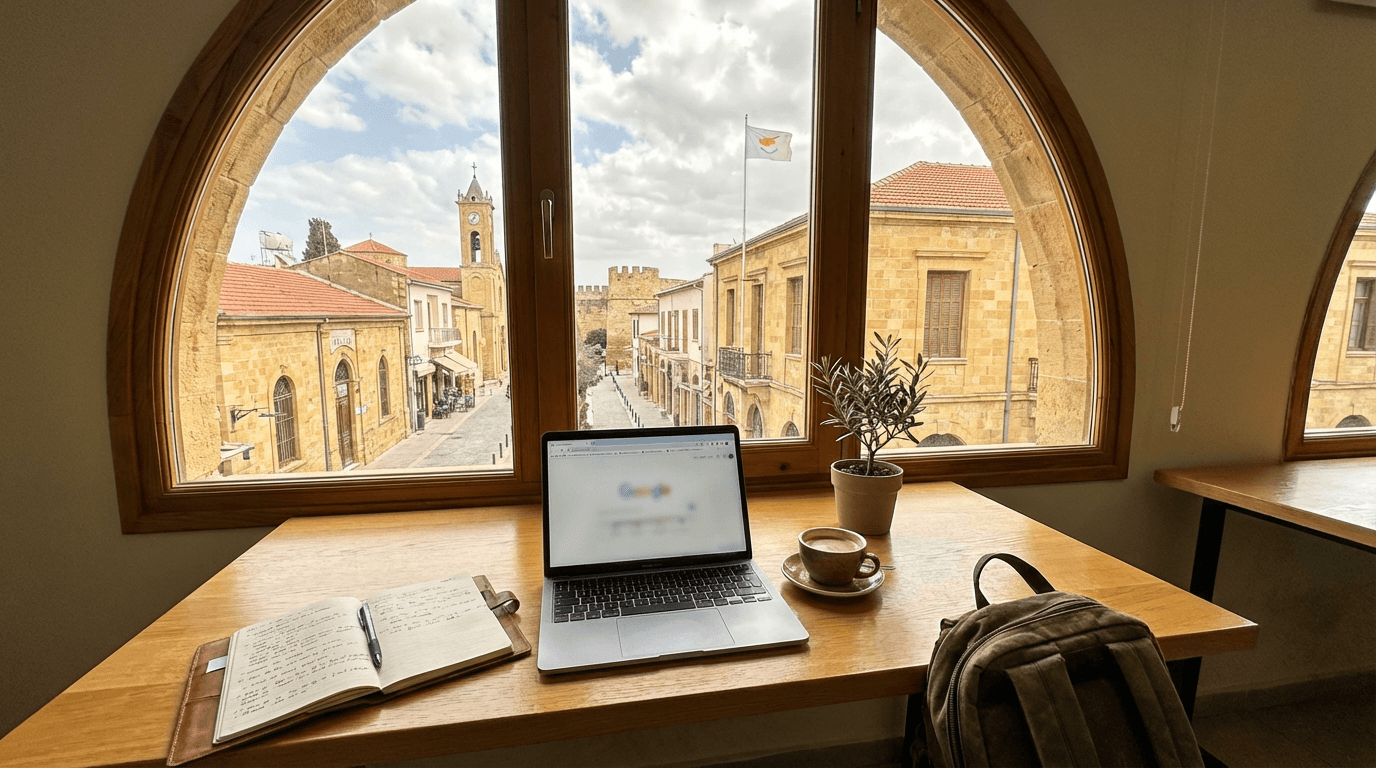
Cyprus
Complete Digital Nomad Guide

Policy Stability
Stamped Nomad ExclusiveHow likely visa and immigration policies are to remain unchanged
Quick Facts
Nomad Visa Cost
$76
Income Requirement
$3,780/mo
Max Stay
36 months
Renewable
Yes
Cost of Living
$1,600/mo
Avg Internet
167 Mbps
Safety Score
7/10
Healthcare
Medium
Coworking
Medium
English Friendly
High
Time Zones
EET, EEST
Entry Methods Available
Best For
The Entry Strategy
Cyprus sits in a unique spot. It is a full EU member but not yet a full member of the Schengen Area, though that transition is currently in motion. For now, this means the island maintains its own specific entry rules, but it still honors valid multiple-entry Schengen visas. If you already have one of those in your passport, you can usually skip the separate Cyprus application process entirely.
The rules for entry depend heavily on your passport. EU, EEA, and Swiss citizens have it easiest, requiring only a valid ID card or passport to enter and stay. US, Canadian, and Australian citizens are among those who enjoy visa-free entry for up to 90 days within any 180-day period. If you fall outside these categories, you will need to secure a visa before you land, as Cyprus does not currently offer a visa-on-arrival or a digital e-visa system.
Short-Stay Options (Type C)
For most nomads testing the waters in Limassol or Paphos, the Type C visa is the standard choice. This covers both tourism and business meetings. You can apply for a single-entry or multiple-entry version depending on your travel plans. The fees are relatively straightforward:
€20 to €90 depending on the entry type and applicant age.
Children under 6 years old are typically exempt from fees.
Proof of funds and a passport valid for at least 3 to 6 months beyond your stay are standard requirements.
If you are visiting for business, you will need an invitation from a Cypriot company. While this visa is great for short stints, extending it is difficult. Extensions are generally reserved for humanitarian reasons or significant emergencies, so it is best to plan your exit or your residency application well before your 90 days are up.
Staying Long-Term
If the Mediterranean lifestyle sticks, you will need to look beyond the standard tourist entry. The Long-stay Type D visa is the gateway for work or study, eventually leading to a residence permit. For remote workers and entrepreneurs, the "Pink Slip" (Temporary Residence Permit) is a frequent go-to. It is valid for 1 year and can be renewed annually, provided you can prove a consistent income from abroad and have local health insurance.
For those looking to make a permanent move, the "Golden Visa" or Category F investment path is an option. This requires a minimum investment of €300,000 in real estate or local businesses. It is a steep price tag, but it offers a fast track to permanent residency without the need for annual renewals.
Important Procedures and Future Changes
All visa applications and residency permits are handled through the Civil Registry and Migration Department. You can review the specific documentation requirements for Cypriot residence permits to ensure your paperwork is in order before you arrive. Keep in mind that these rules only apply to the areas controlled by the Republic of Cyprus.
Looking ahead, the island is pushing for full Schengen integration. By late 2026, visitors who currently enjoy visa-free travel will likely need to apply for an ETIAS authorization before flying in. While the core visa types are not expected to change drastically in 2025, the shift toward Schengen will mean stricter border controls and a more unified system with the rest of Europe. Always double-check with the nearest embassy if you are planning a stay that bridges several months, as migration policies are a primary focus for the government heading into 2026.
Cyprus has long been a favorite for travelers chasing the Mediterranean sun, but its Digital Nomad Visa Scheme has turned the island into a legitimate long-term base for remote workers. Managed by the Civil Registry and Migration Department, this permit allows non-EU and non-EEA nationals to live on the island while working for employers or clients based entirely abroad.
The Financial Threshold
To qualify, you need to prove a stable monthly net income of at least €3,500. This is the amount you take home after taxes and social contributions. If you are planning to bring your family, the requirements scale up. You will need an additional 20% for a spouse or partner and 15% for each minor child.
The authorities are strict about documentation here. You will need to provide bank statements, employment contracts, or signed client agreements that clearly show your income meets these targets consistently.
Application Steps and Timeline
The process starts by entering Cyprus legally, usually on a standard tourist visa. Once you are on the ground, you have 3 months to submit your application. You will need to visit the Civil Registry and Migration Department in Nicosia or your local district office in person to file the MVIS6 form and provide your biometric data.
The paperwork pile includes your passport, proof of remote work, health insurance covering your stay, a clean criminal record from your home country, and a rental agreement or title deed for your home in Cyprus. Expect to pay a €70 application fee and a €70 registration fee for your first permit. Processing typically takes between 5 and 7 weeks.
Duration and Renewals
Your initial residence permit is valid for 1 year. If you still meet the income requirements and want to stay longer, you can renew it for up to 2 additional years, giving you a total of 3 years on the island. Just make sure to start the renewal process at least 1 month before your current permit expires.
Tax Benefits and Residency
If you spend fewer than 183 days in Cyprus during a calendar year, you generally won't be considered a tax resident. However, if you stay longer, you fall into the local tax net. Cyprus uses a progressive tax system where the first €19,500 of income is usually tax-free, with rates climbing up to 35% for higher earners.
The real draw for high earners is the Non-Domicile status. This can exempt you from taxes on dividends and interest for 17 years. There is also a 50% tax exemption on employment income for those earning over €55,000, though you should consult a local tax professional to ensure your remote work structure qualifies for these specific incentives.
The Fine Print
While this visa offers a lot of freedom, it comes with specific boundaries you need to keep in mind:
- No Local Employment: You cannot work for any company registered in Cyprus or take on local freelance clients.
- Family Restrictions: Your spouse and children can join you, but they are not permitted to work or engage in any business activity in Cyprus.
- Digital Nature: You must demonstrate that your work is performed entirely via telecommunications and digital tools.
- Clean Record: A certified clean criminal record is mandatory for both the main applicant and any adult dependents.
For the most current forms and official announcements, you can visit the Civil Registry and Migration Department website.
Entry Basics for Nomads
Cyprus is a bit of a unique case in Europe. While it is an EU member, it is not yet a full member of the Schengen Area. This means the clock for your 90-day stay in Cyprus is separate from the time you spend in countries like France or Italy. It is a massive perk for long-term travelers trying to stay in Europe without burning through their Schengen days.
Most digital nomads from "Western" nations including the US, Canada, Australia, New Zealand, and the UK can enter Cyprus visa-free. You simply show up, get a stamp, and you are good to go for 90 days within any 180-day period. This same rule applies to citizens of the EU, EEA, and Switzerland.
The Category C Short-Stay Visa
If your passport is not on the visa-exempt list, you will need to apply for a Category C visa before you book your flight. This is a traditional paper visa sticker, as Cyprus does not have a digital e-visa system yet. You will need to visit a consulate or embassy in person or send your documents by mail.
The requirements are standard but strict. You will need:
- A passport with at least 6 months of validity remaining.
- Proof of your travel itinerary and accommodation bookings.
- Evidence of sufficient funds to cover your stay.
- Travel medical insurance coverage.
- A visa fee ranging from €20 to €60.
Processing usually takes between 5 and 15 working days, but it is smart to get your application in at least a month before you plan to land in Larnaca or Paphos.
The Reality of Overstaying
Cyprus has moved away from old-school paper tracking. They now use the Entry Exit System (EES), which electronically logs every time you cross the border. If you think you can slip under the radar, think again. The penalties for overstaying are aggressive and can ruin your travel plans for years.
- Minor overstays (up to 5 days): Expect a fine between €500 and €1,000.
- Moderate overstays (31 to 90 days): Fines jump to €2,000–€5,000 and usually come with a 3 to 5-year entry ban.
- Serious overstays (90+ days): You are looking at fines up to €10,000, a decade-long ban, and potential deportation.
If you are staying in Northern Cyprus (the area not controlled by the Republic), the rules are different. Overstay fines there are roughly 460 Turkish Lira per day. However, crossing back into the south after overstaying in the north can lead to significant legal headaches at the Green Line checkpoints.
Border Runs and the 90-Day Rule
In the past, some travelers tried "border runs" to Egypt or Israel to reset their 90 days. This does not work anymore. The 90/180-day rule is a rolling window. If you have spent 90 days in Cyprus, you must leave and stay out for another 90 days before you can return. Border officials are trained to spot patterns of "living" in the country on a tourist visa, and they have the authority to deny you entry if they think you are abusing the system.
What is Changing in 2026
The landscape is shifting. Cyprus is aiming for full Schengen membership by 2026. When this happens, the separate 90-day clock for Cyprus will disappear, and it will be lumped in with the rest of the Schengen Zone.
Additionally, the ETIAS (European Travel Information and Authorization System) will eventually become a requirement for visa-exempt travelers. This will be a quick online authorization you handle before you fly, similar to the US ESTA. Until then, just keep a close eye on your calendar and enjoy your three months of Mediterranean sun.
Making Cyprus Your Long-Term Base
Cyprus has become a magnet for remote workers and investors for good reason. Between the 300 days of sunshine and the favorable tax environment, it is a place where you can actually settle down rather than just pass through. Whether you are living off dividends, running a freelance business, or looking to buy a permanent slice of the Mediterranean, the island has a specific residency track for you.
The Digital Nomad Visa
If you are working remotely for clients or employers outside of Cyprus, this is your most straightforward entry point. It is designed specifically for freelancers and remote employees who want to stay longer than a standard tourist visa allows. The initial permit lasts for 1 year and can be renewed for another two years.
- Income Requirement: You need to prove a net monthly income of at least €3,500. If you bring a spouse, add 20%, and add 15% for each child.
- The Paperwork: You will need health insurance, a clean criminal record from your home country, and a rental agreement or property deed in Cyprus.
- Costs: Government fees are relatively low, ranging from €70 to €140 for the application, plus a €70 registration fee per person.
- Timeline: Expect a processing time of about 5 to 7 weeks once you submit your documents.
Category F: The Retirement Route
This is a lifelong residency permit often used by retirees or those with significant passive income. You are not allowed to work locally in Cyprus under this permit, so your funds must come from abroad in the form of pensions, dividends, or rental income from other countries.
- Financial Barrier: You must show a minimum annual income of €9,568 for yourself, plus €4,613 for each dependent.
- Housing: You need to show proof of accommodation, but unlike the Golden Visa, there is no minimum value required for the property you rent or buy.
- Fees: The application costs €500 per adult. Legal and translation fees usually add another €500 to €1,000 to the total.
- Wait Time: This is a slower process, often taking 12 to 18 months to finalize.
The Golden Visa (Investment PR)
If you have the capital and want to skip the queues, the "Fast Track" permanent residency program is the way to go. This grants you and your family lifelong residency rights without an expiration date, provided you visit the island at least once every two years.
- The Investment: A minimum of €300,000 plus VAT into new residential real estate, shares in a Cyprus company, or local investment funds.
- Income Proof: You must demonstrate an annual foreign income of at least €500,000.
- Speed: This is the fastest route to permanent status, with processing usually wrapped up in 2 to 6 months.
- Extra Costs: Beyond the investment, factor in a €500 application fee per adult and various stamp duties or transfer fees ranging from 3% to 19% depending on the property.
The "Pink Slip" and Temporary Stays
For those who aren't ready to commit to a specific long-term program, the temporary residence permit, or "Pink Slip," allows you to stay for up to a year as a visitor. It is often used by people who want to spend more than 90 days on the island while they figure out their next move. The fees are minimal, usually between €20 and €60 for the initial filing. You can learn more about the specifics of these filings through the Civil Registry and Migration Department.
The Path to Permanent Status
While the Golden Visa gives you permanent residency (PR) immediately, other routes require a bit of patience. If you live in Cyprus legally for 5 years under any permit, you generally qualify to apply for standard permanent residency.
If your goal is a passport, the bar is a little higher. Naturalization typically requires 8 years of legal residence, though this can be fast-tracked to 4 or 5 years for highly skilled professionals who can demonstrate proficiency in the Greek language. To keep your status, make sure you do not leave the country for more than two years at a time and maintain your local address and health coverage.
Comparison at a Glance
- Category F: €9,568 annual income, no investment, lifelong duration, €570 total gov fees.
- Golden Visa: €50,000 annual income, €300k investment, lifelong duration, €570 total gov fees.
- Digital Nomad: €3,500 monthly income, no investment, 1 year (renewable), €140 to €210 total gov fees.
Cyprus is one of those rare Mediterranean spots where you can still live a high-quality life without burning through your savings. While the island has seen prices creep up recently, it remains significantly more affordable than hubs like Barcelona or Tel Aviv. For 2025 and 2026, a solo nomad can expect to spend anywhere from €850 to €2,000 per month, depending heavily on which coastal city you call home.
The Big Four: Where Your Money Goes
Limassol is the island's shiny, cosmopolitan heart, but it comes with a price tag to match. It currently holds the highest cost of living index on the island at 65.4. If you want the hustle and the high-end beach clubs, you'll pay for the privilege. Nicosia follows at 59.7, offering a more urban, local vibe. For those looking to stretch their Euro further, Paphos (57.6) and Larnaca (56.5) are the sweet spots for budget-conscious remote workers.
Monthly Rent Breakdown
Housing will be your biggest overhead. Rent varies wildly based on how close you are to the water and how modern the interior is. Here is what you can expect for a one-bedroom apartment in the main nomad hubs:
- Limassol: Budget starts at €900-€1,100; Comfortable central living is €1,200-€1,500; Premium sea-view units exceed €1,500.
- Nicosia: Budget ranges €700-€900; Comfortable is €900-€1,100; Premium apartments hit €1,100-€1,300.
- Larnaca: Budget options are €600-€800; Comfortable units cost €800-€1,000; Premium living is €1,000-€1,200.
- Paphos: Budget is €500-€700; Comfortable stays run €700-€900; Premium spots are €900-€1,200.
Food and Dining
If you stick to local markets in Paphos or Larnaca, you can keep your grocery bill around €250 to €400 a month. Dining out is where things get fun. An inexpensive meal at a local tavern will run you €10-€15, while a proper mid-range dinner for two sits around €50-€60. If you have a taste for imported cheeses and luxury spirits, expect your grocery bill to climb past €400 easily.
Getting Around
Public transport is functional but basic. A one-way bus ticket is €1.50-€2, and a monthly pass averages €40-€75. Taxis are a bit pricier, starting at €5 plus nearly €2 per kilometer. Many nomads find that renting a car is the best way to see the island, with monthly rates ranging from €65 to €160 plus fuel, which currently hovers around €1.40 per liter.
Coworking and Connectivity
Internet is generally reliable, but many nomads prefer the community of a dedicated desk. Limassol, Larnaca, and Nicosia have the best setups.
- Day Passes: €10-€25
- Monthly Dedicated Desk: €150-€300
- Premium Private Offices: €400+ at international spaces like Regus.
Health Insurance
The Cyprus Digital Nomad Visa requires you to have private health coverage. Basic plans covering inpatient and outpatient care start at €50-€150 per month. For more comprehensive global coverage, plan to set aside €100-€250. While residents use the GESY public system, nomads usually rely on private clinics for faster service and English-speaking staff.
Choosing Your Lifestyle Tier
Where you fall on the spectrum depends on your priorities. A Budget lifestyle of €1,000-€1,500 is totally doable in Paphos or the outskirts of Larnaca if you cook at home and use the bus. A Comfortable mid-range life costs €1,800-€2,500, allowing for a central apartment, regular coworking, and dinners out. If you want the Premium experience in Limassol with a car and a private office, you should budget €2,500 and up.
Paphos: The Goldilocks Zone
Paphos is currently the heavy hitter for remote workers in Cyprus. It hits that sweet spot where affordability meets a high quality of life. You aren't just getting a desk here; you’re getting a legitimate community.
Monthly Rent: €600–€1,000
Total Living Costs: €1,200–€1,800
Key Vibe: Scenic, communal, and balanced.
The harbor area is perfect for a post-work drink, though don't expect the 24/7 clubbing scene found elsewhere. It is safe, exceptionally pretty, and cafes like Omikron are practically designed for laptop users. If you want a smooth transition into island life without a massive price tag, start here.
Limassol: The Coastal Powerhouse
Limassol is where the money is. It is the island's primary business hub, which means the infrastructure is modern and the networking is top-tier. You will find a blend of high-end dining, sleek coworking spaces, and a more "big city" energy than the rest of the coast. It is busy, occasionally crowded, and definitely the most cosmopolitan choice.
Monthly Rent: €700+
Average Meal: €20
Key Vibe: Ambitious, fast-paced, and modern.
The trade-off for all that energy is the cost. You will pay a premium for rent and dining compared to Paphos or Larnaca. However, if you thrive in an entrepreneurial environment and want the best beaches right at your doorstep, the extra spend is usually worth it.
Larnaca: The Budget-Friendly Retreat
If your priority is keeping overhead low while staying near the water, Larnaca is the winner. It is significantly more laid-back than Limassol and lacks the polish of Paphos, but it has a raw, authentic charm. It is the kind of place where you can spend your mornings at Edem's Yard and your afternoons kayaking or snorkeling.
Monthly Rent: €500–€900
Internet Speeds: Stable, with plenty of "work-friendly" cafes.
Key Vibe: Quiet, affordable, and local.
The social scene is smaller here, so you might have to work a little harder to find your tribe. But for those who prefer a peaceful environment and a lower cost of living, it is a fantastic base.
Nicosia: The Cultural Capital
Nicosia is the only major city without a beach, which keeps the "holiday" crowds away but brings in the culture. As the capital, it houses the best museums, the most diverse dining, and a massive selection of coworking spaces like The WorkPlace. It feels like a proper European capital, split by the Green Line, offering a historical depth you won't find on the coast.
Estimated Monthly Cost: €3,422
Coworking Options: 273+ spaces available.
Key Vibe: Sophisticated, historic, and urban.
Be aware that Nicosia is the priciest mountain to climb. Between the high rents and the lack of sea breezes, it can be intense in the summer. It is best suited for nomads who value urban amenities and nightlife over beach access.
Ayia Napa: The High-Energy Alternative
Most people think of Ayia Napa as a place for a wild weekend, but it has surprisingly decent infrastructure for remote work. During the shoulder seasons, it is a beautiful place to hunker down. During the peak of summer, however, it is a non-stop party. You will have access to some of the best white-sand beaches on the island and a very active social scene.
Monthly Rent: €800
Average Meal: €30
Key Vibe: High-energy, tourist-centric, and vibrant.
It is not the place for someone seeking tranquility. The noise levels and tourist crowds can be a distraction, but if you want your 5:00 PM to involve world-class clubs and turquoise water, this is your spot.
A Note on Connectivity
Internet across Cyprus is generally excellent with an average speed of 80.97 Mbps. While most standard coworking spaces provide a steady 10–15 Mbps, you can find premium hubs that push 300+ Mbps if your work involves heavy uploads or video editing. Expect to pay between €30 and €50 per month if you are setting up your own high-speed home connection.
Staying Connected on the Island
Cyprus has undergone a massive digital transformation recently. Gone are the days of patchy ADSL and frustrating lag. Today, the island is blanketed in high-speed fiber and some of the fastest 5G in the Mediterranean, making it a top-tier destination for remote work.
In major hubs like Nicosia and Limassol, fixed broadband speeds are impressive. Providers like epic have clocked median download speeds of 166.88 Mbps, with uploads sitting comfortably around 69 Mbps. Even the average across other providers like Cyta and G-NET stays within the 44 to 123 Mbps range. Latency is consistently low at about 10 ms, which is great news if your day is filled with back-to-back Zoom calls or heavy file transfers.
Fiber optic coverage is now standard in the four main cities. If you are staying in Nicosia, Limassol, Larnaca, or Paphos, you can often find connections pushing 1 Gbps or even 2 Gbps. While the rollout is reaching smaller villages, it is still a bit hit-or-miss in rural areas. It is always smart to ask your host for a speed test screenshot before booking a long-term villa in the Troodos Mountains.
Top Coworking Spots
The coworking scene here is social and well-equipped. You will find a mix of sleek corporate offices and cozy, community-driven hubs.
- SOHO (Limassol): This is the premium choice. It feels more like a private club than an office, featuring a gym, modern event spaces, and high-end amenities.
- Hügge (Paphos): True to its name, this spot focuses on community. It offers 24/7 access and a fantastic rooftop for post-work drinks.
- HUB Nicosia: A spacious, highly-rated facility in the capital that is perfect for those who need a quiet, professional environment.
- Yfantourgeio (Nicosia): Located in a converted weaving mill, this place has a unique, cozy vibe that feels more like a library-cafe than a sterile office.
- Ohouse (Larnaca): A great pick for those who like to work outdoors occasionally, offering a garden space and lightning-fast fiber.
- Regus: They have reliable, standardized locations across all major cities if you prefer a familiar corporate setup.
Membership Costs
Pricing is competitive compared to Western Europe, though Limassol tends to be the most expensive market. Most spaces offer flexible tiers depending on how often you plan to show up.
- Hot Desks: Expect to pay between €150 and €215 per month.
- Dedicated Desks: These usually range from €180 to €325 per month.
- Day Passes: Perfect for a quick session, these typically cost between €10 and €29.
Cafes and Mobile Data
If you prefer the "laptop under an olive tree" vibe, city cafes generally offer free WiFi with speeds between 20 and 50 Mbps. While fine for light emails, these public networks can be spotty during peak lunch hours. Always keep a VPN active and consider a backup plan.
Mobile data is your best friend here. 5G coverage is excellent, with mobile speeds averaging 65 to 114 Mbps. If you want to skip the hassle of a local contract, Nomad eSIMs offer prepaid plans starting at $4.50 for 1GB, going up to 50GB for roughly $44. For a more permanent backup, local SIM cards or MiFi devices provide 100+ Mbps for about €40 per month.
Understanding the Dual System
Cyprus operates a two-tier healthcare system that works surprisingly well for expats once you understand the mechanics. The public system, known as GESY, is a national health scheme that offers highly subsidized care to legal residents. If you are on the Digital Nomad Visa and paying into the social insurance system, you can access GP visits for as little as €6 to €15.
Most nomads and short-term remote workers lean toward private healthcare. It is faster, the facilities feel more like boutique hotels than hospitals, and English is the default language for staff. While the public system is reliable for emergencies, the private sector is where you go to skip the queues for specialists or elective procedures.
Public vs. Private Costs
The price gap between the two systems is noticeable but rarely bank-breaking by Western standards. Here is how the typical costs break down:
- GP Visit: Public costs €6–€15; Private costs €40–€80.
- Specialist Consultation: Public costs €10 with a referral; Private costs €60–€120.
- MRI Scan: Covered under GESY; Private clinics charge €250–€400.
- Emergency Room: Free for public emergencies; €100–€250 at private hospitals.
- Dental Check-up: Expect to pay €80–€130 in the private sector.
Insurance for Nomads
If you are applying for the Cyprus Digital Nomad Visa, you will need to prove you have health insurance. Since the visa requires a minimum income of €3,500 per month, many nomads opt for international plans that cover them both in Cyprus and during trips back home or elsewhere in Europe.
- International Nomad Insurance: Providers like SafetyWing are popular for their flexibility, starting around €56 per month.
- Full Private Medical: Global policies from Cigna or Allianz offer higher coverage limits and cost between €50 and €300 per month depending on your age and deductible.
- Local Private Plans: Companies like Trust or Atlantic provide local coverage that satisfies residency requirements for about €150 to €400 per month for families.
Top-Tier Hospitals
You will find the highest concentration of advanced medical tech in Nicosia and Limassol. These facilities are accustomed to international patients and often have dedicated desks for insurance coordination.
- American Medical Center (Nicosia): Known for world-class cardiology and a 24/7 emergency department.
- Mediterranean Hospital (Limassol): A massive multispecialty hub that is very popular with the expat community.
- Apollonion Private Hospital (Nicosia): The go-to spot for orthopedic surgery and specialized procedures.
Pharmacies and Prescriptions
Finding a pharmacy in Cyprus is easy; just look for the glowing green cross sign. They are usually open from 8:30am to 9:00pm on weekdays. In tourist hubs like Paphos or Limassol, pharmacies operate on a night-duty rotation to ensure 24-hour access. You can find many over-the-counter medications for €5 to €50, but it is wise to bring a copy of your home prescription to help the pharmacist find the local equivalent.
In an Emergency
The universal emergency number in Cyprus is 112. This connects you to police, fire, and ambulance services. For immediate, high-level trauma care, the public A&E departments at Nicosia General or Limassol General are your best bet. If you have premium private insurance and the situation is stable, private facilities like the Cyprus Central Hospital offer much faster intake times.
Cyprus is a modern financial hub, but it still carries a bit of that Mediterranean "island time" when it comes to bureaucracy. Since the country uses the Euro (€), nomads coming from the Eurozone will find the transition seamless. For everyone else, managing your money here requires a mix of local savvy and digital-first banking to avoid getting clipped by exchange rates.
Opening a Local Bank Account
You can open a bank account in Cyprus as a non-resident, but don't expect to do it entirely from your laptop while sitting at a beach bar. While banks like Bank of Cyprus and Hellenic Bank allow you to start applications online, you almost always need to visit a branch in person to finalize the paperwork. The process usually takes one to two weeks once your documents are submitted.
The "Know Your Customer" (KYC) checks are quite strict here. To get through the door, you will need:
- A valid passport or national ID.
- Proof of address, such as a utility bill less than 3 to 6 months old.
- Proof of income, which can be payslips, tax returns, or bank statements.
- A bank reference letter from your current bank in your home country.
Banks often want to see a "Cyprus connection" before they approve you. This could be a rental agreement for your apartment, a business contract, or proof that you are applying for a residency permit.
Digital Banks and Neobanks
For most nomads, a local account is overkill. Wise and Revolut are the gold standard in Cyprus. They are widely accepted for daily spending and are perfect for paying your rent via SEPA transfer without the hefty fees traditional banks charge.
Revolut is particularly popular here because it is registered with CySEC for crypto services, making it a bit more integrated into the local tech scene. Most local businesses won't blink if you tap a Wise or Revolut card, and these platforms generally offer much better exchange rates than any high-street bank on the island.
ATM Fees and Cash Culture
While cards are accepted in cities like Limassol and Nicosia, Cyprus still has a soft spot for cash, especially in smaller mountain villages or family-run tavernas. Most local bank ATMs do not charge an access fee for foreign cards, but you should always stick to ATMs attached to actual banks to be safe.
When using an ATM, keep these tips in mind:
- Always decline the conversion. If the ATM asks if you want to be charged in your home currency, say no. Let your own bank handle the conversion to avoid a 3% to 5% markup.
- Independent ATMs (often found in kiosks or tourist strips) may charge a flat fee of €2 to €5.
- Check your home bank's foreign transaction fees, which typically range from 1% to 3%.
Moving Money Into the Country
If you are moving a large sum to pay for a long-term villa rental or to start a business, avoid traditional SWIFT transfers. They are slow and can cost anywhere from €10 to €30 per transaction plus a hidden spread on the exchange rate.
Instead, use Wise for mid-market rates or TransferGo and Remitly, which often have promotions for zero-fee first transfers. If you are sending money from within the EU, a SEPA transfer is usually free or costs just a few cents, making it the most efficient way to move Euros around.
Crypto and Digital Assets
Cyprus has become a bit of a hub for crypto companies, but the rules are firm. Crypto is legal to own and trade, but it is not legal tender. You cannot pay your taxes or your grocery bill in Bitcoin. The Cyprus Securities and Exchange Commission (CySEC) regulates Crypto Asset Services Providers (CASPs) under laws that align with the EU's MiCA framework.
Be aware that traditional Cypriot banks are notoriously conservative regarding crypto. They may flag or block accounts that show frequent transfers to or from unregulated exchanges. If you trade frequently, stick to regulated platforms like Revolut or Coinbase to keep your primary spending account in good standing.
Visas and Residency for the Whole Crew
Moving your family to Cyprus is relatively straightforward if you have your own residency sorted. Minor children under 18 can join you as dependents on your permit. You will need to provide original birth certificates, valid passports with at least 3 months of validity, and proof that you have the financial means to support everyone without relying on public funds.
The authorities also require a medical certificate from your home country and proof of suitable housing, such as a registered rental agreement or a title deed. If you are a single parent, be prepared to show legal custody documents or a notarized consent form from the other parent. Adult dependents are rarely approved unless you can prove exceptional circumstances and total financial dependency.
Education and International Schools
Most nomad families gravitate toward international schools, which are concentrated in Limassol, Nicosia, and Paphos. These institutions typically follow British, American, or International Baccalaureate (IB) curricula, making it easier for kids to transition back home or move on to a third country later. Well-known options include The English School and the American Academy.
Budgeting for education is a major part of the move. Annual tuition generally falls between €6,000 and €18,000 per child. Keep in mind that the "sticker price" is rarely the final cost. You should factor in an additional 15% to 30% for the following:
- Registration fees: €500 to €4,000
- Exam fees: €300 to €1,200
- School transport: €800 to €2,000 per year
- Meals and uniforms: Varies by school
Many schools offer sibling discounts, so it is always worth asking for a price break if you are enrolling more than one child.
Healthcare and Pediatric Care
Once you have your Alien Registration Certificate (ARC) and legal residency, your children can be enrolled in the General Healthcare System, known as GESY. This provides access to a wide network of GPs, specialists, and hospitals like Makarios Hospital in Nicosia. Most visits and medications are covered or heavily subsidized, though many expats maintain private insurance to skip the wait times for non-urgent specialist appointments.
Childcare and Early Years
If your children are too young for primary school, Cyprus has a robust network of private nurseries and preschools. For a full-day program, expect to pay between €500 and €600 per month. Half-day options, like those at Angels Nest, usually cost between €3,900 and €5,280 annually. For casual help, a local babysitter will charge between €7 and €15 per hour.
Where to Plant Your Roots
The best city for your family depends on your priorities, whether that is beach access or a quiet suburban life. Here are the top picks for nomad families:
Limassol (Germasogeia area)
- Vibe: High-energy, coastal, and cosmopolitan.
- Pros: Closest proximity to the best international schools and beaches.
Paphos (Tala area)
- Vibe: Relaxed, safe, and very walkable.
- Pros: Large expat community and plenty of outdoor activities.
Nicosia (Strovolos area)
- Vibe: Urban and professional.
- Pros: Home to the best parks, sports complexes, and specialized healthcare.
Larnaca (Livadia area)
- Vibe: Quiet and residential.
- Pros: More affordable housing than Limassol while staying close to the airport.
Safety and Quality of Life
Safety is one of the biggest draws for parents in Cyprus. Violent crime is remarkably low, and it is common to see children playing outside or walking to shops with a level of freedom that has vanished in many other European cities. While property crime exists, child-related incidents are rare. The beaches are well-guarded by lifesavers during the season, and the emergency services number is 112. Most parents find the island offers a slower, more secure pace of life that is hard to beat.
Safety and Security
Cyprus is consistently ranked as one of the safest countries in the Mediterranean. With a crime index sitting between 33 and 35 and a violent crime rate of only 0.4 per 100,000, it is significantly safer than most major European hubs. You will likely feel comfortable walking through Nicosia or Limassol at night, though it is always smart to stay aware of your surroundings in quieter, unlit areas.
Most issues are limited to petty theft in high-traffic tourist zones. Pickpockets sometimes operate in the Ayia Napa party districts, Paphos harbor, and the crowded markets of Larnaca. Keep your phone out of your back pocket and never leave valuables visible in a parked rental car. Aside from these minor nuisances, serious incidents involving foreigners are very rare.
Staying Smart: Common Scams
While the island is safe, a few localized scams target the unsuspecting. Taxi drivers occasionally "forget" to turn on the meter; always insist on the meter or agree on a fixed price before the car moves. In tourist centers, you might encounter "fake guides" who offer free tours that inevitably end at a high-pressure jewelry or carpet shop where they earn a commission.
Rental Fraud: When hunting for long-term housing, never send deposits via wire transfer for a property you haven't seen in person. Fake listings on social media are a known issue.
ATM Security: Use machines located inside bank lobbies when possible. Skimmers are occasionally found on outdoor street machines.
Restaurant Bills: Always check the itemized receipt. Some spots in heavy tourist zones might add "service charges" or items you didn't order.
LGBTQ+ Life and Social Nuances
Cyprus is a bit of a contradiction for LGBTQ+ nomads. On one hand, the hospitality toward foreigners is legendary, and you will find growing, vibrant gay scenes in Limassol and Nicosia. On the other hand, the country remains socially conservative, particularly in rural villages and among the older generation. Public displays of affection might draw some stares, but physical hostility is uncommon.
The biggest hurdles are often systemic rather than social. Around 17% of the community reports avoiding healthcare services due to fears of prejudice. While the younger urban crowd is very progressive, it is helpful to be mindful of your setting when traveling outside the main coastal cities.
Cultural Etiquette and Language
Cypriot culture revolves around respect and food. When meeting someone older, use Kyrie (Mr.) or Kyria (Mrs.) followed by their first name. If you are invited to a local home, never arrive empty-handed. A small gift like flowers or a bottle of wine goes a long way. If someone offers you food or a drink, accept it; refusing can be seen as a slight against their hospitality.
English is the unofficial second language here. It is used extensively in business, government, and tourism, so you won't struggle with daily chores. However, learning a few Greek phrases like "Kalimera" (Good morning) or "Efcharisto" (Thank you) will immediately warm people up to you. For those staying long-term, the government offers free Greek classes to help with integration.
The Nomad Community
The digital nomad scene has exploded since 2021, with over 1,000 specialized visas issued. You will find the most active communities in Limassol and Paphos, supported by excellent coworking spaces like Makerspace in Larnaca or Regus in Limassol. These hubs are perfect for networking and finding your footing quickly.
To truly integrate, step outside the "expat bubble." Join local Facebook groups or attend local festivals. Cypriots are animated and love a loud debate; don't mistake their volume for anger. It is just the local way of being passionate. Embrace the slower "Mediterranean pace" and you will find that doors open much faster.
The Mediterranean Tax Haven for Remote Workers
Cyprus has quietly become one of the most tax-efficient bases in Europe for the laptop lifestyle. While the island is famous for its beaches and halloumi, its tax code is the real draw for high-earning nomads. Between the Non-Dom regime and a high tax-free threshold, you can legally keep significantly more of your paycheck here than in most EU nations.
The system is built to attract foreign talent. If you play your cards right, you can enjoy a lifestyle that combines low overhead with full access to the European market. However, you need to understand exactly when the clock starts ticking on your tax residency to avoid getting hit by unexpected bills from your home country.
Becoming a Tax Resident
Cyprus uses two different tests to determine if you owe them money. Most people know the 183-day rule, which is the standard "half a year plus one day" requirement. If you spend that much time on the island in a calendar year, you are a tax resident by default.
For those who move around more, the 60-day rule is a game changer. You can become a Cyprus tax resident by staying just 60 days per year, provided you maintain a permanent home there, don't stay in any other single country for more than 183 days, and aren't a tax resident elsewhere. This is perfect for nomads who want a solid EU "home base" while spending most of the year traveling.
If you are a non-EU citizen on the Digital Nomad Visa, you'll need to show a monthly income of at least €3,500. While this visa lets you live on the island, you only become a tax resident once you hit that 183-day mark.
Personal Income Tax Rates
Cyprus offers a generous tax-free bracket. You don't pay a cent in income tax on your first €22,000 of earnings. After that, the rates climb progressively:
- €0 to €22,000: 0%
- €22,001 to €32,000: 20%
- €32,001 to €42,000: 25%
- €42,001 to €72,000: 30%
- Over €72,000: 35%
If you are a high earner making over €55,000, there is a massive incentive available. New residents can often claim a 50% tax exemption on their employment income for several years, which effectively slashes your tax bill in half.
The Non-Dom Advantage
The "Non-Domicile" status is the crown jewel of the Cypriot tax system. If you haven't been a tax resident in Cyprus for 17 of the last 20 years, you qualify. This status lasts for 17 years and exempts you from paying tax on dividends and interest, regardless of where in the world that money is earned.
For nomads who run their own companies or live off investments, this is incredibly powerful. You get to live in an EU member state while paying 0% tax on your passive income and foreign dividends. It is one of the most competitive setups in the world for location-independent entrepreneurs.
Crypto and Digital Assets
Cyprus is modernizing its approach to digital assets. Starting in 2026, a flat 8% tax applies to gains from crypto disposals. This includes selling for cash, exchanging one coin for another, or using crypto to pay for goods and services.
If you are trading crypto as a professional business, those earnings are treated as regular income and taxed at the standard progressive rates up to 35%. However, for the casual investor or someone holding long-term, the 8% rate is relatively mild compared to the rest of the Eurozone. Just keep in mind that EU-wide reporting rules mean exchanges will be sharing your data with the authorities, so keeping clean records is a must.
Avoid Double Taxation
You won't get taxed twice on the same dollar if your home country has a treaty with Cyprus. They have signed agreements with over 65 countries, including the US, UK, Germany, and Canada. These treaties decide which country gets "first dibs" on your taxes. If you’ve already paid tax elsewhere, Cyprus usually gives you a credit so you aren't out of pocket twice. Always check the specific "tie-breaker" rules in the treaty if you’re splitting your time between two countries.
Paperwork and Deadlines
Even if you don't owe any tax, you still have to tell the government what you earned. If you are a resident over the age of 25, you must file an annual tax return (the TD1 form) by July 31. This covers your worldwide income from the previous year.
First-time residents need to register for a Tax Identification Code (TIC). If you are freelancing and your turnover from Cyprus-based activities exceeds €15,000, you may also need to register for VAT, which sits at a standard 19%. It is a straightforward process, but missing the deadlines can lead to annoying fines that eat into your sunset cocktail budget.
Stay Connected from Day One
Cyprus has excellent mobile infrastructure, so there is no reason to rely on spotty cafe Wi-Fi. You can pick up a prepaid SIM at any airport arrival hall, authorized store, or even local kiosks. Cytamobile-Vodafone offers a dedicated tourist SIM for €9.99 that gives you 20GB of data for 30 days. If you are a data-heavy user, PrimeTel has a €20 plan loaded with 250GB valid for 20 days. All major providers, including Epic, now support eSIMs, which saves you the hassle of hunting down a physical card.
Getting Around the Island
Public transport is mostly limited to buses, so download the Pame app immediately. It is the best tool for planning routes, checking live arrivals, and managing your Motion Travel Card payments. For door-to-door service, skip the old-school street hail and use ride-hailing apps like Bolt or Cabcy. They work reliably in Nicosia, Limassol, Larnaca, and Paphos, offering upfront pricing so you don't have to haggle with drivers. Other solid options for local transfers include nTaxi, Alfa Taxi, and Hannk.
Where to Set Up Your Base
Each city has a distinct personality, and your choice depends on your work-life balance goals. Limassol is the island's business hub, perfect for nomads who want high-end coworking spaces and a fast-paced coastal vibe. Paphos is much more relaxed, popular with expats and those who prefer a slower pace near the water. Larnaca offers a middle ground with more affordable seaside living, while Nicosia is the place for pure urbanites who need to be in the center of the country's economy and culture.
- Limassol: Best for networking, premium coworking, and active nightlife.
- Paphos: Best for coastal views, quiet mornings, and an established expat community.
- Larnaca: Best for budget-conscious nomads and frequent flyers due to airport proximity.
- Nicosia: Best for professionals who want a "big city" feel and deep history.
Finding Your Home
Don't commit to a year-long lease before you land. Start with Airbnb or Booking.com for a short-term stay to test the Wi-Fi and the neighborhood. Once you are on the ground and ready for something more permanent, Bazaraki is the go-to local platform for long-term rentals. Expect to pay anywhere between €500 and €1,500 per month; prices fluctuate heavily based on the season and how close you are to the marina.
Food and Daily Life
When you are deep in a flow state and can't leave your desk, the delivery apps here are fantastic. Foody is the local favorite and boasts the most downloads, but Wolt and Bolt Food are also widely used in major cities. They don't just deliver meals; you can get groceries and pharmacy items sent straight to your door. If you find yourself in North Cyprus, Feed Me is the primary service to use.
While almost everyone speaks English, learning a few phrases in the local dialect goes a long way. Download Cyprusays, which focuses specifically on Cypriot Greek rather than the standard mainland version. It includes audio from native speakers and speech recognition to help you get the pronunciation right before you head to the local bakery.
Safety and Emergencies
Cyprus is generally very safe, but it helps to have the right numbers saved. The universal emergency number is 112. It is free to call from any phone, the operators speak English, and they can geolocate your position if you are lost. For non-emergencies, you can reach the police hotline at 1460 or the domestic violence support line at 1440.
Avoiding Common Pitfalls
The biggest mistake new nomads make is overpacking. The island is casual and the weather is warm most of the year, so travel light to stay mobile. Always verify Wi-Fi speeds with a host before booking a long stay, as "high-speed" can be a subjective term in older village stone houses. Finally, never skip the "scouting phase." Book a place for one week first to see if the neighborhood noise levels and local amenities actually fit your work schedule before signing anything long-term.
Latest Nomad News
More Guides from Europe

Stay Updated on Cyprus
Get notified about visa changes, policy updates, and new information for digital nomads in Cyprus.