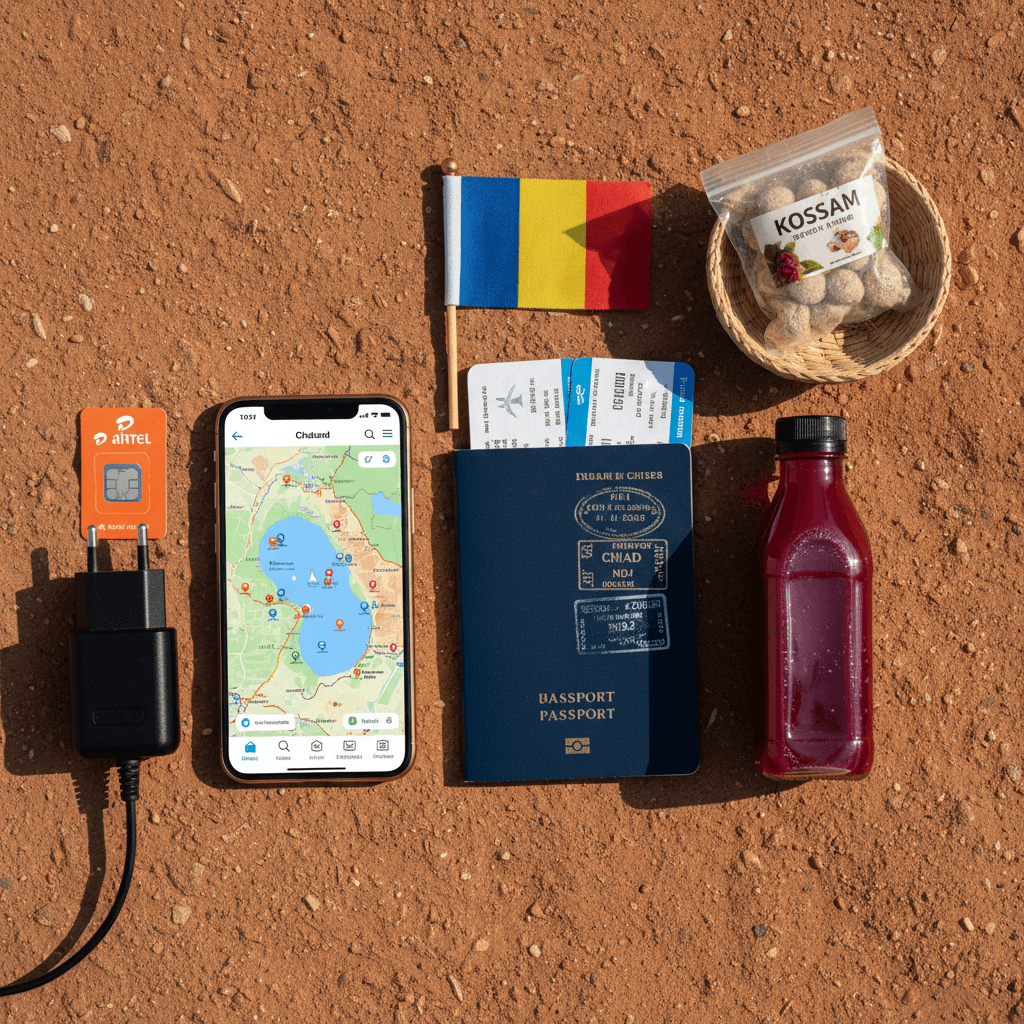
Chad
Complete Digital Nomad Guide

Policy Stability
Stamped Nomad ExclusiveHow likely visa and immigration policies are to remain unchanged
Quick Facts
Nomad Visa Cost
$50
Max Stay
1 months
Renewable
Yes
Cost of Living
$800/mo
Avg Internet
5 Mbps
Safety Score
3/10
Healthcare
Low
Coworking
Low
English Friendly
Low
Time Zones
UTC+1
Entry Methods Available
Best For
The Basics of Getting In
Entering Chad as a digital nomad requires more preparation than your average Southeast Asian border run. Most travelers need a visa before they arrive. While the country recently modernized its entry process, the rules are strict and paperwork is a non-negotiable part of the journey. If you are from one of the 14 visa-free nations, such as Benin, Cameroon, Nigeria, or Senegal, you can stay for up to 90 days with just your passport. For everyone else, the e-visa is now the standard path.
The e-visa system launched in late 2024 and covers both tourism and business. You should submit your application between 7 and 90 days before you plan to land. Once you pay the fees, which start around $50 USD plus processing costs, expect to wait 3 to 5 business days for approval. Always keep a printed copy of your authorization; digital versions on a phone screen are rarely enough for local immigration officers.
Visa Types for Nomads
While Chad does not have a dedicated, long-term "digital nomad visa" in the traditional sense, several categories fit the remote work lifestyle depending on your project and duration. Most nomads start with a standard tourist visa, which usually allows for a 30-day stay, though 90-day versions exist for certain nationalities.
- Tourist Visa: Best for short-term scouting. It is valid for up to 6 months from issuance but typically allows a 30-day single entry.
- Business Visa: If you are meeting local partners or attending conferences, this covers stays up to 90 days. You will need a formal invitation letter and proof of sufficient funds.
- Long-term Extensions: If you decide to stay, you must visit the Direction de l’Emigration et de l’Immigration in N’Djamena before your current permit expires. Extensions require proof of accommodation and a valid reason for staying, and they are granted at the discretion of the officers.
The U.S. Travel Suspension
A significant shift occurred in June 2025 that specifically impacts American nomads. Chad suspended the issuance of new visas for U.S. citizens. This policy remains in effect through 2026 as part of a reciprocal travel ban. If you hold a U.S. passport and did not secure a visa before June 9, 2025, you currently cannot enter the country. Those with visas issued before that date are generally permitted to enter until their specific document expires.
Critical Requirements and Registration
Getting the visa is only the first step. Chad has a mandatory police registration rule that catches many travelers off guard. Every foreigner must register with the local police within 72 hours of arrival. If you are staying in a high-end hotel, they often handle this for you, but if you are renting an apartment or staying in a guesthouse, you must go to the police station yourself.
- Yellow Fever Certificate: This is mandatory for entry. You will be asked for your "yellow card" at the airport or border.
- Entry Authorisation: Do not rely on "Visa on Arrival" unless you have a pre-approved authorization letter from Chadian authorities. Without it, you will likely be denied boarding at your point of departure.
- Passport Validity: Your passport must be valid for at least 6 months beyond your intended stay.
The Digital Nomad Outlook
There has been talk of official digital nomad categories being integrated into the e-visa portal, reflecting a slow move toward attracting remote talent. However, the current environment remains bureaucratic. For now, the most reliable way to maintain a legal presence is to enter on a 30-day tourist or business visa and handle extensions locally in the capital. Always ensure your documents are in order before you travel, as the e-visa system does not offer refunds for mistakes or denied applications.
The Current Landscape
Chad is currently in a state of transition regarding its immigration policy. While the government announced the introduction of a dedicated Digital Nomad Visa in late 2024, the program is still in its infancy. This move is part of a broader push to modernize the eVisa system and attract international professionals to the Sahel region.
Because the specific implementation details are still rolling out, you won't find a "one-click" nomad application just yet. For now, most remote workers entering the country rely on existing visa structures while the Ministry of Public Security and Immigration finalizes the fine print for the nomad-specific category.
Your Current Visa Options
If you are planning to touch down in N'Djamena before the nomad visa is fully operational, you have three primary paths to consider. Each comes with its own set of rules regarding how long you can stay and what you can legally do while there.
- Tourist Visa: This is the most common entry point for short-term stays. You can secure a one-month single-entry visa or a three-month multiple-entry version. While these are technically not for employment, they work for those scouting the country for a few weeks.
- Work Permit: This is the "heavy lifting" option. It requires a formal job offer or a sponsorship from a foreign company that is registered with the Chadian Ministry of Labor. It is the most secure way to stay long-term, but the paperwork is significant.
- Long-Term Residence Visa: For those planning to make Chad a semi-permanent base, this visa allows for extended stays. You will likely need to prove a steady income, though the government has not yet set a hard public threshold for remote earners.
The Application Process
The good news is that Chad has moved much of its bureaucracy online. The eVisa portal is relatively efficient and has simplified what used to be a grueling process at embassies. If you are applying for a standard entry visa, the steps are straightforward.
First, you will fill out the online form, which usually takes about 10 to 15 minutes. You will need to upload a digital copy of your passport, a recent photo, and any supporting documents like your yellow fever vaccination certificate. Once you pay the fee via credit card or bank transfer, the approval typically hits your inbox within 3 to 5 business days.
If you opt for the more formal work permit route, your employer has to get involved. They must file a request with the National Office for Employment Promotion (ONAPE). This process is slower, usually taking between 2 and 4 weeks to finalize.
Requirements and Restrictions
Regardless of which path you take, there are a few non-negotiable rules you need to follow to stay on the right side of Chadian law. The country is strict about registration and documentation once you arrive on the ground.
- Local Registration: All foreign nationals must register with local authorities within 72 hours of arriving in the country. Don't skip this step; it is a standard security requirement.
- Passport Validity: Your passport must be valid for at least 6 months beyond your stay and contain at least two blank pages for stamps.
- Employment Rules: Standard tourist visas do not legally permit you to work for a local Chadian company. If your income is coming from abroad, the lines are blurrier, but a work permit is the only way to be 100% compliant for long stays.
- Tax Obligations: Foreign workers are technically required to register for tax and social security. While the specific rates for nomadic workers are still being defined, it is wise to keep records of your foreign earnings.
What We Are Still Waiting For
Since the official announcement of the nomad-specific category is so fresh, several key details remain under wraps. We are still waiting for the government to confirm the minimum monthly income required to qualify for the specific nomad stream. We also expect more clarity on whether this visa will be renewable and if it offers any specific tax exemptions for the first year of residency. Keep a close eye on the official Ministry of Public Security and Immigration portal for these specific updates as they go live.
The Basics of Entry
Entering Chad as a digital nomad requires more lead time than your average Southeast Asian or European getaway. While the country is slowly digitizing its bureaucracy, the rules remain strict. Most travelers will need to secure their paperwork well before they pack their bags. If you happen to hold a passport from Benin, Cameroon, Central African Republic, Republic of the Congo, Equatorial Guinea, Gabon, Mali, Niger, or Senegal, you are in luck. Citizens of these nations can generally enter visa-free for stays up to 90 days due to regional agreements. For everyone else, you will be looking at the new e-visa system or a visit to an embassy.
The E-Visa System
The Chadian government launched an official e-visa portal in December 2024, which has significantly simplified the process for remote workers. This system is managed by the Direction de l’Emigration et de l’Immigration and serves as the primary gateway for international visitors. You should aim to submit your application anywhere from 7 to 90 days before your intended arrival date. The process involves filling out a digital form and uploading several documents, including a passport scan, a recent photo, your travel itinerary, and a confirmed hotel booking.
Processing times are not always predictable. Some approvals come through in a few days, while others can take several weeks. Once you submit the application and pay the fees, you can track your status through the government portal. If you run into technical glitches, the immigration office in N’Djamena maintains a dedicated contact line and email address for support.
What It Costs
The financial side of the visa is relatively straightforward, though prices can fluctuate based on your nationality and the specific type of entry you request. Here is a breakdown of what to expect:
- Standard E-Visa Fee: Starts around $50 USD.
- Service Fees: Additional processing charges applied at checkout.
- Refund Policy: Non-refundable once the application is submitted, regardless of the outcome.
Visa on Arrival Realities
Do not rely on getting a visa at the airport. While there are whispered exceptions for certain nationalities at N'Djamena International Airport, the official stance for 2025 and 2026 is that tourists must have their visas sorted in advance. Showing up without one is a gamble that usually ends with a flight back to your origin point. If you are not using the e-visa system, your only other reliable path is applying through a Chadian embassy or consulate in your home country.
Staying Longer: Extensions and Duration
The standard tourist e-visa is typically a single-entry permit valid for 30 days. If you decide that a month isn't enough time to explore the Ennedi Plateau or settle into the pace of N'Djamena, you can apply for an extension. This is not an automatic process. You must visit the Direction de l’Emigration et de l’Immigration office in the 8th Arrondissement of N’Djamena before your current visa expires. You will need to bring proof of accommodation, a valid reason for staying longer, and the required extension fees.
The Risks of Overstaying
Chad takes immigration dates very seriously. Overstaying your visa can lead to immediate complications when you try to leave the country. Penalties include fines that often exceed €200, potential detention, and even deportation. In some cases, an overstay can result in a long-term entry ban. If your visa is about to expire and you cannot get an extension, it is better to leave and re-apply than to risk the legal headache. Border runs are not a viable strategy here; exiting and immediately re-entering is often viewed with suspicion, and you would still need a brand-new e-visa for the second entry.
Checklist for Application
- Passport: Must be valid for at least six months beyond your stay.
- Digital Documents: High-quality scans of your passport bio page and a passport-style photo.
- Proof of Stay: A confirmed hotel reservation or an official invitation letter.
- Payment: A credit or debit card capable of international transactions for the $50+ fee.
The Reality of Staying Long-Term
If you are eyeing Chad as a long-term base, you should know that the country does not currently offer a specific digital nomad visa or a remote work permit. There are no "golden visas" for investors or streamlined paths for retirees. For the nomadic community, this means your options are traditional and heavily bureaucratic.
Most foreigners enter on a short-term visa and then transition to a residence permit if they intend to stay beyond 90 days. Because there is no dedicated freelancer category, most long-term residents are there on the back of a formal employment contract with a local company or an international NGO. If you are strictly working for yourself, you will likely find yourself navigating the "Long-Stay Visa" process, which requires significant documentation before you even board your flight.
The Residence Permit Path
The process starts at a Chadian embassy or consulate in your home country. You cannot simply arrive on a tourist visa and decide to stay forever; you must secure a long-stay visa first. Once you land in N'Djaména, the real work begins with the Directorate General of National Security (DGSN). This is where you apply for your Titre de Séjour (Residence Permit).
To get this permit, you will need to provide several specific items:
- A passport with at least six months of validity remaining.
- A formal medical certificate from a recognized physician.
- A clean police clearance report from your home country.
- Proof of financial means, such as bank statements or an employment contract.
- Certified translations of any documents that are not in French or Arabic.
If you are bringing family, your dependents will need to provide proof of relationship, such as marriage or birth certificates. You will also need to show you have the financial capacity to support them throughout your stay.
Working and Permanent Residency
For those looking to settle in for several years, permanent residency is technically possible, though the requirements are opaque. You generally need to prove several years of continuous, legal residence and show that you have made a tangible economic contribution to the country. These applications are handled on a case-by-case basis by the DGSN.
If your residency is tied to a local job, your employer handles the work permit application through the Ministry of Public Service, Labor, and Employment. They have to prove that your specific skills are unique and cannot be easily found within the local Chadian workforce. Business visas are a different beast entirely; they are strictly for short-term meetings and prohibit any form of local employment or long-term stay.
Costs and Practicalities
Government fees in Chad are rarely posted on a central website, and the lack of a functional e-visa portal means you will be dealing with physical offices and paper forms. Secondary sources suggest permit fees can hover around USD 100, but these costs fluctuate based on your nationality and the specific type of permit you are seeking. Always carry extra cash for processing fees and unexpected administrative costs.
Processing times are slow. It is common for a residence permit to take several weeks or even months to be finalized. You should start your application process as early as possible and maintain regular contact with the DGSN office in N'Djaména. Since there is no centralized online portal, your best move is to visit the nearest Chadian embassy or consulate for the most current requirements before you start packing your bags.
Official Contact Points
- Directorate General of National Security (DGSN): Located in N'Djaména, this is the primary hub for all residence permits.
- Ministry of Foreign Affairs: For high-level visa inquiries and diplomatic stays.
- Chadian Embassies: Your first point of contact for the initial long-stay visa entry.
The Price of the Frontier
Chad presents a unique financial paradox for the digital nomad. On one hand, it ranks as one of the most affordable destinations on the planet, where a monthly budget of $500 to $600 covers all basic necessities. On the other hand, the lack of traditional nomad infrastructure means that "buying" your way into Western comforts can cause costs to skyrocket into the thousands.
Most nomads find that their largest expense isn't the cost of living itself, but the cost of reliability. While local life is inexpensive, maintaining a high-speed internet connection and a consistent power supply requires a more strategic approach to budgeting than in more developed hubs.
Major Cities and Regional Costs
While Chad has several urban centers, N'Djamena is the only realistic choice for anyone needing to stay connected. Outside the capital, the cost of living drops slightly, but the trade-off is a near-total lack of coworking spaces and reliable utilities.
- N'Djamena: The capital is the most expensive city with a total monthly average around $542 for a basic lifestyle. It is the only city where you will find expat-oriented housing and dedicated workspaces like WenakCo.
- Moundou, Sarh, and Abéché: These secondary cities offer lower costs, often hovering around $500 to $515 total per month. However, housing geared toward foreigners is almost non-existent, and you will likely rely on local markets for everything.
Monthly Budget Tiers
Your lifestyle choices in Chad will dictate your budget more than in almost any other country. There is a massive gap between living like a local and opting for the "expat bubble."
The Budget Tier: $410 to $545 per month
- Rent: $150 for a basic 1BR outside the city center.
- Food: $200 to $250, sticking strictly to local markets and street food.
- Transport: $20 to $45 using local buses and shared taxis.
- Workspace: $0 to $50, mostly working from basic cafes or home.
- Insurance: $40 to $100 for basic nomad health coverage.
The Comfortable Tier: $719 to $1,024 per month
- Rent: $224 for a central 1BR in N'Djamena with better security.
- Food: $300 to $400, allowing for some imported goods and occasional restaurant meals.
- Transport: $45 to $100 for more frequent private taxi use.
- Workspace: $50 to $100 for a consistent desk at a coworking space.
- Insurance: $100 to $200 for more robust medical plans.
The Premium Tier: $1,800 to $3,600 per month
- Rent: $900 to $1,800 (approximately 750,000 to 1,500,000 CFA) for a fully furnished, modern apartment with a backup generator.
- Food: $500 to $800, focusing on imported Western brands and high-end dining.
- Transport: $100 to $250 for private drivers or car rentals.
- Workspace: $100 to $350 for premium office setups with high-speed satellite backup.
- Insurance: $200 to $400 for full international coverage including medical evacuation.
Key Expense Breakdowns
Rent is your most variable cost. In central N'Djamena, a modest apartment averages $224, but prices for secure, modern units favored by international workers often start at $900. These premium units usually include the cost of security and water, which are vital considerations here.
Food costs are generally low if you eat seasonally. Expect to spend about $209 on a standard basket of local groceries. Imported items like cheese, wine, or specific electronics carry heavy markups due to the logistical challenges of being a landlocked nation.
Connectivity is a hidden cost. Since coworking is sparse, you may spend $5 per day at places like WenakCo just to ensure you have a stable connection. If you choose to work from cafes, a coffee or light meal will set you back a few dollars, but the Wi-Fi is rarely guaranteed to be fast enough for video calls.
The Reality of Life in Chad
If you are looking for a hidden gem with high-speed fiber and a bustling community of remote workers, Chad is not that place. In fact, it is one of the most challenging environments on the planet for a digital nomad. Infrastructure is sparse, costs are surprisingly high for foreigners, and the safety situation is volatile. If you choose to base yourself here, it is usually for a specific mission or humanitarian project rather than a lifestyle choice.
N'Djamena: The Only Option
N'Djamena is the capital and the only city where you can realistically expect to find a functioning internet signal and a place to plug in your laptop. It is the economic heart of the country, but even here, the digital nomad lifestyle is a struggle. You won't find the typical "laptop cafes" or networking events common in other African hubs like Nairobi or Dakar.
Workspace and Connectivity
Reliable internet is the biggest hurdle. Average speeds hover around 1 Mbps, which makes video calls nearly impossible and basic web browsing a test of patience. Most professionals rely on a mix of 4G mobile data, expensive dongles, and the occasional coworking space like The Hub to stay online. Only about 2.5% of the population has internet access, so connectivity is treated as a luxury item.
- The Hub: The most established workspace in the city, offering a more stable environment than most hotels.
- Cote Jardin: A popular cafe among the expat community that can serve as an informal office for a few hours.
- Backup Systems: Always carry a secondary SIM card; outages are frequent and can last for hours.
Cost of Living
Chad is unexpectedly expensive for outsiders. Because so many goods are imported and security requirements are high, your monthly budget will likely exceed what you would spend in Southeast Asia or even parts of Europe. Most "nomads" here are actually high-earning consultants or NGO workers, which has driven up the price of secure housing.
- Nomad Monthly Budget: Approximately $5,713 for a lifestyle that includes secure housing and imported food.
- Expat Monthly Budget: Around $2,285 for those with more permanent, local arrangements.
- One-Bedroom Apartment: Rent ranges from $200 to $1,150 depending on the neighborhood. Sabangali and Farcha are the preferred areas for foreigners.
- Utilities: Expect to pay around $40 per month for basic services, excluding the high cost of private generators if your building lacks reliable power.
Safety and Lifestyle
Safety is a primary concern that will dictate your daily movements. Most western governments advise against all but essential travel to N'Djamena due to threats of terrorism and violent crime. Street crime like muggings and bag snatching is common, particularly after dark. Walking alone at night is never recommended, and you should always use trusted private transport.
The social scene is small and centered around the expat community. Places like Kirikou Bar or Le QG N'Djamena offer a spot for a drink and local music, but you should always remain aware of your surroundings. For LGBTQ+ travelers, it is important to know that social hostility is high and legal protections are non-existent.
Why Other Cities Aren't Recommended
While Moundou and Sarh are significant local hubs, they are entirely unsuitable for remote work. Telecommunications in these regions are categorized as very unreliable. Outside the capital, you will find almost no healthcare facilities capable of handling emergencies, and the lack of any expatriate infrastructure means you will be entirely on your own. Travel between cities often requires specific permits from the Ministry of Interior and, in many cases, armed escorts.
The Final Verdict
Chad is a destination for the experienced traveler who is comfortable with extreme isolation and high-risk environments. For the average digital nomad, the combination of 1 Mbps internet and a $5,700 monthly price tag makes it one of the least practical places in the world to work remotely. If you are looking for a stable African base, you would be much better served in Kigali or Cape Town.
The Connectivity Reality Check
Working from Chad is an exercise in patience and preparation. While the country is making strides in digital infrastructure through national fiber projects like PMICE, the ground reality remains challenging for the average remote worker. Most of your digital life will center on N'Djamena, where the infrastructure is most concentrated. Outside the capital, reliable internet is almost non-existent for professional needs.
Broadband speeds fluctuate wildly depending on the technology used. Traditional local ISPs like Moov and GLOBALTEL typically offer modest download speeds between 8 Mbps and 14 Mbps. However, the game-changer for nomads here is Starlink, which has pushed average download speeds up to 68 Mbps. If your work involves heavy video conferencing or large file transfers, finding a location with satellite service or a robust fiber connection is your only real path to productivity.
Top Coworking Hubs in N'Djamena
The coworking scene is small but high-quality, providing much-needed stability in an environment where home internet can be fickle. These spaces offer more than just a desk; they provide the air conditioning and backup power necessary to survive the local climate and occasional outages.
- Khidimé Space (Job Booster Chad): This is arguably the most professional setup in the city. It features high-speed internet, dedicated meeting rooms, and a quiet environment for deep work.
- WenakLabs / WenakCo: This is the heart of the local tech and entrepreneurship scene. It functions as a collaborative innovation hub where you can network with local developers and creators.
Membership and Access Costs
Pricing for professional space is quite reasonable compared to Western hubs. At Khidimé Space, you can secure a monthly open-space pass for 30,000 FCFA (about $50 USD). For shorter stays, expect to pay around 2,000 FCFA ($3) for a daily pass or 8,000 FCFA ($13) for a week. Across the city, the average cost for a hot desk typically sits around $73 per month.
Mobile Data and eSIM Options
Mobile internet is often more reliable than landline connections, though latency can be high, often exceeding 200 ms. Airtel and Moov are the primary players. Airtel generally offers the best performance with download speeds near 31 Mbps in urban areas.
Data plans are straightforward but can get expensive if you are a heavy user:
- Entry Level: 1GB for 30 days costs roughly 7,000 FCFA ($11).
- Mid-Tier: 7GB for 30 days runs about 12,000 FCFA ($20).
- Heavy User: 14GB plans range from 20,000 to 35,000 FCFA ($33–$58).
For those who prefer to land with data already active, eSIM providers like Nomad or Esimatic offer tourist plans starting between $6 and $14. These are great for getting a taxi or finding your hotel, but you will want a local SIM for better long-term rates.
The Cafe Culture and Fiber Growth
Do not rely on cafe WiFi for important meetings. While spots like Cote Jardin offer internet access, the connections are notoriously inconsistent. Most nomads find that hotel and cafe WiFi is fine for checking emails but will likely drop during a Zoom call. Public hotspots are rare and usually slow, averaging only 1 Mbps.
The silver lining is the rapid expansion of the national fiber backbone. Chad has deployed over 1,275 km of fiber and is working on cross-border links to Niger and Sudan. This is slowly reducing the country's reliance on expensive transit through Cameroon, which should lead to better stability and lower prices in the coming years. For now, always have a mobile hotspot as a backup, and prioritize spaces that mention Starlink or dedicated fiber lines.
Public vs Private Quality
In Chad, the healthcare divide is stark. Public facilities are chronically underfunded and overwhelmed, often grappling with severe shortages of basic medication and medical staff. While the Hôpital Général de Référence Nationale in N’Djamena is the country's primary referral center, it frequently lacks the resources to handle complex cases effectively. If you venture outside the capital, public care becomes almost nonexistent.
For digital nomads and expats, private healthcare is the only viable path. These clinics offer significantly shorter wait times, modern diagnostic equipment, and staff who are more likely to speak English or French. While these facilities are far superior to the public system, they are priced for the international community and require solid financial backing or high-end insurance.
International Hospitals in N’Djamena
The gold standard for care in the capital is the Center Médical International, operated by International SOS. It functions as a full-service hub for the expat community, providing 24/7 emergency services, inpatient wards, and specialized care in fields like cardiology and orthopedics. They have an on-site lab, X-ray machines, and a well-stocked pharmacy.
Other reliable options for those living in N’Djamena include:
- Clinique Moderne: Frequently used by the diplomatic community for routine procedures and consultations.
- Polyclinique Internationale de N’Djamena: A private facility known for providing reliable care and stabilization for international residents.
- International SOS Clinic: Offers advanced ambulances and a staff fluent in English, French, and Arabic.
Health Insurance Options
Local public insurance is not designed for non-residents and won't cover the type of care you’ll want. You need a robust international private medical insurance (IPMI) plan. Look for providers like Cigna, Allianz, Bupa Global, or William Russell. These plans are designed for the nomadic lifestyle and offer global networks.
Your policy must include medical evacuation coverage. Because Chad lacks the infrastructure for high-level surgeries or specialized treatments, serious conditions often require a flight to Cameroon or France. Without insurance, an evacuation can cost tens of thousands of dollars out of pocket. Ensure your plan specifically covers tropical diseases, particularly malaria, which is a significant risk here.
Costs for Common Procedures
While Chad’s per capita health spending is low at roughly $29 USD, this figure is misleading for nomads. Private care is expensive because households in Chad often pay more than 60% of health costs directly out of pocket. You should expect to pay premium rates for the privilege of Western-style care.
- Basic Consultation: Expect to pay anywhere from $50 to $200 USD at a top-tier private clinic.
- Specialist Visit: Rates vary wildly but generally start at $100 USD.
- Hospitalization: Daily rates in private wards can climb into the hundreds, excluding procedures and medication.
- Emergency Evacuation: Can exceed $50,000 USD if you aren't covered by a policy.
Pharmacy Access
Pharmacies in N’Djamena are generally better stocked than those in the provinces, but supply chains are inconsistent. Private pharmacies only have about a 48% availability rate for essential medicines. You will find that generic drugs are significantly cheaper, often 2 to 9 times less expensive than brand-name originators, but quality can vary.
The safest bet is to bring a three-month supply of any chronic medications you take, along with the original prescriptions. Always carry your own malaria prophylaxis and a basic first-aid kit. The pharmacy at the International SOS clinic is the most reliable source for high-quality, authentic medication in the city.
Emergency Services
In a medical crisis, you can dial 15 for public emergency services, though response times and equipment levels are often poor. For a more reliable response, keep the International SOS emergency number saved: +235 66 14 66 12. They operate advanced ambulances capable of stabilizing patients before they reach the clinic.
For other emergencies, the police can be reached at 17 and the fire department at 18. If your condition is critical, your first priority should be contacting your insurance provider to trigger an evacuation protocol. Most serious medical issues for expats end with a flight out of the country rather than a long stay in a local ward.
The Cash King Economy
In Chad, cash is the undisputed ruler of daily life. While digital nomad hubs in other parts of the world have moved toward contactless payments, N'Djaména remains a place where paper bills make the world go round. You will find that most transactions, from market stalls to local cafes, happen in the Central African CFA Franc (XAF).
One detail you cannot overlook is the currency itself. The XAF is pegged to the Euro at a fixed rate of 1 EUR = 655.957 XAF. While this provides some stability, be careful with your bills. Only notes issued by the Bank of Central African States (BEAC) are valid here. Even though the West African CFA used in places like Senegal or Ivory Coast has the same value, it is not accepted in Chad.
Opening a Local Account
For most nomads staying a month or two, opening a local bank account is probably more trouble than it is worth. However, if you are planning a long term stay, major commercial players like Société Générale and Ecobank are your best bets. These institutions are regulated by COBAC and offer a layer of familiarity in an otherwise underdeveloped banking sector.
To get an account started, you will need to head to a branch in N'Djaména during their specific operating hours. Most banks open at 07:00 and close by 13:00 from Monday to Saturday, though Friday hours are even shorter, usually ending around 10:30. Bring the following documents with you:
- Valid Passport and your visa or residency permit.
- Proof of Address in Chad, such as a lease agreement.
- Proof of Income or a document showing the source of your funds.
- Initial Deposit, though be aware that local interest rates for certain accounts can be surprisingly high, ranging from 16% to 25%.
ATMs and Digital Cards
If you rely on Wise or Revolut, you are in luck. These cards generally work at ATMs in the capital, particularly those at high end hotels and major bank branches. Visa is the most widely accepted network; Mastercard and Cirrus work occasionally but are much less reliable.
The catch is the limit. ATM withdrawal maximums are often quite low, which means you might have to perform three or four transactions to get the cash you need for the week. This adds up quickly because you will likely face operator fees between $1 and $5 per withdrawal, plus whatever your home bank charges. When the machine asks if you want "Dynamic Currency Conversion," always decline it to ensure you get the better exchange rate from your own provider.
Moving Money into Chad
Since carrying thousands of dollars in cash is a bad idea, you will need a strategy for transfers. For quick cash pickups, MoneyGram and Xoom are the most efficient. You can send money to yourself and pick it up at Orabank or UBA locations, often within minutes.
Traditional SWIFT transfers to an Ecobank account are reliable but slow. If you go this route, keep your documentation handy. Moving large sums of money out of the country often requires proof of the original source of those funds to satisfy local regulators. For smaller, everyday needs, Revolut can also facilitate transfers to local mobile wallets, which are becoming a popular way for locals to handle digital payments.
The Reality of Crypto
Chad exists in a bit of a regulatory gray area regarding cryptocurrency. While the CEMAC zone permits virtual asset service providers under 2022 regulations, local banks and payment providers are strictly banned from holding, trading, or converting crypto themselves. Adoption on the ground is very low. If you need to liquidate crypto for CFA, you will likely have to rely on peer-to-peer platforms, but do so with extreme caution as there is very little consumer protection in this space.
Is Chad Right for Your Family?
Chad is one of the most demanding destinations a digital nomad can choose, particularly when traveling with children. While the country offers a raw, unfiltered look at Central African culture, the reality for families is that the infrastructure is fragile. Most expats living here are attached to large NGOs, the oil sector, or diplomatic missions, meaning they have significant institutional backing. If you are planning to arrive as an independent remote worker with kids in tow, you will need to be exceptionally self-reliant and prepared for a steep learning curve.
The logistics of bringing your family depend on the primary worker's status. To secure dependent visas, you must first have your own long-stay visa, work permit, and residence card in order. You will need to provide marriage and birth certificates, medical clearances, and criminal record checks for all adults. While the process can take several months, families often handle this through a Chadian embassy or via police registration within 72 hours of arrival. Just keep in mind that a spouse on a dependent visa cannot legally work without obtaining their own separate permit.
Education and International Schools
If you are looking for schooling that aligns with Western standards, your search begins and ends in N'Djamena. There are no viable international options outside the capital. Space is often limited, and priority is frequently given based on nationality or the employer's status.
- American International School of N'Djamena (AISN): Offers a curriculum from Pre-K through Grade 8. It is primarily English-medium but includes French tracks.
- Lycée Montaigne: This is the go-to for the French system, following the recognized baccalaureate path.
- N'Djamena English International School (NEIS): Another English-medium option for expat families.
Expect to pay between $2,700 and $3,300 USD annually for primary tuition. These costs are often subsidized for corporate or NGO employees, so independent nomads should budget accordingly. Local schools are generally not an option for expats due to severe underfunding and different linguistic standards.
Healthcare Realities
Healthcare is perhaps the biggest hurdle for parents. Public facilities like the Mother and Child Hospital face chronic shortages of basic supplies and significant overcrowding. The infant mortality rate in Chad is among the highest in the world, which underscores the risks of the local health environment. You must have a robust international insurance policy that covers medical evacuation and airlifts to Europe or South Africa.
For day-to-day needs, families stick to private clinics like Renaissance Hospital or Clinique Pasteur. Malaria is a constant threat, so prophylaxis and high-quality mosquito nets are non-negotiable. Ensure all routine vaccinations are up to date, and remember that Yellow Fever vaccination is a mandatory entry requirement for everyone in the family.
Where to Live and Childcare Costs
N'Djamena is the only city with the infrastructure to support an expat family lifestyle. Within the city, you should focus on neighborhoods like Sabangali, Farcha, and Chagoua. These areas offer guarded compounds which are standard for foreign residents. For weekend outings, families often head to the Grand Marché or Place de la Nation, though you should always remain aware of your surroundings.
Childcare and local schooling costs are relatively low if you can find availability:
- Private Preschool: Approximately $36 USD (21,000 FCFA) per month.
- Middle School (Two Semesters): Roughly $1,634 USD (985,000 FCFA).
- Nannies: Domestic help is affordable and common, though most families hire through word-of-mouth recommendations within the expat community.
Safety and Security for Children
Safety is a serious concern that requires constant vigilance. The threat of kidnapping and the presence of extremist groups like Boko Haram near the Lake Chad region mean that travel outside the capital is often restricted or advised against. Within N'Djamena, the primary risks are petty crime and poor road conditions. Avoid traveling at night, stay away from border zones, and ensure your housing has 24-hour security. It is also standard practice to use a trusted company driver rather than navigating the chaotic traffic or using public transport with children.
Risk Assessment and Street Safety
Chad is a destination that demands high-level situational awareness. It is currently one of the most challenging environments for digital nomads due to significant security concerns. In N'Djamena, petty theft and armed robberies are frequent, often targeting expatriates who appear to have high-value electronics or cash. Carjackings and home invasions occur periodically, sometimes involving domestic staff, so vetting anyone entering your living space is vital.
The threat of kidnapping is a serious reality rather than a distant possibility. Westerners have been targeted recently, including high-profile cases of expats and medical professionals taken in 2022 and 2024. These risks intensify significantly near the borders with Cameroon, Nigeria, Niger, and the Central African Republic. If you choose to base yourself here, avoid traveling outside the capital without professional security advice and stay clear of public demonstrations or large crowds.
Avoiding Scams and Extortion
While classic tourist traps are less common because there is little traditional tourism, you will likely encounter opportunistic financial pressure. Fake police officers may stop you to demand immediate "fines" or bribes for imaginary traffic violations. If you are pulled over, ask for official documentation and try to avoid paying cash on the spot. It is better to offer to settle the matter at a police station, which often discourages scammers.
- Roadside Extortion: Always keep your doors locked and windows up in traffic to prevent "smash and grab" thefts.
- Workplace Theft: Expats running small teams or hiring help should implement strict inventory controls, as economic hardship drives high rates of internal theft.
- Currency Swaps: Be cautious in busy markets like the Grand Marche; verify your change carefully to ensure you aren't receiving counterfeit bills or outdated currency.
Legal Realities and LGBTQ+ Safety
Chad is a deeply conservative society with a legal system that reflects these values. Under the 2017 Penal Code, same-sex activity is criminalized. Penalties include prison sentences ranging from 3 months to 2 years and substantial fines. There are no legal protections against discrimination, and same-sex relationships have no legal recognition.
For LGBTQ+ nomads, discretion is a matter of personal safety. Public displays of affection are culturally frowned upon for all couples but can lead to legal intervention for same-sex partners. While there is a small, quiet community within the expat bubble, the broader social stigma remains high.
Cultural Etiquette and Local Customs
Chadians are known for their hospitality, provided you follow the local social script. Greetings are the most important part of any interaction. Never jump straight into a business question or a price negotiation. Start with "Bonjour" or "Salaam Alaikum," followed by a firm handshake and an inquiry about their well-being. Using formal titles like Monsieur or Madame goes a long way in establishing respect.
The right hand is the only hand used for eating or passing objects, as the left is considered unclean. When sitting on the floor or on low chairs, ensure your feet are not pointing directly at anyone, as this is offensive. Dress modestly in all public spaces; for men, this means trousers rather than shorts, and for women, clothing that covers the shoulders and knees. Avoid discussing politics, the military, or sensitive religious topics with people you do not know well.
Language and Communication
If you don't speak French or Chadian Arabic, daily life will be an uphill battle. English is rarely spoken outside of high-level embassy circles or specific international NGO offices. Simple tasks like buying groceries or negotiating a taxi fare require at least a basic grasp of French. Download offline translation files before you arrive, as mobile data can be unreliable and slow when you need it most.
The Expat Network and Social Integration
Because the environment is so restrictive, the expat community in N'Djamena is tight-knit. Most social life revolves around private compounds, embassy-sponsored events, and a few specific hotels. InterNations has a presence here, serving as a lifeline for newcomers to find reliable information on everything from safe housing to vetted drivers.
- Join InterNations: This is the primary hub for meeting NGO workers and embassy staff who understand the local security nuances.
- Faith Communities: Local churches and mosques are central to Chadian social life and can be a gateway to meeting locals if you approach them with respect.
- Professional Circles: Many expats are in Chad for humanitarian or diplomatic work; connecting with these groups provides a safety net that solo nomads lack.
Integration takes time and a massive amount of patience. Chadians value steady, long-term relationships over quick interactions. While the security situation keeps most foreigners in a "bubble," learning a few phrases in Chadian Arabic will earn you genuine warmth and help bridge the gap between being a target and being a guest.
The Tax Residency Threshold
Chad doesn't currently offer a specific digital nomad visa, which means you fall under the standard tax net used for any other foreign worker or resident. Understanding where you stand starts with the 183-day rule. If you spend more than half the calendar year within Chad's borders, the government considers you a tax resident.
Physical presence isn't the only trigger, though. You can also be classified as a resident if you maintain a dwelling in the country for at least one year or if your primary economic interests are centered there. For most nomads passing through, staying under that six-month mark is the simplest way to avoid being taxed on your global earnings. If you stay longer, Chad expects a cut of everything you earn worldwide.
Income Tax Brackets
If you cross into residency territory, your professional income is taxed on a progressive scale. These rates apply to your annual income in Central African CFA francs (XAF) after allowable deductions. Here is how the brackets break down:
- 0 to 800,000 XAF: 0%
- 800,001 to 6,000,000 XAF: 10.5%
- 6,000,001 to 7,500,000 XAF: 15%
- 7,500,001 to 9,000,000 XAF: 20%
- 9,000,001 to 12,000,000 XAF: 25%
- Above 12,000,000 XAF: 30%
For non-residents who stay under the 183-day limit, you are generally only liable for tax on income that is actually sourced within Chad. If your clients are all based in Europe or North America and you are just using Chadian Wi-Fi to send emails, you typically won't owe Chadian income tax as a non-resident.
Investment and Crypto Gains
Passive income and capital gains follow a different set of rules. These are usually taxed at proportional rates rather than the progressive scale used for salaries.
- Capital Gains: Generally taxed at 20% for residents.
- Rental Income: Residents pay 15% on earnings from property.
- Dividends: These carry a tax rate ranging from 5% to 20%.
As for Bitcoin and other digital assets, Chad has no specific legislation addressing cryptocurrency. In the absence of dedicated rules, the tax authorities likely treat crypto profits as standard capital gains. This means residents should expect to pay 20% on any realized gains from their digital portfolios.
The Double Taxation Trap
One of the biggest hurdles for nomads in Chad is the lack of Double Taxation Agreements (DTAs). Chad has very few of these treaties in place, and the ones that do exist are mostly limited to neighbors in the CEMAC region like Cameroon, Gabon, and the Republic of Congo.
There is no tax treaty with the United States, the United Kingdom, or most EU nations. This creates a significant risk of being taxed twice on the same dollar if you become a resident. Without a DTA to provide relief, you might find yourself paying full rates to both Chad and your home country. Always check your home nation's rules on foreign tax credits before settling in for a long stay.
Filing and Compliance
If you find yourself meeting the residency criteria, you are required to file an annual Personal Income Tax return. These declarations are typically due by January 1st of the following year. If you are married, the Chadian system usually requires couples to file jointly.
Because there are no "nomad-friendly" exemptions or specialized digital regimes, the paperwork can be dense. Most remote workers who choose Chad as a base for more than six months hire a local tax professional to handle the annual PIT filings and ensure they are claiming all eligible deductions to lower that top 30% rate.
Connectivity and Mobile Data
Internet in Chad is a test of patience. The average fixed-line speed in N'Djamena hovers around 1 Mbps, which won't cut it for Zoom calls or heavy uploads. Most nomads skip the local Wi-Fi and lean heavily on mobile data. Your best bet is an eSIM for immediate connectivity. Providers like Nomad, MobiMatter, and Yesim offer data packages starting between $3 and $6 per GB. These generally piggyback off the Airtel network, which is the most reliable in the country.
If you prefer a physical SIM, head to an Airtel or Tigo shop with your passport. However, don't expect miracles. Even with 4G, speeds fluctuate. Smart travelers often carry two different SIMs from different providers to switch back and forth when one network inevitably dips. If you need a more stable setup, look for coworking spaces in N'Djamena where a hot desk goes for about $66 a month.
Getting Around the Capital
N'Djamena isn't exactly a walkable city, especially given the heat and safety concerns after dark. Download the Allonsy app as soon as you land. It is the local super-app for taxis and food delivery. For dedicated rides, Chads Cars is the official taxi app; it gives you price estimates and lets you track your driver, which adds a much-needed layer of security.
- Allonsy: Best for general ride-hailing and grocery runs.
- Chads Cars: Reliable for quick taxi bookings, usually under 10 seconds.
- SasaChat Ride MinApp: Good for shared trips or priority rides if you are in a rush.
Where to Set Up Base
Housing in N'Djamena is a tale of two price points. If you want "Western-standard" security, expect to pay a premium. Sabangali and Dembé are popular because they sit near the Chari River and offer a bit of atmosphere. Moursal is the place to be if you want to be in the middle of the action with easy access to markets.
- Sabangali & Dembé: Lively, riverside views, popular with expats.
- Farcha & Karkandjeri: Quieter, residential, more green spaces.
- Gardolé & Bololo: Near the university, slightly more affordable.
- Mbololo & N'Djari: A mix of modern villas and traditional homes.
Budgeting for a nomad lifestyle here is tricky. While local life is cheap, the "expat bubble" is expensive. A secured 2-bedroom residence can cost between $900 and $1,800 monthly. Total monthly expenses for a digital nomad often hit $5,713 when you factor in private security, imported food, and reliable power backups.
Daily Life and Survival Tips
Communication is your biggest hurdle. English is rarely heard outside of high-end hotels or embassy circles. French is the language of business and daily life. Download Memrise or Drops to brush up on your French before you arrive. Even basic phrases will help you negotiate taxi fares and market prices.
Health and safety require proactive planning. Tap water is a no-go; stick to bottled mineral water. Ensure your yellow fever, meningitis, and typhoid vaccines are current, and keep a supply of malaria prophylaxis on hand. For emergencies, save these numbers immediately:
- Police: 17
- Ambulance: 2251-4242
- Fire: 18
Cultural Etiquette and Pitfalls
Chad is a deeply conservative and predominantly Muslim society. Dress modestly at all times. For men and women, this means keeping shoulders and knees covered with loose-fitting clothing. Public displays of affection are frowned upon, and LGBTQ+ travelers should exercise extreme discretion due to local laws and social attitudes.
Finally, be prepared for administrative "Chad time." Whether you are waiting for a residence permit or a meal at a restaurant, things move slowly. It can take 2 to 8 weeks to process official paperwork. Bring physical copies of your passport and visa everywhere, and never photograph government buildings or military personnel, as this can lead to immediate detention or fines.
More Guides from Africa

Stay Updated on Chad
Get notified about visa changes, policy updates, and new information for digital nomads in Chad.