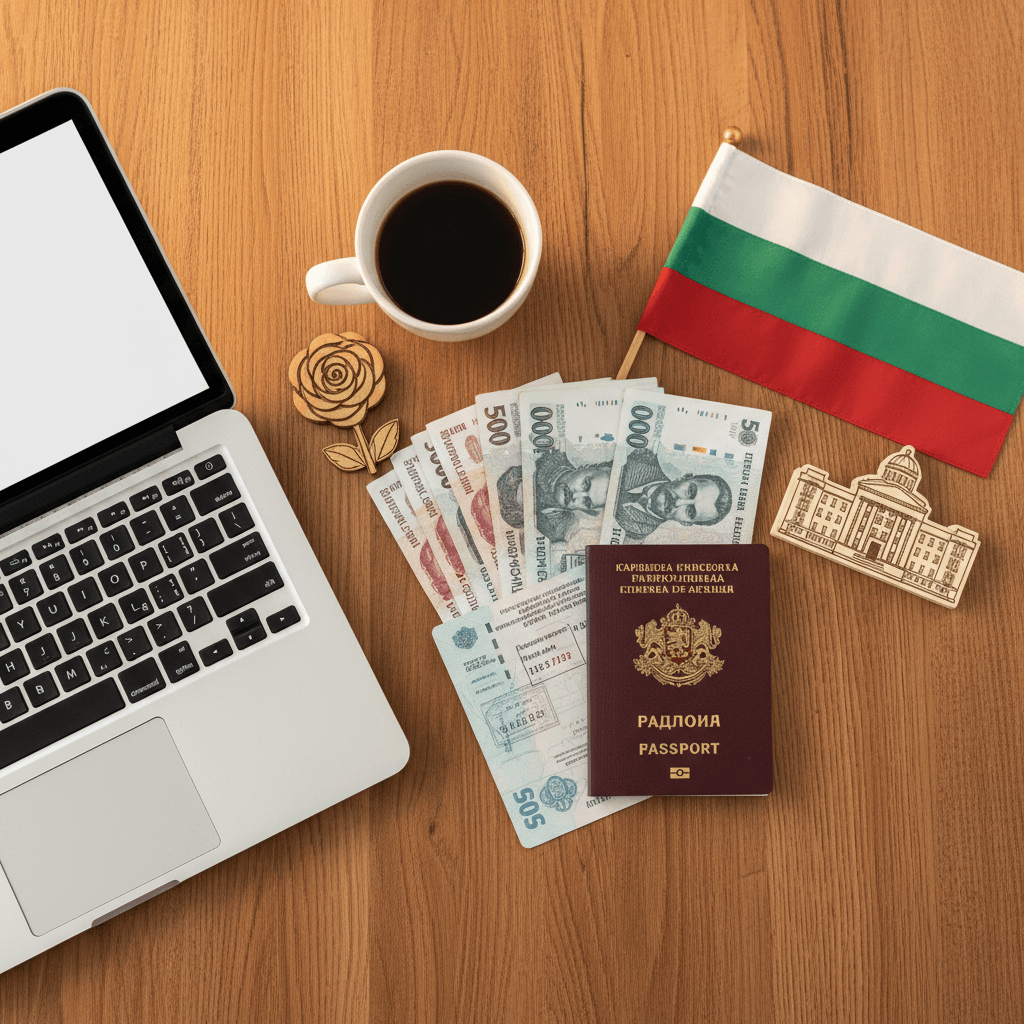
Bulgaria
Complete Digital Nomad Guide

Policy Stability
Stamped Nomad ExclusiveHow likely visa and immigration policies are to remain unchanged
Quick Facts
Nomad Visa Cost
$108
Income Requirement
$2,478/mo
Max Stay
24 months
Renewable
Yes
Cost of Living
$1,020/mo
Avg Internet
89 Mbps
Safety Score
7/10
Healthcare
Medium
Coworking
High
English Friendly
Medium
Time Zones
EET, EEST
Entry Methods Available
Best For
The Schengen Shift
Bulgaria’s entry into the Schengen Area on January 1, 2025, changed the game for digital nomads. Before this, Bulgaria was a popular "Schengen shuffle" destination where travelers could wait out their 90-day clock. Now, time spent in Bulgaria counts toward your total 90-day limit across the entire Schengen zone. If you have a Type C visa or come from a visa-free country, you get 90 days of sunshine and fast Wi-Fi within any 180-day window.
Visa-Free Entry
If you hold a passport from the USA, Canada, Australia, Japan, or the UK, you don't need to apply for a visa before flying into Sofia or Varna. You fall under the visa-exempt list, allowing you to breeze through immigration for stays up to 90 days. EU, EEA, and Swiss citizens have it even easier, with full freedom of movement to live and work in Bulgaria indefinitely, though you should register for a residence certificate if you stay beyond three months.
Short-Stay Visas (Type C)
For those who do need a visa for tourism or short business trips, the Type C is the standard choice. This visa now grants access to the entire Schengen Area, not just Bulgaria. Here are the quick facts on getting one:
- Cost: €90 for adults; €45 for children aged 6 to 12.
- Processing Time: At least 15 days, so don't book a last-minute flight before your sticker is in hand.
- Requirements: You'll need valid travel insurance, proof of funds, and a return ticket.
Keep in mind that Bulgaria does not offer a visa on arrival. You must coordinate with a Bulgarian embassy or a VFS Global center in your home country before you depart. Also, ignore any websites claiming to offer a Bulgarian E-Visa; the process remains paper-based and requires an in-person appointment.
Long-Stay Options (Type D)
If 90 days isn't enough to satisfy your Banitsa cravings, you will need a Type D visa. This is the gateway to long-term residency. It’s designed for people moving for work, study, or starting a business. Unlike the Type C, this visa usually lasts 6 to 12 months and allows for multiple entries. The application fee ranges between €100 and €200 depending on your specific situation.
Recent updates to the Foreigners Act in June 2025 have made the administrative side a bit smoother. For example, the deadline for Blue Card visa decisions has been extended to 30 days to ensure applications are handled thoroughly. You’ll also need to show health insurance covering at least 3 months when applying for your initial permits.
Business vs. Remote Work
It is important to distinguish between "business" and "employment." You can attend meetings, sign contracts, or scout office locations on a Type C visa. However, you cannot legally be hired by a Bulgarian company or receive a local salary on a short-stay visa. Digital nomads working for companies outside of Bulgaria generally operate within the 90-day tourist window, but those looking to settle long-term often explore the "Trade Representative" or "Freelance" pathways under a Type D visa to secure residency.
Extensions and Emergencies
Extending a Type C visa is notoriously difficult. It is generally only permitted for "force majeure" situations, such as a medical emergency or a serious humanitarian reason that prevents you from leaving. If you find yourself in this spot, head to the local Migration Office before your 90 days are up. You'll need to provide proof of your situation, updated insurance, and evidence that you have the financial means to support your extended stay.
The Legal Lowdown
Bulgaria has finally formalized what many of us have been doing for years. Under the updated Foreigners in the Republic of Bulgaria Act, the government introduced a specific residence permit tailored for remote workers. While everyone calls it a digital nomad visa, legally, it is a residency permit based on a long-stay Visa D. It is designed specifically for non-EU, non-EEA, and non-Swiss citizens who want to trade their home office for a view of the Balkan Mountains or the Black Sea.
The permit is open to three specific groups. First, employees of foreign companies. Second, owners or managers of foreign companies who hold at least a 25% stake. Third, freelancers with at least one year of experience. The golden rule across all categories is simple: you cannot provide services to Bulgarian companies or individuals. Your income must come entirely from abroad.
The Money Question
To qualify, you need to prove you are earning enough to support yourself without dipping into Bulgarian social funds. The government sets the bar at 50 times the previous year's minimum monthly wage. For those applying in 2025, this translates to roughly €27,550 annually. If you are planning your move for 2026, expect that number to jump to approximately €31,000 as the local minimum wage increases.
You will need to back these numbers up with solid paperwork. Bank statements, signed contracts, or tax documents are all fair game. The authorities want to see a consistent flow of foreign-sourced income that meets or exceeds these thresholds.
The Paperwork Path
The process starts at a Bulgarian embassy or consulate in your current country of residence. You cannot skip this step and apply from inside Bulgaria. You will apply for a Visa D, which carries a €100 fee and usually takes one to two months to process. You will need your passport, proof of remote work, a clean criminal record, and health insurance with at least €30,000 in coverage. You also need to show a signed lease or proof of accommodation in Bulgaria.
Once your Visa D is approved, you have a green light to enter the country. Within 14 days of arriving, you must head to the Ministry of Interior's Migration Directorate to register your residence. This takes another two to four weeks. After that, you apply for your physical ID card, which can take anywhere from 3 to 30 days depending on how much you pay for expedited service.
Duration and Taxes
The permit is granted for one year. You can renew it once for an additional year, giving you a total of two years in the country. It is important to remember that this specific permit does not lead to permanent residency; it is a temporary solution for the nomadic lifestyle. If you want to stay longer, you will need to look into other visa categories after your two years are up.
Taxation depends on how long you stay. If you spend 183 days or less in Bulgaria per year, you generally avoid becoming a Bulgarian tax resident. However, if you cross that 183-day threshold, you may be subject to Bulgaria's 10% flat income tax. It is one of the lowest rates in Europe, but you should definitely chat with a tax advisor to see how it interacts with your home country's tax laws and social security requirements.
Quick Facts
- Maximum Stay: 2 years (1-year initial permit + 1-year renewal).
- Local Work: Strictly prohibited; no Bulgarian clients or employers allowed.
- Family: You can apply for family reunification once your own permit is approved.
- Insurance: Mandatory health insurance with €30k minimum coverage.
- Housing: You must provide a formal rental contract as part of the application.
Bulgaria has officially stepped into the big leagues of European travel. Since joining the Schengen Area in early 2025, the rules for visiting the land of yogurt and roses have aligned with the rest of Western Europe. If you have spent time in France or Italy recently, those days count toward your limit here too. It is a seamless transition for travelers, but it means you need to keep a much closer eye on your calendar.
The 90-Day Rule for Visa-Free Travelers
If you carry a passport from the United States, Canada, Australia, or the UK, you likely fall under the visa-exempt category. You can roll into Bulgaria and stay for up to 90 days within any 180-day period without filing a single piece of paperwork beforehand. This is a rolling window, so if you leave for a week and come back, your clock does not reset; it just pauses.
At the border, be ready to show a few basics. While they do not always ask, guards have the right to request proof of travel insurance with €30,000 coverage, a return ticket, and proof that you have enough money to support yourself. Keep a digital copy of your accommodation booking handy just in case.
Applying for a Type C Schengen Visa
If your home country is not on the visa-exempt list, you will need to snag a Type C Schengen Visa before you fly. Bulgaria does not offer visas on arrival, and there is no digital e-visa system for tourists yet. You will need to book an appointment at a Bulgarian embassy or a VFS Global center in your home country.
The sweet spot for applying is about one to three months before your trip. The process usually takes at least 15 days, though it can stretch longer during the busy summer season. You will need to provide:
- A passport issued within the last 10 years with at least two blank pages.
- Recent passport-sized photos.
- Specific flight itineraries and hotel confirmations.
- Bank statements showing you can fund your stay.
Costs and Fees
Budgeting for your visa is straightforward, though the fees are non-refundable even if your application is denied. The standard Type C visa fee sits between €80 and €107. If you are planning a longer move and applying for a Type D visa, expect to pay between €100 and €200 depending on your specific situation. Fees are often waived or reduced for children under six and students.
The Myth of the Border Run
In the old days, nomads would hop over the border to Turkey or Serbia for a weekend to "reset" their Bulgarian visa. Those days are over. Since Bulgaria is now part of the unified Schengen tracking system, your entry and exit stamps are logged in a central database. Leaving the zone for a day does not reset your 90-day allowance. If you try to game the system, you risk heavy fines and a five-year ban from entering any Schengen country, which includes most of Europe.
Extensions and Overstays
Extending a tourist visa is notoriously difficult. The Migration Directorate generally only grants extensions for "force majeure" events, like a serious medical emergency or a natural disaster that prevents travel. If you overstay without a very good reason, the penalties are stiff. Beyond the immediate 500 BGN fine, you face deportation and a black mark on your record that will make future European travel a nightmare.
For those who fall in love with the Balkan lifestyle and want to stay longer than three months, the tourist visa is not the right path. You will need to exit the country and apply for a Type D long-stay visa, which serves as the gateway to a residency permit. This is handled by the Ministry of Interior's Migration Directorate once you arrive with the correct entry clearance.
Bulgaria is quickly becoming a favorite for remote workers who want to stretch their euros without sacrificing a high quality of life. While EU citizens can simply show up and register, those coming from outside the bloc have a few clear paths to call this country home for the long haul. Most journeys begin with a Type D visa applied for at an embassy abroad, which eventually converts into a residence permit once you land on Bulgarian soil.
The Freelancer Route
If you are a self-employed nomad or a remote worker with a solid track record, the Freelance Permit is your best bet. You will need to show at least one year of professional experience and a detailed business plan. The government wants to see that you have foreign clients and a steady income; specifically, you should be earning around €27,500 per year (calculated as 50 times the minimum wage).
The initial permit is usually good for one year and can be renewed. You will also need to provide proof of local accommodation, health insurance, and a clean criminal record. Expect to pay application fees ranging from BGN 100 to BGN 500, plus the costs for the physical residence card.
Retirement in the Balkans
Bulgaria has one of the most accessible residency programs for retirees in Europe. There is no strict age requirement; as long as you receive a pension from any country, you are eligible. This makes it a popular choice for early retirees looking for a low cost of living and a central European base.
- Income: You must prove monthly income at least equal to the Bulgarian minimum wage, which is roughly BGN 1,000 (€510).
- Fees: The state application fee is a modest BGN 10, while the permit issuance costs between BGN 45 and BGN 225 depending on processing speed.
- Process: Apply for the Type D visa in your home country first, then finalize the permit at the Migration Directorate after arrival.
Investment and Permanent Residency
For those with significant capital who want to skip the annual renewal cycle, the investment path offers a direct route to permanent residency. By investing €512,000 (BGN 1 million) into approved funds or projects, you can secure permanent status without a prior stay requirement. This status is valid indefinitely, though the physical card is refreshed every five years.
If you prefer the slow and steady route, you can qualify for permanent residency after five years of continuous legal stay. During this period, you cannot be absent from the country for more than 30 months total. The permanent permit carries a one-time fee of BGN 1,000 and grants you many of the same rights as Bulgarian citizens, minus the right to vote.
Key Requirements for All Applicants
Regardless of which path you choose, the Migration Directorate requires a standard set of documents for every application. Keep these ready to avoid delays at the government office:
- Proof of Funds: Bank statements showing you can support yourself without relying on the Bulgarian social system.
- Accommodation: A notarized rental contract or proof of property ownership.
- Health Insurance: A policy valid in Bulgaria with coverage for at least €30,000.
- Criminal Record: A legalized and translated background check from your home country.
Official Government Resources
Navigating the bureaucracy is easier when you go straight to the source. These departments handle the heavy lifting of your application:
- Migration Directorate: The primary body under the Ministry of Interior that processes all residence permits once you are in the country.
- Ministry of Foreign Affairs: This is where you start your journey by applying for the initial Type D long-stay visa.
- Point of Single Contact (eGov): A helpful portal that provides English-language overviews of stay types and links to the necessary Bulgarian forms.
The Economics of Living in Bulgaria
Bulgaria remains one of the most compelling value propositions for digital nomads in 2025 and 2026. While inflation has touched every corner of Europe, this Balkan gem still offers a lifestyle that costs roughly 50% to 60% less than what you would pay in London, Paris, or Berlin. You can expect a monthly burn rate between €800 and €2,500, though most nomads find their "sweet spot" at the €1,400 mark.
The local currency is the Lev (BGN), pegged to the Euro at a rate of approximately €1 to 1.96 BGN. While card payments are standard in Sofia and major hubs, keeping cash on hand is still a smart move for smaller mountain villages or local markets. Here is how the costs break down across the four primary nomad bases.
Sofia: The Tech Capital
The capital offers the most "Western" experience with a price tag to match. It is the only city where premium budgets can easily climb toward the €2,500 mark if you opt for a luxury apartment in Lozenets or Vitosha.
- 1BR Rent: €400–€500 (Budget), €500–€600 (Comfortable), €700+ (Premium)
- Food & Dining: €200–€600 depending on how often you hit the trendy spots in the center.
- Coworking: Dedicated desks average €100–€150 per month.
- Transport: A monthly public transit pass is a steal at roughly €30.
Plovdiv: The Cultural Hub
Plovdiv is generally 10% to 15% cheaper than Sofia and offers a much slower pace of life. It is perfect for those who want a walkable city with a massive creative heart.
- 1BR Rent: €350–€450 (Budget), €450–€550 (Comfortable), €600+ (Premium)
- Food & Dining: €200–€500; the Kapana district has excellent mid-range options.
- Coworking: Expect to pay €80–€120 for a solid desk setup.
- Transport: Very walkable, but a monthly pass is only €20–€25.
Varna: The Maritime Escape
Varna’s pricing is seasonal. If you arrive in the height of summer, expect to compete with tourists for short-term rentals. In the off-season, you can find incredible deals near the Sea Garden.
- 1BR Rent: €400–€500 (Off-season), €500–€600 (Comfortable), €700+ (Summer peaks)
- Food & Dining: €200–€550; seafood is high quality and affordable.
- Coworking: Monthly rates hover around €100–€140.
- Transport: Reliable bus network for €20–€25 monthly.
Bansko: The Nomad Village
Bansko is legendary for having one of the lowest costs of living for nomads globally. Because it is a mountain town, your biggest expense outside of rent will likely be your ski pass or mountain bike rentals.
- 1BR Rent: €300–€400 (Budget), €400–€500 (Comfortable), €600+ (Premium)
- Food & Dining: €180–€400; traditional "Mehanas" offer massive portions for very little money.
- Coworking: The community is huge here, with passes ranging from €100–€150.
- Transport: Mostly walkable, but local buses are around €20–€30.
Understanding Your Budget Tier
The Budget Tier (€800–€1,000): This lifestyle involves living like a local. You will likely stay in a studio or a shared apartment slightly outside the historic centers, cook most of your meals, and use the excellent public transport systems. Bansko is the best place to make this budget feel like a luxury.
The Comfortable Tier (€1,200–€1,600): This is where most nomads land. You can afford a modern 1BR apartment in a trendy neighborhood, eat out several times a week, maintain a dedicated coworking membership, and have a comprehensive private health insurance plan. Private insurance is a requirement for many visas and usually costs between €80 and €120 per month for high-quality international coverage.
The Premium Tier (€2,000–€2,500): At this level, you are living in the best real estate Bulgaria has to offer. This covers penthouses in Sofia, frequent fine dining, private car transport or taxis, and top-tier health insurance with €30,000+ in coverage. Even at this "high" end, you are still spending significantly less than you would for a basic lifestyle in New York or San Francisco.
1. Bansko: The Mountain Mecca
Bansko is the undisputed heavyweight champion of the European digital nomad scene. What started as a modest ski resort has transformed into a year-round hub for remote workers. The draw here isn't just the scenery; it's the density of the community. With over 10+ coworking spaces like Nestwork and Coworking Bansko, you are never more than five minutes away from a potential business partner or a hiking buddy.
- The Vibe: Small town, high energy. You'll find daily events ranging from morning yoga to communal dinners and skill-sharing sessions.
- Cost of Living: Expect to pay around €250/month for a studio. A comfortable lifestyle is easily achievable on €1,000/month.
- The Trade-off: It is a small town. If you need a different five-star restaurant every night or a sprawling metro system, you might feel claustrophobic after a few months.
2. Sofia: The Urban Powerhouse
If you thrive on big-city energy, Sofia is the place to be. It houses the country's largest startup ecosystem and offers the most diverse range of coworking offices, including premium spots like Work Better and NETWORKING. It feels like a proper European capital, blending gritty Soviet-era architecture with trendy rooftop bars and lush parks.
- The Connectivity: Internet speeds average 77.6 Mbps, and the city is packed with work-friendly cafes around Vitosha Boulevard.
- The Nightlife: From hidden jazz bars to massive techno clubs, the social scene is active seven days a week.
- The Trade-off: Air pollution can get heavy during the winter months. It is also the most expensive city in Bulgaria, with monthly costs averaging $1,373.
3. Plovdiv: The Creative Sanctuary
Plovdiv is one of the oldest continuously inhabited cities in the world, and you feel that history in every cobblestone street. It is the artistic soul of Bulgaria, attracting creatives and slow-travelers who prefer galleries and ancient Roman theaters over high-rise office blocks.
- The Budget: This is arguably the most affordable major city in the country. Total monthly costs hover around $836, with rent as low as $251.
- The Safety: Plovdiv is consistently rated as one of the safest urban areas in Bulgaria, making it a favorite for solo travelers.
- The Trade-off: The nomad community is smaller than Bansko's, and you will find fewer people who speak fluent English compared to the capital.
4. Varna: The Summer Playground
Varna is the "Sea Capital" of Bulgaria. During the summer, the city explodes with life as nomads flock to the 8+ kilometers of beaches. Innovator Coworking provides a solid base for those who need a professional environment before heading to the beach bars for sunset.
- The Lifestyle: It is all about the water. Between kite surfing and beach volleyball, it’s hard to stay glued to a screen here.
- The Social Scene: The nightlife in the summer is legendary, with clubs like PORTe staying packed until sunrise.
- The Trade-off: The city feels very different in January. Many seasonal businesses close, and the coastal wind can be biting.
5. Burgas: The Coastal Alternative
Burgas is Varna’s more relaxed, less touristy sibling. While it lacks the massive club scene of the north, it offers a more authentic Bulgarian experience. The introduction of Burgas Coliving has started to put it on the map for nomads looking for a built-in social circle by the sea.
- The Coliving: Having a dedicated coliving space makes it much easier to integrate and find friends quickly in a city where the nomad infrastructure is still developing.
- The Environment: It is less crowded than Varna during the peak July-August rush, offering a more tranquil pace of life.
- The Trade-off: Coworking options are limited outside of the main coliving hub, and the nightlife is significantly quieter.
Quick Comparison
- Bansko: Best for community and mountain sports. Monthly cost: €1,000.
- Sofia: Best for networking and urban amenities. Monthly cost: $1,373.
- Plovdiv: Best for budget-conscious creatives. Monthly cost: $836.
- Varna: Best for beach lovers and summer parties. Monthly cost: Budget-friendly.
- Burgas: Best for a quiet, communal seaside stay. Monthly cost: Budget-friendly.
High-Speed Connectivity Without the High Price Tag
Bulgaria is a bit of a hidden champion when it comes to the internet. While other European hubs struggle with outdated copper wires, Bulgaria skipped straight to fiber. You can expect median fixed broadband speeds around 85 Mbps, but that is really just the baseline. In most urban apartments, fiber connections reaching 200 Mbps to 1 Gbps are standard and incredibly cheap, often costing between 11 BGN and 40 BGN per month.
The mobile data situation is even more impressive. Bulgaria currently ranks as the fastest mobile network in Europe, with 5G speeds frequently topping 400 Mbps in city centers. This makes tethering a perfectly viable backup plan if you decide to work from a park or a remote mountain terrace. Even in rural areas, internet penetration stays high at over 84%, so you are rarely truly off the grid unless you choose to be.
Top Coworking Hubs
The coworking scene here is anchored by a few heavy hitters that have turned Bulgaria into a legitimate nomad destination. Networking Premium is the dominant player, operating over 10 locations across Sofia, Plovdiv, and Bansko. Their spaces are known for 24-hour access and a high-tech vibe, often doubling as event venues for the local tech community.
If you are heading to the mountains, Coworking Bansko is the legendary heart of the nomad village. It is less of an office and more of a community center where work blends into après-ski drinks and weekend hikes. In Plovdiv, Regus offers a more corporate, polished environment at locations like Kamenitza Park, which is ideal if you need a professional backdrop for client calls.
- Networking Premium: Best for variety and 24/7 access across multiple cities.
- Coworking Bansko: Best for community-driven nomads and mountain lovers.
- WorkBetter (Sofia): Best for a boutique feel with an excellent on-site café.
- Regus (Plovdiv): Best for flexible, short-term professional rentals.
Membership Costs and Budgeting
Your budget goes a long way here compared to Western Europe or North America. A monthly pass at a top-tier coworking space usually falls between €75 and €199. If you are looking for an all-in-one solution, coliving spaces are a popular shortcut. These typically range from €599 to €1,095 per month, which covers your boutique accommodation, utilities, high-speed WiFi, and a dedicated desk in the coworking area.
For those living in Sofia, expect your total monthly "work and play" expenses (including coworking and gym memberships) to hover between €100 and €200 on top of your rent. In smaller towns like Bansko, monthly coworking memberships specifically sit around the €129 to €149 mark.
The Café Office Culture
Sofia is packed with "laptop-friendly" cafes. Most specialty coffee shops expect people to work from their tables and provide free WiFi that easily hits 50 to 100 Mbps. While the connection is generally rock solid, some remote spots or older buildings might have thick stone walls that mess with the signal. It is a smart move to keep a local SIM card handy for those rare moments when the router needs a reboot.
Getting Connected: Mobile Data Plans
Don't bother with expensive international roaming. Pick up a local prepaid SIM as soon as you land. The three main providers are A1, Vivacom, and Yettel. They all offer 5G and allow you to use your data across the EU at domestic rates.
Vivacom
- 30-Day Plan: $6.70 to $11.10
- Data Allowance: 12GB to 25GB
- Best for: Overall value and solid 5G coverage.
A1 Bulgaria
- 30-Day Plan: $16.56
- Data Allowance: 5GB (Higher tiers available)
- Best for: Reliability in more rural regions.
Yettel
- Weekly Plan: $10.26
- Data Allowance: 700MB (Better for short-term tourists)
- Best for: Quick setups and easy-to-find kiosks.
The Lay of the Land
Bulgaria is a bit of a hidden gem when it comes to medical care. You get access to highly trained doctors and modern facilities at a fraction of the price you would pay in London or New York. While the public system keeps the country running, most nomads and expats gravitate toward the private sector for efficiency and English speaking staff.
The public healthcare system, funded by the National Health Insurance Fund (NHIF), provides basic coverage for things like emergency visits and hospitalizations. It is underfunded by EU standards, which shows in the aging infrastructure of state hospitals. If you are in a major hub like Sofia, Plovdiv, or Varna, you will find excellent care. In rural villages, the options are much thinner.
Private Healthcare: The Nomad Choice
Private clinics are where you will likely spend your time. They offer shorter wait times and equipment that rivals any Western European facility. A specialist consultation usually runs between €20 and €40, while an ultrasound might cost you €25 to €50. These prices are often 50% to 70% cheaper than what you'd find in the West.
Two facilities stand out for high end care:
- Acibadem City Clinic Tokuda Hospital: This is the big one in Sofia. It is JCI accredited and features robotic surgery and advanced imaging. It is a massive multidisciplinary hub that feels more like a high end hotel than a hospital.
- Uni Hospital: Located in Panagyurishte, this facility represents a massive recent investment in Bulgarian health. It covers 30 medical specialties and holds international accreditation for medical travel.
Insurance Requirements and Costs
If you are staying long term or applying for the digital nomad visa, insurance isn't optional. EU citizens can use their EHIC card for public services, but everyone else needs a plan. For those on a residency permit, you will eventually contribute about 8% of your gross salary to the public system, though many nomads stick to private plans for better access.
Here is a breakdown of what you can expect to pay for annual coverage:
- Visa/Residence Permit Plan: Costs €50–€150. This satisfies the legal requirements with €30,000–€60,000 in coverage.
- Basic Local Plans: Costs €120–€240. Includes outpatient care and hospitalization up to €30,000.
- Standard Plans: Costs €240–€360. Offers higher limits up to €50,000 and includes medical evacuation.
- Premium International Plans: Costs €360–€600+. This is the "no worries" option with €100,000+ coverage and full private access.
Out of Pocket Expenses
If you decide to pay as you go for minor issues, the costs are very manageable. Most private hospitals have direct billing with international insurers, so you might not even have to reach for your wallet.
- General Practitioner Visit: €20–€40
- Specialist Visit: €30–€50
- Blood Work: €20–€50
- X-ray or MRI: €50–€150
- Private Hospital Room: €50–€100 per day
World Class Dental Care
Bulgaria is a major destination for dental tourism because the quality is high and the prices are incredibly low. You can get a composite filling for €30 to €60 or a dental implant with a crown for €450 to €800. Even complex root canals rarely exceed €100 per canal. Many nomads schedule their annual checkups specifically for their time in Bulgaria to save hundreds of euros.
Pharmacies and Emergencies
Pharmacies are everywhere in Bulgarian cities, and many pharmacists speak enough English to help you find what you need. The country uses electronic prescriptions, which makes refills straightforward. For emergencies, the national system operates 24/7. While emergency care is covered under mandatory insurance, you might pay a tiny co-payment of about €2 per day for hospital stays or €1.50 for a GP visit.
Setting Up Local Banking
Opening a bank account in Bulgaria is surprisingly accessible for foreigners, even if you haven't secured long-term residency yet. Most major branches are accustomed to international clients, though the paperwork can feel a bit old-school. You will generally need your valid passport, a local address (a rental contract usually works), and a small initial deposit between 10 and 50 BGN.
While you can walk into a branch and start the process, don't expect to walk out with a card. It typically takes about one week for your debit card to be ready. You can choose to have it mailed to your apartment or pick it up at the branch. Major players like UniCredit Bulbank, DSK Bank, and Postbank are reliable choices, and many offer multi-currency accounts so you can hold EUR or USD alongside your BGN.
The Digital Nomad Favorites: Wise and Revolut
If you prefer to skip the traditional banking bureaucracy, digital banks are widely embraced here. Revolut is particularly popular among locals and expats alike. With a standard account, you can exchange up to 2,000 BGN per month without fees, though keep in mind that weekend exchanges trigger a 1% surcharge. If you plan on moving larger sums, the premium tiers remove those exchange caps entirely.
Wise is the better bet for those who prioritize the mid-market exchange rate without the weekend markup. Their transparent fee structure usually lands between 0.35% and 1%. Both services provide physical cards that work flawlessly at Bulgarian point-of-sale terminals, from high-end Sofia restaurants to small mountain town grocery stores.
Managing Cash and ATM Strategy
Bulgaria is still a cash-heavy society once you step outside the major cities or visit smaller shops. ATMs are everywhere, but they aren't all created equal. You should prioritize machines owned by local banks like UBB or UniCredit. Avoid the generic "commercial" ATMs found in tourist heavy areas, as they often charge predatory fees.
Many local machines have a frustratingly low daily withdrawal limit of 200 BGN. When the screen asks if you want the ATM to "convert" the currency for you, always decline. This is a Dynamic Currency Conversion trap; always choose to be charged in the local BGN currency to let your home bank handle the conversion rate.
- Revolut Limits: Free withdrawals up to €200 monthly, then a 2% fee applies.
- Wise Limits: 2 free withdrawals per month, followed by a flat fee of £0.50 plus 1.75% on the remaining amount.
Moving Money Internationally
If you need to pay rent via bank transfer or send money to a local friend, you have a few solid paths. Wise remains the gold standard for speed and cost, often landing transfers in a Bulgarian account within minutes. Xe is a strong alternative if you need someone to pick up physical cash, boasting over 5,500 pickup locations across the country.
Traditional services like Western Union and MoneyGram are available but generally more expensive. For most nomads, a combination of a Wise account for transfers and a Revolut card for daily spending covers every base.
Cryptocurrency and Regulation
Bulgaria is a crypto-friendly destination with a clear legal framework. The country operates under the EU's MiCA regulations, and as of July 2025, the Crypto Assets Act provides a structured licensing system for service providers. The Bulgarian National Bank and the Financial Supervision Commission keep a close eye on the sector to ensure security and compliance.
For the individual nomad, you don't need a special license to trade for yourself. Any gains you make from selling cryptocurrency are taxed as income from financial assets. It is a straightforward system that makes Bulgaria one of the more attractive spots in Europe for those living off digital assets.
Dependent Visa Options
Moving your family to Bulgaria involves a two step process centered on family reunification. To sponsor your spouse and children under 18, you generally need to have held your own long term residence permit for at least one year. You will need to prove you can support them with a minimum income of roughly 1,077 BGN (€550) per month and provide evidence of a long term housing lease.
Once the Migration Directorate approves the reunification, your family applies for a Type D visa at a Bulgarian embassy. The fee is €100 for adults, while children under 12 usually get theirs for free. After arriving, they receive a residence permit valid for up to one year, which is renewable alongside your own status.
International Schools
Most nomad families gravitate toward Sofia because it holds the highest concentration of international education options. You will find curricula ranging from the International Baccalaureate (IB) to the British National Curriculum. Prices vary significantly based on the age of the child and the prestige of the institution.
- Zlatarski School: Expect to pay between €8,890 and €12,680 per year for grades 5 through 12.
- British School of Sofia: This is a premium option with fees ranging from €15,300 to €16,600 annually.
- General Market Rate: Other international schools in the city typically fall between €5,000 and €20,000 per year.
Budget an extra €1,000 to €3,000 per year if you need school bus transport or specialized extracurricular activities. While these costs are high for Bulgaria, they remain competitive compared to Western European capitals.
Healthcare for Children
Once you have your long term residence sorted, your children can access the public healthcare system much like locals do. This includes routine check ups and mandatory vaccinations. A major perk for residents is that prescriptions for children under 7 years old are free for acute infections.
You will need to register with a local GP to get a pediatrician referral. While public care is functional, many nomads opt for private insurance to skip the lines and access English speaking doctors. Basic health insurance for visa purposes costs about €19 per month, but a more robust private plan is a smart investment for peace of mind.
Where to Live
Sofia is the logical choice for jobs and schooling, but it is a busy capital. For a better quality of life, look at neighborhoods like Lozenets or Boyana. These areas are greener, quieter, and offer more space for kids to play away from the city center traffic.
If you prefer the coast, Varna and Burgas offer a more relaxed pace. These cities have excellent sea gardens, which are massive coastal parks perfect for families. Plovdiv is another strong contender, offering a blend of ancient culture and modern amenities without the frantic energy of Sofia.
Childcare and Daily Costs
Bulgaria is one of the most affordable places in Europe for childcare. If you can secure a spot in a public kindergarten, the cost for foreigners is a modest €35 to €50 per month. However, these spots are competitive and often have long waiting lists.
- Private Kindergartens: These usually cost between €170 and €300 per month, often including meals.
- High-end Nurseries: Premium full day care centers like KidsBee can cost up to €700 per month.
- Babysitting: Private sitters generally charge around €6 per hour for casual care.
Safety Considerations
Bulgaria is statistically very safe and ranks in the top 20% of countries globally for family security. Violent crime is rare, and you will often see children playing outside well into the evening. The biggest safety concern is actually traffic, particularly in Sofia. The city lacks widespread school zones and drivers can be aggressive, so close supervision near roads is a must.
Standard city precautions apply. Keep an eye on your belongings in crowded tourist spots like Sunny Beach or central Sofia to avoid pickpockets. Overall, the culture is very welcoming toward children, and you will find that most restaurants and public spaces are family friendly.
Staying Safe on the Ground
Bulgaria is one of those places where you can breathe easy. It carries a Level 1 safety rating from the U.S. State Department, putting it on par with most stable European nations. Violent crime against foreigners is rare. You are far more likely to deal with a persistent taxi driver than any physical threat.
That said, keep your wits about you in crowded spots. Sofia’s central bus and train stations, along with the busy pedestrian stretches of Vitosha Boulevard, are magnets for pickpockets. Sunny Beach and other Black Sea resorts see a spike in petty theft during the summer months. Just use the same common sense you would in London or Rome, and you will likely have a trouble-free stay.
Avoiding the Local Hustle
The most common headaches for nomads come in the form of "tourist taxes" and minor scams. Taxis are the main culprit. Always use official apps like Yellow or TaxiMe rather than hailing a car on the street, especially at the airport or train stations. Unregulated drivers often use rigged meters that can triple the price of a standard fare.
Be wary of "fake police" who might ask to check your wallet for counterfeit bills; real officers will never do this on the street. In public transport, always validate your ticket immediately. Plainclothes inspectors can be aggressive with fines if you are caught unaware. If you are heading to a strip club in a resort town, be extremely careful. These spots are notorious for inflating bills and using intimidation to force payment.
The "Yes" and "No" Paradox
One of the first things you will notice is the head-nodding confusion. In Bulgaria, a shake of the head usually means "yes," while a nod means "no." It is incredibly easy to accidentally order the wrong coffee or agree to something you did not intend. Until you get the hang of it, stick to verbalizing your answers. A simple "Da" (yes) or "Ne" (no) saves a lot of frustration.
Bulgarians might seem stoic or even "grumpy" at first glance, but it is rarely personal. They value directness and sincerity over performative politeness. When you are out for drinks, make direct eye contact when toasting and say "Nazdrave." It is considered rude to look away during the clink.
LGBTQ+ and Social Acceptance
The legal framework in Bulgaria protects against discrimination in housing and jobs, but the social climate is conservative. In Sofia, you will find a small, resilient queer scene with friendly bars and clubs. However, public displays of affection can still draw unwanted attention or harassment, especially in smaller towns and rural areas.
Nomad communities in places like Bansko are generally very inclusive, but broader Bulgarian society remains traditional. Transgender rights are particularly limited, and gender identity is not widely understood outside of younger, urban circles. Discretion is often the safest path when traveling through the provinces.
Breaking the Language Barrier
You can get by with English in Sofia, Plovdiv, and the big tech hubs. The younger generation and the nomad community speak it fluently. However, once you step into a local bakery or travel to a mountain village, English disappears. The Cyrillic alphabet is the biggest hurdle for most newcomers.
Learning the alphabet takes about an afternoon and makes life 100% easier. Being able to read "Pharmacy" or "Supermarket" on a sign changes your entire experience. Use Google Translate’s camera feature for menus, but try to learn basic greetings like "Zdravei" (Hello) and "Blagodarya" (Thank you). Locals appreciate the effort and will usually warm up to you instantly.
Finding Your Tribe
The expat and nomad scene here is surprisingly tight-knit. Sofia is the heart of the tech community, but Bansko has become a world-famous magnet for digital nomads who want mountain air and low costs. Plovdiv offers a more artistic, bohemian vibe for those who prefer a slower pace.
- Sofia: Join the "Expats in Sofia" Facebook group, which has over 30,000 members. It is the best place for housing leads and legal advice.
- Bansko: This is a village-style community where you will see the same faces at coworking spaces and evening hot spring trips.
- Meetups: Look for InterNations events or weekly nomad "coffee mornings" in the major cities to build a social circle quickly.
Social integration happens fastest when you lean into local traditions. Don’t be afraid to join a mountain hiking group or attend a local festival. Bulgarians are fiercely proud of their land and history; showing genuine interest in their culture is the fastest way to turn a local acquaintance into a lifelong friend.
Understanding Tax Residency
Bulgaria is famous among the nomad community for its 10% flat tax, but you don't automatically get that rate just by showing up. Residency is usually triggered by the 183-day rule. If you spend more than 183 days in the country during any 12-month period, you are considered a tax resident for the calendar year in which you hit that threshold. Days spent for education or specific medical treatments are generally excluded from this count.
There is also the "center of vital interests" test. Even if you stay fewer than 183 days, the authorities might claim you as a resident if your primary home, family, or business activities are rooted in Bulgaria. If you are planning to stay long-term on a nomad visa, it is smart to track your entry and exit dates to avoid any surprises. To prove your status to your home country and avoid being taxed twice, you can request a Tax Residency Certificate from the National Revenue Agency (NRA).
The 10% Flat Tax and Freelancer Incentives
The headline rate is a straightforward 10% on worldwide income for residents. However, if you are working as a freelancer or self-employed person, the deal gets even better. Bulgaria allows a 25% deemed expense deduction. This means the government assumes 25% of your gross income went toward business costs, so you only pay tax on the remaining 75%. This brings your effective income tax rate down to 7.5%.
You also need to account for social security contributions. These are capped at a maximum monthly income of 3,850 BGN. Even if you earn significantly more, your social security payments won't increase past that ceiling. Non-residents are only taxed on income sourced directly from within Bulgaria, usually at that same 10% rate.
Crypto and Digital Assets
Bulgaria treats crypto gains simply. Profits from selling or exchanging digital assets are taxed at 10%. Similar to the freelancer setup, you get a 10% fixed cost allowance, meaning you are taxed on 90% of your total gains. You must declare these trades in your annual return. If you are trading at a high volume that looks more like a professional business, the NRA might categorize you under corporate rules, though the rate remains a consistent 10%.
Double Taxation Relief
You likely won't have to pay tax to two different governments on the same Euro. Bulgaria has signed double taxation treaties with over 70 countries, including the US, UK, Canada, and most of the EU. These treaties provide a framework to decide which country has the primary right to tax your income. Usually, you will receive a tax credit in your home country for any taxes paid to the Bulgarian NRA.
Reporting Requirements
Staying compliant requires a bit of paperwork, but the online portal is relatively modern if you have a PIC (Personal Identification Code) or an e-signature. Here are the dates to remember:
- Annual Tax Return (Form 50): Due by April 30 each year.
- Early Bird Discount: File by March 31 to receive a 5% discount on your tax bill, capped at 500 BGN.
- Quarterly Advances (Form 55): Self-employed individuals must pay estimated taxes by April 30, July 31, and October 31.
- VAT Registration: Required only if your turnover exceeds 166,000 BGN.
If you are moving large sums of money into or out of the country, you may also need to report those transactions to the Bulgarian National Bank. Most nomads find that hiring a local accountant for a few hundred Euro a year is the best way to handle these filings without the headache.
Connectivity and SIM Cards
Staying connected in Bulgaria is both easy and incredibly cheap. If you have an eSIM-compatible phone, Airalo is the path of least resistance. You can snag 30GB for about $16 USD and activate it the second your plane touches the tarmac. It saves you the hassle of hunting down a physical store while hauling luggage.
For those who prefer a local physical SIM, head to an official Vivacom, A1, or Yettel shop. Vivacom generally offers the most reliable coverage across the mountains and rural areas. You can pick up a prepaid starter pack with 12GB of data and 800 minutes for roughly $7 USD. Avoid the small kiosks at the airport that inflate prices; stick to the branded carrier stores in the city center where you don't even need to show an ID as a tourist.
Getting Around
The golden rule for transportation in Bulgaria is to use apps rather than hailing taxis on the street to avoid the "tourist tax." Moby is the go-to ride-hailing app in Sofia, Plovdiv, Burgas, and Varna. It provides transparent pricing, and a standard ride usually starts around €0.80.
For public transit, MPass is your best friend for cashless tickets in Sofia and Plovdiv. If you are navigating Sofia’s network of trams and the metro, SofiaBus or Sofia Public Transport Live provides real-time tracking so you aren't standing in the cold. Google Maps works surprisingly well for bus routes and schedules in the capital.
Where to Set Up Base
Choosing the right neighborhood changes your entire experience. Sofia is the primary hub, but Plovdiv offers a more laid-back, artistic alternative.
- Lozenets (Sofia): The premier nomad choice. It is upscale, leafy, and packed with specialty coffee shops and coworking spaces. A one-bedroom here typically runs between €600 and €900 per month.
- Oborishte (Sofia): Perfect if you want an old-world European feel. It is home to many galleries and embassies with a very safe, quiet atmosphere.
- Studentski Grad (Sofia): The budget-friendly option. It is loud and energetic, with apartments ranging from €350 to €550 per month.
- Kapana (Plovdiv): Known as "The Trap," this is the creative heart of Plovdiv. It is incredibly walkable, and you can find central apartments for €200 to €300 per month.
Finding a Rental
Skip the long-term commitment of local real estate agents. Flatio is the best resource for nomads because they offer monthly rentals with no deposits and include utilities and WiFi in the price. Expect to pay €400 to €700 for a solid one-bedroom in Sofia. Coliving.com is another great shout for those looking for an instant community, with rooms ranging from €300 to €600. If you are heading to the mountains, look into Bansko Nomad Apartments for verified setups that actually have desks and high-speed internet.
Daily Life and Apps
When you don't feel like cooking, Glovo is the dominant delivery app. It covers everything from traditional banitsa and shopska salad to international favorites. Delivery is fast, and the app handles payments seamlessly.
While most young people in big cities speak English, learning the Cyrillic script and a few basics will go a long way. Use Mondly or Ling to learn phrases like "Zdraveyte" (Hello) and "Kolko struva?" (How much?). It makes a massive difference when shopping at local markets or traveling outside the main hubs.
Safety and Emergencies
Bulgaria is generally very safe, but keep 112 saved in your phone. This is the universal emergency number for police, fire, and ambulance services, and they do have English-speaking operators. For more specific needs, you can use these direct lines:
- Police: 166
- Ambulance: 150
- Fire: 160
- Traffic Police: 165
Common Pitfalls to Avoid
The low cost of living in Bulgaria is a double-edged sword. It is easy to overspend on dining out every night, so keep a loose budget. Always secure your data with a VPN when using public WiFi in cafes, and get your local SIM immediately to avoid surprise roaming charges from your home provider. If you plan on staying longer than 90 days, start your Type D visa paperwork early, as Bulgarian bureaucracy is notoriously slow. Finally, pack for the seasons; the winters are genuinely cold and require more than just a light jacket.
More Guides from Europe
Stay Updated on Bulgaria
Get notified about visa changes, policy updates, and new information for digital nomads in Bulgaria.