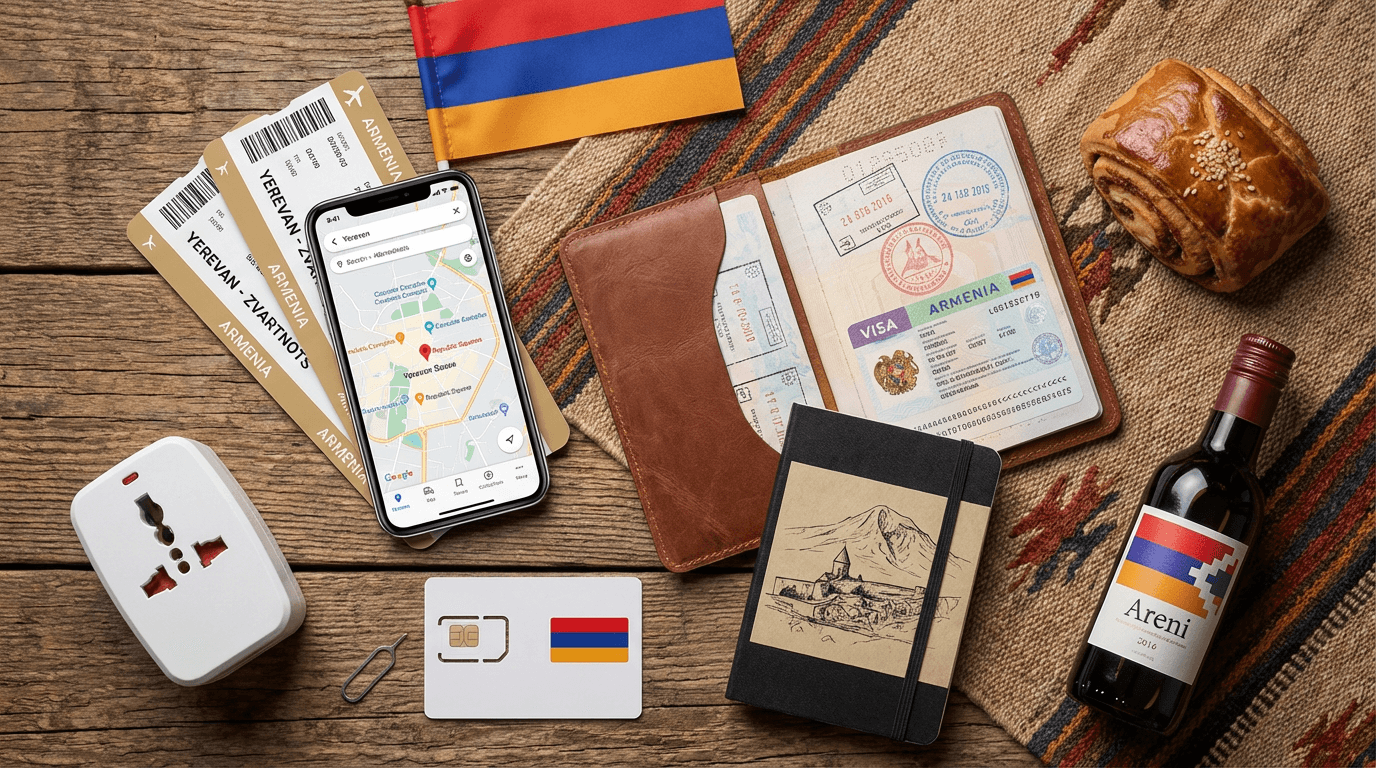
Armenia
Complete Digital Nomad Guide

Policy Stability
Stamped Nomad ExclusiveHow likely visa and immigration policies are to remain unchanged
Quick Facts
Nomad Visa Cost
N/A
Max Stay
6 months
Renewable
Yes
Cost of Living
$1,200/mo
Avg Internet
50 Mbps
Safety Score
8/10
Healthcare
Medium
Coworking
High
English Friendly
Medium
Time Zones
GMT+4
Entry Methods Available
Best For
Your Path to the Caucasus
Armenia is surprisingly open for travelers, offering a mix of generous visa-free periods and a streamlined digital application process. For most nomads, getting into the country is the easy part; the challenge is usually deciding how long you can afford to stay away from the rest of the world once you've settled into a Yerevan cafe.
The 180-Day Freedom
If you hold a passport from the United States, United Kingdom, EU, Australia, or Canada, you generally fall into the visa-free category. Citizens of these nations, along with several others like Russia, Georgia, the UAE, and Brazil, can stay in Armenia for up to 180 days within a one-year period without any paperwork. It is one of the most generous allowances in the region, making it a premier hub for long-term slow travel.
The Golden Ticket: Temporary Residence Exemption
A specific window of opportunity is open from January 1 to July 1, 2026. During this period, nationals from 113 countries who might normally need a visa can enter visa-free for 180 days if they hold a valid residence permit from the US, EU/Schengen states, UAE, Bahrain, Qatar, Saudi Arabia, Kuwait, or Oman. You must have at least six months of validity left on that permit and carry the physical card or passport sticker to show at the border.
E-Visas and Tourist Entry
If you don't qualify for a visa-free stay, the Armenian e-visa application system is your best bet for a quick entry permit. The process is entirely digital and caters to two main durations:
- 21-day stay: Costs $8 USD.
- 120-day stay: Costs $38 USD.
While some travelers opt for a Visa on Arrival at the airport for roughly $31 USD, the e-visa is generally faster and avoids the queue after a long flight. Note that citizens of certain countries, including India, Pakistan, and Egypt, may be required to apply through an embassy or hold specific residency credentials to use the e-visa or VOA options.
Business and Special Categories
If you are heading to Yerevan for a conference or a specific project, the Business Visa follows the same pricing and duration structure as the tourist version ($8 for 21 days or $38 for 120 days). For those looking to put down deeper roots through investment or work, the V-7 visa category is the primary route, though the "Special" 10-year residency category is being phased out by August 2026 as part of a broader immigration overhaul.
Extending Your Stay
If 120 days isn't enough, you can request an extension. You will need to visit the Migration and Citizenship Service of the Ministry of Internal Affairs in Yerevan. They can grant an additional 60 days, provided you have a valid justification for staying. Always start this process at least a week before your current visa expires to avoid daily fines or complications at the border when you eventually leave.
Transit and Quick Stops
For those just passing through on the way to Georgia or Iran, transit visas are available. A single-entry transit visa costs $26, while a multiple-entry version is $47. However, given the low cost of a 21-day tourist visa, most nomads find it easier to just grab the standard entry permit and enjoy a few days of khorovats and cognac before moving on.
Technically speaking, Armenia doesn't have a flashy "Digital Nomad Visa" program with a dedicated landing page and a clever marketing name. Instead, the country offers something much more stable: a pathway to legal residency through entrepreneurship. By registering as a Private Entrepreneur (the Armenian version of a sole proprietor), you unlock the ability to live and work in the country long term.
This approach is actually a hidden gem for remote workers. Unlike many European nomad visas that require five-figure monthly salaries, Armenia is remarkably accessible. Most travelers from eligible countries can enter visa-free for 180 days, giving you plenty of time to set up your local business registration and decide if you want to stay longer.
The Residency Options
Temporary Residence Permit: Valid for 1 year and easily renewable. This is the standard choice for nomads.
Permanent Residence Permit: Valid for 5 years. This is typically an option after you've established a track record of living and paying taxes in the country.
The Application Process
The process is surprisingly logical, though it does involve some legwork in Yerevan. You'll start by visiting the State Registry of Legal Entities to register as a sole proprietor. This usually takes just a day or two. From there, you'll head to the tax office to get your taxpayer identification number.
Once your business is live, you need to show some activity. This involves reporting income and paying a small amount of tax. After about 3 to 6 weeks of business activity, you can submit your residency application to the Citizenship and Migration Services. Expect a processing time of 45 to 55 days for the permit to be issued.
You will need to gather a few specific documents for the final filing:
Your valid passport and a notarized Armenian translation.
Three passport-sized photos.
A medical certificate from a local Armenian clinic.
Proof of your business registration.
The completed application form.
Costs and Income Requirements
One of the best things about Armenia is the lack of a strict income floor. There is no official minimum salary you must earn to qualify. While an immigration officer might check to see if you can support yourself, the barriers are much lower than in neighboring regions. The government is more interested in the fact that you are a registered, tax-paying entity.
The government fees are also quite reasonable compared to global standards:
Temporary Residence: 105,000 AMD (approx. $264 USD).
Permanent Residence: 140,000 AMD (approx. $354 USD).
Taxation for Nomads
Armenia uses a 183-day rule for tax residency. If you stay in the country for more than 183 days in a calendar year, you become a tax resident. This means you'll be expected to pay taxes on your Armenian-sourced income. Most nomads operating as sole proprietors opt for a simplified tax system, which is based on a small percentage of your gross revenue.
Foreign-sourced income is generally not taxed unless you are physically present in the country long enough to trigger that residency status. It is a straightforward system, but it pays to hire a local accountant for a few hours to make sure your filings are handled correctly. You can find more details on the State Revenue Committee website regarding specific tax brackets for small businesses.
Important Restrictions
This pathway is specifically designed for people who are actually running a business. You cannot simply show up and ask for residency without the sole proprietor registration. Also, keep in mind that this route is primarily available to citizens of countries that already enjoy visa-free entry to Armenia. If you require a sticker visa just to enter the country as a tourist, the process for residency becomes significantly more complex.
Armenia has quietly become one of the most accessible hubs for remote workers in the Caucasus. The government keeps the gates wide open for most nationalities, offering generous stay durations that make it easy to settle in without immediate paperwork headaches. Whether you are planning a three-month sprint in Yerevan or a half-year mountain retreat, you have three main paths to entry.
The Visa-Free Pass
If you hold a passport from the US, UK, EU/EEA, Russia, or Georgia, you are in luck. You can enter Armenia without any prior paperwork and stay for up to 180 days per calendar year. This is a massive perk for nomads who want to test the waters before committing to a residency permit.
A few specific rules apply to other regions:
- China: You get 90 days within a 180-day window.
- Brazil, Argentina, and Ukraine: Standard visa-free entry applies, typically for 180 days.
- Special Exemption: Through July 1, 2026, residents of 113 countries who hold valid residence permits from the US, EU, Schengen zone, or GCC can also enjoy the 180-day visa-free stay.
Ensure your passport is valid for at least 6 months. If you are coming from Russia or Georgia, you can often use your national ID card at specific checkpoints, though a passport is always the safer bet for border hops.
Visa on Arrival (VoA)
For those not on the visa-free list, like citizens of Canada, Australia, Mexico, or Israel, the Visa on Arrival is a reliable fallback. You can pick this up at major land borders or Zvartnots International Airport. It grants a stay of up to 120 days and costs 15,000 AMD (roughly $39).
Some nationalities, including India and Indonesia, can access a conditional VoA if they hold a valid visa or residence permit from a "strong" jurisdiction like the US, UK, Japan, or the Schengen area. If you don't meet these specific conditions, you will need to apply for an E-Visa instead.
The E-Visa Process
The official e-visa portal is straightforward. You should apply at least 3 business days before you fly, though processing can sometimes take up to a week. You will need to upload a digital photo and a scan of your passport's info page.
You have two main choices here:
- Short Stay: 21 days for approximately $7 to $8.
- Long Stay: 120 days for approximately $34 to $38.
Both options are single-entry. Once you receive the approval via email, print it out. Border guards will want to see the physical copy alongside your passport.
Extensions and the "Border Run"
If your initial 120-day visa is running out, you can apply for a one-time extension of up to 60 days. You must do this in person at the Migration and Citizenship Service (MCS) in Yerevan before your current visa expires. The fees for this range from 3,000 to 40,000 AMD depending on the specific circumstances and duration.
In the past, many nomads would simply drive to the Georgian border and back to reset their 180-day clock. While this is not strictly illegal, authorities are becoming more observant in 2026. If they see a pattern of "living" in Armenia on back-to-back tourist entries without ever applying for residency, they may deny entry. Use this tactic sparingly.
Overstays and Penalties
Armenia is relatively strict about its exit dates. If you stay past your limit, you will face a fine between 50,000 and 100,000 AMD (about $130 to $260). You can pay this at the border when leaving, but it is much smoother to settle it at the MCS office in the Davtashen district of Yerevan before you head to the airport. While a first-time overstay usually won't result in a ban, it does flag your profile for future visits.
The Three Pillars of Armenian Residency
Armenia keeps its residency system surprisingly straightforward. While many countries bury you in paperwork, the Migration and Citizenship Service focuses on three main tiers of permits. Most nomads will start with a one-year Temporary Permit, which costs roughly 105,000 AMD ($270 USD). It is easy to renew as long as your reason for staying remains valid.
If you fall in love with the Caucasus and decide to stick around, you can level up to a five-year Permanent Permit. This usually requires living in the country for three years first and showing you have a place to live and enough funds to support yourself. The fee for this is 140,000 AMD ($360 USD). There is also a ten-year Special Permit historically reserved for high achievers or ethnic Armenians, though the government is currently shifting this toward a new five-year fast-track for investors starting in August 2026.
The application process is relatively quick. You will need a notarized translation of your passport, a medical certificate from a local clinic, and a few passport photos. Most people get their approval or denial within 30 days.
The "Freelancer" Workaround
Armenia does not have a dedicated Digital Nomad Visa yet, but they have something arguably better. You can register as a Sole Proprietor for a tiny fee of about $8 USD. Once you are a registered business entity, you qualify for residency under the "business activity" category. This is the gold standard for remote workers because there is no minimum income requirement to maintain your status.
Cost: 105,000 AMD for the permit plus minor registration fees.
Requirements: Business registration certificate, passport, and a basic health check.
Tax Perk: Micro-businesses often enjoy significant tax exemptions, making this a very wallet-friendly home base.
Long-Term Retirement
Retirees do not have a specific visa category to select, but the temporary residency permit works perfectly for this stage of life. If you can show you have roughly $1,000 USD per month in pension or investment income, the government is generally happy to welcome you. You will need to provide proof of health insurance and a clean criminal record from your home country. After three years of living in Armenia on this permit, you are eligible to apply for permanent status.
Investment and Real Estate
Buying a condo in downtown Yerevan is a great lifestyle move, but it does not automatically grant you residency. To get a permit through real estate, the property must be income-generating, such as a rental unit that functions as a business. If you prefer a more direct route, investing between $5,000 and $50,000 into a functional local business usually secures your spot. Keep an eye on 2026, when a new "Golden Visa" style fast-track is expected to launch with specific investment thresholds for real estate and securities.
Pathways to Citizenship
If you decide to go all-in, citizenship is a realistic goal. You can apply after holding permanent residency for three years. You will need to pass a basic test on the Armenian Constitution, which is available in multiple languages, and demonstrate a connection to the country. Armenia allows dual citizenship, so you do not have to give up your original passport to call the Highlands home.
Quick Fee and Duration Reference
Temporary Permit: 1 year duration, 105,000 AMD ($270) fee. Best for freelancers and students.
Permanent Permit: 5 year duration, 140,000 AMD ($360) fee. Requires 3 years of prior residency.
Special/Fast-Track: 10 or 5 year duration, 150,000 AMD ($390) fee. Reserved for investors and major contributors.
Armenia remains one of the most underrated value plays for the remote work crowd. While prices in neighboring Georgia have seen a steady climb, Armenia offers a high-quality lifestyle that feels surprisingly accessible. You can live quite well here on $1,000 to $1,500 per month, though your choice of neighborhood in Yerevan will be the biggest factor in your final burn rate.
Breaking Down the Monthly Budget
Most nomads land in one of three spending brackets. These totals cover your housing, food, transport, and a desk at a coworking space.
- The Budget Tier ($800–$1,000): This is for those who prioritize value. You'll likely live in a residential district like Nor Nork or Erebuni, cook most meals at home, and use the metro or marshrutkas to get around.
- The Comfortable Tier ($1,200–$1,500): This is the sweet spot. It gets you a modern apartment in a solid neighborhood like Arabkir, frequent dinners out, and a dedicated desk at a top-tier coworking space.
- The Premium Tier ($1,800–$2,500+): If you want to be in the heart of the Kentron (city center) in a renovated high-end flat, eat at the best restaurants every night, and take private taxis everywhere, this is your range.
Housing and Neighborhoods
Rent is your primary expense. In the center of Yerevan, prices have stabilized but remain higher than the outskirts. If you want to save money without losing the city vibe, look just outside the "small center."
- Kentron (City Center): Expect to pay $900–$1,800 for a nice one-bedroom. You're paying for the convenience of being steps away from every cafe and bar.
- Arabkir and Ajapnyak: These are the "digital nomad" favorites. They offer a more local feel with prices between $600 and $1,300 for high-quality apartments.
- Nor Nork and Erebuni: These are the budget zones. You can find decent flats for $350–$850, but you'll be relying more on public transit to reach the social hubs.
Eating and Socializing
The food in Armenia is a highlight, and it won't break the bank. Groceries for a week typically run around $50 if you shop at local markets like GUM Market or supermarkets like SAS and Yerevan City. Dining out is equally affordable; a solid meal at a mid-range restaurant with a drink will cost you about $15. If you're a coffee shop worker, a flat white usually sits around $3 to $4.
Coworking and Connectivity
Yerevan has a thriving tech scene, so the infrastructure is reliable. Most coworking spaces offer flexible plans that fit the nomad lifestyle.
- Day Passes: Usually cost between $12 and $20.
- Monthly Hot Desks: Expect to pay $65–$100.
- Monthly Dedicated Desks: These run $100–$200 and often include 24/7 access.
Internet is generally fast and stable. While Yerevan is the king of connectivity, Dilijan is a surprising runner-up, offering speeds that often outpace other secondary cities like Gyumri.
Health and Insurance
Healthcare is one area where Armenia is exceptionally affordable. A consultation with a doctor typically costs between $15 and $40. If you're applying for the digital nomad visa, you'll need health insurance that covers at least AMD 4,000,000 (roughly $8,300).
Most nomads opt for international providers. Basic plans from SafetyWing or Genki usually range from $138 to $510 per year for basic coverage. If you prefer a local Armenian plan, you can find comprehensive options for $300–$800 per year.
Beyond the Capital
If you're looking to stretch your budget further, getting out of Yerevan is the way to go. Costs in secondary cities are generally 20% to 30% lower across the board.
Dilijan
- Rent: $150–$450
- Monthly Total: ~$1,400
- Best For: Nature lovers and hikers who need fast internet.
Gyumri
- Rent: $180–$400
- Monthly Total: ~$1,400
- Best For: Those seeking a historic, artistic atmosphere and a lower cost of living.
Ashtarak
- Rent: $150–$300
- Monthly Total: ~$800–$1,100
- Best For: A quiet, small-town experience that is still close to Yerevan.
Where to Set Up Your Base
Armenia might be small, but it packs a punch when it comes to variety. Whether you want the high-energy pulse of a modern capital or the quiet, misty mornings of a mountain town, there is a corner here for you. Most nomads settle in the "Big Three": Yerevan, Gyumri, and Vanadzor. Each offers a distinct flavor of Armenian life without breaking the bank.
Living costs across the country are incredibly manageable compared to Western Europe or North America. You can expect to spend between $1,100 and $1,500 monthly for a comfortable lifestyle. Safety is another major draw. Armenia consistently ranks as one of the safest countries in the world, and you will feel that peace of mind whether you are walking home from a jazz club at 2:00 AM or hiking in the northern canyons.
Yerevan: The Pink City
Yerevan is the heartbeat of the country and the obvious choice for anyone who needs a robust community. It is famous for its rose-colored tuff stone architecture and a cafe culture that rivals Paris. If you thrive on networking and high-speed infrastructure, this is your spot. The internet is snappy, typically averaging 35–40 Mbps, and the city is packed with dedicated workspaces.
The social scene here is the most developed in the Caucasus. You can spend your mornings at BŪRO or Impact Hub, your afternoons in trendy coffee shops, and your evenings at hidden wine bars or world-class jazz clubs. It is busier and more expensive than the rest of the country, but the convenience is hard to beat.
- Monthly Cost: Around $1,500 for a single person.
- Coworking: Plentiful options including mydesk and Impact Hub.
- Vibe: Fast-paced, social, and cosmopolitan.
- Pros: Best amenities, massive nomad community, and a high safety index of 78.
- Cons: Higher rent and more urban noise than other regions.
Gyumri: The Cultural Soul
If Yerevan is the brain of Armenia, Gyumri is its heart. This city has a gritty, artistic charm that draws in nomads who prefer character over polish. It is the second-largest city and feels much more "authentic" and traditional. The local tech scene is growing rapidly, centered around the Gyumri Technology Center.
The cost of living here is a bit lower than the capital, usually landing between $1,250 and $1,450. You will find a solid community of remote workers at spots like Bureau or the Art House cafe. The winters can be biting, but the warm hospitality and the historic architecture of the Kumayri district make up for the chill.
- Monthly Cost: Approximately $1,250–$1,450.
- Internet: Surprisingly fast, ranging from 30–65 Mbps.
- Vibe: Artistic, historic, and welcoming.
- Pros: Great public transport, strong cultural heritage, and a tight-knit community.
- Cons: Harsh winters and a smaller selection of international food.
Vanadzor: The Nature Retreat
Vanadzor is the dark horse of Armenia. Located in the lush northern region, it is surrounded by the stunning Debed Canyon. It is the perfect home base for nomads who want to spend their weekends hiking or mountain biking. While the nomad scene is smaller here, it is growing thanks to affordable hubs like LOFT and QoWorking.
Life in Vanadzor is slow and affordable. You can live well on about $1,200 a month. While the nightlife is quiet, the air quality is fantastic and the pace of life allows for deep focus. It is an emerging tech hub, so you will likely run into local developers at Cafe Makan during the workday.
- Monthly Cost: Budget-friendly at roughly $1,229.
- Internet: Reliable speeds around 30–40 Mbps.
- Vibe: Quiet, green, and industrial-meets-nature.
- Pros: Incredible scenery, very low costs, and a peaceful environment.
- Cons: Limited entertainment and a very small expat circle.
Quick Comparison
Yerevan
- Coworking: 10+ professional spaces.
- Internet: 35–74 Mbps.
- Safety: Top-tier global ranking.
- Best for: Social butterflies and networking.
Gyumri
- Coworking: 2–3 main tech hubs.
- Internet: 30–65 Mbps.
- Safety: Very high.
- Best for: Artists and history buffs.
Vanadzor
- Coworking: 2 boutique spaces.
- Internet: 30–40 Mbps.
- Safety: High.
- Best for: Hikers and budget-conscious focused workers.
The Connection Context
Armenia might not be the first name on your list when you think of tech hubs, but the infrastructure here punches well above its weight. Fiber-optic cables dominate the landscape, making up over 83% of the country's fixed broadband connections. In Yerevan and even smaller towns, you are likely to find fiber-to-the-home setups that have largely replaced old copper lines.
You can expect average fixed broadband speeds between 50 and 59 Mbps download and around 41 to 47 Mbps upload. If you are doing heavy lifting like video editing or constant Zoom calls, look for places serviced by Telecom Armenia, which leads the pack with average speeds of 63.7 Mbps. The government is currently pushing to get this high-speed access to every single community by 2026, so the "dead zones" are shrinking fast.
Coworking in Yerevan
While the cafe culture is great, most nomads eventually migrate to a dedicated workspace for reliability. Yerevan has a sophisticated coworking scene that caters to different vibes, from corporate sleek to startup grit. Prices are generally affordable, though they vary based on how many "perks" you need.
- Impact Hub Yerevan: This is the gold standard for networking. It is a modern space that focuses on social impact and creative communities.
- Aeon Time & Space: A great choice if you are a snacker. For 70,000 AMD a month, you get a hot desk and unlimited coffee, cookies, and snacks.
- Hero House: Ideal for the night owls. A hot desk is 30,000 AMD per month and gives you 24-hour access from Monday through Saturday.
- Yerevan Coworking: A solid professional option at 55,000 AMD per month for a hot desk, featuring private offices and meeting rooms if you need to look the part for a client call.
- 256 HUB: An established name with multiple locations across the city, making it easy to find a spot near your apartment.
Budgeting for Your Desk
If you prefer to bounce around rather than commit to one spot, here is what you should expect to pay for your workspace:
- Day Passes: 5,000 to 8,000 AMD (roughly $12 to $20)
- Hot Desks: 25,000 to 40,000 AMD per month (roughly $65 to $100)
- Dedicated Desks: 40,000 to 80,000 AMD per month (roughly $100 to $200)
- Private Offices: Starting around 100,000 AMD per month ($250+)
Mobile Data and SIM Cards
Mobile internet is surprisingly snappy here, with download speeds averaging 34 to 42 Mbps. Ucom currently holds the title for the fastest mobile speeds, but Viva-MTS has the most impressive coverage, reaching 99.9% of populated areas. You can pick up a SIM card at the airport or at any carrier shop in the city center with just your passport.
Popular Monthly Plans:
- Viva-MTS (Smart Plan): 5 GB of data and 300 minutes for 2,000 AMD.
- Ucom (Level Up): 6 GB of data and 200 minutes for 1,800 AMD.
- Team Telecom (Smart Plan): 3 GB of data and 10,000 minutes for 1,500 AMD.
- Unlimited Data: Both Viva-MTS and Team Telecom offer unlimited packages for roughly 4,500 to 4,900 AMD per month.
If you prefer to have data the moment you land, you can use an eSIM provider like Nomad. They offer 1 GB plans starting at $6, or larger 50 GB buckets for around $49.
The Cafe Situation
Yerevan is full of beautiful cafes, but they are better for emails than for high-stakes meetings. Median speeds in cafes hover around 26 Mbps, but they can get bogged down when the afternoon crowd starts streaming video. If you want to try your luck, The Green Bean and Calumet Ethnic Lounge Bar are known favorites for the remote work crowd and usually offer the most dependable connections.
Armenia's healthcare system is in the middle of a major modernization phase. While the public system is available, most digital nomads and expats gravitate toward the private sector. In Yerevan, you will find clinics that feel exactly like those in Western Europe or the US, but at a fraction of the cost.
Public vs. Private Care
Public healthcare is accessible to residents, but it comes with hurdles like long wait times and a language barrier. For a seamless experience, stick to private facilities. These clinics are concentrated in the capital and boast modern equipment, English-speaking staff, and streamlined booking systems.
If you need medical attention in Yerevan, these facilities are the gold standard:
- Nairi Medical Centre: A top-tier multi-specialty hospital with many English-speaking physicians.
- Erebuni Medical Center: Known for having the best emergency care and specialized departments like cardiology and trauma.
- Vardanants Center for Innovative Medicine: A favorite for nomads due to their modern approach and telemedicine options.
- Shengavit Medical Center: The go-to facility for maternity and specialized women’s health services.
Healthcare Costs
One of the biggest perks of basing yourself in Armenia is the affordability of high-quality care. You can often pay out-of-pocket for minor issues without breaking the bank. Here is what you can expect to pay at a private clinic:
- General Practitioner Visit: $15 to $40
- Specialist Consultation: $30 to $70
- Dental Cleaning: $20 to $40
- MRI Scan: $80 to $200
- Basic Blood Work: $10 to $30
- Non-surgical ER Visit: $50 to $200
Insurance Requirements
If you are applying for the digital nomad visa (or a residency permit), health insurance is a hard requirement. You must show proof of coverage for at least your first 30 days in the country. Many nomads opt for international providers like SafetyWing or Genki because they handle emergency evacuations and global coverage.
Alternatively, you can buy a local Armenian policy from providers like SIL Insurance, Ingo Armenia, or Liga Insurance. These local plans are incredibly affordable, usually costing between $300 and $600 per year. Armenia has also introduced a universal health insurance system with monthly contributions of around 13,700 drams (about $35), which covers everything from oncology to cardiac surgery, though it excludes dental work.
Pharmacies and Medications
Pharmacies are everywhere in Yerevan, and many stay open 24/7. You will find that many medications that require a prescription elsewhere are available over-the-counter here, though the government is slowly tightening these rules.
If you take specific maintenance medication, bring a supply along with a doctor’s note. It is also smart to know the generic name of your medicine, as brand names often differ. While pharmacists in central Yerevan usually speak some English, having the chemical name written down helps avoid any confusion.
Emergency Services
In an emergency, the numbers to know are 911 or 112 for general emergencies and 103 for an ambulance. Government ambulances are free, but response times can vary. If you are in Yerevan and have a specific private hospital you prefer, it is often faster to call their direct line or take a taxi if the situation allows.
A Note on Dental Tourism
Armenia has become a hub for dental tourism. The clinics in Yerevan use the same high-end German and American equipment you would find in London or New York, but the prices are 70-80% lower. If you have been putting off a root canal or an implant, this is the place to get it done.
While the tap water is safe to drink and the local produce is excellent, keep in mind that medical facilities are sparse once you leave Yerevan. If you are trekking in the mountains or staying in remote villages, finding an English-speaking doctor becomes much more difficult, so keep a basic first-aid kit and your insurance details handy.
Armenia is one of the few remaining spots where a foreigner can walk into a bank and leave with a functional account in a matter of days, or sometimes even hours. While the global banking world is tightening up, Yerevan remains relatively friendly to nomads, provided you have your paperwork in order. You do not need a residency permit to get started, but you will need to prove you are not just passing through for 48 hours.
The Paperwork Checklist
To get an account open, you need more than just your passport. Most banks now require an Armenian Social Services Number (SSN). You can get this at any local police station for about 1,000 AMD. It usually takes about 15 to 30 minutes, though you might need a local to help translate the forms.
Beyond the SSN, come prepared with these documents:
- A valid passport with at least 6 months of validity remaining.
- Proof of address, such as a registered rental agreement, a utility bill in your name, or even a formal hotel confirmation.
- Proof of income, like a remote employment contract or 6 months of bank statements from your home country.
- A statement of purpose explaining why you need a local account, such as paying local rent or receiving freelance payments.
Which Bank Should You Choose?
Not all Armenian banks are created equal when it comes to the expat experience. Some have excellent English apps, while others feel like stepping back into the 1990s.
- Ameriabank: Generally considered the gold standard for foreigners. Their mobile app is fully functional in English, they offer multi-currency accounts (USD, EUR, AMD, RUB), and their staff is accustomed to dealing with non-residents.
- Evocabank: The "cool" digital bank of Armenia. They have a sleek interface and sometimes allow for remote account opening if you have the right digital signatures.
- IDBank: A solid choice if you are looking to park savings, as they often offer high interest rates on deposits, sometimes reaching up to 9%.
- Ardshinbank: Useful if you plan on traveling outside of Yerevan, as they have one of the widest ATM networks in the country.
Managing Your Cash
The local currency is the Armenian Dram (AMD). While cards are accepted in most Yerevan cafes and supermarkets, you will need cash for the "vernissage" markets, small guesthouses in the mountains, and marshrutka (minibus) rides.
Most Armenian ATMs do not charge a local fee for foreign Visa or Mastercard withdrawals. However, your home bank might still hit you with a 1% to 3% foreign transaction fee. When the ATM asks if you want to use their conversion rate, always decline it. Choosing to be charged in AMD ensures you get the mid-market rate rather than a marked-up bank rate.
Daily withdrawal limits usually hover between 100,000 and 150,000 AMD. If you need more, you will likely have to visit a teller inside the branch with your passport.
Moving Money In and Out
If you are looking to fund your new Armenian account, you have a few reliable paths. Wise is a favorite for nomads; while it does not offer a full AMD balance yet, you can send USD, EUR, or GBP to your Armenian bank account with very low fees.
For quick transfers or cash pickups, apps like TransferGo, Paysend, and Remitly are often cheaper than traditional wire transfers. If you need to move large sums for a long-term rental or a vehicle purchase, a standard SWIFT transfer to your local bank is the most secure method, though it may take 3 to 5 business days to clear.
Revolut users should be aware that while your card will work for spending and ATM withdrawals at the local rate, the full suite of Revolut services is not yet available for residents of Armenia, and transfers to local banks can sometimes be hit with unexpected intermediary fees.
A Note on Crypto
Armenia is currently formalizing its crypto regulations to bring more transparency to the market. New rules require service providers to register with the Central Bank. You can still use crypto exchanges, and cash-to-crypto transactions are permitted at various kiosks until 2027, provided you show a valid ID. The government's focus is currently on investor protection and preventing money laundering rather than banning the tech.
Armenia is one of those rare places where "family-first" isn't just a marketing slogan; it is the fundamental social fabric. For digital nomads with kids, the transition is often smoother than expected because the local culture is incredibly welcoming to children. Whether you are grabbing dinner in a Yerevan cafe or hiking in the Dilijan forest, you will find that locals go out of their way to accommodate families.
Residency and Dependent Visas
If you have secured your own temporary residence permit through work, study, or business, bringing your family along is a straightforward process. Spouses, children (both minors and adults), and even parents are eligible for family reunification permits. These permits typically last for one year and can be renewed annually.
You will need to apply at the Migration and Citizenship Service in Yerevan after your own permit is issued. The processing time is usually around 30 days. Make sure you have your paperwork in order before you arrive. You will need:
- A valid passport with a certified Armenian translation.
- Proof of relationship, such as a birth or marriage certificate. These must be apostilled or legalized in your home country.
- A medical certificate from a local Armenian clinic.
- The application fee of approximately 105,000 AMD (about $270).
After three years of legal residence, some families may even qualify to apply for permanent residency.
Education and International Schools
Most nomad families gravitate toward Yerevan because that is where the international schooling infrastructure is concentrated. You will find several high-quality options that follow English-language curricula, making it easy for kids to transfer from other international systems.
- CIS Armenia International School: A popular choice offering a British-style education. Annual tuition for preschool starts around $9,300, while secondary school can reach $17,800. There is also a one-time capital development fee of $2,800.
- QSI International School: Known for its American-style curriculum and diverse student body.
- Admissions: Be prepared to provide previous school transcripts and health records. Most schools require an interview or entrance assessment.
Childcare and Daily Costs
If your children are younger, childcare is remarkably affordable compared to Western Europe or North America. Private kindergartens in the capital generally cost between 100,000 and 300,000 AMD ($260–$770) per month. If you prefer one-on-one care, hiring a nanny is a common practice. Monthly rates for nannies vary widely based on hours and experience, ranging from 30,000 to 150,000 AMD ($77–$385).
Healthcare for the Little Ones
The public healthcare system provides free emergency aid and basic medical care for all children under 18 living in Armenia. However, most expats prefer private clinics like Wigmore Clinic for routine visits and specialist care. The quality is high, and many doctors speak excellent English.
Costs in the private sector remain very reasonable. A visit to a GP usually runs between $15 and $40, while a specialist consultation might cost $20 to $60. Even though out-of-pocket costs are low, carrying private international insurance is a smart move for peace of mind and more comprehensive coverage.
Where to Set Up Base
While the whole country is safe, certain areas are better suited for the nomad lifestyle with kids.
- Yerevan (Arabkir): This is a favorite for families. It is slightly quieter than the city center, full of green spaces, and close to several international schools.
- Yerevan (Kentron): If you want to be in the heart of the action, the center is extremely walkable and filled with parks like the Seasons Park or the Swan Lake area.
- Dilijan: Often called the "Armenian Switzerland," this is the spot for families who want nature right outside their door. It has a growing expat community and a much slower pace of life.
Safety and Security
Safety is perhaps the biggest "pro" for families moving here. Armenia consistently ranks in the top 10 safest countries globally. Street crime is incredibly low, and it is perfectly normal to see families out in public squares well past 10:00 PM. The police are generally helpful and approachable. While you should stay informed about the situation near the borders, the main cities and tourist hubs are exceptionally secure. In any emergency, you can dial 112 for assistance.
Armenia is one of those rare spots that feels much safer than the evening news might suggest. In fact, current data from Numbeo places it as the 8th safest country globally. Violent crime is remarkably rare, and you will likely feel more comfortable walking home at night in Yerevan than you would in most major American or European cities. Daytime safety is rated at nearly 90%, which is a major draw for solo travelers and those carrying expensive tech gear.
Safety and Common Scams
While the risk of being mugged is nearly zero, you still need to keep your wits about you regarding petty theft. Vehicle break-ins happen occasionally, so do not leave your laptop bag on the passenger seat while you grab a coffee. Pickpocketing is rare but can occur in crowded markets or on the "marshrutka" (minibuses).
The real threats are digital or opportunistic. Local taxi drivers might try to overcharge you if you hail them on the street. Always use apps like GG or Yandex to ensure you are paying the local rate. Recently, there has been a rise in sophisticated digital scams. Be wary of AI voice deepfakes targeting expats, fake social media giveaways, or Telegram bots asking for your CVV or passport details. If a "bank bot" asks for your credentials, it is a scam.
Cultural Etiquette and Language
Armenian culture is built on a foundation of extreme hospitality. If a local invites you for coffee or dinner, they genuinely want to host you. It is polite to bring a small gift like chocolates or flowers and always remove your shoes before entering a home. When visiting the country's stunning medieval monasteries, dress modestly; long pants and covered shoulders are expected for everyone.
Language can be a hurdle. The Armenian alphabet is unique and beautiful, but it looks like a wall of art to the uninitiated. In Yerevan, you will find that the younger generation and the tech community speak excellent English. In rural areas, you will likely need a translation app or some basic Russian to get by. Learning a few phrases like "Barev" (Hello) goes a long way in earning respect from the locals.
LGBTQ+ Considerations
Same-sex activity has been legal since 2003, but the social climate remains conservative. You are unlikely to face any issues in your day-to-day life as a digital nomad, especially in the capital. However, it is best to avoid public displays of affection to prevent unwanted attention or harassment. There is a small, underground LGBTQ+ scene in Yerevan that is welcoming and safe for those who find it through local networks.
The Nomad Community
The expat scene is centered heavily in Yerevan, driven by a booming local tech industry and companies like PicsArt. While the community is smaller than what you would find in Lisbon or Bali, it is incredibly tight-knit and welcoming. You will find most of your tribe in coworking spaces or through specific social channels.
- Yerevan Expats: A very active Facebook group for general advice and housing.
- Digital Nomads Armenia: Great for networking and finding weekend trips to places like Dilijan or Gyumri.
- Meetup.com: Used frequently for tech talks and board game nights.
Social Integration Tips
To really settle in, do not just hang out with other foreigners. Armenians are proud of their history and food. Asking a local for the best spot to get khorovats (barbecue) or showing interest in their ancient history will open doors that a simple "hello" won't. If you are staying long-term, consider volunteering with local NGOs or attending tech meetups to build a more diverse social circle. Showing up at the same cafe or coworking spot daily is the fastest way to become a "regular" in this community-oriented society.
Understanding Tax Residency
Armenia offers a surprisingly straightforward tax environment, but you need to keep a close eye on your calendar. You become a tax resident if you spend 183 days or more in the country during a single calendar year, which runs from January 1 to December 31. Keep in mind that partial days count as full days; the moment your plane touches down or takes off, that day belongs to Armenia.
There is also a "center of vital interests" rule. Even if you stay fewer than 183 days, the tax authorities might consider you a resident if your family, primary home, or main economic ties are based here. For most nomads, the 183-day rule is the primary threshold to manage. If you stay under that limit, you are a non-resident and generally only pay tax on income sourced directly from within Armenia.
Income Tax Rates and Treaties
If you cross that 183-day threshold, Armenia applies a flat 20% personal income tax rate on your worldwide income. For non-residents, that same 20% applies, but only to money earned from Armenian sources. Other specific types of income have their own rules:
- Interest and Royalties: Taxed at a flat 10%.
- Rental Income: Taxed at 10%, though higher rates can kick in for very high earners.
- Dividends: Usually taxed at 5% for residents.
To prevent you from paying twice on the same dollar, Armenia has active Double Taxation Treaties with roughly 50 countries. This list includes the UK, Germany, Canada, Russia, China, the UAE, and much of the EU. If you are a resident in Armenia, you can typically use these treaties to claim credit for taxes you have already paid to your home country.
The "Microbusiness" Loophole for Nomads
While Armenia does not have a specific "Digital Nomad Visa" with its own tax perks, many remote workers register as individual entrepreneurs to take advantage of the Microbusiness Regime. If your annual turnover is under approximately AMD 24 million (roughly $60,000), you can qualify for a 0% income tax rate. This is a massive win for consultants, freelancers, and small-scale remote workers.
If you are in the tech space, look into the IT sector incentives. Tech companies and startups can often access a turnover tax rate of just 1% to 5%. You will need to register as a legal business entity to access these rates, but for long-term nomads, the savings usually outweigh the paperwork.
Crypto and Digital Assets
Armenia is currently a bit of a "Wild West" for crypto, which is great news for investors. If you are an individual trading crypto as a hobby rather than a business, capital gains on those trades are currently 0%. However, if the authorities decide you are trading professionally or as a business, they may apply a 10% to 20% tax.
For those running a formal company, crypto profits are hit with the standard 18% corporate tax rate. Be aware that the government is tightening up on cash-to-crypto exchanges, with stricter regulations and potential bans on certain types of anonymous trades expected to roll out by 2026. Always use exchanges that follow standard AML and KYC protocols to avoid headaches with local banks.
Reporting and Deadlines
If you are a resident, you must file an annual tax return, known as Form 1000. For income earned in 2025, the deadline is November 1. Looking further ahead, the government plans to shift these deadlines to a window between March and July starting in 2027. You can handle this through the official electronic filing portal.
Non-residents usually do not need to file a return if their Armenian income was already taxed at the source, such as a local company withholding tax from a paycheck. Regardless of your status, if you plan on doing business or staying long-term, you should apply for a Taxpayer Identification Number (TIN). It makes everything from opening bank accounts to signing long-term leases much easier. Keep your boarding passes and passport stamps organized; they are your best defense if you ever need to prove your residency status.
Stay Connected
Landing in Yerevan without data is a recipe for stress. You have two main paths: grab a physical SIM at the airport or activate an eSIM before you touch down. Local providers like MTS, Beeline, and Ucom offer prepaid plans that are incredibly cheap by Western standards.
- eSIM Options: Providers like Airalo, Simsolo, and MobiMatter are favorites for nomads. You can find data plans starting as low as $0.90 per GB.
- Typical Costs: Expect to pay between $15 and $40 for 3GB valid for 30 days, depending on the provider and speed.
- The Perk: Using an eSIM allows you to keep your home number active for WhatsApp or iMessage while using local data for everything else.
Getting Around
Forget about Uber; it doesn't exist here. Instead, download Yandex Go, GG Taxi, and UTaxi as soon as you arrive. These apps are the lifeblood of transport in Armenia and allow for card payments once you register your account locally.
GG Taxi is often cited as the most reliable by locals. Use ggASAP for the quickest pickup or ggShuttle if you want to save money on shared rides. Yandex Go is usually the budget-friendly choice and is handy because it doubles as a food delivery platform. If you're booking a ride for a friend, Yandex has a specific feature for that too.
Where to Set Up Base
Yerevan is a city of distinct pockets. Most nomads gravitate toward Kentron, the city center. It is the heartbeat of the capital, packed with coworking spaces like Impact Hub Yerevan and more cafes than you can count. If you want a quieter life, look at Arabkir. It feels more residential and green but is still just a quick taxi ride from the center.
- Kond: This is one of the oldest neighborhoods. It offers historic charm and lower rent prices for those who prefer a traditional atmosphere.
- Malatia-Sebastia: A rising favorite for its balance of commercial hubs and residential comfort.
- Zeytun: Choose this area if you want total peace and quiet away from the tourist crowds.
Budgeting for a studio or 1-bedroom apartment is straightforward. You can find solid options ranging from $200 to $400 per month, though prices in Kentron will lean toward the higher end of that bracket.
Finding Your Home
For short-term stays, Airbnb is the standard for furnished apartments with dedicated workspaces. If you want more variety, Booking.com lists over 4,000 properties in the country. For a more localized experience, check out Armanestan.org, which specializes in helping foreigners navigate local payment systems and bookings.
Food and Groceries
When you're deep in a work sprint and can't leave the desk, Glovo is your best friend. It covers everything from restaurant meals to pharmacy runs and groceries. Yandex Eats and Menu.am are also solid backups. Most of these apps offer real-time tracking so you aren't left wondering when your dinner will arrive.
Bridging the Language Gap
You won't find Armenian on Duolingo, so you'll need to look elsewhere. The Ling app is great for interactive lessons and hearing native speakers. For a deeper dive, Tun Online Armenian School offers structured live lessons for both Eastern and Western Armenian dialects. While many younger people in Yerevan speak English, learning basic phrases in Armenian or Russian will make your daily interactions much smoother.
In Case of Emergency
Save these numbers in your phone immediately. Dial 112 or 911 for general emergencies. They usually have English-speaking operators available, but be prepared to encounter Russian speakers first. They can quickly transfer you to a colleague who speaks your language.
- Fire: 101
- Police: 102
- Ambulance: 103
- Gas Emergencies: 104
Pro Tips to Avoid Burnout
The biggest mistake nomads make in Armenia is moving too fast. Don't try to switch cities every week. The infrastructure outside Yerevan can be spotty, so plan longer stays to find your rhythm. Always ask your host for a screenshot of a speed test before booking. Aesthetics are nice, but a beautiful stone cottage is useless if the WiFi can't handle a Zoom call. Finally, get health insurance before you land. It is a small price to pay for peace of mind while exploring the Caucasus.
Latest Nomad News
Stay Updated on Armenia
Get notified about visa changes, policy updates, and new information for digital nomads in Armenia.