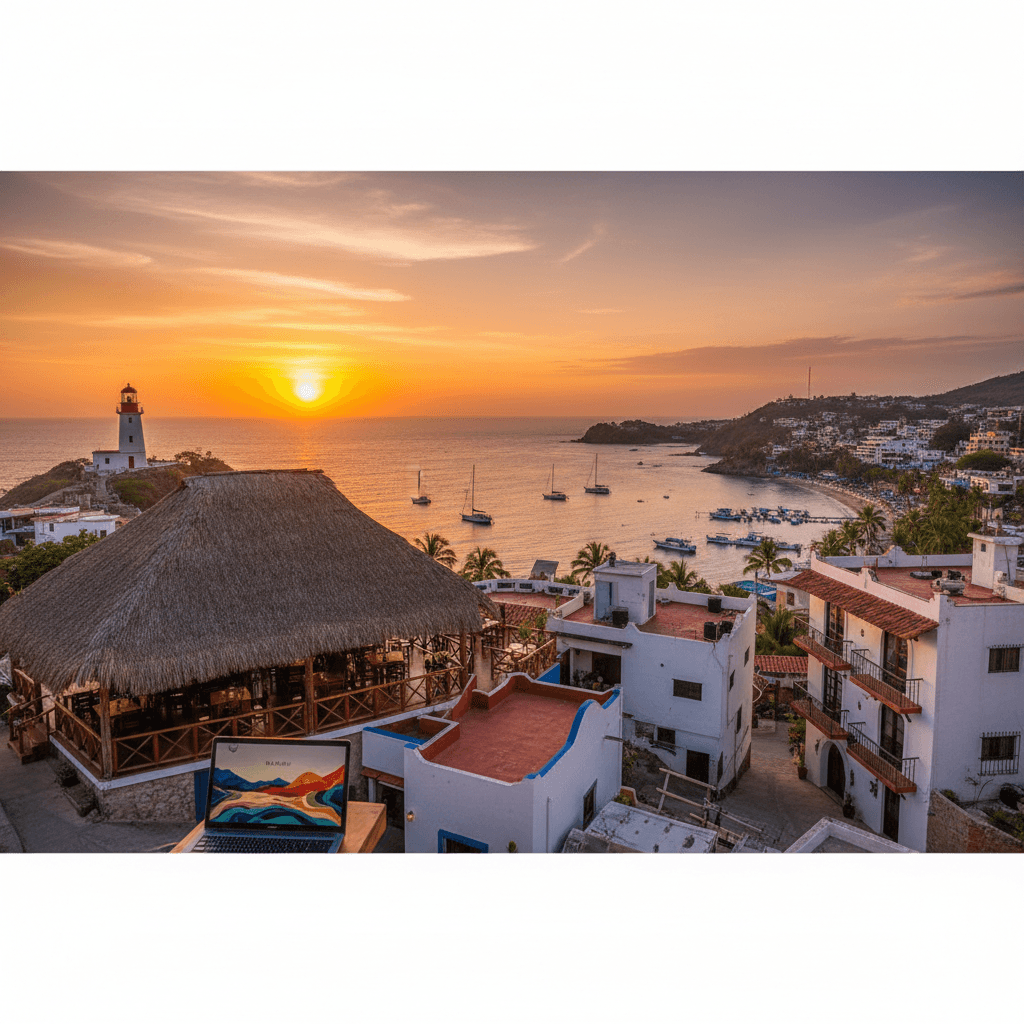
Zihuatanejo
🇲🇽 Mexico
Zihuatanejo, or "Zihua" as locals and long-termers call it, is the antithesis of the hyper-polished resort experience. While much of the Mexican coast has been reshaped by massive hotel chains, Zihua retains the grit and charm of a Guerrero fishing village. It is a place where the morning rhythm is set by the arrival of the panga boats at the town pier rather than the opening of a hotel buffet. For nomads, the appeal lies in this authenticity; it feels like a town that belongs to its residents, where visitors are simply invited to pull up a chair.
The Daily Rhythm
The vibe here is intentionally slow. In El Centro, you'll find narrow, cobblestone streets draped with colorful tree wraps and public nooks filled with upcycled pallet furniture. It is festive but grounded. You might spend your morning working from a cafe with 20 Mbps fiber, but your afternoon will likely involve a $1 collectivo ride to Playa Blanca or Barra for a surf session. The local surf guru, Chimi, is the go-to for board rentals, which usually run a couple hundred pesos. Unlike the crowded lineups in Sayulita, the waves here often feel like your own private playground.
Why Nomads Choose Zihua
Zihua attracts a specific type of traveler: those who prioritize community and local culture over high-end amenities. You won't find dedicated coworking chains like those in Puerto Vallarta. Instead, you'll see people working from the public parks on upcycled swings or long wooden benches. It is a town of "low-key" luxury, where the greatest value is found in a $2 taco from a market stall or a fresh agua fresca from a street vendor. Expats often mention that the town feels safe and intimate, with a small-town security that’s hard to find in larger hubs.
The Living Experience
Living here is significantly more affordable than the Caribbean coast. A comfortable lifestyle usually falls into these brackets:
- Budget Tier ($1,200 to $1,800 USD/month): This covers a shared studio in El Centro for $400 to $600, eating mostly street food, and using local transport.
- Mid-Range ($2,000 to $2,800 USD/month): A private 1BR in the heart of town for $700 to $1,000, dining at mid-range seafood spots, and regular cafe visits.
- Comfortable ($3,000+ USD/month): A beach-view apartment starting at $1,200, frequent upscale dining, and private transport.
The Trade-offs
While the city center is reliable, Zihua isn't without its quirks. If you venture into the jungle edges or smaller beach villages like Barra, the power and internet can be temperamental, especially during the rainy season from June to October. Most nomads keep a Telcel or Airalo SIM card as a backup for these moments. The language barrier is also more pronounced here than in Cancun; having Google Translate with an offline Spanish pack is a necessity for navigating the local markets and menus. It is a place that rewards those who are willing to adapt to its pace, offering a coastal lifestyle that feels earned rather than manufactured.
The Price of Paradise
Zihuatanejo is where your pesos stretch significantly further than they would in the high rise corridors of Cancun or the trendy cafes of Tulum. It remains a working fishing village at heart, which keeps the local economy grounded in reality rather than tourist inflation. Most nomads find they can live a high quality life here for a fraction of US or European costs, provided they embrace the local rhythm of markets and colectivos.
Expats generally categorize their spending into three tiers based on how much "Western" comfort they require. If you are comfortable in a traditional studio in El Centro and eating like a local, you can get by on a budget of $1,200 to $1,800 USD per month. Mid range living, which includes a nicer one bedroom apartment and more frequent restaurant visits, typically sits between $2,000 and $2,800 USD. For those wanting luxury beach views and high end seafood nightly, expect to spend $3,000 or more.
Monthly Cost Breakdown
- Housing: A modest studio in El Centro usually runs between $400 and $600. Upgrading to a modern one bedroom in the same area costs $700 to $1,000, while premium stays with ocean views in the hills or near the beach start at $1,200.
- Food and Drink: Street tacos and market meals are a steal at $2 to $5. A nice dinner at a mid range sit down restaurant will cost $8 to $15, while upscale seafood dinners peak around $40.
- Transportation: Colectivos are the local secret, costing only about $0.50 to $1 per ride. Uber and Didi are available for convenience, with most cross town trips ranging from $5 to $10.
- Connectivity: A local Telcel or AT&T SIM card with plenty of data costs roughly $10 to $20 per month.
Housing and Neighborhoods
Rent is your biggest variable, and the best deals aren't usually found on standard booking sites. Travelers often recommend joining Facebook groups like "Digital Nomads Mexico" or "Expats in Zihuatanejo" to find long term rentals. Always ask for a discount if you are staying for 28 days or more, as monthly rates are significantly lower than nightly prices.
El Centro
- Rent: $400 to $1,000 per month depending on amenities.
- Vibe: Walkable, social, and loud. It is the best spot for reliable 20 Mbps internet.
- Food: Surrounded by the main market and the cheapest street food stalls.
Playa Blanca and La Barra
- Rent: $800 to $1,500+ for beach proximity.
- Vibe: Quiet, surf focused, and remote. It is a 30 minute colectivo ride from the city.
- Warning: Infrastructure is thinner here. Power and WiFi can drop after heavy tropical storms, especially during the rainy season from June to October.
Practical Money Tips
Cash is still king in the markets and smaller shops. Most nomads use apps like Wise or Revolut to manage transfers and then withdraw pesos from ATMs in El Centro to avoid high bank fees. For grocery shopping, the local markets in the city center offer the freshest produce and fish at prices that beat any supermarket.
If you are planning to work from cafes, you won't find dedicated coworking spaces like those in Puerto Vallarta. Instead, look for the public "pallet parks" in El Centro. These community spaces feature upcycled furniture and festive decor, offering a free place to work if you have a reliable hotspot or eSIM as a backup. For a few hundred pesos, you can also rent a surfboard from local legends like Chimi, making the coastal lifestyle affordable even on a modest budget.
The Pulse: El Centro
For digital nomads and solo travelers who need to stay connected, El Centro is the undisputed home base. It is the heart of Zihua, where narrow streets are lined with artisanal markets and vendors selling fresh agua frescas. You'll find the most reliable internet here, with many cafes hitting speeds around 20 Mbps, which is plenty for video calls and deep work sessions.
The vibe is social and walkable. Instead of sterile coworking spaces, nomads gather at the public pallet furniture parks. These are community-built nooks with upcycled benches and swings under trees wrapped in colorful fabrics. It is the best spot to meet other remote workers while staying close to the main market for a $3 lunch of street tacos or fresh fruit. Just be aware that the area gets lively during the day; if you need total silence, you might want to invest in noise-canceling headphones.
- Rent: $700 to $1,000 for a mid-range 1BR; $400 to $600 for a budget studio.
- Connectivity: Best in the city; Airalo eSIMs and Telcel chips work flawlessly here.
- Atmosphere: High energy, authentic, and central to everything.
The Slow Lane: Playa Blanca and Barra de Potosi
Expats and long-term residents often gravitate toward Playa Blanca or the nearby village of Barra de Potosi. Located about 30 minutes from the city center via $1 collectivo, these areas trade convenience for raw Pacific beauty. It is where you go if you want to wake up to the sound of uncrowded waves rather than the sound of delivery trucks.
The community here is tight-knit and revolves around the water. You'll likely run into Chimi, the local surf guru, who handles board rentals and storage for a couple hundred pesos. While it is incredibly peaceful, the infrastructure is thinner. Power outages can happen after heavy tropical storms, especially during the rainy season from June to October. Most expats here keep a backup data plan or use their phone as a hotspot when the local lines flicker.
- Rent: $1,200+ for beach-view properties.
- Transportation: Requires a car or regular use of the collectivo vans.
- Atmosphere: Quiet, surf-centric, and rustic.
Family-Friendly Comfort: Ixtapa and Surrounds
While Zihuatanejo is all about the fishing village charm, families often look toward the neighboring resort zone of Ixtapa or the quieter residential pockets on the edge of El Centro. These areas offer more "big-city" infrastructure, like paved sidewalks and easier access to the Ixtapa-Zihuatanejo General Hospital, which is about 10 minutes from the center.
Families appreciate the safety and the predictable pace. You are close enough to the Centro markets for fresh produce but far enough away to avoid the late-night bar noise. The schools and larger grocery stores are easily accessible via Uber or Didi, which are reliable and affordable ways to move the kids around without haggling with taxi drivers.
- Daily Costs: Mid-range meals for a family run $8 to $15 per person.
- Activities: Easy access to calm swimming beaches and bike rentals for $5 to $10 a day.
- Atmosphere: Secure, convenient, and predictable.
The Nomad Verdict
If you are arriving for the first time, start in El Centro. Most travelers find that the proximity to the 20 Mbps cafes and the social scene at the pallet parks makes the transition much smoother. Once you have your bearings and a reliable Telcel SIM card from the local OXXO, you can scout the beach villages for a more permanent, off-the-grid sanctuary. Just remember to negotiate your rent if you're staying longer than 28 days; Facebook groups like Digital Nomads Mexico are great for finding these long-term deals.
Connectivity Expectations
Zihuatanejo isn't a tech hub, but it's surprisingly functional for remote work if you stick to the town center. In El Centro, you'll generally find speeds around 20 Mbps at most cafes and rentals. This is plenty for video calls and standard workflows, though you might notice a dip during peak evening hours when the town logs on. Most nomads find the infrastructure reliable enough for a daily 9-to-5, provided they have a backup plan.
The situation changes once you head toward the fringes. Outlying spots like Playa Blanca or Barra de Potosi are beautiful for a digital detox, but they're prone to outages. Heavy tropical storms during the rainy season from June to October can knock out power and internet for hours. If your job requires 100% uptime, keep your base in the city center and save the remote beach villages for your weekends.
Coworking and Work-Friendly Spaces
You won't find the sleek, glass-walled coworking franchises common in Puerto Vallarta or Mexico City here. Zihua's work culture is much more "sand between your toes." Instead of dedicated offices, the local community often utilizes public parks in Centro where nomads work outdoors. They're great for casual tasks or emails, though you'll be relying on your own data hotspot.
For a more traditional setup, the market areas and plazas in El Centro are home to several cafes where the staff won't mind if you linger over a coffee for a few hours. The vibe is social and festive; it's easy to meet other travelers doing the same. Just check the signal strength before you order your first $2-5 agua fresca.
Data and SIM Cards
Since public WiFi can be hit or miss, a local SIM card is your best friend. Most expats recommend Telcel for the best coverage in Guerrero. You can grab a chip at any OXXO convenience store or at the airport for about $10 to $20, which gets you a solid month of data. It's the most reliable way to tether your laptop when the cafe router decides to take a siesta.
If you prefer to hit the ground running, Airalo eSIMs work well here and save you the hassle of swapping physical cards. It's a bit more expensive than a local chip, but the convenience is worth it for many short-term nomads. Always keep your Spanish offline pack downloaded on Google Translate; it's helpful for asking for the "WiFi contraseña" in smaller, family-run spots where English isn't the primary language.
Practical Connectivity Tips
- Test the Speed: Before signing a long-term lease, ask the host for a screenshot of a speed test. Many Airbnb listings in Zihua now highlight their WiFi speeds to attract nomads, but it's always better to verify.
- Power Backups: Surge protectors are a smart investment here. The local grid can be temperamental during the humid summer months, and a small portable power bank will keep your phone and hotspot alive during brief flickers.
- Negotiate Long Stays: If you're staying for 28 days or more, use Facebook groups like "Digital Nomads Mexico" to find rentals with proven high-speed fiber. You can often negotiate a better rate than what's listed on the major booking platforms.
- Timing is Everything: If you have a massive upload or a high-stakes presentation, try to schedule it for the morning. The town is quieter, the air is cooler, and the bandwidth is generally less stressed than it is in the late afternoon.
Staying Safe in Zihua
Zihuatanejo maintains a distinct small town security that sets it apart from the more volatile regions of Guerrero. Most nomads describe the vibe here as incredibly relaxed, largely because the local economy still revolves around a tight knit fishing community rather than just anonymous mass tourism. You'll find that people look out for one another, and the presence of families in the El Centro plazas late into the evening creates a naturally safe environment.
While cartel related headlines often dominate news about the state, Zihua remains a relatively calm bubble. Petty theft is the most common concern, though even that is lower than in major hubs like Mexico City or Cancun. Expats generally recommend sticking to well lit areas in El Centro after dark and avoiding solo treks into remote jungle areas or off grid beaches like the far edges of Playa Blanca late at night. If you're heading back from a late dinner, use a ride hailing app like Uber or Didi rather than walking long distances alone, especially if you're carrying a laptop or expensive camera gear.
- Solo Travelers: Stick to the main tourist corridors in Centro and the Madera neighborhood. Socializing is easy at the pallet furniture parks, which are generally very safe during daylight hours.
- Nightlife: Stick to the bars near the Paseo del Pescador. It's a high traffic area where you're never far from help if you need it.
- Emergency Contacts: Save the number for the local Angeles Verdes (Green Angels), who provide roadside assistance, and 911 for general emergencies.
Healthcare & Medical Services
For a town of its size, Zihuatanejo has a decent healthcare infrastructure, supplemented by the more modern facilities in neighboring Ixtapa. For minor ailments, stomach issues, or ear infections from surfing, you can head to any Farmacia Similares or Farmacia del Ahorro. Most have an adjacent doctor's office where a consultation costs roughly $50 to $100 MXN (about $3 to $6 USD).
If you need more serious attention, the Ixtapa-Zihuatanejo General Hospital is the primary facility, located about 10 minutes from the center of town. For specialized surgeries or high level trauma, patients are often stabilized and then transferred to larger hospitals in Acapulco or Mexico City. Expats living here long term usually prefer private clinics in Ixtapa for a more westernized experience and shorter wait times.
Insurance and Logistics
Most digital nomads in the area carry SafetyWing or similar international health insurance. It's important to remember that most local clinics expect payment upfront in cash or via credit card, and you'll then seek reimbursement from your provider. Always ask for a "factura" (official tax invoice) to ensure your insurance claim goes through smoothly.
- Pharmacies: Widely available in El Centro. You can get most maintenance medications over the counter, though antibiotics and stronger painkillers require a local prescription.
- Dental Care: Zihua is a popular spot for dental tourism. You'll find high quality clinics in Centro that charge a fraction of US or Canadian prices.
- Water Safety: Never drink the tap water. Stick to bottled water or the 20-liter garrafones delivered to most long term rentals. Even locals use purified water for ice and washing produce.
In short, while you should exercise the same common sense you'd use in any coastal town, Zihua is a place where you can generally let your guard down. Just keep your electronics out of sight when you're not working and stay hydrated with purified water to avoid the most common "traveler's tax" on your health.
The Walkability Factor
Zihua is a dream for anyone who prefers their own two feet to a steering wheel. If you're staying in El Centro, you'll rarely need a vehicle. Most of the town's best cafes, markets, and public squares are packed into narrow, walkable streets that feel more like a village than a city. The pace is slow, so don't expect people to rush past you on the sidewalk.
For those living near the waterfront, the Paseo del Pescador (Fisherman's Walk) provides a scenic, paved route along the bay. It connects the town center to several beaches, making it easy to transition from a morning work session to an afternoon swim without much effort.
Mastering the Collectivo
When you need to venture further out, like to the surf breaks at Playa Blanca or the laid back vibes of Barra de Potosi, the local collectivos are your best friend. These are shared white vans that run on set routes. They aren't fancy, but they're incredibly efficient and cheap, usually costing between $0.50 and $1.00 USD (roughly 10 to 20 pesos) per ride.
To catch one, just look for the destination written on the windshield and wave it down. You'll be sharing the space with locals heading to the market or school, which is part of the charm. The trip to the outlying beach villages typically takes about 30 minutes from the main terminal in Centro.
Ride-Hailing and Taxis
While Zihuatanejo remains more traditional than Cancun, ride-hailing apps like Uber and Didi have established a presence. They're useful when you're carrying groceries or heading home late at night, generally costing between $5 and $10 USD for trips within the city limits. Expats recommend downloading the Spanish offline pack for these apps to ensure you can communicate your destination if your data signal dips.
- Local Taxis: Plentiful in Centro and near major hotels. Always agree on the price before you get in, as they don't use meters.
- Airport Transfers: A taxi or private shuttle from Zihuatanejo-Ixtapa International (ZIH) to El Centro takes about 20 to 40 minutes and usually runs between $15 and $25 USD.
- Busbud: A reliable way to book regional shuttles if you're planning to head further up the coast.
Two-Wheeled Exploration
If you want more freedom than a van route provides, consider renting a bike or a scooter. This is especially popular for nomads staying near the beaches. You can often find rentals through local surf shops, like Chimi's, or at various stands near the shore. Expect to pay around $5 to $10 USD per day.
Biking is a great way to explore the flat coastal roads, but keep an eye out for potholes and the occasional wandering dog. If you're heading into the hilly areas surrounding the bay, a scooter is the smarter choice to save your legs the burn.
Practical Transit Tips
- Cash is King: Collectivo drivers and local taxis almost never take cards. Keep a stash of small peso coins and bills specifically for transport.
- Timing: While transport runs frequently during the day, services thin out significantly after dark, especially the collectivos heading to Barra.
- Language: Knowing how to say "Where does this go?" (¿A dónde va?) or "Stop here, please" (La parada aquí, por favor) will make your life much easier.
The Local Linguistic Landscape
In Zihuatanejo, Spanish isn't just the official language; it's the heartbeat of daily life. Unlike the high-rise resorts of nearby Ixtapa where English is a standard requirement for staff, Zihua retains its authentic fishing village roots. Most nomads find that while you can get by with English in the tourist heavy pockets of El Centro or at upscale seafood spots, the experience becomes much smoother once you move beyond basic greetings.
Expats living here long-term suggest that locals appreciate the effort of a "Buenos días" or "Gracias." In the markets and smaller neighborhoods like Playa Blanca, don't expect the vendors to speak much English at all. If you're planning to stay for a few months, consider it an opportunity to practice your Spanish in a low pressure environment where people are generally patient and friendly.
Digital Tools for Communication
Since English is limited outside the immediate center, you'll want to have your digital toolkit ready before you land. Most travelers recommend downloading the Spanish offline pack on Google Translate. This is a lifesaver for reading handwritten menus at market stalls or communicating specific directions to a driver.
- Google Translate: Use the camera feature to translate labels at the grocery store or signs in the El Centro markets.
- WhatsApp: This is the primary way to communicate with landlords, tour guides, and even the local surf guru Chimi. If you're booking a long term rental through Facebook groups, expect all coordination to happen here.
- Uber/Didi: While these apps are available, having the Spanish keyboard installed helps when you need to message a driver about your exact pickup location.
Connectivity and Data
Staying connected is the backbone of being a nomad, and Zihua's infrastructure is decent but has its quirks. In the city center, you'll find reliable WiFi averaging around 20 Mbps at most cafes and public parks. However, if you head out to Barra de Potosí or the jungle edges, the connection becomes much more temperamental, especially after the heavy tropical storms common between June and October.
Expats recommend having a local backup. You can grab a Telcel or AT&T SIM card at any OXXO convenience store or the airport for about $10 to $20 a month. This gives you enough data to hotspot if the power dips during a rainstorm. For those who want to hit the ground running, an Airalo eSIM is a popular choice to get data the moment you touch down at ZIH Airport.
Key Phrases for the Zihua Lifestyle
You don't need to be fluent to thrive here, but knowing a few specific phrases will help you navigate the local scene like a pro. Most nomads find these four categories cover 90% of their daily interactions:
- Digital Nomad Basics: "¿Cuál es la contraseña del WiFi?" (What is the WiFi password?) and "¿Hay un enchufe cerca?" (Is there an outlet nearby?).
- Dining and Markets: "¿Cuánto cuesta?" (How much does it cost?) and "La cuenta, por favor" (The bill, please).
- Transport: "¿Va para El Centro?" (Are you going to the center?) when flagging down a collectivo.
- Social: "Mucho gusto" (Nice to meet you) goes a long way when meeting fellow travelers at the pallet furniture parks.
While the language barrier exists, it's rarely a dealbreaker. The "Zihua vibe" is about patience and community. If you approach communication with a smile and a bit of Google Translate, you'll find the locals are more than happy to help you find your way.
The Sweet Spot: November to May
If you want the quintessential Zihua experience, aim for the dry season between November and May. During these months, the Pacific humidity drops to a manageable level and the sky stays a crisp, reliable blue. Temperatures generally hover between 75°F and 90°F (24°C to 32°C), which is perfect for working from a cafe in El Centro during the morning and hitting the water by 2:00 PM.
Most nomads find December through April to be the peak window. The air is slightly cooler at night, and you won't have to worry about the sudden power flickers that sometimes plague the region during storm season. This is also when the town feels most alive; the markets are full, and you'll find the most social activity in the public parks and plazas.
The Rainy Season: June to October
Summer in Zihuatanejo brings the heat. From June to October, temperatures frequently climb into the 95°F (35°C) range. While the mornings are often sunny, afternoon tropical storms are common. These rains turn the surrounding hills a brilliant green, but they come with a few trade-offs for the remote worker.
Expats living in outlying areas like Playa Blanca or Barra de Potosi often report inconsistent internet and occasional power outages following heavy lightning storms. If you're planning to stay during this window, stick to El Centro. The infrastructure there is more resilient, and you'll have better luck maintaining a 20 Mbps connection for your Zoom calls while the rain hammers the cobblestones outside.
When to Avoid the Crowds
If your goal is deep focus and uncrowded surf, steer clear of Semana Santa (the week leading up to Easter) and the Christmas/New Year break. During these periods, prices for short term rentals can double and the usually quiet beaches become packed with domestic travelers. September and October are the quietest months, but they also carry the highest risk of hurricanes and the most intense humidity. Most travelers find the "shoulder" months of May or November offer the best balance of lower prices and decent weather.
Seasonal Planning for Nomads
- Surfing: While you can find waves year round, the swells are often more consistent for beginners and intermediates during the spring. Check in with local gurus like Chimi near the beach for the best daily reports.
- Connectivity: Always have a backup plan in the summer. A Telcel SIM or an Airalo eSIM is a lifesaver when a Tuesday afternoon storm knocks out the local WiFi for an hour.
- Packing: You won't need much beyond light linen and cotton. Even in the "cool" months, it rarely drops below 70°F, so leave the heavy hoodies behind.
Connectivity and Workspace
Zihua isn't your typical tech hub, but the digital nomad infrastructure is surprisingly functional if you stick to El Centro. Most cafes and public plazas offer speeds around 20 Mbps, which is plenty for video calls and standard remote work. You won't find dedicated coworking spaces like those in Puerto Vallarta; instead, the community gravitates toward the public parks in the city center. Local favorites include the pallet furniture parks where you'll find nomads working from upcycled benches under colorful tree wraps.
For a reliable backup, pick up a local Telcel or AT&T SIM card at any OXXO for about $10 to $20 per month. If you prefer things ready before you land, an Airalo eSIM works well, though it's usually more expensive than a local chip. If you're staying in outlying areas like Playa Blanca or Barra, be prepared for occasional power or internet drops after heavy tropical storms.
Cost of Living and Housing
Your budget here stretches much further than in the Riviera Maya. Most nomads find that $1,200 to $1,800 a month covers a comfortable, budget friendly lifestyle, while $2,800 secures a high end experience with a view. Rent is the biggest variable, and expats recommend scouring Facebook groups like "Expats in Zihuatanejo" or "Digital Nomads Mexico" rather than relying solely on Airbnb, where you should always negotiate a discount for stays longer than 28 days.
- El Centro Studio: $400 to $600 per month. This is the sweet spot for walkability and reliable WiFi.
- Beach View 1BR: $1,200+ per month. Expect these prices in more scenic pockets near the water.
- Daily Meals: Tacos and market food cost $2 to $5; mid range seafood dinners run $8 to $15.
- Transport: Collectivos are the local lifeline at roughly $0.50 to $1 per ride.
Getting Around and Safety
The city center is highly walkable, but you'll want the Uber or Didi apps for longer trips or late night rides. Download the Spanish offline pack on Google Translate since English is limited outside the main tourist shops. For a day trip to the surf breaks at Barra de Potosi, catch a 30 minute collectivo from the terminal in El Centro.
Safety reflects the town's fishing village roots; it's generally relaxed and lacks the high pressure vibe of larger Mexican cities. Standard precautions apply, like avoiding poorly lit areas at night and keeping an eye on your gear at the beach. For healthcare, there are plenty of pharmacies in El Centro for minor issues. For anything serious, the Ixtapa Zihuatanejo General Hospital is about 10 minutes away, though many expats carry SafetyWing insurance to cover private clinic visits.
Timing Your Stay
The best weather window is between November and May, when temperatures hover between 75 and 90 degrees. This is the dry season, meaning you'll get those iconic Pacific sunsets every night without the humidity. Avoid September and October if you can; it's peak hurricane season, and the humidity can make working from a non air conditioned cafe nearly impossible. If you're here to surf, connect with Chimi near the beach for board storage and local wave reports; it's the fastest way to plug into the local scene.
Need visa and immigration info for Mexico?
🇲🇽 View Mexico Country GuideWild Card
Expect the unexpected