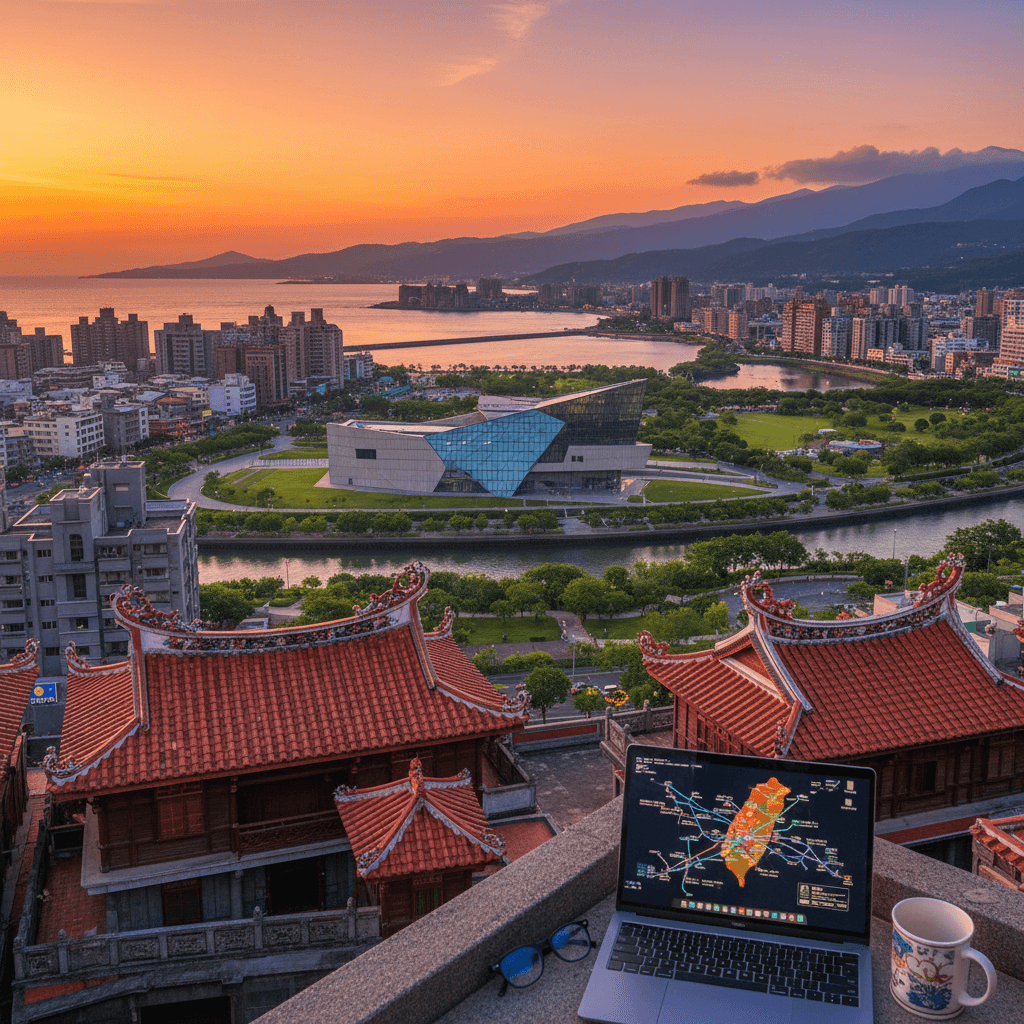
Yilan City
🇹🇼 Taiwan
The Pacific Backyard
While Taipei feels like a high performance engine that never shuts off, Yilan is where Taiwan goes to exhale. Located just an hour south of the capital through the 13 kilometer Xueshan Tunnel, this coastal county feels worlds away from the neon sprawl. It is a place defined by water: the crashing waves of the Pacific to the east, the natural hot springs of Jiaoxi, and the misty mountains of Taipingshan that hem the city in. For nomads, the vibe here is distinctly "slow living" with a rugged, outdoor edge.
The city itself doesn't try to compete with the skyscrapers of the north. Instead, you'll find a low rise skyline, lush rice paddies that change color with the seasons, and a persistent scent of salt air. It is the kind of place where you can spend your morning on a Zoom call and your afternoon surfing at Wai'ao Beach or soaking in a cold spring in Su'ao. It lacks the polish of Taipei, but it replaces that with a raw, authentic energy that appeals to travelers who find big cities a bit too sterile.
A Different Pace of Life
Living here means trading the MRT for a scooter. Life revolves around the weather and the tides. Most nomads find that the community is smaller and more localized than in the southern hubs like Tainan. You won't find a coworking space on every corner; instead, the "office" is usually a quiet, minimalist cafe overlooking a field of green. The locals are famously hospitable but often speak less English than their Taipei counterparts, making it a great spot if you actually want to practice your Mandarin.
The emotional experience of Yilan is one of reclamation. You reclaim your time and your headspace. There is a specific quietness that settles over the Lanyang Plain at dusk, broken only by the sound of frogs in the paddies or the distant whistle of the local train. It is not a place for those chasing a high octane nightlife scene. It is for the nomad who wants to hike, surf, and write, all while staying within striking distance of a major metropolis if they ever miss the "big city" conveniences.
Neighborhood Identities
- Yilan City Center: The administrative heart. It is the most convenient for long term stays, offering better access to supermarkets like PX Mart and the main train station. It feels like a traditional Taiwanese town with a modern layer of trendy coffee shops popping up near the Luna Plaza area.
- Jiaoxi: Technically a separate township but effectively a suburb. This is the "spa" district. Almost every apartment building here has hot spring water piped directly into the bathrooms. It is touristy on weekends but incredibly relaxing on weekdays.
- Toucheng/Wai'ao: The surf hub. If you want to wake up, check the swell, and then work from a beachside cafe, this is your spot. It has a very laid back, international backpacker energy compared to the more traditional city center.
The Cost of Slowing Down
Yilan is significantly more affordable than Taipei, particularly when it comes to housing and local food. You get more space for your money, often with views that would cost a fortune in the capital.
- Studio Apartment: $400 to $650 USD per month depending on how close you are to the hot springs or the coast.
- Local Meal: $3 to $6 USD for a hearty bowl of scallion pancakes and local cherry duck.
- Scooter Rental: $150 to $200 USD per month; a necessity for true freedom here.
- Coffee: $3 to $5 USD in the specialty roasteries that the city is becoming known for.
The humidity is the one thing you can't escape. Yilan is one of the wettest parts of Taiwan. You'll learn to love the rain, or at least respect it, as it's the reason the landscape stays so impossibly green. Most expats recommend investing in a high quality dehumidifier the day you move in. It is a small price to pay for living in a place that feels like Taiwan's best kept secret.
The Price of the Quiet Life
Living in Yilan City offers a significant financial reprieve compared to the steep prices of Taipei. You are essentially trading the convenience of a massive metro system for a monthly budget that stretches much further. Most nomads find they can live comfortably here on $1,200 to $1,600 USD per month, though you can certainly drop that figure if you opt for local housing and stick to night market eats.
The local economy revolves around agriculture and tourism, so while high end western imports are pricey, the basics are incredibly affordable. You will spend less on a three course meal at a local eatery here than you would for a single cocktail in the Xinyi district of the capital.
Housing and Neighborhoods
Rent is your biggest saving. While Taipei studios often start at $800 USD, you can find modern apartments in Yilan for nearly half that. Most expats look for places near the Yilan Train Station for accessibility or closer to the Sports Park for a bit more greenery.
- Yilan City Center: A modern one bedroom apartment typically runs between $450 and $600 USD. These are usually in newer buildings with elevators and security.
- Zhongshan Road Area: This is the heart of the action. Older walk up apartments can be found for as low as $300 USD, though they might lack the polish of newer builds.
- Utilities: Expect to pay around $60 to $90 USD for electricity, water, and high speed fiber internet. Keep in mind that AC usage in the humid summer months will spike your power bill quickly.
Eating and Drinking
Food is where Yilan shines for the budget conscious traveler. The city is famous for its scallions and duck, and you will find these ingredients everywhere. If you eat like a local, your daily food cost will hover around $15 to $20 USD.
- Local Meals: A bowl of beef noodles or a set meal at a small shop costs about $4 to $6 USD.
- Night Markets: You can fill up at the Dongmen Night Market for under $10 USD. It is one of the best ways to sample local flavors without breaking the bank.
- Groceries: Shopping at PX Mart or local wet markets is affordable. A bag of locally grown produce and staples for the week usually costs around $30 USD.
- Coffee: A latte at a specialty cafe like Gorogoro will set you back about $4 to $5 USD, which is comparable to Taipei prices.
Transportation and Connectivity
Yilan does not have an MRT, so your transport costs will look a bit different. Most residents rely on scooters. If you aren't comfortable riding, you will be using the bus system or trains to get around the county.
- Scooter Rental: Long term rentals usually cost about $150 USD per month. Buying a used scooter is often a better deal if you stay for six months or more.
- Public Transit: A local bus ride is less than $1 USD. The train to Taipei takes about an hour and costs roughly $7 USD for the express service.
- Mobile Data: A monthly unlimited 5G SIM card from Chunghwa Telecom or Taiwan Mobile costs around $20 to $25 USD. The coverage in the city is excellent.
Lifestyle and Extras
Entertainment in Yilan is mostly about the outdoors, which is fortunately free. Whether it is hiking the trails in nearby Jiaoxi or heading to the coast, your weekend plans rarely require a cover charge. If you want to join a gym, a monthly membership at a local fitness center usually costs around $40 USD. For healthcare, Taiwan's National Health Insurance is world class; if you are on a Gold Card or a resident visa, your monthly premium is nominal, and a visit to the doctor typically costs a $5 to $10 USD co-pay.
Choosing a base in Yilan is less about finding the right city block and more about deciding which version of the Pacific coast you want to wake up to. While Taipei is a short bus ride through the mountain tunnel, Yilan City and its surrounding townships feel worlds away. Most people who stick around here for more than a weekend choose their spot based on whether they need a train station nearby or a surfboard leaning against their front door.
For Digital Nomads: Yilan City Center
If you need reliable Wi-Fi and a steady supply of caffeine to get through a Zoom call, the area around the Yilan Railway Station is your best bet. It is the most walkable part of the county, putting you within reach of the Luna Plaza shopping center and the Dongmen Night Market. You will find the most consistent internet speeds here, often hitting 100Mbps or higher in modern apartment buildings.
- The Vibe: Low key urban with a heavy dose of history. You are surrounded by repurposed colonial buildings and quiet back alleys.
- Nomad Hubs: Check out Stay Here Co-working Space or set up shop at Gorogoro, a renovated old house that serves great coffee and has plenty of power outlets.
- Monthly Rent: Expect to pay between $450 and $700 USD for a decent studio or a small one bedroom apartment.
For Expats and Long-Termers: Luodong
Luodong is technically a separate township, but it functions as the commercial heart of the region. Many expats prefer it over Yilan City because it feels more alive after dark. It is home to the famous Luodong Night Market and the Luodong Forestry Culture Park, which offers a massive green space for morning runs. It is the most convenient spot if you don't plan on buying a scooter immediately, as the bus network here is the most robust in the county.
- The Vibe: Energetic and convenient. It is the closest thing Yilan has to a "downtown" feel without the Taipei price tag.
- Local Perks: You are close to the Poyang Lake area for weekend escapes and have the best access to local clinics and larger supermarkets.
- Cost of Living: Local meals like Gao Zha or mutton soup usually run between $3 and $8 USD.
For Solo Travelers and Surfers: Toucheng
If your laptop only opens after you have been in the ocean, head north to Toucheng. Specifically, the area around Wushi Harbor is the primary hub for the local surf community. It is much more seasonal than the city center, but it has a tight knit feel that makes it easy to meet people. The Toucheng Old Street area offers a bit more character for those who want to avoid the high rise condos popping up near the beach.
- The Vibe: Salty, relaxed, and slightly rugged. It is the kind of place where people recognize you after your second visit to the breakfast stand.
- Social Scene: Hang out at Blackboard Cafe or the various surf hostels along the coast to find the local expat crowd.
- Commute: The local train connects you to Yilan City in about 20 minutes for less than $2 USD.
For Families: Jiaoxi
Jiaoxi is famous for its natural hot springs, but beyond the tourist hotels, it is a very livable area for families. The streets are wider and cleaner than in the denser parts of Luodong. There is a high concentration of parks and hiking trails like the Linmei Shipan Trail right on your doorstep. Many newer residential complexes here include private hot spring tubs in the units, which is a massive perk during the damp, grey winter months.
- The Vibe: Relaxed resort living with a focus on wellness and the outdoors.
- Family Essentials: The area is safe, quiet at night, and has several reputable primary schools within a short drive.
- Housing: Modern two bedroom apartments generally start around $800 USD per month, often including access to a gym or a shared pool.
Connectivity and Speed
You'll find that Yilan doesn't suffer from the connectivity lag you might expect when leaving Taipei's high tech bubble. Most apartments and local guesthouses come standard with fiber optic connections, usually pushing speeds between 60 Mbps and 100 Mbps. If you're staying closer to the Yilan Train Station or the newer developments in Yilan City, those numbers often climb higher.
Public Wi-Fi is surprisingly reliable here too. The iTaiwan network covers major government buildings and transit hubs, which is a lifesaver if your local SIM card hits a dead zone. For a more stable mobile experience, most nomads grab a Chunghwa Telecom or FarEasTone SIM. You can expect 5G coverage throughout the city center, though it gets spotty once you head toward the mountains or the deeper parts of the rice paddies.
Where to Work: Coworking Spaces
Yilan isn't Taipei; you won't find a massive WeWork on every corner. The scene here is more intimate and community focused. The Yilan Youth Hub near the train station is the primary go to for many locals and visiting professionals. It's a government backed initiative that provides a clean, modern environment for a very low cost, often charging around $100 TWD to $200 TWD for a day pass.
The Cafe Culture Alternative
If you prefer the hum of a milk steamer over a quiet office, Yilan City has a growing number of laptop friendly cafes. Cafe Slow Train, located in an old converted warehouse near the station, is a solid pick. It has high ceilings and large tables that are perfect for spreading out your gear. Just be aware that on weekends, these spots fill up with tourists from Taipei, so try to get your heavy lifting done between Monday and Thursday.
Practical Remote Work Tips
- Power Plugs: Taiwan uses Type A and Type B plugs, the same as the US and Canada. If you're coming from Europe or Australia, you'll need an adapter.
- Peak Hours: Most cafes open a bit later, usually around 10:00 AM or 11:00 AM. If you're an early riser, you might be limited to working from your accommodation or a 7-Eleven.
- Language: While the internet is fast, the staff at local coworking hubs might not speak fluent English. Have Google Translate or Line ready to help with the logistics of booking a desk.
- Data Caps: Most prepaid SIM cards from the airport offer truly unlimited data for 30 days for about $500 to $800 TWD. It's worth the investment to have a reliable hotspot.
Most nomads find that Yilan offers a much better work-life balance than the bigger cities. You can finish a Zoom call at 5:00 PM and be at the Jiaoxi Hot Springs or the Dongmen Night Market by 5:30 PM. The infrastructure is there to support a full time job, provided you don't mind a slightly slower pace of life outside of your inbox.
A Culture of Safety
You'll find that Yilan City feels significantly more laid back than the high energy streets of Taipei. It's the kind of place where locals often leave their scooters running while they pop into a 7-Eleven for a tea egg. While you should always use common sense, the violent crime rate is incredibly low. Most nomads feel perfectly comfortable walking home alone at 2:00 AM after a few drinks at a local craft beer spot.
The biggest safety concern you'll actually face isn't crime; it's the traffic. Yilan's streets are narrower than Taipei's, and the mix of scooters, cars, and heavy rain can get chaotic. Pedestrians don't always have the right of way in practice, even if they do on paper. Keep your eyes peeled when crossing near the Yilan Train Station or along the busy Zhongshan Road corridor.
Natural Hazards to Watch For
Yilan is on the northeast coast, which means it sits right in the path of many typhoons during the summer months from July to September. The city is built for this, but it can lead to flooding and power outages. Download the Taiwan Weather App (by the Central Weather Administration) to get real time alerts. It's the gold standard for staying ahead of the storms.
Earthquakes are also part of life here. Most modern buildings in Yilan are built to strict seismic codes, but the tremors can be unsettling if you aren't used to them. If you feel a shake, stay away from glass and wait for it to pass. It's usually over in seconds.
Healthcare and Hospitals
The healthcare in Yilan is excellent and surprisingly affordable, even if you're paying out of pocket. Many doctors have studied abroad and speak English well, though the nursing and administrative staff might rely more on translation apps like Google Translate or Line. For anything serious, you'll want to head to one of the major hospitals rather than a small neighborhood clinic.
- National Yang Ming Chiao Tung University Hospital: This is the primary facility in the city center. It has a full emergency department and specialized clinics. It's the most reliable spot for expats needing English speaking specialists.
- Poh-Ai Hospital: Located just south in Luodong, about a 15 minute drive away, this is a massive private hospital known for high quality care and modern equipment.
- Local Clinics: For a simple cold or a skin rash, look for the small clinics with the Blue Cross National Health Insurance sign. A visit without insurance usually costs between $15 and $30 USD.
Pharmacies and Prescriptions
Pharmacies are everywhere in Yilan, often marked by a green cross. You can get many medications over the counter that would require a prescription in the US or Europe. However, for specific chronic medications, it's better to bring a copy of your original prescription to show the pharmacist. If they don't have your specific brand, they can usually find the local equivalent using the chemical name.
Emergency Contacts
Keep these numbers saved in your phone just in case. The operators usually have access to English translators, though it might take a moment to get one on the line.
- Police: 110
- Fire and Ambulance: 119
- English Language Emergency Hotline: 0800-024-111
Most expats recommend joining the Yilan Foreigners Facebook group. It's a solid resource for finding specific English speaking dentists or physiotherapists that other nomads have vetted. If you're staying long term on a Gold Card or a work permit, you'll be eligible for the National Health Insurance (NHI) after six months, which makes healthcare costs almost negligible.
The EasyCard is Your Best Friend
In Yilan, your first order of business is picking up an EasyCard or an iPASS at any 7-Eleven or FamilyMart. While Yilan doesn't have the subway system you'll find in Taipei, these cards are the universal currency for the local bus network and the trains. You can tap on and off at the station or when boarding the bus, and you'll get a small discount compared to paying with cash. Keep a balance of at least 200 TWD to ensure you aren't caught short when heading out to the coast.
Navigating by Train
The railway is the backbone of Yilan's geography. Yilan Station sits right in the center of the city, and it's the primary hub for getting elsewhere in the county or back to Taipei. If you're heading to the surfing beaches in Wai'ao or the hot springs in Jiaoxi, the local commuter trains (Local Train) are frequent and cheap. For trips back to the capital, the Puyuma or Taroko express trains will get you there in about an hour, but you absolutely must book these in advance on the Taiwan Railways (TRA) app, especially on weekends when everyone flees the city for the coast.
Mastering the Bus Network
Yilan's bus system is split between the long distance cruisers and the local routes. The Kamalan and Capital Star buses are the legends of the Taipei to Yilan commute. They leave from Taipei Bus Station or Technology Building Station every 15 to 20 minutes and cost around 130 TWD. Once you're actually in Yilan, look for the Yellow Bus routes which circle the main city landmarks. Most nomads find that the Bus+ or Google Maps apps are fairly accurate for timing, though the local buses can be sparse once you get into the rural rice paddy areas.
Scooters and Biking
To really see Yilan like a local, you need two wheels. The city is flat, making it perfect for cycling, and many hostels or long term rentals will provide a bike for free. If you have an International Driving Permit with a motorcycle endorsement, renting a 125cc scooter is the ultimate freedom. Prices usually hover around 400 to 600 TWD per day near the train station. Just be ready for the rain. Yilan is famously wet, so locals always keep a heavy duty poncho under the seat. If you aren't comfortable on a scooter, YouBike 2.0 stations are popping up around Yilan Station and the Luna Plaza area, allowing you to grab a bike for a few dollars an hour.
Ride Hailing and Taxis
You won't find Uber here like you do in Taipei. Instead, FindTaxi or the Line Taxi feature within the LINE messaging app are the go to moves for expats. Taxis usually congregate at the train station and major hospitals. Most rides within the city limits will cost you between 120 and 200 TWD. If you're heading out to a remote cafe in the fields, it's a good idea to grab the driver's phone number or LINE ID so you can message them for a ride back, as catching a random cab on a country road is nearly impossible.
Walking the City Center
Yilan City is surprisingly walkable if you stick to the core areas around the Jimmy Park and the Yilan Literature Museum. The sidewalks can be hit or miss, often occupied by parked scooters or shop displays, so you'll frequently find yourself walking on the edge of the road. It's a slow paced city, so drivers are generally less aggressive than in Taipei, but always keep an eye out for scooters turning corners. Most of the best coffee shops and coworking spots are within a 15 minute walk of the main station area.
The Language Barrier in the Lanyang Plain
In Yilan City, you'll find a different linguistic rhythm than the English friendly streets of Taipei. While the capital feels international, Yilan is deeply Taiwanese. Traditional Mandarin is the primary language for business and official matters, but Taiwanese Hokkien is the soul of the city. You'll hear it constantly at the Dongmen Night Market or among the older generation in the Shengnong Road area. Most locals under 40 have a functional grasp of English, but they might be shy about using it until you break the ice.
For a digital nomad, this means your phone is your best friend. Don't expect English menus at the smaller beef noodle shops or local breakfast stands. Most expats rely on photo translation apps to decipher handwritten signs. If you're staying long term, learning even basic greetings in Mandarin will change how locals treat you. A simple "Ni hao" or the Hokkien "Gau cha" (good morning) goes a long way in building rapport with your neighborhood fruit vendor or the staff at local cafes.
Digital Communication and Essential Apps
If you want to exist in Yilan, you need LINE. It is the undisputed king of communication in Taiwan. From booking a haircut to chatting with your landlord or joining local expat meetups, everything happens on LINE. Email is often ignored by smaller local businesses, so don't be surprised if a shop tells you to just "add their LINE" for inquiries. It's also the primary way to get notifications from delivery services and banking apps.
For getting around and eating, a few other apps are non negotiable for your home screen:
- Google Maps: It's surprisingly accurate for Yilan's bus schedules and train timings at the Yilan Railway Station.
- Uber Eats and Foodpanda: Both operate extensively in the city center, though English options in the menus are hit or miss.
- Google Translate: Specifically the camera feature, which is vital for reading utility bills or instructions at the laundromat.
- Bus+: This app is much better for tracking the local green buses that head out toward Yuanshan or Jiaoxi.
Connectivity and Data
Taiwan's internet infrastructure is world class, and Yilan is no exception. You can expect 5G coverage across almost the entire city. Most nomads grab a prepaid SIM from Chunghwa Telecom or Taiwan Mobile right at the airport. If you missed that, there are service centers near the Luna Plaza shopping mall where you can sign up. A monthly unlimited data plan usually runs between $15 and $25 USD, which is a steal considering the speeds.
Public Wi-Fi is also surprisingly reliable. The iTaiwan network is available in government buildings and public libraries. Most cafes, like the popular Cafe Slow Train, offer free, fast Wi-Fi for customers. You'll rarely find a "no laptop" policy in Yilan cafes compared to the stricter spots in Taipei, making it a very friendly environment for remote work.
Navigating Social Nuances
Communication in Yilan is often indirect. Locals are incredibly polite and will rarely give you a flat "no" if they can avoid it. If someone says something is "a bit inconvenient," they usually mean it's impossible. Paying attention to these subtle cues helps avoid frustration during lease negotiations or project collaborations.
Expats in the area often congregate in Facebook groups like "Yilan Foreigners" to trade tips on English speaking dentists or the best places to watch live music. Since the community is smaller than Taipei's, word of mouth is the most powerful tool you have. If you're looking for a specific service, just ask around at local hangouts; the community is tight knit and usually happy to point newcomers in the right direction.
The Seasonal Rhythm
Yilan is famously the wettest county in Taiwan, and you'll feel that the moment you step off the bus from Taipei. It sits in a unique triangular plain that catches every bit of moisture coming off the Pacific. While the rain keeps the rice paddies a brilliant, neon green, it also means you should always have a sturdy umbrella or a high quality raincoat in your backpack. Locals joke that it rains nearly every day, with around 220-230 rainy days annually.
The best window for a comfortable stay is from late October through early December. During this stretch, the oppressive summer humidity breaks, and the winter rains haven't fully settled in. You'll get crisp afternoons with temperatures hovering around 22°C (72°F), which is perfect for biking through the fields in Sanxing or soaking in the cold springs at Su'ao without shivering when you get out.
Summer Heat and Typhoon Season
From June to September, Yilan turns into a literal sauna. Temperatures frequently hit 34°C (93°F) with humidity levels that make your clothes stick to your skin the second you leave your apartment. This is also peak typhoon season. Since Yilan sits on the northeast coast, it's often the first place these storms make landfall.
Nomads who stay during the summer usually head to the coast. Toucheng becomes the place to be, as the ocean breeze makes the heat slightly more bearable. Surfers flock to Waiao Beach during these months, though you have to keep a close eye on the weather warnings. If a typhoon warning is issued, businesses shut down, and the trains to Taipei often stop running, so you'll want to be stocked up on snacks and have a good power bank ready.
Winter Chill and the Rain
Winter in Yilan, lasting from January to March, isn't freezing in terms of the thermometer, but the dampness gets into your bones. Average lows are around 13°C (55°F), but without central heating in most apartments, it feels much colder. This is the grayest time of year, with persistent drizzle that can last for weeks at a time.
The upside to a winter stay is the hot spring culture. Jiaoxi becomes the center of life, and many nomads choose to rent apartments there specifically for the in room hot spring tubs. There is nothing quite like hitting a deadline while soaking in mineral water while it pours rain outside your window. Just make sure you invest in a high capacity dehumidifier; most landlords provide them, and you'll need to run yours 24/7 to keep your gear from getting moldy.
What to Pack and When to Book
If you're planning a visit, keep these seasonal shifts in mind for your budget and your suitcase:
- Spring (April to May): Unpredictable rain but lush scenery. Great for visiting the plum blossom lake or the green onion farms.
- Summer (June to August): High season for domestic tourists. Prices for Airbnbs in Toucheng and Jiaoxi can double on weekends.
- Autumn (September to November): The sweet spot. Clearer skies and manageable temperatures.
- Winter (December to March): Quiet and moody. Best for those who love hot springs and don't mind the gloom.
Most expats recommend avoiding the Lunar New Year period, which usually falls in late January or early February. The city becomes incredibly crowded as people return home from Taipei, and almost every cafe or coworking space will close for at least three to five days. Traffic on the National Highway 5, the main artery to the capital, becomes a total standstill, turning a 50 minute trip into a three hour ordeal.
Getting Connected and Moving Around
You'll want to grab a local SIM card as soon as you land at Taoyuan International Airport. Chunghwa Telecom is the gold standard for coverage in Yilan, especially if you plan on heading into the mountains or coastal areas where other signals might drop. Expect to pay around $500 to $800 TWD for 30-day high-speed data plans (with fair usage). If you miss the airport kiosks, there are plenty of service centers near the Yilan Train Station, but you'll need your passport and a second form of ID to sign up.
The EasyCard is your lifeline here. You can buy one at any 7-Eleven or FamilyMart for $100 TWD. While Yilan doesn't have a metro system like Taipei, you'll use this card for the local Kamalan and Capital Star buses, and even at convenience stores. Most nomads find that renting a scooter is the only way to truly enjoy the city. A monthly rental from shops near the station usually runs between $3,000 and $4,500 TWD. Just make sure you have an International Driving Permit that specifically covers motorcycles.
Cost of Living Breakdown
Yilan is significantly more affordable than Taipei, but prices have ticked up as more remote workers move toward the coast. You can live comfortably here on a budget that would feel tight in the capital.
- Studio Apartment: $12,000 to $18,000 TWD per month for a modern space near the city center.
- Local Meal: $80 to $150 TWD for a bowl of garlic vermicelli or a bento box.
- Coworking Desk: $3,000 to $5,000 TWD monthly, though many people just work from cafes.
- Beer at a Bar: $150 to $250 TWD for a craft pint.
Workspace and Connectivity
Internet speeds in Yilan are generally excellent, with most apartments offering fiber connections of 100Mbps or higher. If you need a dedicated office environment, check out the Yilan Youth Hub near the train station. It's a popular spot for local entrepreneurs and digital nomads to park for a few hours. For a more relaxed vibe, head to the cafes in the Luodong area. Places like Rebirth Cafe offer stable Wi-Fi and plenty of power outlets, provided you keep the coffee orders coming.
Health and Safety
Taiwan's healthcare is world class, and Yilan is no exception. National Yang Ming Chiao Tung University Hospital is the primary facility in the city. Most specialists speak English, and a walk in consultation usually costs less than $600 TWD if you don't have local insurance. For minor issues, local pharmacies are everywhere. Just look for the green cross sign; the pharmacists are usually very helpful and can provide over the counter meds for most common ailments.
Safety is rarely a concern. You can walk through the Dongmen Night Market at midnight without a second thought. The biggest risks here are natural. Keep an eye on the Central Weather Administration app during the summer months. Yilan is often the first place to feel the impact of typhoons, and the city can shut down quickly when a warning is issued. Heavy rain is a constant companion, so invest in a high quality raincoat rather than a cheap umbrella that will break in the wind.
Language and Social Life
English isn't as widely spoken here as it is in Taipei. You'll get by with translation apps, but learning basic Mandarin phrases for "no cilantro" or "takeout" goes a long way. Most expats and nomads connect through Facebook groups like "Yilan Foreigners" or by hanging out at local surf shops in nearby Waiao. Life here moves at a slower pace, so don't expect a wild nightlife scene. Socializing usually revolves around night markets, late night tea houses, or weekend trips to the hot springs in Jiaoxi.
For banking, stick with Mega Bank or Post Office ATMs. These generally accept international Visa and Mastercard with the lowest fees. While big retailers take Apple Pay, Yilan is still very much a cash heavy society. Always keep a few $100 TWD bills in your pocket for the smaller food stalls and local markets.
Need visa and immigration info for Taiwan?
🇹🇼 View Taiwan Country GuideHidden Gem
Worth the effort