Washington D.C.
🇺🇸 United States
Power Suits and Park Benches
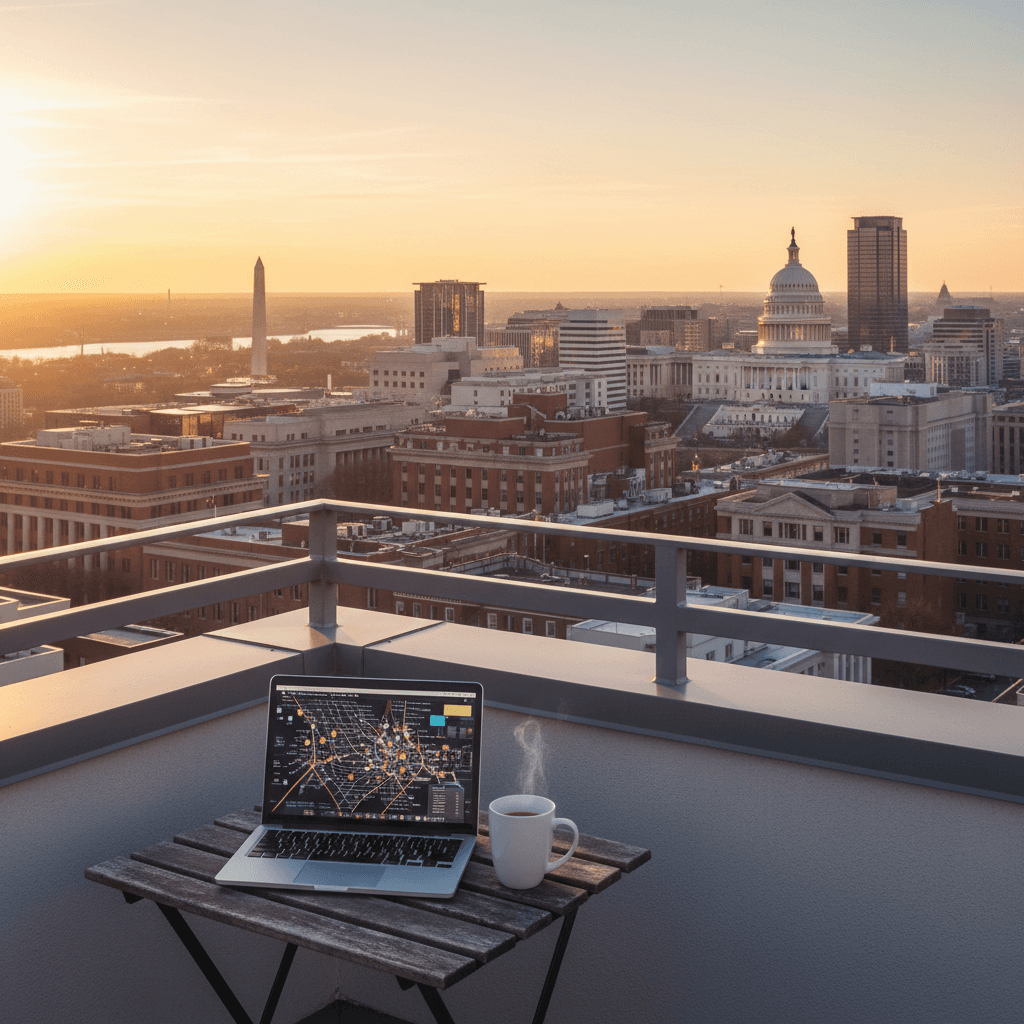
Washington D.C. carries a weight that most digital nomad hubs simply don't have. It's a city where the person sitting next to you at a coffee shop in Adams Morgan is just as likely to be drafting a piece of federal legislation as they are a lines of code. The vibe is decidedly high stakes, yet surprisingly green. You'll find yourself working under the shadow of neoclassical monuments one hour and hiking through the dense woods of Rock Creek Park the next.
Most nomads quickly realize that D.C. isn't just a political machine; it's a collection of distinct villages. There's a palpable sense of ambition here that can be infectious. People don't ask what you do for fun as often as they ask what you do for work. It's a town that rewards the curious and the connected. If you enjoy being in the room where things happen, the energy here is unmatched by any other American city.
The Cost of the Capital
Let's be realistic about the wallet. D.C. is one of the most expensive cities in the United States, and your budget will reflect that. You aren't coming here for $5 street food or cheap rent. You're coming for the networking, the world class free museums, and the sheer efficiency of the place. Expats often suggest budgeting at least $3,500 to $4,500 per month for a comfortable solo lifestyle.
- One bedroom apartment: Expect to pay $2,200 to $2,900 in popular areas like Logan Circle or Navy Yard.
- Daily expenses: A mid range dinner for two will easily hit $100, while a craft cocktail at a spot like The Gibson runs about $16 to $20.
- Transport: The Metro is clean and reliable. A monthly pass usually costs between $72 and $216 depending on your commute distance.
Where the Work Happens
Remote workers tend to cluster in neighborhoods that balance historic charm with modern infrastructure. Capitol Hill offers beautiful row houses and a neighborhood feel, while The Wharf provides waterfront views and high end amenities. If you want a bit more grit and a lot more nightlife, H Street NE is the go to choice for a younger, creative crowd.
The coworking scene is mature and professional. You won't find many "laptop friendly" cafes that appreciate you camping out for eight hours on a single latte. Instead, travelers recommend dedicated spaces to ensure high speed reliability and a professional atmosphere.
- WeWork: Locations like Metropolitan Square put you right next to the White House. Hot desks average $300 per month.
- Industrious: Known for a more upscale, quiet vibe in places like Union Market. Expect to pay around $400 to $500 for monthly access.
- The Line Hotel: Located in an old church in Adams Morgan, the lobby is a famous unofficial workspace for nomads who prefer a social atmosphere.
The Daily Rhythm
Life here follows the federal calendar. Tuesday through Thursday are the busiest days, with bars and restaurants packed for happy hour. Many nomads find that the city empties out slightly on weekends as locals head to the Shenandoah Valley or the Eastern Shore. This is the best time to grab your laptop and head to the National Portrait Gallery courtyard, a stunning, glass enclosed space with free Wi-Fi and plenty of tables.
The emotional experience of D.C. is one of constant discovery. One day you're overwhelmed by the intensity of the K Street lobbyists, and the next you're sitting on the National Mall at sunset, feeling the strange peace of a city that genuinely believes it moves the world. It’s a place that demands you show up with a plan, but rewards you with a level of intellectual stimulation that's hard to find anywhere else on the nomad circuit.
The Price of Power
Living in the heart of the American capital isn't cheap. If you're coming from a digital nomad hub like Chiang Mai or Lisbon, the sticker shock will be real. Most nomads find they need a monthly budget of at least $4,500 to $6,000 to live comfortably here without constantly checking their bank app. It is a premium destination where you pay for world class infrastructure, incredible free museums, and proximity to global influence.
The biggest bite out of your budget will be housing. Unlike some European cities where you can find a bargain on the outskirts, D.C. prices remain high across almost every desirable neighborhood. You're paying for safety, walkability, and that classic federal architecture. Most expats recommend looking for short term furnished rentals through platforms like Blueground or Landing, as traditional leases usually require a one year commitment and a mountain of paperwork.
Neighborhood Price Breakdown
Your choice of neighborhood dictates your entire financial experience in the District. Here is what you can expect to pay for a modern one bedroom apartment or a high end studio in the most popular nomad spots.
Logan Circle and 14th Street
- Monthly Rent: $2,800 to $3,600
- Vibe: High energy, trendy, and very walkable. You are steps away from the best bars and gyms.
- Coffee Price: $6.00 for a latte at Slipstream.
Navy Yard
- Monthly Rent: $2,500 to $3,200
- Vibe: Modern glass high rises with rooftop pools and views of the Anacostia River. It feels like a brand new city.
- Coworking: $350 to $500 for a hot desk at WeWork or Industrious.
Adams Morgan
- Monthly Rent: $2,200 to $2,900
- Vibe: Grittier, more soul, and the best nightlife. It is slightly more affordable because it lacks a direct Metro station.
- Dinner for Two: $80 to $120 at a mid range spot like Lapis.
Daily Expenses and Lifestyle Costs
Groceries will likely run you about $500 to $700 a month if you shop at Whole Foods or the local favorite, Harris Teeter. Many travelers find that Trader Joe's is the best way to keep the food budget under control. If you prefer eating out, a casual lunch at a spot like CAVA or Sweetgreen costs around $16 to $22 once you add a drink and tax.
Transportation is one area where you can save. D.C. is incredibly walkable and the Metro system is clean and efficient. A monthly unlimited SmarTrip pass costs $72 to $192 depending on the distance of your regular commute. Most nomads skip the car entirely, as parking permits are a headache and private garage spots can cost an extra $250 per month. Use the Capital Bikeshare app instead; an annual membership is only $95 and gives you access to thousands of bikes across the city.
Don't forget to factor in the 10% sales tax on liquor and the 10% tax on prepared food. Tipping is also non negotiable here. Expats typically tip 20% at restaurants and $1 to $2 per drink at bars. It adds up quickly, so many remote workers stick to the "Happy Hour" window between 4:00 PM and 7:00 PM, when you can find $6 beers and $9 glasses of wine at places like Mission or The Brighton.
Coworking and Connectivity
Internet is lightning fast and reliable, which is part of what you're paying for. Most apartments include high speed Wi-Fi, but if you need a dedicated office, the city is packed with options. A day pass at a space like Hera Hub or Eaton House usually goes for $30 to $50. If you're on a budget, the Martin Luther King Jr. Memorial Library is a stunning, free place to work with excellent facilities and zero cost for entry.
For Solo Nomads: Adams Morgan and Mount Pleasant
If you want to be where the energy is without feeling like you are stuck in a corporate office park, head to Adams Morgan. It is the city's nightlife capital, but during the day, it's a haven for remote workers who prefer coffee shops over cubicles. You will find yourself at Tryst more often than not; it is a neighborhood staple where nobody will glare at you for staying three hours on one latte. Expect to pay around $2,400 for a decent studio or a room in a shared rowhouse.
Just a ten minute walk north is Mount Pleasant. It is quieter, greener, and feels like a village within the city. Expats often prefer this pocket because it is less transient than other areas. You can grab a pupusa at Los Hermanos for $4 and then head to Each Peach Market for high quality groceries. It is the perfect balance for someone who needs a focused environment but wants a social scene nearby.
- Average Rent: $2,200 to $2,800
- Coworking: WeWork on 14th Street or the Line Hotel lobby
- Vibe: Eclectic, social, and very walkable
For Long Term Expats: Capitol Hill and Eastern Market
Capitol Hill is not just for politicians. It is actually one of the most charming residential neighborhoods in the country. The streets are lined with 19th century brick rowhouses and flowering trees. Expats staying for a year or more gravitate here because of the community feel. You will likely do your grocery shopping at Eastern Market on the weekends, where local vendors sell everything from blue crab to handmade pasta.
The price point here is higher, but you get what you pay for in terms of safety and aesthetics. A one bedroom apartment will usually run you at least $2,700. For work, many residents skip the home office and head to the Folger Shakespeare Library or the Library of Congress for a truly grand atmosphere. It is a neighborhood that encourages you to slow down and actually get to know your neighbors.
- Average Rent: $2,700 to $3,500
- Best Perk: Proximity to the National Mall for morning runs
- Local Spot: Wine nights at Sonoma Restaurant and Wine Bar
For Families: Chevy Chase and Cleveland Park
If you are relocating with kids, the upper Northwest quadrant is the gold standard. Chevy Chase feels almost suburban but keeps you connected via the Red Line metro. The schools are among the best in the district, and the streets are incredibly quiet. You are looking at $4,000 and up for a multi bedroom house, though smaller apartments are available near the Connecticut Avenue corridor.
Cleveland Park is another favorite for families who want a bit more character. It is home to the National Zoo, which is free to enter and serves as a massive backyard for local kids. The neighborhood has a distinct architectural style with large Victorian homes and deep porches. It feels safe, established, and far removed from the political noise of downtown.
- Average Rent: $3,200 to $5,500
- Parks: Rock Creek Park access for hiking and biking
- Groceries: Giant Food and Wegmans are the primary hubs
For Budget Conscious Travelers: H Street Corridor and NoMa
Washington D.C. is never truly cheap, but you can find better value in NoMa (North of Massachusetts Avenue) and along H Street. NoMa is dominated by sleek, modern apartment buildings that often include coworking spaces and gyms in the rent. This makes it a hit with digital nomads who want a turnkey lifestyle. You can often find "pod" style living or newer studios starting around $2,000.
The H Street Corridor is famous for its streetcar and its grit. It is where you go for live music at Rock and Roll Hotel or a cheap, massive sandwich at Taylor Gourmet. While parts of it are still gentrifying, the energy is undeniable. It is a great spot for younger travelers who want to be near the action but cannot afford the $3,000 rents of Logan Circle or Georgetown.
- Average Rent: $1,900 to $2,500
- Transport: The H Street Streetcar and Union Station hub
- Coworking: Spaces NoMa or the local coffee shops like Ebenezers
Connectivity and Speed
Washington D.C. behaves like the global power center it is when it comes to infrastructure. You aren't going to struggle with connectivity here. Most short term rentals and apartments in neighborhoods like Navy Yard or NoMa come standard with fiber optic connections, often hitting speeds between 300 Mbps and 1 Gbps. Comcast Xfinity and Verizon Fios are the primary players, and while they can be pricey, the reliability is top tier.
Public Wi-Fi is surprisingly robust across the District. The city's "DC-WiFi" network covers many public parks and plazas, though it's better for checking emails than jumping on a high stakes Zoom call. For a more stable public connection, the Martin Luther King Jr. Memorial Library in Penn Quarter is a favorite for locals. It underwent a massive renovation recently and offers some of the fastest free internet in the city alongside beautiful, light filled workspaces.
Top Coworking Spaces
The coworking scene in D.C. leans heavily toward the "pro-working" end of the spectrum. You'll find fewer beanbags and more mahogany than in places like Bali or Lisbon. Most spaces cater to a mix of tech startups, lobbyists, and non profit consultants.
- Industrious: With locations in hotspots like Union Market and Thomas Circle, this is the gold standard for many expats. It feels more like a boutique hotel than an office. A monthly desk usually starts around $400 to $500, but the breakfast spreads and networking events are high quality.
- WeWork: Still a staple in the city with several locations, including a popular one at Metropolitan Square near the White House. It's a bit more social than Industrious. Expect to pay about $29 per day for a hot desk or $300 per month for an All Access pass.
- The Shop: Located in the Porter House building on 14th Street, this spot is a favorite for those who want to be in the heart of the action. It has a great rooftop and a slightly more creative, less corporate vibe than the downtown options.
The Best Laptop Friendly Cafes
If you prefer the hum of a coffee shop over the silence of an office, D.C. has plenty of spots where you won't be glared at for staying a few hours. However, many cafes in popular areas like Georgetown or Adams Morgan have "no laptop" policies on weekends, so always check the signs before you get settled.
Tryst in Adams Morgan is the undisputed king of D.C. laptop culture. It's huge, has plenty of couches, and the staff is used to people camping out for half the day. The coffee is solid, and they transition into a bar in the evening. In the West End, Tatte Bakery and Cafe offers a bright, airy atmosphere with plenty of power outlets, though it gets incredibly loud during the lunch rush.
For a quieter vibe, try Emissary in Dupont Circle. It has a subterranean, cozy feel that's perfect for deep work sessions. If you're staying closer to Capitol Hill, Ebenezers Coffeehouse is a reliable choice with a lot of space and a community feel. Most travelers find that a $5 to $7 latte is the unofficial "rent" for a two hour session at these spots.
Practical Tips for Remote Workers
Digital nomads often find that the city's pace is fast. People here are career focused, so you'll fit right in working from a cafe. If you need to take a private call and don't have a coworking membership, look for "Breather" spaces or similar apps that let you book private rooms by the hour. These usually range from $25 to $60 per hour depending on the size and location.
Mobile data is a non issue if you have a local SIM or an eSIM. 5G coverage is ubiquitous across the city and even extends into most of the Metro tunnels. If you're coming from abroad, an Airalo or Holafly eSIM will work perfectly, but for longer stays, a $45 monthly prepaid plan from a carrier like T-Mobile will give you more than enough data to use your phone as a hotspot in a pinch.
Staying Safe in the District
Washington D.C. is a city of sharp contrasts. You can be standing in front of a high security government building one minute and find yourself on a quiet, residential street the next. Most nomads feel perfectly comfortable in neighborhoods like Dupont Circle, Adams Morgan, and Navy Yard. These areas stay active late into the night with foot traffic from diners and bar-hoppers, which adds a layer of natural security.
The general rule for D.C. is to stay aware of your surroundings, especially when using the Metro late at night. While the train system is generally safe and clean, stations like Gallery Place-Chinatown and Union Station can get a bit rowdy after dark. Travelers often recommend sticking to the front car near the operator if you are riding solo late at night. Property crime, specifically bike theft and car break-ins, is the most common headache here. If you are renting a bike or using a scooter, use a heavy duty U-lock and never leave electronics in a parked car.
Some areas require more caution than others. Expats usually suggest avoiding certain pockets of Anacostia or far Northeast after dark unless you know exactly where you are going. If you ever feel uneasy, rideshare apps like Uber and Lyft are ubiquitous and usually arrive within 3 to 5 minutes in the central zones. Expect to pay about $15 to $25 for a cross-town trip during peak hours.
Healthcare Quality and Access
You are in one of the best cities in the world for medical care, provided you have the insurance to back it up. D.C. is home to George Washington University Hospital and MedStar Georgetown University Hospital, both of which are top tier facilities. For minor issues like a sinus infection or a quick prescription, urgent care centers are your best friend. Brands like One Medical and Allure Medical have locations all over the city.
A standard urgent care visit without insurance will likely set you back $150 to $250 just for the consultation. Most nomads find that getting a local membership to a service like One Medical, which costs around $199 per year, makes navigating the system much smoother. It allows you to book same day appointments through an app and message doctors directly, which is a lifesaver when you are working on a deadline.
- Pharmacy chains: CVS and Walgreens are on almost every other corner. Many are open 24 hours, including the CVS in Dupont Circle.
- Emergency number: Dial 911 for police, fire, or ambulance services.
- Mental Health: D.C. has a high concentration of therapists, but many don't take insurance. Expect to pay $150 to $300 per session out of pocket.
Practical Tips for Nomads
The tap water in D.C. is perfectly safe to drink, though some locals prefer using a Brita filter because of the slight chlorine taste. If you are visiting during the summer, the humidity can be brutal. Heat exhaustion is a real risk for those not used to the swampy Mid-Atlantic climate, so carry water if you are walking between monuments on the National Mall.
For those staying long term, it is worth looking into a Capital Bikeshare membership. It costs about $95 per year or $8 for a single day. It is often faster than a taxi during rush hour and keeps you out of crowded train cars during flu season. Most expats say the city feels much smaller and more manageable once you start navigating it on two wheels.
Emergency Contact Breakdown
- Non-Emergency Police: Dial 311 for issues that don't require an immediate siren.
- Poison Control: 1-800-222-1222.
- Average ER Wait: Can range from 2 to 6 hours depending on the severity of the case and the hospital's location.
The Metro System
Washington D.C. has one of the most efficient transit systems in the United States, and you likely won't need a car if you're staying within the District. The Metro, managed by WMATA, is the backbone of local travel. It's clean, generally safe, and uses a color coded system (Red, Blue, Orange, Silver, Yellow, and Green) that makes it easy to navigate even if it's your first day in town.
Fares are calculated by distance and time of day. During peak hours, you might pay up to $6.00, while off peak trips can be as low as $2.25. On weekends, there is a flat fare of $2.25 to $2.50 per one way trip, which is a steal for getting from a neighborhood like Adams Morgan down to the National Mall. You'll need a SmarTrip card to ride, which you can buy at any station for $2.00 or simply add to your Apple or Google Wallet for free.
Buses
While the trains are great for long hauls, the bus system fills in the gaps. Local buses cost a flat $2.25. These routes cover high traffic areas like Georgetown, Union Station, and the National Mall, providing essential connections throughout the city.
Walking and Biking
D.C. is a remarkably walkable city, especially in the Northwest quadrant. Neighborhoods like Dupont Circle, Logan Circle, and the 14th Street corridor are designed for pedestrians. Most expats find that walking is the best way to soak in the architecture and find those quiet cafes that don't show up on top ten lists.
If you need to move faster, Capital Bikeshare is the way to go. You'll see the red bike docks everywhere. A single 45 minute ride on a classic bike is $1.00 to unlock plus $0.05 per minute. If you're staying for a month, the $120.00 annual membership is a smart move since it includes unlimited 45 minute rides. Just be careful on the roads; while there are many protected bike lanes, D.C. traffic can be aggressive during rush hour.
Ride Shares and Scooters
Uber and Lyft are ubiquitous here. A typical 15 minute ride across town usually lands between $12.00 and $22.00 depending on demand. If you're heading to or from Reagan National Airport (DCA), expect to pay around $20.00 to $35.00. Many remote workers prefer using electric scooters like Lime or Spin for short "last mile" trips. These usually cost about $1.00 to start and $0.30 to $0.45 per minute. They are fun, but the costs add up quickly if you use them daily.
Commuter Rail and Regional Travel
If you want to escape the city for a weekend, you have excellent options. The MARC train goes to Baltimore for about $9.00, and the VRE connects you to Northern Virginia. For trips to New York City or Philadelphia, Union Station is your hub. Taking the Amtrak Northeast Regional is the standard move for nomads; if you book a few weeks in advance, you can find tickets to NYC for around $30.00 to $60.00. The Acela is faster but will easily double your price.
Transportation Cost Breakdown
- Metro Fare (Peak): $2.25 to $6.00
- Metro Fare (Off-Peak/Weekend): $2.25 to $2.50
- Capital Bikeshare (Daily Key): $8.00
- Monthly Unlimited Transit Pass: $64.00 to $192.00 (based on fare value)
Most travelers recommend living near a Metro station on the Red or Green lines. This gives you the most flexibility for hitting coworking spaces in Chinatown or meeting friends for drinks in U Street without worrying about expensive late night Ubers.
The Linguistic Landscape
English is the undisputed king in the District, but the city's flavor of it is distinct. You'll hear a mix of high stakes political jargon around Capitol Hill and a more laid back, local vernacular in neighborhoods like Anacostia or Shaw. While you don't need a second language to get by, the city is incredibly international. Roughly 15% of households speak a language other than English at home, with Spanish, French, and Amharic being the most common. If you find yourself in Adams Morgan, you're just as likely to hear Spanish or Ethiopian dialects as you are English.
Expats often find that D.C. locals are direct and fast paced. In coffee shops like Compass Coffee or Tryst, the person next to you is likely talking about policy or tech. Don't be surprised if the small talk feels a bit like a networking session; it's just the nature of the town. Most nomads find that people are helpful if you have a specific question, but they generally value efficiency over long, drawn out greetings.
Staying Connected
You won't have to worry about finding a signal here. D.C. has some of the fastest internet speeds in the United States. Most apartments and short term rentals in Navy Yard or NoMa come standard with fiber optic connections, often reaching speeds of 1 Gbps. If you're working from a cafe, The Potter's House in Lanier Heights or Emissary in Dupont Circle offer reliable, free Wi-Fi that can handle video calls without much lag.
For those who prefer a dedicated desk, coworking spaces are everywhere. Prices vary based on how many perks you want, but here is what you can generally expect for a monthly hot desk:
- WeWork (Metropolitan Square): $300 to $450
- Industrious (Thomas Circle): $400 to $600
- The Yard (Eastern Market): $350 to $500
Mobile Data and Essential Apps
If you're arriving from overseas, grab a local SIM or set up an eSIM immediately. The big three carriers, Verizon, AT&T, and T-Mobile, all have excellent 5G coverage throughout the city. You can expect to pay around $50 to $70 for a monthly prepaid plan with plenty of data. Travelers often say T-Mobile offers the best balance of price and speed within the city limits, though Verizon is better if you plan on hiking in the nearby Shenandoah Valley on weekends.
To navigate the city like a local, you'll need a few apps on your home screen. Download these before you head out:
- SmarTrip: This is the digital version of the transit card. You'll use it for the Metro and the Circulator bus. Most people just add it to their Apple or Google Wallet for easy tapping.
- Transit: While Google Maps is fine, this app gives much more accurate real time data for the WMATA trains and buses.
- ParkMobile: If you're brave enough to drive and find a spot in Georgetown, you'll need this to pay for the meter.
- Too Good To Go: A favorite for budget conscious nomads, this app lets you buy "surprise bags" of leftover food from high end bakeries and cafes for about $5 or $6.
Cultural Nuances in Communication
One thing that catches newcomers off guard is the "D.C. Walk." On Metro escalators, the rule is strictly "stand on the right, walk on the left." If you block the left side, you'll likely get a polite but firm "excuse me." It's a small thing, but it's a major part of the local communication code. Also, while the city is formal in professional settings, the social scene is much more relaxed. You'll see people in suits at 14th Street bars right next to someone in a hoodie and jeans. Most expats recommend leaning into the "work hard, play hard" vibe to really connect with the people living here.
The Seasonal Sweet Spot
Washington D.C. has a reputation for being a swamp, and if you visit in July, you will realize that is not just a political metaphor. The humidity gets heavy, and the air feels thick enough to chew. Most nomads find that the best windows for a productive and pleasant stay are April through June and September through October. These months avoid the biting chill of winter and the oppressive heat of summer, letting you actually enjoy the city parks between Zoom calls.
Spring is the headliner here. The cherry blossoms usually peak in late March or early April, drawing massive crowds to the Tidal Basin. While it is beautiful, it is also the most expensive and crowded time to be in the city. If you want the flowers without the elbowing, try the National Arboretum or the neighborhoods of Capitol Hill and Georgetown where the magnolias and tulips are just as stunning but the tourists are fewer.
Autumn: The Nomad’s Favorite
Many long term travelers prefer the fall. The weather stays crisp and clear well into November, and the humidity finally breaks. This is the best time for rooftop coworking or taking your laptop to the courtyard at the National Portrait Gallery. The city feels energized as Congress returns to session and the social calendar fills up with gallery openings and street festivals like H Street Festival in September.
Surviving the Extremes
If you are on a budget, January and February offer the lowest rates for mid term rentals and hotels. It gets cold, often dipping below 30 degrees Fahrenheit, and the occasional snowstorm can shut the city down for a day or two. D.C. does not handle snow well, so expect the Metro to lag and grocery stores to be cleared of bread and milk at the first sign of a flake.
Summer, specifically July and August, is a test of endurance. Temperatures regularly hit 90 degrees with high humidity. You will want a place with strong central air conditioning. This is the season when locals flee to the Delaware beaches or the Blue Ridge Mountains. If you stay, you can take advantage of the free Smithsonian museums to stay cool during the day, but be prepared for afternoon thunderstorms that move in fast and heavy.
What to Pack
- Layered clothing: D.C. style is more formal than most nomad hubs. Even in summer, office buildings and coworking spaces like WeWork or Industrious crank the AC to freezing.
- Comfortable walking shoes: This is a walking city. You will likely clock 10,000 to 15,000 steps a day just moving between neighborhoods like Dupont Circle and Adams Morgan.
- A sturdy umbrella: Sudden downpours are common in late spring and summer.
Seasonal Cost Variations
Prices for housing fluctuate based on the political and tourist cycles. You will see a significant jump in short term rental prices during Inauguration years or during the Cherry Blossom Festival. Expect to pay a premium of 20% to 40% during these peak windows.
- Peak Season (March to June): Highest prices, maximum crowds, perfect weather.
- Shoulder Season (September to November): Moderate prices, great weather, active social scene.
- Low Season (January to February, July to August): Lowest prices, extreme temperatures, fewer crowds.
Expats recommend booking your accommodation at least three months in advance if you plan to arrive in the spring. If you are looking for a deal and do not mind the heat, August is your best bet for finding discounted monthly stays as the city slows down for the summer recess.
Getting Around the District
D.C. is one of the few U.S. cities where you can comfortably live without a car. The Metro system is the backbone of the city, and you should grab a SmarTrip card immediately. You can download the digital version to your phone to tap into stations and buses easily. The base fare for the Metro starts at $2.00 and caps at $6.00 during peak hours, though weekend rides are a flat $2.00.
If you prefer being above ground, the Capital Bikeshare program is everywhere. A single ride is $1.00 to unlock plus a per minute fee, but a $25 for 30-day pass is better if you're staying for a while. Neighborhoods like Adams Morgan and DuPont Circle are very walkable, but the city’s hills can be surprising when you’re trekking from the U Street corridor down to the National Mall.
Money and Costs
Living in the capital isn't cheap. Local nomads usually budget at least $3,500 to $4,500 per month for a comfortable lifestyle. While you can find cheaper eats in immigrant hubs like Eden Center just across the bridge in Virginia, dining out in the city proper will cost you. A standard lunch at a fast casual spot like Cava or Chopt runs about $15.00 to $18.00, while a cocktail at a trendy bar in Logan Circle is usually $16.00 to $20.00.
Tipping is expected here. You should leave 20% at restaurants and bars. Many spots have started adding a 3% to 5% service fee to help cover staff healthcare costs, so check your bill before adding your tip. If you want to save money, take advantage of the free Smithsonian museums. You can spend weeks exploring them without spending a dime on admission.
Staying Connected
Internet reliability is excellent across the city. Most apartments use Verizon Fios or Xfinity, with speeds often exceeding 300 Mbps. If you need a professional workspace, Industrious and WeWork have multiple locations, but local favorites like The Shop in Porter is popular for its community feel. A hot desk typically starts around $300.00 per month.
For a more casual vibe, the MLK Jr. Memorial Library in Chinatown is a stunning, renovated space with plenty of outlets and fast, free Wi-Fi. Many coffee shops in D.C. have "no laptop" policies on weekends, so if you're planning to work from a cafe like Tryst or Compass Coffee, try to go during the work week.
Health and Safety
D.C. is generally safe in the areas where most expats and nomads hang out, but it’s still a major city. Use common sense, especially at night in areas like Gallery Place or parts of Shaw. Stick to well lit streets and keep your phone tucked away while walking.
Healthcare is top tier but expensive if you don't have insurance. If you need a quick checkup, One Medical has several clinics around the city and offers a seamless app experience for booking. MedStar Health also operates several urgent care centers for non emergencies. Expect to pay at least $150.00 to $250.00 for a basic urgent care visit without coverage.
Practical Essentials
- Time Zone: Eastern Standard Time (EST)
- Power Outlets: Type A and B (120V)
- Sales Tax: 6% on general goods, 10% on liquor and restaurant meals
- Emergency Number: 911
- Non-Emergency Services: 311
Most travelers find that getting a local SIM card is the easiest way to stay connected. You can pick up a prepaid T-Mobile or AT&T card at the airport or any retail store for about $50.00 a month. If your phone supports it, an eSIM is even faster to set up before you land.
Need visa and immigration info for United States?
🇺🇸 View United States Country GuideNomad Haven
Your home away from home