Vienna
🇦🇹 Austria
The Imperial Office
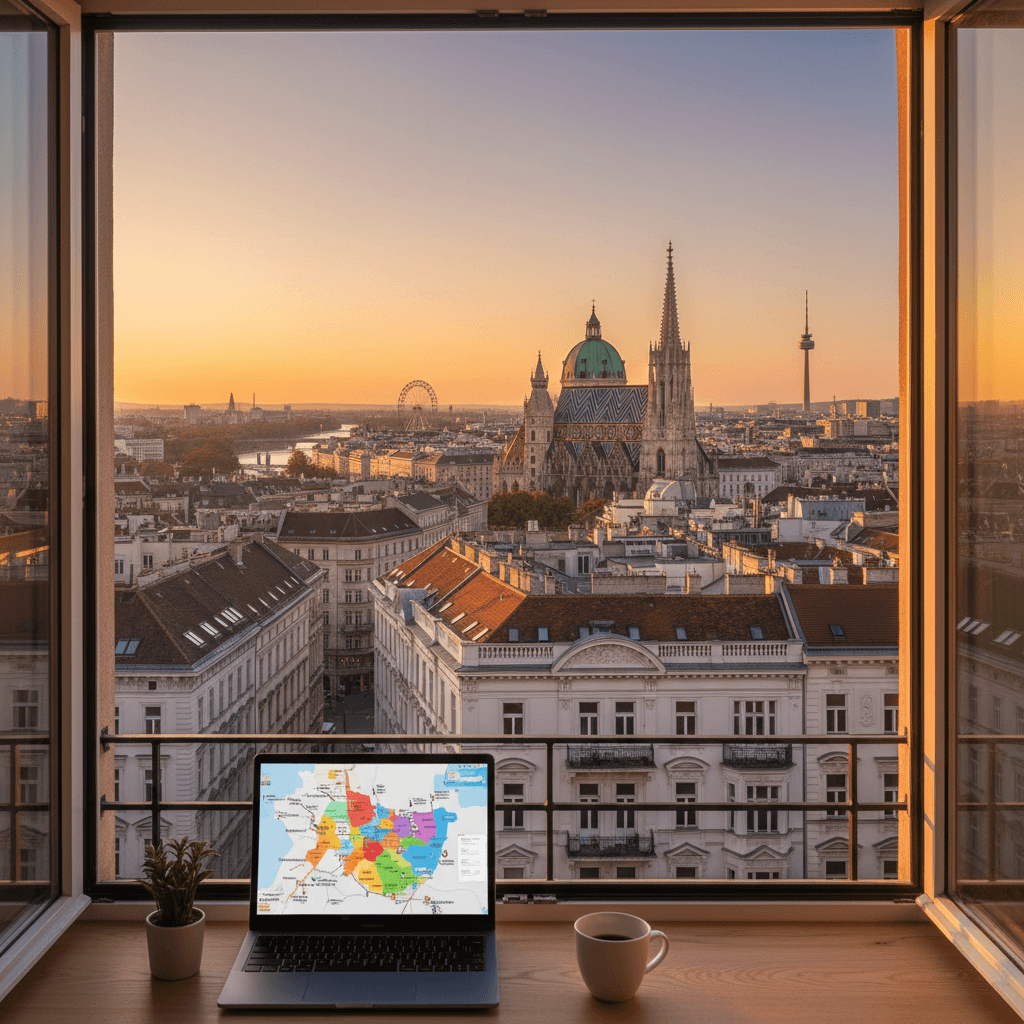
Vienna isn't your typical scrappy nomad hub. It doesn't try to be "cool" in the way Berlin or Lisbon does; it simply is elegant. Living here feels like being an extra in a high budget period drama that somehow has 300 Mbps fiber optic internet and a perfectly functioning subway. The vibe is a unique blend of "Old World" prestige and "New World" efficiency. You'll spend your mornings working under the gilded ceilings of a 19th-century coffee house and your afternoons networking at a tech startup hub in a renovated factory.
The city operates with a quiet, disciplined rhythm. People value their privacy and their weekends, so don't expect the frantic energy of London or New York. Instead, you get a high quality of life that feels earned. It's a place where you can actually focus. The productivity levels among nomads here are famously high, likely because the infrastructure just works. You won't waste half your day troubleshooting a connection or waiting for a delayed tram.
The Nomad Reality Check
While the aesthetic is dreamlike, the social barrier is real. Locals can be reserved, and the "Viennese grumpiness" is a well known cultural quirk that even the residents joke about. It’s rarely personal, but it means you’ll likely find your community within the international expat circles first. Most nomads find that joining a dedicated coworking space like Impact Hub Vienna or Stockwerk is the fastest way to bypass the local chill and make friends.
Cost is the other major factor. This isn't a "live like a king for €1,000" destination. You're paying for the security, the clean air, and the fact that the tap water tastes better than bottled. If you’re coming from a cheaper hub like Bratislava or Budapest, the €4.50 price tag for a Melange coffee might sting, but the ability to sit in that cafe for four hours with your laptop without being hassled makes it a fair trade.
Living the Neighborhood Life
Where you plant your flag changes your experience entirely. Most nomads gravitate toward the 7th District (Neubau). It’s the creative heart of the city, packed with independent boutiques, vegan eateries, and the highest concentration of laptop friendly cafes. If you want to be where the action is, this is it, though you'll pay a premium for a furnished studio, often between €1,000 and €1,500.
For a slightly more residential but still central feel, the 6th District (Mariahilf) is the go to for expats. It’s sandwiched between the grand museums and the gritty, lively Naschmarkt. If you’re traveling with a family or just want more space for your Euro, Leopoldstadt (2nd District) offers a great mix. It’s located between the Danube Canal and the massive Prater park, giving you plenty of green space to decompress after a long day of deep work.
The Daily Grind and Glory
A typical Tuesday in Vienna starts with a €3.20 subway ride that arrives exactly when the sign says it will. You might head to Propeller Cafe for a fast connection and a solid breakfast, then move to a park like Stadtpark for a lunch break in the sun. The city is incredibly walkable, but the WienMobil bike sharing system is the secret weapon for getting across the city center in minutes.
By the time 5:00 PM rolls around, the city shifts. The coffee houses stay full, but the wine taverns (Heurige) start calling. There is a palpable sense of "Feierabend," the German concept of finishing work and truly beginning your private life. Whether you’re grabbing a €6 Käsekrainer sausage from a street stand or meeting friends for a €20 schnitzel dinner, the transition from work to play is seamless. Vienna teaches you how to be a professional without letting your job become your entire personality.
The Reality of the Vienna Price Tag
Vienna isn't a budget destination, but it provides incredible value for the quality of life you get in return. Most nomads find they need about €2,000 to €3,000 per month to live comfortably without constantly checking their bank app. While locals can get by on roughly €1,500, they usually have the benefit of long term, rent controlled leases that aren't available to short term visitors.
The city is very card friendly, so you won't need to carry stacks of Euros. Using fintech like Revolut or Wise is the standard move here to avoid conversion fees at the local ATMs.
Monthly Budget Tiers
- The Budget Nomad (€1,500 to €2,000): You're likely looking at a room in a shared apartment (WG) or a studio in the outer districts like Leopoldstadt. You'll stick to the legendary street food scene, use a monthly transit pass, and do most of your deep work in laptop-friendly cafes.
- The Mid-Range Lifestyle (€2,000 to €3,000): This is the sweet spot. It covers a private 1BR in a hip area like Mariahilf, a few dinners out at mid-range spots each week, and a dedicated desk at a coworking space like Impact Hub.
- The Comfortable Resident (€3,000+): At this level, you can snag a premium serviced studio at District Living, eat at upscale restaurants whenever you like, and enjoy a full social calendar of weekend trips and opera nights.
Housing and Neighborhood Costs
Rent is your biggest hurdle. The market for furnished, short term rentals is competitive, so expect to pay a premium for convenience. Expats recommend using platforms like Flatio to skip the heavy bureaucracy of traditional Austrian leases.
- Neubau (7th District): The nomad favorite. It is walkable and packed with cafes, but expect to pay €1,000 to €1,500 for a furnished studio.
- Mariahilf (6th District): Central and social. Prices are similar to Neubau, generally €1,000 to €1,400 for decent nomad housing.
- Leopoldstadt (2nd District): A bit more residential and slightly easier on the wallet. You can often find quality spots for €800 to €1,200.
Food and Dining
Eating out can be as cheap or as expensive as you make it. A quick Käsekrainer sausage from a street stand will cost you €5 to €8, while a solid lunch at a mid-range restaurant usually lands between €15 and €25 per person. If you're heading somewhere upscale, budget at least €40 before drinks.
Groceries are high quality but priced accordingly. If you cook at home most of the time, you'll likely spend €300 to €400 a month on food. For the best deals, skip the fancy markets and head to Hofer or Lidl.
Work and Connectivity
Internet is lightning fast and reliable. You can get a high speed home connection for about €30 a month, and mobile data is affordable via local providers on the WienMobil app. If you prefer a professional environment over a cafe, coworking costs are varied:
- Impact Hub Vienna: Offers flexible tiers starting at €35 for 10 hours, up to €225 for a dedicated desk.
- Stockwerk: A renovated factory vibe with 24/7 access for around €200 a month.
- District Living: District Living offers coworking from €115/month for flexible desks, making it affordable for those wanting integrated living and working spaces.
Transport and Utilities
This is where Vienna shines. The public transport system is world class and incredibly cheap for what you get. A single ticket is €2.40, but most nomads just grab the €50 monthly pass which covers all subways, trams, and buses. It is far more efficient than ride hailing, which is limited and expensive here. For shorter hops, the WienMobil bike share system is a great, low cost alternative.
Expect to spend about €100 to €200 a month on "extras" like museum entries, drinks in Neubau, or the occasional movie. Utilities like electricity and heating are usually included in nomad-style rentals, but if they aren't, budget an extra €150 for a standard apartment.
The Nomad Hub: Neubau (7th District)
If you want to be in the center of Vienna's creative pulse, Neubau is where you'll likely end up. It's the city's trendiest district, packed with independent boutiques, street art, and the highest concentration of laptop-friendly cafes. Most nomads gravitate here because the neighborhood feels alive without the tourist-heavy crowds of the 1st District.
- The Vibe: Hip, artistic, and highly walkable. You can spend your morning working at Impact Hub Vienna on Lindengasse and your afternoon browsing vinyl shops.
- Rent: Expect to pay between €1,000 and €1,500 for a furnished studio or one-bedroom apartment.
- Perks: You're steps away from Propeller Cafe, which has some of the fastest WiFi in the city, clocked at over 300 Mbps.
- The Trade-off: It's one of the pricier areas for housing, and apartments get snapped up fast.
The Expat Favorite: Mariahilf (6th District)
Mariahilf sits right next to Neubau and offers a slightly more established feel while staying incredibly central. It's home to the Naschmarkt, the city's most famous open-air market, making it a dream for anyone who loves cooking with fresh, international ingredients. Expats recommend this area because it balances social energy with practical amenities.
- The Vibe: Lively and diverse. It's the kind of place where you'll find a traditional Austrian bakery right next to a specialty coffee roaster.
- Rent: Similar to Neubau, prices usually range from €1,000 to €1,400 for mid-range rentals.
- Perks: Excellent shopping along Mariahilfer Strasse and a very high density of English-speaking services and international meetups.
- The Trade-off: It can get quite noisy and busy, especially on weekends when the shopping crowds descend.
Families and Long-Termers: Leopoldstadt (2nd District)
Located between the Danube Canal and the Danube River, Leopoldstadt has undergone a massive transformation. It's now a sophisticated residential-commercial mix that families and solo travelers seeking a bit more breathing room love. It feels less "hip" than the 7th, but it's far more functional for daily life.
- The Vibe: Relaxed and green. You have the Prater, a massive park and forest, right in your backyard for morning runs or weekend picnics.
- Rent: Slightly more affordable than the inner districts, typically ranging from €800 to €1,200 for modern apartments.
- Perks: Home to District Living, a popular choice for nomads that offers fully furnished studios with built-in coworking access.
- The Trade-off: It lacks the narrow, historic cobblestone charm of the 6th or 7th districts.
Solo Travelers and Short Stays: Landstrasse (3rd District)
If you're only in town for a few weeks, Landstrasse is a practical choice. It's well-connected to the airport via the CAT train and sits within walking distance of the city center's grand museums. It's an upscale, diplomatic area that feels very safe and polished.
- The Vibe: Professional and refined. You'll see plenty of embassy buildings and grand 19th-century architecture.
- Rent: Prices are moderate to high, often around €1,100 to €1,300 for short-term furnished stays.
- Perks: Easy access to Stadtpark for free public WiFi and the Wien Mitte transport hub, which makes getting anywhere in the city a breeze.
- The Trade-off: The nightlife is quieter here, so you'll likely be heading to other districts for late-night drinks.
Regardless of where you land, Vienna's public transport is world-class. A €50 monthly pass covers all trams, buses, and the subway, so you're never truly stuck in one neighborhood. Most nomads find that even if they live in the quieter 2nd District, they're only a 10-minute train ride away from the social heart of the city.
Connectivity and Speed
Vienna is a productivity powerhouse. You won't be hunting for a decent signal here; the city is blanketed in high speed fiber optic networks and 5G coverage that puts many other European capitals to shame. Most nomads find that even basic home internet packages clock in around €30 a month, providing more than enough bandwidth for video calls and heavy uploads.
If you're out and about, the city's public infrastructure has you covered. Free WiFi is available at the Vienna University Library and across major public spaces like Stadtpark. For mobile data, expats recommend grabbing a local SIM through the WienMobil app or visiting a local provider to get set up immediately. The coverage is remarkably consistent, even when you're riding the U-Bahn deep underground.
Top Coworking Spaces
The coworking scene in Vienna is professional and polished. You won't find many "party" offices; instead, expect sleek design and serious work ethics. Here are the spots most nomads gravitate toward:
- Impact Hub Vienna: Located at Lindengasse 56 in the 7th District, this is the heart of the social entrepreneurship scene. It's great for networking and offers flexible tiers: €35 for 10 hours, €60 for 25 hours, or €175 for unlimited monthly access. A dedicated desk will run you €225.
- District Living: This is a favorite for those who want a true "live-work" setup. They offer flexible desks, private offices, and meeting rooms that hold up to 12 people. The perks include free coffee, tea, and reliable printing services.
- Stockwerk: Situated at 11A Pater-Schwartz-Gasse, this space occupies a beautifully renovated factory. It offers 24/7 access for members, a shared kitchen, and a community of about 60 desks. It's known for a slightly more industrial, creative vibe.
The Coffee House Office
You can't talk about working in Vienna without mentioning the coffee houses. Unlike cities where baristas glare at you for opening a laptop, Vienna has a long tradition of people sitting for hours with a single cup of coffee. It's the original coworking culture.
For fast speeds, head to Propeller Cafe, which has been tested with download speeds around 60-300+ Mbps depending on conditions. It remains a nomad favorite for its reliable atmosphere and consistent connectivity.
Practical Costs and Essentials
Budgeting for your workspace depends on how much structure you need. Most mid range nomads spend between €120 and €225 a month on a professional desk, while budget travelers often stick to the "one coffee per two hours" rule at local cafes.
- High speed home internet: €30 per month.
- Coworking day pass: Usually around €20 to €30.
- Monthly unlimited coworking: €175 to €225.
- Cafe work: €5 to €6 for a Melange (traditional Viennese coffee).
Digital nomads often say that the Neubau district is the best place to base yourself if internet speed and cafe proximity are your priorities. Everything is walkable, and you're never more than five minutes from a reliable router and a strong caffeine fix.
A Safe Haven in Central Europe
Vienna consistently ranks near the top of global quality-of-life surveys, and it doesn't take long to see why. For nomads and expats, the city feels remarkably secure. You can walk through the 7th District or Mariahilf late at night without the constant over-the-shoulder glance common in other major capitals. While the vibe is relaxed, you shouldn't get complacent. Petty theft, particularly pickpocketing, happens around high-traffic tourist spots like Stephansplatz or the Westbahnhof train station. Keep your laptop bag zipped and your phone off the table at outdoor cafes.
The city's infrastructure contributes to this sense of safety. Street lighting is excellent, and the public transport system runs reliably through the night on weekends. Most travelers find that common sense is your best defense. There aren't really any "no-go" zones to worry about, though some areas around the Praterstern station can feel a bit gritty after dark. Even then, it's more about occasional loitering than actual danger.
World-Class Healthcare Access
If you get sick in Vienna, you're in good hands. The healthcare system is one of the best in the world, characterized by high-tech facilities and well-trained staff who almost always speak fluent English. For minor issues, look for a Apotheke (pharmacy). They are everywhere, marked by a large red "A." Pharmacists here are highly trained and can offer advice for basic ailments, often saving you a trip to the doctor.
For something more serious, Vienna has numerous public and private hospitals. AKH Wien (General Hospital of the City of Vienna) is a massive, world-renowned facility central to the city. If you prefer a private setting, many expats recommend Privatklinik Döbling for its high standards and international department. Most nomads use private international insurance like SafetyWing or World Nomads, but if you're an EU citizen, your EHIC card will cover most necessary treatments in the public system.
Emergency Contacts and Practical Info
It's smart to have the local emergency numbers saved before you arrive. In Austria, the numbers are specific to the service, though the European standard 112 works for everything. If you need a specific department, use these:
- Police: 133
- Ambulance: 144
- Fire Department: 122
- Euro-Emergency: 112
When visiting a doctor as a nomad, expect to pay upfront if you don't have local social security. A standard consultation usually costs between €80 and €150. Always ask for a detailed receipt to submit to your insurance provider later. If you need a doctor outside of business hours, the Ärztefunkdienst (Emergency Medical Service) can be reached by dialing 141; they provide house calls and medical advice when regular clinics are closed.
Daily Wellness and Environment
Safety in Vienna extends to the environment. The tap water comes directly from the Alps and is some of the cleanest and best-tasting in the world. You’ll save a lot of money and plastic by simply refilling a bottle at the many public drinking fountains. Air quality is generally high, though it can get a bit stagnant in the narrow streets of the 1st District during the peak of summer.
For those who prioritize physical activity, the city is designed for it. The Donauinsel (Danube Island) offers over 20 kilometers of car-free paths for running and cycling. Most nomads find that the combination of clean air, walkable neighborhoods, and high food safety standards makes maintaining a healthy lifestyle relatively effortless here.
The Gold Standard of Public Transit
Vienna consistently ranks as one of the most livable cities on the planet, and its transit system is a massive reason why. The network of U-Bahn (subway), trams, and buses is so efficient that owning a car feels like a chore rather than a luxury. Most nomads find they rarely wait more than five minutes for a connection in the central districts.
The pricing is remarkably straightforward. A single ticket costs €3.20 (€3.00 for digital tickets), but if you're staying for more than a few days, skip the singles. Expats and long term travelers usually opt for the monthly pass at €75.00 (€65.20 for digital). This gives you unlimited access to every tram, bus, and train within the city limits. You can buy these at any station kiosk or via the WienMobil app, which is the local holy grail for route planning and ticket storage.
Mastering the U-Bahn and Trams
The U-Bahn is the backbone of the city. It's clean, safe, and runs 24 hours on weekends. During the week, night buses take over after midnight, ensuring you're never stranded after a late night in Neubau. The trams, or "Bims" as locals call them, are slower but offer a scenic way to see the Ringstrasse architecture while you move between meetings.
- U-Bahn: Five lines (U1, U2, U3, U4, U6) covering most of the city.
- Trams: Ideal for short hops within the 6th and 7th districts.
- S-Bahn: These regional trains are great for reaching the outskirts or heading toward the airport.
Two Wheels and Walkability
Vienna is incredibly flat, making it a dream for cyclists. The city is crisscrossed with dedicated bike lanes that are physically separated from car traffic. If you don't want to buy a bike, WienMobil Bikes is the city's bike sharing program. You'll see these red and white bikes parked at hubs all over town. It's affordable and integrates directly with your transit app.
Walking is the default mode of transport in the Innere Stadt and surrounding neighborhoods like Mariahilf. The sidewalks are wide and well maintained. You can walk from the Museumsquartier to the Naschmarkt in about 15 minutes, passing dozens of coffee houses along the way.
Getting to and from VIE Airport
Instead, take the S7 S-Bahn or a Railjet train. It takes about 20-30 minutes to reach the city center and costs €5.40, or even less if you already have a city transit pass. If you're carrying heavy luggage, Uber and Bolt operate here, though they are more expensive than the trains, usually costing between €30 and €45 depending on your destination.
Practical Transit Tips
- Validation: If you buy a paper ticket, you must validate it in the blue or orange machines before boarding. Failure to do so results in a €105 fine if you're caught by inspectors.
- Quiet Cars: On the ÖBB Railjet trains, look for the quiet zones if you need to get some work done during a day trip.
- Citymapper: While Google Maps is decent, Citymapper often provides more accurate real time data for Vienna's tram delays.
- The Honor System: There are no turnstiles in the subway stations. It operates on an honor system, but undercover ticket checkers are frequent and they don't take "I'm a tourist" as an excuse.
Most nomads recommend living in the 2nd, 6th, or 7th districts precisely because they are transit hubs. From Praterstern or Westbahnhof, you can reach almost any part of the city in under 20 minutes. It's a level of freedom that makes exploring the city's outskirts, like the vineyards in the 19th district, feel like a quick afternoon breeze.
The Language Barrier (Or Lack Thereof)
You can breathe a sigh of relief when landing at Schwechat Airport. Vienna is incredibly accessible for English speakers, especially within the tech, startup, and creative circles that nomads tend to frequent. While German is the official language, the city's high international ranking means you'll find high English proficiency across most service industries, from the baristas in Neubau to the staff at District Living.
Most nomads find that they can navigate daily life, grocery shopping, and public transit entirely in English. However, there's a subtle cultural nuance to keep in mind. While locals speak English well, they appreciate it when you don't just assume they do. Starting a conversation with a polite "Entschuldigung, sprechen Sie Englisch?" usually gets a much warmer reception than simply launching into an English request.
When You'll Actually Need German
The "reserved" reputation of the Viennese often stems from the language gap in social settings. While you can survive in English, you'll need some German to truly thrive or build deeper connections with locals outside the expat bubble. Expats recommend learning at least the basics if you plan to stay longer than a month, particularly for dealing with official bureaucracy or reading lease agreements.
Digital nomads applying for the remote working visa should prepare for a bit of paperwork that might be in German. While the 2030 Economy and Innovation strategy aims to make the city more international, the municipal offices (Magistrats) still operate primarily in the local tongue. If you're heading to a government appointment, it's smart to bring a German speaking friend or use a translation app to ensure nothing gets lost in the fine print.
Key Phrases for Your Coffee House Office
Vienna's coffee house culture is legendary, and these spots often double as remote workspaces. To blend in at places like Café Central or Propeller, keep these terms in your back pocket:
- Grüß Gott: The standard, formal greeting in Austria. It's more common than "Guten Tag" and will immediately make you sound less like a tourist.
- Die Rechnung, bitte: "The bill, please." Remember that tipping is standard here; most nomads aim for about 10% or round up to the nearest even Euro.
- Melange: The classic Viennese coffee, similar to a cappuccino but often milder.
- Danke / Bitte: "Thank you" and "Please/You're welcome." Use these liberally.
Digital Tools and Learning
For day to day navigation, Google Translate is your best friend for menus and street signs. If you want to get serious about the local dialect, which has its own rhythmic lilt quite different from the "High German" spoken in Berlin, travelers often suggest using apps like Duolingo or Babbel before arrival.
If you're looking for a more social way to learn, check out the Impact Hub Vienna in the 7th District. They often host networking events where you can practice your German in a low pressure environment. Many nomads also join local Meetup groups or language exchanges in Mariahilf to bridge the gap between being a visitor and feeling like a resident.
Communication Etiquette
Communication in Vienna is direct but formal. People value their privacy and personal space, so don't be offended if locals don't strike up a conversation with you on the U-Bahn. Once you're in a coworking space or a social club, however, that shell drops. In professional settings, punctuality is a form of communication itself. Being five minutes early is considered being on time; being exactly on time is pushing it.
When it comes to staying connected, the digital infrastructure is top tier. You'll find fiber optic networks throughout the city center, and the WienMobil app is the gold standard for navigating the city's transport system in English. Whether you're working from a park or a high end studio, the "digital" part of being a nomad is rarely a struggle here.
The Four Seasons of the Imperial City
Vienna experiences a classic temperate continental climate, which means you'll get four very distinct seasons. If you're coming from a place with consistent weather, the shift here can be quite dramatic. The city transforms completely between the snowy, quiet winters and the lush, green summers where life moves outdoors to the parks and the Danube Canal.
Most nomads find the sweet spot for visiting is between May and September. During these months, temperatures usually hover between 20°C and 25°C (68°F to 77°F). It is warm enough for t-shirts and outdoor dining but rarely reaches the stifling humidity found in Southern Europe. This is when the city feels most alive, with film festivals at City Hall and endless coffee house seating spilling onto the sidewalks.
Breaking Down the Calendar
- Spring (March to May): This is a transition period. While March can still feel quite brisk, May is arguably the most beautiful month in Vienna. The city's many rose gardens and parks like the Stadtpark burst into bloom. Daytime averages sit around 14°C to 19°C. You might see some rain in May, so keep a light jacket or umbrella handy for those afternoon showers.
- Summer (June to August): These are the warmest months. While 25°C is the average, heatwaves can occasionally push temperatures above 30°C. Keep in mind that many older Viennese apartments and even some cafes don't have air conditioning. If you're sensitive to heat, look for modern rentals in areas like District Living or seek out coworking spaces like Impact Hub that offer climate control.
- Autumn (September to October): September is a nomad favorite. The crowds thin out, the air turns crisp, and the vineyards surrounding the city start their harvest. Temperatures drop to a comfortable 15°C to 20°C. By late October, the days get shorter and the "grey" sets in, which is a great time to retreat into the cozy interior of a historic coffee house like Café Central.
- Winter (November to February): Expect it to be cold. Temperatures often hover between 0°C and 5°C, and it frequently dips below freezing at night. While the days are short and dark, the city compensates with world-famous Christmas markets and a festive atmosphere. If you don't mind the chill, it's a magical time to be here, but for those who chase the sun, this is the time to head elsewhere.
When to Book Your Stay
If you're looking for the best balance of weather and social activity, aim for a May or June arrival. You'll catch the beginning of the outdoor event season without the peak tourist pricing of mid-summer. Expats often recommend September as the runner-up because the weather remains stable and the city's cultural calendar kicks back into high gear after the summer break.
Travelers often say the "worst" months are January and February. The holiday magic has faded, the skies are often overcast, and the biting wind can make walking between meetings a bit of a chore. However, if you're a fan of ice skating or want to experience the Viennese Ball season, these months offer a unique local experience that most tourists miss.
Practical Weather Tips
- The Rain Factor: Rainfall is fairly consistent throughout the year, but it actually peaks in May and June. It's rarely a washout, but quick showers are common.
- Layering is Key: Even in the summer, evenings can get cool. A light sweater is a staple for anyone planning to stay out late at the bars in Neubau.
- Sunlight Variations: In December, the sun sets around 4:00 PM. Conversely, in June, you'll have light until nearly 9:00 PM, giving you plenty of time for post-work exploration.
Connectivity and Getting Online
You won't struggle to find a signal in Vienna. The city's fiber optic infrastructure is world class, and most nomads find the 306 Mbps download speeds at spots like Propeller Cafe more than enough for heavy video calls. For your phone, skip the expensive roaming and pick up a local SIM through the WienMobil app or at a local provider shop; coverage is excellent even in the subway.
High speed home internet typically runs around €30 a month. If you're staying short term, look for apartments on platforms like Flatio or District Living, which usually include high speed WiFi in the rental price. If you need a change of scenery, the Vienna University Library and Stadtpark offer free public WiFi that's surprisingly reliable.
Money and Budgeting
Vienna isn't a budget destination like nearby Bratislava, but it's manageable if you're smart about it. Most nomads find a monthly budget of €2,000 to €3,000 provides a comfortable lifestyle. While cash used to be king, card payments are now widely accepted almost everywhere. Expats recommend keeping a Revolut or Wise account handy to avoid bank fees on smaller transactions.
- Budget Tier (€1,500 to €2,000): Focus on shared housing, street food like €5 Würstel, and working from cafes rather than dedicated desks.
- Mid-range Tier (€2,000 to €3,000): Covers a private one bedroom in Mariahilf, regular dining out, and a basic coworking membership.
- Comfortable Tier (€3,000+): A central studio in Neubau, upscale dinners, and full 24/7 coworking access.
Navigation and Transport
The public transport system is legendary for its efficiency. You likely won't need a car or even a ride hailing app. A single ticket is €3.20, but the real value is the monthly pass for €75.00 (€65.20 for digital), which gives you unlimited access to every bus, tram, and subway line in the city.
Download the WienMobil and Citymapper apps to get around. For sunny days, the city is incredibly bike friendly. You can grab a WienMobil Bike for a few euros to navigate the dedicated lanes that crisscross the central districts. If you're coming from the airport, the buses or the S-Bahn are much cheaper than the specialized CAT train and nearly as fast.
Safety and Health
Vienna consistently ranks as one of the safest cities globally. You can walk through most neighborhoods at night without a second thought, though travelers say it's still wise to watch your bag in crowded tourist spots like Stephansplatz. If you have an emergency, dial 112 for the EU standard line or 133 for the police.
The healthcare system is top tier. Pharmacies are easy to spot by the large red "A" signs, and most pharmacists speak excellent English. If you're a non EU nomad, make sure your travel insurance covers private clinics, as the wait times at public hospitals can be long for non urgent issues.
Local Customs and Language
German is the official language, but English proficiency is very high, especially in the 6th and 7th districts. Learning a few basics like "Guten Tag" or "Danke" goes a long way with the locals, who can sometimes seem reserved or formal at first. Don't take the "Viennese grumpiness" personally; it's often just a local quirk rather than actual rudeness.
When dining out, a 10% tip is the standard for good service. Also, be aware that many shops and supermarkets close strictly on Sundays. Nomads often forget this and end up with an empty fridge, so do your grocery shopping on Saturday morning to avoid the weekend rush.
Visa and Paperwork
If you're looking to stay long term, Austria has introduced remote working visa options for eligible applicants. Be prepared for some bureaucracy; you'll likely need a clean criminal record certificate and proof of health insurance. Most expats suggest starting this process well in advance, as Austrian officials are thorough and rarely rush the paperwork.
Need visa and immigration info for Austria?
🇦🇹 View Austria Country GuideNomad Haven
Your home away from home