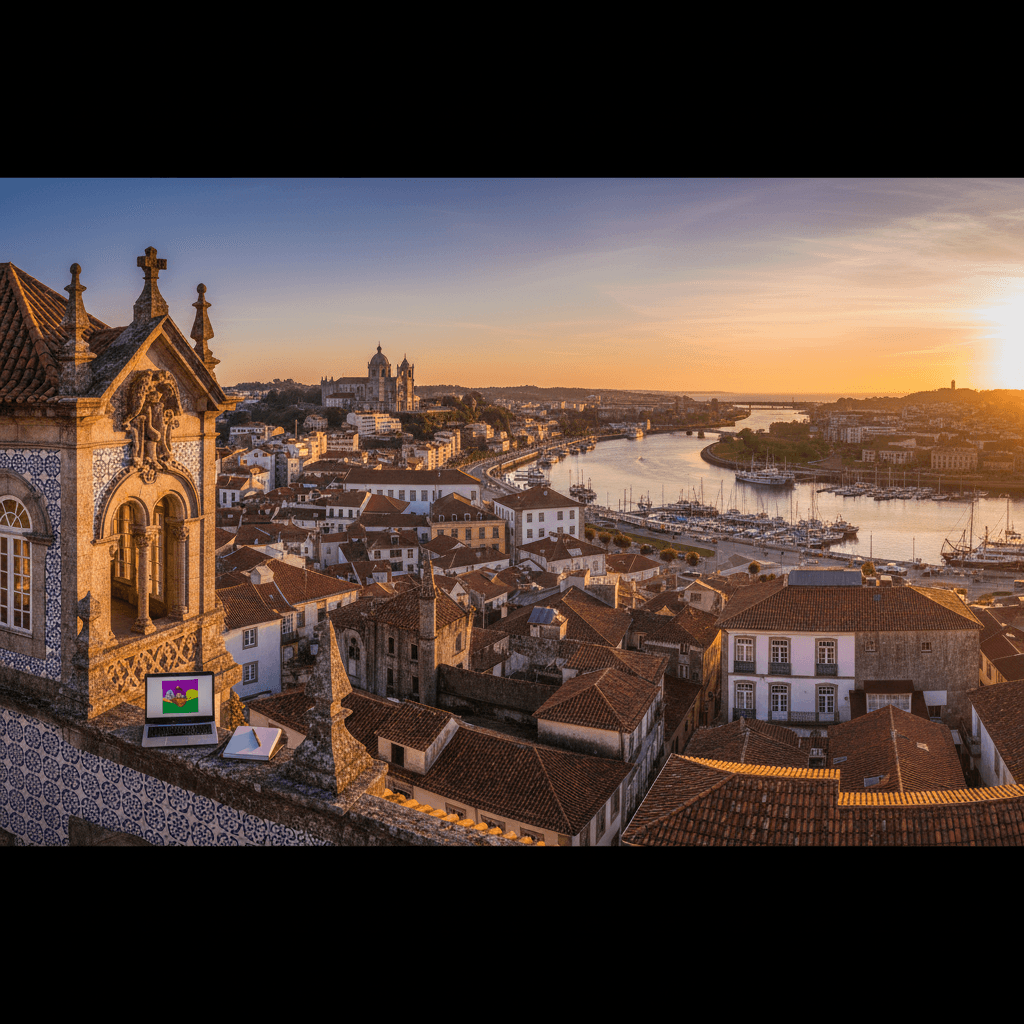
Viana do Castelo
🇵🇹 Portugal
If Lisbon is the loud, charismatic older sibling and Porto is the moody artist, Viana do Castelo is the grounded cousin who actually knows how to live well. Tucked away in the far north, this coastal city trades the frantic energy of the southern hubs for a pace of life that feels intentionally slow. It is one of the few places left in Portugal where you can walk through the main square without tripping over a tour group, making it a sanctuary for nomads who prioritize authenticity over networking mixers.
The vibe here is defined by the Atlantic. You feel it in the brisk breeze that keeps the 21°C summer days comfortable and see it in the architecture of the city center, where Manueline windows and tiled facades tell stories of a deep maritime history. Living here feels like being let in on a secret; you get the high-speed 239 Mbps internet and the reliable infrastructure of a modern European city, but with a community that still takes its festivals and afternoon coffees seriously.
The Daily Grind and Cost of Living
Expect to spend around $3,129 per month for a comfortable mid-range lifestyle. While that figure is higher than some rural villages, it reflects a high quality of life in a city that is remarkably easy to navigate on foot. Rent is the primary variable, but since the expat community is still small, you aren't competing with thousands of others for the same three apartments.
- Budget Tier: €1,500 to €2,000. This usually involves shared housing and sticking to local tascas where a daily special costs under €10.
- Mid-Range: $2,500 to $3,500. This covers a private one-bedroom apartment, frequent dining out, and weekend trips to nearby Peneda Geres National Park.
- Comfortable: $4,000+. This allows for premium housing near the beach and upscale seafood dinners that can run €30 or more per person.
Where to Plant Your Laptop
The City Center is the undisputed heart of the nomad experience. It is flat, highly walkable, and packed with traditional cafes where the staff will eventually remember your order. While dedicated coworking spaces are still rare, the cafe culture is welcoming. You'll find most remote workers parked at tables in the main square, fueled by €1 espressos and the reliable 4G/5G coverage from providers like MEO or Vodafone.
For those who need a view to stay inspired, the Santa Luzia area sits on the hill overlooking the city. It is breathtaking but steep. Most nomads prefer to live downtown for the convenience of the Estacao Viana Shopping mall and the proximity to the train station, then head up the hill or out to the Cabedelo Beach area for a change of scenery on the weekends.
Safety and Local Life
Viana do Castelo is exceptionally safe, even by Portuguese standards. Crime is low, and the compact nature of the city means you'll quickly recognize the faces in your neighborhood. Healthcare is robust, with the local camara municipal helping residents get settled into the public system, though most expats keep a private insurance plan for faster access to specialists.
The biggest challenge you'll face isn't safety or internet; it's the language. While younger locals and hospitality staff speak solid English, you'll want to keep DeepL or Google Translate handy for trips to the pharmacy or the local market. Learning a few phrases like "com licenca" goes a long way in a city that prides itself on traditional northern hospitality.
Getting Around
You don't need a car if you stay in the center. The city is a dream for cyclists and walkers. However, if you want to explore the Spanish border or the rugged coastline, Uber is available for short hops, and the train connects you to Porto in about an hour. Most nomads find that a pair of comfortable walking shoes and the occasional train ticket are all they need to feel fully mobile.
The Price of Authenticity
Viana do Castelo is a breath of fresh air for nomads who feel priced out of Lisbon or overwhelmed by the tourist crowds in Porto. It is one of those rare coastal spots where you can still live a traditional Portuguese life without the "expat tax" found in the south. You are looking at a total monthly spend of around $3,129 for a mid-range lifestyle, though budget-conscious travelers can comfortably get by on $1,500 to $2,000 if they opt for shared housing and stick to local tascas.
The city center is where you want to be. It is flat, walkable, and packed with the kind of cafes where a coffee and a pastry won't break the bank. Most nomads find that while the upfront cost of a short-term rental might seem high, the daily "burn rate" is remarkably low. You can grab street food for €5 to €10, while a solid mid-range dinner with wine usually lands between €15 and €25. If you want to splurge on upscale seafood near the harbor, expect to pay €30 or more.
Budget Breakdown by Lifestyle
- Budget Tier: €1,500 to €2,000. This covers a room in a shared apartment, plenty of home cooking, and using the city's excellent walkability to save on transport.
- Mid-Range Tier: €2,500 to €3,500. This is the sweet spot for most digital nomads. It covers a private one-bedroom apartment, dining out a few times a week, and a few weekend trips to nearby Porto or the Peneda-Geres National Park.
- Comfortable Tier: €4,000+. This gets you a premium apartment, perhaps in the Santa Luzia hills or closer to the beach, frequent upscale dining, and a rental car for exploring the northern coastline.
Housing and Neighborhoods
Rent is your biggest variable here. Because there isn't a massive expat bubble, you'll often find better deals by looking at local platforms like HousingAnywhere or even checking physical flyers in the city center. If you are applying for the D8 Digital Nomad Visa, keep in mind you'll likely need a lease of at least 12 months to satisfy D8 visa requirements.
City Center
- Rent: Moderate, though availability can be tight in the summer.
- Vibe: Best for solo travelers and nomads who want everything within a five-minute walk.
- Pros: Flat terrain, reliable fiber internet, and easy access to the train station.
Santa Luzia
- Rent: Varies, often featuring larger homes or villas.
- Vibe: Quiet, scenic, and surrounded by nature.
- Pros: Incredible views of the basilica and the Atlantic; great for families.
- Cons: Very hilly; you will likely want a car or a sturdy pair of legs for the climb.
Tech and Connectivity
Don't let the sleepy, historic facade fool you. The internet speeds in Viana do Castelo are some of the best in the country, often averaging 239 Mbps. This is significantly higher than the national average, making it a reliable base for heavy video calls or developers. While you won't find flashy coworking chains like Second Home or Heden here, the local cafe culture serves as a de facto office for many.
For mobile data, grab a SIM card from MEO, NOS, or Vodafone as soon as you arrive. You can find these shops in the local mall or the city center. A standard data plan will run you roughly €10 to €20 per month. If you need a formal office environment for a day, Porto is only an hour away by train and offers plenty of dedicated coworking hubs.
Practical Logistics
Getting around is cheap because you'll mostly be using your feet. The city center is incredibly compact. For longer trips to the beach or the surrounding parks, Uber is available and affordable. If you are planning an extended stay, register at the local town hall, the camara municipal, to access public services. For banking, most expats recommend using Revolut or Wise for daily spending to avoid exchange fees, though a local account at Caixa Geral is helpful if you are working toward residency.
The City Center: Best for Nomads and Solo Travelers
If you want to be where the action is, the flat city center is your best bet. It is the heart of Viana do Castelo, centered around the Praça da República. You will find yourself walking everywhere, from the local shops and the Estação Viana Shopping mall to the riverside parks. Most nomads choose this area because it is the only part of town where you can reliably work from a café without needing a car.
- Monthly Rent: Around $900 to $1,300 for a private apartment.
- Daily Life: Extremely walkable with high speed internet averaging 239 Mbps.
- The Vibe: Authentic and social. You will spend your afternoons at outdoor tables in the main square.
The only real downside is the lack of dedicated coworking offices. You will likely be joining the local café culture to get your deep work done. Parking can also be a headache during the summer festivals, so don't bother bringing a vehicle if you live here.
Santa Luzia: Best for Families and Nature Lovers
For those who prefer a view over convenience, the hills surrounding the Santa Luzia Basilica offer a quieter, more scenic lifestyle. It is a favorite for families who want more space and easy access to hiking trails. The air is cooler here, and the views of the Lima River meeting the Atlantic are unmatched. You are trading the flat, walkable streets for steep inclines, so a car or a sturdy pair of legs is a requirement.
- Monthly Rent: $1,100 to $1,600 for larger family homes.
- Daily Life: Quiet residential streets with proximity to natural parks.
- The Vibe: Peaceful and secluded. It feels like a mountain retreat just ten minutes from the city.
Expats living here often mention the need for a car to run basic errands. While the funicular connects the hill to the town center, it is more of a tourist novelty than a practical way to haul groceries.
Cabedelo and Coastal Areas: Best for Long-Term Expats
If you moved to Portugal for the ocean, look across the river to Cabedelo. This area is perfect for expats staying six months or longer who prioritize surfing or kitesurfing over city amenities. It is less "urban" and more "surf town." You will find a mix of modern apartments and older beach houses. It is a bit further from the main cluster of restaurants, but the trade-off is having the dunes right outside your door.
- Monthly Rent: $850 to $1,200 depending on the season.
- Daily Life: Focused on the outdoors; great for biking and beach runs.
- The Vibe: Laid back and sporty. You will see people in wetsuits more often than business suits.
During the winter months, these coastal spots can get quite windy and damp. Make sure any apartment you rent has decent heating, as the Atlantic breeze is no joke in January.
Cost of Living Breakdown
Viana do Castelo is significantly more affordable than Lisbon or Porto, but it still maintains a high quality of life. A comfortable lifestyle here usually sits between $2,500 and $3,500 per month for a single person. If you are on a tighter budget, you can get by on $1,500 to $2,000 by sharing housing and sticking to local tascas for meals.
- Street Food & Local Cafés: €5 to €10 for a quick lunch.
- Mid-range Dinner: €15 to €25 per person including wine.
- Transport: Very low. Uber is available for short trips, and the city is mostly navigated on foot.
- Connectivity: Mobile data plans from providers like MEO or Vodafone cost about €10 to €20 a month.
Connectivity in the North
If you're worried about dropping a Zoom call while looking out over the Lima River, don't be. Portugal's infrastructure is surprisingly robust, and Viana do Castelo actually punches above its weight. Viana offers fast internet, with fixed broadband medians around 200 Mbps or higher from major providers. It's the kind of reliability that makes it easy to forget you're in a historic seafaring town rather than a glass office in Lisbon.
Most apartments in the city center come equipped with fiber optic internet. If you're booking an Airbnb or a local rental, just ask the host for a Speedtest screenshot. Providers like MEO, NOS, and Vodafone dominate the market here. You can grab a local SIM card at the Centro Comercial Estação Viana right by the train station. A standard data plan usually runs between €10 and €20 per month, which is plenty for tethering if the power ever flickers during a winter storm.
The Coworking Reality
Here is the honest truth: Viana do Castelo isn't Lisbon or Porto. You won't find massive coworking franchises like Second Home or Heden here. The nomad community is smaller and more fragmented, which is exactly why people choose this city. If you need a dedicated desk with ergonomic chairs and a community manager, you might find the options thin on the ground.
Most remote workers here embrace the "laptop and a latte" lifestyle. The city center is flat and packed with cafes that have decent Wi-Fi and even better pastries. The main square, Praça da República, is the unofficial headquarters for local freelancers. You'll see people working from outdoor tables when the weather is nice, though you should always check for a power outlet before you get too settled. If you absolutely need a corporate environment for a day, Porto is only an hour away by train and has dozens of high end spaces like Porto i/o or Typographia Cowork.
Best Spots to Log On
- The City Center Square: Perfect for light admin work or clearing your inbox. The atmosphere is lively, and the coffee is cheap.
- Estação Viana Shopping: It sounds unconventional, but the food court area has reliable Wi-Fi and plenty of seating if you're in a pinch between meetings.
- Local Libraries: The Biblioteca Municipal, designed by Álvaro Siza Vieira, is a quiet, architectural masterpiece. It's a great spot for deep focus work, though you'll need to keep your voice down.
Practical Tips for Remote Work
Since the nomad scene is still emerging, networking happens organically. You won't find a packed calendar of "Tech Tuesdays," but you will meet people at the local surf schools or during the festivals in August. Expats recommend joining Facebook groups for Northern Portugal or using apps like Revolut or Wise for your daily spending to avoid local bank fees.
If you're planning on staying long term on a D8 Digital Nomad Visa, remember that you'll need to show a lease agreement of at least six months. Platforms like HousingAnywhere are your best bet for finding nomad friendly housing that includes high speed internet in the monthly rent. Most nomads find that a budget of $2,500 to $3,500 covers a very comfortable lifestyle here, including a private apartment and plenty of dinners out.
One final tip: the northern Portuguese sun can be bright. If you plan on working from a terrace, invest in a good screen protector or a laptop sunshade. There's nothing worse than trying to code while squinting at a glare from the Atlantic.
Peace of Mind in the North
Viana do Castelo is one of those rare spots where the "big city" anxieties of Lisbon or Porto simply don't follow you. It feels more like a large, coastal village than an urban center. You'll find the atmosphere here incredibly relaxed, and the crime rates reflect that. It is widely considered one of the safest hubs in Northern Portugal, largely because it lacks the dense tourist crowds that usually attract petty theft.
Most nomads feel perfectly comfortable walking through the city center or along the Lima River well after dark. While you should still use common sense in crowded areas like the Praça da República during major festivals, violent crime is nearly non-existent. The local police, or GNR, are generally helpful, though their English might be limited compared to officers in the capital. If you ever run into a serious jam, remember that 112 is the universal emergency number for police, fire, and ambulance services.
Healthcare Infrastructure
The healthcare system in Viana is robust and follows the standard Portuguese model of high quality care. For minor issues, the city center is dotted with pharmacies (look for the green illuminated crosses). Most pharmacists speak decent English and can provide over the counter remedies for common ailments without a doctor's visit.
When you need more than a quick fix, you have two main paths. The public system, the Serviço Nacional de Saúde (SNS), is accessible if you are a legal resident. You'll need to head to the Câmara Municipal (town hall) to register your address and then visit the local Centro de Saúde to get your user number. While public care is excellent and very affordable, wait times for non-emergencies can be long.
Many expats and digital nomads opt for private health insurance to skip the queues. Private clinics in the area offer modern facilities and a higher likelihood of finding English speaking specialists. If you have a private policy through providers like Mufg, Allianz, or Cigna, you'll find that out of pocket costs for a standard GP consultation usually hover around €40 to €60.
Practical Medical Tips
- Hospital de Santa Luzia: This is the main public hospital serving the region. It's located just north of the city center and handles 24/7 emergencies.
- Health Center Registration: Bring your passport, NIF (tax number), and proof of address to the Unidade de Saúde Familiar to register for the public system.
- Medication: If you have a specific prescription, bring the generic name of the drug. Portuguese brands differ, but pharmacists can usually match the chemical compound easily.
Environmental Safety
The main "danger" in Viana do Castelo is actually the Atlantic. The beaches are beautiful but the currents can be powerful and the water remains chilly even in August. Always check the flag system before swimming: green is good, yellow means stay close to shore, and red means stay out of the water. If you're hiking in the Santa Luzia hills or heading out toward Peneda-Gerês National Park, keep an eye on the weather. The northern climate can shift from sunny to misty and rain soaked in a matter of minutes, making trails slippery.
Overall, the lack of "nomad bubbles" here means you're living alongside locals who take pride in their city's tranquility. As long as you respect the slow pace and keep your wits about you during the busy summer festivals, you'll find Viana to be one of the most secure bases in Western Europe.
The Walkability Factor
If you set up base in the City Center, your primary mode of transport will be your own two feet. The heart of Viana do Castelo is remarkably flat and paved with traditional Portuguese cobblestones, making it easy to hop between your apartment, the local fruit markets, and the riverside. Most nomads find they rarely need a vehicle for daily life, as the distance from the central Praça da República to the Lima River is just a short, breezy stroll.
The terrain only gets challenging when you head toward the Santa Luzia area. The hill leading up to the basilica is steep; while the views are incredible, it is not a walk you will want to do with groceries or a laptop bag. For those living on the hill or heading to the northern beaches, a set of wheels becomes much more practical.
Public Transit and Regional Links
For trips beyond the city limits, the train station is centrally located and serves as your gateway to the rest of Northern Portugal. You can catch a regional train to Porto or Braga for a few euros, though the journey to Porto usually takes about 75 minutes. If you are in a rush, the express buses (Rede Expressos) are often faster and just as affordable.
- Porto Airport Transfer: The nearest major hub is Francisco Sá Carneiro Airport. A taxi or Uber typically costs between €60 and €80 and takes about 50 to 60 minutes.
- Local Buses: Small yellow buses circle the urban core, but they are mostly used by elderly locals. Most expats prefer walking or cycling.
- The Funicular: To reach the top of Santa Luzia without breaking a sweat, use the Santa Luzia Funicular. It is the longest in Portugal and costs about €3 for a round trip.
Ride-Hailing and Taxis
Uber operates in Viana do Castelo, though wait times can be longer than what you might experience in Lisbon, especially during the off-season. Expect to pay around €5 to €10 for most trips within the city boundaries. Traditional taxis are also plentiful near the train station and the main hospital. They are reliable and use meters, so you don't have to worry about haggling over prices.
Cycling and Scooters
The city is becoming increasingly bike friendly, particularly along the coast. There are dedicated cycling paths that run toward the Atlantic beaches like Praia do Cabedelo. If you are staying long term, many expats recommend buying a second hand bike or a sturdy scooter to explore the natural parks and seaside trails. The flat geography of the center makes cycling a joy, though you should watch out for slippery stones when it rains.
Should You Rent a Car?
If you plan to stay strictly within the city center, a car is more of a headache than a help due to limited parking in the historic zone. However, if you want to explore the Peneda-Geres National Park or take weekend trips across the Spanish border, a rental is a must. Most nomads find that renting a car for specific day trips is more cost effective than owning one. Rental agencies are available near the city center, with daily rates starting around €25 to €40 depending on the season.
Getting Around Summary
- Daily Commute: Walking (Free)
- Uber/Taxi: €5 to €15 per trip
- Monthly Transport Budget: €50 to €100 (if using occasional Ubers/Trains)
- Bike Rental: €15 to €20 per day
The Local Language Landscape
In Viana do Castelo, you’re stepping into a more traditional side of Northern Portugal. Unlike the expat hubs of Lisbon or the Algarve, European Portuguese remains the undisputed primary language here. You won't find menus in five different languages at every corner, which is exactly why nomads seeking an authentic experience love it. It’s the kind of place where a little effort goes a long way with the locals.
English proficiency is generally moderate. In the city center, particularly around the Praça da República and the Santa Luzia Basilica, you’ll find that younger staff in cafés and restaurants speak decent English. However, once you head into smaller neighborhood tascas or deal with older shop owners, the language barrier becomes more apparent. Most nomads find that while they can get by with English in tourist areas, daily life requires some basic Portuguese phrases to really feel at home.
Communication Style and Social Norms
The vibe in Viana is relaxed and polite. People value formal greetings; it’s standard practice to say "Bom dia" (good morning) or "Boa tarde" (good afternoon) when entering a shop or sitting down at a café. It isn't just a courtesy; it’s a social lubricant that opens doors to better service and friendlier conversations.
Expats often mention that the locals are incredibly patient if you try to speak their language, even if you stumble. Since the city sees fewer long term foreign residents than Porto, people are often genuinely curious about your story. Don’t expect the fast paced, transactional communication style of a major tech hub. Conversations here take time, usually over a €0.70 espresso.
Essential Phrases for Your Kit
You don't need to be fluent to survive, but memorizing these few basics will change how people treat you in the local markets and shops:
- Olá: Hello (Universal and easy).
- Obrigado (m) / Obrigada (f): Thank you (Match the ending to your own gender).
- Com licença: Excuse me (Vital for moving through crowded festivals).
- Por favor: Please.
- Fala inglês?: Do you speak English? (Always ask this before launching into English).
Digital Tools and Connectivity
Since you’ll likely face some language gaps, having a reliable data plan is your best safety net. Local providers like MEO, NOS, and Vodafone have shops in the city center and the Estação Viana Shopping mall. You can grab a prepaid SIM for around €10 to €20 per month, which usually includes plenty of data for real time translation.
Most nomads in Viana rely on Google Translate for quick signs and menus, but for more nuanced communication, DeepL is the preferred choice for Portuguese. It handles the European dialect much better than other apps, which helps you avoid sounding like a Brazilian soap opera character, a common pitfall for beginners in the North.
Practical Communication Tips
If you're planning on staying for more than a month, consider these strategies to bridge the gap:
- Use the "Café Office" method: Since dedicated coworking spaces are scarce, use the city center squares. Working from your laptop in a local café makes you a "regular," and the staff will eventually start teaching you the local names for your favorite snacks.
- The 112 Emergency Line: This is the universal emergency number. Operators usually speak English, but it helps to know your street name in Portuguese.
- Government Interactions: If you need to visit the Câmara Municipal (Town Hall) to register your residency or handle paperwork, bring a translation app or a Portuguese speaking friend. Official business is almost exclusively conducted in Portuguese.
- Join Online Communities: Because there are fewer formal nomad meetups, use Facebook groups or WhatsApp chats for expats in Northern Portugal to find language exchange partners in nearby Porto or Braga.
The Atlantic Rhythm
Viana do Castelo doesn't follow the scorching rules of the Algarve or the stifling summer humidity of Lisbon. Here, the weather is defined by the Atlantic. It's a mild, maritime climate that keeps the air fresh and the landscapes shockingly green. Most nomads find the "feel" of the city sits around 21°C during the peak months, though the breeze off the Lima river can make it feel a bit crisper than the thermometer suggests.
The city operates on a seasonal pendulum. From late spring through early autumn, you'll get those long, golden Iberian days perfect for working from a cafe in the Praça da República. Once November hits, the North Atlantic reminds you it's there. The rainy season kicks in and lingers through March, turning the cobblestone streets slick and the surrounding hills misty.
When to Touch Down
If you want the absolute best balance of work and play, aim for May through September. This is when the city truly wakes up. The temperatures hover between 20°C and 25°C, which is the sweet spot for taking a laptop to the beach or hiking up to the Santa Luzia Basilica without breaking a sweat.
- The Romaria de Nossa Senhora d'Agonia: If you're in town during August, prepare for the city's biggest cultural explosion. It's a massive festival with traditional costumes, parades, and fireworks. It's the best time for social networking, though finding a quiet spot to take a Zoom call becomes a challenge.
- Surfing Season: For those who balance spreadsheets with swells, the shoulder months of September and October are legendary. The water is still relatively warm, the summer crowds have thinned, and the Atlantic swells start to get consistent at Praia do Cabedelo.
The Low Season Reality
Winter in Viana (December to February) isn't freezing, but it's damp. Temperatures usually stay between 10°C and 15°C. You won't see snow, but you will see plenty of rain. This is the "deep work" season. Since the city has fewer expats and digital nomad meetups than Porto, the winter months can feel a bit quiet. Local life retreats indoors to the cozy tascas and bakeries.
Expats recommend investing in a good raincoat rather than an umbrella; the coastal wind tends to turn umbrellas inside out within minutes. Also, check your apartment's heating situation before signing a winter lease. Many older buildings in the city center aren't heavily insulated, so a portable heater or a place with a modern AC unit makes a huge difference in comfort.
Monthly Climate Breakdown
- Spring (April to June): Expect a mix of sunny days and occasional showers. Temperatures are rising, and the city parks start blooming. It's the best time for hikers and nature lovers to explore the nearby Peneda Geres National Park.
- Summer (July to September): Dry, sunny, and breezy. You'll rarely deal with the 40°C heatwaves common in southern Portugal. Nighttime temperatures are perfect for outdoor dining without needing a heavy jacket.
- Autumn (October to November): The rain begins to return, but the days are often mild. This is harvest season in the nearby Vinho Verde regions, making it a great time for weekend vineyard tours.
- Winter (December to March): Cool and wet. This is the cheapest time for short term rentals, but you'll spend more time in cafes than on the beach.
Most travelers agree that June is the "hidden" winner. You get the summer weather and the long daylight hours, but you beat the mid August holiday rush when half of Portugal and Spain descends on the coast. You'll have your pick of the outdoor tables at the local cafes and plenty of bandwidth to get your work done before heading to the water.
Getting Settled and Staying Connected
Viana do Castelo is a breath of fresh air if you're tired of the frantic pace of Lisbon. Here, the internet is surprisingly fast, often clocking in around 239 Mbps, which beats out many larger European hubs. While you won't find flashy corporate coworking chains like Second Home, the local café culture in the city center fills the gap. Most nomads set up shop in the cafes lining the main square, where the Wi-Fi is reliable and the espresso is cheap.
For your phone, skip the international roaming charges. Grab a local SIM card from MEO, NOS, or Vodafone. You can find their shops easily in the city center or at the mall; a prepaid data plan usually runs between €10 and €20 per month. For banking, most expats stick with Revolut or Wise for daily spending to avoid conversion fees, though you'll want a local account like Caixa Geral if you're planning on a long-term residency application.
Cost of Living Breakdown
Living here is significantly more affordable than in the Algarve or Porto, though prices have crept up recently. You can expect a total monthly spend of roughly $3,129 for a comfortable lifestyle, but budget-conscious travelers can make it work on $1,500 to $2,000 if they opt for shared housing and local tascas.
- Budget Tier ($1,500 to $2,000): Shared apartment, cooking at home, and using the city's excellent walkability to save on transport.
- Mid-Range ($2,500 to $3,500): A private one-bedroom apartment, frequent meals out at mid-range spots (€15 to €25 per person), and weekend trips to nearby nature parks.
- Comfortable ($4,000+): Upscale housing near the water, dining at top-tier seafood restaurants (€30+), and keeping a car for surfing trips.
Neighborhoods to Know
The city is compact, so you're never truly isolated, but the vibe shifts significantly depending on which hill or street you call home.
City Center (Centro)
- The Vibe: The heartbeat of the city. Flat, historic, and incredibly walkable.
- Pros: You're steps away from every major café, the train station, and the main square festivals.
- Cons: Parking is a nightmare during peak summer months or festival weeks.
Santa Luzia
- The Vibe: Elevated and scenic, centered around the famous basilica.
- Pros: Incredible views and immediate access to hiking trails and fresh air.
- Cons: Very hilly; you'll likely want a car or a very strong pair of legs for daily errands.
Beach Areas (Cabedelo)
- The Vibe: Laid-back, salt-of-the-earth, and perfect for kitesurfers.
- Pros: Immediate beach access and a more "vacation" feel year-round.
- Cons: Fewer amenities than the center; it can feel a bit quiet in the winter.
Navigating and Safety
You don't need a car if you stay in the center. The terrain is flat and the sidewalks are well-maintained. For longer hauls, Uber is active here and very affordable. If you're heading to Porto Airport, it's about a one-hour drive or a scenic train ride away. For healthcare, the local public system is solid, but most nomads keep private insurance to access the quicker private clinics in the city center. In an emergency, dial 112.
Safety is rarely an issue. Viana is a quiet, family-oriented city with very low crime rates. Just use the same common sense you'd use anywhere else during the busy August festivals when the crowds peak. English is common among the younger crowd and hospitality staff, but learning a few phrases like "com licença" (excuse me) goes a long way with the older locals at the market.
The Social Scene
Don't expect a wild clubbing scene. Social life here revolves around long dinners, festivals, and outdoor activities. Since there aren't many formal nomad meetups, most people find their community at the beach or through online groups for expats in Northern Portugal. If you're feeling isolated, Porto is close enough for a day trip to hit up a larger networking event, but most people move to Viana specifically to escape that grind and enjoy the slower, authentic northern pace.
Need visa and immigration info for Portugal?
🇵🇹 View Portugal Country GuideHidden Gem
Worth the effort