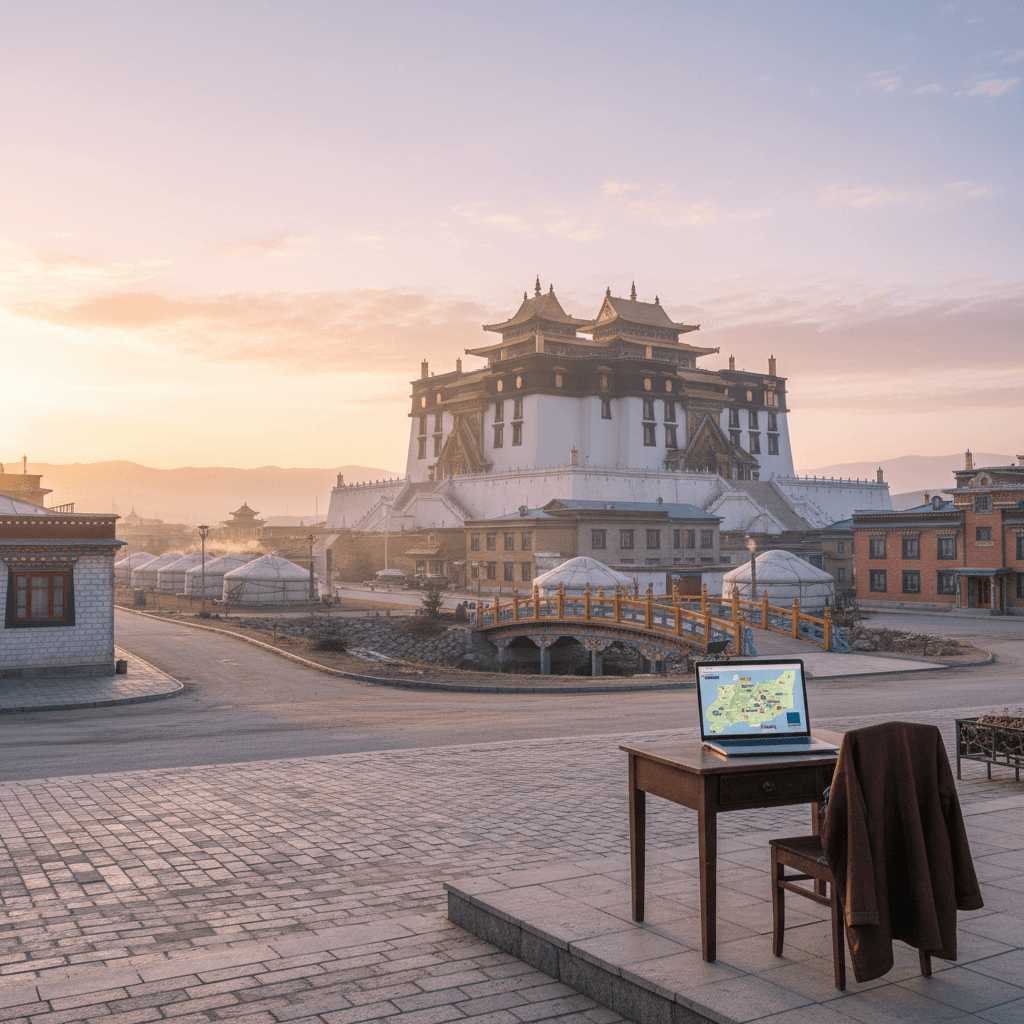
Ulaanbaatar
🇲🇳 Mongolia
The High-Altitude Frontier
Ulaanbaatar is a city of extremes that doesn't care about your comfort zone. It is a place where Soviet-style apartment blocks and gleaming glass skyscrapers sit alongside sprawling ger districts, all surrounded by the infinite silence of the Mongolian steppe. For digital nomads, it feels less like a vacation and more like an expedition. You aren't here for the beach or the high-speed fiber; you're here for the raw, unfiltered energy of a culture that has been nomadic for millennia and is now trying to figure out 21st-century urbanism on the fly.
The vibe is gritty but deeply hospitable. You will likely spend your mornings working from a sleek cafe in the city center and your weekends riding horses or drinking fermented mare's milk in a traditional felt tent. It’s an affordable base, with most nomads getting by on about $1,033 per month, but the trade-off is a city that struggles with infrastructure. Traffic is legendary, and the winter air quality is some of the toughest in the world. But when the summer hits and the Naadam Festival kicks off in July, the city transforms into a celebration of wrestling, archery, and horse racing that feels like stepping back into the era of the Khans.
The Neighborhood Breakdown
- Sukhbaatar District: This is the heart of the city and where you will likely spend 90% of your time. It’s walkable, relatively safe, and home to the Shangri-La Mall and the best coworking spaces. Rent for a central studio here usually runs between $400 and $800.
- Central Ulaanbaatar: Best for those staying long-term. It has the highest concentration of international schools, supermarkets, and private hospitals like Intermed. It’s convenient, though the heavy traffic and winter smog are most intense here.
- The Outskirts: These areas are dominated by ger camps. While not practical for daily work due to spotty internet and lack of plumbing, they offer the "real" Mongolia experience. Nomads often head here for short bursts of nature and a break from the city noise.
Digital Infrastructure and Work
Internet speeds hover around 60 Mbps, which is enough for Zoom calls but can feel sluggish compared to Southeast Asian hubs. Most remote workers rely on 4G backups. You can grab a SIM card at the airport from Mobicom or Unitel for about $2, which gets you 10GB of data. If you prefer to have everything ready before you land, Gohub offers reliable eSIM options.
When your apartment feels too small, the coworking scene is growing. Expect to pay around $267 a month for a hot desk. Local cafes are generally work-friendly, and events like Digital Nomad Week are starting to put the city on the global remote-work map. Just keep in mind that English isn't widely spoken outside these circles, so having Google Translate downloaded for offline use is a survival requirement.
Daily Life and Logistics
Getting around is an endurance sport. The city is centralized, so walking is often faster than sitting in a car. When you do need a ride, download the UB Cab app; a 3km trip usually costs about $1. For the adventurous, the UB Smart Bus app helps you navigate the cheap, albeit crowded, public bus system for less than 1 MNT per trip.
The food scene is a meat-lover's dream. You can grab buuz (steamed dumplings) or khuushuur (fried meat pastries) from street stalls for about $3. If you need a break from mutton, the city has a surprising number of high-quality Korean and Italian restaurants where a nice dinner will cost you $15 or more. While the city is generally safe, theft and alcohol-related scuffles are common in the outskirts at night. Stick to the well-lit areas of Sukhbaatar, keep your phone in your front pocket, and you'll find the locals are some of the most welcoming people you'll ever meet.
The Reality Check
Don't come to Ulaanbaatar in January unless you are prepared for -30°C temperatures and heavy coal smoke. The sweet spot is June through August, when the weather is a perfect 20-25°C and the steppes are vibrant green. It is a city of "lows" (slow internet, bad traffic, extreme cold) and incredible "highs" (unmatched landscapes, low costs, and a sense of being at the edge of the world). It’s not for everyone, but for the nomad who is tired of the same old Bali-Lisbon-Medellin circuit, it's the ultimate palate cleanser.
The Bottom Line on Ulaanbaatar
Ulaanbaatar is one of the most affordable capitals in Asia for digital nomads, but it comes with a trade-off in infrastructure. You can live comfortably here on $1,033 a month, though your experience will vary wildly depending on whether you are eating street food or frequenting the high-end spots in the Shangri-La mall area. It is a city of extremes where a $1 taxi ride might take forty minutes due to legendary traffic jams.
Budget travelers can scrape by on $800 to $1,200 per month by sticking to basic studios and local canteens. If you want a more "Western" lifestyle with specialty coffee and a modern gym, expect to spend between $1,500 and $2,000. For those with a $2,500+ budget, you can live in the city's most upscale developments and dine at international restaurants every night.
Monthly Expenses Breakdown
- Housing: A central studio or one-bedroom apartment in the Sukhbaatar district typically runs between $400 and $800. Airbnb stays average around $55 per night if you aren't ready to commit to a lease.
- Dining Out: Local staples like buuz dumplings or khuushuur pastries cost about $3 for a filling meal. A mid-range dinner at a cafe is usually $5 to $10, while upscale international dining hits $15 or more.
- Connectivity: A hot desk at a local coworking space costs roughly $267 per month. Mobile data is incredibly cheap; you can pick up 10GB of data from Mobicom or Unitel at the airport for about $2.
- Transportation: Short taxi trips around the center cost about $1. Public buses are even cheaper at less than 1 MNT per ride, though you will need the UB Smart Bus app to figure out the routes.
Where to Plant Your Flag
Most nomads and expats gravitate toward Sukhbaatar. It is the most walkable part of the city and keeps you close to the major malls, coworking hubs, and the few areas where English is commonly spoken. You will pay a premium for rent here, but you save money and sanity by avoiding the gridlocked outskirts.
If you are looking for a more authentic or rugged experience, the outskirts and Ger camps offer much lower prices and direct access to the steppes. However, the infrastructure is thin. Expats with families often look at Central Ulaanbaatar for proximity to international schools and private hospitals like those found near the major supermarkets, though the winter air pollution is a significant drawback in these densely packed areas.
Practical Spending Tips
Cash is still very much part of life here. While you can use cards at major malls and hotels, carry Mongolian Tugrik for smaller shops and taxis. Most travelers recommend using the UB Cab app to avoid the chaotic "gypsy taxi" system where you just wave down random cars. It provides a set price and is much safer for foreigners, especially at night.
If you are planning to work from cafes, keep in mind that while speeds can reach 60 Mbps, many nomads find the actual performance feels much slower. It is worth investing in a local SIM card as a backup. Also, factor in the cost of high-quality winter gear if you are visiting between December and February. Temperatures regularly drop below -30°C, and skimping on a coat will be your most expensive mistake.
For Digital Nomads
If you are coming to Ulaanbaatar to work, you will likely want to plant your flag in Sukhbaatar. This is the heartbeat of the city where the most reliable infrastructure lives. Most nomads find that staying within walking distance of Sukhbaatar Square saves them from the city's legendary traffic jams, which can turn a three kilometer drive into a forty minute ordeal. You will be close to the Shangri-La Mall for high end amenities and plenty of cafes that are friendly to laptop users.
The coworking scene is growing, with hot desks averaging around $267 per month. While home internet speeds usually hover around 60 Mbps, it can feel sluggish during peak hours, so having a local SIM from Mobicom or Unitel as a backup is a smart move. You can grab 10GB of data at the airport for about $2. Expect to pay between $400 and $800 for a decent studio or one bedroom apartment in this central hub.
- Top Spot: Sukhbaatar District
- Monthly Rent: $400 to $800
- Best Coworking: Hub Innovation Center or local cafes near the square
- Vibe: Fast paced, central, and convenient for networking
For Expats and Long Term Residents
Expats who plan on staying for a season or longer often gravitate toward Central Ulaanbaatar, specifically the areas just south of the main square. This neighborhood offers the best balance of daily life necessities. You will find the largest international supermarkets, private hospitals, and the majority of the city's international schools here. It feels more like a lived in community than the purely commercial zones.
Living here means you are close to the best international dining, including excellent Korean and Italian spots. A mid range dinner will set you back about $5 to $10. The main downside is the winter air quality, which can get quite heavy due to the surrounding ger districts. Most long term residents invest in high quality air purifiers for their apartments to handle the December to February stretch.
- Top Spot: South Central / Khan-Uul (near the stadium)
- Monthly Rent: $600 to $1,200 for larger units
- Transportation: Use the UB Cab app for reliable rides; most trips cost about $1
- Vibe: Established, practical, and well serviced
For Families
Families usually look for space and safety, leading them toward the newer developments in the southern part of the city near Zaisan. It is tucked closer to the mountains, offering slightly better air quality and easier access to the outdoors. While it is further from the city center, the proximity to international schools and larger, multi bedroom apartments makes it the go to choice for those with kids.
Safety is a priority here, and while the city's safety index is moderate (around 47/100 per Numbeo), these residential pockets feel very secure. You will be near the National Amusement Park and have quicker access to weekend trips out to the steppes. Keep in mind that the commute into the center for work can be brutal during rush hour, so a flexible schedule is a huge plus.
- Top Spot: Zaisan Area
- Monthly Rent: $1,000 to $2,000+
- Perks: Closer to hiking trails and better air
- Vibe: Quiet, upscale, and family oriented
For Solo Travelers and Adventurous Souls
If you are here for the raw Mongolian experience and don't mind a bit of grit, the Outskirts or Ger Districts offer a total immersion into the local way of life. This isn't for the faint of heart or those who need 24/7 high speed fiber, but it is where you will find the most affordable living and the easiest access to the open plains. Travelers often stay in Ger Camps on the edge of the city to witness the Naadam Festival in July, which features traditional wrestling and archery.
You will be relying heavily on the UB Smart Bus app to get around, as taxis can be chaotic and expensive this far out. Eating like a local is the way to go here; a plate of buuz dumplings or khuushuur pastries costs about $3. Just be cautious at night, as these areas are less lit and have higher rates of petty theft compared to the central districts.
- Top Spot: Bayanzurkh or outskirts camps
- Monthly Rent: Under $300
- Food Costs: $3 to $5 per meal
- Vibe: Authentic, rugged, and budget friendly
Need visa and immigration info for Mongolia?
🇲🇳 View Mongolia Country GuideHidden Gem
Worth the effort