Tongyeong
🇰🇷 South Korea
The Maritime Muse
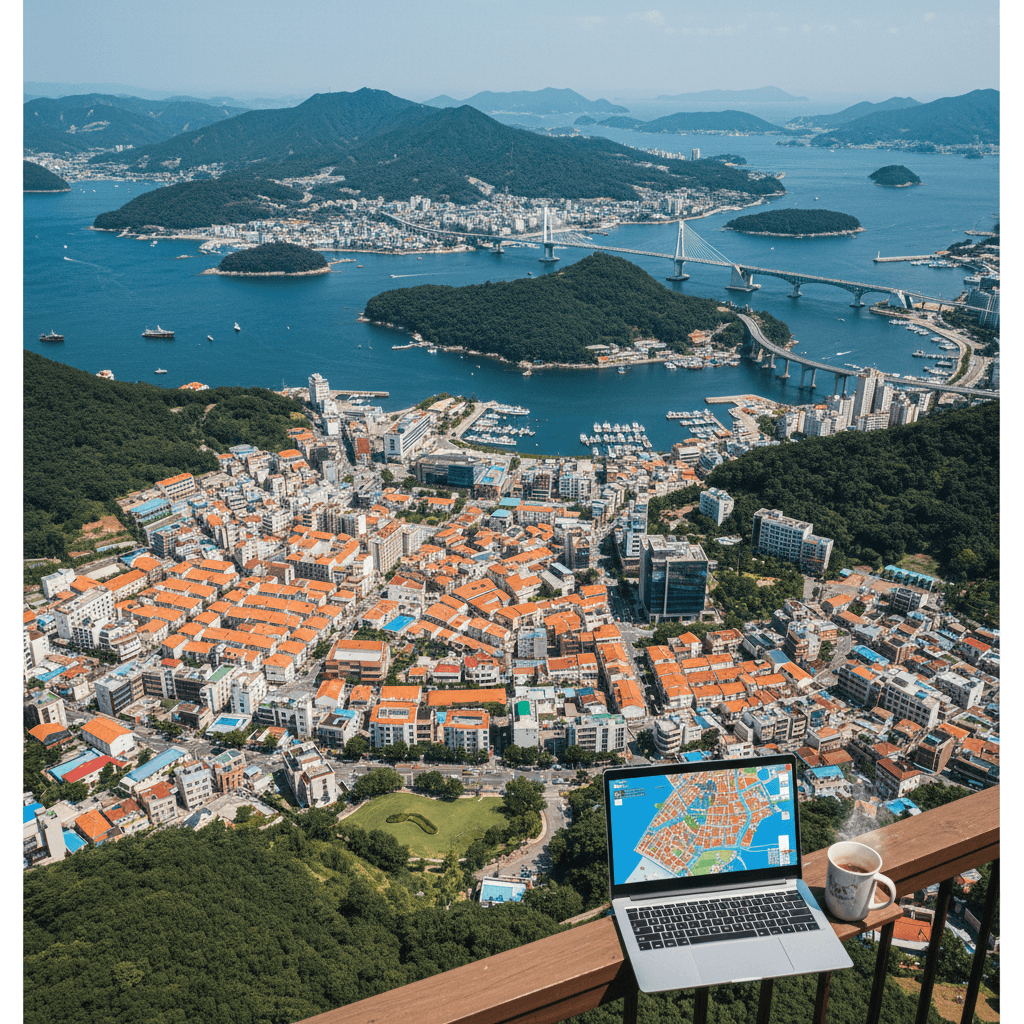
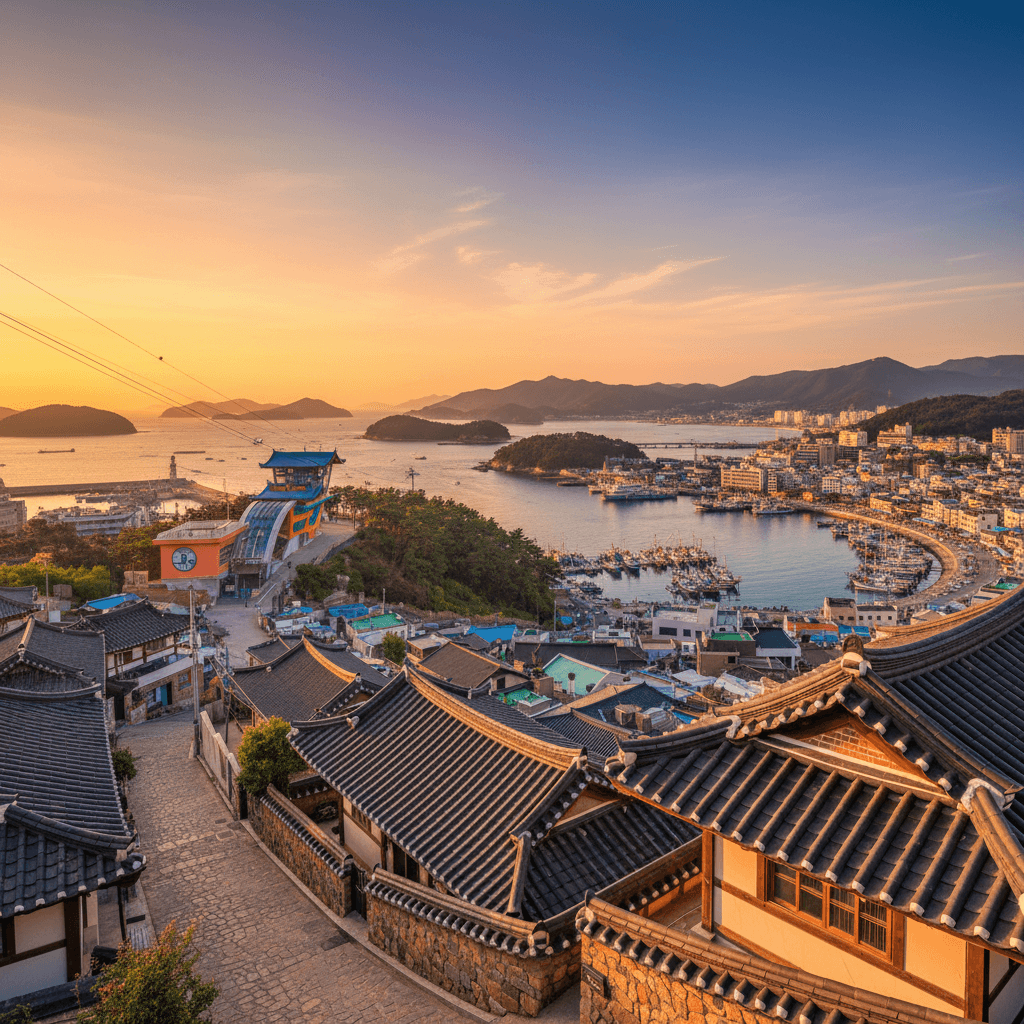
If Busan is South Korea’s high energy summer party, Tongyeong is its poetic, slightly salt-crusted cousin. Often dubbed the Napoli of Korea, this port city sits on a jagged peninsula in Gyeongsangnam-do, surrounded by 150 islands that dot the South Sea like emeralds. It doesn't feel like the sleek, glass-and-steel Korea you see in K-dramas; it feels like a place where people actually live, fish, and paint. The vibe is decidedly slow, rhythmic, and deeply connected to the water.
For digital nomads, Tongyeong is a "reset" destination. It’s where you go when the sensory overload of Seoul becomes too much. You’ll spend your mornings working from a cafe overlooking Ganguan Harbor and your afternoons catching a ferry to a remote hiking trail. It’s a city of hills, murals, and some of the freshest seafood on the peninsula. While it lacks the dedicated nomad hubs of larger cities, the world class internet ensures you’re never truly off the grid unless you choose to be.
Cost of Living
Your won goes significantly further here than in the capital. While specific data for 2025 is tighter than in Busan, travelers and long term residents find the coastal lifestyle surprisingly affordable. You can live comfortably on $2,000 a month, though budget conscious travelers can make it work for around $1,200 if they stick to local markets and shared housing.
- Housing: A studio or one bedroom apartment near the harbor typically runs between ₩500,000 and ₩800,000 ($350 to $550 USD) per month. Compare that to the ₩1.5M+ you would drop in Seoul's Gangnam district.
- Dining: Street food like Chungmu gimbap costs ₩5,000 to ₩10,000 ($3.50 to $7). A mid range meal with plenty of side dishes will land between ₩15,000 and ₩25,000 ($10 to $18).
- Connectivity: A prepaid SIM from KT or SK Telecom with 10GB of data costs about ₩30,000 ($22).
- Transportation: Local buses and ferries are efficient, with most rides costing between ₩2,000 and ₩5,000.
The Neighborhood Breakdown
Tongyeong doesn't have the distinct expat enclaves like Itaewon or Haeundae. Instead, your choice of neighborhood depends on how much "city" you want in your day to day life.
Ganguan Harbor (Central)
- The Vibe: The heart of the city. Everything is walkable, from the ferry terminal to the markets.
- Pros: Best access to cafes, island ferries, and the Jungang Market. Great for short term stays.
- Cons: Can feel a bit claustrophobic and noisy during peak tourist weekends.
Dongpirang & Outskirts
- The Vibe: Famous for its mural village and steep, winding alleys that offer the best views of the sea.
- Pros: Quieter, more artistic, and closer to nature. Ideal for those who want a "pension" style living experience.
- Cons: Limited amenities; you’ll likely need a scooter or to rely on Kakao T for grocery runs.
Work, Life, and Logistics
Don't look for a WeWork here. To get work done, you’ll be joining the local "coffice" culture. Cafes near the water are accustomed to people lingering with laptops, and speeds consistently hit 100+ Mbps. If you absolutely need a formal coworking space like FastFive, you'll need to hop a bus to Busan, which takes about 2 to 3 hours.
The biggest hurdle for most is the language. English proficiency is lower here than in the big metros. You’ll want Papago and Naver Dictionary pinned to your home screen. However, the locals are famously patient, especially if you’ve mastered a basic "gamsahamnida" (thank you). Safety is a non issue; South Korea remains one of the safest places for solo travelers, and Tongyeong’s harbor is well lit and peaceful even late at night.
When the screen fatigue hits, the city provides. You can take the Skyline Luge for a shot of adrenaline or board a 6:00 AM ferry to Hansando to see where Admiral Yi Sun-sin won historic naval battles. It’s a city that rewards the curious nomad who doesn't mind a little bit of a language gap in exchange for a front row seat to the South Sea.
The Coastal Discount
Living in the "Napoli of Korea" comes with a significant price drop compared to the vertical jungles of Seoul or the beachside luxury of Busan. While Tongyeong is a major tourist draw for its seafood and islands, the day-to-day cost for a nomad or expat remains surprisingly grounded. You get the same world-class Korean infrastructure, like 100 Mbps internet and efficient public transit, but at a fraction of the capital's price tag.
Most travelers find that their biggest savings come from housing. While you won't find the massive expat complexes of Itaewon here, the local market is much more accessible. You can secure a solid studio or a one-bedroom apartment in scenic areas like Ganguan Harbor for between ₩500,000 and ₩800,000 ($350 to $550 USD) per month. In contrast, a similar spot in Seoul's Gangnam district would easily double or triple that figure.
Monthly Budget Breakdowns
Depending on how much you prioritize ocean views and fresh sashimi, your monthly spend will likely fall into one of these three tiers:
- The Budget Tier ($1,200/month): This covers a room in a shared house or a modest guesthouse, plenty of street food from Jungang Market, and getting around via the local bus system.
- The Mid-Range Tier ($2,000/month): The sweet spot for most nomads. This includes a private studio, eating out at mid-range restaurants a few times a week, and regular ferry trips to nearby islands like Hansando or Saryangdo.
- The Comfortable Tier ($3,000+/month): This lifestyle involves a high-end private apartment, frequent upscale dining, and perhaps a weekend car rental or private tours via Klook to explore the further reaches of Gyeongsangnam-do.
Eating and Drinking
Food is where Tongyeong shines, especially if you love the sea. You can grab a quick meal at a street stall for ₩5,000 to ₩10,000 ($3.50 to $7). A proper sit-down dinner at a mid-range spot usually runs between ₩15,000 and ₩25,000 ($10 to $18). If you're looking to splurge on a full seafood spread near the docks, expect to pay ₩40,000 ($28) or more.
For groceries, locals stick to the traditional markets for the best deals on produce. If you need western comforts or household goods, Olive Young is the go-to for toiletries and skincare, while larger supermarkets in the outskirts handle the rest. Digital nomads often work from local cafes, which are plentiful; just factor in about ₩5,000 for a solid latte as your "desk fee" for the afternoon.
Connectivity and Logistics
Since Tongyeong doesn't have its own dedicated coworking spaces like FastFive or WeWork, most remote workers rely on the city's excellent cafe culture. High-speed WiFi is a given almost everywhere. For mobile data, expats recommend picking up a KT or SK Telecom prepaid SIM card at the airport or a local shop. You'll typically pay around ₩35,000-₩50,000 for 10-30 days unlimited data, which is ideal for those who don't want to hunt for WiFi passwords.
Getting around is cheap and reliable. A single bus or ferry ride within the local area costs between ₩2,000 and ₩5,000. If you're heading to the islands, ferry tickets generally range from ₩10,000 to ₩20,000 round trip. For quick hops across town, the Kakao T app is the local version of Uber and is very affordable for short distances. If you need to head to a larger hub like Busan for a day of networking, the bus from the main terminal takes about two to three hours and costs roughly ₩15,000.
Practical Essentials
- Digital Nomad Visa: If you're staying long-term, the Hallyu visa requires a minimum annual income of ₩88 million.
- Banking: Once you have your local ID, KakaoBank or Wise are the easiest ways to manage your Korean Won.
- Translation: Since English isn't widely spoken outside the main tourist harbors, keep Papago or Naver Dictionary on your home screen.
For Digital Nomads: Ganguan Harbor and Jungang Market
If you're coming to Tongyeong to work, you'll want to stay near the Ganguan Harbor area. This is the city's functional heart where the "Napoli of Korea" vibes are strongest. It's the most walkable part of town, packed with cafes that have reliable 100 Mbps+ internet speeds, which is vital since the city lacks dedicated coworking spaces like FastFive or WeWork found in Busan.
- Rent: ₩500,000 to ₩800,000 ($350 to $550 USD) for a studio or one bedroom apartment.
- Vibe: Active, maritime, and slightly touristy.
- Pros: Immediate access to the ferry terminal for island hopping and the best concentration of cafes for working.
- Cons: It can get noisy on weekends, and the central streets can feel a bit cramped compared to the wide open sea views.
Most nomads use apps like Zigbang or Dabang to scout short term rentals here. For food, you'll be steps away from Jungang Market, where you can grab a meal of local street food for ₩5,000 to ₩10,000. When the "claustrophobia" of the harbor hits, you can hop on a ferry to Hansando or Saryangdo for about ₩10,000 to clear your head.
For Solo Travelers: Dongpirang and Seopirang
Solo travelers usually gravitate toward the hills overlooking the port, specifically around the Dongpirang Mural Village. It's a colorful, artsy neighborhood that feels more intimate than the harbor front. The area is filled with small guesthouses and "pensions" where it's easier to meet other travelers, even though the nomad community here is much smaller than in Seoul.
- Daily Budget: $40 to $70 USD covering a guesthouse bed and local dining.
- Vibe: Creative, quiet at night, and very photogenic.
- Must-Try: Local seafood at the small spots tucked into the alleyways.
English isn't widely spoken here, so solo travelers should keep Papago or Naver Dictionary ready on their phones. The hills are steep, but the reward is a panoramic view of the South Sea that makes the climb worth it. It’s a safe area to walk alone at night, though the street lighting can be sparse in the older residential alleys.
For Expats and Long-Termers: Misu-dong and Bongpyeong-dong
If you're planning to stay for a few months on a Hallyu digital nomad visa, look across the Tongyeong Bridge to the Misu-dong or Bongpyeong-dong areas. These neighborhoods are more residential and offer a slower pace away from the day-tripper crowds. You'll find better grocery options and local gyms here, catering to those who want a "real" Korean life rather than a vacation stay.
- Living Costs: A comfortable mid-range lifestyle here runs about $2,000 USD per month.
- Vibe: Local, calm, and residential.
- Transport: Use Kakao T for quick rides into the center or take the local bus for about ₩1,500.
Expats recommend this area because it’s close to the Skyline Luge and the Tongyeong Cable Car, but far enough away that you don't feel like you're living in a tourist attraction. It's also closer to medical facilities like Tongyeong Red Cross Hospital if you need healthcare services.
For Families: Jukrim-myeon (New Town)
Families often prefer the Jukrim area, which is the "new town" section of Tongyeong. It’s located near the main bus terminal and features wider streets, modern apartment complexes, and more parks. It doesn't have the historic charm of the harbor, but it’s much more convenient for those traveling with kids or needing modern amenities.
- Rent: ₩900,000+ for larger family sized apartments.
- Vibe: Suburban, clean, and organized.
- Convenience: Proximity to large supermarkets and the intercity bus terminal for trips to Busan.
While Jukrim is a 15 to 20 minute bus ride from the scenic harbor, it offers a level of comfort that's hard to find in the older parts of the city. There are plenty of kid friendly restaurants and flat areas for strollers, making it the most practical choice for a long term family base.
The "Napoli of Korea" might feel like a step back in time, but its digital infrastructure is firmly in the future. Like the rest of South Korea, Tongyeong enjoys blistering internet speeds that often exceed 100 Mbps. Whether you are hunkered down in a harbor-side guesthouse or tethering from a ferry deck, you will rarely struggle with a Zoom call. The trade-off is the lack of a formal nomad "scene." You won't find the sleek, glass-walled coworking hubs of Seoul or Busan here; instead, your office will likely be a third-wave coffee shop overlooking the water.
Connectivity and Data
Public WiFi is ubiquitous. You will find it in almost every cafe, most public parks, and even the traditional markets. For a dedicated connection, expats usually grab a prepaid SIM from KT or SK Telecom. Expect to pay around ₩30,000 ($22) for a 10GB data pack, though many nomads opt for unlimited plans if they are staying a full month. If you are arriving from abroad, Holafly or RapideSIM eSIMs are the easiest way to get online the moment you step off the bus from Busan.
Where to Get Work Done
Since there are no dedicated coworking spaces in Tongyeong, the local cafe culture picks up the slack. The area around Ganguan Harbor is packed with spots that are laptop-friendly during the weekdays. Most of these places expect you to buy a fresh drink every few hours, but the "bali-bali" (hurry-hurry) culture of the big cities is softer here. You can usually settle in for a few hours without anyone glancing at their watch.
- Cafes near Dongpirang Mural Village: This area offers several spots with great views and decent table heights for typing.
- Local Libraries: The municipal libraries offer quiet zones and free, stable internet if you need a distraction-free environment.
- Guesthouses: Many nomads choose to work from their accommodation, as standard home broadband in Korea is exceptionally fast and reliable.
The Busan Connection
If you find yourself craving a professional office environment or need a meeting room to impress a client, Busan is your best bet. It is roughly a 2 to 3-hour trip by bus or train, costing about ₩15,000 ($11). Once there, you can access heavy hitters like FastFive, WeWork, or FabLab. A day pass in these spaces typically runs between ₩10,000 and ₩20,000 ($7 to $14). Many long-termers in Tongyeong treat a trip to Busan as a weekly "office day" to batch their heavy collaborative work before retreating back to the quiet of the islands.
Practical Requirements
If you are planning to stay long-term and want to set up your own home internet, you will eventually need an Alien Registration Card (ARC) and a local bank account. Apps like KakaoBank or Wise are the go-to for managing transfers. For translation, don't bother with anything else; Papago and Naver Dictionary are the gold standards here. They handle the nuances of Korean much better than other global competitors, which is helpful when you are trying to troubleshoot a router with a landlord who doesn't speak a word of English.
Internet and Tech Costs
- Monthly Broadband: Approximately $20 for high-speed home fiber.
- Coworking Day Pass (Busan): ₩10,000 to ₩20,000.
- Prepaid SIM (10GB): ₩30,000.
- Coffee Shop "Rent": ₩5,000 to ₩8,000 per drink.
Most nomads find that Tongyeong is better suited for a "deep work" retreat rather than a social networking hub. It is the kind of place where you finish your project by 4:00 PM so you can catch the last ferry to Hansando for a sunset hike. It is peaceful, wired, and perfect for those who prefer sea breezes over networking events.
A Safe Harbor on the South Sea
South Korea is consistently ranked as one of the safest countries in the world, and Tongyeong is no exception. While Seoul has its high energy and Busan has its grit, Tongyeong feels like a sleepy maritime village where the biggest danger is usually a slippery pier or a stubborn seagull. You can walk through the central harbor areas at 2:00 AM without a second thought, though it's always smart to stay in well lit areas near Ganguan Harbor just to be safe.
Violent crime is almost non existent here. Most travelers find that the local culture is built on a foundation of mutual respect. You'll often see people leave their laptops on a table at a cafe while they go to the restroom, though we still recommend keeping your gear with you. If you do run into trouble, the emergency number for police is 112, and for fire or ambulance services, it's 119. These lines usually have English speaking operators available to assist foreigners.
Healthcare Standards and Local Clinics
The medical care in Tongyeong is high quality, reflecting South Korea's national standards. For most minor issues like a cold or a small cut, you should look for a local clinic (Uiwon). These are everywhere and usually specialize in specific areas like internal medicine or orthopedics. You don't always need an appointment; you can just walk in, show your passport, and be seen within 20 to 30 minutes. A standard consultation usually costs between ₩15,000 and ₩30,000 ($11 to $22) if you aren't on the national insurance plan.
For more serious concerns or emergencies, Tongyeong Red Cross Hospital or New Segyero Hospital are the primary facilities in the city. They have modern equipment and dedicated emergency rooms. If you require specialized surgery or English speaking specialists, many expats take the 2 hour bus ride to Busan, where larger university hospitals have international clinics specifically for foreigners.
Pharmacies and Everyday Wellness
Pharmacies, marked by a red or green "Yak" (약) sign, are ubiquitous. You'll find them on almost every street corner near Jungang Market. Pharmacists in Tongyeong are highly trained and can provide over the counter medication for most common ailments. If you need basic supplies like bandages, antiseptic, or vitamins outside of pharmacy hours, head to an Olive Young or a 24 hour convenience store like GS25 or CU.
- Pharmacy Hours: Most are open from 9:00 AM to 8:00 PM, with select "late night" pharmacies available on a rotating schedule.
- Medical Translation: While many doctors speak basic English, download the Papago app to help translate specific symptoms or medical histories.
Environmental Considerations
The most common health "risk" in Tongyeong isn't a virus, it's the air. Like the rest of the peninsula, Tongyeong can experience high levels of fine dust (PM2.5), especially during the spring months. Locals use apps like AirVisual to check daily levels. If the numbers are high, do what the locals do and wear a KF94 mask, which you can buy at any convenience store for about ₩1,500.
The coastal sun can also be surprisingly intense, especially when you're out on a ferry to Hansando or Saryangdo. Humidity peaks in July and August, so staying hydrated is vital. Tap water is technically safe to drink, but most residents prefer using a filtration system or buying bottled water, which is very affordable at around ₩1,000 for a large bottle.
Insurance for Nomads
If you're staying on a tourist visa, you won't be eligible for the National Health Insurance Service (NHIS). Most nomads here rely on private travel insurance like SafetyWing or World Nomads. If you eventually transition to a Digital Nomad Visa (Hallyu Visa) or a work visa, you'll be required to join the national system, which is deducted from your local bank account or salary. It's an incredible value and covers everything from dental checkups to major surgeries with very low out of pocket costs.
Getting Around the "Napoli of Korea"
Tongyeong is a city defined by its relationship with the water. Because the central hub is concentrated around the peninsula's tip, you'll find that much of your daily life happens within a relatively small footprint. It is a place where the salt air follows you from the market to your apartment, and the transportation options reflect that maritime lifestyle.
Walking and Local Transit
If you set up base near Ganguan Harbor, your own two feet will be your primary mode of transport. The central area is highly walkable, connecting the seafood markets, harbor front, and the colorful alleys of Dongpirang Village. It is easy to spend an entire afternoon wandering between cafes and the docks without ever needing a vehicle.
For longer trips across town or to the quieter outskirts, the local bus system is efficient and affordable. Most rides cost around ₩1,500 to ₩2,000. While the routes can be a bit confusing if you don't speak Korean, the KakaoBus app is a lifesaver for tracking arrivals in real time. If you're in a hurry or it's raining, Kakao T is the go-to ride-hailing app. It works just like Uber, is very inexpensive for short city hops, and saves you the struggle of explaining your destination to a driver since you input it in the app.
Island Hopping by Ferry
You haven't truly experienced Tongyeong until you've used the ferry terminal at Ganguan Harbor. This is the city's version of a subway system, whisking you away to islands like Hansando or Saryangdo. Travelers often recommend catching the first ferry around 6:00 AM to beat the midday heat and the crowds. Expect to pay between ₩10,000 and ₩20,000 for a round trip depending on the distance. These ferries are reliable, but always keep an eye on the weather; high winds can occasionally cancel afternoon return trips, leaving you stranded for a night of "accidental" island camping.
The Two-Wheeled Option
For a bit more freedom, you can find bike and scooter rentals near the main harbor for roughly ₩10,000 per day. It is a fantastic way to explore the coastal roads that hug the shoreline. Just be mindful that Tongyeong is surprisingly hilly once you move away from the immediate water's edge. If you aren't used to steep inclines, an electric scooter is a much wiser investment than a standard bicycle.
Arriving from the Mainland
Tongyeong doesn't have its own airport, so you'll likely be arriving via Gimhae International Airport in Busan. From there, you can catch a direct intercity bus that takes about 2 to 3 hours and costs roughly ₩15,000. The buses are comfortable, usually featuring wide reclining seats and air conditioning. If you're coming from Seoul, the express bus is your best bet, as there is no direct KTX high speed train station in Tongyeong yet. The journey from the capital takes about 4 hours, but the scenic transition from urban skyscrapers to southern coastal mountains makes the time fly by.
Transportation Quick Guide
- Local Bus: ₩1,500 to ₩2,000 per ride. Best for cross-town trips.
- Kakao T (Taxi): ₩4,000 to ₩10,000 for most inner-city trips.
- Island Ferries: ₩10,000 to ₩20,000 round trip. Departure from Ganguan Harbor.
- Bike Rental: ₩10,000 per day. Great for coastal paths.
- Airport Transfer: ₩15,000 from Busan Gimhae Airport via intercity bus.
Most nomads find that the lack of a subway isn't a hindrance; rather, it forces a slower pace that fits the city's character. Whether you're taking the Skyline Luge for a bit of fun or riding the cable car for the best views in town, getting around is more about the journey than just reaching a destination.
The Language Gap
In the high energy hubs of Seoul or Busan, you can usually get by with English and a bit of gesturing. Tongyeong is a different story. Outside of the main tourist information centers at Ganguan Harbor or the ticket booths for the Skyline Luge, English proficiency is quite low. Most shop owners at Jungang Market and ferry operators speak almost exclusively Korean. You won't find many expat enclaves here to buffer the experience, so you'll need to be comfortable being the "foreigner in the room."
While the language barrier is real, it's rarely a barrier to getting things done. The locals are used to the "Napoli of Korea" being a domestic tourist draw, and they're generally patient with visitors. You'll find that most menus in the central port area have photos, and Google Lens becomes your best friend for translating labels at the local mart. However, don't expect deep philosophical conversations with your barista unless you've put in the work to learn the local tongue.
Survival Phrases & Etiquette
Learning a few basics goes a long way in a port town like this. A simple annyeonghaseyo (hello) and gamsahamnida (thank you) are the bare minimum. If you're browsing the stalls at the fish market, knowing eolmayeyo? (how much is it?) will save you a lot of back and forth. Manners matter more than perfect grammar here. Remember to use two hands when handing over your credit card or receiving a drink; it's a small gesture of respect that locals notice immediately.
- An-nyeong-ha-se-yo: Hello (Standard)
- Gam-sa-ham-ni-da: Thank you
- Ju-se-yo: Please give me...
- Ye-gi-yo: Excuse me (to get a server's attention)
Digital Tools for Communication
If you're relying on Google Translate, you're going to struggle. It often fails with the nuances of Korean sentence structure. Most nomads in Korea swear by Papago. It's an app by Naver that handles Korean much more accurately, especially when using the voice to voice feature for real time translation. For navigation, Google Maps is notoriously spotty in Korea; download Naver Maps or KakaoMap to find your way around the winding alleys of Dongpirang Village.
For texting and local communication, KakaoTalk is the undisputed king. Even if you're only here for a month, having a Kakao account is helpful for booking local services or communicating with Airbnb hosts. If you need to call a taxi, the Kakao T app is the standard, and it allows you to set your destination in advance so you don't have to explain it to the driver in Korean.
Staying Connected
The good news is that while you might not understand the language, the internet speed is world class. You'll find 100 Mbps speeds as the baseline in most guesthouses. Public WiFi is everywhere, from the ferries to the island hiking trails, though it's often unsecured. For a reliable personal connection, pick up a prepaid SIM from KT or SK Telecom. You can grab these at Gimhae Airport in Busan before taking the bus down to Tongyeong.
- Prepaid SIM (unlimited data): around ₩30,000 ($22 USD) for 10 to 30 days.
- eSIM options: Holafly or RapideSIM work well if you don't want to swap physical cards.
- Portable WiFi (Egg): Available for rent, but most nomads find a local SIM more convenient for using Kakao T on the go.
Social Life and Networking
Tongyeong doesn't have a dedicated coworking space or a formal nomad meetup scene. If you're looking for a "tribe," you'll likely have to head to Busan for the weekend to join Digital Nomads Korea events or hang out in the Haeundae expat bars. In Tongyeong, your social life will revolve around the "pensions" (local guesthouses) and the lively atmosphere of the harbor at night. Most travelers find that the best way to meet people is by joining group day tours to islands like Hansando or Saryangdo, where the shared experience of hiking usually breaks the ice.
When to Land in the "Napoli of Korea"
Tongyeong is a coastal beauty that breathes with the rhythm of the South Sea. Because it sits on the southern tip of the peninsula, the weather is significantly milder than the bone chilling winters you'll find in Seoul. However, it's also right in the path of the summer monsoon rains, so timing your stay is everything if you want to make the most of those island ferries.
Spring: The Sweet Spot (March to May)
Spring is arguably the best time to set up your mobile office here. Temperatures hover between 10°C and 25°C (50°F to 77°F), making it perfect for hiking the trails on Saryangdo without breaking a sweat. April is particularly stunning when the cherry blossoms and local greenery start to pop against the blue of Ganguan Harbor.
- Pros: Ideal hiking weather, blooming landscapes, and moderate prices.
- Cons: Popular spots like the Skyline Luge and the cable car get busier with domestic tourists on weekends.
- Nomad Tip: This is the best window for outdoor work. Grab a portable WiFi device like Holafly or a local KT SIM and work from the deck of a ferry.
Summer: The Humidity Gamble (June to August)
If you aren't a fan of humidity, you might want to head north during the summer. July is the peak of the rainy season, and August brings temperatures between 25°C and 32°C (77°F to 90°F). The air gets thick, and the sudden downpours can ground the ferries, which are your lifeline to the outlying islands.
Most travelers find the heat manageable if they stick to the water. The sea breezes help, but you'll definitely want an apartment with strong AC. If you're here in August, expect to pay a bit more for "pension" style accommodations as Korean families flock to the coast for their summer breaks.
Fall: The Hiker's Reward (September to November)
September can still be a bit wet and warm, but October is glorious. The humidity drops, the skies turn a crisp blue, and the mercury sits comfortably around 15°C to 20°C (59°F to 68°F). This is when the local seafood, especially the famous Tongyeong oysters, starts coming into season at Jungang Market.
- October: The most stable weather for island hopping to Hansando.
- November: Crisp mornings and fewer crowds. You can snag better deals on long term stays near the harbor.
Winter: The Quiet Retreat (December to February)
While Seoul is huddling under layers of down jackets, Tongyeong stays relatively temperate, rarely dipping far below 0°C (32°F). You won't see much snow, but the sea wind can be biting. It’s a quiet, introspective time in the city. Many nomads find this the most productive season because the distractions of island excursions are fewer and the cafes are half empty.
Expect to pay around ₩15,000 to ₩25,000 ($10 to $18) for a hearty, warming meal of spicy seafood stew to beat the chill. It’s the cheapest time for housing, with studio rents near the harbor often dropping toward the ₩500,000 ($350) mark.
The Verdict
Avoid July and August if you hate rain and sweat. Aim for May or October for the quintessential Tongyeong experience. If you’re on a strict budget and don't mind a brisk breeze, January offers the most peace and the lowest overhead for your "workation."
The Nomad Reality
Tongyeong moves at a different speed than the neon-soaked streets of Seoul. It is often called the Napoli of Korea, and while that might sound like marketing fluff, you will feel it when you are sitting by the harbor watching the fishing boats come in. For digital nomads, this is a place to recharge and focus. You won't find a massive community of remote workers here, but you will find world class internet and a cost of living that makes the capital look like a rip-off.
Most travelers find that while English isn't widely spoken, the locals are patient. You will want to download Papago for translations and Naver Maps for navigation; Google Maps is famously unreliable across South Korea. If you are planning a long term stay, check current requirements, previously around ₩88 million for Hallyu/digital nomad visas, but many visitors simply maximize their 90 day tourist stamp.
Cost of Living
Your won goes significantly further here than in Busan or Seoul. You can live well on a mid-range budget of $2,000 a month, though frugal travelers can scrape by on $1,200 if they stick to local markets and shared housing.
- Studio Apartment: ₩500,000 to ₩800,000 per month ($350 to $550 USD) near Ganguan Harbor.
- Street Food: ₩5,000 to ₩10,000 for a filling snack like Kimbap or local honey bread.
- Mid-range Dinner: ₩15,000 to ₩25,000 for fresh seafood or Korean BBQ.
- Transport: ₩2,000 to ₩5,000 for local bus rides; ferry tickets to nearby islands usually run between ₩10,000 and ₩20,000.
Where to Set Up Base
The central port area near Ganguan Harbor is the most practical choice for short stays. It is walkable and puts you right next to the ferry terminals. The downside is the noise from the docks and the weekend crowds, but the convenience is hard to beat.
If you prefer quiet, look toward the outskirts near Dongpirang Village. The views are incredible, but you will rely more on the Kakao T app to hail taxis. For a true retreat, some nomads book "pensions" on the islands for a week of deep work, though you will need to stock up on groceries before you leave the mainland.
Internet and Productivity
Don't look for dedicated coworking brands like WeWork or FastFive here; you will have to head to Busan for those. Instead, Tongyeong's work culture happens in cafes. The internet speeds are blistering, often exceeding 100 Mbps, and public WiFi is everywhere. To stay connected on the ferries, grab a KT or SK Telecom prepaid SIM card at the airport for about ₩30,000.
Getting Around
The city center is highly walkable, but the real magic is on the water. Ferries leave Ganguan Harbor as early as 6:00 AM for islands like Hansando. For land travel, Kakao T is the local version of Uber and is very affordable. If you are coming from the international airport in Busan (Gimhae), expect a 2 to 3 hour bus ride that costs around ₩15,000.
Health and Safety
South Korea is incredibly safe, and Tongyeong is no exception. You can walk the harbor at night without a second thought. If you get sick, Tongyeong Asan Hospital provides high quality care, and pharmacies are easy to spot by their bright red "Yak" signs. For any emergency, dial 119; they usually have English speakers available to help visitors.
Timing Your Stay
Spring and fall are the sweet spots. April to June and the month of October offer perfect hiking weather and clear skies. Avoid July and August if you can; the humidity is punishing and the monsoon rains can cancel ferry trips for days at a time. Winters are chilly but rarely drop far below freezing, making it a quiet, moody time for writers or artists to visit.
Need visa and immigration info for South Korea?
🇰🇷 View South Korea Country GuideHidden Gem
Worth the effort