Surakarta (Solo)
🇮🇩 Indonesia
The Vibe: Javanese Soul at a Slower Tempo
If Bali is Indonesia's loud, neon-soaked party and Yogyakarta is its artistic university town, Solo is the dignified grandparent who knows all the best stories. It is the cultural heartland of Central Java, a place where tradition isn't just a performance for tourists but a lived reality. You'll feel it the moment you step off the train; the air is quieter, the traffic is less frantic, and there is a pervasive sense of halus, a Javanese concept of refinement and politeness that dictates daily life.
Living here feels like stepping back into a more intentional era. You won't find the frantic "hustle culture" of Jakarta or the digital nomad bubbles of Canggu. Instead, you'll find yourself sitting on a plastic stool at a Hik (a traditional night stall) at 11 PM, sipping ginger tea with locals while discussing nothing in particular. It is a city that rewards the patient traveler. Expats often say that Solo doesn't just welcome you; it absorbs you into its rhythm.
A Culture of Quiet Pride
The city revolves around its two royal palaces, the Mangkunegaran and the Keraton Surakarta. This royal heritage trickles down into everything, from the way people speak to the meticulous patterns on the batik shirts everyone wears on Fridays. Unlike other Indonesian hubs, Solo hasn't been "hollowed out" by mass tourism. The 250 or so Westerners who live here are mostly long-termers, researchers, or language students rather than transient influencers.
This means you get an authentic slice of Java, but it comes with a learning curve. You won't find English menus everywhere, and the "nightlife" usually consists of live acoustic music in a garden cafe rather than a 4 AM club set. It's a place for nomads who want to actually learn the language, master the art of batik in Laweyan, and save a massive amount of money while doing so.
The Nomad Reality: Pros and Cons
Solo is arguably one of the most affordable cities on the planet for the quality of life it provides. You can live a "luxury" lifestyle here for $800 a month that would cost $4,000 in Western Europe. The locals are famously friendly, often striking up conversations just to practice their English or offer directions. You'll likely be invited to a wedding within your first month of staying here.
However, the infrastructure is still catching up. While the internet is stable enough for Zoom calls, you won't find a coworking space on every corner. You'll be doing a lot of your work from places like Solo Technopark or the many aesthetic cafes popping up around Slamet Riyadi. If you need a high-energy social scene with daily networking events, you might find Solo a bit too sleepy. But if you’re looking to escape the "nomad circus" and actually focus on a deep project or cultural immersion, Solo is unmatched.
Neighborhood Snapshots
- Laweyan (The Batik Village): This is the soul of the city. It's a maze of narrow alleys and high-walled merchant houses. It's incredibly walkable and feels like a living museum. Most nomads prefer staying here for the atmosphere and the proximity to the best local food.
- Pasar Kliwon: The Arab Quarter offers a different energy. It’s denser, more bustling, and smells of Middle Eastern spices and grilled goat satay. It’s central and great for those who want to be in the thick of the action.
- Slamet Riyadi: This is the city's main artery. It’s where the "modern" Solo lives, with malls, bigger hotels, and the famous Sunday Morning Car Free Day, where the entire street turns into a massive market and playground.
Ultimately, Solo is a city for the "slowmad." It’s for the person who wants to spend $2 on a world-class Nasi Liwet, ride a bicycle through ancient villages, and experience Indonesia without the filters. It’s a place that asks you to slow down, and once you do, you might find it very difficult to leave.
The Ultimate Budget Frontier
If you're coming from Bali or even Yogyakarta, Solo's price tags will feel like a clerical error. It is consistently ranked as one of the most affordable cities in Indonesia. You can live a high quality life here for a fraction of what you'd spend in Canggu. Most expats find that $400 to $600 a month covers a comfortable, low-key lifestyle, while $1,200 puts you in the "luxury" bracket with a high-end apartment and daily restaurant meals.
Monthly Housing Breakdown
Rent is your biggest variable, and in Solo, it's incredibly cheap. Most nomads look for a "Kost" (a studio-style boarding house) or a small house. Prices are usually lower if you negotiate for a three to six month stay upfront.
Laweyan (Batik Village)
- Studio/Kost: $80 to $150
- 1-Bedroom House: $120 to $250
- The Vibe: Historic, artistic, and very walkable. It's the neighborhood of choice for those who want a bit of soul.
Pasar Kliwon (Arab Quarter)
- Studio/Kost: $70 to $130
- 1-Bedroom House: $100 to $200
- The Vibe: Busy and central. You'll be right in the thick of the textile trade and some of the best street food in the city.
Slamet Riyadi (Main Street)
- Studio/Kost: $100 to $180
- 1-Bedroom House: $150 to $300
- The Vibe: This is the commercial spine of the city. It's more modern and convenient, but you'll pay a slight premium for the proximity to malls and hotels.
Food and Dining
Eating out is often cheaper than cooking for yourself in Solo. The city is famous for its culinary scene, and you can eat like a king on a shoestring budget. Local warungs and street stalls are the way to go for daily meals.
- Street Food (Nasi Liwet, Selat Solo): $1 to $3 per meal
- Mid-range Cafes: $4 to $8 per meal
- Monthly Groceries: $40 to $80 if you stick to local markets; up to $150 if you need imported cheeses or specific Western brands from supermarkets.
- Large Bintang Beer: $2.50 to $4.00 (Alcohol is more expensive and harder to find here than in Bali).
Connectivity and Getting Around
Solo doesn't have a massive digital nomad infrastructure, but the basics are solid and very cheap. Most people rely on apps like Gojek or Grab to get around.
- Mobile Data (10GB+): $2 to $5 per month. Telkomsel is the most reliable provider in the region.
- Home Fiber Internet (60 Mbps+): $8 to $15 per month.
- Gojek/Grab Ride (5km): $1.50 to $3. It's the most efficient way to navigate the city.
- Monthly Transport Pass: Roughly $21, though most nomads prefer the flexibility of ride-hailing apps.
Lifestyle Budget Tiers
The Budget Nomad ($400 to $600): You'll stay in a nice local Kost in a residential area, eat primarily at warungs, and use a motorbike or Gojek for transport. This is a very realistic budget for someone looking to stretch their savings.
The Mid-Range Nomad ($700 to $1,000): This covers a private one-bedroom house or a premium Kost with AC and hot water. You'll mix local food with visits to nicer cafes, maintain a coworking membership at a place like El Samara, and take a few weekend trips to nearby mountains.
The "Solo Luxury" Nomad ($1,200 to $1,500): At this level, you're living in the best housing available, dining at upscale restaurants every night, and likely have a private driver or car rental. You'll find it difficult to spend more than this without trying very hard.
For the Culture-Focused Nomad: Laweyan
If you want to live inside a living museum, Laweyan is your spot. This is the historic heart of Solo's batik industry, famous for its narrow, winding alleys and high walls that hide massive merchant mansions. It feels more like a village than a city district, which is exactly why nomads who stay long-term gravitate here.
- The Vibe: Artistic, quiet, and deeply traditional. You'll spend your afternoons working from a wooden porch while listening to the rhythmic sounds of batik production.
- Estimated Rent: Expect to pay between $80 and $150 for a basic studio or a room in a heritage guesthouse. Larger traditional houses can go for $250.
- Best for: Remote workers who prioritize aesthetics and a walkable, quiet environment over a high-energy social scene.
For the Budget-Conscious Solo Traveler: Pasar Kliwon
Pasar Kliwon is the city's Arab Quarter and arguably its most energetic neighborhood. It's a sensory overload of textile markets, goat satay stalls, and diverse architecture. It's incredibly central, making it the perfect base if you're relying on Gojek or Grab to get around the city quickly.
- The Vibe: Busy, diverse, and unapologetically local. It has a gritty charm that suits travelers who want to be in the thick of the action.
- Estimated Rent: This is one of the most affordable central areas, with rooms often found for $70 to $130 per month.
- Best for: Solo travelers on a shoestring budget and foodies who want $1 street food right outside their doorstep.
For Families and Comfort-Seekers: Slamet Riyadi Area
Slamet Riyadi is the city's main artery. While it's more commercial, the residential pockets just off the main road offer the most modern amenities in Solo. You'll be close to the larger supermarkets, the best hospitals, and the city's main malls like Solo Paragon. It's the most "western-friendly" part of town without losing its Javanese soul.
- The Vibe: Convenient and polished. On Sunday mornings, the street turns into a massive car-free zone where the whole city comes out to walk and eat.
- Estimated Rent: Prices are higher here, ranging from $150 to $300 for modern one-bedroom apartments or well-maintained houses.
- Best for: Families who need proximity to international-style groceries or anyone who isn't ready to give up modern comforts like malls and air-conditioned gyms.
For Long-Term Expats and Techies: Jebres
Located on the eastern side of the city, Jebres is home to Solo Technopark and several universities. It's a bit of a trek from the royal palaces, but it's where the city's modern infrastructure is being built. You'll find a younger, student-heavy population and the best free coworking spots in the city.
- The Vibe: Academic and industrious. It lacks the historic charm of Laweyan but makes up for it with a functional, low-cost lifestyle.
- Estimated Rent: You can find very cheap local housing here, often starting as low as $50 to $100 for basic setups.
- Best for: Expats working in tech or education, and anyone who wants to be close to the Shopee Solo Creative Hub or other innovation spaces.
Most nomads find that while Solo doesn't have a single "foreigner enclave," the small expat community is spread thinly across these areas. If you're unsure, travelers often recommend booking a week in Laweyan first to soak up the culture before deciding if you'd prefer the convenience of the Slamet Riyadi corridor.
Connectivity and Speeds
In Solo, you aren't going to find the lightning fast fiber optics common in Canggu or Jakarta, but the infrastructure is surprisingly stable. Most digital nomads find the average speeds of 20 to 50 Mbps perfectly adequate for Zoom calls and standard workflow. If you are uploading massive video files, you might feel the pinch, but for general remote work, it holds up well.
Expats usually recommend getting a local Telkomsel SIM card immediately. It has the best coverage across Central Java. You can pick up 10-15GB data packages around $3-4 from Telkomsel at any Indomaret or Alfamart convenience store. If your phone supports it, an eSIM is a great backup, but the local physical cards are much cheaper for long term stays.
Top Coworking Spots
The coworking scene here is smaller than in neighboring Yogyakarta, but it is high quality and much more affordable. You won't find the "digital nomad zoo" vibe here; it's mostly local entrepreneurs and serious remote workers.
- El Samara: This is the most established dedicated coworking space in the city. Located on Jalan Mawar, it provides a professional environment with air conditioning that actually works and reliable backup power. Expect to pay around $3 to $8 for a daily pass. The coffee is decent, and the atmosphere is quiet enough for deep focus.
- Solo Technopark: This is a massive government backed innovation hub in the Jebres area. It is a game changer for budget travelers because Solo Technopark offers various free innovation spaces. These spots are open during standard business hours and offer a modern, high tech environment without the price tag of a private office.
Cafe Culture and Remote Work
If you prefer the hum of a coffee shop, Solo has a thriving "nongkrong" culture, which basically means hanging out for hours. Most cafe owners are perfectly happy for you to park with a laptop for a few hours as long as you keep the coffee flowing. A typical latte will set you back about $2 to $3.
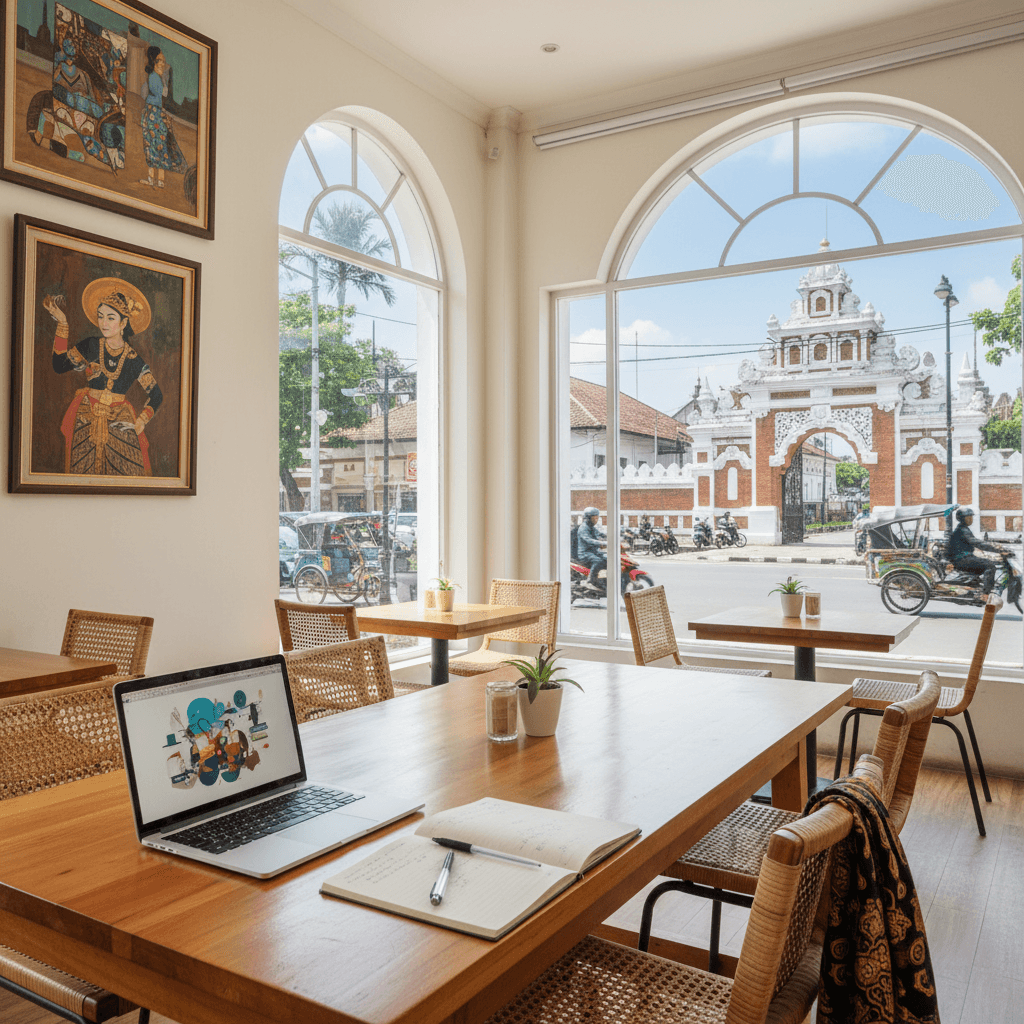
The Laweyan district is a favorite for this. The historic batik houses often have hidden courtyards with decent WiFi. Along Jalan Slamet Riyadi, you will find more modern, glass fronted cafes that feel like they could be in Melbourne or Singapore. Kopi Satu Tujuan is a standout for nomads because it’s specifically designed to be a "coffee coworking" hybrid, blending the social vibe of a cafe with the desk space of an office.
Practical Tips for Working Remotely
Power outages aren't common, but they do happen during the peak of the rainy season. It is a good idea to keep your laptop and a power bank fully charged. Most nomads use the Grab or Gojek apps to order food directly to their desks when they are in the zone; a full meal delivered usually costs less than $4 including the tip.
One thing to keep in mind is the call to prayer. Solo is a deeply religious city with many mosques. If you have important client meetings, try to schedule them outside of prayer times or invest in a pair of high quality noise cancelling headphones, as the speakers can be quite loud if your workspace is near a minaret.
The General Vibe on the Ground
Solo is often cited as one of the safest cities in Indonesia. While Jakarta has the frantic energy of a mega-capital and Bali can feel a bit like a tourist theme park, Solo retains a small town soul. Locals take pride in their reputation for being halus, a Javanese term for being refined, polite, and soft-spoken. This cultural trait translates into a low-stress environment for foreigners.
Violent crime is extremely rare here. Most expats feel comfortable walking through neighborhoods like Laweyan or Pasar Kliwon during the day without a second thought. That said, petty theft like phone snatching or pickpocketing can happen in crowded spots like the Pasar Gede market or during the Car Free Day events on Sundays. Keep your phone tucked away when you are on the back of a motorbike and don't hang your bag loosely over one shoulder.
Navigating the Streets Safely
The biggest physical risk you will face in Solo isn't crime, it's the traffic. Sidewalks are often uneven or used as parking spots for motorbikes, which forces you to walk on the edge of the road. If you are renting a scooter, always wear a helmet. The local police occasionally run checkpoints near Slamet Riyadi to check for international driving permits and helmets.
Solo is more conservative than the coastal islands. While you won't be harassed for your clothing, dressing modestly helps you blend in and shows respect for the local culture. Most nomad women find that covering their shoulders and knees reduces unwanted attention and makes interactions with locals much smoother.
Healthcare Facilities and Hospitals
If you get sick, you are in decent hands for routine issues. Solo has several reputable private hospitals that are used to dealing with the expat community. While they might not have the specialized equipment found in Singapore, they are perfectly fine for infections, minor injuries, or diagnostic tests.
- RS JIH Solo: Located on Jl. Adisucipto, this is often the first choice for expats. It is modern, clean, and has several English-speaking specialists and staff.
- RS Kasih Ibu: A well-established private hospital on Jl. Slamet Riyadi. It is central and reliable for emergency room visits or general consultations.
- RS Hermina: Good for general pediatrics and routine checkups, located near the city center.
A standard consultation with a GP at a private hospital usually costs between $15 and $25. If you need lab work, expect to pay around $30 to $50 depending on the complexity. Most hospitals expect payment upfront or a guarantee of insurance coverage before admitting you.
Pharmacies and Medications
You can find a pharmacy, known locally as an Apotek, on almost every major corner. Kimia Farma and Apotek K-24 are the most reliable chains. They are often open 24/7 and carry most standard medications, from antibiotics to asthma inhalers.
Many drugs that require a prescription in the West can be bought over the counter here, but it is always better to consult a doctor first. If you have a specific brand-name medication you rely on, bring a supply with you. While the active ingredients are the same, local brand names can be confusing to navigate.
Staying Healthy and Avoiding "Solo Belly"
The food in Solo is legendary, but your stomach might need a few days to adjust. The golden rule is to never drink the tap water. Even locals boil their water or buy large 19-liter Aqua jugs for home use. Most restaurants use ice made from purified water, but if you are at a very basic street stall, it is safer to skip the ice.
If you do catch a stomach bug, head to the nearest Indomaret or Alfamart and look for Norit (activated charcoal) or Oralit (rehydration salts). These are cheap, effective, and usually do the trick. If symptoms last more than 48 hours, it is worth a quick trip to RS JIH to rule out anything more serious like parasites or dengue fever, which occasionally pops up during the rainy season.
Getting Around Solo
Solo is a city that moves at a gentler pace than its neighbors. You won't find the aggressive traffic of Jakarta here, but you also won't find a massive subway system. Navigating the streets is a mix of using modern apps and embracing local quirks. Most nomads find that once they get the hang of the primary transport apps, the city becomes incredibly easy and cheap to traverse.
Ride-Hailing Apps
The undisputed kings of transport in Solo are Gojek and Grab. If you don't have these downloaded before you arrive, make it your first priority. They are the lifeline for expats and travelers alike. You can choose between a car (GoCar/GrabCar) or a motorbike (GoRide/GrabBike).
- Motorbike Taxis: These are the fastest way to slice through peak hour traffic. A 5 km ride usually costs between $1.50 and $3. It is customary to wear the helmet they provide.
- Cars: Better for rainy afternoons or when you're heading out to dinner in a nice outfit. Prices are still very low, rarely exceeding $5 for trips within the city center.
- Food Delivery: Both apps also handle food delivery (GoFood/GrabFood), which is a godsend when you're deep in a flow state at your desk and don't want to hunt for a warung.
Public Transportation
The city has made great strides in public transit with the Batik Solo Trans (BST) bus system. These bright buses are clean, air conditioned, and surprisingly reliable. There are several corridors covering major routes like Slamet Riyadi and the airport.
- Cost: Rp3,700 (~$0.23 USD) per trip.
- Payment: You generally need an e-money card (like Flazz, E-money, or Brizzi) which you can buy and top up at Indomaret or Alfamart convenience stores.
- Hours: Most routes run from 5 AM to 9 PM, so don't rely on them for late night returns.
Traditional Transport
For a more nostalgic experience, especially in the Laweyan or Pasar Kliwon areas, you'll still see Becaks (cycle rickshaws). They aren't the most efficient way to get across town, but they're perfect for short, breezy trips through narrow alleys where cars can't fit. Always negotiate the price before you sit down; a short hop should be around $1 to $2. It's a great way to support local drivers who have been doing this for decades.
Walking and Biking
Solo is more walkable than many Indonesian cities, particularly along the Slamet Riyadi corridor which features wide sidewalks. On Sunday mornings, this main artery shuts down for Car Free Day, turning the street into a massive pedestrian playground full of food stalls and performers. Outside of this area, sidewalks can be uneven or blocked by street vendors. If you're staying in Laweyan, walking is the best way to soak in the architecture, but for anything longer than a kilometer, you'll likely want wheels.
Renting Your Own Wheels
If you're staying for a month or more, renting a scooter gives you total freedom. You can find monthly rentals for around $40 to $70 depending on the bike's condition. Just be aware that you'll need an International Driving Permit and a healthy dose of patience to handle the local driving flow. Parking is everywhere and usually costs a flat fee of about $0.15, collected by attendants in orange vests.
Leaving the City
Solo is a fantastic base for regional travel. The Adisumarmo International Airport connects you to Jakarta and other hubs, while the Balapan Station offers high speed train connections to Yogyakarta (about an hour away) and Semarang. The train to Yogyakarta is a favorite for nomads looking for a weekend change of scenery, costing only a few dollars for a comfortable, scenic ride through the rice fields.
Getting Around the Language Barrier
In Solo, English isn't as widespread as it is in Bali or Jakarta. While you'll find English speakers at major hotels and upscale cafes along Slamet Riyadi, the everyday reality involves a lot of smiles and gestures. Most locals speak Indonesian (Bahasa Indonesia) as their primary language of trade, but Javanese is the soul of the city. You'll hear it everywhere, from the batik stalls in Laweyan to the food vendors in Pasar Kliwon.
Expats who settle here long term usually find that learning basic Indonesian is a necessity rather than a hobby. It's a phonetic language with no conjugations, making it relatively easy to pick up the basics. Being able to negotiate a price at Pasar Gede or explain your dietary preferences at a local warung will change your experience from being a tourist to being a neighbor.
The Javanese Nuance
Solo is famous for Bahasa Halus, a highly refined and polite form of the Javanese language. While nobody expects a nomad to master the complex hierarchy of Javanese speech, learning a few "magic words" goes a long way. Using the word "Matur nuwun" (thank you) instead of the Indonesian "Terima kasih" often earns a wider smile and an immediate sense of rapport.
Communication here is indirect and incredibly polite. Locals rarely say "no" directly because it's considered rude. If you ask a shopkeeper if they have a specific item and they say "Belum" (not yet) or give a vague "maybe later," they likely mean no. You'll need to learn to read between the lines and stay patient; rushing a conversation is seen as a sign of poor character.
Digital Tools and Apps
Since English isn't the default, your smartphone is your best friend for communication. You'll want to have these apps ready to go:
- Google Translate: Download the Indonesian offline dictionary. The camera feature is a lifesaver for reading menus at traditional soto stalls that don't have pictures.
- WhatsApp: This is the lifeblood of communication in Solo. Whether you're booking a table, talking to a landlord, or joining a local expat group, everything happens over WhatsApp.
- Gojek or Grab: Use the in-app chat feature to talk to drivers. It has a built-in translation tool that works surprisingly well for coordinating pick-up points.
- SayHi: Many nomads recommend this for more natural, voice-to-voice translations when having longer conversations with locals.
Key Phrases for Your First Week
While you can get by with translation apps, having these phrases ready will make your daily life much smoother. Prices are often spoken quickly, so it helps to know your numbers in Indonesian.
- Berapa harganya? (How much is this?): Expect to hear prices like 15.000 (limabelas ribu) for a solid meal.
- Pedas? (Spicy?): Solo food can be sweet, but the sambal is no joke. Ask for "Tidak pedas" if you want to keep your tastebuds intact.
- Bisa kurang? (Can you go lower?): Use this for polite bargaining at markets, though prices in Solo are already some of the lowest in the country.
- Permisi: (Excuse me): Use this constantly. It's the social lubricant that makes navigating crowded spaces like Klewer Market much easier.
Most travelers find that even if they stumble over their words, the people of Solo are incredibly patient. They appreciate the effort of anyone trying to speak the local tongue. If you're staying for more than a month, consider hiring a private tutor for around $5 to $10 per hour. It's a small investment that pays off in much deeper cultural connections.
The Seasonal Rhythm
Solo doesn't do four seasons. Instead, your life here will revolve around the wet and the dry. If you're planning a stint as a nomad, the timing of your arrival can completely change how much you enjoy the city's walkable neighborhoods like Laweyan.
The dry season runs from May to September, and this is when the city really shines. You'll get clear blue skies and relatively lower humidity, making it much easier to hop on a Gojek or walk between batik shops without melting. This is also the peak time for cultural festivals and outdoor performances at the Mangkunegaran Palace. If you want to explore the nearby Cetho or Sukuh temples in the Karanganyar highlands, these months are your best bet for clear mountain views.
The wet season kicks in around October and lasts through April. Don't expect a light drizzle; these are tropical downpours that usually hit in the mid afternoon. The humidity spikes, and some streets in the lower lying areas can experience minor flooding. On the plus side, the surrounding volcanic landscape turns an incredible shade of neon green, and the city feels much cooler. Most nomads find this a great time to hunker down in cafes or the Shopee Solo Creative Hub to get deep work done while the rain drums on the roof.
Temperature and Humidity
Solo is consistently hot. You're looking at daily highs between 30°C and 33°C (86°F to 91°F) year round. The real kicker isn't the heat, it's the humidity, which rarely drops below 70 percent. Even in the "cool" months of January and February, you'll want a room with decent AC.
Expats recommend the shoulder months of May and June as the sweet spot. The rain has subsided, but the dust of the late dry season hasn't settled over the city yet. The air feels slightly fresher, and it's comfortably before the European holiday crowds arrive in July.
Key Events and Cultural Timing
When you book your stay, keep the Islamic calendar in mind. Ramadan and the subsequent Idul Fitri holidays significantly impact the city's flow. While Solo is a cultural melting pot, it remains a predominantly Muslim city. During Ramadan, many local warungs close during the day, and the nights become incredibly lively with food markets and prayer. The week of Idul Fitri sees the city empty out as locals head to their home villages, but prices for transport and accommodation can spike as people travel.
Other dates to watch for include:
- Solo Batik Carnival (July): A massive, colorful street parade that showcases the city's textile heritage. It's loud, crowded, and fantastic for photography.
- Suro (Late July or August): The Javanese New Year. The palaces hold solemn processions, including the famous parade of the Kyai Slamet white buffaloes. It's a unique glimpse into the city's spiritual heart.
- International Solo Batik Expo (October): A major draw for textile enthusiasts and buyers from around the region.
The Best Time for Nomads
If you're looking for the perfect balance of work and play, aim for June to August. You'll pay slightly more for a flight, but the reliable weather means you can actually use the city's outdoor spaces. If you're on a strict budget and don't mind the rain, November or February offer the best leverage for negotiating long term rents in areas like Pasar Kliwon, as demand is much lower.
Getting Around Town
Solo is surprisingly compact, but the tropical heat makes walking long distances a challenge. Most expats and long term travelers rely on Gojek or Grab. These apps are your lifeline for everything from motorbike taxis (ojek) to car rides and food delivery. A five kilometer trip usually costs between $1.50 and $3.
If you want to try the local experience, look for the Batik Solo Trans (BST) buses. They are clean, air conditioned, and cost about Rp3,700 (~$0.23) per ride. For a slower, more nostalgic pace through the historic lanes of Laweyan, you can still find traditional becaks (cycle rickshaws). Just make sure to negotiate the price before you hop in; usually $1 to $2 is fair for a short trip.
Staying Connected
Don't expect the blazing speeds of Singapore or even Jakarta, but Solo's infrastructure is solid enough for most remote work. Most nomads find that a Telkomsel SIM card provides the best coverage. You can grab one at any cell shop or "Konter" on the street. Expect to pay around $3-5 for 10-25GB packages from Telkomsel that lasts a month.
For a dedicated workspace, El Samara is the go to spot for the small expat community. If you are on a budget, take advantage of the Solo Technopark. It houses several free hubs like the Shopee Solo Creative Hub and the Garena Gaming Hub. They offer free WiFi and AC, though they can get loud with local students during peak hours.
Visa Logistics
Most travelers arrive on a Visa on Arrival (VoA) which costs ~$32 (IDR 500,000) and lasts 30 days. You can extend this once for another 30 days at the local immigration office (Kantor Imigrasi) on Jalan Adi Sucipto. It's a straightforward process, but it requires three separate visits. If you plan to stay longer, look into the B211A Cultural Visa before you arrive, which can be extended for up to six months.
Money and Banking
Cash is still king in Solo's traditional markets and small warungs. Use ATMs from major banks like BNI, Mandiri, or BCA to avoid high fees and skimming risks. Most of these machines have a 2,500,000 IDR (approx. $160) withdrawal limit per transaction. For larger purchases or western style cafes, QRIS (a local QR code payment system) is everywhere. You can use it if you have a local bank account or some international digital wallets.
Health and Safety
Solo is one of the safest cities in Indonesia. Violent crime is extremely rare. Your biggest worry will likely be "Bali Belly" or traffic mishaps. For medical needs, expats recommend RS Kasih Ibu or RS Dr. Oen. They have modern facilities and some English speaking staff. Always stick to bottled or filtered water; the tap water is strictly for showering.
Cultural Etiquette
Solo is the heart of Javanese refinement. People here are soft spoken and value politeness. You'll notice locals avoid using their left hand to give or receive items, as it's considered disrespectful. When visiting the Kraton (Palace) or local mosques, dress modestly. Covering your shoulders and knees is the standard. A simple "Matur Nuwun" (thank you in Javanese) goes a long way in building rapport with the locals.
Cost of Living Summary
- Monthly Budget (Soloist): $400 to $600 covers a decent room, plenty of street food, and transport.
- Monthly Budget (Comfort): $1,000 to $1,200 allows for a private villa or upscale apartment, daily cafe visits, and weekend trips.
- Local Meal: $1 to $3 for Nasi Liwet or Selat Solo at a local stall.
- Coffee at a Cafe: $2 to $4 at popular spots like cold n brew or various spots in Laweyan.
Need visa and immigration info for Indonesia?
🇮🇩 View Indonesia Country GuideHidden Gem
Worth the effort