Santa Rosa de Copán
🇭🇳 Honduras
The Highland Soul of Honduras
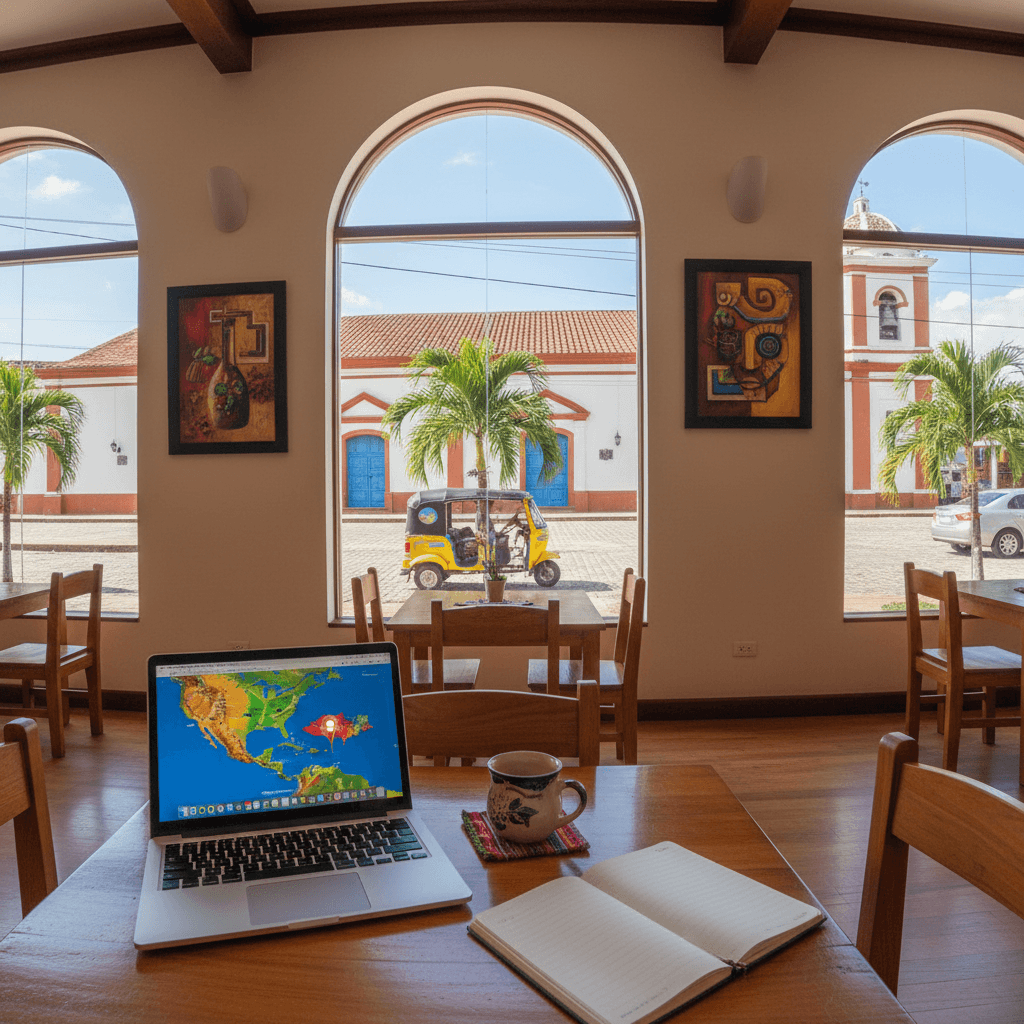
If you're tired of the humid, salt-crusted air of the Caribbean coast and the frantic energy of San Pedro Sula, Santa Rosa de Copán is the deep breath you've been looking for. Perched in the western highlands at about 1,150 meters, this isn't the Honduras you see in travel brochures for Roatán. It’s a place of cobblestones, red-tiled roofs, and a persistent scent of roasting coffee that clings to the morning mist. The vibe is decidedly slow, intellectual, and deeply rooted in colonial history.
Living here feels like stepping back into a more intentional era. You'll spend your mornings working from a courtyard cafe and your afternoons watching the sunset over the pine-covered hills of the Sierra de Merendón. It’s a town where people still greet each other on the street with a polite "buenas" and where the local "Copán Industrial" soda is a point of fierce civic pride. For nomads, the draw isn't a high-tech infrastructure; it's the chance to disappear into a genuine Central American community where you aren't just another face in a tourist crowd.
The Nomad Reality Check
Santa Rosa is a "deep work" destination. It’s perfect if you have a big project to finish and want to keep your overhead low. You can live comfortably here for $1,200 a month, and those on a tighter budget can easily get by on $800. However, the trade-off is the infrastructure. Power outages happen, and while most modern cafes have decent enough WiFi for a Zoom call, you'll want a backup Tigo or Claro SIM card with a heavy data plan to tether when the grid decides to take a siesta.
The social scene is centered around coffee culture rather than late-night clubs. You’ll find yourself befriending local baristas and agricultural entrepreneurs rather than a massive pack of digital nomads. It’s quiet, safe, and incredibly affordable, but you’ll need at least basic Spanish to navigate daily life, as English proficiency remains low outside the main hotels and upscale restaurants.
Where to Plant Your Flag
The city is compact and walkable, which is a blessing since there are no ride-sharing apps like Uber here. You'll mostly rely on your own two feet or the local motor-taxis that zip around the steep streets.
- Barrio El Centro: This is the heart of the action. You’re steps away from the Central Park and the best cafes like Cafe Ciudad Blanca. It’s beautiful and historic, but the stone streets can echo with traffic noise during the day. Expect to pay $400 to $600 for a decent apartment here.
- Barrio Santa Teresa: A bit more residential and quieter than El Centro, but still within a ten-minute walk of the plaza. It’s a favorite for long-termers who want a local feel without the cathedral bells waking them up every hour.
- The Outskirts: If you head toward the hills, you’ll find larger homes and cooler air. It’s much cheaper, with rents often dipping below $300, but you’ll likely want a car or a reliable contact for a taxi driver to get into town.
The Daily Grind and Beyond
The "Santa Rosa lifestyle" is defined by the weather. With temperatures hovering between 15°C and 25°C year-round, it’s one of the few places in Central America where you might actually need a light sweater in the evening. The dry season from December to April is glorious, offering crisp blue skies and perfect hiking weather for trips to the nearby Celaque National Park.
When you aren't working, the town serves as a gateway to the Mayan ruins of Copán Ruinas, which are about three hours away. But most days, your biggest decision will be which mountain-grown bean to try next. It’s a low-stress, high-caffeine existence that trades "vibrancy" for genuine peace and a very healthy bank account.
The Highland Budget: What to Expect
Living in Santa Rosa de Copán is a breath of fresh air for your bank account, especially if you're coming from the Caribbean islands or North America. It is one of those rare spots where you can live a high quality of life without the "gringo tax" found in more touristy hubs. Most nomads find that a monthly budget of $1,200 allows for a very comfortable lifestyle, including a nice apartment, frequent dining out, and weekend trips to the mountains.
If you are sticking to a tighter budget, you can easily get by on $800 a month. This covers a modest studio, plenty of local baleadas, and bus fare. For those who want the best the city has to offer, $2,000 a month puts you in the top tier of local spenders, covering a large colonial home and upscale dinners every night.
Typical Monthly Expenses
- Studio or 1BR Apartment (Central): $350 to $600
- Coworking Membership: $100
- 10GB to 15GB data plan: $10 to $15
- Monthly Groceries: $200 to $300
- Mid-range Dinner for Two: $20 to $30
Housing and Neighborhoods
The city doesn't have a massive high-rise scene; instead, you'll be looking at colonial style homes or modern low-rise apartments. Most expats and digital nomads gravitate toward Barrio El Centro. It is the heart of the coffee scene, meaning you're never more than a two minute walk from a world class espresso. The trade off is the noise; those cobblestone streets echo with the sound of motorbikes and morning commerce.
For a quieter stay, look at the residential areas on the outskirts. These neighborhoods are often cheaper and offer more space, though you will likely want a car or a reliable taxi contact. To find the best deals, skip the international booking sites and head to Facebook Groups or Encuentra24. Many of the best rentals are still found by walking the streets and looking for "Se Alquila" signs.
Dining and Socializing
Food is where Santa Rosa really shines for the budget conscious. You can grab street food like pupusas or baleadas for $2 to $4. If you prefer a sit down meal at a mid-range cafe, expect to pay between $5 and $10. Even the "expensive" spots in town rarely cross the $20 mark for a main course and a drink.
Since the social scene revolves heavily around coffee, you'll spend a lot of time in places like Cafe con Libros or Cafe de Copan. A high quality latte will usually set you back about $2.50. Alcohol is similarly affordable, with local beers costing around $1.50 to $2.00 at most bars.
Transport and Connectivity
The city is incredibly walkable, so your transport costs will be negligible unless you're heading out of town. A local bus ride is roughly $0.50, and taxis within the city limits are very affordable. There is no Uber here, so you will need to rely on local cabs or your own two feet.
Internet is the one area where you might want to spend a bit extra. While basic home internet is included in many rentals, it can be spotty during the rainy season from May to October. Most nomads recommend getting a Tigo or Claro SIM card as a backup. A $10 data package is usually enough to keep you online during a power flicker. For banking, stick to BAC or Ficohsa ATMs to avoid the highest fees, and use Wise for larger transfers to avoid local bank markups.
The Digital Nomad: Barrio El Centro
If you want to be within a three minute walk of your next caffeine fix, El Centro is the only place to be. This is the historic heart of the city, defined by cobblestone streets and 18th century Spanish architecture. It is where the limited but growing cafe culture lives, making it the most practical spot for remote work. You will find yourself spending a lot of time at local coffee shops where the internet is usually stable enough for a few Zoom calls, though most nomads keep a Tigo or Claro SIM card ready for the inevitable power flicker.
- Estimated Rent: $450 to $650 for a furnished central apartment.
- Vibe: Social and walkable, but can get noisy during local festivals or Sunday market days.
- Best for: Working from cafes and being near the town's best restaurants.
The Long Term Expat: Barrio Santa Teresa
Expats who decide to stay for a year or more often migrate slightly north of the central plaza to Santa Teresa. It is a bit quieter and feels more like a residential community than a tourist hub. You still get the colonial charm, but the streets are wider and there is less foot traffic. It is a great middle ground because you can still walk to the center in ten minutes, but you will have a much easier time finding a house with a small courtyard or a bit of garden space.
- Estimated Rent: $350 to $550 for a multi bedroom house.
- Vibe: Traditional, neighborly, and peaceful.
- Best for: Those who want a "real" local life away from the main plaza noise.
Families: El Tejar and the Outskirts
For families moving to the western highlands, the residential areas toward the southern outskirts, like El Tejar, are the top choice. These neighborhoods offer more modern construction and bigger footprints for the money. You are looking at much lower price points than the central zone, often getting a full three bedroom home for the price of a small central studio. While you will need to rely on local taxis or have your own car, the tradeoff is a much safer, quiet environment for kids to play.
- Estimated Rent: $300 to $500 for a large home.
- Vibe: Suburban and quiet with more green space nearby.
- Best for: Families needing multiple bedrooms and a yard.
Solo Travelers and Budget Seekers: Barrio Miraflores
Solo travelers looking to stretch a budget often land in Miraflores. It is a hilly area that offers some of the best views of the surrounding mountains and the red tiled roofs of the city. The housing here is a mix of older apartments and local guest houses. It is not as polished as the colonial center, but it is authentic and incredibly affordable. You will find more local "comedores" here where a full lunch of beans, rice, and plantains costs about $3.
- Estimated Rent: $250 to $400 for basic accommodations.
- Vibe: High energy and hilly with great views.
- Best for: Budget conscious travelers who don't mind a steep walk.
Most people moving here find that the city is small enough that you aren't ever truly "stuck" in one neighborhood. You can cross the main parts of town on foot in about twenty minutes. If you are unsure, start with a week in a central guesthouse to get a feel for the hills and the noise levels before committing to a long term lease on the outskirts. Most rentals are still found via Facebook groups or by simply walking around and looking for "Se Alquila" signs.
Connectivity in the Highlands
Working from Santa Rosa de Copán requires a bit more strategy than your typical digital nomad hub. While the city is the intellectual and coffee capital of western Honduras, the infrastructure still reflects its rugged mountain setting. You will find that fiber optic internet is slowly rolling out to the central core, but speeds rarely exceed 20 to 30 Mbps on a standard connection. It is enough for Zoom calls and basic uploads, but heavy video editors might feel the lag.
The biggest hurdle here isn't the speed; it's the stability. Power outages occur occasionally, especially during the rainy season from May to October. Most seasoned remote workers in town rely on a dual setup. They use a local ISP for the heavy lifting and keep a secondary mobile hotspot ready to go at a moment's notice.
Coworking and Work-Friendly Cafes
Traditional coworking spaces with ergonomic chairs and soundproof booths haven't quite hit Santa Rosa yet. Instead, the "coworking" scene is decentralized, taking place in the city's famous coffee shops. Since this is the heart of the HWC (Honduran Western Coffee) region, the cafes are world-class and generally welcoming to laptops as long as you keep the caffeine flowing.
A "nomad pass" or informal coworking setup at a local guesthouse usually runs around $100 per month if you negotiate a dedicated desk. Most cafes expect you to spend about $5 to $10 a day on food and drinks if you plan to stay for a few hours.
Mobile Data and SIM Cards
Do not rely on your home country's roaming plan here. It will be slow and expensive. As soon as you arrive, head to a local agency for either Tigo or Claro. These are the two giants in Honduras, and their coverage in Santa Rosa is excellent.
Most nomads prefer Tigo for its slightly better data packages in the highlands. You can get an "unlimited" data SIM for roughly $10 to $15 that lasts for a week or two. To recharge, look for signs that say "Recargas" in almost any small corner store (pulpería). It's a quick process that takes about two minutes. Having 4G as a backup is mandatory if you have 9-to-5 meeting obligations.
Practical Setup Tips
If you are renting an Airbnb or a local apartment in Barrio El Centro or Barrio Santa Teresa, always ask the host for a screenshot of a speed test before booking. Many hosts claim to have "high-speed" internet, but that might mean 5 Mbps in local terms. If you need a more permanent setup, look for providers like Cable Color or Multivisión, which are the primary ISPs in the area.
Since the city sits at an elevation of about 1,100 meters, it stays cooler than the coast. This is great for your laptop's battery life and your own comfort, as you rarely need air conditioning. However, the thick stone walls of colonial buildings are notorious for killing Wi-Fi signals. If your router is in the living room, don't expect a great connection in a back bedroom without a signal booster.
Finally, grab a high-quality surge protector. The voltage fluctuations during storms can be hard on electronics. Most expats also keep a small power bank charged at all times just to keep their phones and hotspots alive during those two-hour afternoon maintenance cuts.
A Different Kind of Safety
Unlike the high-energy, often gritty atmosphere of San Pedro Sula or Tegucigalpa, Santa Rosa de Copán feels like a deep breath of mountain air. It is widely considered one of the safest urban centers in Honduras. The vibe here is small-town and traditional; people still greet each other on the stone-paved streets, and the "western hospitality" the region is known for isn't just a marketing slogan. It's a place where you can walk to a cafe at night without the hyper-vigilance required in the bigger cities.
That said, you are still in Central America. Petty theft can happen, though it's rare. Most nomads follow the standard "don't be flashy" rule. Keep your high-end MacBook in your bag while walking between cafes and avoid wandering into dark, unfamiliar outskirts alone after midnight. The biggest "danger" you’ll likely face is a twisted ankle on the uneven colonial cobblestones or a sudden downpour during the rainy season.
Health and Medical Care
If you get sick, you're in decent hands for routine issues. Santa Rosa serves as the regional hub for western Honduras, so it has better facilities than the surrounding mountain villages. For everyday ailments or prescriptions, pharmacies (farmacias) are everywhere. Look for Farmacia Kielsa or Farmacia Simán; they are well-stocked and the pharmacists can often recommend over-the-counter fixes for minor stomach bugs or allergies.
For more serious concerns, the city has a mix of public and private options:
- Hospital de Occidente: This is the main public hospital. It is usually crowded and best saved for absolute emergencies if you have no other choice.
- Centro Médico Santa Rosa: A private facility that most expats and long-term travelers prefer. It’s cleaner, faster, and offers a higher standard of personalized care.
- Private Specialists: You can find English-speaking dentists and general practitioners in the center who charge a fraction of US or European prices. A standard consultation usually runs between $30 and $50.
Practical Wellness Tips
The tap water is a no-go here. Even locals don't drink it. You’ll want to buy the 5-gallon jugs (botellones) for your apartment, which cost about $2 to $3 for a refill. Most reputable restaurants use purified water for their ice and salads, but if you have a sensitive stomach, stick to peeled fruits and cooked vegetables for your first week while you adjust.
The altitude is about 1,150 meters (3,800 feet), which is a sweet spot for many. It’s high enough to escape the tropical heat of the coast but not high enough to cause altitude sickness. However, the mountain sun is deceptively strong. Even if it feels cool and breezy, you will burn quickly during a walk to Cerrito Hill if you aren't wearing SPF.
Emergency Contacts
It’s smart to have these numbers saved before you arrive, just in case. Don't expect the operators to speak English, so having a translation app or a basic Spanish script ready is helpful.
- General Emergency: 911
- National Police: 199
- Red Cross (Cruz Roja): +504 2662-0155
- Fire Department (Bomberos): +504 2662-0193
Local nomads often suggest joining local WhatsApp or Facebook groups like "Santa Rosa de Copán Avisos." These are great for real-time info on everything from power outages to recommended local doctors. While the city is quiet, being plugged into the local digital grapevine is your best safety net.
The Cobblestone Reality
Santa Rosa de Copán isn't a city of high speed transit or digital apps. It's a place where your primary mode of transport will be your own two feet. The historic center is remarkably compact, and because the city sits in the highlands, the air is cool enough that walking doesn't turn into a sweat soaked chore. Most nomads find they can reach the best coffee shops, banks, and markets within a 10 to 15 minute stroll if they stay near the central colonial zone.
The streets are mostly cobblestone, which adds to the colonial charm but can be a bit of a nightmare for rolling suitcases or anyone with mobility issues. You'll want sturdy shoes. While the city feels safe and sleepy, keep your wits about you after dark, especially if you're wandering outside the main well lit plazas.
Taxis and Moto-Taxis
When the hills get too steep or you're carrying groceries, look for the local taxis. You won't find Uber or any other ride hailing apps here yet. Instead, you'll hail white taxis on the street or find them lined up near the central park. Prices are very affordable, usually around $1.50 to $2.50 for a trip within the city limits. Always agree on the price before you get in, as meters aren't a thing here.
- Standard City Fare: 30 to 50 Lempiras (approx. $1.25 to $2.00)
- Late Night Fare: Expect to pay a small premium, usually 20 Lempiras extra.
- Moto-Taxis: These three wheeled tuk-tuks are common for short hops and usually cost about $0.50 to $0.75 per person.
Arriving and Departing
Getting to Santa Rosa is the biggest logistical hurdle. Most expats and nomads fly into Ramon Villeda Morales International Airport (SAP) in San Pedro Sula. From there, you have a few choices to cover the 3 hour drive west into the mountains. If you're on a budget, the Casasola or Congolon bus lines are the go to options. They're reliable and cost roughly $10 to $15 for a one way ticket.
For a more comfortable experience, many travelers recommend hiring a private shuttle or a trusted driver from the airport. This will run you closer to $100 or $150, but it's much safer and faster if you're arriving late in the day. Avoid driving yourself if you're new to the country; the roads into the highlands are winding, often filled with heavy trucks, and can be prone to landslides during the rainy season from May to October.
Regional Connections
If you're planning to visit the famous Mayan ruins in Copán Ruinas, you'll find daily bus departures from the main terminal. It's a 2 to 3 hour journey. For longer trips to the capital, Tegucigalpa, or the Caribbean coast, you'll likely need to transit back through San Pedro Sula.
- Bus to Copán Ruinas: Leaves frequently, costs about $6.00.
- Bus to San Pedro Sula: Multiple departures daily, takes 3 to 4 hours.
- Private Car Rental: Not recommended for city use, but available in San Pedro Sula for roughly $40 per day if you want to explore Celaque National Park on your own schedule.
Most nomads find that once they've settled into a rental in Barrio El Centro or one of the quieter outskirts, they rarely need a car. The city is built for a slower pace, and the lack of traffic noise is one of the main reasons people choose Santa Rosa over the chaos of Honduras' larger urban hubs.
The Language Barrier
If you are coming from Roatan or Utila, Santa Rosa de Copan will be a bit of a reality check. In the Bay Islands, English is everywhere; here in the western highlands, Spanish is the undisputed king. You will find that very few people outside of high end hotel lobbies or specific tourism offices speak fluent English. While this might sound intimidating, it is actually one of the reasons nomads stay here for months. It is an immersive environment where you are forced to use your Spanish, and the locals are incredibly patient with learners.
The pace of life in Santa Rosa is slow, and that extends to how people talk. You won't deal with the rapid fire slang you might hear in Tegucigalpa. Most residents speak clearly and with a polite, formal undertone. It is common to be addressed as "Usted" rather than the informal "tu," even in casual settings. Learning a few polite openers will get you much further than a perfect accent.
Essential Communication Tools
Since English proficiency is low, you will want to have your digital toolkit ready before you land. Most expats and long term travelers rely heavily on Google Translate, specifically the offline Spanish dictionary pack. The camera translation feature is a lifesaver for reading menus at local comedores or deciphering signs at the western bus terminal.
- WhatsApp: This is the lifeblood of communication in Honduras. You will use it for everything from booking an Airbnb to ordering water delivery or messaging a local cafe to see if their power is back on.
- SpanishDict: A favorite among the nomad community for its better grasp of regional nuances compared to basic translators.
- DeepL: Best for writing professional emails or long form messages to landlords if you are negotiating a monthly lease.
Connectivity and SIM Cards
Staying connected is the biggest hurdle for remote work here. While the city is charming, the infrastructure can be temperamental. Most nomads find that having a backup data plan is mandatory because power outages can happen during the rainy season from May to October. Do not rely solely on your apartment's fiber connection.
There are two main players: Tigo and Claro. Most travelers recommend Tigo for the western highlands as it tends to have slightly better penetration in the mountainous terrain around the city. You can pick up a SIM card at almost any "pulperia" (small corner store) for a few dollars. A prepaid plan with roughly 10GB to 15GB of data usually costs around $10 to $15. It is cheap enough that many nomads keep a SIM from both providers in a dual SIM phone just to ensure they never miss a Zoom call.
Social Etiquette and Basic Phrases
Communication in Santa Rosa is as much about manners as it is about vocabulary. You will notice that people always greet each other when entering a room or a small shop. A simple "Buenos dias" (Good morning) or "Buenas tardes" (Good afternoon) is expected. Skipping this can make you seem brusque or rude.
Here are a few phrases that will make your daily life smoother:
- ¿Cuanto cuesta?: How much does it cost? (Essential for market stalls without price tags).
- La cuenta, por favor: The check, please.
- ¿Tiene WiFi?: Do you have WiFi? (Follow this up by asking for the "clave" or password).
- Disculpe: Excuse me. Use this to get a waiter's attention or pass someone on a narrow colonial sidewalk.
- A la orden: You will hear this constantly from locals. It means "at your service" or "you're welcome."
If you are looking to level up your skills, there are often local tutors available for private lessons. Expect to pay around $10 to $15 per hour for one on one Spanish instruction, which is a steal compared to online platforms or schools in Antigua, Guatemala. Most nomads find that after a month of navigating the cafes and markets in Santa Rosa, their conversational confidence skyrockets.
The Highland Climate
Unlike the sweltering humid heat you find on the coast or in the Bay Islands, Santa Rosa de Copan sits at about 1,100 meters above sea level. This elevation creates a temperate highland climate that feels more like a perennial spring than a tropical furnace. Most days you are looking at steady temperatures between 15°C and 25°C (roughly 60°F to 77°F). It is the kind of weather where you will want a light sweater for the mornings and evenings, but a t-shirt is perfect for a midday coffee crawl through the cobblestone streets.
The air here is crisp and noticeably cleaner than in San Pedro Sula. For nomads who struggle with the intense Caribbean sun, this city is a massive relief. You won't find many apartments with air conditioning because, frankly, you rarely need it. Ceiling fans and open windows usually do the trick, keeping your electricity bill significantly lower than it would be in Roatan.
Dry Season: The Sweet Spot (December to April)
If you want the quintessential highland experience, aim to arrive between December and April. This is the dry season, characterized by bright blue skies and very little rainfall. It is prime time for hiking in nearby Celaque National Park or taking day trips to the ruins. The humidity drops, and the coffee harvest is in full swing, meaning the city smells faintly of roasting beans and the local cafes are at their liveliest.
The nights can get surprisingly chilly in January and February, sometimes dipping toward 12°C (54°F). If you are staying in a traditional colonial building with thick stone walls, those rooms hold the cold. Local expats suggest bringing a decent hoodie or buying a locally made wool blanket at the market. You will appreciate the extra layer when you are working late on your laptop.
The Rainy Season (May to October)
The rains typically start in May and stretch through October. This isn't usually a constant drizzle; instead, you get clear mornings followed by heavy, dramatic afternoon downpours. It turns the surrounding mountains an incredible, deep green, but it does bring some logistical headaches. September and October are the wettest months and the time when you are most likely to deal with localized flooding or mudslides on the roads leading out of town.
For digital nomads, the rainy season is when the city's infrastructure is tested most. Power outages are more frequent during heavy storms. If you are planning to stay during these months, it is a good idea to have a backup power bank and a Tigo or Claro SIM card with plenty of data to use as a hotspot when the local Wi-Fi drops. Most veterans of the city just use the rain as an excuse to hunker down in a cafe like Cafe de las Velas and get some deep work done.
When to Visit for the Vibe
While the weather is best in the dry season, timing your visit around local events can change the experience entirely. August is a popular time because of the Feria Agostina, where the city comes alive with parades and livestock shows. It is a bit noisier and more crowded, but it offers a great look at western Honduran culture. If you prefer the quiet, focused atmosphere that Santa Rosa is known for, stick to the shoulder months of November or May, when the crowds are thin and the weather is transitioning.
- Best for hiking: January to March
- Highest humidity: June to September
- Coldest nights: December and January
- Peak coffee season: December to March
In short, if you can handle a few afternoon storms, there isn't really a "bad" time to be here. The consistent temperatures make it one of the most comfortable places in Central America to set up a remote office for a few months. Just remember that the sun is stronger at this altitude than it feels; even on a cool 20°C day, you will want sunscreen if you are out exploring the colonial center.
Connectivity and Power
Living in the western highlands means trading high-speed fiber for a slower pace of life. While most cafes and rentals offer decent Wi-Fi for basic tasks, the infrastructure can be temperamental. Power outages happen, especially during the rainy season from May to October. If you're working on a deadline, it's smart to have a backup plan.
Pick up a local SIM card immediately. Tigo and Claro are the two main providers. Most nomads prefer Tigo for better coverage in the hilly terrain of Santa Rosa. You can get an unlimited data plan for about $10. Use your phone as a hotspot when the house Wi-Fi dips. If you need a more professional setting, look for small local cafes in Barrio El Centro. While dedicated coworking spaces are rare, the coffee culture here is massive, and owners are usually fine with you staying for a few hours if you're buying their world-class beans.
Cost of Living
Your dollar goes incredibly far here compared to Roatán or even San Pedro Sula. You can live a very comfortable life on $1,200 to $1,500 a month, though budget-conscious travelers can scrape by on $800 if they stick to local markets and shared housing.
- Studio or 1BR Apartment: $300 to $600 per month in the center.
- Street Food (Baleadas): $2 to $4 per meal.
- Mid-range Dinner: $10 to $15 including a drink.
- Monthly Grocery Bill: $200 to $300 for a single person.
- Local Bus or Moto-taxi: $0.50 to $1 per ride.
Navigation and Safety
There is no Uber here. You'll rely on local taxis or your own two feet. The central colonial zone is very walkable, though the cobblestones can be tough on your shoes. For longer trips, head to the main bus terminal to catch a ride to Copán Ruinas or San Pedro Sula. The drive to the nearest major airport, SAP, takes about 3 hours, so plan your departures accordingly.
Safety in Santa Rosa is generally better than in the big industrial cities. It feels like a large village where people know their neighbors. Still, don't be flashy. Keep your phone tucked away while walking at night and use common sense. Most expats recommend sticking to Barrio El Centro or the quieter outskirts if you have a family.
Money and Logistics
Cash is still king for daily transactions. Use BAC or Fichosa ATMs for the best exchange rates and lower fees. It's a good idea to have the Wise app set up for international transfers, though you'll mostly be paying your rent in Lempiras or US Dollars cash. For finding apartments, skip the big booking sites. Join local Facebook groups or check Encuentra24. Many of the best deals are found by simply walking around and looking for "Se Alquila" signs.
Cultural Nuances
English proficiency is low, so you'll need at least basic Spanish to get by. Download Google Translate for offline use. A simple "Buenos días" or "Buenas tardes" goes a long way with the locals. This is a conservative, polite society where a friendly greeting is expected before you start asking for prices or directions. If you're looking to meet people, the social scene revolves around coffee shops rather than loud clubs. It's a quiet town, perfect for deep work and mountain hikes, but don't expect a wild nightlife scene.
Need visa and immigration info for Honduras?
🇭🇳 View Honduras Country GuideHidden Gem
Worth the effort