San Miguel de Allende
🇲🇽 Mexico
The Aesthetic Heart of the Highlands
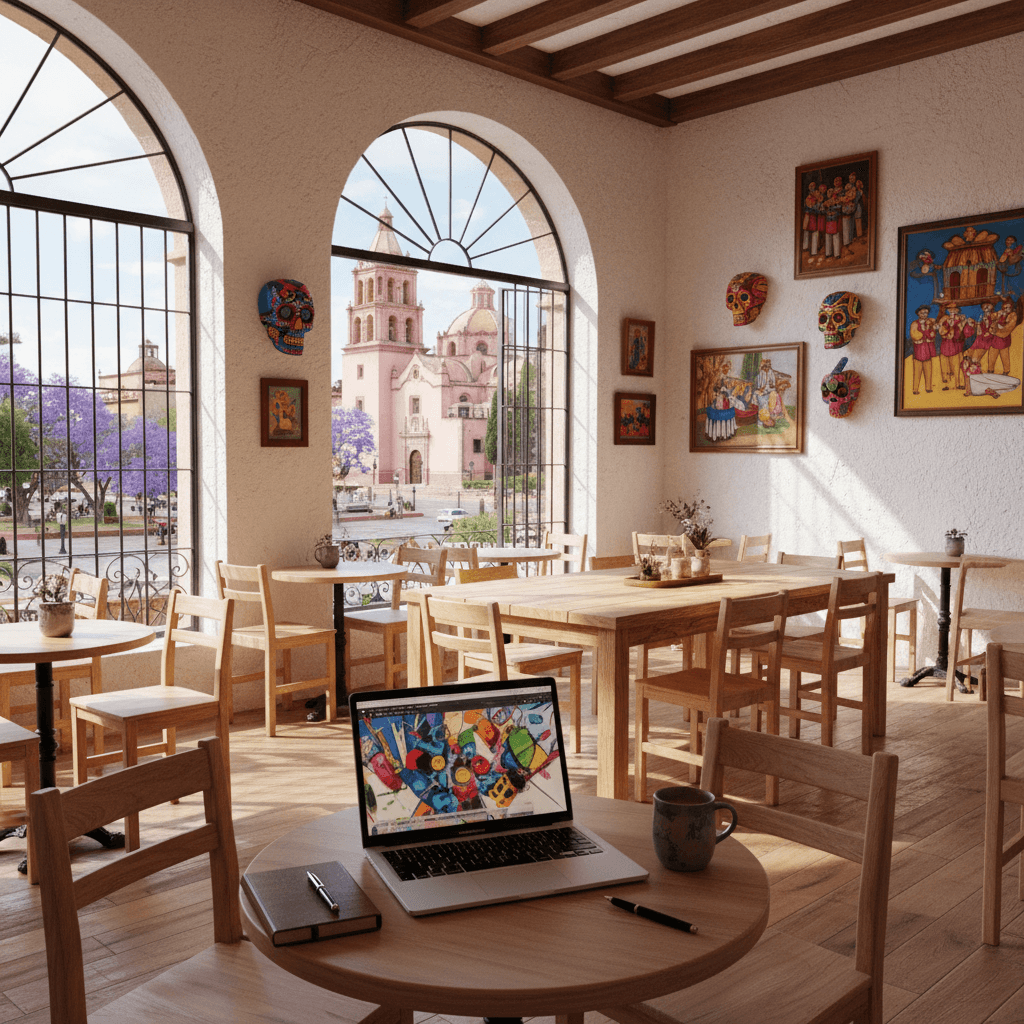
San Miguel de Allende doesn't feel like a typical digital nomad hub. You won't find the neon-soaked party energy of Playa del Carmen or the sprawling, gritty intensity of Mexico City. Instead, this UNESCO World Heritage site offers a curated, slow-motion immersion into colonial Mexico. It is a place of ochre walls, purple jacarandas, and the constant chime of church bells echoing off the hillsides.
The city is built on a foundation of art and history. Most people spend their first few days just staring at the Parroquia de San Miguel Arcángel, the pink, neo-Gothic cathedral that anchors the main square. But for those staying longer, the appeal lies in the "intentional living" vibe. It is a town where you trade the rush for a morning coffee at Ki'Bok and an afternoon wandering through Fábrica la Aurora, a former textile mill turned into a massive complex of galleries and studios.
The Community Dynamic
The social scene here is distinct. While places like Tulum attract the twenty-something "influencer" crowd, San Miguel draws a more established demographic of creative professionals, retirees, and slow travelers. This creates a stable, sophisticated atmosphere where the person sitting next to you at a rooftop bar is just as likely to be a retired architect as a freelance developer.
Nomads often find their footing through active WhatsApp groups and local meetups. Because the town is small and walkable, you'll start recognizing faces within a week. There is a deep sense of community here that’s hard to find in larger cities, bolstered by frequent cultural festivals and gallery openings that bring everyone out into the streets.
What to Expect on the Ground
Life here happens on cobblestones. You will need sturdy shoes and a tolerance for steep hills. The pace is unhurried, which can be a double-edged sword; if you are looking for high-octane nightlife every Tuesday, you might find it too quiet. However, if you want a place where you can actually focus on your work during the day and enjoy a world-class meal on a terrace at sunset, it’s hard to beat.
- Safety: It is widely considered one of the safest spots in Mexico for expats and solo travelers. You can comfortably walk through Centro or Independencia at night.
- Connectivity: Despite the old-world look, the internet is reliable. High-speed fiber optic is standard in most rentals, costing between $30 and $50 USD per month.
- Walkability: You won't need a car. Most nomads rely on their own two feet, supplemented by the occasional $5 to $10 USD taxi ride for longer distances.
Cost of Living Breakdown
San Miguel is more expensive than many other Mexican towns, but it remains a bargain compared to major US or European hubs. Your budget will largely depend on how close you want to be to the Jardín Principal.
Centro (The Heart)
- Vibe: High energy, touristy, and breathtakingly beautiful.
- Monthly Rent: $800 to $1,200 USD for a modest studio; $2,000+ USD for luxury colonial homes.
- Best For: Short-term nomads who want to be steps away from Cafe Rustica and the best rooftop bars.
Guadiana & Independencia (The Local Mix)
- Vibe: Quieter, residential, and favored by long-term expats.
- Monthly Rent: $1,200 to $1,800 USD for elegant mid-range apartments.
- Best For: Remote workers staying 3+ months who want a neighborhood feel and proximity to the Outsite coworking community.
Daily Expenses
- Coffee and Breakfast: $5 to $10 USD at local favorites like Cafe Rustica.
- Mid-range Dinner: $15 to $25 USD including a drink.
- Gym Membership: Roughly $40 USD per month.
- Mobile Data: $20 to $40 USD for a solid Telcel or Saily eSIM plan.
Ultimately, San Miguel de Allende is for the nomad who wants to feel inspired by their surroundings. It’s a place for people who value a high quality of life, a rich arts scene, and a community that feels like a village rather than a transit hub. It’s less about "grinding" and more about finding a sustainable rhythm in one of the most beautiful settings in North America.
What to Expect in Your Budget
San Miguel de Allende is far from the cheapest destination in Mexico, but it provides incredible value for the quality of life you get. For those coming from the US or Europe, your money goes significantly further here, especially regarding lifestyle perks like eating out and local services. Most nomads find that a monthly budget between $1,500 and $2,000 allows for a comfortable, budget conscious stay, while $3,000 or more unlocks the high end colonial lifestyle the town is famous for.
The local economy is stable, and while prices in the historic center are geared toward tourists and the large expat community, you can keep costs down by shopping at local markets like Mercado de Artesanías or eating away from the main plaza. High speed fiber optic internet is standard now, usually costing between $30 and $50 per month, which is a non negotiable for remote work.
Monthly Expense Breakdown
- Housing: Expect to pay $800 to $1,200 for a studio or one bedroom in Centro or Independencia if you are booking short term via Airbnb. For something more upscale in the Guadiana neighborhood, prices often jump to $1,800 or more.
- Utilities: If your rent doesn't include them, set aside $60 to $150 for electricity and about $40 for water and gas.
- Connectivity: A local Telcel SIM or an eSIM like Saily with a solid data package will run you $20 to $40.
- Coworking: A dedicated desk at a spot like Outsite or Selina typically costs between $100 and $200 a month.
Dining and Entertainment
Food costs vary wildly depending on your habits. You can grab street tacos for $3 to $5, or spend $15 on a brunch at Cafe Rustica or Ki'Bok Coffee. If you are heading to one of the famous rooftop bars for dinner and drinks, expect to pay $20 to $40 per person. Most travelers find that $400 to $600 a month covers a mix of grocery shopping and frequent dining out.
Entertainment is relatively affordable. Gallery openings at Fábrica la Aurora are often free to browse, while tickets for concerts, workshops, or botanical garden tours at Charco del Ingenio usually fall in the $10 to $25 range. If you're looking to stay fit, a local gym membership is around $40, and a drop in yoga session is about $15.
Neighborhood Price Comparison
Centro
- Vibe: The heart of the action, right by the pink Parroquia.
- Short-term Rent: $1,000 to $1,500
- Pros: No need for transport; you are steps from the best cafes and galleries.
Independencia
- Vibe: A more authentic, residential mix of locals and expats.
- Short-term Rent: $800 to $1,100
- Pros: Quieter nights and better prices on groceries and local eats.
Guadiana
- Vibe: The upscale choice for nomads who want luxury and community.
- Short-term Rent: $1,200 to $2,000+
- Pros: Home to many coliving spaces and high end amenities, though it's a longer walk to the center.
Transportation Costs
San Miguel is a walking town, so your transport budget might actually be zero most days. When the cobblestones get tiring or you are carrying groceries, taxis are everywhere and generally charge $5 to $10 for trips within the city. Ride hailing apps like Uber or Didi are also available and competitively priced. If you want to explore further out, like a day trip to Guanajuato City, budget about $50 for a round trip shuttle or private driver.
For Solo Travelers and First-Timers: Centro
If you want to be in the thick of the action, Centro is the place to plant your flag. This is the postcard version of San Miguel, where you'll walk out your door and immediately hit the pink spires of the Parroquia de San Miguel Arcángel. It's the most walkable part of town, meaning you won't need to mess with taxis or apps to find a world class meal or a gallery opening.
- Rent: Expect to pay $800 to $1,200 for a decent studio or one bedroom on Airbnb.
- The Vibe: High energy and tourist heavy, but incredibly convenient.
- Top Spots: Grab a coffee at Ki'Bok or spend an afternoon wandering through the galleries at Fábrica la Aurora.
Solo travelers love this area because it's impossible to feel lonely. You're steps away from rooftop bars and social hubs like Cafe Rustica. The downside is the noise and the crowds, especially on weekends when the wedding processions and tourists take over the cobblestones.
For Digital Nomads and Remote Workers: Guadiana
Guadiana has evolved into the unofficial headquarters for the remote work crowd. It's slightly more polished and residential than Centro but still within a 15 minute walk of the main square. This neighborhood feels like a calm oasis where you can actually get through a Zoom call without a parade passing by your window.
- Rent: Prices are steeper here, usually ranging from $1,200 to $1,800 for elegant, modern homes.
- The Vibe: Professional, upscale, and community oriented.
- Connectivity: This is where you'll find the Outsite coliving space and a strong WhatsApp community of nomads.
Most nomads find the extra cost worth it for the peace and quiet. You'll have reliable fiber optic internet, which usually runs about $30 to $50 a month if you're setting up your own place. It's the best spot if you want to balance deep work with social meetups at nearby yoga studios or cafes.
For Long-Term Expats and Slow Travelers: Independencia
Located just behind Centro, Independencia offers a more authentic slice of life. It's where the expat community and local families blend together. It doesn't have the manicured feel of Guadiana, but it makes up for it with character and slightly better value for your money.
- Rent: You can often find comfortable mid-range options for $900 to $1,400.
- The Vibe: A mix of local markets and quiet residential streets.
- Practicality: It's quieter at night but still close enough to the action that you don't feel isolated.
Expats recommend this area if you're staying for several months and want to escape the "tourist bubble." You'll be closer to local markets where street food costs $3 to $5, helping you keep your monthly budget closer to the $2,000 mark rather than the $3,500 you might spend in the luxury zones.
For Families and Nature Lovers: Near Charco del Ingenio
While not a traditional neighborhood name, the areas bordering the botanical gardens and the upper parts of town are popular with families who need more space. You'll sacrifice the immediate walkability of Centro for larger yards and proximity to nature trails.
- Rent: Large family homes can go for $2,000 and up.
- The Vibe: Quiet, breezy, and great for kids or pets.
- Transport: You'll likely want to budget $10 to $20 a week for taxis or ride-hailing apps since it's a bit of a climb from the center.
Families often prefer these outskirts because they offer a break from the narrow, crowded sidewalks of the historic district. You're still only a short drive from the 911 emergency services and private hospitals, providing a safety net that many international families prioritize.
Digital Infrastructure and Connectivity
San Miguel de Allende might look like a 16th century colonial dream, but its digital infrastructure is surprisingly modern. Fiber optic internet is now the standard across most of Centro and the surrounding neighborhoods. You can expect reliable speeds that handle video calls and large uploads without much fuss. Most household plans run between $30 and $50 USD per month, though you should always ask your Airbnb host for a speed test screenshot before booking, especially in the thick stone houses of the historic center where Wi-Fi signals sometimes struggle to penetrate walls.
For mobile data, travelers usually lean on Telcel for the best coverage in the winding cobblestone streets. A local SIM or an eSIM via Saily will cost you roughly $20 to $40 USD depending on your data needs. It is a smart backup to have because while the city is generally stable, occasional power flickers during the summer rainy season can knock out your router for a few minutes.
Top Coworking Spaces
The coworking scene here is more intimate than the massive hubs you find in Mexico City or Playa del Carmen. It is built around community and shared aesthetics rather than just rows of desks.
- Outsite San Miguel: Located in the elegant Guadiana neighborhood, this is the go-to for many professional nomads. It functions as a coliving and coworking hybrid with a dedicated WhatsApp group that makes social integration seamless. Expect to pay around $100 to $200 USD for monthly access if you aren't staying on-site.
- Selina: Situated closer to the action in Centro, Selina attracts a younger, more transient crowd. It is great for networking and finding people to grab a rooftop drink with after work, though it can get a bit loud during peak hostel hours.
- Fábrica la Aurora: While primarily an art and design center, many creative nomads find inspiration working from the benches and common areas here. It is ideal for those who don't need a formal desk but want to be surrounded by galleries and studios.
The Best Laptop-Friendly Cafes
If you prefer the "work from anywhere" lifestyle, San Miguel has a deep cafe culture. Most owners are accustomed to seeing laptops, provided you keep the coffee flowing and move on during busy lunch rushes.
- Cafe Rustica: This is arguably the nomad headquarters of the city. It has spacious tables, reliable free Wi-Fi, and a menu that won't break the bank. A meal and coffee here usually lands between $5 and $10 USD.
- Ki'Bok Coffee: Known for having some of the best brews in town, this spot has a more relaxed, vertical layout. It is perfect for clearing your inbox in the morning, though the seating is a bit tighter than at Rustica.
- Geek & Coffee: Located near the Fabrica la Aurora, this spot offers a massive garden area. It is one of the few places where you can work outdoors with enough space to feel private, though keep an eye on your screen glare in the afternoon sun.
Community and Networking
The secret to working effectively in San Miguel is joining the right digital circles. The nomad community is very active on WhatsApp and Facebook. These groups are where you will find the latest info on pop-up meetups, 2025 creator events, and the best places to find a quiet corner when the local festivals get loud. While the town has a reputation for being a retirement haven, the influx of younger remote workers has shifted the energy, making it easy to find collaborators and fellow slow travelers who value culture as much as their career.
A Secure Haven in the Highlands
San Miguel de Allende is widely regarded as one of the safest destinations in Mexico for remote workers and expats. The town maintains a relaxed, community focused atmosphere where the biggest concern is usually tripping on a loose cobblestone rather than petty crime. Most nomads feel perfectly comfortable walking through Centro or Independencia well after the sun goes down, though it is always smart to stay aware of your surroundings as you would in any international city.
While the central districts are highly secure, travelers often suggest avoiding the outer fringes of the city late at night. Stick to well lit areas and use reputable taxi services if you are headed to a residential neighborhood after a few drinks at a rooftop bar. The local police presence is visible but generally unobtrusive, and the high density of international residents means there are always eyes on the street.
Healthcare Standards and Facilities
The quality of medical care in San Miguel is excellent, particularly for those coming from North America who are used to high private sector standards. While it is a smaller town, the local clinics and hospitals are well equipped for most routine procedures, specialist consultations, and emergencies. For highly complex surgeries, some expats make the 1.5 hour trip to nearby Querétaro or León, which host massive, state of the art medical centers.
- Hospitals: MAC Hospital is the primary choice for many expats and nomads. It provides 24/7 emergency services and has English speaking staff available to help you navigate insurance and treatment.
- Pharmacies: You will find a farmacia on almost every corner in Centro. Chains like Farmacias del Ahorro or Guadalajara are reliable for over the counter needs and common prescriptions.
- Costs: A standard consultation with a specialist usually runs between $40 and $80 USD. Many nomads choose to pay out of pocket for minor issues because the prices are so manageable compared to US rates.
Emergency Services and Insurance
In the event of an emergency, the number to dial is 911. However, many long term residents recommend keeping the direct number for private ambulance services or MAC Hospital saved in your phone, as response times can be faster. The local expat community is incredibly active on WhatsApp and Facebook groups; if you are feeling unwell or need a recommendation for a specific doctor, these forums are often your fastest route to a trusted referral.
Most nomads here use international health insurance like SafetyWing or Genki, while retirees often opt for local private plans. If you are planning a short stay, just ensure your policy covers medical evacuation, though it is rarely needed. For daily health, the most common issue for newcomers is the altitude or "Moctezuma's Revenge." Stick to bottled water, even for brushing your teeth if you have a sensitive stomach, and give yourself a few days to adjust to the thin mountain air.
Practical Safety Tips
- Transport: Use apps like Uber or Didi when possible so your trip is tracked. If you take a street taxi, agree on the price beforehand; most rides within the city limits should cost between $5 and $10 USD.
- Banking: Use ATMs located inside banks rather than standalone machines on the street to avoid card skimming.
- Connectivity: Keep a local SIM or eSIM active. Telcel has the best coverage in the region, ensuring you can always access maps or call a ride if you get turned around in the winding colonial alleys.
The Cobblestone Reality
San Miguel de Allende is a city built for explorers who prefer their own two feet to four wheels. The Centro and Independencia neighborhoods are incredibly compact, making walkability your primary mode of transport. Be warned, though: those iconic cobblestones are as unforgiving as they are beautiful. Most nomads quickly learn to ditch the stylish footwear for sturdy soles to navigate the steep hills and uneven paths.
Walking isn't just a way to save money; it's the best way to stumble upon the galleries at Fábrica la Aurora or grab a quick espresso at Ki’Bok Coffee. If you are staying in the more residential Guadiana district, you can expect a 15 to 20 minute stroll to reach the main plaza, the Parroquia de San Miguel Arcángel.
Taxis and Ride-Hailing
When the hills get too steep or you’re carrying groceries, taxis are everywhere. You can usually hail one on the street within minutes. Most rides within the city limits cost between $5 and $10 USD, but it’s always smart to confirm the price before you hop in, as meters aren't the standard here.
For those who prefer a digital trail, Uber and Didi operate in the region. They provide a reliable backup, especially for late-night trips back from rooftop bars or when you need a ride to the outer fringes of town. Expect to spend roughly $10 to $20 USD per week if you use these services occasionally for convenience.
Wheels and Fitness
While cars are more of a headache than a help in the narrow, crowded streets of Centro, some long-term expats opt for scooters. Rentals are available for around $50 USD a month, giving you more freedom to visit the botanical gardens at Charco del Ingenio without breaking a sweat. If you need a more intense workout than the local topography provides, local gyms offer monthly memberships for about $40 USD, often including weight rooms and fitness classes.
Arriving and Departing
San Miguel doesn't have its own airport, which helps preserve its slower pace. Most travelers fly into León’s Bajío International Airport (BJX), which is about a 90 minute drive away. You have a few solid options for the final leg of the journey:
- Private Shuttles: The most popular choice for nomads, costing between $30 and $60 USD depending on whether you book a shared or private van.
- Airport Taxis: Readily available at the terminal, though usually pricier than pre-booked shuttles.
- Bus Connections: For a more budget-friendly route, you can take a bus to the main station in San Miguel, though this usually requires a taxi transfer at both ends.
Regional Exploration
If you get the itch for a change of scenery, Guanajuato City is a common day trip or weekend getaway. It’s close enough for a quick excursion but different enough in vibe to feel like a real escape. Local buses run frequently between the two cities, and the tickets are very affordable for those looking to see more of the state without renting a car.
The Language Balance
You'll find that San Miguel de Allende is one of the most linguistically accessible cities in Mexico. Because it's been a magnet for artists and retirees since the 1940s, English is woven into the fabric of the town. In the Centro district, at high-end galleries like Fábrica la Aurora, or at nomad hubs like Cafe Rustica, you can usually get by without speaking a word of Spanish. Most staff at boutique hotels, upscale restaurants, and private clinics speak excellent English.
However, once you step away from the tourist plazas or head into local markets like Mercado de Artesanías, the dynamic shifts. While you won't be stranded, having some Spanish makes life significantly smoother. It's the difference between just "getting by" and actually connecting with the community. Most nomads find that locals are incredibly patient and appreciative when you make an effort, even if you're just stumbling through basic greetings.
Practical Communication for Nomads
If you're planning to stay for more than a month, don't rely solely on translation apps. While Google Translate is great for reading menus or signs, the social life here happens on WhatsApp. From joining the Outsite nomad groups to coordinating with your landlord or booking a table at Ki'Bok Coffee, everything runs on chat. Most expats recommend setting up a local SIM card immediately to stay connected.
- Telcel: The most reliable coverage for the Guanajuato region. You can grab a SIM at the airport or any OXXO for about $20 to $40 depending on your data needs.
- Saily or Airalo: Great for eSIM users who want data the second they land at BJX airport.
- Fiber Optic: Most modern rentals in Guadiana or Independencia offer high-speed internet, but always ask for a speed test before signing a lease.
Learning the Local Tongue
San Miguel is a fantastic place to actually learn Spanish because the environment is so low-pressure. You aren't thrown into the deep end like you might be in Mexico City. There are several reputable spots to transition from a "tourist" to a "local" communicator:
- Instituto Allende: Famous for its visual arts, it also offers structured Spanish immersion programs that are popular with long-term expats.
- Warren Hardy Spanish: A go-to for many retirees and nomads looking for a practical, conversational approach rather than dry grammar.
- Language Exchanges: Keep an eye on community boards at Selina or local Facebook groups for "Intercambio" nights, where you can swap English practice for Spanish over a mezcal.
Helpful Phrases to Know
While English is common, these few phrases go a long way in daily interactions. Note that "Gracias" is the bare minimum, but adding a "Buen día" when entering a small shop is a standard courtesy here.
- ¿Cuánto cuesta?: How much does it cost? Use this at the markets where prices aren't always labeled.
- ¿La cuenta, por favor?: The bill, please. Servers in Mexico generally won't bring the check until you ask for it.
- ¿Cuál es la contraseña del WiFi?: What is the WiFi password? Most cafes are happy to share if you're working for an hour or two.
- Con permiso: Excuse me. Essential for navigating the narrow, crowded cobblestone sidewalks in Centro.
Ultimately, communication here is about more than just words. It's about the pace. People take the time to greet one another properly. If you rush into a transaction without a "Hola" or "Buenos días," you'll stand out as a tourist. Slow down, use your manners, and you'll find San Miguel opens up to you in a much more meaningful way.
The High Desert Sweet Spot
San Miguel de Allende sits in the central highlands of Mexico, which means you can forget about the sweltering humidity found in coastal towns like Tulum or Puerto Vallarta. The climate here is often described as "eternal spring," but that's a bit of a simplification. Because of its elevation, the air is thin and dry, creating a environment where you'll likely experience four seasons in a single day. It's the kind of place where you'll start your morning in a light jacket, switch to a t-shirt by noon, and be back in a sweater by the time you're grabbing a cocktail at a rooftop bar in Centro.
Peak Season: November to May
This is the goldilocks window for digital nomads and retirees alike. From November through May, the weather is consistently dry and sunny. Expect daytime highs to hover between 70°F and 85°F (21°C to 29°C), while evenings drop significantly, often hitting 45°F to 55°F (7°C to 13°C). Most local homes and Airbnbs aren't equipped with central heating or AC, so veteran expats recommend packing layers and ensuring your rental has plenty of heavy blankets for those chilly winter nights.
- November: The crowds arrive for Dia de los Muertos, but the weather is crisp and the landscape is still green from the departing rains.
- January and February: These are the coldest months. It's bright and blue during the day, but you'll want a heater for your workspace if you're pulling long hours on your laptop.
- March and April: This is the warmest stretch before the rains. Temperatures can occasionally spike into the 90s°F (32°C+), making those afternoon siestas feel less like a luxury and more like a necessity.
The Rainy Season: June to October
While some travelers avoid the summer, many long-term nomads actually prefer it. The "rainy season" doesn't mean it's gray and miserable all day. Usually, you'll have beautiful sunny mornings perfect for working from the patio at Cafe Rustica, followed by intense, dramatic thunderstorms in the late afternoon or evening. These rains turn the surrounding high desert into a lush, vibrant green and help clear the dust from the cobblestone streets.
The biggest hurdle during these months isn't the water itself, but the infrastructure. San Miguel's steep, stone-paved hills can turn into mini-rivers during a heavy downpour. If you're staying in Independencia or Guadiana, you might find yourself stranded for an hour or two until the storm passes. It's a great excuse to stay put at a cafe and finish your deep-work session.
When to Time Your Move
If you're looking for the best balance of social life and comfort, aim for a late October or early November arrival. You'll catch the start of the festival season and the best weather window. For those on a tighter budget, arriving in June can sometimes yield better long-term rental deals on Facebook groups or through local connections, as the winter "snowbird" crowd has headed north.
- Best for Work Productivity: January to March. The cool air keeps you focused, and there are fewer outdoor distractions.
- Best for Socializing: September and October. The Independence Day celebrations and film festivals bring a massive surge of energy to the town.
- Worst for Crowds: Holy Week (Semana Santa) and the weeks around Christmas. Prices for short-term stays can double, and the narrow streets of Centro become difficult to navigate.
Regardless of when you visit, the sun in the highlands is incredibly strong. Even on a cool 65°F day, you'll feel the burn quickly. Most nomads keep a high-quality sunscreen and a reusable water bottle as permanent fixtures in their day bags to combat the dry altitude and intense UV rays.
Connectivity and Tech Setup
You won't have much trouble staying connected here. Most modern rentals and cafes now run on fiber optic lines, with residential speeds typically costing between $30 and $50 USD a month. If you're working from a patio, just keep in mind that thick colonial stone walls are notorious for blocking signals, so a mesh router or a long ethernet cable is a smart pack.
For mobile data, skip the roaming charges and grab a local SIM. Telcel has the best coverage in the surrounding Guanajuato highlands, though AT&T is a solid backup. Expect to pay around $20 to $40 for a monthly data plan. If your phone supports it, an eSIM like Saily is the easiest way to get online the second you land at the airport.
Money and Budgeting
While San Miguel is pricier than nearby Guanajuato City, it's still a bargain compared to Austin or London. A comfortable lifestyle for a solo nomad usually sits between $2,000 and $3,000 USD per month. Cash is still king at the smaller mercados and for tipping, so keep a stash of pesos on hand.
- Daily Coffee and Lunch: Budget $10 to $15 at spots like Ki’Bok or Cafe Rustica.
- Gym Memberships: Local spots average around $40 a month.
- Coworking: A hot desk at Outsite or Selina typically runs $100 to $200 monthly.
- Tipping: A 10 to 15 percent tip is standard in restaurants. For grocery baggers or gas station attendants, a few small coins are appreciated.
Getting Around the Cobblestones
The town is incredibly walkable, but your ankles will pay the price if you don't wear sturdy shoes. Those picturesque cobblestones are uneven and slippery when it rains. For longer trips or grocery hauls, taxis are everywhere and usually cost between $5 and $10 for a cross-town hop. Uber and Didi operate here too, though many locals still prefer the reliable green-and-white cabs.
If you're flying in, you'll likely land at BJX (León). It’s about a 90 minute drive to Centro. For the final leg of the trip, private shuttles typically cost between $30 and $60 USD to take you straight to your door.
Health and Safety
San Miguel is widely considered one of the safest spots in Mexico. You'll see expats walking home from rooftop bars well after dark without a second thought. That said, stick to the well lit areas of Centro and Guadiana at night. The biggest "danger" here is usually a trip on a loose stone or dehydration from the high altitude.
For healthcare, the private clinics are excellent and many doctors speak English. If you have a minor ailment, look for a Farmacia del Ahorro; they often have a doctor on-site for quick, low-cost consultations. In any serious emergency, dial 911, but most nomads find that the local expat Facebook and WhatsApp groups are the fastest way to get recommendations for specialists.
Cultural Etiquette
Life moves slower here, and locals appreciate it when you do the same. Always start your interactions with a polite "Buenos días" or "Buenas tardes" before launching into a question. It’s also common for shops to close for a few hours in the afternoon for a late lunch or siesta, especially outside the main tourist drag. If you're invited to a local's home, it's polite to arrive 15 to 30 minutes after the stated time; showing up exactly on the dot can actually catch your host off guard.
Need visa and immigration info for Mexico?
🇲🇽 View Mexico Country GuideEasy Landing
Settle in, no stress