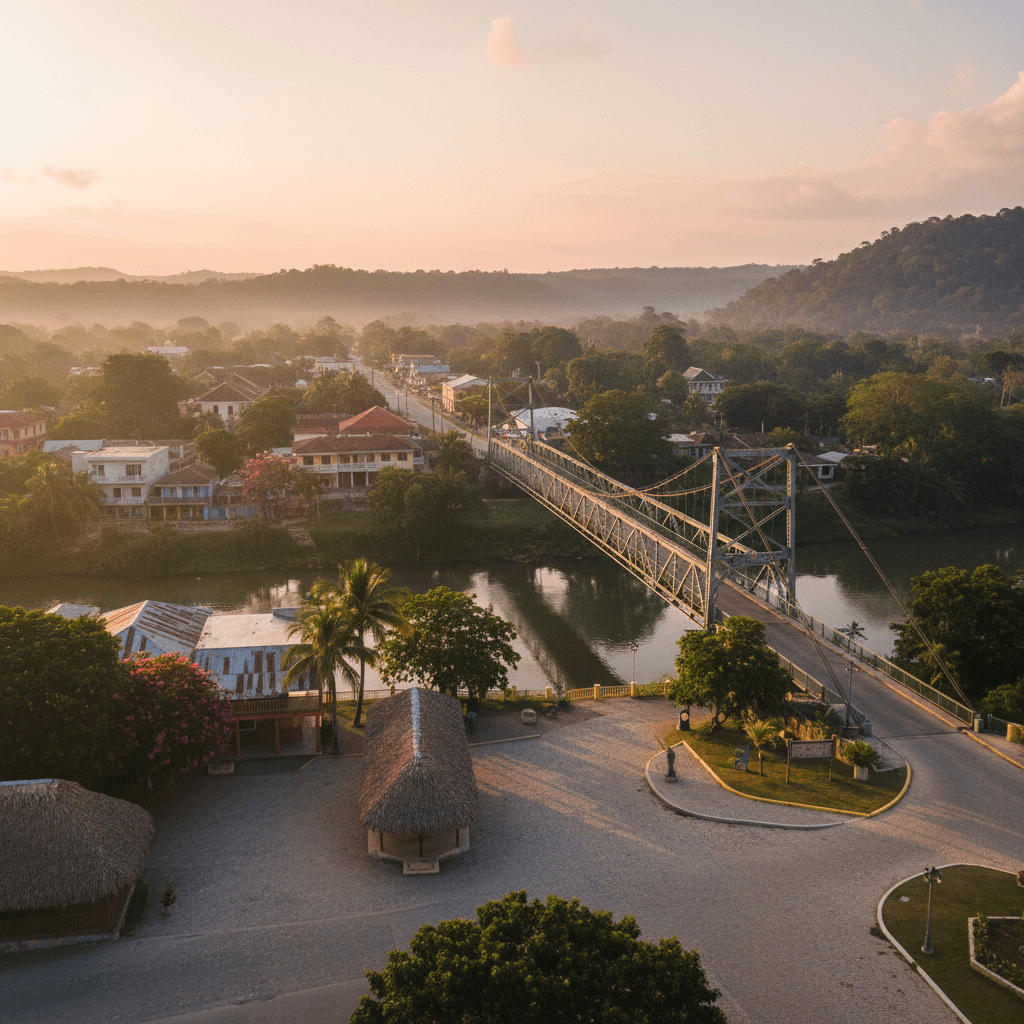
San Ignacio
🇧🇿 Belize
The Gateway to the Wild West
San Ignacio is the rhythmic heart of the Cayo District, a place where the humidity of the jungle meets the dust of the highway. It feels less like a polished tourist trap and more like a rugged frontier town that just happens to have high speed internet. While the islands of Belize are about slow living and salt water, San Ignacio is about adventure, sweat, and deep connections with the land.
The town sits on the banks of the Macal River, and the vibe is distinctively Maya and Mestizo. You'll hear Spanish and English mixing in the air, often punctuated by the sound of a distant tractor or a local bus. Nomads who land here are usually looking for something deeper than a beach club. They want to wake up to the sound of howler monkeys, spend their lunch breaks walking to a 2,000 year old ruin, and grab a $2 beer with locals at the end of the shift.
The Burns Avenue Pulse
Life in town revolves around Burns Avenue. This pedestrian-only strip is where the nomad community congregates. It's lined with low-slung, colorful buildings that house everything from tour operators to small cafes. It's the kind of place where you can't walk five minutes without running into someone you met at the market the day before.
Most remote workers find the town's pace refreshing. It’s laid-back but active. You aren't fighting for a seat at a crowded coworking space; instead, you’re likely setting up your laptop on a shaded patio while a tropical downpour cools the afternoon air. It’s authentic, slightly gritty in the best way, and significantly more affordable than the cayes.
What Sets Cayo Apart
San Ignacio isn't just a stopover; it’s a basecamp. What makes it different from other nomad hubs in Central America is the sheer density of history and nature right at your doorstep. You aren't just "near" the jungle; you are in it. You can finish a Zoom call at 4:00 PM and be at the top of the Xunantunich temple by sunset.
- The Market Culture: The Saturday market is the soul of the town. It’s where you’ll find the best $1.50 pupusas and piles of fresh dragon fruit, ginger, and local honey.
- The Border Proximity: Being just 15 minutes from the Guatemalan border makes regional travel incredibly easy for weekend trips to Tikal.
- Affordability: Your dollar goes much further here. A solid local lunch usually costs between $5 and $8 USD, and long-term stays are often half the price of what you'd pay in San Pedro.
The Emotional Landscape
There is a specific feeling that comes with living in Cayo. It’s the smell of woodsmoke in the evenings and the sight of the mist rolling over the Maya Mountains in the morning. It feels grounded. You'll likely find yourself trading your designer sneakers for hiking boots and your morning latte for a cup of heavy, local cacao.
Expats often say that San Ignacio grows on you slowly. At first, it might seem like a simple transit point, but after a week of navigating the hills and meeting the shopkeepers on the "strip," you realize you've found a community that values time and conversation over the frantic pace of the digital world. It is a place for the nomad who wants to feel like a resident, not just a visitor.
The Bottom Line on Cayo Costs
San Ignacio is arguably the most wallet friendly base for remote workers in Belize. While the islands of Ambergris Caye and Caye Caulker command premium prices for everything from a golf cart rental to a plate of ceviche, San Ignacio remains grounded. You are trading the beach for the jungle, and that trade comes with a significant discount on your monthly burn rate.
Most nomads living a comfortable, mid-range lifestyle here find they spend between $1,200 and $1,800 USD per month. This covers a nice private apartment, eating out frequently, and the occasional weekend excursion to the ruins or the Pine Ridge forest. If you are living like a local and cooking at home, you can easily get that number under $1,000 USD.
Housing and Utilities
Rent is your biggest variable. Since San Ignacio is hilly, prices often depend on how far you are from the town center and whether you have a view of the valley. For a modern one bedroom apartment with air conditioning, expect to pay between $500 and $850 USD. If you look toward the Santa Elena side of the bridge or slightly further out in neighborhoods like Cahal Pech, you can find simpler local houses for $350 to $450 USD.
- Studio or 1BR Apartment (Town Center): $600 to $850 USD
- Local 2BR House (Santa Elena/Suburbs): $400 to $600 USD
- Electricity: $75 to $150 USD (highly dependent on AC usage)
- High-Speed Fiber Internet: $50 to $80 USD
Electricity is notoriously expensive in Belize. Most expats recommend looking for a place with good natural ventilation and ceiling fans to keep the bill from skyrocketing. Water is generally cheap, usually under $15 USD a month.
Food and Dining
The San Ignacio Market is your best friend for keeping costs down. If you shop there on Tuesdays or Saturdays, you can get a week's worth of fresh tropical fruit and vegetables for about $25 USD. Imported goods at the supermarkets (like peanut butter, specific cheeses, or American cereals) will cost double what you pay back home, so most nomads stick to local brands.
- Street Food (Rice and Beans/Stew Chicken): $4 to $6 USD
- Dinner at a Mid-range Restaurant (Burns Ave): $12 to $20 USD
- Local Beer (Belikin): $2 to $3 USD
- Cappuccino at a Cafe: $3.50 to $5 USD
A quick lunch of three fry jacks or a couple of garnaches from a street vendor will only set you back about $2 or $3 USD. It is one of the few places in the country where you can eat like royalty on a shoestring budget.
Transport and Connectivity
San Ignacio is a very walkable town, especially if you stay near Burns Avenue. You probably won't need a car for daily life. When you do need to move, "collective" taxis are the standard. These are shared cabs that run set routes for a fixed price, usually around $1.50 to $2.50 USD per person within town limits.
For your phone, a Digi or Smart SIM card is easy to grab. A monthly data plan with enough juice for hotspots will cost you roughly $30 to $50 USD. If you are planning to stay long term, the $250 USD fee for the official Digital Nomad Visa is an upfront cost, but many visitors simply choose to renew their 30 day tourist stamp at the local immigration office for about $100 USD per month after the first month.
The Town Center (Burns Avenue & Surroundings)
If you want to be where the action is, the area around Burns Avenue is your best bet. Nomads usually flock here because everything is walkable. You can grab a coffee at Soul Project, hit the bank, and wander over to the San Ignacio Market without ever needing a taxi. It is the heart of the Cayo social scene, though it can get a bit noisy on weekend nights when the bars are in full swing.
- Target Audience: Social nomads and short-term backpackers.
- Average Rent: $450 to $700 USD for a decent studio or one-bedroom apartment.
- Vibe: High energy, colorful, and very convenient.
- Pros: Immediate access to the best street food and the fastest available fiber optic lines in town.
Santa Elena
Just across the Hawksworth Bridge lies San Ignacio's twin town, Santa Elena. It feels more residential and "local" than the tourism-heavy side of the river. Expats who plan on staying for six months or more often look here because you get more square footage for your dollar. It is slightly quieter, though you are still only a ten-minute walk or a $2 USD taxi ride from the main strip.
- Target Audience: Long-term expats and budget-conscious remote workers.
- Average Rent: $350 to $550 USD for a small house or upper-level flat.
- Vibe: Authentic Belizean neighborhood feel with local fruit stands on every corner.
- Pros: Lower grocery prices and a more peaceful atmosphere at night.
Bullet Tree Falls
About three miles west of the town center, Bullet Tree Falls is where you go if the "jungle" part of the Cayo District is your main draw. It sits right on the Mopan River. Families and slow-traveling nomads often rent riverside cabanas here to enjoy the breeze and the swimming holes. You will likely need a scooter or a bike, as it is a bit far to walk into town for daily errands.
- Target Audience: Families and nature-loving nomads who prioritize peace over nightlife.
- Average Rent: $600 to $900 USD for a multi-bedroom home or eco-lodge style rental.
- Vibe: Lush, green, and river-focused.
- Pros: Cooler temperatures thanks to the river and canopy; great for kids to run around safely.
Cahal Pech & The Hill
For those who want a view, "The Hill" area near the Cahal Pech Mayan Ruins is the premier spot. It sits at a higher elevation than the rest of town, meaning you get a better breeze and stunning views of the Macal River valley. The area is home to several upscale hotels and private villas. It is a steep walk up from the market, so most residents here keep a vehicle or rely on the local taxi collective.
- Target Audience: Solo travelers looking for safety and luxury-leaning expats.
- Average Rent: $800 to $1,200 USD for modern apartments with air conditioning and reliable backup power.
- Vibe: Quiet, breezy, and slightly more upscale.
- Pros: Proximity to the ruins for morning runs and the best sunset views in the district.
San Antonio Village
If you are looking for a true cultural immersion, San Antonio is a short drive south of San Ignacio. It is a predominantly Maya community known for its pottery and traditional farming. It is becoming a niche favorite for solo travelers who want to disconnect from the "digital" part of nomad life for a few weeks. While the internet is surprisingly okay, the lifestyle is much slower and centered around community events.
- Target Audience: Solo travelers seeking a cultural retreat.
- Average Rent: $300 to $500 USD for basic, rustic accommodations.
- Vibe: Community-oriented, traditional, and very safe.
- Pros: Incredible access to local Maya history and some of the best handmade tortillas in Belize.
Connectivity and Speed
San Ignacio is the digital heartbeat of the Cayo District. While you won't find the fiber optic speeds of a major US city, the infrastructure has stabilized significantly. Most central hotels and guesthouses offer speeds between 20 Mbps and 50 Mbps, which is plenty for Zoom calls and standard uploads. If you're staying in the hills or further out toward Bullet Tree Falls, expect those speeds to dip or rely more on point to point wireless systems.
Power outages do happen, especially during the rainy season when tropical storms roll through. Most seasoned nomads here carry a backup power bank and a local SIM card to tether during brief outages. It is a minor trade off for the view of the jungle from your balcony.
Coworking Spaces and Work-Friendly Cafes
True dedicated coworking spaces are still a bit of a rarity in San Ignacio, as the town maintains a more traditional backpacker feel. However, the community has adapted. For a casual "cafe office" vibe, Soul Project is a local favorite. It is technically a cultural hub and bar, but during the day, it is quiet enough to hammer out some emails. Jack’s Shack on Burns Avenue is another solid choice. They have decent WiFi and the staff won't mind if you linger over a second cup of coffee. If you need a more professional setting, many nomads head to the San Ignacio Resort Hotel. Their lobby and patio areas are spacious, and the internet is among the most stable in town.
Mobile Data and SIM Cards
Do not rely solely on your accommodation's WiFi. As soon as you arrive, head to a DigiCell or Smart outlet. Most nomads prefer DigiCell for better coverage in the more remote parts of Cayo. You can pick up a SIM card for about $10 USD and load it with a data plan. A prepaid data plan with 7.5GB of data costs around $22.50 USD and lasts for 30 days. It is a small price to pay for the peace of mind of having a hotspot when the local router decides to take a nap.
- DigiCell: Best overall coverage in the Cayo District.
- Smart: Often has cheaper promotional rates but can be spotty near the ruins.
- Top-up: You can buy "credit" at almost any Chinese grocery store in town.
The Nomad Community
While San Ignacio doesn't have the massive digital nomad meetups you'll find in places like Medellin or Canggu, the community is tight knit. Most remote workers find each other at Burns Avenue during happy hour or at the Saturday Market. It is a very organic social scene. You'll likely meet people who are splitting their time between working and exploring the nearby ATM cave or Xunantunich. If you're looking for a structured coliving experience, keep in mind that Noma Collective is based in Placencia, but their members often trek up to San Ignacio for "workcations" because of the lower cost of living and the change in scenery.
Practical Tips for Remote Work
- Noise: San Ignacio is a lively town. If your rental is near the market or the main bus stop, expect roosters, sirens, and music. Invest in a good pair of noise-canceling headphones.
- VPN: Use a VPN if you need to access specific banking apps or streaming services from home. Local speeds are usually high enough to handle the slight lag a VPN introduces.
- Hardware: Bring any specialized tech or cables you need. There are small electronics shops in town, but finding specific MacBook chargers or high end peripherals is difficult and expensive.
Staying Safe in San Ignacio
San Ignacio is generally the safest urban hub in Belize, but it pays to be smart. Most nomads feel comfortable walking the downtown core and Burns Avenue during the day. The vibe is communal; people know each other, and locals are usually quick to offer directions or help if you look lost.
After dark, stick to the well lit areas near the police station and the main restaurant strip. While violent crime against tourists is rare, petty theft like phone snatching or bag lifting can happen at the market or in crowded bars. Expats usually recommend avoiding the area near the Macal River park late at night, as it gets quite dark and isolated.
If you're heading out to the ruins or remote waterfalls, always go with a licensed guide or a group. Solo hiking in the deep bush isn't just a safety risk regarding people; it's easy to lose your way in the jungle. For transport at night, use a registered taxi, they have green license plates. A ride within town limits usually costs about $5 to $7 BZ ($2.50 to $3.50 USD).
- Emergency Number: Dial 911 for police or 90 for medical emergencies.
- Solo Female Travelers: You might encounter some "cat-calling" or persistent whistling. It's usually harmless but annoying; a firm "no" or simply ignoring it and walking on is the standard move.
- Local Scams: Be wary of "helpful" strangers offering to show you a shortcut to a ruin or a secret swimming hole for a fee. Stick to official tour operators based in town.
Healthcare & Medical Services
You won't find world class specialized surgery in Cayo, but for routine issues, infections, or minor injuries, the local infrastructure is decent. Most nomads head to La Loma Luz Adventist Hospital in nearby Santa Elena. It's a private facility known for being clean, efficient, and affordable for out of pocket consultations.
For a quick checkup or a prescription, there are several private clinics right in San Ignacio. San Ignacio Hospital is the public option; it's free or very low cost but expect long wait times and basic facilities. For anything serious, like a major break or complex illness, most expats choose to be stabilized locally and then transported to Belize City or even across the border to Guatemala City where the private hospitals are more advanced.
Pharmacies are plentiful along Burns Avenue and the Western Highway. You can get many medications over the counter that would require a prescription in the US or Europe, but always check the expiration dates. Wallens Market and Pharmacy is a reliable spot for Western brands and basic medical supplies.
- Typical Consultation Fee: A private doctor visit usually runs between $50 and $100 BZ ($25 to $50 USD).
- Water Safety: Do not drink the tap water. Most nomads buy 5 gallon jugs of "Crystal" purified water for about $5 BZ ($2.50 USD).
- Health Insurance: Ensure your policy covers "medical evacuation" to the US or Mexico, as local intensive care is limited.
Practical Wellness Tips
The biggest health threats in San Ignacio aren't what you'd expect. Dehydration and heat exhaustion hit nomads hard during the dry season. Always carry more water than you think you need. Mosquito borne illnesses like Dengue or Zika pop up occasionally, especially during the rainy season from June to November. Use a repellent with DEET if you're heading into the bush or sitting near the river at dusk.
The Pulse of the Strip
San Ignacio is one of the few places in Belize where your own two feet are your best asset. The town center is compact, hilly, and manageable. Most of your daily life will revolve around Burns Avenue, the pedestrian only "Strip" where you'll find the highest concentration of cafes and banks. If you're staying in a central guesthouse or an Airbnb near the Macal River, you won't need wheels for your morning coffee or grocery run.
Taxis and the "Dollar" Collectives
When the Belizean humidity kicks in or you're hauling a week's worth of produce from the Saturday market, grab a taxi. You'll recognize them by their green license plates. Within the town limits, a private ride usually costs between $5 and $10 BZ (that's $2.50 to $5 USD). Always confirm the price before you shut the door, though drivers here are generally straightforward with nomads.
For trips to nearby spots like Santa Elena (just across the bridge) or the ruins of Cahal Pech, look for collective taxis. These operate on fixed routes and pick up multiple passengers. You'll pay significantly less, often just $2 or $3 BZ per person. It's a great way to save cash if you don't mind sharing the backseat with a local farmer or a student.
Conquering the Western Highway
To get out of town without a rental car, the "chicken buses" are your lifeline. These are retired North American school buses painted in bright colors. They aren't luxury, but they're incredibly cheap and run frequently along the George Price Highway. You can catch them at the main bus stop near the market.
- To Belize City: About $10 BZ ($5 USD). The trip takes roughly 2 to 2.5 hours depending on how many people flag it down on the roadside.
- To Benque Viejo (Guatemala Border): Around $3 BZ ($1.50 USD). It's a quick 20 to 30 minute ride if you're planning a weekend trip to Tikal.
- Express Buses: Look for the "Express" sign in the window. These have air conditioning, fewer stops, and cost a few dollars more. They're worth every penny in the summer.
Renting Your Own Wheels
If you want to explore the Mountain Pine Ridge Forest Reserve or reach the more remote trailheads, you'll need a 4x4. The roads in the Cayo District can turn into a muddy mess after a quick rain. Local agencies like Matus Car Rental or Cayo Auto Rentals are the go to spots. Expect to pay $75 to $100 USD per day for a decent Jeep or SUV. It's pricey, so most nomads team up with others at the hostel or coworking hubs to split the cost for a day trip.
Getting There from PGIA
Most nomads arrive via Philip Goldson International Airport (BZE). You have three main ways to reach San Ignacio from the coast:
- Shared Shuttles: Companies like Williams Shuttle or Belize Ground Shuttle are the gold standard. They cost about $40 to $60 USD per person and drop you right at your door.
- The Budget Route: Take a $25 USD taxi from the airport to the Belize City bus terminal, then hop on a westbound bus for $5 USD. It's a bit of a mission with luggage, but it's the cheapest way in.
- Domestic Flight: You can fly from BZE to the Maya Flats airstrip near San Ignacio. It's a tiny plane with incredible views, costing around $130 USD one way, but it cuts the travel time down to 30 minutes.
Navigation Tips
Don't rely solely on Google Maps for the smaller dirt roads around Cayo. Use Waze, which is surprisingly popular with local drivers for real time updates on road conditions. If you're walking, keep in mind that San Ignacio is built on limestone hills. The trek up to the Cahal Pech area is steep, so time your walks for the early morning or after sunset to avoid the midday heat.
One of the biggest draws for nomads in San Ignacio is the sheer ease of getting things done. Unlike neighboring countries where you might struggle with a language barrier, Belize is the only country in Central America where English is the official language. You won't need to fumble with a translation app to negotiate your rent or explain how you like your eggs at the market.
The Linguistic Landscape
While English is the language of government, schools, and signage, what you'll actually hear on the streets of Cayo is a beautiful, rhythmic blend. Most locals are bilingual or even trilingual. Belizean Creole (Kriol) is the heartbeat of daily conversation. It sounds like a melodic, fast-paced version of English, and while you'll understand bits of it, don't be surprised if you can't follow a full conversation between locals right away.
Because of San Ignacio's proximity to the Guatemalan border, Spanish is incredibly common. In many households and shops around town, it's the primary language. You'll also hear Garifuna or even Plautdietsch (Low German) if Mennonite farmers are in town for market day. It’s a linguistic melting pot that feels welcoming rather than exclusionary.
Communication Style
The vibe in San Ignacio is famously friendly, but there's a certain etiquette to it. People here value a proper greeting. Walking into a shop or passing someone on Burns Avenue without a quick "Good morning" or "Good afternoon" is considered a bit brusque. It’s a small town at heart, and taking ten seconds for small talk goes a long way in building rapport with the vendors at the San Ignacio Market.
Staying Connected
For your digital life, communication is straightforward but requires a quick errand. Don't rely on your international roaming plan, as it'll likely be sluggish and expensive. Most nomads head straight to the Digi or Smart showrooms in the center of town to grab a local SIM card.
- Digi (formerly BTL): Generally offers the most consistent 4G/LTE coverage throughout the Cayo District. A prepaid SIM usually costs about BZ$20 ($10 USD) plus tax.
- Smart: Often has competitive data packages and is a favorite for those staying strictly within the town limits where the signal is strong.
- Data Costs: Expect to pay around $20 USD to $25 USD for 20-25GB of data per month.
WhatsApp is the undisputed king of communication here. Whether you're booking a cave tour, ordering a taxi, or checking if a local cafe has a table open, you'll do it through WhatsApp. Make sure you have the app installed and updated before you arrive. Most businesses don't bother with fancy websites; they'll just list a phone number and expect a message.
Useful Local Slang
You don't need to learn Kriol to survive, but dropping a few words will definitely earn you some smiles. "Gud mawnin" is standard, but you'll hear "Aight" as a universal greeting, agreement, or goodbye. If someone asks "Whe di go on?" they're just asking what's up. If you find yourself enjoying the laid-back Cayo pace, you might describe your afternoon as "liming," which is the local art of doing absolutely nothing with friends.
The Sweet Spot: February to May
If you want those postcard-perfect blue skies and dry trails for trekking to Xunantunich, aim for the window between February and May. This is the peak of the dry season. The humidity drops significantly, and the Macal River settles into a clear, calm turquoise that's perfect for a post-work canoe session or a swim at the bottom of Big Rock Falls.
Temperatures during these months usually hover between 80°F and 90°F. It gets hot, but it’s a dry heat that doesn't leave you drenched the moment you step outside. Most nomads prefer this time because power outages, which can occasionally happen during heavy tropical storms, are much less frequent. You’ll have the most reliable uptime for your Zoom calls and the best conditions for weekend trips into the Mountain Pine Ridge Forest Reserve.
The "Green Season" Strategy
The rainy season typically kicks off in June and runs through November. Don't let the "hurricane season" label scare you off completely, though. San Ignacio is inland and tucked into the foothills, so it doesn't get hit with the same intensity as coastal spots like San Pedro or Caye Caulker.
During these months, you’ll typically see bright, sunny mornings followed by a heavy downpour in the late afternoon. It’s actually a great rhythm for deep work; you get your errands done early, then hunker down with your laptop while the rain cools everything off. The landscape turns an incredible, deep emerald green, and the prices for long term rentals often drop by 20% to 30% as the tourist crowds thin out.
What to Watch Out For
- The "Mopan" Floods: In October and November, heavy rains can cause the rivers to rise. This sometimes closes the low-lying bridge or puts a temporary halt to cave tubing tours at Actun Tunichil Muknal (ATM).
- The April Heat: April is often the hottest month. If your jungle cabana doesn't have A/C, you'll be spending a lot of time in the air-conditioned cafes on Burns Avenue.
- Christmas Peak: From December 20th to January 5th, prices spike and the town gets crowded with travelers crossing the border from Guatemala. Book your accommodation well in advance if you're arriving then.
Packing for the Microclimates
San Ignacio is a bit of a weather chameleon. While it's tropical, the nights in the Cayo District can actually get surprisingly chilly between December and February, sometimes dipping into the 60s. Locals call these "cold fronts." You’ll want a light hoodie or a denim jacket for evening walks to the night market.
For the rest of the year, focus on moisture-wicking fabrics. The humidity in the jungle is the real deal. If you're planning to work from outdoor decks or cafes, bring a high-quality dry bag for your laptop. Sudden tropical afternoon showers are common, and they move fast. Being caught in a five-minute deluge without protection for your gear is a mistake you only make once.
The Verdict
For the best balance of social life and perfect weather, arrive in late January. You'll beat the holiday price hikes, catch the best weather of the year, and be settled in just as the town's social calendar starts picking up for the spring. If you're on a tight budget and don't mind a little mud on your hiking boots, September offers the best leverage for negotiating monthly rates at local guesthouses.
Visas and Legal Stays
Most nomads start with the standard 30-day tourist visa, which is granted upon arrival for most nationalities. If you want to stay longer, you'll need to visit the local immigration office in San Ignacio to renew it monthly for $100 USD. It is a bit of a chore, but it keeps you flexible.
For those planning a longer stint, the "Work Where You Vacation" program is the way to go. To qualify, you need to prove an annual income of at least $75,000 USD. Additional fees apply for dependents. This digital nomad visa allows you to stay for up to six months and saves you those monthly trips to the immigration office.
Money and Banking
The Belize Dollar (BZD) is pegged to the US Dollar at a 2:1 ratio. You can use USD cash almost everywhere, but you'll usually get your change back in BZD. It's smart to keep smaller bills on you for the market and taxis.
- ATMs: Stick to Atlantic Bank or Belize Bank on Burns Avenue. They generally accept international cards like Visa and Mastercard. Expect a fee of about $5 USD per withdrawal.
- Digital Payments: While restaurants on the main strip take cards, San Ignacio is still very much a cash town. Always have enough BZD for your daily meals and market hauls.
- Apps: Download WhatsApp if you haven't already. It is the primary way to book tours, contact landlords, and even order food from local spots.
Connectivity and Utilities
Don't rely solely on your Airbnb's WiFi if you have back-to-back Zoom calls. Power outages happen, especially during the rainy season when storms roll through the Cayo District.
Pick up a local SIM card from Digi or Smart. You can find their offices right in the center of town. A prepaid data plan with 10GB of data will cost you roughly $25 USD. Most nomads find Digi has slightly better coverage when you're out exploring the nearby ruins like Xunantunich.
Health and Safety
San Ignacio is generally safer than Belize City, but you should still use common sense. Stick to well-lit areas like Burns Avenue at night and avoid walking alone on the outskirts of town after dark. The local community is tight-knit, and people generally look out for one another.
- Healthcare: For minor issues, the San Ignacio Community Hospital is the main public facility. For anything serious, most expats head to private clinics in Spanish Lookout or travel to Belize City.
- Pharmacies: There are several well-stocked pharmacies near the town center. You can get most basic medications over the counter without a hassle.
- Water: Do not drink the tap water. Most long-term rentals provide five-gallon purified water jugs. You can swap these at local corner stores for about $2 USD.
Local Customs and Etiquette
The pace of life here is slow. If a meeting or a tour starts ten minutes late, that's just "Belize time." People are incredibly friendly and expect a "good morning" or "good afternoon" when you pass them on the street. It goes a long way in building rapport with the locals. When visiting the Saturday Market, it's okay to ask for a small discount if you're buying in bulk, but don't haggle aggressively. The prices are already quite fair for the quality of fresh produce you're getting.
Need visa and immigration info for Belize?
🇧🇿 View Belize Country GuideEasy Landing
Settle in, no stress