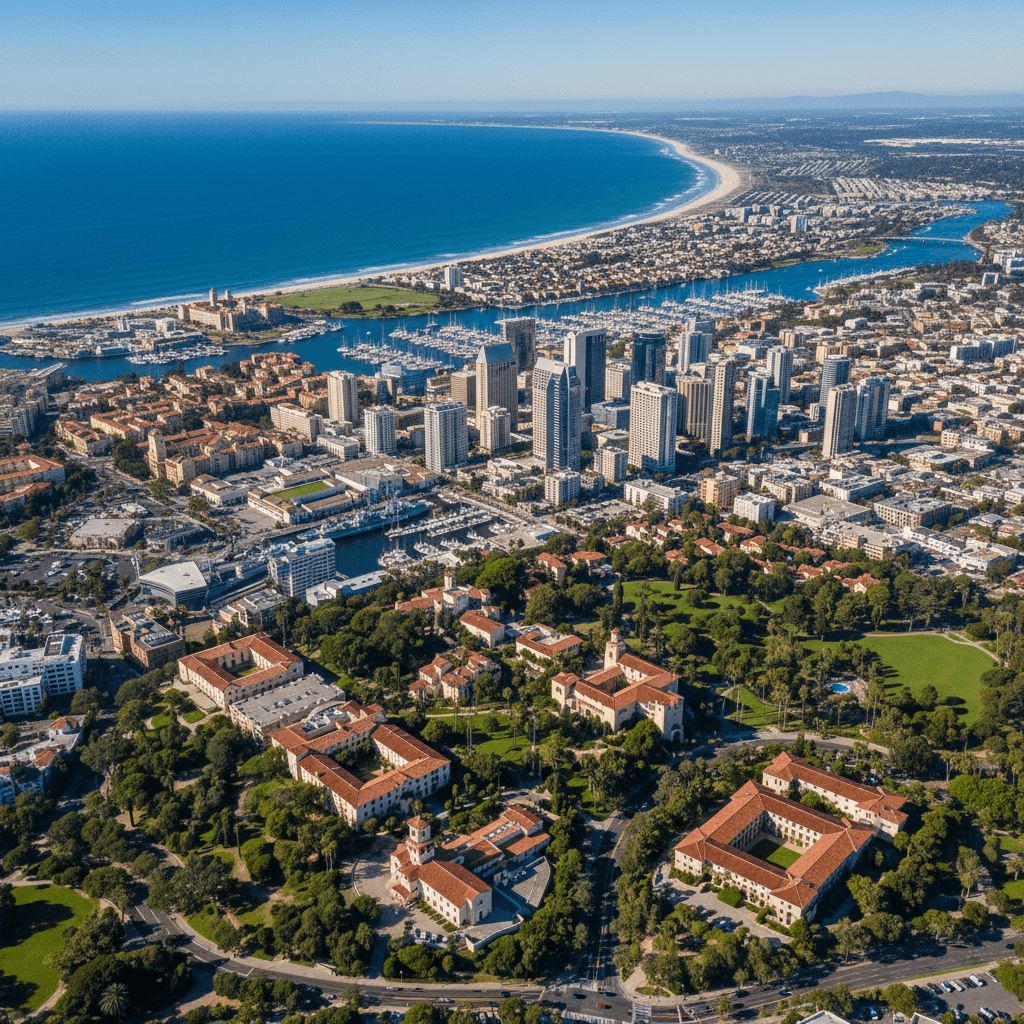
San Diego
🇺🇸 United States
San Diego is where the high-energy ambition of a tech hub meets the absolute refusal to rush. It is a city that trades the frantic pace of San Francisco or New York for a surfboard and a breakfast burrito. For digital nomads, the draw is not just the 250 plus days of sunshine or the ultra-fast 250 Mbps fiber; it is the fact that people here actually prioritize their lives outside of the laptop screen. You will find founders taking Zoom calls from beach walls in La Jolla and developers meeting for post-work sessions at breweries in North Park.
The Local Vibe
The atmosphere is distinctively coastal and unapologetically relaxed. While the rest of the country is grinding, San Diegans are checking the surf report. This "California Dream" lifestyle is contagious. You will quickly find yourself adopting the local uniform of flip-flops and hoodies, even in professional settings. There is a deep-seated wellness culture here, focused on fresh seafood, outdoor fitness, and a massive craft beer scene that serves as the city's social glue. It is also one of the few places in the U.S. where you can feel the physical proximity to another country; the influence of Tijuana is felt in the architecture, the bilingual conversations on the street, and the best street tacos you will ever eat for $5.
The Nomad Reality
Living here is a premium experience with a price tag to match. Most nomads budget at least $4,500 per month to live comfortably. While the cost of living is high, the infrastructure for remote work is world-class. You are never more than five minutes from a cafe with reliable WiFi or a high-end coworking space like Union Cowork or Downtown Works. The community is welcoming and active; expats often use Meetup.com or Outsite WhatsApp groups to organize sunset bonfires or weekend trips across the border. It is a safe, clean, and highly functional city, though travelers recommend staying aware in areas like Barrio Logan after dark.
Neighborhood Snapshots
Where you park your laptop defines your experience. Each pocket of the city feels like a different town entirely.
- North Park: The undisputed nomad capital. It is walkable, packed with craft breweries, and home to Lestat’s, a 24-hour coffee shop that is a rite of passage for late-night workers. Expect to pay $2,000 to $2,500 for a studio.
- Downtown/Gaslamp: Best for those who want high-rises and nightlife. It is the transit hub of the city, making it easy to hop on the MTS Green Line trolley. Rents here usually start at $2,500.
- Pacific Beach (PB): This is for the younger crowd and surf addicts. It is louder and more tourist-heavy, but nothing beats finishing a sprint task and walking straight into the Pacific Ocean.
Practical Logistics
- Connectivity: WiFi is ubiquitous. If you need a local SIM, AT&T or Verizon plans run about $30 to $50 for unlimited data.
- Transportation: While the $2.50 trolley is great for certain routes, San Diego is a car-heavy city. Most nomads rely on a mix of Uber, which costs $10 to $20 for most inner-city trips, and Bird e-scooters for short zips across the neighborhood.
- Dining: You can eat well on any budget. Budget $10 for a heavy Mexican lunch, $25 for a mid-range sit-down meal, and $40 plus for upscale seafood in La Jolla.
Ultimately, San Diego is for the nomad who wants the perks of a major American city without the stress. It is a place where "work-life balance" isn't a buzzword, it is the standard operating procedure. You come for the fast internet and the networking, but you stay because you realized you haven't worn a pair of real shoes in three weeks.
The Reality of the San Diego Budget
San Diego is beautiful, but it's not cheap. Most nomads budget at least $5,000-$6,000 per month to live comfortably here without constantly checking their bank balance. While locals might scrape by on less, the nomad lifestyle usually involves short term rentals and coworking fees that drive costs up quickly. You should budget a minimum of $2,800 just to cover the basics, but $4,500 is a more realistic mid range target if you want your own place and a decent social life.
The city operates on a tiered system. If you're on a strict $3,000 budget, you'll likely be looking at shared housing in areas like North Park and working from cafes like Lestat's. Those with $6,000 or more can afford high rise apartments in Downtown or beachside spots in La Jolla, along with regular dinners at upscale seafood and Mexican fusion restaurants.
Housing by Neighborhood
Rent will be your biggest hurdle. Prices fluctuate based on proximity to the water and the "cool factor" of the neighborhood. Expats recommend locking in a monthly rate through platforms like Airbnb or Zillow, or checking out ITH Hostels for potential work exchange programs to offset costs.
- North Park: This is the nomad headquarters. Expect to pay between $2,000 and $2,500 for a studio or one bedroom. It's walkable and packed with craft breweries, making it worth the price for many.
- Downtown: If you want to be near the Gaslamp Quarter and major transit hubs, be ready to pay $2,500 or more. It's convenient but can feel crowded and corporate.
- La Jolla and Pacific Beach: These areas are stunning but come with a heavy "beach tax." Costs here are significantly higher, and the vibe is more tourist focused than nomad friendly.
Eating and Drinking
San Diego's food scene is a highlight, especially if you love tacos and fresh fish. You can eat well on a budget if you stick to street food, where a solid meal costs between $5 and $10. Mid range sit down spots usually run $15 to $25 per person. If you're heading out for a nice dinner at a rooftop bar or a seafood spot in La Jolla, expect to drop $40 or more before drinks.
Don't forget the tipping culture. It's standard to tip 15% to 20% at restaurants and bars. While it adds up, it's expected across the United States and skipping it is considered poor etiquette.
Coworking and Connectivity
Internet speeds in the city are excellent, often ranging from 42 to 252 Mbps. Most nomads find that a dedicated coworking space is worth the investment for the community alone. Union Cowork in North Park is a favorite, offering 24/7 access and even a beer bar for $140 to $400 a month. Other solid options include NEST, Downtown Works, and WeWork.
For mobile data, travelers often say AT&T or Verizon are the most reliable. You can pick up an unlimited SIM card for about $30 to $50 a month. If you're hopping over to Tijuana for a day trip, apps like Google Translate and Wise are helpful for managing the currency jump and language barrier.
Getting Around
Unless you're staying strictly within North Park or Downtown, you'll need to factor in transport costs. Public transit via MTS buses and trolleys is affordable at $2.50 per ride, but it isn't always the fastest way to get across town. Many nomads rely on a mix of Uber and Lyft, which usually cost $10 to $20 per trip. For short distances, Bird e-scooters are everywhere; just make sure you have the app downloaded and ready to go.
- Airport Transfer: An Uber from SAN to the city center usually costs $15 to $25.
- Trolley to City: A cheaper alternative at around $13 depending on your final stop.
- Daily Commute: Budget at least $15 to $30 daily if you plan on using ride hailing apps frequently.
The Nomad Crowd: North Park
If you ask any remote worker where to set up shop, they'll point you toward North Park. It's the undisputed heart of the city's nomad scene, where the craft beer is cold and the WiFi is fast. The neighborhood feels lived-in and local, filled with restored bungalows and dog-friendly sidewalks that lead to some of the best coffee shops in Southern California.
- Rent: Expect to pay between $2,000 and $2,500 for a decent studio or one bedroom apartment.
- Coworking: Union Cowork is the local staple, offering 24/7 access and a beer bar for $140 to $400 a month. Outsite North Park is another favorite, especially for those who want an instant community via their active WhatsApp groups.
- Vibe: Walkable, creative, and slightly hipster. You'll spend your mornings at Caffe Calabria or Lestat’s and your evenings at a local brewery.
The only real downside here is the parking situation. If you're bringing a car, make sure your rental includes a dedicated spot, or you'll spend twenty minutes circling the block every night. Most nomads here skip the car entirely and rely on Bird e-scooters or Uber rides that usually cost $10 to $20 to get across town.
The Networking Pros: Downtown and Little Italy
For solo travelers and entrepreneurs who want to be in the middle of the action, Downtown is the place to be. It's the central hub for the trolley system and puts you within walking distance of the Gaslamp Quarter's nightlife. It's polished, professional, and perfect if you're looking to network at high-end coworking spaces like Downtown Works or WeWork.
- Rent: This is the priciest area, with modern high-rise apartments often starting at $2,500.
- Networking: Downtown Works frequently hosts happy hours and mixer events that make it easy to meet other professionals.
- Safety: While generally safe and well-lit, expats recommend staying north of the Gaslamp late at night and being cautious around the fringes of the East Village.
The Coastal Expats: La Jolla and Pacific Beach
If your idea of a perfect Tuesday involves a morning surf session before opening your laptop, head to the coast. Pacific Beach (or PB to the locals) has a younger, high-energy atmosphere centered around Garnet Avenue. Further north, La Jolla offers a more refined, upscale experience that appeals to long-term expats and those with a higher budget. It's less about the "startup grind" and more about the quintessential California lifestyle.
- Lifestyle: Very relaxed with a heavy focus on outdoor fitness and fresh seafood.
- Cost: Living near the water comes with a premium. Expect grocery prices and dining out to be notably higher than inland neighborhoods.
- Connectivity: While there are fewer dedicated coworking spaces than in North Park, the cafe culture is strong. Places like Jennings House provide a solid atmosphere for a few hours of work with a view.
Families and Long-Term Settlers: South Park and Hillcrest
Families often find their groove in South Park, a quieter neighbor to North Park that trades the rowdy bars for independent boutiques and shaded parks. It's incredibly safe and maintains a tight-knit community feel. Nearby Hillcrest is the center of the city's LGBTQ+ community and offers a fantastic mix of diverse dining and pedestrian-friendly streets. These areas feel less like a temporary stop and more like a place to build a life.
- Dining: You'll find everything from $5 street tacos to mid-range fusion spots where a meal runs about $20.
- Transport: These areas are well-served by the MTS bus system, with fares at $2.50 per ride, though many residents prefer biking.
- Atmosphere: Expect a mix of young families and long-term residents. It's quieter at night but still close enough to the action when you want it.
Connectivity and Speed
San Diego is a heavyweight when it comes to infrastructure. You aren't going to struggle for a signal here; the city is blanketed in ultra fast fiber and 5G. Average speeds typically range between 42 Mbps and 252 Mbps, which is more than enough for heavy video conferencing or uploading large files. Most apartments and Airbnbs come standard with high speed cable internet, but it's always smart to ask for a speed test screenshot before booking a long term stay.
For mobile data, expats and short term travelers usually head to an AT&T or Verizon store. You can grab an unlimited prepaid SIM for roughly $30 to $50 per month. Coverage is excellent across the city, though it can get a bit spotty if you head deep into the canyons or right down to the water's edge in certain parts of La Jolla.
Top Coworking Spaces
The coworking scene is concentrated in North Park and Downtown, reflecting the city's split personality between startup grit and corporate polish. Most spaces offer daily passes, but the real value is in monthly memberships if you're staying for a while.
- Union Cowork (North Park): This is the neighborhood favorite. It's got a relaxed, community focused vibe and a beer bar for post work social sessions. Memberships run between $140 and $400 per month, and it stays open 24/7 for those working odd hours.
- Downtown Works: Located in the heart of the city, this spot is great for networking. They host frequent happy hours and events. It's professional but not stuffy, and the rooftop terrace is a major perk for taking calls in the sun.
- NEST: Located in the Cyber Hive, this space leans more towards the tech and startup crowd. It's a solid choice if you're looking for a quieter, more focused environment.
- WeWork: You'll find several locations Downtown. They're reliable, provide the usual amenities, and are almost always open 24 hours for members.
The Cafe Culture
If you prefer the hum of a coffee shop over a formal office, San Diego has plenty of laptop friendly pockets. North Park is the undisputed king of this scene, but you'll find gems scattered throughout the city. Most cafes expect you to buy a drink every couple of hours, and many have "no laptop" policies on weekends to keep tables open for brunchers.
Lestat’s is a local legend, largely because it's open 24/7. It’s the go to for night owls and those working on European or Asian time zones. Caffe Calabria offers a more traditional Italian vibe with great coffee, while Jennings House in Point Loma provides a cozy, home like atmosphere that's perfect for deep work. For a free option, the San Diego Public Library downtown is an architectural marvel with surprisingly fast WiFi and dedicated quiet zones.
Community and Networking
Connecting with other remote workers is relatively easy here. Beyond the coworking events, the local nomad community is active on Meetup.com and various Facebook groups. Many travelers find that the best way to meet people is by hanging out at ITH Hostels, which often facilitates exchanges and social nights for digital nomads. If you're into fitness, joining a local "run club" or a surf school is often more effective for networking than a formal business mixer.
Safety in America's Finest City
San Diego is famously laid-back, and that relaxed energy extends to its safety profile. Most nomads find the city incredibly welcoming, with a general vibe that feels more like a collection of coastal villages than a massive metropolitan hub. You can generally walk around neighborhoods like North Park, Hillcrest, and La Jolla at almost any hour without much worry.
That said, it is still a major U.S. city. Expats usually suggest keeping your wits about you in the Gaslamp Quarter late on weekends when the crowds get rowdy. While Barrio Logan has a fantastic arts scene, travelers often recommend avoiding certain industrial or residential pockets in the southeast parts of the city after dark. Property crime, specifically car break-ins, can happen in busy beach parking lots. Don't leave your laptop or surf gear visible in your backseat if you're hitting the waves at Pacific Beach.
If you are heading south for a day trip to Tijuana, the border crossing is straightforward, but make sure your documentation is solid. Most nomads use the PedWest or San Ysidro crossings. While the tourist areas of TJ are generally fine during the day, it's a different safety environment than San Diego, so it's smart to head back before the sun goes down or stay in well-traveled areas.
Healthcare Infrastructure
You are in good hands here. San Diego is a massive hub for biotech and medical research, meaning the quality of care is world-class. If you have an emergency, dial 911. For everything else, you'll find a dense network of urgent care clinics and hospitals.
- Top Hospitals: UCSD Health is highly rated, especially their facilities in Hillcrest and La Jolla. Scripps Health and Sharp Healthcare also have major footprints across the county.
- Pharmacies: You'll see a CVS or Walgreens on nearly every major corner. They are convenient for picking up prescriptions or basic over-the-counter meds, and many are open 24/7.
- Urgent Care: For non-emergencies like a flu or a minor surfboard scrape, look for Concentra or Sharp Rees-Stealy urgent care centers. Expect to pay between $150 and $300 for a visit if you don't have local insurance.
Insurance and Costs
Healthcare in the U.S. is notoriously expensive. Even a short ER visit can run into the thousands of dollars. Most nomads here rely on international providers like SafetyWing or World Nomads. If you are an expat on a longer-term visa, you might be looking at private plans that can cost anywhere from $400 to $700 per month depending on your age and coverage needs.
Always keep a digital copy of your insurance card on your phone. Most clinics will ask for it upfront before they even see you. If you need blood work or specific labs, Quest Diagnostics is the go-to provider with locations throughout the city.
Environmental Health
The air quality in San Diego is generally excellent thanks to the constant Pacific breeze. However, pay attention to "Beach Closure" signs after a heavy rain. Runoff can occasionally contaminate the water, especially near the Imperial Beach area. Most locals wait 72 hours after a storm before getting back in the ocean. Also, the sun is stronger than it looks. Even on "June Gloom" days when it's overcast, you'll want high-SPF sunscreen if you're working from an outdoor cafe in Little Italy.
The Geography of Getting Around
San Diego is a sprawling city, but for most nomads, life centers around a few key hubs. If you're staying in North Park or Downtown, you'll find these areas surprisingly walkable. You can easily hop between a morning session at Union Cowork and a late lunch without ever needing a car. However, once you want to head to the beaches of La Jolla or the surf breaks in Pacific Beach, you'll need to think about your transit strategy.
Public Transit and the Trolley
The MTS (Metropolitan Transit System) is the backbone of the city's public transport. The Trolley is the most reliable way to move between Downtown, Old Town, and even down to the San Ysidro border crossing if you're planning a day trip to Tijuana. It's clean, efficient, and avoids the notorious Southern California freeway traffic.
- Standard Fare: $2.50 per ride.
- Payment: Most locals use the PRONTO app to load funds and scan as they board.
- Airport Connection: A ride from San Diego International (SAN) to the city center via the trolley link costs about $13, though many travelers find the convenience of a car-share worth the extra spend.
Ride-Hailing and Scooters
Uber and Lyft are ubiquitous here. Since parking in neighborhoods like North Park can be a nightmare, many nomads prefer to use ride-hailing for nights out or grocery runs. Expect to pay between $10 and $20 for a standard cross-town trip. If you're just going 10 or 15 blocks, look for a Bird e-scooter. They're scattered all over the sidewalks in high-traffic areas and are a favorite for short coastal commutes. Just make sure you download the app and check the local parking zones to avoid a fine.
The Car Culture Reality
While you can survive without a car in the nomad-heavy districts, expats who stay for more than a month often consider a long-term rental or a car-share. San Diego is built for driving, and having your own wheels opens up the North County coastline and hiking trails that buses simply don't reach. If you do drive, be prepared for the high cost of gas and the competitive parking scene in Little Italy and Hillcrest.
Biking and Alternative Transit
The city is becoming more bike-friendly, especially along the Embarcadero and the beachfront boardwalks. Many nomads choose to rent a beach cruiser for the week if they're staying near the water. It's the best way to soak in the 75 degree weather while getting from your Airbnb to a cafe like Caffe Calabria. If you're heading further afield, the Pacific Surfliner train is a scenic, stress-free way to visit Los Angeles or San Juan Capistrano for a weekend, with tickets usually starting around $35.
Quick Transit Cost Breakdown
- MTS Bus/Trolley: $2.50 per trip.
- Uber/Lyft: $10 to $25 depending on distance and surge pricing.
- E-Scooters: Roughly $1 to unlock plus $0.15 to $0.30 per minute.
- Airport Uber: $15 to $25 to most central neighborhoods.
- Tijuana Day Trip: 45 minutes by bus or trolley for under $10.
Navigating the Local Lingo
English is the undisputed king in San Diego. You will find that nearly everyone speaks it with a clear, standard American accent that is easy for non-native speakers to understand. The local vibe is incredibly laid back, so the communication style tends to be informal. Don't be surprised if your barista or coworking manager greets you with a casual "How's it going?" rather than a formal greeting.
While English is the primary language, San Diego is a bilingual city at heart. Its location right on the Mexican border means Spanish is woven into the daily fabric of life. You'll hear it in the kitchens of the best taco shops in North Park, on the trolleys heading south, and throughout the historic Barrio Logan neighborhood. Most signage in public transportation hubs and government buildings is printed in both English and Spanish.
The Border Influence
If you are planning to take advantage of the 45 minute bus ride to Tijuana for a day trip, having some Spanish in your back pocket is a massive advantage. While many people in the tourist areas of Mexico speak English, the experience is much smoother if you can handle basic transactions in Spanish. Most nomads recommend downloading Google Translate for offline use before crossing the border, as cell service can occasionally be spotty during the transition between carriers.
Even if you stay on the U.S. side, knowing a few phrases like "Hola" or "Gracias" is a nice gesture, especially when frequenting the authentic Mexican eateries that make the city's food scene famous. Expats often find that San Diegans are patient with language learners, so it is a low pressure environment to practice your skills.
Digital Nomad Communication
In the professional world, communication is fast and digital. If you are working out of spaces like Union Cowork or Downtown Works, expect most networking and community coordination to happen via Slack or WhatsApp.
When it comes to staying connected, the infrastructure is top tier. You can expect ultra fast internet speeds ranging from 42 to 252 Mbps in most parts of the city. To keep your phone buzzing, nomads suggest picking up a local SIM card from AT&T or Verizon. You can usually find unlimited data plans for roughly $30 to $50 per month, which is a solid investment if you plan on using your phone as a hotspot while working from Lestat’s or Caffe Calabria.
Social Etiquette and Slang
San Diego has its own flavor of West Coast slang that you will pick up quickly. You might hear "zoney" used to describe tourists from Arizona during the summer months, or "June Gloom" to describe the morning fog that often blankets the coast. The social culture is built on a foundation of politeness mixed with a "no worries" attitude.
- Tipping: This is a major part of the local "language" of commerce. Standard practice is to tip 15 to 20 percent at restaurants and bars.
- Casualness: Unless you are in a high level corporate meeting Downtown, the dress code and communication style are beach casual. You can conduct a business meeting in a nice pair of jeans and a t-shirt without anyone batting an eye.
- Meeting People: Digital nomads frequently use Meetup.com to find social circles. Whether it is a tech mixer or a hiking group at Torrey Pines, these events are usually conducted in English and are very welcoming to newcomers.
Overall, you won't face many communication barriers here. The blend of American surf culture and Mexican heritage creates a communicative environment that is both functional for business and warm for social life.
The Sweet Spot: When to Land
San Diego is famous for its "perfect" weather, but there is a bit more nuance to it than just endless sunshine. If you want the absolute best balance of warm days and clear skies, aim for September and October. This is the local secret; the summer crowds have headed home, the Pacific Ocean is at its warmest, and the air stays a comfortable 70 to 75°F (21 to 24°C).
Spring is the other prime window. From March through May, the coastal sage scrub is in bloom and the temperatures hover in the high 60s. It is the ideal time for nomads who prefer working from a patio at Caffe Calabria in North Park without needing the AC or a heavy jacket. You will occasionally run into "May Gray," a coastal fog that rolls in during the mornings, but it usually burns off by lunchtime.
Avoiding the Gloom and the Heat
If your dream is waking up to bright blue skies every single morning, you might want to skip June. Locals call it "June Gloom." A thick marine layer often sits over neighborhoods like La Jolla and Pacific Beach for weeks at a time. While it is rarely cold, it can feel a bit damp and grey until mid-afternoon. If you are staying further inland in North Park, you will see the sun much earlier than your friends living on the coast.
True heat spikes are rare but usually happen in late August or early September. On these days, temperatures can climb into the 80s or 90s. Since many older apartments in trendy areas like South Park or Hillcrest lack central air conditioning, these weeks can be tough for remote work. Most nomads just relocate to a cooled coworking space like Union Cowork or Downtown Works until the sun sets.
Winter for the Budget-Conscious
Winter in San Diego is hardly a winter at all by global standards. From December through February, you can expect highs around 55 to 65°F (13 to 18°C). This is when the city sees the bulk of its rain, though "bulk" only means about 10 days of precipitation for the entire year. You will want a light jacket for the evenings when the desert air cools down quickly.
The perk of visiting during the cooler months is the drop in short-term rental prices. While the cost of living remains high, you can often find better deals on monthly stays via Airbnb or ITH Hostels during the off-season. It is also the best time for a day trip to Tijuana, as the border crossing lines tend to be shorter when it is not peak vacation season.
Packing and Daily Rhythm
The climate dictates a very specific lifestyle here. You will notice that the "San Diego Uniform" consists of layers. Even in the height of summer, the temperature can drop 15 degrees the moment the sun goes down. Travelers recommend always having a hoodie or a light denim jacket on hand, especially if you are heading to a rooftop bar in the Gaslamp Quarter after work.
- Peak Season (July to August): Expect 75 to 80°F, high humidity, and crowded beaches. Great for surfing, but housing prices peak.
- Shoulder Season (September to October): The sweet spot. Warm water, clear skies, and 75°F averages.
- Low Season (January to February): Cooler 60°F days and occasional rain. Best for saving money on mid-range accommodation.
Regardless of when you arrive, the air quality stays consistently high thanks to the sea breezes. It is a city built for being outside, so plan your work schedule around a midday surf session or a walk through Balboa Park to make the most of the 260+ days of sunshine per year.
Connectivity and Workspace
San Diego is a dream for remote work, boasting average internet speeds between 42 and 252 Mbps. You won't struggle to find a signal, as ultra-fast WiFi is standard in almost every cafe and apartment. For mobile data, pick up a SIM card from AT&T or Verizon. An unlimited plan usually runs between $30 and $50 per month and provides excellent coverage even when you're hanging out at the beach.
The coworking scene is concentrated and high-quality. Union Cowork in North Park is a local favorite, offering 24/7 access and a beer bar with monthly memberships ranging from $140 to $400. Downtown Works and NEST are also solid options for those who need a professional environment in the city center.
When you want to work from a cafe, Lestat’s on Park is a legendary 24-hour spot. Caffe Calabria and Jennings House are also laptop-friendly. If you need total silence, the San Diego Public Library downtown is an architectural marvel with plenty of desk space and reliable free internet.
Cost of Living
San Diego is pricey, and your biggest hurdle will be housing. Most nomads find they need a monthly budget of at least $2,800 to $4,500 to live comfortably. Digital nomads often split their spending into these tiers:
- Budget (approx. $3,000): Staying in shared housing or hostels like ITH, eating at taco trucks, and working from public libraries or cafes.
- Mid-range (approx. $4,500): Renting a private studio or 1BR in North Park, a full coworking membership, and dining out a few times a week.
- Comfortable ($6,000+): A luxury apartment downtown or in La Jolla, frequent fine dining, and regular weekend trips.
Expect to pay about $2,000 to $2,500 for a one-bedroom apartment in North Park. Downtown prices frequently climb above $2,500. For food, you can grab street tacos for $5 to $10, while a mid-range meal with a drink will set you back about $15 to $25. Don't forget to factor in a 15 to 20 percent tip at restaurants, as it is standard practice here.
Getting Around the City
While San Diego is a car-heavy city, you don't necessarily need one if you choose your neighborhood wisely. The MTS bus and trolley system is affordable at $2.50 per ride and connects the major hubs well. For quick trips, Uber and Lyft are everywhere, usually costing $10 to $20 for a standard ride within the city.
Short-distance commuters swear by Bird e-scooters. They are perfect for zipping between meetings in North Park or Downtown. If you're coming from the airport, an Uber to the city center costs roughly $15 to $25, but you can also hop on the trolley for about $13 if you aren't carrying too much luggage.
Safety and Health
The city is generally very safe for travelers and solo nomads. You'll find the air quality is excellent and the locals are famously laid-back. Most expats suggest being a bit more cautious in southeast areas like Barrio Logan after dark, but common sense is usually enough to keep you out of trouble. For medical needs, UCSD Health provides top-tier care, and you'll find a CVS or Walgreens pharmacy on almost every major corner. Always dial 911 in a genuine emergency.
Social Life and Integration
Making friends is relatively easy thanks to a massive expat and nomad community. Meetup.com is very active here, especially for tech mixers and outdoor groups. Many nomads find their "tribe" through Downtown Works happy hours. If you're looking for a day trip, the Tijuana border is just a 45-minute bus ride away. It's a popular weekend escape for authentic food, but keep your passport handy and use Google Translate for a smoother experience once you cross the border.
Need visa and immigration info for United States?
🇺🇸 View United States Country GuideEasy Landing
Settle in, no stress