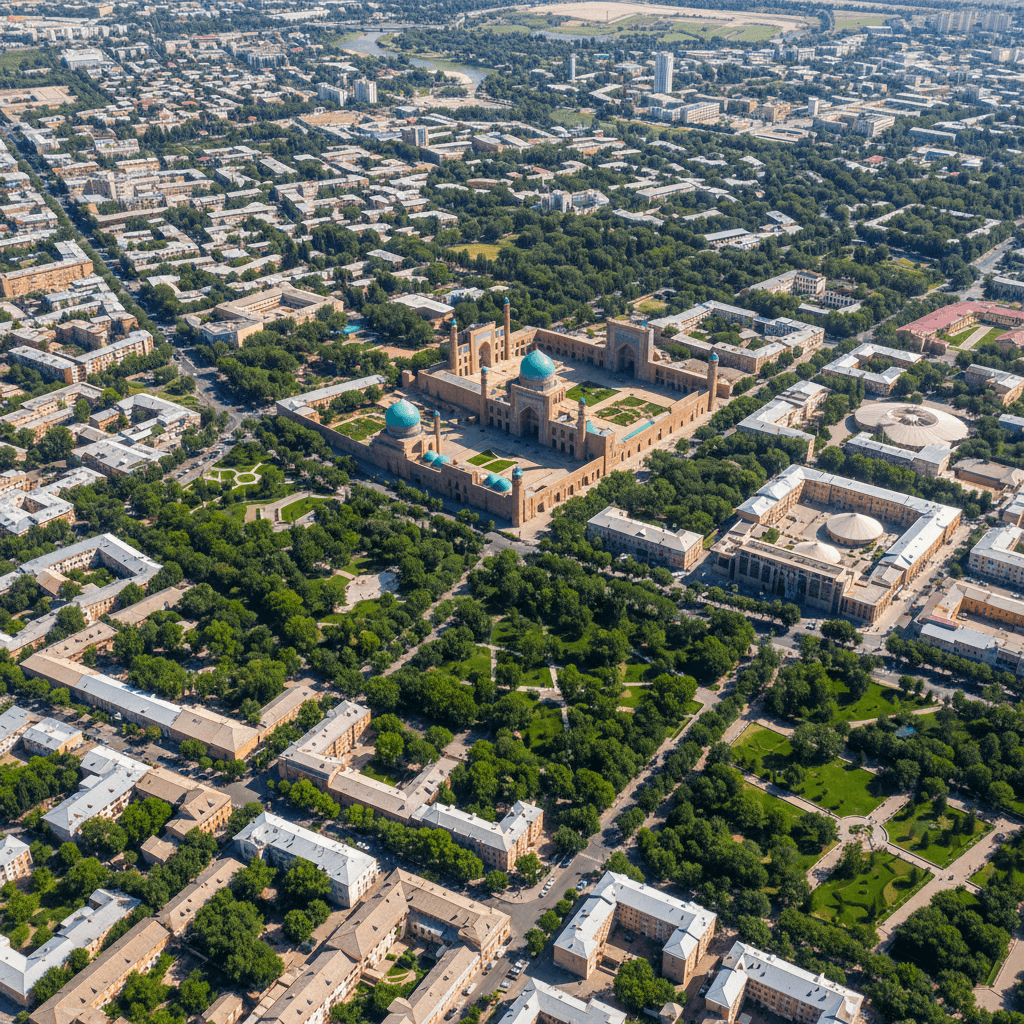
Samarkand
🇺🇿 Uzbekistan
Ancient Majesty Meets the Slow Life
Stepping into Samarkand feels like walking through a living blueprint of the Silk Road. While Tashkent is the commercial engine of Uzbekistan, Samarkand is its soul. It is a city defined by turquoise domes, intricate tilework, and a pace of life that encourages you to actually breathe. For nomads, the appeal isn't a high-octane startup scene; it's the ability to work from a courtyard guesthouse while the scent of fresh lepeshka bread wafts over the wall.
The city has a distinct, garden-like atmosphere. Large swaths of the historic center are pedestrianized, meaning you can walk from the Registan Square to the Bibi-Khanym Mosque without dodging heavy traffic. It’s quiet, safe, and surprisingly affordable, with a total monthly cost of living averaging around $693. You aren't here for the nightlife; you’re here for the inspiration that comes from 2,500 years of history staring you in the face.
The Nomad Experience
Living here requires a bit of a pioneer spirit. The nomad community is smaller than in Tashkent, so you'll likely find yourself befriending local guesthouse owners and travelers more than fellow tech workers. Internet speeds generally hover between 49 and 71 Mbps, which is plenty for video calls, though you should definitely keep a local Beeline or Ucell SIM card as a backup. Note that you'll want a VPN for certain apps like Twitter or Skype that can be finicky on local networks.
- Best Time to Visit: Aim for April to May or September to October. The 15 to 25°C weather is perfect for walking.
- Summer Heat: July and August can hit a brutal 40°C, making mid-day work sessions in air-conditioned cafes a necessity.
- Language: Uzbek and Russian are the standards. English isn't widely spoken once you leave the tourist cafes, so keep Google Translate ready.
Where to Plant Your Roots
Most nomads stick to the Historic Center around the Registan. It’s the most walkable area and puts you in the heart of the action. If you want something more visceral, the area around Siyob Bazaar is loud, fragrant, and deeply authentic, though it can be a bit overwhelming for a long-term stay.
Monthly Budget Breakdown
- Budget Tier ($600 to $900): Includes a simple guesthouse or studio apartment for $300 to $500 and meals primarily from the bazaar.
- Mid-Range ($900 to $1,200): Covers a modern apartment, frequent dining at mid-range restaurants, and daily Yandex Go rides.
- Comfortable ($1,200+): Upscale housing near the Registan ($600+), high-end dining, and weekend trips to Bukhara.
Practical Logistics
Getting around is remarkably easy. Yandex Go is the local equivalent of Uber and it's incredibly cheap; a ride from the train station to the center usually costs about 30,000 som, which is roughly $2.50. For longer distances, the Afrosiyob high-speed train is your best friend. It connects you to Tashkent in about two hours for roughly 100,000 som, but you need to book weeks in advance as seats disappear quickly.
Eating is a highlight of the Samarkand experience. You can grab a massive plate of plov or fresh bread at Siyob Bazaar for $1 to $3. If you need a proper sit-down meal with reliable Wi-Fi, expect to pay between $5 and $10 at mid-range spots. Cash is still king here. While more places are starting to accept cards, you'll want to keep a stack of som in your pocket for the markets and smaller cafes.
Samarkand isn't a place where you'll find a different co-working space on every corner, but it is a place where you can find deep focus. It’s a city for the "slow nomad" who wants to trade the neon lights of Southeast Asia for the timeless blue tiles of Central Asia.
The Nomad Budget Breakdown
Samarkand is a breath of fresh air for your bank account. While Tashkent feels like a growing metropolis, Samarkand remains a high value sanctuary where your dollars stretch much further. Most digital nomads find they can live comfortably here for around $693 per month, though your lifestyle choices can push that toward the $1,200 mark if you prefer upscale dining and boutique stays near the monuments.
- Budget Tier ($600 to $900): You'll stay in local guesthouses or modest apartments, eat primarily at Siyob Bazaar, and use the city's walkable paths to get around.
- Mid-Range ($900 to $1,200): This covers a modern one bedroom apartment, frequent dinners at sit-down restaurants, and daily lattes at emerging cafe hubs.
- Comfortable ($1,200+): At this level, you're looking at premium housing near Registan Square, weekend trips to Bukhara via the Afrosiyob train, and no-expense-spared dining.
Housing and Neighborhoods
Finding a long term rental can be a bit of a treasure hunt since the market isn't as formalized as in Europe. Most nomads start in the Historic Center. It's incredibly walkable, and you're never more than a few minutes from a 14th century masterpiece. Expect to pay between $300 and $500 for a basic studio, while more polished units near the major landmarks can hit $600 or more.
The area around Siyob Bazaar is perfect if you want to be in the thick of things. It's noisy and unapologetically local, but you'll have the city's best produce at your doorstep. If you're staying for a month or more, check local Facebook groups or negotiate a monthly rate with a boutique hotel. Avoid the area immediately surrounding the train station for housing; it's better for transit than daily living.
Food and Daily Expenses
Eating is where Samarkand truly shines. You can grab a massive plate of plov or fresh bread at Siyob Bazaar for $1 to $3. It's the ultimate budget hack. For a proper sit-down meal at a mid-range restaurant, you'll likely spend between $5 and $10. Even the high end spots rarely cross the $25 mark for a full dinner with wine.
Groceries are affordable if you stick to local markets. Imported goods will spike your bill, so embrace the seasonal fruits and local dairy. For getting around, download the Yandex Go app. It's the local version of Uber and prevents the "tourist tax" at the curb. A ride from the train station to the city center usually costs about 30,000 som, which is roughly $2.50.
Connectivity and Coworking
Don't let the ancient architecture fool you. Internet speeds generally hover between 49 and 71 Mbps, which is plenty for Zoom calls and uploading files. However, reliability can be spotty in older guesthouses with thick stone walls. It's smart to pick up a local SIM card from Beeline or Ucell for about $5 to $10 a month for a heavy data plan.
Dedicated coworking spaces are still a new concept here, with memberships typically costing between $50 and $100 a month. Most nomads work from cafes or their own apartments. Just keep in mind that you'll need a VPN to access certain services like X or Skype, as local restrictions can occasionally interfere with your workflow.
Practical Money Tips
Cash is still king in Samarkand. While more restaurants are starting to accept cards, you'll want to keep a stack of som for the bazaars and smaller shops. ATMs are widely available, but they can run out of cash on weekends, so plan ahead. Travelers often use Wise or Revolut for better exchange rates, but always carry a backup physical card. Most importantly, remember that while the city is safe and affordable, the language barrier is real. Have a translation app ready for those bazaar negotiations.
For Nomads and Slow Travelers: The Historic Center
If you want to step out of your door and see 14th century tilework before your first coffee, the area surrounding Registan Square is your base. It is the most walkable part of Samarkand, characterized by flower lined pedestrian paths that make the morning commute to a cafe feel like a stroll through an open air museum. You'll find most of the city's boutique guesthouses and hotels clustered here, which often double as makeshift workspaces.
- Rent: Expect to pay $600+ for upscale apartments or well equipped guesthouses.
- Vibe: Immersive and historical, though it gets crowded with tour groups during peak hours.
- Internet: Generally reliable at 49-71 Mbps, but keep a Beeline or Ucell SIM card handy for backup.
Working from this neighborhood is easy because of the emerging cafe culture. Most nomads find the pace here perfectly suited for deep work in the mornings and architectural photography in the afternoons. Just remember to pack a VPN; you will likely need one to access certain apps like Skype or Twitter while on local networks.
For Foodies and Solo Explorers: Siyob Bazaar District
Located just a short walk from the Bibi-Khanym Mosque, the area around Siyob Bazaar is for those who want to live in the thick of local life. It is louder and more chaotic than the manicured streets near the Registan, but the proximity to the city's best cheap eats is unbeatable. You can grab fresh obi non (Samarkand bread) or a massive plate of plov for $1 to $3.
- Rent: Mid range options typically fall between $400 and $600 per month.
- Food: This is the heart of Samarkand's culinary scene, with street food stalls and traditional tea houses at every corner.
- Transport: Highly walkable, but you can use Yandex Go to reach the train station for about 30,000 som.
Solo travelers often prefer this area because it is impossible to feel lonely when you are surrounded by friendly vendors and the constant hum of the market. It is less "nomad focused" than the historic center, so don't expect many dedicated coworking hubs here. It is a place for those who prefer an authentic, slightly gritty atmosphere over a polished tourist experience.
For Long Term Expats: The Modern Russian Quarter
While Samarkand doesn't have the massive expat infrastructure of Tashkent, the newer parts of the city offer a more residential feel with better access to supermarkets and long term apartment rentals. These areas sit further west of the historic core and provide a quieter environment away from the souvenir shops. You'll find more wide boulevards and Soviet era apartment blocks that offer better value for money if you are staying for several months.
- Rent: Budget friendly studios can be found for $300 to $500.
- Lifestyle: More "real life" with local pharmacies, gyms, and grocery stores.
- Social: Limited nomad meetups, so you will likely spend your time socializing with locals or other travelers in the central bars.
Expats recommend this area if you need a stable routine. Since the city is so compact, you are never more than a $2.50 taxi ride away from the main sites. It is the best choice if you want to keep your monthly burn under $700 while still enjoying a comfortable lifestyle.
For Families: The Garden Suburbs
Families visiting Samarkand usually stick to the quieter residential pockets between the Historic Center and the University Boulevard. This area is exceptionally safe and offers a "garden city" feel with plenty of shade and less traffic. While there aren't many specific "expat schools" in Samarkand, the parks and pedestrian zones make it one of the most family friendly stops in Central Asia.
- Safety: Crime is very low; most families feel comfortable walking around late into the evening.
- Healthcare: Basic needs are met by widespread pharmacies, but for anything serious, most people head to Tashkent.
- Climate: If visiting with kids, aim for April to May or September to October to avoid the 40°C summer heat.
Most families opt for larger guesthouses that offer breakfast and a courtyard. It provides a contained, safe environment for children to play while parents catch up on emails. Avoid the area directly adjacent to the train station for long stays; it's convenient for a quick exit on the Afrosiyob high speed train, but the constant bustle of taxi drivers can be a bit overwhelming for a family home base.
Connectivity and Speed
You might expect an ancient Silk Road city to have ancient internet, but Samarkand is surprisingly capable. Most nomads find average speeds between 49 Mbps and 71 Mbps, which is plenty for video calls and heavy uploads. While the infrastructure is improving, it isn't always seamless. You'll find that hotel and guesthouse Wi-Fi can be hit or miss, so it is smart to have a backup plan ready.
The most reliable way to stay online is grabbing a local SIM card immediately. Beeline and Ucell are the top choices for data, and you can usually get a monthly plan with plenty of gigabytes for $5 to $10. You'll need your passport to register the SIM at a physical store or the airport. One thing to keep in mind: certain apps like Skype or X (Twitter) sometimes face local restrictions, so most travelers recommend having a reliable VPN installed before you arrive.
Coworking and Work-Friendly Cafes
The dedicated coworking scene in Samarkand is still in its early stages compared to Tashkent. You won't find a massive variety of global chains, but local hubs are popping up to serve the growing remote work crowd. Expect to pay between $50 and $100 for a monthly hot desk. These spaces are usually quiet and provide the most stable power and internet connections in the city.
Most nomads here prefer a "cafe hopping" approach. The city is becoming more laptop-friendly, especially in the areas surrounding Registan Square. While the traditional teahouses (chaikhanas) are great for a break, they aren't built for productivity. Instead, look for modern spots in the Historic Center that offer power outlets and upholstered seating. The vibe is generally relaxed, and staff usually won't mind if you linger over a coffee for a few hours of work.
Practical Tech Tips
- Mobile Hotspots: If you're staying in a boutique hotel or a traditional guesthouse, the walls can be thick enough to block Wi-Fi signals. A portable 4G router or using your phone as a hotspot is often more reliable than the house internet.
- Power Stability: Power outages aren't a daily occurrence, but they happen. Keep your devices charged and consider a small power bank if you're planning to work from the gardens or courtyards.
- Local Apps: Download Yandex Go for getting around. It works like Uber and prevents you from having to haggle with drivers at the train station. For communication, Telegram is the king of apps here; almost every business and local contact will prefer it over email or WhatsApp.
- Language Barriers: Since English isn't widely spoken outside of the primary tourist sites, keep Google Translate with the Uzbek and Russian packs downloaded for offline use. It makes explaining your Wi-Fi needs much easier.
The Digital Nomad Experience
Samarkand is a city for those who value atmosphere over a high-octane tech scene. You aren't going to find massive networking events or "nomad brunches" every weekend. Instead, you get a 100/100 lifestyle score for the sheer beauty of your surroundings. Working for a few hours and then walking five minutes to see the Bibi-Khanym Mosque is a trade-off most remote workers are happy to make. It is a "slow travel" destination where you can be highly productive during the day and spend your evenings drinking local wine in a quiet courtyard.
A Peaceful Environment for Productivity
Samarkand is remarkably safe, even for solo travelers and nomads who find themselves walking home after a long session at a cafe. The vibe here is far more relaxed than the frantic energy of Tashkent. Most people describe the city as a series of garden paths and pedestrian zones where you can wander freely without looking over your shoulder. Violent crime is extremely rare, and the local community tends to be protective and welcoming toward foreigners.
The biggest "danger" you'll likely face is the enthusiasm of taxi drivers near the train station. They can be aggressive in their pursuit of fares, often quoting prices three or four times the local rate. Avoid the stress by using Yandex Go. A ride from the station to the historic center should only cost you about 30,000 som (roughly $2.50). It takes the guesswork out of the transaction and keeps your data tracked for safety.
Staying Healthy in the Silk Road Heat
Health considerations in Samarkand are mostly about preparation rather than immediate risk. The tap water isn't recommended for drinking, so you'll want to stick to bottled or filtered water. You can find large 5-liter jugs at any local market for less than $1. While the food at Siyob Bazaar is delicious, stick to high-turnover stalls for your plov and bread to avoid any stomach upsets during your first few days as your system adjusts to local oils.
Healthcare facilities in the city are functional but basic. For minor issues, pharmacies (known locally as 'Dorixona') are everywhere and well-stocked with European and Russian medications. Pharmacists are often very helpful, though you'll need a translation app like Google Translate to explain specific symptoms since English proficiency is low in the medical sector.
- Emergency Services: Dial 103 for an ambulance or 102 for police assistance.
- Medical Costs: A standard consultation with a doctor typically costs between $15 and $30 at private clinics.
- Insurance: Most nomads carry international coverage like SafetyWing or World Nomads, as local hospitals may require cash payments upfront before treatment.
Practical Safety Tips
While the city is safe at night, some residential streets outside the Historic Center are poorly lit. If you're staying in a guesthouse tucked away in the mahallas (traditional neighborhoods), keep a small flashlight or your phone charged for the walk back. The uneven pavement is more of a threat to your ankles than any local person is to your wallet.
If you're planning to stay long-term, it's worth noting that Samarkand doesn't have the massive international hospitals you'll find in Western Europe. For anything serious or for specialized dental work, most expats take the Afrosiyob high-speed train to Tashkent, which is only two hours away and offers more modern private medical centers.
Seasonal Wellness
The continental climate means you need to protect yourself against the elements. If you're visiting between June and August, temperatures frequently hit 40°C (104°F). Heat exhaustion is a real risk for nomads who try to sightsee during midday. Do your work in an air-conditioned cafe during the afternoon and save your walks for the early morning or after sunset when the monuments are lit up and the air cools down.
- Sun Protection: High-SPF sunscreen is harder to find and more expensive locally; bring your own supply.
- Hydration: Carry water at all times, especially when exploring the sprawling Shah-i-Zinda complex where shade is limited.
- Winter Gear: From December to February, temperatures can drop to -10°C, so bring quality thermal layers if you plan to work through the winter.
The Pedestrian Advantage
Samarkand is a dream for anyone who prefers exploring on foot. Unlike the sprawling chaos of many Central Asian hubs, the historic heart of this city was designed for slow movement. You can reach about 95% of the major sights, including the Registan and Shah-i-Zinda, via beautifully maintained, flower-lined pedestrian paths. Most nomads find they rarely need wheels during the day, as the layout keeps traffic noise at a distance from the main monuments.
The walking experience is relaxed and safe, though the summer sun from June to August can be punishing with temperatures hitting 40°C. During these months, locals and savvy travelers stick to the early mornings or late evenings when the monuments are lit up and the air cools down. If you're visiting in the peak windows of April to May or September to October, you'll likely spend your entire stay wandering between blue-tiled domes without ever stepping into a car.
Mastering the Ride-Share
When you do need to cover more ground, skip the street-side taxi hustle. The local "taxi mafia" at the train station is notorious for overcharging newcomers. Instead, download Yandex Go before you arrive. It works exactly like Uber or Bolt and is the gold standard for getting around affordably and transparently. A ride from the train station to the Registan Square area typically costs around 30,000 som (roughly $2.50).
- Yandex Go: The most reliable way to get a fair price. You can link your card or pay in cash.
- Street Taxis: If you must hail one, always agree on the price before sitting down. Expect to pay a "tourist premium" compared to the app.
- Public Buses: They are extremely cheap but the routes are complex and rarely translated. Most short-term visitors find them more trouble than they're worth.
Arriving and Departing
Most nomads arrive via the Afrosiyob high-speed train from Tashkent or Bukhara. It's a sleek, modern service that makes the journey from the capital in about two hours for roughly 100,000 som. These tickets sell out weeks in advance, so you'll want to book on the official Uzbekistan Railways site as soon as your dates are set. The train station is about a 20-minute drive from the historic center.
If you're flying in, the Samarkand International Airport is equally convenient. It's a quick Yandex ride into town. While there aren't currently bike or scooter sharing programs like you might find in Almaty or Europe, the city's compact nature means you won't miss them. Just bring a comfortable pair of walking shoes and let the ancient alleys do the work.
Navigating the Neighborhoods
Where you stay dictates how you'll move. If you're based in the Historic Center, your transport costs will be near zero because everything is at your doorstep. If you choose a spot near the Siyob Bazaar, you'll be in the thick of the action and close to the Bibi-Khanym Mosque, though it's a bit noisier and more crowded. Expats and long-termers sometimes look further out for cheaper rent, but for the typical nomad stay of a few weeks, staying central saves enough time and effort to justify the slightly higher room rates.
- Historic Center: Maximum walkability, quietest streets, but higher prices for groceries and cafes.
- Siyob Bazaar Area: Authentic vibe, great for cheap eats, but expect to navigate crowds of shoppers daily.
- Train Station District: Best avoided for accommodation; it's disconnected from the soul of the city.
The Language Gap
In Samarkand, you'll find that language is often the biggest hurdle for productivity. While the city is a crossroads of history, English hasn't quite caught up to the tourism boom. Outside of high end boutique hotels and the most popular spots around Registan Square, English proficiency is low. Most locals speak Uzbek as their first language, but Russian remains the lingua franca for business, logistics, and older generations. If you have a basic grasp of Russian, you'll find life significantly easier; if not, you'll be relying heavily on technology.
Most nomads find that Google Translate is their best friend here. It's common to see travelers holding up their phones at Siyob Bazaar to translate "how much" or "is this lamb?" into Uzbek. Don't expect waiters or taxi drivers to be fluent. They're incredibly patient and friendly, but the communication will be functional rather than deep. Travelers often say that a smile and a few local words go a long way in breaking the ice.
Digital Communication and Apps
You shouldn't rely on your home roaming plan here. It's better to pick up a local SIM card immediately. Beeline and Ucell are the most popular choices for data, and you can usually get a decent monthly plan with plenty of gigabytes for $5 to $10. You can find these at the airport or small shops around the city center, though you'll need your passport to register the line.
For getting around and communicating with drivers, Yandex Go is non negotiable. The app allows you to set your destination and see the price (usually around 30,000 som for a cross city trip) before you get in. Since the app has a built in chat with auto translate, it solves the language barrier with drivers instantly. Most nomads find this much more relaxing than haggling with the taxi mobs at the train station.
Local Etiquette and Useful Phrases
While you can get by with apps, learning a few Uzbek phrases will earn you a lot of respect. The locals are proud of their culture and love it when visitors make an effort. Use these daily to smooth over your interactions:
- Assalomu alaykum: Hello (formal and respectful)
- Rahmat: Thank you
- Xayr: Goodbye
- Qancha?: How much?
- Ha / Yo'q: Yes / No
Keep in mind that Uzbekistan has some internet restrictions. To stay connected to your usual workflow, you'll likely need a VPN. Apps like Skype or X (Twitter) can be spotty or blocked depending on the current local regulations. Most nomads set up their VPNs before arriving to ensure they don't lose access to their work tools or social accounts.
Social Connection
Because the nomad scene is smaller here than in Tashkent, you won't find many English speaking meetups or digital nomad hubs. Most social interaction happens organically in cafes or at the guesthouses in the Historic Center. If you're looking for a community, you'll have to be proactive. Joining local Facebook groups for expats in Uzbekistan or hanging out in coffee shops near the university areas is your best bet for finding someone who speaks English and understands the remote work lifestyle.
The Sweet Spots: Spring and Autumn
If you want to see Samarkand at its most photogenic, aim for the shoulder seasons. April to May and September to October are the goldilocks zones for nomads. During these windows, temperatures hover between 15°C and 25°C, making those long walks between Registan Square and Bibi-Khanym Mosque actually enjoyable rather than a test of endurance.
Spring brings a burst of green to the city's garden paths, while autumn is harvest season. If you're here in September, the Siyob Bazaar overflows with world famous Samarkand melons and grapes for just a couple of dollars. The air is crisp, the sky is usually a deep blue, and you won't need anything more than a light jacket for evening strolls to find a wine bar.
Survival Mode: Summer Heat
From June through August, the continental climate kicks into high gear. Temperatures regularly climb between 30°C and 40°C. It's a dry, dusty heat that can feel draining if you're trying to sightsee at noon. Travelers often find themselves adopting a Mediterranean schedule: work from a cooled cafe or guesthouse during the day, and don't emerge until the sun dips.
The upside of summer is the light. The sun stays up late, and the blue tiles of the Shah-i-Zinda necropolis look spectacular in the harsh afternoon glare. Just make sure your accommodation has reliable A/C; it's a non-negotiable during these months. You'll also find that the city feels a bit quieter as locals retreat indoors during the peak heat of the day.
The Winter Chill
Winter in Samarkand, running from December to February, is cold and biting. Temperatures frequently drop between -5°C and 10°C. While it doesn't rain much, the damp cold can seep into the older brick buildings in the historic center. Some nomads find this the perfect time for deep work, as the tourist crowds evaporate and the prices for boutique guesthouses can be even more negotiable.
If you visit in January, bring a heavy coat and thermal layers. The sight of the Registan covered in a light dusting of snow is rare but incredible for photography. Just be aware that some smaller cafes might have limited hours, and the garden-like atmosphere of the city feels a bit more dormant.
Quick Seasonal Breakdown
- Best for Work/Life Balance: September and October. Stable 20°C weather and the best local produce.
- Best for Budgeting: January and February. You can often snag high-end rooms near the center for $20 to $30 a night.
- Worst for Walking: July. The 40°C heat makes the pedestrian-friendly layout feel like a marathon.
- Rainfall: Low year-round. You won't need an umbrella often, but a dust mask might be handy during dry, windy spells in late summer.
Most digital nomads agree that timing your stay for the Navruz festival in late March is a major win. It's the Persian New Year, and the city comes alive with street food, traditional music, and a community vibe that you won't get during the sleepy winter months or the scorching mid-summer.
Living the Silk Road Life
Samarkand feels less like a frantic metropolis and more like an open air museum that actually lets you live inside it. For nomads, the draw isn't a high octane networking scene; it's the ability to work from a cafe overlooking 14th century tilework for a fraction of the cost of a European capital. You’ll find the atmosphere quiet, safe, and surprisingly walkable, with most of the major monuments connected by flower lined pedestrian paths.
Cost of Living Breakdown
Your bank account will breathe a sigh of relief here. A comfortable monthly budget sits around $700 to $900, though you can easily push that higher if you insist on luxury hotels near the Registan. Local prices are low enough that you rarely need to penny pinch.
- Housing: A decent one bedroom apartment in the center typically runs between $300 and $500. If you want something upscale or right on the doorstep of the major sites, expect to pay $600 or more.
- Food: You can grab a massive plate of plov and fresh bread at Siyob Bazaar for about $2. A mid range dinner at a sit down restaurant usually costs between $5 and $10.
- Transport: Most things are walkable, but a 20 minute Yandex Go ride from the train station to the historic center will only cost you about 30,000 som (roughly $2.50).
Where to Set Up Base
The Historic Center is the obvious choice for shorter stays. You’ll be within walking distance of the Registan and Bibi-Khanym Mosque, surrounded by boutique guesthouses that often include breakfast. It’s touristy, but the convenience of being able to wander out for a sunset view of the domes is hard to beat.
If you prefer a more local flavor, look toward the Siyob Bazaar area. It’s louder and more chaotic, but you’ll have the city’s best produce and street food at your doorstep. Avoid staying too close to the train station; it’s far from the action and the taxi drivers there are notoriously persistent with inflated prices.
Connectivity and Workspace
Internet speeds generally hover between 50 and 70 Mbps. It’s reliable enough for Zoom calls, but many nomads recommend keeping a local SIM card as a backup. Beeline and Ucell are the reliable choices here; you can get a month of heavy data for about $10. Just keep in mind that some social media platforms or VOIP services like Skype might require a VPN to function smoothly.
While dedicated coworking spaces are still a developing concept compared to Tashkent, the cafe culture is growing. You’ll find plenty of spots around the center where nobody will mind if you linger over a coffee with a laptop for a few hours. Expect to pay about $50 to $100 a month if you find a formal desk space.
Getting Around
Samarkand is roughly 95% walkable if you stay in the center. The city has invested heavily in pedestrian infrastructure, so you won't spend your day dodging traffic. For longer distances, download the Yandex Go app. It’s the local version of Uber and prevents any haggling over fares. If you're coming from Tashkent, the Afrosiyob high speed train is the only way to fly; it’s fast, clean, and costs around 100,000 som, but you must book weeks in advance on the official railway site.
Weather and Timing
Timing is everything in Central Asia. The sweet spots are April to May and September to October, when temperatures stay between 15°C and 25°C. Summer (June to August) is a furnace, often topping 40°C, which makes midday exploration miserable. Winters are bitey and cold, frequently dropping below freezing, though the sight of blue domes under a layer of snow is undeniably beautiful.
Social Etiquette and Language
Uzbek and Russian are the dominant languages. Outside of hotels and major tourist spots, English is quite rare, so keep Google Translate downloaded for offline use. Learning a few words of Uzbek goes a long way; Rahmat means thank you and Assalomu alaykum is the standard greeting. Dress modestly when visiting mosques or mausoleums; covering your shoulders and knees is expected regardless of the heat.
Practical Essentials
- Money: Uzbekistan is still very cash heavy. While some upscale spots take cards, you’ll want a stack of som for the bazaars and small shops. Wise or Revolut cards usually work at ATMs in the larger banks.
- Safety: It’s a very safe city for solo travelers. Use common sense at night, but violent crime is extremely rare.
- Healthcare: Pharmacies are everywhere and well stocked for basics. For anything serious, you’ll likely want to head to Tashkent, as local hospital facilities can be basic. Dial 103 for an ambulance in an emergency.
Need visa and immigration info for Uzbekistan?
🇺🇿 View Uzbekistan Country GuideEasy Landing
Settle in, no stress