Sabaneta
🇨🇴 Colombia
The Smallest Municipality with the Biggest Heart
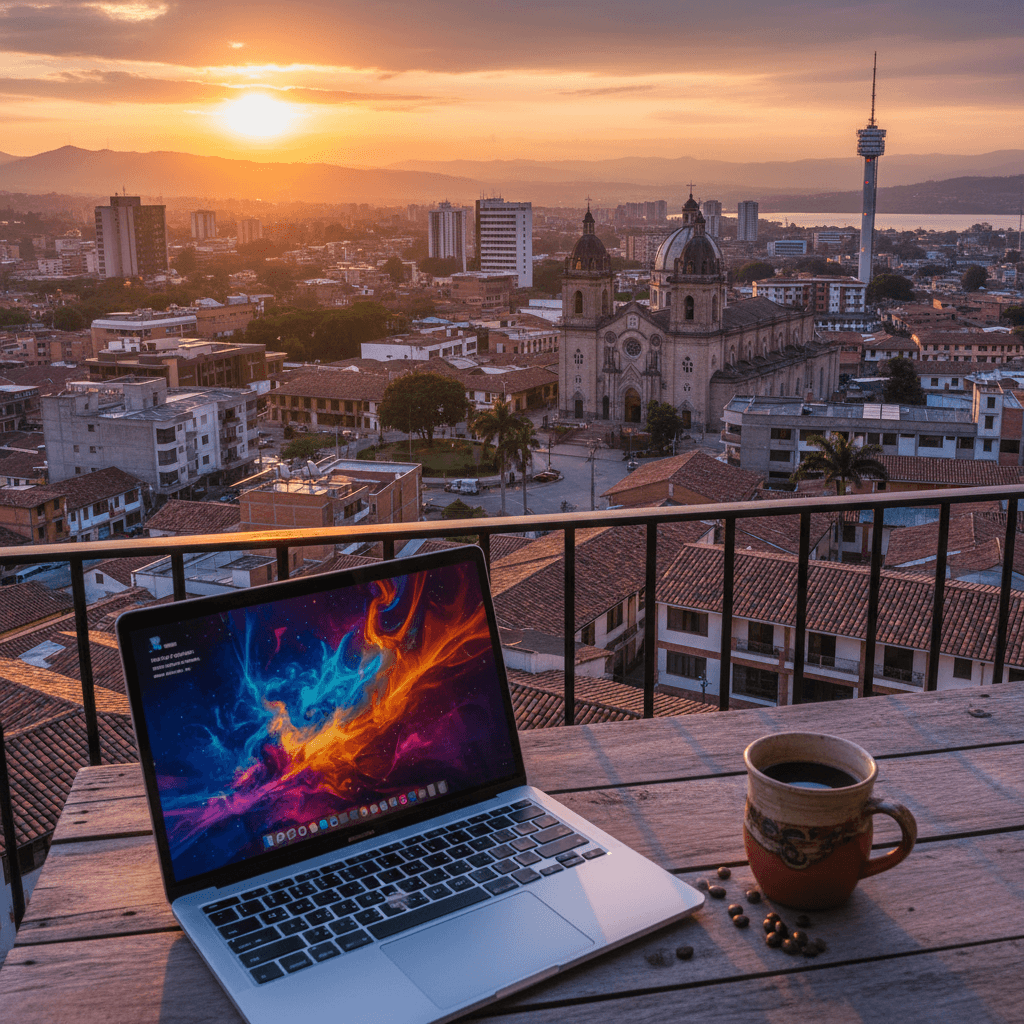
If you head south from the high energy of El Poblado and keep going until the skyscrapers start to mingle with steep green mountains, you'll hit Sabaneta. It is technically the smallest municipality in Colombia, but it carries a reputation for having the highest quality of life in the Aburrá Valley. While Medellín feels like a sprawling metropolis, Sabaneta feels like a collection of nested villages that somehow kept their soul while the rest of the world hurried up.
The vibe here is profoundly local. You won't find the "gringo bubbles" that define parts of Laureles or Envigado. Instead, you'll find retirees playing cards in the shade, families sharing buñuelos the size of softballs, and a community that still says hello to strangers on the street. It is the kind of place where the church bells at Parque Sabaneta still dictate the rhythm of the afternoon, and the smell of grilled chorizo hangs heavy in the air every weekend.
A Slower Digital Pace
For the nomad who is tired of the frantic networking events and the "see and be seen" culture of more famous hubs, Sabaneta is a breath of fresh air. It is where you go when you actually want to get work done during the day and disappear into a purely Colombian atmosphere by 5:00 PM. You'll trade the trendy avocado toast cafes for traditional fondas and local bakeries where a coffee costs less than a dollar.
Expats who settle here usually do so because they want to improve their Spanish and lower their burn rate. You are looking at a lifestyle that is roughly 20 to 30 percent cheaper than the northern neighborhoods. You'll still have access to modern malls like Mayorca and Aves María, but your daily life will revolve around the neighborhood tienda and the vibrant street life around the main plaza.
The Connectivity Trade-off
Living here means accepting a slightly longer commute if you need to be in the city center. The Medellín Metro is your lifeline; the Sabaneta and La Estrella stations connect you to the rest of the valley, but the ride to Poblado will take you about 20 minutes on a good day. It is a trade-off that most nomads find worth it for the peace and quiet you get in return.
The infrastructure is surprisingly robust for such a traditional area. Fiber optic internet is standard in the newer high-rise apartment buildings climbing the hillsides. While the dedicated coworking scene is smaller than in Medellín, you will find a growing number of laptop-friendly spots and quiet cafes where the staff won't mind if you linger over a second tinto.
What to Expect Daily
- Social Life: Centered around the main park, especially on Tuesday nights when pilgrims visit the church and the surrounding bars overflow with music.
- Topography: The flat land near the park is walkable, but many of the newer, nicer apartments are located up steep hills that will give your calves a serious workout.
- The Crowd: A mix of local families, university students from nearby campuses, and a small but loyal group of long-term expats who value authenticity over nightlife.
- Safety: Generally regarded as one of the safest areas in the metro region, though standard urban awareness is still required after dark.
Sabaneta doesn't try to impress you with flashy rooftop bars or international fusion restaurants. It wins you over with its consistency. It is a place that feels lived-in and honest. If your idea of a perfect Tuesday is finishing a project by 4:00 PM and sitting on a park bench to watch the world go by with a $2 USD plate of empanadas, you will feel right at home here.
The Local Price Advantage
Living in Sabaneta is a strategic move for nomads who want to keep their overhead low without sacrificing the perks of city life. You'll find that your dollar or euro stretches significantly further here than it does in El Poblado or Laureles. Most expats report saving about 20% to 30% on daily expenses just by crossing the border into this southern municipality.
The local economy is built for residents rather than tourists. This means "gringo pricing" is less common, and you're more likely to pay the same rate as your neighbor for everything from a haircut to a bag of passion fruit. It's a place where a comfortable, mid-range lifestyle is accessible for around $1,200 to $1,500 USD per month, though minimalist travelers can easily get by on less.
Monthly Budget Breakdown
- One-bedroom apartment (Modern): $600 to $900 USD
- Local lunch (Menu del Dia): $4 to $6 USD
- Dinner for two (Mid-range): $25 to $40 USD
- Monthly Metro pass: $30 to $40 USD
- Coworking hot desk: $120 to $180 USD
- Liter of milk: $1.10 USD
Housing and Neighborhoods
Rent is your biggest variable. If you're looking for a high-rise with a view and a gym, check out the Aves María sector. It's uphill and a bit more upscale, with prices for a furnished one-bedroom usually sitting around $800 USD. For a more authentic, walkable experience, look closer to Parque Sabaneta. You can find older but spacious apartments there for $500 to $650 USD.
Keep in mind that utilities (estratos) are tiered in Colombia. Most of Sabaneta falls into Estrato 3 or 4, which means your electricity, water, and gas bills will be moderately priced. Expect to pay around $60 to $90 USD per month for a full suite of utilities including high-speed fiber internet.
Eating and Entertainment
The food scene is a major win for the budget-conscious. You can grab a massive buñuelo at El Peregrino for a couple of dollars, which is practically a rite of passage here. For a proper sit-down meal, the streets surrounding the main plaza are packed with fondas and grills where a hearty steak or trout dinner rarely exceeds $12 USD.
Groceries are affordable if you stick to local brands and shop at markets like Euro or the smaller fruver stands. A weekly haul of fresh produce, meat, and coffee for one person typically costs between $35 and $50 USD. If you crave imported peanut butter or specific snacks from home, head to the Mayorca Mega Plaza, but be prepared to pay a premium for those items.
Transport and Connectivity
You don't need a car here. Sabaneta is incredibly walkable, and the Medellín Metro is your lifeline to the rest of the valley. A single trip costs less than $1 USD. If you're out late in Medellín, an Uber or Didi back to Sabaneta will run you about $8 to $12 USD depending on the surge.
For work, the costs are stable. While the search for dedicated coworking spaces often leads people back toward Envigado, local spots are popping up. Budget about $150 USD for a monthly membership with reliable backup power. If you prefer working from cafes, a cappuccino usually costs around $2.50 USD, and most owners don't mind if you linger for a few hours.
For the Social Nomads: Parque Sabaneta and Surroundings
If you want to be where the action is, stay within a few blocks of the main plaza. This area feels like a traditional Colombian town tucked inside a modern valley. You'll find most digital nomads working from El rincón de Sabaneta or grabbing a coffee at the various small cafes lining the square. It is the heart of the community, where the local energy is highest.
Living here means you are steps away from the famous giant buñuelos at El Peregrino and the best local street food. The vibe is loud, social, and very authentic. You can expect to pay around $600 to $850 USD for a modern one bedroom apartment in one of the newer high rise buildings just a short walk from the park.
- Pros: Walking distance to everything, easy Metro access via the Sabaneta station, and the best people watching in Antioquia.
- Cons: It gets noisy on weekends and during local festivals.
- Internet: Most modern buildings here offer fiber optic with speeds reaching 150 Mbps or more.
For Long-Term Expats: La Doctora
Expats who have traded the chaos of El Poblado for a quieter life usually end up in La Doctora. This neighborhood climbs up the mountainside, offering cooler temperatures and incredible views of the Aburrá Valley. It feels much more residential and suburban than the area around the park.
You will likely need a car or a reliable taxi app like Indrive or Cabify to get around, as the hills are steep. The trade off is peace and quiet. High end apartments here often feature balconies and gym facilities, with rents sitting between $800 and $1,200 USD for larger units. Expats often gather at Mall Vegas Plaza nearby for shopping and quick bites.
- Atmosphere: Quiet, green, and upscale.
- Commute: A 10 minute taxi ride to the Metro or the main plaza.
- Top Perk: Better air quality and lower noise levels than the valley floor.
For Families: Aves María
Aves María is the sweet spot for families who need convenience and safety. It is anchored by the Aves María Shopping Mall, which houses a cinema, a supermarket, and plenty of kid friendly dining options. The streets are wider and the apartment complexes are known for having excellent common areas, including playgrounds and pools.
The neighborhood is exceptionally walkable for a family. You have easy access to Hospital Venancio Díaz Díaz for medical needs and several private daycare options nearby. A three bedroom apartment in this zone typically ranges from $900 to $1,300 USD, making it a bargain compared to similar family oriented zones in Medellín.
- Safety: Very high, with 24/7 gated security in almost every building.
- Amenities: Close to gyms like Smart Fit and various bilingual schools.
- Vibe: Active, safe, and very organized.
For Solo Travelers and Budget Seekers: San Remo
San Remo is a more traditional, working class neighborhood that is perfect for solo travelers who want to stretch their budget without sacrificing safety. It is flat, making it easy to walk to the Estrella Metro station, which connects you to the rest of the city in 20 minutes.
The cost of living here is significantly lower. You can find local "almuerzo ejecutivo" (set lunches) for about $4 to $6 USD. Studio apartments or rooms in shared houses can be found for $400 to $550 USD. While you won't find many dedicated coworking spaces in this specific pocket, the proximity to the Metro means you can reach the work hubs in Sabaneta or Envigado very quickly.
- Rent: $400 to $600 USD for modest, clean units.
- Transport: Excellent; arguably the best Metro access in the municipality.
- Local Life: Very high immersion; you will likely be the only foreigner on your block.
Connectivity Infrastructure
While Sabaneta feels like a sleepy pueblo compared to the high rise density of El Poblado, the fiber optic infrastructure is surprisingly robust. Most modern apartment rentals in neighborhoods like Aves María or La Doctora come equipped with 100 to 200 Mbps connections as a standard. If you are booking an Airbnb, always ask for a screenshot of a speed test, as older buildings near the main plaza might still rely on copper wiring that struggles during the afternoon rainstorms.
For a backup plan, Claro and Tigo offer reliable 4G and 5G coverage throughout the valley. You can pick up a SIM card at the Mayorca Mega Plaza mall for about $5 to $10 USD, which usually includes enough data to tether your laptop if the home WiFi drops. Most nomads find that a local SIM is a lifesaver for taking Zoom calls while sitting in the park or at a local cafe.
Coworking Spaces
Sabaneta is still catching up to the dedicated coworking scene found in Laureles, but there are local spots where you can get through a deep work session without being distracted by reggaeton. Most expats gravitate toward the Aves María area because it combines modern amenities with a quieter atmosphere.
- Meraki Coworking House: Located in the heart of Sabaneta, this space offers a dedicated environment for digital nomads and local professionals. It provides stable internet and a community-focused atmosphere that is ideal for those looking to escape the noise of the main plaza.
Laptop Friendly Cafes
If you prefer the hum of a coffee shop over a sterile office, Sabaneta has plenty of options. The culture here is relaxed, so you won't get side eyed for staying a few hours, provided you keep the lattes flowing. Just keep in mind that power outlets can be scarce in older establishments.
- Cafe Retiro: A favorite for those who want a view of the park. The WiFi is decent for emails and light browsing, though it can get noisy during the lunch rush. A high quality espresso will set you back about $1.50 USD.
- El Tejadito: This spot has a more local feel and great outdoor seating. It is better for administrative tasks or creative writing than heavy video conferencing.
Data and Pricing Summary
- Average Home Internet Speed: 100 to 200 Mbps
- Coworking Day Pass: $10 to $15 USD
- Monthly Coworking Membership: $140 to $180 USD
- Local SIM Card with 10GB Data: $8 to $12 USD
- Coffee at a Laptop Friendly Cafe: $1.50 to $3.00 USD
Most travelers find that Sabaneta offers the best balance of price and performance in the Aburrá Valley. You get the same internet speeds as the more expensive districts but at a fraction of the cost for a daily desk. Just remember to bring a universal power adapter, as some older cafes still use the non grounded two prong outlets common in Colombia.
Staying Safe in the Valley's Smallest Town
Sabaneta feels different from the rest of the Aburra Valley. While Medellin has a certain edge, Sabaneta maintains a small town atmosphere where neighbors actually know each other. Most nomads find it significantly safer than El Poblado or Laureles because it lacks the heavy tourist traffic that attracts petty crime. You'll see locals sitting in Parque Sabaneta late into the evening, and the general vibe is one of collective watchfulness.
That said, basic urban precautions still apply. The local phrase "no dar papaya" (don't give papaya) means don't put yourself in a position to be taken advantage of. Keep your phone tucked away while walking near the Estrella or Sabaneta metro stations, as these high traffic transit points are where most phone snatching occurs. If you're heading back to your apartment after a late night at a fonda, skip the walk and use Uber or InDrive. These apps provide a digital paper trail that street hails don't offer.
Residential areas like La Doctora and Aves Maria are generally very quiet and secure. You'll notice many apartment buildings have 24 hour porteria (security guards). This isn't just a luxury; it's a standard feature that provides peace of mind for nomads carrying expensive gear. If you're looking for the safest pockets, stick to the areas south of the main plaza where the newer high rise developments are clustered.
Healthcare and Medical Services
Colombia consistently ranks high for healthcare quality in Latin America, and living in Sabaneta puts you within reach of world class facilities. For emergencies or specialized consultations, Hospital Venancio Diaz Diaz is the primary local public facility, but most expats and digital nomads prefer private clinics for faster service and more English speaking staff.
A short 10 to 15 minute drive or taxi ride takes you to Hospital Manuel Uribe Angel in neighboring Envigado, which is highly regarded. For top tier, international standard care, many nomads head to Clinica El Rosario or Hospital Pablo Tobon Uribe in Medellin. These facilities often have dedicated international patient departments to help you navigate insurance claims.
- Pharmacy Access: You'll find a Drogueria on almost every corner. For 24 hour service, look for Drogas La Rebaja or Pasteur. Most basic medications, including many that require prescriptions in the US or Europe, are available over the counter here.
- Health Insurance: If you're on the Digital Nomad Visa, you'll eventually need to enroll in EPS (the public system), but for shorter stays, private providers like Sura offer excellent "Plan Complementario" options that cost roughly $60 to $100 USD per month.
- Dental Care: Sabaneta is a great spot for affordable dental work. A standard cleaning usually runs between $30 and $50 USD, and the quality is often superior to what you'd find back home.
Emergency Contacts
It is smart to keep these numbers saved in your phone as soon as you land. While you'll hopefully never need them, the response time is generally good within the Sabaneta municipal limits.
- General Emergencies: 123 (The Colombian equivalent of 911)
- Metropolitan Police: 112
- Sabaneta Fire Department: (+57) 604 288 1515
- Medical Emergencies (Sura): #888 (if you have their private insurance)
Most travelers find that the biggest "danger" in Sabaneta is the steep hills in neighborhoods like Pan de Azucar, which can be a literal headache if you aren't used to the altitude and incline. Stay hydrated, keep your wits about you after dark, and you'll find Sabaneta to be one of the most welcoming bases in South America.
The Metro System
The backbone of your life in Sabaneta is the Medellin Metro. It is clean, efficient, and arguably the pride of the entire valley. You will likely spend most of your time using Line A, which runs north to south. The Sabaneta Station and La Estrella Station are the two main stops serving the municipality. From here, it is a smooth 20 to 25 minute ride to the heart of El Poblado if you are craving a more international social scene or high end shopping.
To use the system, you need a Civica card. You can buy these at the ticket booths in most stations for about $10,000 COP (roughly $2.50 USD). While you can buy one off fares, having a personalized card allows you to load balance and breeze through the turnstiles. It also grants you access to the integrated bus system and the famous cable cars that climb the mountainsides, which are spectacular for a weekend view of the valley.
Walking and Local Topography
Sabaneta is famously the smallest municipality in Colombia, and its core is incredibly walkable. If you live near Parque Sabaneta, you will find that your daily needs; groceries, pharmacies, and cafes; are all within a ten minute stroll. The terrain around the park is flat, making it a rarity in the otherwise vertical Aburra Valley. This makes it a great spot for nomads who prefer a "car free" lifestyle.
However, as you move toward neighborhoods like Loma del Escobero or the higher reaches of La Doctora, the incline increases significantly. If your apartment is "up the hill," you will quickly realize that walking home with groceries is a serious workout. In these areas, most residents rely on the local feeder buses or small taxis.
Ride Sharing and Taxis
For late nights or grocery runs, apps are your best friend. Uber and InDrive are widely used, though it is a local quirk that Uber operates in a legal gray area. Don't be surprised if your driver asks one of you to sit in the front seat to look like friends rather than a commercial transaction. A typical ride from Sabaneta to El Poblado usually costs between $15,000 and $25,000 COP ($4 to $6 USD), depending on traffic.
Traditional yellow taxis are everywhere. You can hail them on the street, but it is generally safer and more transparent to use the Cabify app to book them. They always use a meter, known as a taximetro. Make sure the driver starts it when you get in; the minimum fare is usually around $7,000 COP ($1.75 USD).
The Integrated Bus Network
You will see small, brightly colored buses constantly buzzing around the streets. These are the Integrados. They serve as shuttles between the Metro stations and the various residential neighborhoods. Look for the signs in the front window that indicate their destination, such as Villas del Campo or Aves Maria. The fare is usually around $3,000 COP (less than $1 USD) and can often be paid using your Civica card, making the transition from train to bus seamless.
Traffic and Timing
Traffic in the valley can be brutal. If you need to head into Medellin for a meeting, avoid the peak rush hours of 7:00 AM to 9:00 AM and 5:00 PM to 7:30 PM. During these times, the main artery, Avenida Las Vegas, turns into a parking lot. If you have to move during these windows, the Metro is your only guaranteed way to arrive on time. Most nomads find that staying local during the week and exploring the wider city during off peak hours is the best way to maintain sanity.
Transportation Quick Facts
- Metro Fare: Approximately $3,210 COP per trip with a Civica card.
- Civica Card Cost: $10,000 COP for the physical card.
- Ride Share to Airport (MDE): Expect to pay $90,000 to $110,000 COP ($23 to $28 USD) including tolls.
- Peak Hours: 7:00 to 9:00 AM and 5:00 to 7:30 PM.
The Language Gap
Expect a significant shift in English proficiency when you move from El Poblado to Sabaneta. While Medellín's tourist hubs are increasingly bilingual, Sabaneta remains a traditional Colombian enclave. Most shop owners, waiters at the local fondas, and bus drivers speak little to no English. You will need a functional level of Spanish to handle daily life here, from ordering a buñuelo at the park to explaining a maintenance issue to your landlord.
Nomads who thrive here usually view this as a feature rather than a bug. It is one of the best places in the Aburrá Valley for forced immersion. If your Spanish is rusty, download Google Translate for offline use and consider enrolling in private lessons. Local tutors often charge between $10 and $15 USD per hour, which is a steal compared to rates in the US or Europe.
Local Slang and Communication Style
People in Sabaneta are known as Sabaneteños, and they embody the "Paisa" culture with pride. You'll hear the word "pues" tacked onto the end of almost every sentence. It doesn't have a specific meaning; it's more of a linguistic punctuation mark. You will also notice locals using "usted" even among friends and family, which is a quirk of the region that can sound formal to outsiders but is actually a sign of local warmth.
Greetings are non-negotiable. Walking into a small tienda without saying "buenos días" or "buenas tardes" is considered quite rude. Paisas are famously polite and indirect. Instead of saying no, they might say "mañana" or "lo vemos después," which usually means it isn't going to happen. Learning to read these social cues is just as important as learning the grammar.
Staying Connected
Reliable communication starts with a local SIM card. Don't rely on international roaming plans; they are overpriced and often throttled. The major providers in the area are Claro, Tigo, and Movistar. Most expats recommend Tigo for the best balance of coverage and speed in the valley. You can pick up a SIM card at any small cell phone shop near Parque Sabaneta for about $2 to $5 USD.
Data packages are incredibly affordable. You can get a 30 day "prepago" (prepaid) plan with 10GB to 20GB of data and unlimited social media for roughly $10 to $15 USD. To top up your balance, look for signs that say "recargas" at pharmacies or corner stores. You'll just need to provide your phone number and the amount of pesos you want to add.
Digital Infrastructure
While Sabaneta has a slower pace of life, its digital infrastructure is modern. Fiber optic internet is standard in the newer high rise apartment buildings near Mayorca Mega Plaza. You can expect speeds ranging from 100 Mbps to 300 Mbps, which is more than enough for video calls and heavy uploads. If you are scouting an Airbnb, always ask the host for a screenshot of a speed test before booking.
- WhatsApp: This is the primary tool for everything. You will use it to book hair appointments, order water delivery, and talk to your building's security guard.
- Rappi: Essential for communication with delivery drivers. The app has a built in chat feature that translates messages, which is a lifesaver when your driver is lost.
- Emergency Numbers: Dial 123 for general emergencies. It is the Colombian equivalent of 911, though English speakers are rarely available on the line.
Public Wi-Fi is common in malls like Mayorca, but it is often spotty and unsecured. For serious work, stick to your home connection or one of the emerging coworking spots in the neighborhood. The local culture is very social, so if you are working in a cafe, expect a bit of background noise and the occasional friendly stranger asking where you are from.
The Eternal Spring, Sabaneta Edition
Living in Sabaneta means you are signing up for one of the most consistent climates on the planet. While the rest of the world deals with seasonal mood swings, this little corner of the Aburrá Valley stays parked in a comfortable range between 17°C (63°F) and 27°C (81°F) year round. Because it sits at a slightly higher elevation than the valley floor in Medellín, you will notice it stays a degree or two cooler, especially once the sun dips behind the mountains.
You won't find traditional seasons here. Instead, the year is divided by rainfall. The wet seasons typically hit from April to May and again from October to November. During these months, you can expect heavy afternoon downpours that clear out as quickly as they arrived. Most nomads find these rains manageable since they provide a perfect excuse to hunker down in a cafe and get some deep work done.
When to Plan Your Arrival
If you want the absolute best weather with the most sunshine, aim for December through March. This is the dry season, and the energy in Sabaneta is electric. The skies are clear, the air feels crisp, and the local parks are filled with people enjoying the breeze. July and August offer a secondary dry window that is equally pleasant for those who prefer outdoor activities and hiking the nearby hills.
Keep in mind that Sabaneta is a deeply traditional town. While the weather is great in December, it is also the loudest and busiest time of year. Locals celebrate the holidays with a fervor that involves plenty of music and fireworks. If you are looking for a quiet, focused work environment, you might find the festive atmosphere a bit distracting during the final weeks of the year.
Packing for the Valley
The dress code in Sabaneta is casual but put together. Locals rarely wear shorts unless they are exercising, so a good pair of jeans or chinos will help you blend in. Because the temperature drops as soon as the sun goes down, you will definitely want a light jacket or a hoodie for evening walks to Parque Sabaneta. Here is a quick checklist for your suitcase:
- A sturdy umbrella or light rain shell: Essential for those unpredictable afternoon showers in October.
- Light layers: Think breathable cotton for the sunny afternoons and a sweater for the cool nights.
- Comfortable walking shoes: Sabaneta is very walkable, but the terrain can be uneven.
- Sun protection: The tropical sun at this altitude is stronger than it feels; SPF 30 or higher is a smart move.
The Fiestas del Chigüiro and Beyond
If you want to see the town at its most authentic, try to time your visit with the Fiestas del Chigüiro or the local religious festivals in mid year. Unlike the massive, tourist heavy Flower Festival in Medellín every August, Sabaneta’s celebrations feel more like a massive neighborhood block party. It is the best time to see traditional music and experience the local culture without the El Poblado price tags. Just be sure to book your accommodation at least a month in advance if you plan to arrive during these peak local windows.
Getting Connected
You can expect solid internet speeds in Sabaneta, typically ranging between 100 and 200 Mbps in modern apartment buildings. Most digital nomads rely on Claro or Tigo for home fiber. If you're working from cafes, El Tejadito near the park is a local favorite for its reliable signal and great coffee.
For mobile data, grab a SIM card from a Tigo or Movistar kiosk. You'll need your passport for registration. A monthly prepaid plan with plenty of data usually runs around $10 to $15 USD. It's much cheaper than roaming, and the LTE coverage is strong throughout the valley.
Navigating the Valley
The Medellín Metro is your lifeline here. Sabaneta has its own station on Linea A, making it easy to reach Poblado or Laureles in about 20 to 30 minutes. A single trip costs roughly $0.80 USD, but you should get a Civica card immediately at any station window to make transfers to the integrated buses and cable cars seamless.
For late nights or grocery runs, stick to ride-hailing apps. Uber and InDrive are the standard choices for expats. A ride from Sabaneta to the nightlife in Lleras Park typically costs between $5 and $8 USD depending on the time of day. Taxis are everywhere, but apps provide a digital trail and fixed pricing that most travelers prefer.
Money and Costs
Sabaneta is noticeably more affordable than the tourist hubs to the north. While prices are rising, a comfortable lifestyle here is very attainable. Most ATMs have a withdrawal limit, so look for Bancolombia or Davivienda machines; they are generally the most reliable for foreign cards.
- Monthly Rent (1-bedroom): $550 to $850 USD
- Menu del Dia (Lunch): $4 to $7 USD
- Local Beer (Pola): $1.50 to $2.50 USD
- Coworking Day Pass: $12 to $18 USD
Staying Legal
If you're planning to stay long-term, the Colombia Digital Nomad Visa is a game changer. It's valid for up to two years and the application fee is roughly $170 to $230 USD. You'll need to prove you work for a company outside of Colombia and earn at least $900 USD monthly. Most nomads find the process straightforward enough to handle online without a lawyer.
Safety and Health
Sabaneta feels like a small town tucked inside a big city. It's generally safer and quieter than central Medellín, but you should still keep your wits about you. Locals call it "no dar papaya," which basically means don't flash your wealth or leave your phone sitting on an outdoor table. Stick to well lit areas around Parque Sabaneta at night.
For medical needs, Hospital Venancio Díaz Díaz is the primary facility in the neighborhood. For specialized care or English speaking doctors, many expats take a short taxi ride to Hospital Manuel Uribe Ángel in neighboring Envigado. It's a good idea to have a basic international health insurance policy like SafetyWing or Genki before you land.
Language and Culture
English proficiency is lower here than in Poblado. You'll definitely want a translation app and a few Spanish basics to get by at the local markets. The community is incredibly welcoming to those who try. If you're looking to meet people, head to the main plaza on a Sunday afternoon when the whole neighborhood comes out for empanadas and music.
Need visa and immigration info for Colombia?
🇨🇴 View Colombia Country GuideHidden Gem
Worth the effort