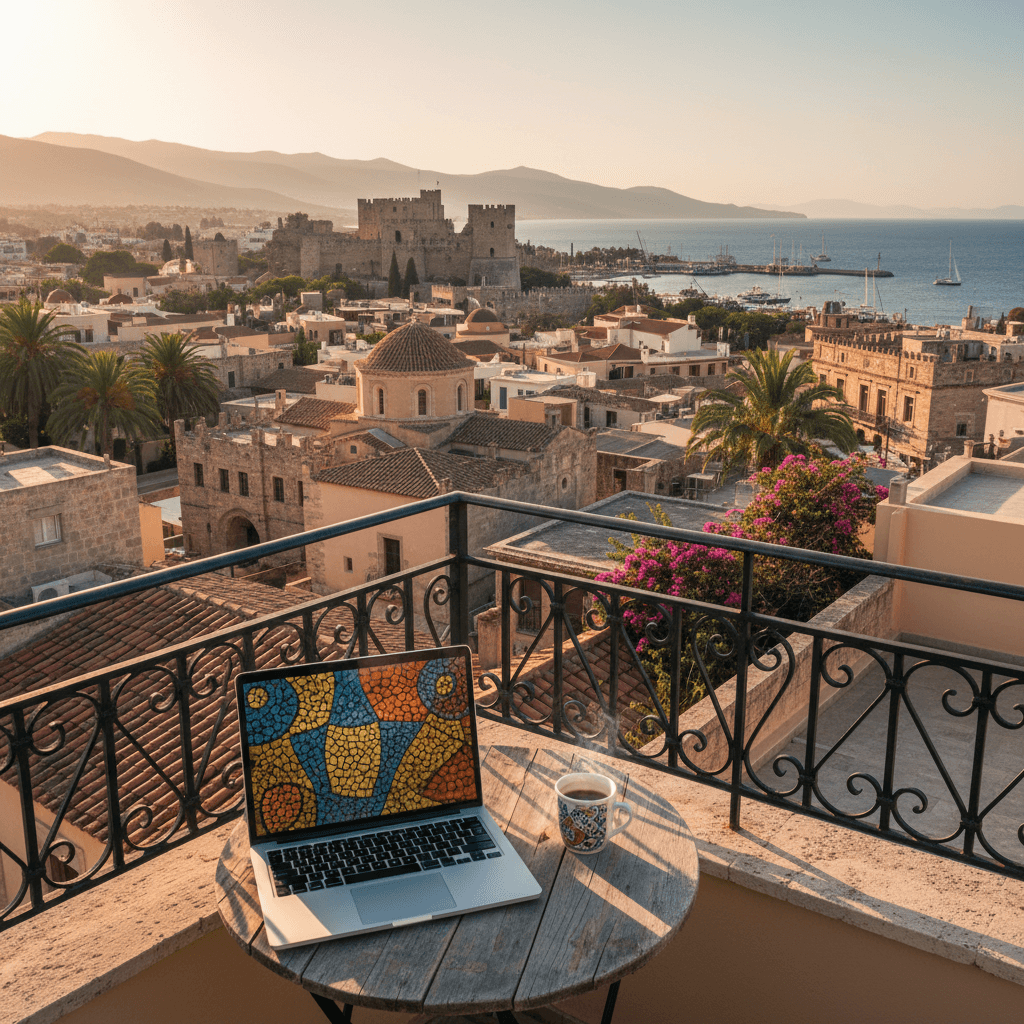
Rhodes Town
🇬🇷 Greece
The Vibe: Medieval Charm Meets Modern Remote Work
Rhodes Town doesn't feel like your typical Greek island party hub. It’s a place where you can spend your morning answering emails in a 14th-century stone alleyway and your afternoon snorkeling in the turquoise waters of Elli Beach. The atmosphere is grounded and surprisingly functional for an island. Because it’s a living, breathing administrative center, it stays active long after the cruise ships leave, making it a favorite for nomads who want a "real" community rather than a seasonal resort.
The emotional appeal of Rhodes lies in its layers. You’ll find yourself walking through the Old Town, a UNESCO World Heritage site that feels like a movie set, only to pop into a sleek cafe with 5G speeds and specialty coffee. Most nomads find the pace of life here strikes a perfect balance: it’s slow enough to cure your burnout but efficient enough that you won't struggle to find a stable connection or a gym. It’s the kind of place where the local grocer remembers your name after three days, and the "work-from-beach" lifestyle actually feels sustainable rather than just a photo op.
What It Costs to Live Here
Living in Rhodes Town is remarkably affordable compared to Athens or the Cyclades, especially if you avoid the July and August price hikes. For a comfortable mid-range lifestyle, expect to budget between €1,200 and €1,400 per month. This covers a private apartment, plenty of dining out, and a budget for local activities.
- Budget Tier (approx. €1,000): You'll likely stay in a shared flat or a modest studio for €500 to €600. You’ll rely on €4 gyros and the local bus system, which costs about €30 for a monthly pass.
- Mid-range Tier (approx. €1,300): This gets you a nice one-bedroom apartment in the New Town for €600 to €800. You can afford regular dinners at local tavernas where a meal costs about €20.
- Comfortable Tier (€1,500+): You’re looking at a premium apartment or even a small villa for €800 or more. You’ll likely rent a scooter for €50 a week and frequent upscale spots like Nireas for €40 seafood dinners.
The Best Neighborhoods for Nomads
Choosing where to drop your bags depends on how much you value silence versus convenience. Most remote workers stick to the northern tip of the island where the infrastructure is strongest.
Rhodes Town (Old & New Town): This is the heartbeat of the island for expats. The Old Town is incredibly atmospheric but can be pricey and loud. The New Town is where you’ll find the best supermarkets and more reliable fiber internet. It’s walkable, safe, and puts you minutes away from the beach.
Elli Beach Area: Perfect for solo travelers who want to jump in the water between meetings. It’s scenic and has a high concentration of cafes that are laptop-friendly. Just be prepared for the summer crowds that pack the shoreline.
Ialyssos & Lindos Outskirts: If you’re traveling with a partner or family and need more space, these areas offer quieter villas. The trade-off is that you’ll definitely need a car or scooter, and the WiFi can be hit or miss compared to the city center.
Connectivity and Community
Don't let the "island" label fool you. The internet in Rhodes Town is generally reliable, with an average speed of 13 Mbps, though many modern rentals now offer much faster fiber connections. While there isn't a dedicated coworking office yet, the city is filled with laptop-friendly cafes in the New Town that offer stable connections and a productive atmosphere.
Socializing is easy here. The local nomad community is active on Facebook and often gathers for sunset drinks at beach bars or organized meetups. If you’re looking to meet people naturally, head to Tamam for a meal or hang out at the cafes in the New Town. Most younger locals are fluent in English, so you won't have trouble making friends or asking for help. Just pick up a local SIM from Cosmote or Vodafone to ensure you have data while exploring; expect to pay between €35 and €50 for a monthly plan with unlimited 5G data.
Weather and Timing
The "sweet spot" for Rhodes is May to June or September to October. During these months, the weather is a perfect 22°C to 26°C, the sea is warm, and the prices haven't skyrocketed. Winters are mild but can be quiet, with temperatures hovering around 15°C and about 10 rainy days in January. Avoid July and August if you hate intense heat and swarms of tourists; the mercury often hits 32°C, and the charm of the Old Town can get lost in the crowd.
The Bottom Line
Rhodes Town hits a sweet spot for nomads who want Mediterranean island life without feeling stranded. You can live comfortably here for €1,200 to €1,500 per month, though your timing matters more than your habits. If you arrive in the shoulder season between November and May, you'll find plenty of leverage to negotiate long term rentals that would otherwise be triple the price during the summer heat.
Most of your budget goes toward housing in the New Town or the medieval Old Town. While the Old Town is atmospheric, the New Town is often more practical for daily life since it's closer to modern supermarkets and the best gyms. Expect to pay €500 to €800 for a decent one bedroom apartment. If you're on a strict budget, sharing a flat can pull your total monthly spend down to about €1,000.
Monthly Budget Breakdown
- Budget Tier (€1,000): This covers a shared apartment, plenty of €3 to €5 gyros, and using the local bus system. You'll stick to free activities like swimming at Elli Beach or hiking the nearby trails.
- Mid-Range Tier (€1,200 to €1,400): This is the sweet spot for most. It includes a private one bedroom flat, participating in local nomad meetups, and dining out at local tavernas like Tamam a few times a week.
- Comfortable Tier (€1,500+): At this level, you're looking at a premium apartment or a small villa, frequent dinners at upscale spots like Nireas, and perhaps a scooter rental at €15 per day to explore the island's southern coast.
Eating and Socializing
Food is where Rhodes really shines for the wallet. You can grab a filling street meal for less than the price of a coffee in London or New York. A mid range dinner with wine and fresh seafood usually lands between €20 and €25 per person. If you prefer cooking, local markets are affordable, though imported goods in the smaller Old Town shops carry a markup.
The social scene is centered around the community. Rhodes Digital Nomads organizes community events and pop-up coworking sessions for remote workers, though a permanent physical hub is still in development. It's the easiest way to skip the tourist traps and connect with people who actually live here. For a more casual vibe, many nomads work from the cafes near Elli Beach, where the staff generally don't mind if you linger over a €4 freddo espresso for a few hours.
Logistics and Connectivity
Internet speeds average around 13 Mbps, which is plenty for Zoom calls and standard workflows, though you won't be breaking any world records. Most nomads skip the hotel Wi-Fi and grab a local SIM from Cosmote or Vodafone. You can get unlimited 5G data for €10 to €20 a month, and the coverage is surprisingly resilient even in the winding stone alleys of the Old Town.
Getting around is cheap if you stay within the city limits. Rhodes Town is highly walkable, and the local bus is only €1.50 to €2 per ride. If you need to head to the airport, the bus is a steal at €2.50, while a taxi will set you back about €25. For island exploration, download the Spitogatos app if you're hunting for long term housing, and keep Google Translate handy for reading menus in the smaller villages outside the main tourist hubs.
For Digital Nomads: New Town and Elli Beach
If you need to stay productive while keeping the Mediterranean within arm's reach, the area around Elli Beach in the New Town is the sweet spot. This isn't the typical tourist trap; it's a functional neighborhood where the 5G signal is strong and the local community provides a welcoming environment for remote workers. Most nomads here spend their mornings in laptop-friendly cafes and their lunch breaks taking a quick dip in the sea.
Living here puts you within walking distance of everything. You'll find modern apartments with reliable fiber internet, though you should expect to pay €600 to €800 for a decent one bedroom place. After work, the social scene revolves around the beach bars and local tavernas like Tamam, where a solid seafood dinner runs about €20. It's safe, walkable, and keeps you connected to the island's main bus hub for weekend trips.
- Rent: €600 to €800 for a modern 1BR
- Vibe: Fast-paced but coastal; best for networking
- Connectivity: Best on the island; reliable 4G/5G and fiber
For History Buffs and Solo Travelers: The Old Town
Living inside the UNESCO-listed medieval walls feels like residing on a movie set. Solo travelers often gravitate here for the sheer atmosphere and the density of social spots. While the cobblestone alleys are stunning, the internet can be hit or miss depending on the thickness of the stone walls in your rental, so always ask for a speed test before booking. Expect a monthly budget of at least €1,200 to live comfortably here, factoring in the slightly higher prices of the local mini-marts.
The Old Town is entirely car-free, which makes it peaceful but means you'll be doing a lot of walking. It's a great choice if you want to be steps away from history and the nightlife on Orfanidou Street, but it can get crowded during the peak July and August heat. Most residents recommend sticking to the quieter backstreets away from the main Socrates Street tourist strip to find some calm.
- Rent: €500 to €700 for traditional studios
- Vibe: Atmospheric and social; very walkable
- Food: Wide range from €3 gyros to €40 fine dining
For Families: Ialyssos and the Outskirts
If you're bringing the kids or just need more breathing room, look toward Ialyssos or the residential fringes of Rhodes Town. These areas offer larger villas and houses that actually come with yards or pools, often for the same price as a small flat in the center. It's much quieter here, and you'll be closer to the organized beaches that have more space for children to play.
You will likely need to rent a scooter or a car for about €15 to €20 a day to get around efficiently, as the bus service is less frequent than in the city center. While the WiFi isn't always as snappy as the New Town's fiber connections, it's usually sufficient for standard remote work. This is where you'll find the local supermarkets and gyms that aren't geared toward tourists, helping keep your monthly "other" expenses around €200.
- Rent: €800+ for larger houses or villas
- Vibe: Relaxed, residential, and spacious
- Transport: Scooter or car rental highly recommended
For Long-Term Expats: The Residential New Town
Expats who stay year-round often settle in the blocks just behind the main commercial district of the New Town. This area stays alive even in the winter months when the tourist shops in the Old Town shutter. You'll be close to the Rhodes General Hospital and the main pharmacy hubs, which is a major plus for anyone staying long-term. The community here is a mix of locals and internationals who appreciate the €1.50 bus fares and the proximity to the daily farmers' markets.
The cost of living for a comfortable expat lifestyle usually starts around €1,500 a month. This covers a private apartment, frequent dining out at mid-range tavernas, and a gym membership. It’s the best neighborhood for those who want a "normal" life with the added bonus of Greek island weather.
- Rent: €600 to €750 for long-term leases
- Vibe: Authentic city living with modern amenities
- Healthcare: Easy access to English-speaking doctors and pharmacies
Connectivity on the Island
Rhodes Town is the reliable heart of the island for remote work. While the average speed across the Dodecanese hovers around 13 Mbps, the town center has seen significant fiber upgrades recently. You won't have trouble with Zoom calls or heavy uploads in the New Town or around the harbor, but speeds can get temperamental if you venture deep into the thick stone walls of the Old Town.
For a seamless experience, most nomads grab a local SIM card immediately. Cosmote and Vodafone are the big players here, and you can find their shops easily in the New Town. Monthly prepaid plans with limited data (2.5-4.5GB) cost €13-€20, while unlimited data plans cost €35-€50. It's a smart backup for those days when the cafe WiFi decides to take a siesta.
Coworking Spaces
The community is anchored by Rhodes Digital Nomads, which serves as the primary hub for the remote community. Rhodes Digital Nomads is developing a dedicated coworking hub (currently in development). In the meantime, they organize pop-up coworking sessions from local cafes and community events for remote workers. It's where you'll find a crowd that isn't just there for the sun.
- Impact Hub-style Cafes: While there isn't a formal Impact Hub brand here yet, several modern cafes in the New Town function similarly, offering plenty of power outlets and a laptop-friendly atmosphere.
Work-Friendly Cafes
If you prefer the hum of a coffee shop, Rhodes Town is incredibly accommodating. Unlike some European capitals where "laptop bans" are trending, local baristas are generally happy to let you linger over a €3 Freddo Espresso for a few hours. The area around Elli Beach is particularly popular for those who want to jump in the water immediately after hitting "send" on a final report.
In the New Town, look for spots with outdoor seating and shade. The vibe is productive but unhurried. Most expats recommend staying away from the heavy tourist tracks in the Old Town during the afternoon if you need quiet; the narrow alleys echo, and the foot traffic can be distracting during the July and August peak.
Practical Tech Tips
Power outages are rare but can happen during heavy winter storms or the height of the summer heatwave. A decent power bank and a mobile hotspot are standard kit for anyone staying more than a week. If you're looking for long-term housing via Spitogatos.gr, always ask for a speed test screenshot before signing. Landlords are getting used to the "digital nomad" tag, but their definition of high-speed might differ from yours.
- Best time for work-life balance: September to November. The weather is perfect, the crowds have thinned, and the internet isn't being throttled by thousands of tourists uploading vacation photos.
- Speed Expectation: 10 to 20 Mbps is the norm, with fiber spots hitting 50+ Mbps.
The social side of work is handled mostly through the Rhodes Digital Nomads Facebook group and local WhatsApp chats. It's a tight-knit scene where people transition quickly from talking shop to planning weekend trips to Lindos or kite-surfing sessions at Prasonisi.
Peace of Mind on the Island of the Sun
Rhodes Town is one of those rare spots where you can actually let your guard down. It feels more like a large, interconnected village than a frantic Mediterranean capital. Most nomads find the island incredibly safe, even when walking home through the winding, dimly lit alleys of the Old Town after a late dinner at a taverna like Tamam.
Violent crime is almost non-existent here. Your biggest concern will be the standard tourist traps or the occasional pickpocket in high-traffic spots like the Mandraki Harbor during the peak of July and August. Locals are generally protective of their reputation for hospitality, so if you run into trouble, someone is usually quick to help. While there aren't any "no-go" zones, the New Town is generally better lit at night than the medieval quarters.
For immediate assistance, the emergency number is 112. If you lose your passport or need to report a theft, the Tourist Police are specifically trained to help internationals and can be reached at 2410-23512. They usually speak excellent English and are used to dealing with the nomadic community.
Healthcare and Medical Services
If you get sick, you're in good hands. Rhodes serves as the medical hub for the entire Dodecanese island chain. The Rhodes General Hospital (Andreas Papandreou) handles serious emergencies and has a solid reputation, though wait times can be long if it isn't life-threatening. Most expats and nomads prefer private clinics for faster service and more personalized care.
- Pharmacies: Look for the green cross signs. They are everywhere in the New Town and are the first stop for minor ailments. Pharmacists in Greece have a high level of training and can often suggest treatments or provide over-the-counter meds that might require a prescription elsewhere.
- English-Speaking Doctors: In the tourist areas of Rhodes Town, almost every doctor speaks fluent English. You won't struggle to explain your symptoms.
- Health Insurance: If you're here on the Greek Digital Nomad Visa, you'll need private insurance anyway. For everyone else, carrying a policy that covers private clinic visits is a smart move to avoid the public system's bureaucracy.
Staying Healthy and Hydrated
The Mediterranean sun is no joke, especially when you're working from an outdoor cafe near Elli Beach. Temperatures regularly hit 32°C to 35°C in the summer. Dehydration and heatstroke are the most common "medical" issues nomads face here. While the tap water is technically safe in Rhodes Town, it has a high mineral content that many find unpleasant to drink. Most locals and long-termers stick to bottled water or large 5-liter jugs to save money and plastic.
Practical Safety Tips
If you decide to rent a scooter or a quad bike to explore the island's interior or head down to Lindos, be careful. The roads can be slick with dust and marble-like stone. Local driving styles are "assertive," so keep your wits about you and always wear a helmet. It's the one area where safety standards can slip if you aren't paying attention.
For digital security, the WiFi at the Rhodes Digital Nomad hub and most New Town cafes is reliable, but using a VPN is still standard practice for remote work. If you're staying in the Old Town, the thick stone walls of the medieval buildings can sometimes kill your 5G signal, so check your "work from home" corner before signing a long-term lease.
- Emergency EU Number: 112
- Tourist Police: 2410-23512
- Pharmacy Hours: Generally 8:00 AM to 2:00 PM and 5:00 PM to 9:00 PM, with rotating 24-hour pharmacies listed on every shop door.
- Average Clinic Visit: €40 to €60 for a private consultation.
The Walkability Win
If you're staying in Rhodes Town, your primary mode of transport will be your own two feet. The city is remarkably compact, especially if you're bouncing between a rental in the New Town and a coworking session in the Old Town. The medieval alleys of the Old Town are a car-free zone by necessity; they're far too narrow for anything but the occasional delivery scooter. Most nomads find that a 15 to 20 minute walk covers almost everything they need, from the laptop-friendly cafes near the harbor to the sunbeds at Elli Beach.
Public Transit and the Bus Hub
For trips beyond the city limits, the local bus system is reliable and surprisingly affordable. Rhodes Town serves as the island's central hub, with two main stations located near the New Market (Nea Agora). The KTEL buses handle the east coast routes toward Lindos, while the RODA buses cover the city suburbs and the west coast.
- Single rides: Expect to pay between €1.50 and €2.00 depending on the distance.
- Monthly passes: If you're sticking around for a while, a €30 monthly pass is a smart investment.
- Airport transfers: The 15km trip from Diagoras Airport (RHO) is easy. A bus costs €2.50 and takes about 30 minutes, while a taxi will set you back roughly €25.
Wheels for Weekend Explorers
While the bus gets you to the major sites, nomads who want to find secluded coves or reach the kite-surfing spots at Prasonisi usually rent their own wheels. You'll find rental shops scattered throughout the New Town, particularly near the hotels.
- Scooters and Bikes: These are the local favorites for dodging summer traffic. Daily rentals start around €10 to €20.
- Car Rentals: Prices fluctuate wildly. In the shoulder season, you can snag a car for a bargain, but July and August prices skyrocket.
- Ride-hailing: Don't rely on apps here. While the Beat app exists, it's often sporadic on the island. Stick to the designated taxi stands or ask a cafe owner to call a radio taxi for you.
Logistics and Apps
The terrain in the Old Town is notoriously uneven with pebble mosaics (hohlakia) that can be a nightmare for rolling suitcases or flimsy sandals. Expats recommend sturdy footwear if you're living within the castle walls. For navigation, Google Maps is generally accurate for street names, but it occasionally struggles with the labyrinthine shortcuts of the Jewish Quarter. If you're planning to use the buses, download the local RODA schedules or check the digital displays at the New Market hub, as they're more reliable than the printed timetables at individual stops.
Transport Cost Breakdown
- Airport Taxi: €25 flat rate to the city center.
- Daily Scooter Rental: €15 average for a 125cc.
- Regional Bus to Lindos: Approximately €5 each way.
- City Bike Share: Look for the green stations; they're great for quick trips along the waterfront.
The Language Gap
You won't have much trouble getting by in Rhodes Town with just English. Because the island has been a major international hub for decades, almost everyone you'll interact with in the New Town and the Old Town speaks it well. Younger locals are often near fluent, and you'll find that shopkeepers, waiters, and landlords can handle complex conversations without a hitch.
That said, the vibe changes once you head into the smaller mountain villages or less touristy spots on the south of the island. In those areas, communication involves more gesturing and smiles. Most nomads find that while they can survive on English alone, learning the Greek alphabet helps immensely when reading street signs or navigating local supermarket aisles.
Key Phrases to Know
Greeks are famously hospitable, but they appreciate it when you make an effort to speak their language. Even a few words can turn a standard transaction into a friendly conversation. Here are the basics you'll use daily:
- Yia sou: Hello (informal) or Goodbye
- Efharisto: Thank you
- Parakalo: Please or You're welcome
- Nai: Yes (This one is confusing because it sounds like "no")
- Ochi: No
- Poso kani?: How much does it cost?
- Pou ine?: Where is?
Digital Tools and Translation
For official documents or rental agreements, Google Translate is your best friend. Expats recommend downloading the Greek language pack for offline use, which is a lifesaver when you're exploring the winding alleys of the Old Town where cell service can occasionally dip. If you're handed a menu or a utility bill that isn't translated, the camera feature on the app works surprisingly well for instant translation.
When it comes to local paperwork or more formal settings like the Rhodes General Hospital, you might run into some language barriers with older staff. In these cases, having a Greek friend or a local contact from the Rhodes Digital Nomads group can be incredibly helpful for bridging the gap.
Social Etiquette and Communication Styles
Communication in Rhodes is direct but warm. Don't be surprised if locals ask personal questions early on; it's usually just genuine curiosity rather than an intrusion. When greeting someone, a firm handshake is the standard. If you become close with locals, don't be shocked if they move to a double cheek kiss later on.
In the workplace or at the Rhodes Digital Nomads hub, the atmosphere is professional but relaxed. While Greeks take their work seriously, they value the social aspect of business. A "quick coffee" to discuss a project can easily turn into a two hour lunch. If you're invited out, it's polite to accept. Tipping isn't mandatory but it is expected in tavernas; most travelers leave about 5 to 10% for good service.
Staying Connected
To keep the lines of communication open, you'll want a local SIM card immediately. Most nomads head to the Cosmote or Vodafone shops in the New Town. You can grab a prepaid plan; unlimited 5G data plans typically cost €35 to €50 per month, though limited data plans (2.5-4.5GB) start around €13-€15. This ensures you have a stable connection for Google Maps while navigating the island's bus system.
For social coordination, Facebook Groups and WhatsApp are the primary tools. Join the local expat and nomad groups to stay updated on meetups at Elli Beach or co working sessions. Most community events are organized in English, so you'll feel included from day one.
The Sweet Spot for Your Stay
Rhodes is famous for having some of the most consistent sunshine in the Mediterranean, boasting over 300 days of clear skies a year. For digital nomads, this means your "office" view is rarely grey. However, the island's rhythm changes drastically between the seasons, and picking the right window can be the difference between a productive, affordable stay and a sweaty, overpriced scramble for a desk.
The sweet spot for most remote workers falls between November and May. During these months, the intense heat of the Aegean summer cools to a comfortable 15°C to 22°C. You can walk through the Old Town without dodging cruise ship crowds, and apartment landlords are far more willing to negotiate monthly rates on Spitogatos or via local Facebook groups. While you might see about 10 rainy days in January, the island remains green and the air stays crisp rather than freezing.
Seasonal Breakdown
- Spring (April to June): This is arguably the prime time for nomads. Temperatures hover around 22°C, Elli Beach is quiet enough for a post-work swim, and the outdoor cafes in the New Town are in full swing. Everything is open, but the July price hikes haven't kicked in yet.
- Summer (July to August): It gets hot, often peaking at 32°C to 35°C. This is the peak tourist season. Expect crowded buses, loud nights in the Old Town, and a significant jump in short term rental prices. If you handle heat well and love a high energy social scene, you'll enjoy it, but your productivity might take a hit.
- Autumn (September to October): The sea stays warm enough for swimming well into October, with highs of 26°C. It’s a great time for hiking near Lindos or kitesurfing at Prasonisi before the winter winds pick up.
- Winter (November to March): It’s quiet. Some tourist focused tavernas close, but the local life in Rhodes Town keeps moving. It’s the best time for deep work and saving money, with lows rarely dipping below 9°C.
What to Pack and Expect
If you’re arriving in the winter, don't let the Mediterranean reputation fool you. Stone houses in the Old Town can get damp and chilly at night, so a good hoodie is a must. Most nomads find that a light jacket is plenty for the daytime, even in January. By April, you’ll be living in t-shirts and sandals.
Wind is a factor here, especially on the west coast near Ialyssos. While it's a dream for windsurfers, it can make outdoor laptop work a bit of a challenge. If you need a stable environment, the Rhodes Digital Nomads hub in the center of town provides a climate controlled space where the weather won't interfere with your Zoom calls.
Monthly Weather Averages
- January: Highs of 15°C, Lows of 9°C, about 10 rainy days.
- April: Highs of 22°C, Lows of 13°C, about 5 rainy days.
- July: Highs of 32°C, Lows of 24°C, virtually no rain.
- October: Highs of 26°C, Lows of 18°C, about 4 rainy days.
Expats generally recommend arriving in late September. You’ll catch the tail end of the summer vibe, enjoy the best water temperatures, and be perfectly positioned to snag a high quality apartment for a long winter stay just as the holiday makers head home.
Survival Finances
Living in Rhodes Town is surprisingly manageable if you time your stay right. Most nomads find they can live comfortably on €1,200 to €1,400 per month, though that budget stretches much further between October and May. During the peak summer heat of July and August, prices for short term rentals skyrocket and the crowds can make the Old Town feel a bit like a theme park.
Your biggest expense will be housing. A decent one bedroom apartment in the New Town or a characterful studio in the Old Town usually runs between €500 and €800. If you are on a tight budget, sticking to street food like gyros for €3 to €5 will keep your costs near €1,000. For a more balanced lifestyle with plenty of taverna meals and a dedicated desk at a coworking hub, expect to spend closer to €1,500.
- Budget Tier: Approximately €1,000 total. Includes a shared flat, plenty of street eats, and bus transport.
- Mid-range Tier: Approximately €1,200 to €1,400 total. Includes a private 1BR apartment, mixing home cooking with local tavernas, and a coworking membership.
- Comfortable Tier: €1,500+ total. Includes higher end rentals, frequent dining at spots like Tamam or Nireas, and a scooter rental for island exploring.
Connectivity and Workspace
Internet speeds in Rhodes are generally reliable enough for video calls and heavy uploads, though the island average sits around 13 Mbps. If you need more horsepower, look for accommodations with fiber connections in the New Town. For a mobile backup, grab a local SIM from Cosmote or Vodafone in the city center. You can get limited data plans for roughly €13 to €20, while unlimited 5G data typically costs between €35 and €50 per month.
The social heart of the remote work scene is centered around the Rhodes Digital Nomads hub, which is currently in development as a dedicated space for the community. When you want a change of scenery, the cafes near Elli Beach are laptop friendly and perfect for a post work swim. Local expats often gather at these spots to network and organize weekend trips.
Getting Around
Rhodes Town is highly walkable, especially the pedestrian alleys of the Old Town. For longer trips, the local bus system is efficient and affordable at €1.50 to €2 per ride. If you plan on staying a while, a monthly bus pass costs about €30. Taxis from the airport to the city center are a flat €25, while the bus is a steal at €2.50.
- Scooter Rental: Expect to pay €10 to €20 per day. It is the best way to reach spots like Lindos or Prasonisi.
- Walking: Free and the best way to see the UNESCO sites.
- Apps: Download Google Translate with the offline Greek pack. While English is spoken by almost everyone under 50, it helps with menus and signs.
Health and Safety
The island is incredibly safe. You can walk through most neighborhoods at night without a second thought, though it is always smart to keep an eye on your belongings in the crowded tourist strips of the Old Town. If you get sick, Rhodes General Hospital has English speaking staff, and pharmacies are easy to find on almost every major street in the New Town.
For any serious trouble, 112 is the standard emergency number. If you have specific issues as a traveler, the tourist police can be reached at 2410 23512. Most nomads use Revolut or N26 for daily spending to avoid local bank fees, though Piraeus Bank ATMs are generally the most reliable for international cards.
Need visa and immigration info for Greece?
🇬🇷 View Greece Country GuideEasy Landing
Settle in, no stress