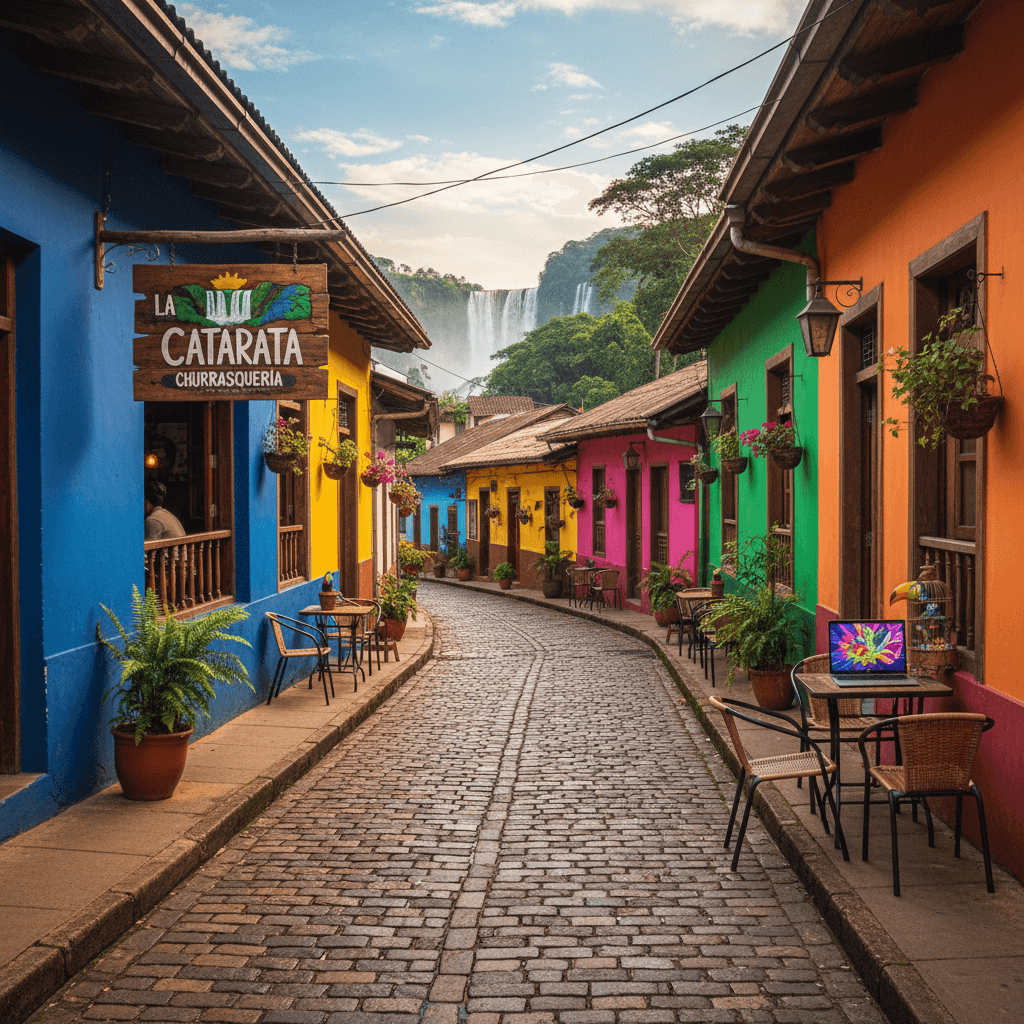
Puerto Iguazú
🇦🇷 Argentina
The Pulse of the Jungle
Puerto Iguazú isn't your typical digital nomad hub. While Buenos Aires thrives on late night tangos and endless coffee shop sessions, this border town moves to the rhythm of the subtropical rainforest. It feels like a frontier outpost that's been softened by tourism; it's humid, green, and surprisingly quiet once the tour buses leave the park for the day.
Living here means trading skyscraper views for the constant, distant hum of the world's most impressive waterfall system. It's a place for the nomad who wants to wake up, hike through a canopy of ferns, and then knock out a few hours of work before grabbing a $2 empanada. You won't find the polished infrastructure of Palermo Soho here, but you will find a pace of life that actually lets you breathe.
What It Costs to Live Here
Argentina remains incredibly affordable for those earning in stronger currencies, and Puerto Iguazú is even easier on the wallet than the capital. Most nomads find they can live comfortably on $1,500 to $2,000 per month, though you can certainly scrape by on much less if you're staying in hostels or eating like a local.
- Budget Tier ($800 to $1,200): Highlights include shared housing or basic guesthouses, relying on the local bus system ($0.50 per ride), and sticking to street food or local parrillas.
- Mid-Range Tier ($1,500 to $2,000): This covers a private studio or a nice 1BR apartment (roughly $300 to $400), regular dinners out at spots like La Rueda, and the occasional private taxi.
- Comfortable Tier ($2,500+): You'll be staying in top-tier lodges near the park entrance, eating $30 upscale meals every night, and booking private tours for every excursion.
The Neighborhood Breakdown
The town is compact, so you won't be dealing with grueling commutes. Most visitors and remote workers cluster in three main areas:
Downtown (Centro)
- The Vibe: The most practical spot for nomads. Everything is walkable, from the bus terminal to the grocery stores.
- Pros: Fast access to cheap eats and the shuttle to the falls.
- Cons: It can get noisy with tourist traffic and late-night bars.
The Falls Area (Parque Nacional)
- The Vibe: Immersive and lush. You're living inside the jungle.
- Pros: Incredible views and immediate access to hiking trails.
- Cons: Higher prices for accommodation and very few shops or services nearby.
Residential Outskirts
- The Vibe: Peaceful and local, often found on the road toward the airport.
- Pros: Much lower rent and a true sense of privacy.
- Cons: You'll definitely need a bike or a regular taxi contact like Guillermo to get around.
Connectivity and Work Culture
Let's be real: you aren't coming here for the coworking scene. There aren't any major dedicated hubs yet. Instead, nomads congregate in hotel lobbies or cafes near the bus terminal. Internet speeds in the center usually hover between 20 and 50 Mbps, which is plenty for Zoom calls, but it can get spotty if you head too far into the jungle outskirts.
Expats recommend grabbing a local SIM card from Claro or Movistar for about $5 a month to ensure you have a backup. If you want to skip the shop visit, an eSIM from Holafly works well here too. Just don't expect the lightning-fast fiber you'd find in a major tech city.
Safety and Logistics
Puerto Iguazú is generally safe, even for solo travelers. Petty theft like pickpocketing happens near the falls and the bus station, so keep your wits about you. Healthcare is accessible through private clinics like Farmacia Iguazú for minor issues, while the local public hospital (Marta Schwarz) handles emergencies. Most nomads pay around $50 a month for a private health plan that covers basic check-ups.
Getting around is simple. The local bus to the park is only $0.50, while a taxi to the airport usually costs around $15. While Uber is hit-or-miss, apps like Cabify are starting to gain some ground. For everything else, your feet will do most of the work.
Puerto Iguazú is one of those rare spots where your cost of living is tied directly to how close you want to be to the spray of the falls. While Argentina is currently a haven for those earning in USD, this border town operates on a slightly different rhythm than the capital. You aren't paying for the high speed urban infrastructure of Buenos Aires; you're paying for the privilege of having a world wonder in your backyard.
Monthly Budget Tiers
Living here is remarkably affordable if you can manage the local currency fluctuations. Most nomads find that their dollars go a long way, especially when sticking to local markets and avoid the high end jungle lodges.
- The Budget Nomad (USD 800 to 1,200): This covers a bed in a shared house or a basic hostel long stay, eating empanadas or "minutas" from street vendors, and using the local bus system to get around.
- The Mid Range Professional (USD 1,500 to 2,000): You'll secure a private studio apartment in the Centro, eat out at decent parrillas a few times a week, and rely on a mix of taxis and bus rides.
- The Comfortable Expat (USD 2,500+): This buys you a premium 1BR or a small house in the quieter outskirts, high end dining at places like The Argentine Experience, and private drivers for your excursions.
Housing and Neighborhoods
The rental market is split between tourist short stays and local residential leases. If you're staying for a month or more, skip the hotel sites and check Facebook Marketplace for "alquiler temporal."
Downtown / Centro
- Rent: USD 200 to 400 for a 1BR or studio.
- Vibe: Noisy and touristy but incredibly convenient. You can walk to the bus terminal, grocery stores, and the Feirinha for cheap Brazilian snacks.
- Best for: Solo nomads who don't want to deal with the logistics of a car.
Falls Area / Parque Nacional
- Rent: USD 500 to 900+ (mostly high end lodges).
- Vibe: Pure jungle immersion. It's quiet, scenic, and smells like damp earth and rainforest.
- Best for: Nature lovers with a bigger budget who don't mind the 20 minute commute for groceries.
Food and Daily Expenses
Dining out is a highlight here, especially if you stick to the local staples. A quick lunch of three empanadas will set you back about USD 1 to 2. A proper sit down dinner at a mid range restaurant usually lands between USD 10 and 20 per person, including a glass of Malbec.
Grocery prices are stable, but variety can be limited compared to big cities. Expect to pay about USD 5 for a local SIM card from Claro or Movistar with enough data for the month. If you prefer a seamless setup, eSIMs like Holafly are popular, though they cost a bit more at USD 10 to 20 for a 30 day plan.
Transport and Connectivity
Getting around is cheap but requires some patience. Local buses to the National Park cost around USD 0.50 per ride. Taxis are the standard for late nights or airport runs, with a trip from IGR airport to town costing roughly USD 15.
Internet is the one "hidden cost" to your productivity. While central fiber connections can hit 50 Mbps, they aren't universal. There are no dedicated coworking hubs yet, so most expats buy a day pass at a hotel lobby or a cafe near the terminal for about USD 5 to 10. It's a small price to pay for a stable connection in the middle of the subtropical rainforest.
Puerto Iguazú isn't your typical sprawling metropolis. It's a compact, humid frontier town where the jungle feels like it's constantly trying to reclaim the pavement. Because the town is small, your choice of neighborhood depends less on commute times and more on how close you want to be to a reliable empanada or the sound of rushing water.
The town layout is straightforward. Most of the action happens in the Centro, while the road leading out toward the National Park hosts more secluded, nature-oriented stays. Infrastructure can be a bit rugged; you'll find fiber internet in the core, but it gets spotty the further you drift into the canopy.
For Solo Travelers and Digital Nomads
If you're landing here solo, stick to Centro (Downtown). This area surrounds the main bus terminal and stretches down toward the Hito Tres Fronteras. It's the most walkable part of town, meaning you won't need to haggle with taxi drivers every time you want a coffee. Most nomads congregate in cafes near the terminal or use hotel lobbies as makeshift offices since dedicated coworking spaces are practically non-existent here.
- Rent: Expect to pay between USD 200 and USD 400 for a decent studio or private room in a guest house.
- Vibe: Social and convenient. You're steps away from Cervecería Patagonia for a post-work pint and close to the shuttle buses that head to the falls every 20 minutes.
- Local Tip: Stick to the blocks near Avenida Victoria Aguirre for the most stable power and internet connections.
For Families
Families usually prefer the Residential Outskirts or the quieter stretches along the Ruta 12 corridor. These areas offer more breathing room, larger gardens, and often private pools, which are a lifesaver during the sweltering January heat. While it's more peaceful, you'll likely need to rely on taxi apps or pre-booked drivers like Guillermo to get the kids into town for dinner.
- Rent: Larger houses or multi-bedroom apartments range from USD 500 to USD 800 per month.
- Vibe: Quiet and suburban. It feels much safer for kids to run around, away from the tourist traffic of the main terminal area.
- Healthcare: You're within a quick drive of Hospital Marta Schwarz for emergencies, and local pharmacies like Farmacia Iguazú are well-stocked for basic needs.
For Expats and Long-Term Settlers
Expats looking for a permanent slice of the rainforest often gravitate toward the Falls Area (Parque Nacional outskirts). This isn't inside the park itself, but rather the leafy zones on the approach. It's perfect if you want to wake up to the sound of toucans rather than motorbikes. You'll trade the convenience of the Centro for better air quality and a more immersive "jungle living" experience.
- Living Costs: Grocery prices remain consistent with the rest of town, with mid-range dinners at local spots costing around USD 15.
- Pros: Direct access to hiking trails and a significantly cooler microclimate thanks to the tree cover.
- Cons: You'll need a car or a reliable bike. Delivery apps like PedidosYa might not always service the deeper residential pockets here.
The Budget Perspective
If you're watching every peso, look for spots near the Port area or the secondary streets behind the main plaza. These areas are slightly more "local" and less polished than the main tourist drag, but they offer the best value for long-term stays. You'll find empanadas for USD 1 and can easily live on a budget of USD 800 to USD 1,200 per month if you're comfortable with shared housing and public buses.
Regardless of where you land, remember that Puerto Iguazú operates on "siesta time." Between 1:00 PM and 4:00 PM, the streets go quiet. Use that time to hunker down with your laptop in a cooled room, then head out when the sun dips and the town wakes back up for dinner.
Connectivity in the Jungle
Puerto Iguazú isn't Buenos Aires. You aren't going to find a high tech hub on every corner, but the infrastructure has improved significantly over the last few years. Most central rentals and hotels now offer fiber optic connections that clock in between 20 Mbps and 50 Mbps. While that is plenty for Zoom calls and uploading files, the reliability can dip during heavy subtropical rainstorms.
Mobile data is your best friend here. Local providers like Claro and Movistar have solid 4G and growing 5G coverage throughout the town center. You can pick up a local SIM for about USD 5, which usually includes enough data to get you through a month of messaging and maps. If you want to skip the kiosk lines, expats often recommend Holafly or BreezeSIM for an eSIM setup before you even land at IGR airport.
Public WiFi is rare outside of your accommodation. Don't count on finding open networks in the plazas or at the falls. If you are working from the National Park, expect your signal to drop to 3G or disappear entirely once you get deep into the trails near the Devil's Throat.
The Coworking Scene
If you are looking for a dedicated WeWork style office, you will be disappointed. Puerto Iguazú doesn't have a major established coworking brand yet. Instead, the nomad community relies on hotel business centers and "work friendly" cafes. Most nomads find that the larger hotels near the Falls Area or Downtown are happy to sell day passes for their common areas.
- Hotel Lobby Passes: Expect to pay between USD 5 and USD 10 (roughly ARS 5,000 to 10,000) for a day of desk space, reliable WiFi, and usually a coffee or two included in the price.
- Cafe Culture: There is a growing trend of "laptoppers" in the cafes near the main bus terminal. These spots are great for a couple of hours of work, but they can get noisy with the constant flow of tourists.
- The Nomad Vibe: Since there isn't a central hub, you will have to be proactive. Travelers often use WhatsApp groups or Facebook expat communities to organize informal meetups at local spots.
Digital Nomad Essentials
Working from a border town requires a few specific tools to keep your productivity high. Power surges can happen during summer storms, so a good surge protector is a smart investment if you are staying long term. Because you are so close to the Brazilian border, your phone might occasionally roam onto Brazilian towers, which can mess with your data plan; keep your "Roaming" settings in check.
- VPN: Using ExpressVPN or NordVPN is highly recommended when hopping between hotel and cafe networks to keep your data secure.
- Power: Argentina uses Type C and Type I plugs. Most modern laptops handle the 220V voltage fine, but double check your bricks.
- Backups: If your job requires heavy bandwidth, try to get your "deep work" done in the mornings. The internet tends to get a bit more sluggish in the evenings when the rest of the town hops online to stream movies.
Overall, Puerto Iguazú is better suited for the "slowmad" who wants to spend their mornings at the world's most impressive waterfalls and their afternoons catching up on emails. It is a place to trade high speed urban amenities for a desk with a view of the rainforest.
Street Safety and Local Vibes
Puerto Iguazú is significantly quieter and safer than the grit of Buenos Aires. Most nomads find the town has a relaxed, small community feel where you can walk comfortably during the day. However, it is a major tourist hub, which naturally attracts petty crime. Pickpocketing is the most common issue, particularly around the Terminal de Ómnibus and the crowded walkways of the Iguazú National Park. Keep your phone tucked away and don't hang your bag on the back of your chair while eating at downtown cafes.
Expats generally recommend sticking to the central Centro area or the well lit tourist corridors after dark. Avoid the unlit outskirts of town or isolated trails once the sun goes down. The border zones near the Tancredo Neves Bridge can get a bit chaotic with traffic and informal trade; it is best to pass through these areas quickly rather than lingering. If you are heading out for dinner, stick to the main drags like Avenida Victoria Aguirre where there is plenty of foot traffic and light.
Healthcare Infrastructure
Healthcare in Puerto Iguazú is functional but basic. For minor ailments or sudden illnesses, the Hospital Marta Schwarz (often referred to as the public hospital) handles emergencies. While public care is technically free, it can be slow and under-resourced. Most digital nomads prefer using private clinics for non-emergencies. Clinica Iguazú is a common choice for travelers needing a quick consultation or lab work.
Pharmacies are plentiful and easy to find. Local pharmacies like Farmacia Yguazú are reliable spots in the center for over the counter meds or filling prescriptions. Many medications that require a script in the US or Europe are available over the counter here, though you should always consult with a pharmacist first. Expect to pay around ARS 70,000-100,000 (~USD 50) for a private doctor's visit if you don't have local insurance.
Insurance and Emergency Contacts
Since the local facilities aren't equipped for complex surgeries or long term intensive care, having robust travel insurance is a non-negotiable part of your setup. Most nomads use SafetyWing or World Nomads, as these plans often cover medical evacuation to better facilities in Buenos Aires or even back home if something serious happens. Keep your policy number and the local emergency digits saved in your phone.
- Police: 101
- Ambulance/Medical Emergencies: 107
- Tourist Police: Look for officers in high-visibility vests near the Hito Tres Fronteras.
Health Risks and Prevention
The subtropical climate brings a few specific health considerations you won't deal with in the pampas. Mosquito borne illnesses like Dengue fever can flare up during the rainy season from November to March. Use a high DEET repellent, especially when trekking through the jungle paths. While the tap water in Puerto Iguazú is treated, many travelers have sensitive stomachs and prefer sticking to bottled water for drinking to avoid any downtime. You'll find 2-liter bottles at any kiosco for about ARS 2,000.
The sun in Misiones is incredibly intense. Even on overcast days, the humidity traps heat and the UV index stays high. Expats suggest buying sunscreen before you arrive in Argentina, as imported brands can be surprisingly expensive in local shops, often costing USD 20 or more for a small bottle.
Navigating the Gateway to the Falls
Puerto Iguazú is a compact town where the pace of life slows down significantly compared to the frantic energy of Buenos Aires. Because the town is built on a relatively small footprint, you can handle most of your daily errands on foot if you stay near the town center. It is a place where you will spend more time looking at trail maps than subway maps.
Walking and the Town Center
The Centro area, particularly around the bus terminal and the main dining strips, is highly walkable. Most nomads find that staying within a ten block radius of the Terminal de Ómnibus allows them to reach grocery stores, pharmacies like Farmacia Iguazú, and local cafes without ever needing a vehicle. The streets are generally safe during the day, though you should stick to well lit areas at night and keep an eye on your belongings near the high traffic tourist zones.
Public Buses: The Rio Uruguay Line
For getting to the main event, the Iguazú National Park, the local bus is your best friend. The Rio Uruguay bus line runs frequently from the main terminal directly to the park entrance. It is reliable, cheap, and used by locals and travelers alike.
- Frequency: Buses typically run every 20 to 30 minutes.
- Cost: A one way ride is approximately ARS 1,200-7,000 (~USD 1-5).
- Route: The bus makes several stops along Avenida Victoria Aguirre before heading out to the falls.
Taxis and Private Drivers
If you are heading to the airport or the Brazilian side of the falls, taxis are the standard choice. While ride hailing apps like Uber are technically present, they are notoriously unreliable in this region with very few drivers available. Most expats recommend skipping the apps and using the official taxi stands or booking a private driver.
- Airport Transfers: A taxi from Cataratas del Iguazú International Airport (IGR) to downtown usually costs around USD 50-60 or ARS equivalent (~80,000-85,000 ARS) for a 20 minute ride.
- Local Hops: Short trips within the town limits typically range from ARS 5,000 to 10,000 (USD 5 to 10).
- Private Drivers: For a more seamless experience, many long term visitors pre book drivers like Guillermo for full day excursions to ensure they aren't stranded at remote trailheads.
Biking and Alternative Transport
Cycling isn't a primary mode of transport here due to the intense subtropical heat and humidity, which can make a simple bike ride feel like a marathon. However, you can find bike rentals near some of the larger hotels for around ARS 5,000 (USD 5) per day if you want to explore the flatter residential outskirts. Once you are inside the National Park, you will likely use the Tren de la Selva (Rainforest Train). It is an ecological train included in your park entry fee that shuttles visitors between the main trail circuits and the Garganta del Diablo station.
Crossing the Border
Puerto Iguazú is part of the Triple Frontera, where Argentina, Brazil, and Paraguay meet. If you want to visit the Brazilian side of the falls (Foz do Iguaçu), you can take an international bus from the main terminal. Just remember that border formalities apply. You will need to hop off the bus with your passport, clear customs, and sometimes wait for the next bus to continue the journey. It is a bit of a process, so many nomads prefer hiring a taxi for the day to handle the border crossing logistics more quickly.
Transport Cost Summary
- Local Bus Ride: ARS 1,200-7,000 (~USD 1-5)
- Short Taxi Trip: ARS 5,000 to 10,000 (USD 5 to 10)
- Airport Transfer: around USD 50-60 or ARS equivalent (~80,000-85,000 ARS)
- Daily Bike Rental: ARS 5,000 (USD 5)
The Linguistic Landscape
In Puerto Iguazu, Spanish is the undisputed king. You'll hear the distinct Rioplatense dialect, famous for that melodic, Italian-like cadence and the "sh" sound for double Ls and Ys. While this is a major tourist hub, don't expect the high level of English you might find in the chic bars of Buenos Aires. Beyond the front desks of high-end hotels like the Gran Melia or the main ticket counters at Iguazu National Park, language barriers are a real part of the daily experience.
Most nomads find that locals are incredibly patient and used to gesturing their way through a conversation. However, once you step away from the falls and into a local parilla or a small grocery store in the Centro, basic Spanish becomes your most valuable tool. If your skills are rusty, download the offline Spanish pack on Google Translate or DeepL. You'll need it for everything from negotiating a taxi fare to asking for the WiFi password at a cafe.
Digital Connectivity and SIM Cards
Staying connected in the subtropical rainforest is easier than it used to be, but it still requires a bit of strategy. For a seamless transition, many expats recommend grabbing an eSIM from Holafly or BreezeSIM before you even land. It saves you the headache of hunting down a physical shop while carrying your luggage, and it's perfect for keeping WhatsApp and Instagram running the moment you cross the border.
If you prefer a local physical SIM to save money, head to a Claro or Movistar shop in the town center. You can usually get set up with a decent data package for around 5,000-15,000 ARS (~USD 3-10) per month. Just bring your passport, as you'll need it for registration. While 4G and 5G coverage is solid within the town limits, signals often drop to nothing once you get deep into the park trails or out toward the more remote residential outskirts near the airport.
Essential Phrases and Social Etiquette
A few key phrases will get you a lot of mileage here. Beyond the standard "Hola" and "Gracias," keep these in your back pocket:
- ¿Cuánto cuesta?: How much does it cost? (Vital for markets and taxis)
- ¿Tenés WiFi?: Do you have WiFi?
- La cuenta, por favor: The check, please.
- ¿Aceptan tarjeta?: Do you accept cards? (Many smaller spots are cash-only)
Socially, the vibe is relaxed. In Argentina, a single kiss on the right cheek is the standard greeting, even in semi-professional settings. When dining out, a 10% tip is the local norm if the service was good. Since the nomad community here is smaller and less organized than in the capital, you won't find many formal meetups. Most travelers socialize by joining group tours of the falls or hanging out in the common areas of hostels like Nomads Hostel.
Working and Communication Specs
- Internet Speeds: Expect 20 to 50 Mbps in central areas. Fiber is becoming more common in downtown hotels, but it can be spotty during heavy tropical storms.
- Coworking: Dedicated spaces are scarce. Most nomads treat cafes near the bus terminal as their makeshift offices. Budget about 5,000 to 10,000 ARS for a day's worth of coffee and snacks while you work.
- Mobile Data: Very affordable at roughly 5 USD for a month of heavy usage, provided you use a local carrier.
- Emergency Contacts: Dial 101 for police and 107 for an ambulance. Having these saved can save you a lot of stress in a pinch.
The Subtropical Reality
Puerto Iguazú doesn't do "mild" very often. Because it's tucked into the upper corner of Misiones province, you're looking at a humid subtropical climate that stays lush and green year round. For digital nomads, this means your biggest battle won't be the cold, but rather the humidity and the sudden, heavy downpours that define the rainforest experience.
The summer months of January and February are the most intense. Temperatures regularly climb to 35°C (95°F), and the humidity makes it feel significantly hotter. While the falls are incredibly powerful during this rainy season, working from a cafe without strong air conditioning can be a struggle. Most long term travelers find the heat draining if they're trying to maintain a standard 9 to 5 schedule.
The Sweet Spot: May to September
If you have the flexibility, aim for the Argentine autumn and winter. Between May and September, the weather settles into a much more manageable rhythm. Daytime highs hover between 15°C and 25°C (59°F to 77°F), which is perfect for hiking the lower and upper circuits of the falls without ending the day drenched in sweat.
The nights can get surprisingly crisp, dropping down to 10°C (50°F). Since many local apartments and budget hostels are built for heat rather than insulation, it's smart to pack a decent hoodie or a light jacket. This period also sees less rainfall, meaning you're less likely to have your outdoor "office days" rained out.
Navigating the Rainy Season
Rain in Puerto Iguazú isn't usually a drizzly, all day affair. Instead, it comes in massive, tropical bursts. The wettest months are typically November through March. If you're visiting during this window, your packing list needs to be specific:
- Dry bags: Essential for protecting your laptop and camera gear while moving between your accommodation and the park.
- Breathable fabrics: Stick to linen or technical gear. Denim becomes heavy and uncomfortable the moment the humidity spikes.
- Reliable footwear: The red soil in Misiones turns into a slick, staining mud when it rains. Leave your white sneakers at home.
Crowds and Timing
Beyond the thermometer, the "best" time to visit is often dictated by the Argentine school calendar. The town gets incredibly crowded during July (winter holidays) and from late December through January. During these peaks, prices for short term rentals on platforms like Booking.com can spike, and the lines for the "Garganta del Diablo" train can be hours long.
Travelers who want a quiet experience recommend the shoulder seasons, specifically April or October. You'll get moderate prices, decent weather, and enough space at the local cafes to actually snag a table near a power outlet. If you're planning to stay for a month or more, arriving in March allows you to catch the end of summer while settling in just as the tourist madness starts to fade.
Quick Seasonal Breakdown
- Peak Summer (Dec to Feb): Hot, humid, and rainy. Highs of 35°C. Great for seeing the falls at max volume, but tough for those sensitive to heat.
- Autumn (March to May): Transition period. Humidity drops and the jungle is vibrant. Highly recommended for nomads.
- Winter (June to August): Dry and mild. Highs of 20°C. Best for hiking, though you'll need a jacket for the evening.
- Spring (Sept to Nov): Increasing rain and heat. Beautiful butterfly season in the park, but keep an eye on the weather forecast for storms.
Survival Basics
Puerto Iguazú is a small, humid outpost that runs at a much slower pace than the chaotic streets of Buenos Aires. Most nomads arrive for the falls and stay for the low cost of living, but you have to be okay with a bit of "frontier" infrastructure. Expect things to break, the internet to flicker during storms, and shops to close for siesta in the afternoon heat.
Cost of Living
Argentina remains incredibly affordable for those earning in foreign currency, though inflation is a constant conversation topic. You can live comfortably here on $1,500 to $2,000 USD per month, while budget travelers often scrape by on $800 to $1,200 USD.
- Studio/1BR Apartment: Central areas run between $200 and $400 USD per month.
- A Quick Meal: Street empanadas or a choripán will cost you about $1 to $2 USD.
- Mid-range Dinner: A sit down meal with wine usually lands between $10 and $20 USD per person.
- Local Transport: Public buses to the park are a steal at roughly $0.50 USD.
Where to Set Up Camp
The town is small enough that your choice of neighborhood really dictates your access to caffeine and reliable power. Most nomads stick to the Centro (Downtown) area near the bus terminal. It is walkable, packed with cheap eats, and has the most reliable cell signals, though it can get noisy with tourist crowds during peak season.
If you want peace, the Falls Area near the park entrance is stunning and immersive, but you will pay a premium for lodging and have fewer grocery options. For those planning a stay of three months or more, the residential outskirts near the airport offer larger homes and lower rent, but you'll need to rely on taxis or a rental bike to get into town.
Internet and Productivity
Don't expect the lightning fast fiber of Palermo. Most central hotels and rentals offer speeds between 20 and 50 Mbps. It is enough for Zoom calls, but you might want a backup plan. There aren't any dedicated "big brand" coworking spaces here yet. Most nomads work from hotel lobbies or cafes near the terminal, often paying a small day pass fee of $5 to $10 USD to use the facilities.
- Local SIMs: Grab a Claro or Movistar card for about $5 USD a month.
- eSIMs: If you want to hit the ground running, Holafly or BreezeSIM are the preferred choices for hassle free data.
- Power: Keep your devices charged; subtropical storms can occasionally cause brief outages.
Getting Around
Walking is your best bet in the town center. For everything else, the local bus system is surprisingly efficient for getting to the Iguazú National Park. If you need a car, Uber is notoriously spotty here. Instead, download Cabify or stick to the traditional radio taxis. A taxi from the airport (IGR) typically costs around $15 USD for the 20 minute ride into town.
Safety and Health
Puerto Iguazú is generally safer than the big cities. Violent crime is rare, but petty theft happens, especially around the bus terminal and the falls. Keep your bag in front of you and avoid walking alone on unlit trails after dark. For medical needs, Hospital Madariaga handles emergencies, but most expats use private clinics like Farmacia Iguazú for routine issues. Make sure your SafetyWing or similar travel insurance is active before you arrive.
Practical Tips
- Money: Use Wise or Revolut for transfers. While cards are becoming more common, cash is still king for better exchange rates and small shops.
- Best Time to Visit: Aim for May through September. The weather is mild and the crowds are thinner. Avoid January and February unless you enjoy 35°C heat and heavy rain.
- Language: English is limited to high end hotels. Download DeepL or the offline version of Google Translate to navigate daily life.
- Tipping: A 10% tip at restaurants is standard and appreciated.
Need visa and immigration info for Argentina?
🇦🇷 View Argentina Country GuideOff the Radar
Pioneer territory