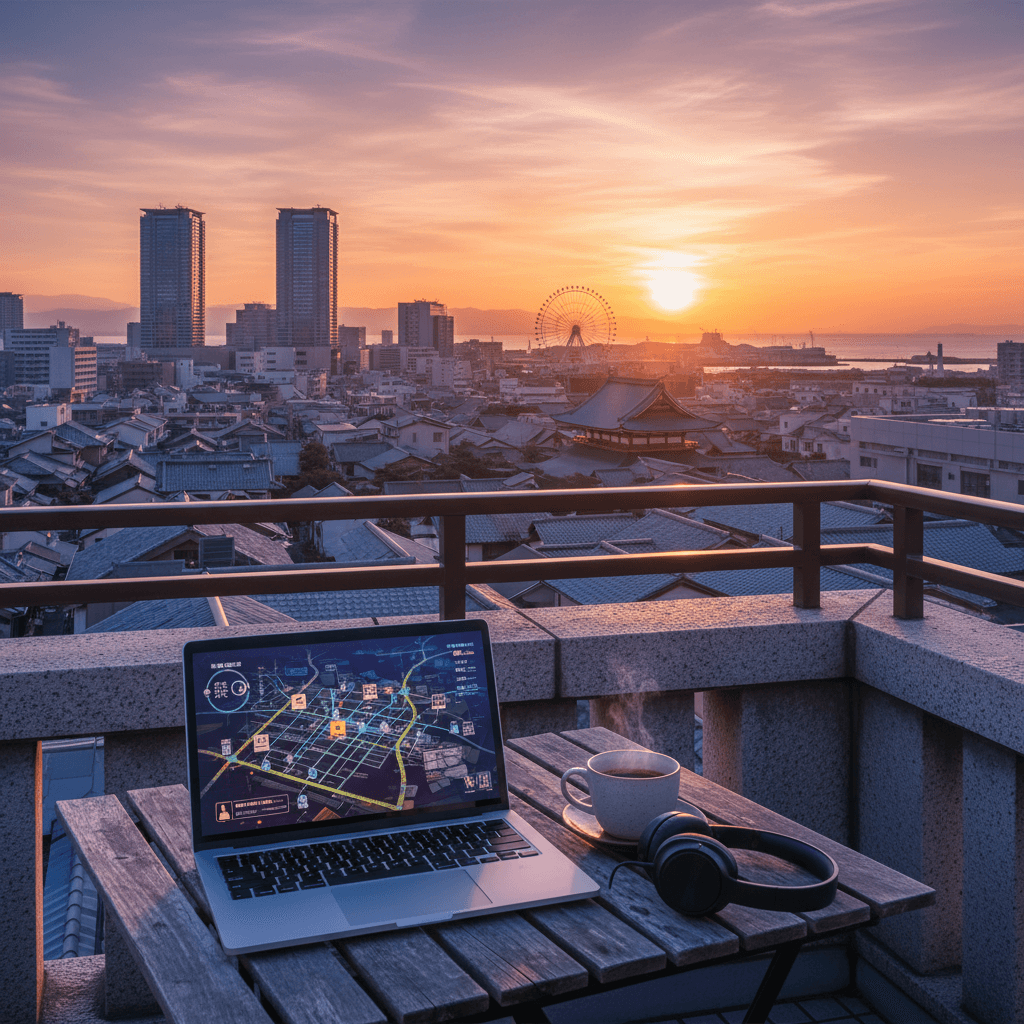
Osaka
🇯🇵 Japan
If Tokyo is Japan's polished, high tech office, Osaka is the loud, neon lit kitchen where everyone actually wants to hang out. It is a city that trades formal bows for belly laughs and replaces stiff etiquette with a culture centered entirely around kuidaore, the local philosophy of eating until you drop. For nomads and expats moving here in 2025 or 2026, the vibe is noticeably looser and more approachable than the capital. You'll find that locals are quicker to strike up a conversation at an izakaya, and the overall pace of life feels human rather than mechanical.
The Daily Rhythm
Living in Osaka means waking up in a quiet, lantern lit neighborhood, grabbing a coffee at the Brooklyn Roasting Company in Kitahama, and spending your afternoon working alongside other creatives. The city doesn't demand the same level of performance that Tokyo does. You can wander through the retro, slightly gritty streets of Shinsekai for kushikatsu skewers or watch the sunset from the Umeda Sky Building without feeling like you're trapped in a tourist treadmill. It is a place where modern skyscrapers sit right next to nostalgic, post war alleyways that smell like dashi and grilled octopus.
Why Nomads Choose Osaka
The primary draw for the remote work crowd is the balance of affordability and accessibility. With the yen hovering around ¥157-159 to the USD, your budget goes significantly further here than in other global hubs. Most nomads find that a monthly budget of ¥250,000 to ¥350,000 (roughly $1,700 to $2,300) buys a high quality of life, including a modern studio in a central ward like Fukushima-ku and plenty of nights out in Dotonbori.
- Connectivity: Reliable WiFi is standard in Airbnbs and dedicated coworking spots like Osakan Space, though you will want a Jasumo eSIM or a Pocket WiFi for heavy uploads and navigating the subway.
- The Social Scene: It is easy to build a community through weekly nomad meetups, language exchanges, or simply becoming a regular at a local neighborhood soba shop.
- The Launchpad Factor: You are 30 minutes from the temples of Kyoto, the deer of Nara, and the waterfront of Kobe. It makes for an incredible home base if you want to see the rest of Japan without constantly packing a suitcase.
The Emotional Experience
There is a specific kind of magic in Osaka's chaos. It is the sound of vendors shouting in the Kuromon Market, the glow of the Glico Man sign reflecting in the canal, and the feeling of safety even when wandering home at 2:00 AM. You'll likely find that while the language barrier exists, the locals' willingness to help, often using a mix of broken English and enthusiastic gestures, bridges the gap quickly. It is a city that feels lived in, messy, and incredibly welcoming. You don't just visit Osaka; you join the party.
Cost of Living Breakdown
- Budget Nomad: ¥150,000 to ¥200,000 per month. This covers a modest studio, plenty of ¥500 street food meals, and a basic coworking membership.
- Mid-range Living: ¥250,000 to ¥350,000 per month. Expect a modern 1BR apartment, frequent dinners at mid-range izakayas, and a full transit pass.
- Comfortable/High-end: ¥400,000+ per month. This allows for upscale housing in Umeda, premium coworking spaces, and high end omakase dining.
The trade off for this vibrant lifestyle is a bit of grit and a lot of noise in the popular districts. If you need absolute silence and clinical cleanliness, the neon heart of Namba might overwhelm you. But for those who want a city with a soul, a sense of humor, and the best street food on the planet, Osaka is hard to beat.
The Weak Yen Advantage
Living in Osaka right now feels like a life hack for anyone earning in USD, EUR, or GBP. With the yen hovering around ¥157-159 to the dollar, your purchasing power goes significantly further here than in Tokyo or even many mid-sized European cities. You can comfortably maintain a high quality of life without the constant price anxiety typical of major global hubs.
Most solo nomads find they can live well on ¥250,000 to ¥350,000 (roughly $1,700 to $2,300) per month. This mid-range budget covers a modern studio, daily meals out, and a dedicated coworking desk. If you're looking to save, a budget of ¥150,000 to ¥200,000 ($1,000 to $1,300) is doable if you stick to local studio apartments and lean into the city's legendary street food scene.
Housing and Neighborhood Costs
Rent is your biggest variable, and it fluctuates based on how close you want to be to the neon lights of the Midosuji subway line. A modern studio or 1BR apartment generally runs between ¥70,000 and ¥120,000. While Airbnbs are convenient for short stays, expats often recommend platforms like Sakura House or Suumo for stays extending beyond a month to get better rates.
- Umeda: Expect to pay a premium here. It's the business and transport heart of the city, with upscale 1BR units often exceeding ¥120,000.
- Fukushima-ku: A favorite for nomads who want a local feel without the Umeda price tag. You'll find modern studios for around ¥95,000.
- Tennoji: This area offers some of the best value for money. It's slightly further from the nightlife hubs but very affordable, with rents starting around ¥70,000.
Eating Your Way Through "Japan's Kitchen"
Osaka's culture is built on kuidaore, which literally translates to "eat until you drop." Fortunately, doing so won't break the bank. You can grab a tray of takoyaki or okonomiyaki from a street vendor for ¥500 to ¥1,000. These aren't just snacks; they're substantial meals that define the city's culinary identity.
For a sit-down dinner at a mid-range izakaya or a specialty soba shop, expect to spend between ¥1,500 and ¥3,000. If you're celebrating, high-end omakase experiences start around ¥10,000, which is a steal compared to similar quality in New York or London. Most nomads find that a monthly food budget of ¥60,000 to ¥90,000 allows for plenty of variety without much cooking at home.
Work and Connectivity
While many cafes like Brooklyn Coffee Roasters are nomad-friendly, public WiFi can be spotty for heavy uploads or video calls. Most long-termers invest in an eSIM via providers like Jasumo or a Pocket WiFi device to stay connected. For a stable workspace, Osakan Space in Honmachi is a top pick, offering monthly passes for about ¥18,000 and a built-in community of local and international professionals.
Transport and Utilities
The city is incredibly walkable, but you'll inevitably use the subway and JR lines to explore. Budgeting ¥10,000 to ¥15,000 for your monthly ICOCA card balance is usually enough to cover city travel and the occasional day trip to Kyoto or Nara. For quick errands, Docomo Bike rentals are a great deal at ¥150 per 30 minutes. Utilities for a standard apartment usually average around ¥15,000, though this can spike in the humid summer months when the air conditioning is running 24/7.
For Digital Nomads & Creatives: Nakazakicho and Fukushima-ku
If you want to escape the neon glare for something more soulful, Nakazakicho is where you'll find your tribe. It survived the wartime bombings, so the vibe is purely nostalgic with lantern-lit alleys and repurposed old houses. Most nomads head here for the quiet cafe culture; it's artistic and walkable, though it gets a bit crowded with weekend visitors looking for the perfect Instagram shot. For those who need a dedicated workspace, Brooklyn Roasting Company in Kitahama is a frequent haunt for the remote work crowd and is just a short trip away.
Fukushima-ku is the practical alternative for those staying longer than a month. It feels like a real neighborhood rather than a tourist hub. You'll find plenty of izakayas and cafes with reliable WiFi, and the rents are significantly more palatable than the city center. Expect to pay around ¥70,000 to ¥90,000 for a decent studio here. It's a bit further from the main nightlife, but the local food scene is so good you probably won't care.
- Top Perk: Authentic local interaction and lower cost of living.
- Coworking: Osakan Space in nearby Honmachi is the gold standard for community, costing about ¥18,000 for a monthly pass.
- The Trade-off: You'll need to rely on your own data or a Pocket WiFi, as public signals can be flaky for video calls.
For Expats & Business Professionals: Umeda and Kyobashi
Umeda is the heart of Osaka's modern skyline and its primary transport hub. If you're moving here for a corporate gig or just want to be in the middle of everything, this is it. You have the Umeda Sky Building for views and every train line you could ever need for weekend trips to Kyoto or Kobe. Living here isn't cheap; modern 1BR apartments often start north of ¥120,000, but you're paying for convenience and high-end amenities.
For something with more grit and character, Kyobashi is a favorite for expats who want an "old school" Osaka experience. It's famous for stand-up soba shops and narrow alleyways. It's less international than Umeda, so you'll get to practice your Japanese daily. It's a fantastic spot if you want to be close to the action without living in a glass tower.
- Rent: ¥95,000 to ¥150,000 depending on the building's age.
- Connectivity: Best in the city; you can be at the airport or in a different prefecture in under an hour.
- Vibe: Fast-paced, professional, and polished in Umeda; raw and authentic in Kyobashi.
For Families: Tennoji
Tennoji has seen a massive glow-up recently. It manages to balance green space with urban convenience, making it the go-to for families. Tennoji Park is a massive plus for kids, and the local markets feel safe and welcoming. It's much quieter than the northern hubs, which means better sleep and less stressful grocery runs. You're further from the Dotonbori nightlife, but for most families, that's a feature, not a bug.
- Living Costs: Mid-range; family-sized apartments are more available here than in the cramped city center.
- Atmosphere: Serene, spacious, and residential.
- Transport: Excellent access to the JR Loop Line and easy routes to Nara for deer-feeding day trips.
For Solo Travelers & Short Stays: Dotonbori and Shinsekai
If you're only in town for a few weeks and want the "Greatest Hits" experience, Dotonbori is the epicenter. You'll be steps away from the Glico Man sign, endless takoyaki stalls, and the city's best networking bars. It's loud, it's crowded, and it's expensive, but you'll never be bored. It's the easiest place to meet people if you're traveling solo, as the bars are packed with both locals and travelers every night of the week.
Shinsekai offers a different kind of energy. It was built in 1912 to look like Paris and New York, and today it's a retro wonderland of kushikatsu (deep-fried skewers) and neon. It's a bit rougher around the edges than Umeda, but it's incredibly lively. It's perfect for foodies who want to live the kuidaore lifestyle, which literally means eating until you drop.
- Daily Spend: Budget ¥1,500 to ¥3,000 for mid-range meals; street food snacks are usually ¥500 to ¥1,000.
- Stay: High turnover of Airbnbs and boutique hotels.
- Warning: Watch your wallet in heavy Dotonbori crowds, though crime remains very low.
Staying Connected
While Japan is a global tech leader, Osaka's public WiFi can be surprisingly hit or miss. You'll find free hotspots in major hubs like Dotonbori or Umeda Station, but these networks often struggle with heavy uploads or stable video conferencing. Most nomads here quickly learn that relying on public signals is a recipe for a dropped Zoom call.
For a reliable setup, skip the hunt for open networks and grab an eSIM or a Pocket WiFi device. Jasumo is a favorite for nomads who need high data caps without the headache of a long term contract. Expect to pay around ¥10,000 to ¥15,000 per month for a solid data plan. This isn't just for work; you'll need that constant connection to navigate the complex subway exits and translate menus on the fly.
If you're working from your rental, most modern apartments and Airbnbs in neighborhoods like Fukushima-ku provide high speed fiber. However, it's always smart to ask for a speed test screenshot before booking, especially if your job involves moving large files.
Top Coworking Spots
Osaka has a more social, gritty feel than Tokyo, and the coworking scene reflects that. You won't just find desks; you'll find communities that actually talk to each other.
- Osakan Space: Located in Honmachi, this is the gold standard for community. It's not just a place to plug in; they host regular lunches, workshops, and even potlucks. A monthly pass costs about ¥16,500 (or ¥14,300 for continuing members), which is a steal for the networking opportunities alone.
- The Hub: With multiple locations across the city including Umeda and Shinsaibashi, this is a more corporate, polished option. It's perfect if you need a professional backdrop for client calls or a quiet, distraction free environment.
- WeWork: You'll find these in the major business districts. They're the most expensive option but offer the most consistency if you're already used to their global ecosystem.
Cafe Culture for Nomads
If you prefer the hum of a coffee shop, Osaka's cafe scene is exceptional. The city is much more relaxed about laptop users than Kyoto or Tokyo, provided you aren't overstaying a single espresso for four hours.
Brooklyn Roasting Company in Kitahama is a legendary nomad haunt. It's spacious, looks over the river, and you're almost guaranteed to spot other people working on MacBooks. The WiFi is solid and the atmosphere is energizing. For a more artistic vibe, head to Nakazakicho. This neighborhood is full of renovated traditional houses turned into cafes. While the WiFi in these smaller spots can be spotty, they're perfect for deep work sessions that don't require a heavy internet lift.
Practical Tech Tips
- Power Outlets: Japan uses Type A and B plugs (two flat pins). Most outlets are non grounded (two pins only), so if your laptop charger has a third grounding pin, bring an adapter.
- Battery Life: Between Google Maps and translation apps, your phone battery will drain fast. Locals and nomads alike carry portable power banks; you'll see charging rental stations like ChargeSPOT in most convenience stores.
- Data Apps: Download the Japan Taxi or GO apps. Even with the great trains, sometimes you'll need a late night ride after a long session at the office, and these apps let you bypass the language barrier.
Overall, your monthly tech and workspace budget should land between ¥20,000 and ¥35,000. This covers a dedicated coworking desk and a high speed mobile data plan, ensuring you can work from a park in Tennoji or a high rise in Umeda without losing your connection.
A Safe Haven in the Kansai Region
Osaka consistently ranks as one of the safest major cities on the planet. For most nomads and expats, the biggest safety concern isn't violent crime, it's remembering not to leave your laptop unattended in a cafe, though even then, locals often find and return lost items. You can comfortably walk through neighborhoods like Nakazakicho or Fukushima-ku at 2:00 AM without a second thought.
While the city is incredibly secure, keep your wits about you in heavy tourist corridors. In the neon-soaked crowds of Dotonbori, petty pickpocketing can occasionally happen, though it remains rare. If you're exploring the retro streets of Shinsekai, you might notice a grittier atmosphere compared to the polished glass of Umeda, but it's more about character than actual danger. Most travelers find the "sketchiest" parts of Osaka are still significantly safer than the average metropolitan area back home.
World-Class Healthcare Access
If you get sick, you're in good hands. Japan's healthcare system is top-tier, and Osaka is home to massive, high-tech facilities like Osaka University Hospital. For non-emergencies, expats recommend looking for "Clinics" (kurinikku) rather than heading straight to a large hospital, as the wait times are shorter and the care is more personalized.
Language can be a hurdle at smaller neighborhood doctors. To bridge the gap, look for facilities in Umeda or Namba that specifically advertise English-speaking staff. Many digital nomads use the Himawari search tool or local expat Facebook groups to find vetted, English-friendly practitioners for everything from dental work to mental health support.
- Emergency Numbers: Dial 119 for an ambulance or fire services; dial 110 for the police.
- Pharmacy Finds: Look for Kokumin or Daikoku Drug chains. They are everywhere and stock everything from basic painkillers to high-end skincare.
- Payment: While many clinics now take credit cards, some smaller offices remain cash-only. Always keep ¥10,000 to ¥20,000 on hand just in case.
Practical Health Tips for Nomads
The biggest health challenge for newcomers is often the "Osaka Summer." During July and August, temperatures frequently hit 35°C with crushing humidity. Heatstroke is a legitimate risk. Do what the locals do: carry a portable fan, stay hydrated with Pocari Sweat from the ubiquitous vending machines, and plan your deep-work sessions in air-conditioned coworking spots like Osakan Space during the peak afternoon heat.
If you have specific prescriptions, bring a solid supply with you. Japan has strict rules about importing certain medications, especially stimulants for ADHD or specific painkillers. Check the Yunyu Kakunin-sho requirements before you fly to ensure your meds won't be confiscated at Kansai International Airport (KIX). For minor ailments like seasonal allergies or a cold, the pharmacists at the local "drugstore" chains are usually very helpful, even if you have to use Google Translate to describe your symptoms.
Safety Apps and Resources
Before you settle in, download the Safety tips app by the Japan Tourism Agency. It provides real-time alerts for earthquakes or extreme weather in English. Since Osaka is a coastal city, it's also smart to glance at the evacuation maps posted in your local train station or ward office. It's unlikely you'll need them, but knowing the "Tsunami Evacuation Area" signs gives you that extra peace of mind while you're enjoying your ¥500 takoyaki by the river.
The Pulse of the City: Trains and Subways
Osaka’s transit system is a marvel of efficiency, though it can feel like a maze during your first week. The city is primarily served by the JR Loop Line, which circles the central districts, and a comprehensive subway network that connects every major neighborhood. Most nomads find that once they get the hang of the Midosuji Line (the red one), which runs north to south through Umeda, Shinsaibashi, and Namba, the city suddenly feels much smaller.
For payment, skip the paper tickets. You'll want an ICOCA or Suica card immediately. These are "tap-and-go" cards you can load with yen at any station. They don't just work for trains; you can use them at 7-Eleven, vending machines, and even some lockers. Expect to spend between ¥10,000 and ¥15,000 per month on transit if you're commuting to a coworking space like Osakan Space daily.
If you're planning a day trip to Kyoto or Nara, the trains are seamless. You can be in Kyoto in 30 minutes for about the price of a fancy coffee. For the airport, the JR Haruka Express is the gold standard, getting you from Kansai International (KIX) to Osaka Station in about 75 minutes for ¥1,800.
Life on Two Wheels
While the trains are great, Osaka is surprisingly flat and bike-friendly. In neighborhoods like Nakazakicho or Fukushima-ku, locals prefer cycling over the subway for short hops. It's often faster than walking to a station, waiting for a train, and walking to your destination.
- Docomo Bike Share: This is the go-to for most expats. It costs about ¥165 per 30 minutes. You'll see the red electric bikes parked in hubs all over the city.
- Monthly Rentals: If you're staying for more than a month, check local shops for "mamachari" (city bikes) rentals. They're affordable and come with a built-in lock and basket for your groceries.
- Parking: Don't just leave your bike on the sidewalk. Osaka is strict about illegal parking, and your bike will be impounded. Always look for designated "Churinjo" (bicycle parking lots).
Apps and Navigation
You’ll be glued to your phone for the first few days. Google Maps is incredibly accurate for train platform numbers and exit letters, which are vital in massive hubs like Umeda Station. If you need a car, don't look for Uber; it's not really a thing here for standard rides. Instead, download the GO or Japan Taxi apps. These connect you with professional taxi drivers, and while they're pricier than the train, they're a lifesaver after a long night in Dotonbori when the subways have stopped running around midnight.
Walking the Neighborhoods
Many nomads choose their base specifically for walkability. Areas like Horie and Amemura are best explored on foot, where the narrow alleys are packed with boutiques and cafes that you'd miss from a train window. Most residents find that a combination of a 15-minute walk and a short subway ride covers 90% of their daily needs. Just keep in mind that Google Maps might show a "5-minute walk" through a station, but in reality, navigating the underground crowds can easily double that time.
Summary of Transport Costs
- Single Subway Ride: ¥190 to ¥330 depending on distance.
- Daily Transit Budget: ¥600 to ¥1,000 for casual exploring.
- Taxi Start Rate: Approximately ¥500 to ¥700 for the first two kilometers.
- Airport Limousine Bus: About ¥1,600, a great alternative if you have heavy luggage.
The Osaka Dialect: More Than Just Japanese
While standard Japanese is the baseline, you'll quickly notice that Osaka has its own linguistic flavor called Osaka-ben. Unlike the more reserved tone found in Tokyo, the local dialect is punchy, rhythmic, and often associated with comedy. Locals are famously outgoing and might strike up a conversation while you're grabbing takoyaki in Dotonbori. Even if your Japanese is limited to a few words, a simple "Ookini" (the local way to say thank you) instead of the standard "Arigatou" will win you immediate smiles and better service at local izakayas.
English Proficiency and Daily Navigation
English levels in Osaka are generally lower than in Tokyo, especially once you wander into creative hubs like Nakazakicho or local haunts in Kyobashi. However, the "Osaka spirit" makes communication easier; locals are often more willing to use gestures, broken English, or drawing to help you out. In major transit hubs like Umeda or Namba, signage is bilingual and staff at major department stores or the JR Haruka Express desk usually speak functional English.
For everything else, technology is your best friend. Nomads in Osaka rely heavily on a few specific tools to get by:
- Google Translate: The camera feature is a lifesaver for reading kanji-heavy menus at small ramen shops.
- Google Maps: Necessary for navigating the multi-level train stations where English announcements can sometimes be muffled.
- Voice-to-Voice Apps: Useful for explaining specific needs at pharmacies like Kokumin or Daikoku Drug.
Essential Phrases for Your Toolkit
You don't need to be fluent to live here, but showing effort goes a long way in Japanese culture. Most expats recommend mastering these basics to make daily life smoother:
- Sumimasen: Excuse me or sorry. Use this to get a waiter's attention or when navigating crowded subways.
- Eigo speaking?: A casual way to ask if someone speaks English.
- Kore o onegaishimasu: "This one, please." Perfect for pointing at items in a window display.
- Okaikei onegaishimasu: "Check, please." Essential for ending your meal at a busy eatery.
The Digital Nomad Communication Setup
Connectivity is the backbone of communication for remote workers. While public WiFi exists in areas like Shinsaibashi, it's often too spotty for a high-stakes Zoom call. Most professionals recommend bypassing the free networks for a more robust setup. Expect to pay around ¥10,000 to ¥15,000 per month for a high-data SIM or pocket WiFi device.
For deeper social connections, Osakan Space in Honmachi is the go-to for networking. Since they host regular potlucks and workshops, it's the easiest place to meet English-speaking locals and fellow nomads without the language barrier being an issue. Outside of work, Meetup.com and local Facebook groups are active, frequently organizing language exchanges at cafe bars where the atmosphere is low-pressure and social.
Cultural Nuances in Communication
Communication in Osaka isn't just about words; it's about the "air" of the room. Tipping is non-existent and can actually cause confusion or offense if you try it. Silence on public transport is strictly observed; keep your phone on silent and avoid taking calls on the train. When entering a traditional space or certain Airbnbs, the "shoes off" rule is a silent but mandatory form of communication. A small bow when greeting someone or thanking them is always appreciated and bridges the gap when words fail.
The Sweet Spots: Spring and Autumn
If you're planning a stint in Osaka, aim for the shoulder seasons. March through May is the gold standard. You'll catch the cherry blossoms peaking in early April, and temperatures hover between a comfortable 10°C and 20°C. It's the kind of weather where you can spend the morning working from a cafe in Nakazakicho and the afternoon walking through Tennoji Park without breaking a sweat.
September through November is equally spectacular. The autumn foliage turns the city's parks into shades of deep red and orange, and the humidity finally breaks. Expect highs around 24°C in October, falling to a crisp 16°C at night. Most nomads find this the best time for day trips to Nara or Kobe since you can spend hours outdoors comfortably.
The Summer Heat: July and August
Brace yourself if you're arriving in mid-summer. July and August are notoriously intense, with temperatures frequently hitting 32°C to 35°C. It isn't just the heat; the humidity is thick enough to feel. During these months, you'll want to rely heavily on the city's underground shopping malls and air-conditioned coworking spaces like Osakan Space.
The silver lining to the summer sweat is the festival season. You'll see locals in yukatas and can experience the massive Tenjin Matsuri in late July. Just make sure your Airbnb has a strong AC unit, and keep your ICOCA card topped up to avoid long walks between subway stations.
Winter and the Rainy Season
Osaka's winters are relatively mild compared to Tokyo or northern Japan. January is the coldest month, with lows around 4°C. It rarely snows, so you won't be trudging through slush. It's a great time for expats who prefer a quieter city and lower accommodation prices, provided you have a decent coat for those evening runs to the local izakaya.
The rainy season, or tsuyu, typically hits from June to early July. It's not a constant downpour, but you'll deal with gray skies and frequent drizzle. This is the time to invest in a sturdy umbrella from a 7-Eleven and focus on indoor productivity. The humidity starts to climb during this period, serving as a precursor to the August heat.
Monthly Weather Snapshot
- January: 9°C / 4°C. Cold and dry. Great for hot ramen and fewer crowds.
- April: 20°C / 12°C. Peak cherry blossom season. Perfect for outdoor working.
- July: 32°C / 24°C. High humidity and heat. Stick to the AC.
- October: 24°C / 16°C. Mild and clear. The best time for exploring neighborhoods on foot.
When to Book
If you're chasing the blossoms or the autumn leaves, book your stay at least three to four months in advance. Prices for monthly rentals in popular spots like Fukushima-ku or Umeda can spike during these windows. For those on a tighter budget, the weeks immediately following the New Year celebrations in January or the heat of late August often see a dip in demand and more flexible housing options.
Connectivity and Tech Setup
While Japan has a reputation for high tech, public WiFi in Osaka can be spotty, especially for video calls or large file uploads. Most nomads recommend skipping the hunt for free hotspots and getting a local eSIM via Jasumo or a Pocket WiFi device right at Kansai International Airport (KIX). It makes navigating the subway and translating menus through your phone much smoother.
For a reliable workspace, Osakan Space in Honmachi is a favorite for its active community and monthly events like potluck lunches. It costs about ¥18,000 for a monthly pass. If you prefer the cafe route, Brooklyn Coffee Roasters is a reliable spot where you will often see other nomads working alongside locals. Just keep a data backup handy for when the cafe signal dips.
Money and Budgeting
The weak yen has made Osaka incredibly affordable for those earning USD or EUR. You can live comfortably on ¥250,000 to ¥350,000 a month, which covers a modern studio and plenty of dining out. If you are on a tighter budget, you can get by on ¥150,000 by sticking to neighborhoods like Fukushima-ku and eating ¥500 takoyaki or ¥1,000 street food meals.
- Banking: Use Wise or Revolut to handle currency conversions. 7-Eleven ATMs are the most reliable way to withdraw cash with international cards.
- Transport: Grab an ICOCA card as soon as you arrive. It works for all subways and buses. Expect to spend about ¥10,000 to ¥15,000 a month on transit.
- Apps: Download the Japan Taxi or GO apps for rides, and Docomo Bike for cheap rentals at ¥165 per 30 minutes.
Housing and Neighborhoods
Finding a place depends on your social goals. Nakazakicho is the go to for a creative, relaxed vibe with its lantern lit alleys and retro cafes. If you want to be in the middle of the neon chaos, Dotonbori is the spot, though it gets loud and pricey. For a more residential feel that still has great izakayas, look into Fukushima-ku or Kyobashi.
- Budget Studio: ¥70,000 to ¥90,000
- Modern 1BR: ¥95,000 to ¥120,000
- Short Term: Airbnb is easiest for stays under a month. For longer stays, check Sakura House.
Health and Safety
Osaka is exceptionally safe, even late at night. You might want to keep an eye on your bag in the densest parts of Dotonbori to avoid pickpockets, but serious crime is rare. If you get sick, Osaka University Hospital provides high quality care. Most major pharmacies, like the Kokyudo chains, are easy to find on main streets. For emergencies, dial 119 for an ambulance or 110 for police.
Language and Local Customs
You will find that people in Osaka are generally more outgoing than those in Tokyo, but English levels are still low outside of tourist hubs. Use Google Translate for reading physical menus. Learning basic phrases like Sumimasen (excuse me) and Arigatou (thank you) goes a long way. Remember that tipping is not practiced and can actually cause confusion; a simple bow is the standard way to show appreciation. Also, keep your phone on silent and avoid taking calls while on the train, as it is considered rude.
Best Times to Visit
Timing your stay is everything. Spring (March to May) and Autumn (September to November) offer the best weather, with temperatures ranging from 10°C to 25°C. Avoid July and August if you can; the humidity is intense and temperatures often climb above 35°C. If you are here in June, pack a sturdy umbrella for the rainy season.
Need visa and immigration info for Japan?
🇯🇵 View Japan Country GuideNomad Haven
Your home away from home