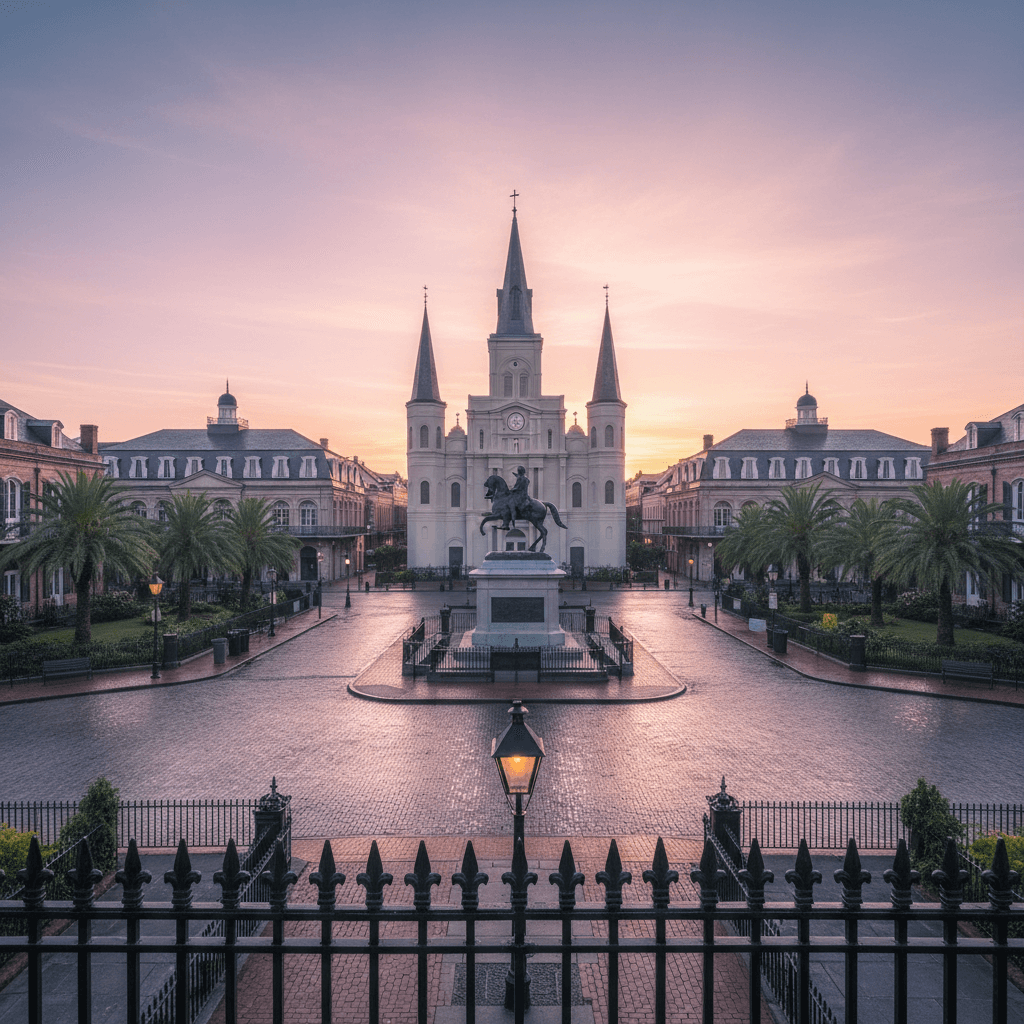
New Orleans
🇺🇸 United States
The Crescent City Rhythm
New Orleans isn't a city you visit just to check off boxes; it's a place that gets under your skin. For digital nomads, it presents a beautiful, sometimes chaotic paradox. You'll find a pace of life that's slower than New York but far more intense than a beach town in Mexico. The air is thick with humidity and the smell of jasmine, and the soundtrack of your workday will likely include a brass band practicing three blocks away. It's a city of constant celebration where the line between "Tuesday afternoon" and "festival season" often blurs.
The magic here lies in the "Big Easy" mentality. Locals prioritize joy, food, and music over the corporate grind. While this makes for an incredible social life, it requires some serious self-discipline. Most nomads find the temptation to close the laptop for a midday po-boy or a spontaneous parade is the biggest hurdle to productivity. If you can handle the distractions, you're rewarded with a community that values soul over status.
Cost of Living Breakdown
Living in New Orleans is moderately priced compared to hubs like San Francisco or Austin, but housing costs have climbed. Expect to spend between $2,550 and $3,950 per month for a comfortable mid-range lifestyle. Here is how the numbers typically shake out:
- Housing: A 1BR apartment generally runs between $1,600 and $2,200. You'll pay a premium for the historic charm of the French Quarter, while areas like Central City offer more breathing room in the budget.
- Food and Drink: You can grab a bag of beignets for $5 or a hearty street food meal for $10. A nice Creole dinner usually lands between $20 and $40 per person.
- Connectivity and Workspace: Budget around $100 to $300 for coworking memberships. A local SIM with a solid data plan from T-Mobile costs roughly $150.
- Transport: A monthly pass for streetcars and buses is about $100, though many nomads rely on Uber or bikes.
Where to Plant Your Flag
Choosing a neighborhood is the most important decision you'll make here. Each "ward" has a distinct personality and its own set of unwritten rules.
Treme-Lafitte
- Best For: Culture seekers and long-term nomads.
- The Vibe: The birthplace of jazz. It's authentic and residential but close to the action.
- Pros: Great local spots like Treme Coffee House at 1501 St Philip St.
- Cons: Like many historic areas, petty crime can be an issue; stay aware of your surroundings at night.
Uptown and Audubon
- Best For: Productivity and quiet.
- The Vibe: Leafy streets, stately mansions, and oak-lined avenues.
- Pros: Very safe and peaceful. The Marsh Hotel lobby is a favorite "work from anywhere" spot.
- Cons: It's a bit of a trek from the nightlife core, and rents are on the higher side.
The Marigny
- Best For: Music lovers and solo travelers.
- The Vibe: Artistic and bohemian. It's home to Frenchmen Street, which most locals prefer over the tourist-heavy Bourbon Street.
- Pros: Incredible live music every single night and great walkability.
- Cons: The noise levels can be high if your apartment is near the clubs.
Productivity and Connection
Internet speeds are reliable, typically averaging 70 to 80 Mbps. If you need a professional environment to escape the heat, Propeller offers day passes for $20 or monthly memberships starting at $175. For a more social, high-end experience, Common House acts as a social club with a pool and gym, making it easy to meet people outside of your screen.
If you prefer the cafe circuit, New Orleans excels. Sacred Grinds provides a unique workspace with views of the historic above-ground cemeteries. For a classic experience, the lobby of Hotel Monteleone is a grand spot to send emails. Expats recommend joining local Facebook groups or attending events at Launch Pad to plug into the professional community quickly.
Practical Realities
The weather is a major factor. From March to May and October to November, the city is perfect, with temperatures between 20°C and 28°C (68°F to 82°F). However, July and August are brutal. The heat index often climbs above 38°C (100°F), and the humidity is relentless. This also coincides with peak hurricane season, so having a flexible exit plan during late summer is wise.
Safety is a frequent topic of conversation. While most nomads feel secure in neighborhoods like Uptown or the Garden District, petty theft is common in tourist areas. Stick to well-lit streets, use Uber after dark if you're alone, and don't let the "anything goes" atmosphere of the French Quarter lower your guard. Most importantly, embrace the local customs. A simple "Where y'at?" goes a long way in building rapport with your neighbors.
The Price of the Big Easy
Living in New Orleans isn't exactly a bargain compared to rural America, but it's significantly more accessible than hubs like New York or San Francisco. Most mid-range nomads find that a monthly budget between $2,550 and $3,950 covers a comfortable lifestyle. This includes a private apartment, plenty of meals out, and a dedicated workspace.
Housing is your biggest variable. While a 1BR apartment typically runs between $1,600 and $2,200, your choice of neighborhood dictates the price and the noise level. If you're looking to stretch your dollars, Central City offers studios starting around $1,600, though the area is still very much in transition. On the flip side, living in the French Quarter means paying a premium for historic charm and putting up with rowdy tourists at 2 PM on a Tuesday.
- Budget Tier (~$2,500/month): Shared housing, relying on street food like $5 beignets, using the RTA streetcars, and working from cafes.
- Mid-range Tier ($2,550 to $3,950/month): A private 1BR, a mix of Creole dining and groceries, frequent Ubers, and a desk at a coworking space.
- Comfortable Tier ($4,000 to $6,000+/month): Upscale housing in Uptown, nightly jazz on Frenchmen Street, and memberships at social clubs like Common House.
Where to Set Up Shop
Expats and long term travelers often gravitate toward Treme-Lafitte for its deep jazz roots and proximity to local favorites like Treme Coffee House. It strikes a better balance for work than the French Quarter, which many find too distracting for a productive Monday morning.
Uptown and the Audubon area are the go-to spots for those who need quiet. It's further from the neon lights of Bourbon Street, but you get access to leafy trails and the laptop-friendly lobby at the Marsh Hotel. If you want a neighborhood feel with a bit of edge, Marigny is popular for its music scene and slightly more affordable eateries.
For those looking for a unique commute, Algiers Point sits just across the river. It's quieter and feels like a small village. Nomads here often use the $2 ferry to get into the city core, making it a scenic way to start the workday.
Staying Connected
Internet speeds are generally reliable, averaging 70 to 80 Mbps. You won't struggle to find a cafe with decent WiFi, though some spots are better suited for deep work than others. Sacred Grinds is a local favorite for its quirky atmosphere and views of the historic cemeteries.
If you need a professional environment, the city has several solid options:
- Propeller: A massive 10,000 sq ft space with day passes for $20 or dedicated desks for $325 a month.
- Launch Pad: Frequently cited by the community as one of the top-rated spots for networking.
- Common House: More of a social club with a pool and gym, perfect if you want your workspace to double as your social life.
For mobile data, a T-Mobile unlimited plan will cost about $150 a month. If you're just visiting for a few weeks, grabbing an eSIM via Airalo is usually the easiest way to bypass the paperwork of a local contract.
Daily Essentials and Transport
Getting around is easy if you stay in the historic core. The city is remarkably walkable, and the iconic streetcars are a steal at $1.25 per ride. A monthly transit pass costs around $100. For longer trips or late nights, Uber is the primary ride-hailing app, with airport transfers to MSY usually costing between $30 and $50.
Food costs can vary wildly. You can grab a quick bite for $10, but a mid-range Creole dinner will likely set you back $20 to $40 per person. Groceries and general entertainment typically add another $600 to $1,000 to your monthly tally depending on how often you're tempted by the cocktail menus on Magazine Street.
Best for Nomads: Treme-Lafitte and Algiers
If you want the quintessential New Orleans experience without being trapped in a tourist bubble, Treme-Lafitte is where you'll find your rhythm. It's the birthplace of jazz and carries a soulful, balanced vibe that appeals to remote workers who need inspiration but also a place to focus. You'll find plenty of laptops open at Treme Coffee House on St Philip St, where the caffeine is strong and the sno-balls provide a much-needed sugar kick during afternoon slumps.
For those who prefer a bit of distance from the city's frantic energy, Algiers is a smart alternative. Located just across the Mississippi River, it's accessible via a quick ferry ride that costs ~$2. It feels like a small town within a big city, and it's home to Nomad, a dedicated coworking space that offers monthly memberships and punch cards for flexible workers. It's quieter here, making it easier to hit deadlines before heading back over the river for dinner.
- Average 1BR Rent: $1,800 to $2,100
- Coworking: Propeller ($175/month) or Nomad
- The Vibe: Culturally deep, community-focused, and slightly gritty in a charming way.
Best for Expats: Marigny and Central City
Expats looking to plant roots often gravitate toward the Marigny. It sits right next to the French Quarter but feels worlds apart in terms of local flavor. Most residents spend their evenings on Frenchmen Street, which locals prefer over Bourbon Street for its authentic live music and better food. Safety can be a concern late at night, so most expats recommend sticking to well-lit paths.
Central City is the "up and coming" pick for those who want to maximize their budget. It's less polished than the historic districts, but you can find studios starting around $1,600. It's becoming a hub for the creative class, though you'll need to stay aware of your surroundings, especially after dark. Many expats here join Common House, a social club that functions as a workspace, gym, and bar, providing a built-in community for newcomers.
- Average 1BR Rent: $1,600 to $2,000
- Social Hubs: Common House and the bars along Magazine Street.
- The Vibe: Artistic, evolving, and socially active.
Best for Families: Uptown and Audubon
If you're traveling with a partner or children, Uptown is the clear winner. It's significantly quieter and safer than the downtown core, with easy access to the sprawling trails of Audubon Park. The streetcar lines make it easy to get around without a car, and the atmosphere is much more residential. You'll trade the rowdy nightlife for oak-lined streets and family-friendly cafes.
Productivity is easier here too. The lobby of the Marsh Hotel is a popular spot for a few hours of work, and the outdoor seating is perfect for the milder months of October and November. The downside is the price; expect to pay a premium for the peace and quiet, with rents often exceeding $2,200 for high-quality units.
- Average 1BR Rent: $2,200+
- Outdoor Space: Audubon Park and the Mississippi River Trail.
- The Vibe: Sophisticated, green, and tranquil.
Best for Solo Travelers: The French Quarter
For a short-term stint where you want to be in the middle of everything, the French Quarter is the obvious choice. You'll be steps away from iconic spots like Cafe du Monde, where a coffee and beignets cost about $10. It's the most walkable part of the city, meaning you won't need to worry about Ubers or bus schedules. However, be prepared for the noise; the party doesn't stop, and midday crowds can be a major distraction if you're trying to take a Zoom call.
Most solo travelers find the Quarter exciting but exhausting. It's the most expensive area for housing, with 1BR apartments regularly topping $2,000. If you want the historic vibe without the 24/7 noise, look for spots closer to the residential edges of the district rather than near Bourbon Street.
- Average 1BR Rent: $2,000 to $2,500
- Work Spots: Hotel Monteleone lobby or local cafes.
- The Vibe: Historic, touristy, and high-energy.
Connectivity and Speed
New Orleans might move at a slower pace when it comes to the "Big Easy" lifestyle, but the internet infrastructure keeps up with modern demands. You can expect average speeds around 100 Mbps or higher in most central areas. Fiber is increasingly common in neighborhoods like the Warehouse District and Uptown, making video calls and heavy uploads reliable for most remote roles.
Most nomads find the city exceptionally friendly toward laptop culture. It is common to see people working from cafes for hours, though it pays to be mindful of peak brunch times on weekends. If you are staying for a month or more, a local SIM from T-Mobile or Verizon will run you around $150 for unlimited data, but many travelers prefer using Airalo for a quick eSIM setup upon arrival.
Top Coworking Spaces
The coworking scene here is diverse, ranging from high-end social clubs to community-focused hubs. Depending on your budget and how much networking you want to do, these are the top picks:
- Propeller: This is a favorite for those who want a professional environment without the pretension. A day pass is $20, while a full monthly membership starts at $175. If you need a dedicated desk, expect to pay around $325.
- Common House: This feels more like a private social club than a standard office. It features a pool, gym, and bar, making it the go-to for expats looking to mix work with a social life.
- Launch Pad: Frequently cited as the top-rated spot in the city, it has a strong reputation for fostering startups and tech talent.
- Nomad in Algiers: For a quieter vibe, take the ferry across the river. They offer flexible punch cards and monthly rates that appeal to those staying on the West Bank.
Cafes and Alternative Workspots
If you prefer the hum of a coffee shop over a dedicated desk, New Orleans has some of the most atmospheric "offices" in the country. Just remember that the humidity is real; if you plan to work outdoors, aim for early morning or late afternoon.
- Treme Coffee House: Located at 1501 St Philip St, this spot is legendary for its local vibe. It is a great place to catch up on emails while sipping a coffee or grabbing a sno-ball during the summer heat.
- Sacred Grinds: Situated at 5055 Canal St, this cafe offers unique views of the historic cemeteries. It is quiet, quirky, and has reliable WiFi.
- The Marsh Hotel: Located Uptown, the lobby and outdoor areas here are popular with digital nomads who want a more polished, aesthetic environment.
- Hotel Monteleone: If you are stuck downtown between meetings, the lobby area is a classic, grand setting to get thirty minutes of work done in a pinch.
Practical Workflow Tips
The biggest challenge for productivity in NOLA isn't the WiFi; it is the temptation. Travelers often say the French Quarter is a productivity killer because of the midday noise and the lure of a $10 cocktail. Many nomads recommend staying in Uptown or Treme-Lafitte to keep your head down during the day, then heading to Frenchmen Street for live music once the laptop is closed.
Power outages can happen during heavy summer rainstorms or hurricane season from June to October. It is a good idea to keep a backup power bank and a mobile hotspot handy if you have tight deadlines. Most coffee shops are happy to let you linger, but the local etiquette is to buy a fresh drink or snack every two hours to keep the "work-from-cafe" culture sustainable for the owners.
Keeping Your Cool in the Big Easy
New Orleans carries a reputation for being a bit wild, but for digital nomads, the reality is more about situational awareness than constant danger. Most travelers find the city maintains a moderate safety level, scoring around 75/100 on most scales. The key is knowing where the party ends and the neighborhood begins.
The French Quarter and Bourbon Street are hotspots for petty crime like pickpocketing and phone snatching, especially after the sun goes down and the crowds get rowdy. If you are working late at a cafe in the Marigny or the Quarter, it is best to call an Uber rather than walking solo through dimly lit side streets. Most expats recommend sticking to better lit, residential areas like Uptown, Audubon, or City Park if you want to go for a night run or a late evening stroll.
- Emergency Services: Dial 911 for immediate police, fire, or medical assistance.
- Personal Safety: Avoid displaying expensive laptops or cameras in high traffic tourist zones.
- Safe Zones: Uptown and the Garden District are generally considered the safest pockets for long term stays.
Healthcare and Medical Facilities
If you get hit with a bout of "New Orleans flu" (usually just a combination of humidity and one too many hurricanes), you are in good hands. The city is a regional hub for medical care. Ochsner Health and Tulane Medical Center are the heavy hitters here, offering high quality emergency and specialized care that nomads find reliable.
For minor issues like prescriptions or a quick flu shot, pharmacies like CVS and Walgreens are on almost every major corner. You do not need to worry about the tap water; it is perfectly safe to drink, though many locals prefer a filter for the taste. Since U.S. healthcare costs are notoriously high, most nomads in the city use SafetyWing or similar travel insurance to avoid massive out of pocket bills.
- Hospitals: Ochsner Medical Center and Tulane Medical Center are the top choices for urgent care.
- Pharmacies: CVS and Walgreens are widespread; many are open 24/7 in the downtown area.
- Insurance: Always carry proof of your provider, as most clinics will ask for it upfront.
Staying Healthy and Productive
The biggest health challenge in NOLA isn't a virus; it is the heat. From June to September, temperatures regularly hit 35°C (95°F) with humidity that makes it feel like 38°C (100°F) or higher. Dehydration and heat exhaustion are real risks if you are walking between coworking spaces like Propeller or Launch Pad during midday.
Nomads often suggest shifting your schedule during the summer months. Knock out your deep work in an air conditioned cafe like Treme Coffee House during the afternoon peak, and save your outdoor exploring for the early morning or late evening. If you are here during hurricane season, which peaks in August and September, keep an eye on local weather apps and have a basic "go bag" ready just in case the city calls for an evacuation.
- Summer Strategy: Drink more water than you think you need and stay indoors between 1:00 PM and 4:00 PM.
- Fitness: Use the trails in Audubon Park for morning exercise before the humidity ramps up.
- Digital Health: Use apps like Airalo for an eSIM to stay connected to local weather alerts and emergency updates.
The Logistics of the Big Easy
New Orleans is a city where the geography dictates the lifestyle. The layout follows the curves of the Mississippi River, creating a "crescent" that makes the city surprisingly compact and walkable in the historic core. Most nomads find that while you don't necessarily need a car, your choice of neighborhood will entirely define how you move through your day.
Public Transit and the Iconic Streetcars
The RTA (Regional Transit Authority) manages the city's network of buses, ferries, and those world famous streetcars. While the streetcars are often viewed as a tourist novelty, the St. Charles line is a legitimate artery for anyone living in Uptown or the Garden District who needs to get downtown for a meeting. It's affordable and arguably the most scenic commute in North America.
- Single Rides: Expect to pay $1.25 per trip.
- Monthly Passes: A 31 day pass runs about $100 and covers buses and streetcars.
- The Leake Ave Ferry: This is a lifeline for nomads staying in Algiers Point. It connects you to the foot of Canal Street and the French Quarter in minutes for a small fee.
- Le Pass App: Download this immediately. It's the standard way to buy tickets and track real time arrivals so you aren't standing in the humidity longer than necessary.
Walking and Biking
If you're based in the French Quarter, Marigny, or the CBD, your own two feet are your best asset. These areas are incredibly dense; you can hit a coworking space, a coffee shop, and a grocery store within a ten block radius. However, the sidewalks are notoriously uneven due to ancient oak roots and shifting soil, so keep your eyes on the ground.
Biking is a popular alternative for reaching neighborhoods like Mid-City or the Bywater. The Lafitte Greenway is a 2.6 mile multi use trail that connects the French Quarter to City Park, offering a car free route for cyclists. For short trips, look for Blue Bikes, the city's bike share program, or use apps like Spin and Lime for electric scooters which are scattered throughout the central neighborhoods for about $1 to unlock plus a per minute fee.
Ride-Hailing and Airport Transfers
When the sun goes down or the afternoon thunderstorms hit, Uber is the dominant player here. It's reliable and generally safer than walking alone through less familiar transitional neighborhoods at night. If you're heading to or from Louis Armstrong New Orleans International Airport (MSY), you have a few solid options:
- Ride-share: A trip to the French Quarter or CBD usually costs between $35 and $50 depending on surges.
- Airport Shuttle: This costs roughly $20 per person and is a good budget choice if you aren't in a rush.
- Taxis: There's a flat rate of about $36 for two passengers from the airport to the French Quarter, which can sometimes be cheaper than Uber during peak festival dates.
Nomad Transport Tips
Expats often recommend living near the St. Charles streetcar line or the Magazine Street bus route if you want to avoid the expense of a car. Car ownership in NOLA comes with high insurance premiums and the constant threat of "pothole season." If you do choose to drive, be aware that street parking in the French Quarter is a nightmare and monthly garage spots can easily tack an extra $200 to $300 onto your monthly budget.
Most travelers find that a combination of walking for daily errands and using Uber for late night social outings strikes the best balance between cost and safety. If you're staying across the river in Algiers to save on rent, the ferry will become the most important part of your daily routine.
The Local Vernacular
While English is the primary language in New Orleans, the city speaks with a cadence you won't find anywhere else in the United States. It isn't just an accent; it's a dialect shaped by centuries of French, Spanish, and African influence. You'll hear the local "Yat" accent, which sounds surprisingly similar to a Brooklyn or Jersey Shore lilt, particularly in older neighborhoods like the Marigny or Mid-City.
Most nomads find that a simple "Where y'at?" is the standard greeting. It doesn't actually mean "where are you?"; it’s a way of saying "how are you doing?" or "what's up?" If you want to lean into the local spirit, keep the phrase Laissez les bon temps rouler in your back pocket. It translates to "let the good times roll" and serves as the unofficial city motto during festival season.
Navigating the Dialect
New Orleans is a city of specific terminology. Understanding these terms will help you feel less like a tourist and more like a local resident during your stay:
- Lagniappe: Pronounced "lan-yap," this means a little something extra, like a free cookie with your coffee or an extra song at the end of a jazz set.
- Neutral Ground: This is what locals call the grassy median in the middle of a wide street. If someone tells you to meet them on the neutral ground, they mean the center of the road where the streetcar tracks usually are.
- Sno-ball: Do not call these snow cones. They are made with finely shaved ice and flavored syrups, and they're a summer survival requirement.
- Praline: Pronounced "praw-leen," not "pray-leen." These are the sugary, pecan-filled treats you'll see in every confectionery window.
Digital Connectivity and Logistics
Staying connected is rarely a struggle here, though the pace of life might tempt you to close your laptop. Most cafes, especially spots like Treme Coffee House and Sacred Grinds, offer reliable free WiFi and a welcoming atmosphere for remote workers. You can expect average speeds around 70 to 80 Mbps in most central areas, which is plenty for video calls and heavy uploads.
For your mobile data, US carriers like T-Mobile or Verizon are the standard. If you're visiting from abroad, skip the hassle of a physical store and download an app like Airalo to grab an eSIM. A solid unlimited data plan usually runs around $150 per month, though cheaper tiers are available if you rely mostly on home or cafe WiFi. If you need a dedicated office environment, Propeller offers day passes for $20 or monthly memberships starting at $205.
Social Etiquette and Communication Style
Communication in New Orleans is famously friendly and high-context. People will talk to you in line at the grocery store, at the bar, or while waiting for a streetcar. It’s a polite city where "please," "thank you," and "ma'am" or "sir" go a long way. This social openness makes it one of the easiest US cities for solo nomads to make friends.
When it comes to dining and nightlife, remember that tipping is a non-negotiable part of the local economy. A 15% to 20% tip is the standard for table service and bartenders. Most establishments are now tech-forward and accept contactless payments via Apple Pay or Google Pay, but it's wise to carry a little cash for smaller bars or for tipping street performers on Frenchmen Street.
Practical Apps for Your Stay
To keep communication and logistics smooth, most expats and travelers rely on a few specific apps:
- Le Pass: The official app for RTA buses and streetcars. You can buy a monthly pass for $45 or single rides for $1.25 directly on your phone.
- Uber: While Lyft exists, Uber tends to have better coverage and shorter wait times in New Orleans.
- Google Translate: While everyone speaks English, this is surprisingly helpful for translating some of the more flowery French-Creole menus at high-end restaurants.
- Wise or Revolut: Best for managing your budget and avoiding high currency conversion fees at local ATMs.
The Sweet Spot: Spring and Fall
If you want to actually enjoy your walk to the coworking space without needing a second shower by 10:00 AM, aim for March through May or October and November. During these windows, the city is at its best with temperatures hovering between 20°C (68°F) and 28°C (82°F). These months are the goldilocks zone for nomads who want to work from the outdoor patio at the Marsh Hotel or take a laptop to the banks of Bayou St. John.
Spring is particularly electric. You get the lead up to Mardi Gras and Jazz Fest, though be warned that accommodation prices skyrocket and the French Quarter becomes nearly impossible to work in due to the noise. October is a local favorite; the humidity finally breaks, the rain settles down to about 5 days a month, and the festival calendar picks right back up with events like Beignet Fest.
Survival Mode: The Summer Humidity
New Orleans summers from June through September are legendary for all the wrong reasons. It is a humid subtropical climate that feels like walking into a warm, wet blanket the moment you step outside. Temperatures sit around 33°C (91°F), but the "feels like" index frequently clears 38°C (100°F). Expect heavy afternoon thunderstorms nearly every other day, with July averaging 15 rainy days.
This is hurricane season, so you need to stay weather aware. Most nomads who stay through the summer find themselves tethered to high powered air conditioning. If you are on a budget, this is when you will find the lowest rent prices, but your electricity bill for AC will likely eat up those savings. It is a slower, sweatier pace of life that locals call "the big slow down."
Mild Winters and Carnival Season
Winter in NOLA is generally mild and short. January is the coldest month, but with average highs of 17°C (63°F), you rarely need more than a light jacket. It is a great time for productivity because the swampy lethargy of summer is gone. However, the city doesn't really sleep in February. Carnival season brings a surge of energy and crowds that can make "normal" remote work life a challenge if you live near parade routes in Uptown or the Mid City area.
Seasonal Breakdown for Planning
- Peak Season (February to May): Best weather but highest costs. Perfect for social nomads who want the full festival experience. Expect 25°C (77°F) days and plenty of networking opportunities at cafes like Treme Coffee House.
- Shoulder Season (October to November): The "secret" best time. Crisp air, lower humidity, and manageable tourist crowds. Great for long term stays in neighborhoods like Marigny or Algiers.
- Low Season (June to August): Intense heat and hurricane risks. Best for those who don't mind staying indoors and want to snag a deal on a 1BR apartment in Central City.
What to Pack
Pack for layers and moisture. Even in the heat of July, most indoor coworking spaces like Propeller or Launch Pad keep the AC cranking so high you might want a sweater. A high quality umbrella or a light raincoat is mandatory, as the tropical downpours come out of nowhere. If you are visiting in the spring, bring comfortable shoes you don't mind getting a bit dirty; New Orleans streets are historic, which is a polite way of saying the sidewalks are uneven and the puddles are unpredictable.
Making the Move: Costs and Logistics
New Orleans isn't the cheapest city in the South, but it's manageable if you're smart about where you plant roots. A mid range solo nomad should budget between $2,550 and $3,950 per month. Rent is your biggest hurdle; a decent one bedroom apartment typically runs $1,600 to $2,200. While the French Quarter is tempting for the history, the price tag usually exceeds $2,000 and the noise rarely stops. Many expats now look toward Central City for studios around $1,600 or Algiers for a quieter pace across the river.
Daily life costs vary by how much you succumb to the city's culinary temptations. You can grab a bag of beignets for under $10, but a nice Creole dinner will set you back $20 to $40 per person. For groceries and dining out, most people spend about $500 to $700 monthly. If you're looking for the high end experience, memberships at social clubs like Common House or frequenting the upscale bistros in Uptown can push your monthly spend north of $4,000.
The Best Neighborhoods for Productivity
- Treme-Lafitte: This is a favorite for nomads who want authentic jazz culture without the French Quarter's tourist traps. It's home to the Treme Coffee House, a perfect spot for morning emails.
- Marigny: Located right next to the Quarter, it's famous for Frenchmen Street's live music. It’s great for solo travelers who want to walk to dinner, though it can get rowdy on weekends.
- Uptown/Audubon: If you need to actually get work done, this is the place. It's quieter, greener, and full of families. The Marsh Hotel lobby is a top tier remote work spot here.
- Algiers Point: It feels like a small village. You'll need to take the $2 ferry to get to the main action, but the Nomad coworking space makes it a solid choice for focused professionals.
Internet and Workspace
Internet speeds generally hover around 70 to 80 Mbps, which is plenty for video calls. If your Airbnb WiFi is spotty, the city has a great cafe culture that welcomes laptops. Sacred Grinds offers a unique view of the historic cemeteries while you type away. For a more formal setup, Propeller offers day passes for $20 or monthly memberships for $175. Launch Pad is another highly rated option in the downtown area.
For connectivity, grab an eSIM from Airalo or visit a T-Mobile store for a local SIM. Unlimited plans usually cost around $150 a month. Most cafes and hotels offer reliable free WiFi, so you won't be hunting for a signal often.
Getting Around and Staying Safe
The city's core is surprisingly walkable, especially in the French Quarter and Marigny. For longer distances, the RTA buses and iconic streetcars cost $1.25 per ride, or you can get a monthly pass for $100. Uber is the go to app for late night rides, which is recommended over walking alone in certain areas. If you're feeling active, Blue Bikes or scooters like Lime are scattered throughout the city for about $1 to unlock.
Safety requires a bit of common sense here. Petty theft is common in high traffic tourist areas like Bourbon Street. Locals and long term nomads suggest staying in better lit, residential areas like Uptown or Mid City after dark. The tap water is perfectly safe to drink, and if you need medical care, Ochsner and Tulane hospitals provide high quality services.
Weather and Timing
Timing is everything in NOLA. The sweet spots are March to May and October to November, when the weather stays between 20°C and 28°C. Summers are brutal; from June to September, the humidity makes 33°C feel like 38°C or higher. This is also hurricane season, so keep an eye on the weather apps if you're visiting in the late summer. Winters are mild and rarely drop below 10°C, making it a great escape for those fleeing northern snow.
Local Customs
New Orleans runs on its own clock. People will greet you with a "Where y'at?" and expect a friendly reply. Tipping is a big deal here; 15% to 20% is the standard for service. While the city is famous for its "go cups" and street drinking, try to venture beyond the neon drinks of the French Quarter. The real magic is found in the neighborhood bars on Magazine Street or the jazz clubs where the locals actually hang out.
Need visa and immigration info for United States?
🇺🇸 View United States Country GuideEasy Landing
Settle in, no stress