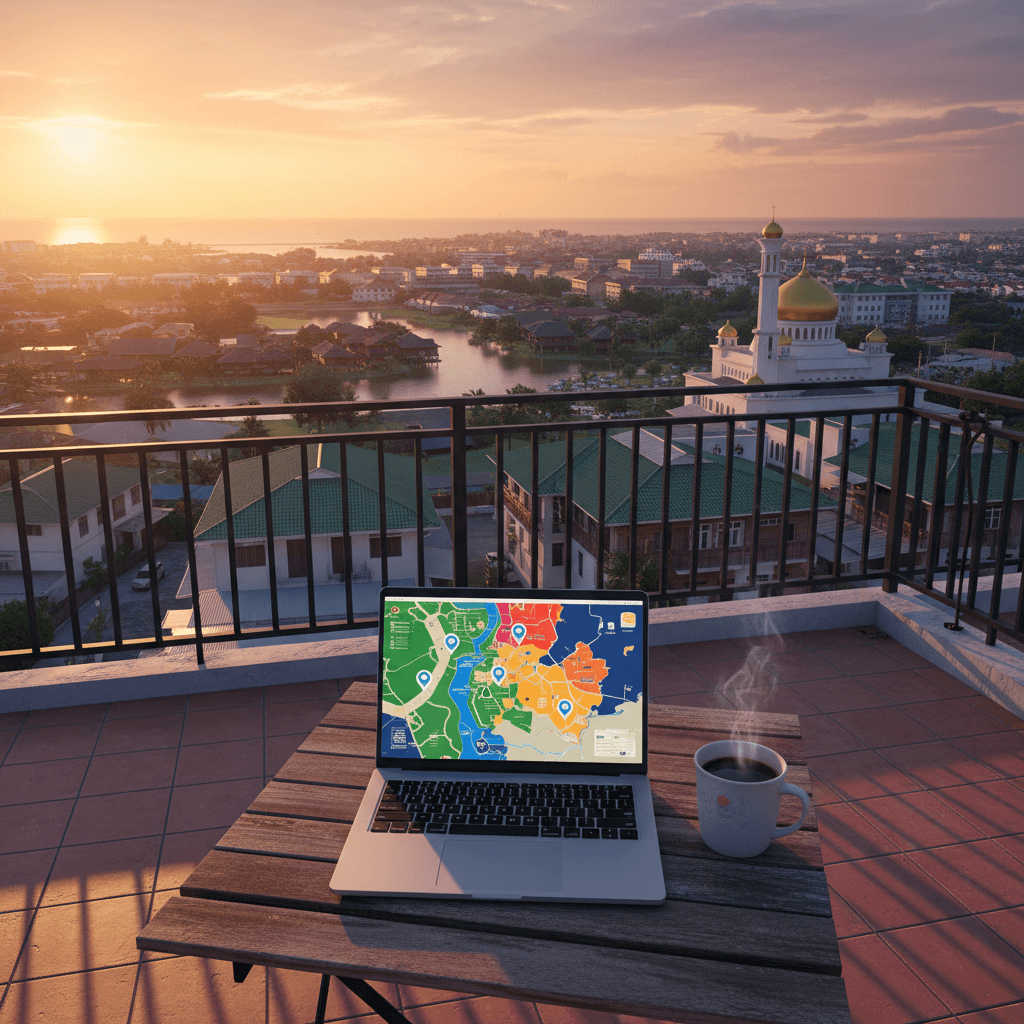
Mentiri
🇧🇳 Brunei
Mentiri isn't the place you go to "grind" until 3 AM or find a neon-soaked nightlife scene. It’s the place you go to breathe. Located just a short drive from the capital, Bandar Seri Begawan, this area offers a window into the quiet, affluent serenity that defines Brunei. It’s a destination for the nomad who is tired of the chaotic traffic of Bangkok or the relentless hustle of Bali. Here, the air is clean, the streets are safe enough to walk at midnight without a second thought, and the pace of life feels like a slow, intentional exhale.
The Daily Rhythm
Living here means trading cocktails for nasi katok and bar crawls for jungle hikes. Since Brunei follows strict Sharia-influenced laws, there is no alcohol sold in the country and most businesses close down for Friday prayers between 12:00 PM and 2:00 PM. While that might sound restrictive, most nomads find it fosters a remarkably low-stress lifestyle. You’ll spend your mornings working with fixed broadband median ~86.55 Mbps and your afternoons exploring the nearby Ulu Temburong National Park or grabbing a $3 latte at a quiet cafe in Gadong.
What It Costs
Brunei is often called "affordable luxury," but it sits at a higher price point than its neighbors. You should budget roughly $1,562 per month for a comfortable stay. While you can find street food for $2 to $4, your biggest expenses will be housing and imported goods.
- Budget Tier ($1,000/mo): You'll likely stay in a Kiulap studio for $500, eat at local warungs, and use the $1 public bus system.
- Mid-Range ($1,500/mo): A modern 1BR in Gadong for $800 to $1,200, frequenting mid-range spots like Pondok Sari Wangi, and using the Knock Knock ride-hailing app.
- Comfortable ($3,000+/mo): Luxury living near the Empire Hotel in Jerudong, private car rentals at $50 per day, and upscale dining.
The Neighborhood Breakdown
While Mentiri itself is residential and peaceful, you’ll likely find yourself gravitating toward these nearby hubs for work and social life:
Gadong
- Best For: The active nomad who wants everything within walking distance.
- Rent: $800 to $1,200 for a 1BR.
- Vibe: The closest thing Brunei has to a "busy" center, with malls, cafes like Pressure Pot Coffee, and the best food variety.
Kiulap and Batu Satu
- Best For: Solo travelers looking for better value.
- Rent: $500+ for studios.
- Vibe: Quiet, green, and very local. It’s near the iconic Omar Ali Saifuddien Mosque and great parks.
Jerudong
- Best For: Those who want the resort lifestyle.
- Rent: $1,500+ for waterfront properties.
- Vibe: Home to the famous Empire Hotel and beautiful beaches. It’s isolated, so you’ll definitely need a car.
Connectivity and Community
The digital infrastructure is surprisingly robust. You can grab a 20GB tourist SIM from DST or Progresif at the airport for about $10 to $20. If you need a professional desk, Regus in the capital or The Co Brunei in Gadong offer memberships between $100 and $250 per month. The community is small but tight-knit. Since nomad density is low, you won't find massive coworking parties. Instead, you'll connect with expats through Facebook groups or over a meal at the Gadong Night Market.
The emotional payoff of Mentiri is the lack of "noise." There’s a deep respect for tradition here, from the modest dress code to the way people speak. If you’re willing to trade the party scene for pristine rainforests, world-class safety, and a culture that truly values peace, Mentiri is a sanctuary.
Brunei sits in a unique spot for digital nomads. It isn't the dirt cheap paradise of Bali or Chiang Mai, but it offers a level of "affordable luxury" and safety that's hard to find elsewhere in Southeast Asia. You'll likely spend around $1,562 per month here. It's a peaceful, clean, and highly functional environment where the infrastructure actually works, though you'll pay a premium for imported goods and a higher standard of living.
The Monthly Breakdown
Your budget in Mentiri and the surrounding Bandar Seri Begawan area depends heavily on how much "local" you're willing to go. While the government subsidies keep fuel and basic utilities low, your lifestyle choices will drive the final number.
- Budget Tier (approx. $1,000 per month): This is doable if you snag a studio in Kiulap for $500 to $800 and stick to $2 Nasi Katok from street stalls. You'll be using the $1 buses or walking when the humidity allows.
- Mid-Range (approx. $1,500 per month): Most nomads fall here. You'll likely rent a one bedroom in Gadong for $800 to $1,200, eat at local warungs for $10 a meal, and use the Knock Knock ride hailing app for $5 trips.
- Comfortable (approx. $3,000+ per month): This buys you a waterfront lifestyle in Jerudong with rents starting at $1,500. You'll be dining at the Empire Hotel for $50 a plate and likely renting a car for $50 a day to get around.
Housing and Neighborhoods
Mentiri itself is quiet and residential, but most remote workers gravitate toward the hubs closer to the capital for better amenities. Since there isn't a massive nomad scene, you'll be looking at apartments meant for expats or locals.
Gadong is the top pick for anyone needing to be near the action. It's the commercial heart of the city with the best concentration of cafes and shopping. Expect to pay $800 to $1,200 for a solid one bedroom. It's walkable by Brunei standards, meaning you can actually get to a grocery store without a car.
Kiulap and Batu Satu are great if you want to save a few hundred dollars. Studios here start around $500. It's quieter, near some beautiful parks and mosques, but you'll feel the lack of expat meetups more acutely.
Jerudong is where you go for the resort vibe. It's expensive, with rents often hitting $1,500 or more, but you're near the beaches and high end pools. It's isolated, so don't move here unless you plan on renting a car.
Remote Work Costs
Internet is surprisingly fast and reliable, averaging 87 Mbps. Most nomads find the local cafes like Pressure Pot Coffee or the Starbucks in Gadong perfect for a few hours of work. A coffee will run you about $3.
If you need a dedicated desk, The Co Brunei in Gadong is the local favorite, costing between $100 and $200 a month. It's one of the few places you'll actually run into other people working online. For a more corporate feel, Regus near the city center offers professional setups for $150 to $250 monthly.
Food and Daily Life
Eating out is a highlight if you love Malay, Chinese, and Indian fusion. You can survive on $2 to $4 street food if you're disciplined. A mid range dinner at Pondok Sari Wangi usually hits the $10 mark. If you're craving upscale Chinese, Zen Restaurant will cost you $25 or more.
Keep in mind that alcohol is not sold in the country. This significantly lowers your "entertainment" budget compared to neighboring countries, but it also means the social scene revolves around night markets and cafes rather than bars. Most expats connect through Facebook groups like Expats in Brunei to find weekend hiking trips or dinner gatherings.
Practical Logistics
Pick up a SIM card at the airport from DST or Progresif. You'll get about 20GB of data for $10 to $20. While Wise and Revolut work at most major retailers and malls, you'll want to keep cash on hand for the smaller warungs and markets in Mentiri. Crime is almost non existent here, so while you should always be sensible, it's one of the few places where you can truly relax about your gear in public spaces.
For Digital Nomads: Gadong
If you're coming to Brunei to work, Gadong is where you'll want to plant your flag. It's the closest thing the country has to a commercial hub, packed with shopping malls, cafes, and the famous night market. Most nomads gravitate here because it's one of the few areas where you can actually get things done without needing a car for every single errand.
- Rent: Expect to pay between $800 and $1,200 for a decent one bedroom apartment.
- Vibe: Busy by Brunei standards, but still quiet compared to Bangkok or KL.
- Work Spots: The Co Brunei is the go to coworking space here, with monthly memberships ranging from $100 to $200. If you prefer cafes, the Starbucks in Gadong is a reliable fallback with decent WiFi.
The biggest draw for Gadong is the food scene. You can grab a $2 nasi katok from a street stall for lunch and hit a mid range spot like Pondok Sari Wangi for a $10 dinner. Just be prepared for the traffic; it's the one place in town where gridlock actually happens.
For Solo Travelers: Kiulap and Batu Satu
Solo travelers looking for a more local, neighborhood feel usually end up in Kiulap or Batu Satu. These areas sit right between the city center and Gadong, making them a strategic base for exploring. It's a bit more affordable than the high end developments further out, and you're never far from a quiet park or a stunning mosque.
- Rent: Studios can be found starting around $500, though they go up quickly for modern builds.
- Vibe: Residential, peaceful, and very safe.
- Highlights: You're close to the Jame' 'Asr Hassanil Bolkiah Mosque and several local markets.
Since there isn't a massive nomad scene here, you'll likely be rubbing shoulders with locals at the warungs. It's a great spot if you want to save money on housing while staying within a $3 to $7 ride hailing trip via the Knock Knock app to the main sights.
For Expats and Families: Jerudong
If you have a higher budget or you're moving with family, Jerudong is the gold standard. It feels more like a resort district than a typical neighborhood. It's home to the Empire Hotel, beautiful beaches, and private schools. Expats often choose this area for the amenities and the proximity to private healthcare at the Jerudong Clinic.
- Rent: Luxury rentals and waterfront properties usually start at $1,500 and can climb much higher.
- Vibe: Upscale, isolated, and quiet.
- Perks: Easy access to the beach and better fitness facilities than the city center.
The downside is that you're tucked away from the action. You'll definitely need a car here, as public buses are infrequent and the 20 minute drive into the capital can feel long if you're doing it daily. For dining, you'll mostly be looking at upscale hotel restaurants where meals can easily top $20 to $50.
For Short Term Stays: Bandar Seri Begawan Center
If you're only in town for a week or two, staying in the heart of the capital is the way to go. This puts the Omar Ali Saifuddien Mosque and the waterfront right at your doorstep. It's the most walkable part of the country, though the "city center" is surprisingly small and closes down early.
- Rent: Short term apartments and hotels are pricier here, often $80 or more per night for something comfortable.
- Vibe: Traditional and central.
- Work Spots: Regus has a professional setup near the center for $150 to $250 a month if you need a corporate environment.
Most travelers find the center convenient for sightseeing, but nomads often find it a bit too restrictive for long term stays. Everything stops during Friday prayers, and the lack of a late night social scene is most noticeable here. It's perfect for soakng up the history before moving to Gadong for a more functional daily routine.
Connectivity and Speed
Brunei might feel like a quiet corner of Southeast Asia, but its digital infrastructure is anything but slow. You can expect fixed broadband median speeds of 86.55 Mbps, while mobile speeds are much higher at 234.96 Mbps, which is more than enough for video calls or heavy uploads. Most apartments and hotels offer stable connections, but if you're planning on staying mobile, you'll want a local SIM card immediately.
Pick up a tourist plan from DST Mobile or Progresif at the airport when you land. You can usually get 20GB of data for between $10 and $20. Top ups are easy to manage through their respective apps, and coverage is surprisingly consistent even as you move toward the greener outskirts of Mentiri.
Coworking Spaces
The coworking scene here is still in its early stages, so don't expect a hub on every corner. Most nomads head into the nearby Gadong or Bandar Seri Begawan areas for a professional setup. The Co Brunei in Gadong is the local favorite for remote workers. It's got a relaxed, nomad friendly vibe and occasionally hosts events where you can meet the small but dedicated expat community. Monthly memberships there typically run between $100 and $200.
If you need something more corporate for formal meetings, Regus Bandar Seri Begawan provides a polished environment closer to the city center. Expect to pay a bit more here, with monthly rates ranging from $150 to $250. It’s a solid choice if you need guaranteed silence and high end office amenities.
Laptop Friendly Cafes
Since Mentiri is a residential and serene area, you'll often find yourself heading toward the busier districts for a "work from cafe" day. The culture in Bruneian cafes is generally respectful and quiet, making them great secondary offices. Just remember to be mindful of prayer times, especially on Fridays when many businesses close for a few hours in the afternoon.
- Starbucks Gadong: It's a reliable standby with plenty of power outlets. A coffee will cost you about $3, and the staff won't mind if you linger for a few hours.
- Pressure Pot Coffee: This spot is popular with locals and offers a more boutique feel. It’s a great place to focus if you prefer a modern, minimalist aesthetic over a chain.
- Coffee Bean & Tea Leaf: Several locations across the capital offer decent WiFi and comfortable seating for a morning session.
Practical Work Considerations
While the internet is fast, the lifestyle in Brunei is famously slow. Most nomads find that the lack of a "hustle" culture actually helps their productivity. There are fewer distractions here than in places like Bangkok or Bali. However, the social side of remote work requires more effort. You won't find many spontaneous nomad meetups, so most people rely on the Expats in Brunei Facebook group to find community events or networking opportunities.
Electricity is stable, but it's always smart to carry a universal adapter if your gear uses different plugs. Most places use the Type G British style three pin plug. If you're working from home in Mentiri, a basic studio or apartment setup will usually set you back about $500 to $800 a month, leaving you plenty of budget to splurge on a high tier data plan for your phone as a backup.
A Haven of Low-Stress Living
Brunei is arguably one of the safest places you'll ever work from. The crime rate is exceptionally low, and even petty theft is a rarity. Most nomads find they can leave a laptop on a cafe table at The Co Brunei to grab a refill without a second thought. It’s a peaceful, orderly environment where the biggest "danger" is usually just the tropical humidity or a sudden downpour during the monsoon season.
The safety here is tied closely to the country's conservative Islamic laws. While the atmosphere is relaxed, you need to respect local customs to stay out of trouble. This means dressing modestly, avoiding public displays of affection, and remembering that alcohol is strictly prohibited for sale. Travelers often say the lack of a party scene contributes to the overall sense of security; there are no rowdy crowds or late-night disturbances to worry about.
World-Class Medical Care
If you get sick or injured, you're in good hands. Brunei’s healthcare system is highly developed, thanks to its oil wealth. The primary public facility is Raja Isteri Pengiran Anak Saleha Hospital (RIPAS) in the capital. While it's free for locals, expats and nomads usually opt for private care to skip the wait times.
For more specialized or premium service, many expats recommend the Jerudong Park Medical Centre. It feels more like a luxury hotel than a clinic and offers top-tier diagnostic equipment. If you just need a quick consultation or a prescription, Jerudong Pharmacy and other local clinics are scattered throughout Gadong and Kiulap, making it easy to find English-speaking doctors and pharmacists.
Emergency Contacts and Practicalities
In the unlikely event of an emergency, the response times are generally quick. Keep these numbers saved in your phone just in case:
- Police: 993
- Ambulance: 991
- Fire and Rescue: 995
Pharmacies are well-stocked with international brands, but if you have a specific prescription, bring a copy of the doctor's note. Most nomads find that basic over-the-counter meds are affordable and easy to find at major malls like The Mall Gadong.
Staying Healthy in the Tropics
The heat is the most consistent health challenge you'll face. Temperatures hover around 32°C (90°F) with high humidity, which can lead to dehydration or heat exhaustion if you aren't careful. Locals tend to stay indoors during the peak afternoon sun, and you should too.
Tap water is generally considered safe for brushing teeth, but most long-term residents stick to filtered or bottled water for drinking. If you're heading out for a day trip to Ulu Temburong National Park, bring plenty of mosquito repellent. While malaria isn't a major concern in the city, dengue fever can occasionally pop up in tropical Southeast Asia, so protecting yourself from bites is a smart move.
Insurance and Costs
Since there isn't a dedicated digital nomad visa yet, you'll likely be here on a tourist entry. This means you won't have access to subsidized public healthcare. A standard private clinic visit might cost you anywhere from $30 to $70, while more intensive treatments can climb quickly. Most travelers find it's best to have a solid international health insurance policy that covers medical evacuation, just for peace of mind while exploring the Borneo rainforests.
Brunei isn't your typical Southeast Asian transit hub. It's quiet, meticulously clean, and moves at a pace that might feel like slow motion if you're coming from Bangkok or Jakarta. Because Mentiri and the surrounding areas near Bandar Seri Begawan aren't built on a traditional grid, your strategy for getting around will define how much you actually see of the sultanate.
The Ride-Hailing Reality
Forget about Uber or Grab here. In Brunei, the ride-hailing landscape is unique, and while local apps have historically filled the gap, availability can fluctuate. Most trips within the capital or out to Mentiri will set you back between $3 and $7. It's reliable, and since most drivers speak excellent English, it's also a great way to get local tips on where the best nasi katok is hiding that day.
Taxis exist, particularly at the airport, but they're significantly pricier. Expect to pay $15 to $25 for the 20 minute trek from the terminal to the city center. Most nomads skip the taxi queue and head straight for a ride-hailing app once they've cleared customs.
Public Buses: The Purple Commute
Brunei's public bus system consists of a fleet of purple minibuses. They're incredibly cheap at just $1 per ride, but they aren't exactly built for people on a tight schedule. There's no formal timetable; you just wait at a purple sign and hope for the best. While they cover the main Darussalam routes, the frequency is low. If you're heading from Mentiri into Gadong for a coworking session, give yourself plenty of buffer time or just stick to ride-hailing.
Two-Wheeled Exploration
If you want more autonomy, look into Rent a Bicycle in Brunei or Ride & Cycle Co. You can snag a scooter or a bicycle for $10 to $20 a day. It's a fantastic way to explore the coastal roads or the quieter residential pockets of Mentiri where the car traffic is light. Just keep the humidity in mind. Riding at 2:00 PM in 32°C heat is a recipe for instant regret. Most locals and expats save their outdoor movement for the early mornings or after the sun dips.
Walking and Connectivity
Walkability is a mixed bag. The heart of Bandar Seri Begawan and the Gadong shopping district are perfectly walkable, with decent sidewalks and clear crossings. However, the infrastructure thins out once you hit the suburbs. Between the intense tropical heat and the occasional heavy downpour during the November to March rainy season, you'll rarely see people walking long distances.
To keep your navigation apps running, grab a local SIM card immediately. You'll find DST and Progresif kiosks at the airport. A tourist plan usually costs between $10 and $20 and comes loaded with around 20GB of data. The 87 Mbps average speeds in the country mean your maps will load instantly, which is vital when you're trying to find a specific warung tucked away in a residential block.
The Water Taxi Experience
You can't talk about transport here without mentioning the water taxis. If you're heading to the famous Kampong Ayer (the water village), these speedboats are your primary link. A quick zip across the river usually costs about $1 or $2. It's easily the most scenic commute you'll have in the country, offering a direct view of the Omar Ali Saifuddien Mosque from the water.
Practical Transport Tips
- Cash is still useful: While ride-hailing apps often allow for card payments, keep small bills for the purple buses and water taxis.
- Friday closures: Remember that the country effectively pauses for Friday prayers between 12:00 PM and 2:00 PM. Public transport and ride-hailing availability will drop significantly during this window.
- Car Rentals: If you're planning on heading out to Ulu Temburong National Park or the beaches in Jerudong frequently, a car rental at $50 a day is a solid investment for the AC alone.
One of the biggest perks of basing yourself in Mentiri or the wider Bandar Seri Begawan area is that you won't have to struggle through a language barrier. While Bahasa Melayu is the official language, the level of English proficiency here is impressively high. You'll find that roughly 80% of people in urban areas speak English fluently, especially in business settings, government offices, and the service industry.
The Local Lingo
Most locals are bilingual, switching effortlessly between Malay and English. In Mentiri, you'll hear a specific dialect called Brunei Malay, which has its own unique rhythm. While you can easily get by with just English, learning a few Malay phrases goes a long way in building rapport with shopkeepers at the local warungs or your Grab drivers. It shows respect for the culture, which is highly valued in this conservative sultanate.
- Selamat pagi: Good morning
- Terima kasih: Thank you
- Berapa harga?: How much?
- Sama-sama: You're welcome
Digital Communication and Apps
Staying connected is straightforward. Most nomads head straight to the airport or a mall in Gadong to pick up a SIM card from DST or Progresif. Tourist SIMs offer 45GB for ~$11.50 (BND 15) or 100GB for ~$23 (BND 30). Coverage is excellent across the capital and its suburbs, including Mentiri. For translations or reading signs in Jawi (the Arabic script often used alongside Romanized Malay), Google Translate is the go to app for most expats here.
When it comes to daily logistics, you'll want to download Knock Knock. Since the bus system is infrequent and public transport is limited, this ride hailing app is your lifeline for getting around. Most trips within the city cost between $3 and $7. For social coordination, WhatsApp is the standard. Whether you're joining a local hiking group or messaging a landlord about an apartment, it's the primary way people communicate.
Social Etiquette and Soft Skills
Communication in Brunei isn't just about the words you use; it's about the delivery. The culture is deeply rooted in MIB (Melayu Islam Beraja), which emphasizes modesty and politeness. Travelers often find that a soft spoken approach works best. Avoid being overly assertive or loud in public places like the Gadong Night Market or inside shopping centers.
There are a few non verbal cues to keep in mind. If you need to point at something, it's more polite to use your thumb rather than your index finger. Also, when meeting someone for the first time, a light touch of the hands followed by bringing your hand to your chest is a traditional greeting, though a simple nod and a smile are perfectly acceptable for foreigners. During the month of Ramadan, which falls around February and March in 2026, be extra mindful of communication regarding food or drink, as locals will be fasting from dawn until sunset.
Finding Your Tribe
Because the nomad scene is small, you won't find massive coworking hubs or loud networking events. Instead, social life happens in quieter pockets. Expats and remote workers tend to congregate in Facebook groups like Expats in Brunei. If you're looking for a place to work and chat, Ikigai Lounge in Gadong or Offices in a Garden in Rimba Gadong or Regus in the city center are the best spots to meet like minded professionals. If you prefer a more casual vibe, the Starbucks in Gadong or High Frequency Cafe or other cafes in Gadong are popular unofficial offices where English is the default language among the laptop crowd.
The Tropical Rhythm
Brunei doesn't really have a "winter" in the traditional sense. Instead, life in Mentiri and nearby Bandar Seri Begawan revolves around the humidity and the rain. You’re looking at a consistent tropical equatorial climate where temperatures hover between 25°C and 32°C (77°F to 90°F) year round. It’s the kind of heat that hits you the moment you step out of an air conditioned building, making the midday sun something you'll want to avoid if you're planning on walking.
The humidity is the real constant here. It rarely drops below 75%, which means your morning coffee at a cafe like Pressure Pot might be followed by a quick dash to your car to avoid a sudden downpour. While the heat is steady, the rainfall is what defines the seasons for the nomad community.
When to Plan Your Stay
If you want to make the most of the outdoor lifestyle, aim for the window between April and October. This is technically the "drier" season. While you'll still see the occasional afternoon shower, the skies are generally clearer, and the average temperature sits comfortably around 28°C. This is the best time for weekend trips to Ulu Temburong National Park or taking a boat out to the water village.
The worst time to visit is typically November through February. This is the peak of the rainy season, and the deluges can be intense. We're talking about 300mm of rain in December alone. Flash flooding isn't uncommon in lower lying areas, and the heavy grey skies can put a damper on the serene, natural vibe that makes Brunei attractive in the first place.
Seasonal Considerations for Nomads
Beyond the clouds and sun, your timing should account for the local calendar. Brunei is a devout Islamic nation, and the rhythm of the city changes significantly during Ramadan. Ramadan 2026 was February 18 to March 19; check current year dates as it shifts annually. During this month, eating, drinking, or smoking in public during daylight hours is strictly prohibited. Most restaurants will be closed for dine in until sunset, though many offer takeout services.
Expats and long term travelers often find this a peaceful time, but if you rely on working from cafes during the day, it can be a challenge. You'll likely spend more time in your apartment or at a dedicated coworking space like The Co Brunei in Gadong, where indoor rules are more flexible for non Muslims. Also, keep in mind that everything stops for Friday prayers between 12:00 PM and 2:00 PM. Shops, offices, and even some petrol stations close down completely.
Weather by the Numbers
- Best Window (April to October): Expect highs of 32°C and moderate rainfall around 150 to 200mm per month. It's the peak season for hiking and beach trips to Jerudong.
- The Wet Season (November to March): Highs stay around 30°C, but rainfall spikes to 250mm or 300mm. Expect daily afternoon thunderstorms that can last for hours.
- Humidity Levels: Consistently high at 70% to 90%. Reliable air conditioning isn't just a luxury here; it's a requirement for getting any work done.
Most nomads find that the predictable weather allows for a very disciplined routine. You work during the heat of the day in a chilled office, then head out for $2 nasi katok or a walk through the night markets once the sun dips and the air cools slightly. Just make sure you always have a sturdy umbrella in your bag, regardless of what the morning sky looks like.
The Brunei Vibe
Living in Mentiri and the surrounding Bandar Seri Begawan area is a study in slow motion. If you're coming from the frantic energy of Bangkok or Ho Chi Minh City, the first thing you'll notice is the silence. Brunei is one of the wealthiest corners of the globe, and it shows in the pristine infrastructure and the lack of street level stress. It's safe, clean, and deeply conservative. You won't find a bar scene here, and Friday afternoons see the entire country pause for prayer between 12:00 PM and 2:00 PM. It's a place for deep work and early nights.
Cost of Living Breakdown
Brunei isn't the budget backpacker haven its neighbors are, but it offers what many call affordable luxury. You can expect to spend around $1,562 a month for a comfortable solo setup. Most of your budget will go toward housing and imported goods, while local perks like fuel and basic food remain subsidized.
- Housing: A studio in Kiulap or Batu Satu runs between $500 and $800. If you want more space in Gadong, expect to pay $800 to $1,200. High end waterfront living in Jerudong starts at $1,500.
- Food: Local warungs serve up Nasi Katok for just $2 to $4. A mid range meal at a spot like Pondok Sari Wangi costs about $10 to $15, while dinner at the Empire Hotel can easily top $50.
- Transport: Public buses are cheap at $1 but notoriously unreliable. Most nomads rely on the Knock Knock app, where rides cost $3 to $7.
Where to Set Up Base
Mentiri itself is a quiet residential area, but as a nomad, you'll likely spend your time in these key hubs:
Gadong
This is the heart of the action. It's where you'll find the best shopping malls, the biggest concentration of cafes, and a walkable layout. Rent for a one bedroom here averages $1,000. It's the best spot if you don't want to feel isolated.
Kiulap
Expats often choose Kiulap for its balance. It's slightly more affordable than Gadong with studios starting at $500. It's quiet, near several parks, and has a good selection of local eateries.
Jerudong
If you have a higher budget and want to be near the coast, Jerudong is the place. It's home to luxury resorts and private beaches. Rent is steep, often over $1,500, and you'll definitely need a car or a consistent ride-hailing budget to get around.
Internet and Coworking
Reliability is the selling point here. Speeds average a solid 87 Mbps, and the infrastructure rarely flickers. For a professional office environment, Regus in the city center offers desks for $150 to $250 a month. If you prefer a community feel, The Co Brunei in Gadong is the local favorite, costing between $100 and $200 monthly.
Laptop culture is respectful and quiet. Cafes like Pressure Pot Coffee or the Starbucks in Gadong are welcoming to remote workers as long as you keep the coffee flowing. For mobile data, grab a SIM from DST or Progresif at the airport. You can get 20GB of data for about $10 to $20.
Practical Logistics
The weather is tropical and unapologetic. Expect 25°C to 32°C year round with high humidity. The wet season hits hard from November to March, often causing localized flooding. The best window for visiting is April through October when the rain lets up.
English is spoken by nearly everyone in urban areas, so you won't struggle with a language barrier. However, local customs are strict. Always dress modestly, covering shoulders and knees. If you're visiting during Ramadan, be aware that eating or drinking in public during daylight hours is prohibited and strictly enforced.
While there isn't a specific digital nomad visa yet, many nationalities get a 90 day tourist entry. Banking is straightforward with HSBC and BAFIA ATMs being common, though it's smart to keep cash on hand for smaller markets and street food stalls.
Need visa and immigration info for Brunei?
🇧🇳 View Brunei Country GuideEasy Landing
Settle in, no stress