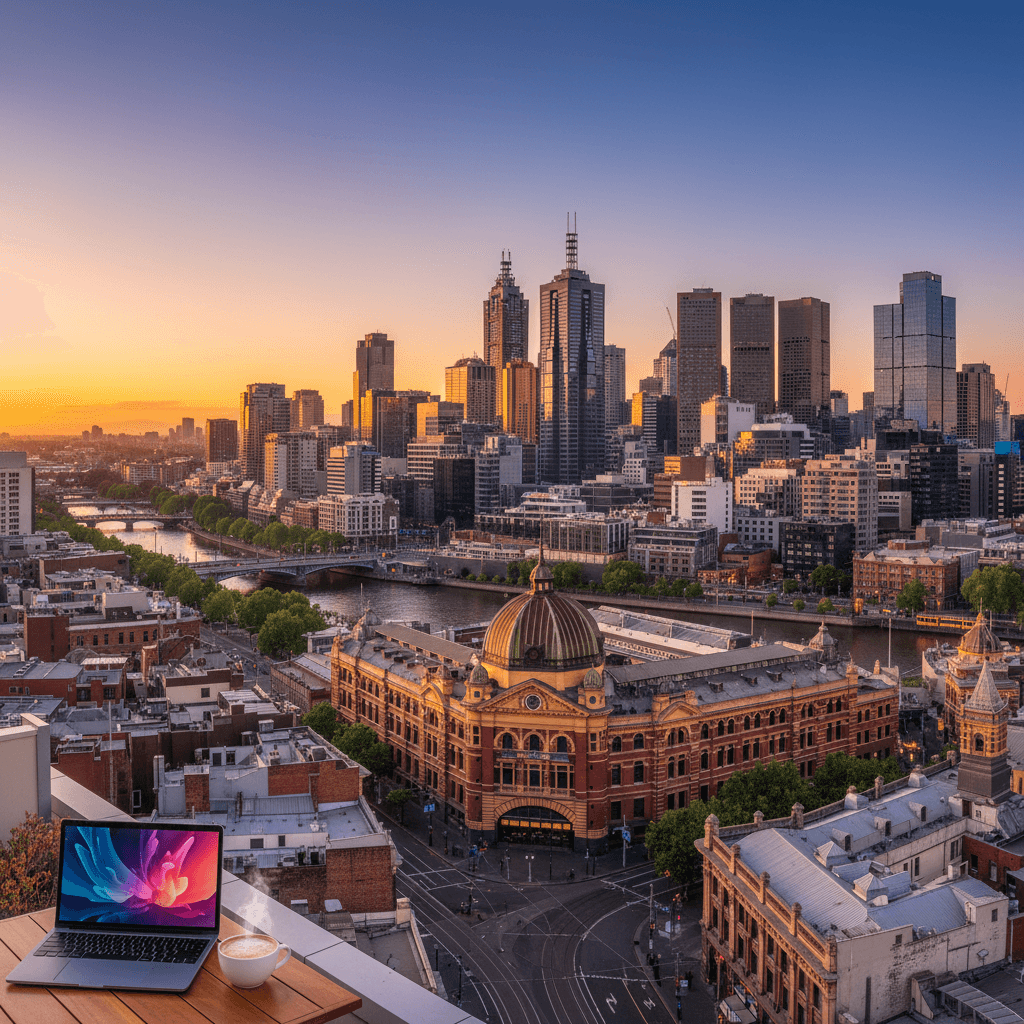
Melbourne
🇦🇺 Australia
The Multicultural Soul of Australia
Melbourne doesn't scream for your attention like Sydney does with its harbor views. Instead, it whispers through a graffiti-covered laneway and lures you in with the smell of a perfectly pulled espresso. It is widely considered the country's cultural capital, a title it earns through a relentless schedule of live music, underground art galleries, and a startup scene that feels more like a community than a corporate ladder.
For nomads, the city offers a distinct creative energy. You aren't just here to tick off tourist sites; you're here to live a lifestyle defined by high-end design and entrepreneurial grit. It's a place where your morning meeting happens in a world-class cafe and your evening ends at a rooftop bar in Fitzroy. While it lacks the tropical heat of Southeast Asian hubs, it replaces it with a sophisticated, safe, and deeply welcoming atmosphere.
The Nomad Experience: Pros and Cons
Living here means embracing a bit of chaos, particularly with the climate. Locals joke about having four seasons in one day, and they aren't exaggerating. You might start your morning in a puffer jacket and end your afternoon in a t-shirt. It keeps the city's mood shifting, but it can be a headache for those used to the predictable sun of Bali or Lisbon.
- The Coffee Obsession: This isn't just a morning ritual; it's a way of life. You'll find some of the best beans on the planet here, making every cafe a potential office.
- The Creative Pulse: Between the street art in Hosier Lane and the constant festival calendar, there is always something new to see. The city never feels stagnant.
- Infrastructure: The public transport is top-tier. The Myki card system is easy to use on your phone, and the Free Tram Zone in the CBD is a massive win for those staying central.
- Cost and Speed: The trade-off for this high quality of life is the price tag. Expect to pay more for a meal or a desk than you would in Brisbane or Adelaide. Also, while the internet is reliable at around 95 Mbps, it won't break any world records for speed.
What It Costs to Live Here (2026 Estimates)
Melbourne is one of Australia's more expensive cities, and your budget will largely depend on how much you want to lean into the dining and nightlife scenes. Most expats recommend starting with a two-week stay in the CBD to get your bearings before committing to a longer lease in the suburbs.
- Budget Backpacker: Approximately $2,450 per month. This usually involves shared housing and cooking most meals at home.
- Comfortable Nomad: Around $3,500 per month. This covers a private studio or a nice room in a trendy area like Brunswick, plus regular cafe visits and weekend trips.
- Digital Executive: Budget $5,250+ per month. This tier allows for a premium apartment in South Yarra or the CBD, high-end dining, and a dedicated desk at a space like The Commons.
Navigating the City
Getting around is surprisingly intuitive. The tram network is the largest in the world and serves as the city's heartbeat. A single trip outside the free zone costs AUD$5, but the walkability of the inner suburbs means you often won't need it. For those arriving at the airport, look into e-SIM options like the Saily app before you land to avoid the premium prices at the terminal kiosks.
The city is exceptionally safe, holding a 5/5 safety rating from most traveler communities. Whether you are walking through the neon-lit streets of the CBD at midnight or exploring the grungier corners of Richmond, the vibe remains generally respectful and secure. It is a place that invites you to lose yourself in the details, from the smell of the eucalyptus trees in the Royal Botanic Gardens to the bass thumping from a basement bar in the North.
The Reality of Your Melbourne Budget
Melbourne holds the title for Australia's cultural heartbeat, but that reputation comes with a price tag to match. While it isn't quite as punishing as Sydney's rental market, your bank account will feel the squeeze compared to Southeast Asian hubs or even smaller Australian cities like Brisbane. Most nomads find they need to balance their love for $5.50 flat whites with a bit of strategic planning to keep their monthly spend under control.
For the 2025 to 2026 period, expect your total monthly outgoings to fall into one of these three tiers:
- The Budget Backpacker: Around $2,450 per month. This involves staying in hostels or shared houses in suburbs like Richmond and keeping dining out to a minimum.
- The Comfortable Nomad: Around $3,500 per month. This covers a private studio or a nice room in a shared house in Fitzroy, regular cafe sessions, and frequent weekend outings.
- The Digital Executive: $5,250+ per month. This buys you a high end apartment in the CBD or South Yarra, daily fine dining, and premium coworking memberships.
Housing and Accommodation
Rent is your biggest hurdle. In Melbourne, the closer you are to a tram line that leads to the city, the more you'll pay. Many expats recommend starting with a short term stay in the CBD for your first 14 days. This gives you time to scout neighborhoods without the pressure of a long lease. If you're looking for value, Richmond and South Melbourne offer a solid middle ground between price and proximity.
For those who want the classic Melbourne experience, Fitzroy is the go to, though you'll pay a premium for the heritage architecture and proximity to the best bars. If you prefer a more polished, upscale vibe, South Yarra is the place to be. Expect to pay significantly more for anything central, while hopping a few stops further out to places like Brunswick can save you hundreds each month.
Food, Coffee, and Dining
Melbourne is a city that lives for its food. You can find world class ramen, authentic pasta, and incredible street food at almost any hour. While high end dining can easily top $150 per person, you can still find plenty of affordable eats in multicultural hubs. A standard meal at a mid range restaurant usually sits between $25 and $40, while a quick lunch from a bakery or cafe will be closer to $15 or $20.
The coffee culture here is no joke. It's a daily ritual, and while $5 to $6 for a latte might seem high, the quality is arguably the best in the world. Most remote workers treat cafes as their secondary offices, though you'll want to check if they're laptop friendly during the busy lunch rush.
Transport and Infrastructure
The tram system is the pride of the city. If you stay within the central grid, the Free Tram Zone is a massive win for your budget. You can zip between meetings and shops without spending a cent. Once you head outside that zone, a single trip will cost you AUD $5. Most travelers find the easiest way to pay is by loading a Myki card directly onto their phone, which lets you tap on and off with ease.
Coworking and Connectivity
While Melbourne's internet speeds generally hover around 95+ Mbps, it can feel a bit sluggish if you're coming from Europe or Singapore. Most nomads opt for a dedicated coworking space to ensure a stable connection. The Commons is a favorite for its community vibe and well designed interiors, with memberships starting around AUD $350 (roughly USD $229) per month. For a more flexible approach, the city's public libraries offer excellent free Wi-Fi and quiet environments for deep work.
For mobile data, don't bother with physical stores if you can avoid them. Most expats suggest using an e-SIM app like Saily. It's the simplest way to get connected the moment you land, provided your phone is compatible. It saves you the hassle of hunting down a local shop and comparing confusing prepaid plans.
The Creative Core: Fitzroy and Brunswick
If you're coming to Melbourne for the artsy, coffee obsessed lifestyle you've seen on Instagram, Fitzroy is your base camp. It is widely considered the original hipster suburb and holds the title for some of the best nightlife in the country. You'll spend your days working from high ceilinged cafes on Brunswick Street and your nights at underground live music venues. It is a magnet for creative workers and freelancers who want to be in the thick of the action.
Just a bit further north, Brunswick offers a similar grungy, hip vibe but feels a bit more lived in. It is well connected to the city center by tram and is a favorite for nomads who want a trendy atmosphere without the premium price tag of Fitzroy's most central streets. Both areas are packed with vintage shops and galleries that keep the inspiration flowing between deep work sessions.
- Highlights: Incredible street art, world class coffee, and a massive community of remote workers.
- Coworking: The Commons offers memberships starting around AUD 350 per month and is a staple for the local startup scene.
Beachside Living: St Kilda
For those who can't imagine living in a city without being near the water, St Kilda is the go to spot. It offers a unique mix of urban grit and seaside relaxation. You can spend your morning answering emails at a beachside kiosk and your afternoon walking along the pier to see the local penguin colony. It is a high energy neighborhood that attracts a diverse crowd of expats and travelers, making it one of the easiest places to meet people.
While the vibe is more relaxed than the inner north, you aren't sacrificing connectivity. The tram lines here are frequent, whisking you into the CBD in about 20 to 25 minutes. It is the ideal compromise for nomads who want to balance a professional workflow with a holiday atmosphere.
Upscale and Balanced: South Yarra and South Melbourne
If you prefer polished streets and high end boutiques over street art and dive bars, South Yarra is the place to be. It is an upscale area with beautiful parks and easy access to the city. It feels a bit more "grown up" than the northern suburbs and is popular with digital executives who want a quieter, sophisticated suburban experience while staying close to the action.
South Melbourne offers a similar sense of balance. It is home to the famous South Melbourne Market and provides a more neighborhood feel compared to the skyscraper heavy CBD. It is recommended for those who want a local life where the barista knows your name, but you're still only a short tram ride from a major coworking hub.
- South Yarra: Best for luxury rentals and high end dining.
- South Melbourne: Great for foodies and those who prefer a village atmosphere.
- Richmond: A diverse and often more affordable alternative that keeps you close to the sporting district and great Vietnamese food.
Strategic Advice for New Arrivals
Most long term travelers suggest starting your Melbourne journey with a two week stay directly in the CBD (Central Business District). This allows you to take advantage of the Free Tram Zone while you scout different neighborhoods. Since Melbourne's weather is famously unpredictable, you'll want to test the commute from various suburbs during a rainy day before signing a longer lease.
While the CBD is convenient, it can feel a bit anonymous. Once you've found your feet, moving out to places like Fitzroy or St Kilda usually results in a much richer social life. Use the Myki system on your phone to get around; a single trip outside the free zone costs about AUD 5, but the connectivity to these outer hubs is what makes Melbourne so livable.
The Reality of Melbourne Connectivity
If you are coming from Bangkok or Bucharest, you might find Melbourne's internet speeds a bit of a reality check. While the city offers a respectable 95+ Mbps on average, it does not quite reach the blazing speeds of some European or Asian nomad hubs. That said, it is more than enough for video calls and heavy uploads; you just might experience the occasional lag during peak hours.
Most local cafes are generous with their WiFi, and you will find it is standard practice to set up your laptop for a couple of hours. The city's public libraries are also fantastic resources, offering high speed connections in quiet, often historic settings for those days when you need to focus without the distraction of a busy espresso machine.
Top Coworking Spaces
The coworking scene here is professional and well established, reflecting the city's strong startup energy. You won't just be paying for a desk; you are paying for the community and the networking opportunities that come with it.
- The Commons: This is the heavy hitter in the local scene. With locations across the city, memberships start around AUD 350 per month. The spaces are thoughtfully designed with plenty of natural light, ergonomic furniture, and a community atmosphere that makes it easy to meet fellow entrepreneurs.
- Hub Australia: Known for its premium feel, Hub offers several locations including a stunning spot in the historic Southern Cross Station. It is a favorite for those who need a more corporate, polished environment for client meetings.
- Creative Spaces: Since Melbourne is an arts hub, look out for smaller, niche studios in Fitzroy or Brunswick. These often cater to designers and artists rather than just tech workers, providing a more eclectic vibe.
Mobile Data and SIM Cards
Getting connected as soon as you land is straightforward. While you can grab a physical SIM at the airport, most nomads now opt for the convenience of an E-SIM. It saves you the hassle of hunting down a store and swapping out tiny pieces of plastic.
The Saily app is a popular choice among travelers here. It allows you to purchase and download various E-SIM plans directly to your phone before you even clear customs. Just make sure your device is E-SIM compatible before you commit. If you prefer a local physical SIM, providers like Telstra offer the best coverage if you plan to head into the bush, while Optus or Vodafone are perfectly fine for city living.
Best Areas for Connection
Where you choose to work will change your experience of the city. Most people recommend starting in the CBD for the first two weeks. It gives you a central base to test out different coworking spots and get a feel for the tram network before you decide on a more permanent neighborhood.
- Fitzroy: Ideal for those who want to work from a different cafe every day of the week. The concentration of high quality coffee and reliable WiFi is highest here.
- St Kilda: A great pick if you want to balance your emails with some sea air. There is a solid network of freelancers and remote workers in the area, and the vibe is significantly more relaxed than the city center.
- State Library Victoria: Located in the CBD, this is arguably the most beautiful place to work in the country. The internet is fast, it is free to enter, and the majestic dome of the La Trobe Reading Room provides plenty of inspiration.
Safety in the City
Melbourne holds a stellar reputation among the nomad community, often scoring a perfect 5/5 for safety in traveler rankings. It is widely considered one of the most secure urban environments in the world, making it a top pick for solo travelers and those working late hours in coworking spaces. You can generally walk through the CBD and inner suburbs like Carlton or South Yarra at night without feeling on edge.
While the city is incredibly safe, common sense still applies in high traffic areas. Most locals suggest keeping an eye on your belongings around major transit hubs like Flinders Street Station or busy nightlife strips in Fitzroy. Theft isn't rampant, but it's better to be smart with your tech and bags when you're distracted by the street art or hunting for the perfect flat white.
Healthcare Infrastructure
Australia’s healthcare system is world class, and Melbourne is home to some of the country's leading medical facilities. If you're an expat or a nomad on a long term visa, you'll find the quality of care exceptional. For those on shorter stays, private travel insurance is a must, as out of pocket costs for GP visits and hospital stays can be steep for non residents.
Most nomads head to local medical centers for routine issues. These are often "all in one" clinics where you can see a doctor, get blood tests, and sometimes even visit a physiotherapist in the same building. You'll find these clinics peppered throughout the CBD and in every major neighborhood like St Kilda or Richmond. Appointments can usually be booked online via apps like HotDoc or Healthengine, which is much easier than calling around.
Pharmacies and Prescriptions
Pharmacies, or "chemists" as the locals call them, are everywhere. Major chains like Chemist Warehouse offer the lowest prices for over the counter meds and toiletries, while smaller local pharmacies provide more personalized service. Many pharmacies in the CBD and inner suburbs stay open late, and there are several 24 hour options available if you need a script filled in the middle of the night.
- Emergency Services: Dial 000 for police, fire, or ambulance.
- After Hours Care: If it's not a life threatening emergency but you need a doctor after 6:00 PM, look for "home doctor" services that can visit your accommodation.
- Water Safety: The tap water is perfectly safe to drink and tastes great. Bring a reusable bottle to save money and reduce plastic.
Practical Tips for Staying Well
The biggest health "threat" in Melbourne isn't crime or disease; it's the sun and the unpredictable weather. The Australian sun is famously harsh, even on overcast days. Expats will tell you to "slip, slop, slap" (slip on a shirt, slop on sunscreen, and slap on a hat) if you're spending any time outdoors.
The "four seasons in one day" phenomenon also means you should always carry a light jacket, even if it looks like a clear summer morning. Rapid temperature drops are common, and catching a chill is the easiest way to ruin a work week. Keeping a weather app like BOM (Bureau of Meteorology) on your phone is standard practice for anyone living here.
Mastering the Myki
Melbourne's transit heart beats through its iconic tram network, the largest in the world. To get moving, you need a Myki card. While you can buy physical cards at 7-Eleven or major stations, most nomads just download the digital version to their phone. You can top it up instantly via the app, making it easy to keep your balance in the green.
A single tram trip costs AUD$5, but there is a massive perk for those staying central. The Free Tram Zone covers the entire CBD (the Hoddle Grid) and extends out to Docklands. If you are only traveling within this zone, you don't even need to tap on. It is a lifesaver for hopping between coworking spots or grabbing lunch without worrying about the fare.
Getting Around the Burbs
While the trams are great for the inner north and south, the train network is your best bet for longer hauls to places like the creative hubs in Footscray or the beaches down the line. Most inner-city suburbs like South Yarra and Brunswick have excellent connectivity, but the frequency can drop off after midnight on weekdays. If you are heading out for a late night in Fitzroy, keep an eye on the schedule or prepare to use a rideshare.
Walking is surprisingly viable here. The city is laid out in a logical grid, and the famous "laneways" are designed for pedestrian exploration. You'll often find that walking three blocks through a graffiti-covered alley is faster and more interesting than waiting for a tram during peak hour.
Arrival and Airport Transfers
Melbourne Airport (Tullamarine) is about 23 kilometers from the city center. Unlike other major Aussie hubs, there is no direct train link yet. You have three main options for getting into town:
- SkyBus: This is the most popular choice for solo travelers. It runs 24/7 and costs around AUD$20.85 for a one-way trip (or check current pricing on skybus.com.au), dropping you at Southern Cross Station in about 30 to 45 minutes.
- Rideshare and Taxis: Uber, Ola, and DiDi all operate here. Expect to pay between AUD$50 and $70 depending on traffic and surge pricing. It is usually worth it if you are traveling in a group.
- Public Bus: For those on a strict budget, you can take a local bus to Broadmeadows station and then a train to the city, but it is a bit of a mission with luggage.
Cycling and Micro-mobility
The city is relatively flat, which makes it a dream for cyclists. There are dedicated bike lanes on many major roads, particularly those heading north toward Brunswick and Northcote. You will see plenty of e-scooters scattered around the sidewalks too. These are great for short "last mile" trips, though the costs can add up if you use them as your primary mode of transport. Just remember that helmets are legally required in Australia, even for scooters, and the police do hand out fines for skipping them.
The "Four Seasons" Factor
You cannot talk about getting around Melbourne without mentioning the weather. Locals joke about "four seasons in one day," and they aren't kidding. You might start your commute in bright sunshine and find yourself in a torrential downpour by the time you reach your coworking space. Most expats recommend carrying a lightweight, packable rain jacket and checking the BOM (Bureau of Meteorology) app before you leave the house. If the weather turns sour, the trams become the city's unofficial shelters, so expect them to get crowded the moment the clouds turn grey.
What to Expect on the Ground
English is the primary language in Melbourne, but you'll quickly realize it's one of the most linguistically diverse cities on the planet. Thanks to a massive multicultural population, it's common to hear Greek, Mandarin, Vietnamese, or Italian while grabbing your morning flat white. You won't face any communication barriers in business or daily life, though the local dialect has its own rhythm and quirks that might take a few days to tune into.
Melburnians are generally laid back but efficient. In the CBD and creative hubs like Fitzroy, the vibe is professional yet casual. People are approachable, and if you're looking for a coworking desk or a recommendation for the best filter coffee, a quick question to the person next to you usually results in a friendly conversation.
The Local Lingo
Australian English is famous for its love of abbreviations. Most nomads find that "Aussie-isms" aren't just for show; they're the standard way people speak. If you hear someone mention they're heading to the "bottlo", they're just going to the liquor store. If a colleague asks to meet "this arvo", they mean this afternoon. Generally, if a word can be shortened and have an "o" or "ie" tacked onto the end, it will be.
One thing to watch for is the "rising inflection," where statements can sound like questions. Don't be confused; it's just a local speech pattern. Also, "no worries" is the unofficial national motto. You'll hear it used to mean you're welcome, it's okay, or don't mention it.
Digital Communication and Apps
Melbourne is a tech forward city, so you'll do most of your communicating through apps. For staying connected without hunting for a physical store, expats recommend using the Saily app. It allows you to download an E-SIM directly to your phone, which is often the easiest way to get data the moment you land. Just make sure your device is compatible before you commit.
- WhatsApp: While iMessage and SMS are common, most social and nomad groups coordinate via WhatsApp.
- Myki App: Essential for public transport. You can load credit and tap on using your phone's NFC, which saves you from carrying a plastic card.
- Language Apps: If you're spending time in suburbs like Box Hill (Mandarin) or Footscray (Vietnamese), having Google Translate handy can be a nice touch, though almost everyone you'll interact with speaks fluent English.
Communication in the Workplace
The startup and creative scene in Melbourne is booming, and the communication style reflects that. It's less hierarchical than London or New York. Even in professional settings, first names are the standard. If you're working out of spaces like The Commons, you'll find that networking is quite organic. People value directness but appreciate a bit of self deprecating humor. If you're invited for a coffee to "pick your brain," it's a genuine social invitation that often leads to solid professional connections.
Key Phrases for Your First Week
You don't need a translator, but knowing these terms will help you blend in at the local pub or cafe:
- Brekkie: Breakfast, which is practically a religion in Melbourne.
- Flat White: The standard espresso and steamed milk drink. Don't call it a latte unless you want more foam.
- Caps: Short for cappuccinos.
- Sorted: When something is taken care of or organized.
- Dees, Pies, or Blues: If someone asks who you "follow," they're talking about AFL (Australian Rules Football) teams. It's the fastest way to start a conversation in a Melbourne bar.
What to Expect: Four Seasons in One Hour
If there is one thing locals and nomads agree on, it is that Melbourne's weather has a personality of its own. The city is famous for its four seasons in one day phenomenon. You might head out for coffee in a t-shirt under a clear blue sky and find yourself ducking into a doorway to escape a sudden downpour or a chilly wind gust twenty minutes later. Most expats quickly learn the golden rule of living here: always carry a light jacket and an umbrella, even if the morning forecast looks perfect.
While the unpredictability can be a bit of a shock compared to the steady tropical heat of places like Thailand or Bali, it keeps the city atmosphere fresh. The changing weather is part of the charm that fuels the massive indoor cafe culture and the cozy, underground bar scene that nomads love so much.
The Sweet Spots: Best Months to Visit
If you want the best balance of outdoor living and manageable temperatures, aim for the shoulder seasons. October and November (Spring) or March and April (Autumn) are widely considered the prime windows for a stay. During these months, the parks are either blooming or turning a deep orange, and the temperatures are usually mild enough for long walks between coworking sessions without the biting cold of winter or the searing heat of mid-summer.
- Spring (September to November): The city wakes up. You will see more people working from the outdoor tables at cafes in Fitzroy. It is a great time for networking as the social calendar starts to fill up.
- Autumn (March to May): This is arguably the most beautiful time in Melbourne. The air is crisp, the wind dies down, and the light is perfect for photographers.
Surviving the Extremes
Summer in Melbourne runs from December to February. While it is the peak of beach culture in St Kilda, be prepared for occasional heatwaves where temperatures can spike significantly. It is the best time for rooftop bars and weekend trips down the coast, but the high UV levels mean you will need to be serious about sun protection.
Winter, spanning June to August, is grey, damp, and windy. It rarely drops to freezing, but the dampness makes it feel colder than the thermometer suggests. This is the season when nomads retreat to cozy spots like The Commons or public libraries to stay productive. If you are coming during these months, make sure your accommodation has decent heating, as older Melbourne houses can be notoriously drafty.
The Nomad Verdict on Timing
Most long term travelers recommend arriving in October. This gives you time to settle into a neighborhood like Richmond or South Melbourne before the holiday rush begins. You will get the best of the spring weather and be well established by the time the major summer festivals and sporting events kick off in January. If you prefer a quieter, more contemplative vibe for deep work, the autumn months of March and April offer a steady, cool environment that is perfect for staying focused in your favorite local cafe.
Connectivity and Tech Setup
Living in Melbourne means you won't struggle for a signal, but don't expect the lightning fast speeds of Seoul or Bangkok. Most nomads find the local 95+ Mbps speeds adequate for video calls, though home setups can be patchy. Skip the hassle of finding a physical store and go with an e-SIM. Expats usually recommend the Saily app to get connected before you even clear customs. Just make sure your phone isn't network locked before you buy.
For a dedicated desk, The Commons is the heavy hitter here. A membership will set you back about AUD 350 a month, but it's where you'll find the most active professional community. If you prefer a more relaxed vibe, the city is packed with laptop friendly cafes and public libraries that offer reliable, free internet.
Getting Around the City
Melbourne's tram network is the largest in the world and it's remarkably easy to use. The best part is the Free Tram Zone in the CBD, which lets you hop on and off without paying a cent as long as you stay within the central grid. For anything outside that, a single trip is AUD 5. Forget the plastic cards; you can now load a Myki card directly onto your phone and tap on at the reader.
The city's layout is very walkable, but the neighborhoods have distinct personalities. Most travelers recommend staying in the CBD for your first 14 days. This lets you get a feel for the commute times to trendy spots like Fitzroy or Brunswick before you commit to a long term lease.
Budgeting and Costs
Melbourne is expensive, even by Australian standards. You'll need to keep a close eye on your daily spend to avoid a shock at the end of the month. Here is a rough breakdown of what to expect for monthly budgets in 2026:
- Budget Backpacker: Around $2,450. This covers hostel stays and plenty of home cooked meals.
- Comfortable Nomad: Roughly $3,500. This gets you a private room in a shared house and regular cafe visits.
- Digital Executive: Budget $5,250 or more for a high end apartment in South Yarra and frequent dining out.
Weather and Packing
Locals joke about experiencing four seasons in one day, and they aren't kidding. You might start your morning in a puffer jacket and end it in a t-shirt. Even if you're visiting during the prime months of October, November, March, or April, always carry an extra layer and a compact umbrella. The weather is famously unpredictable, so flexibility is your best friend when planning outdoor trips to the coast.
Safety and Local Life
This is one of the safest cities you'll ever visit, earning a 5/5 safety rating from most travelers. You can generally walk around the inner suburbs at night without worry. While it's a multicultural melting pot where you'll hear dozens of languages, English is the primary way to get things done. If you find the city costs are draining your bank account too fast, consider looking at rural hubs outside the city for a few weeks to balance the books.
Need visa and immigration info for Australia?
🇦🇺 View Australia Country GuideNomad Haven
Your home away from home