Medellín
🇨🇴 Colombia
The City of Eternal Spring
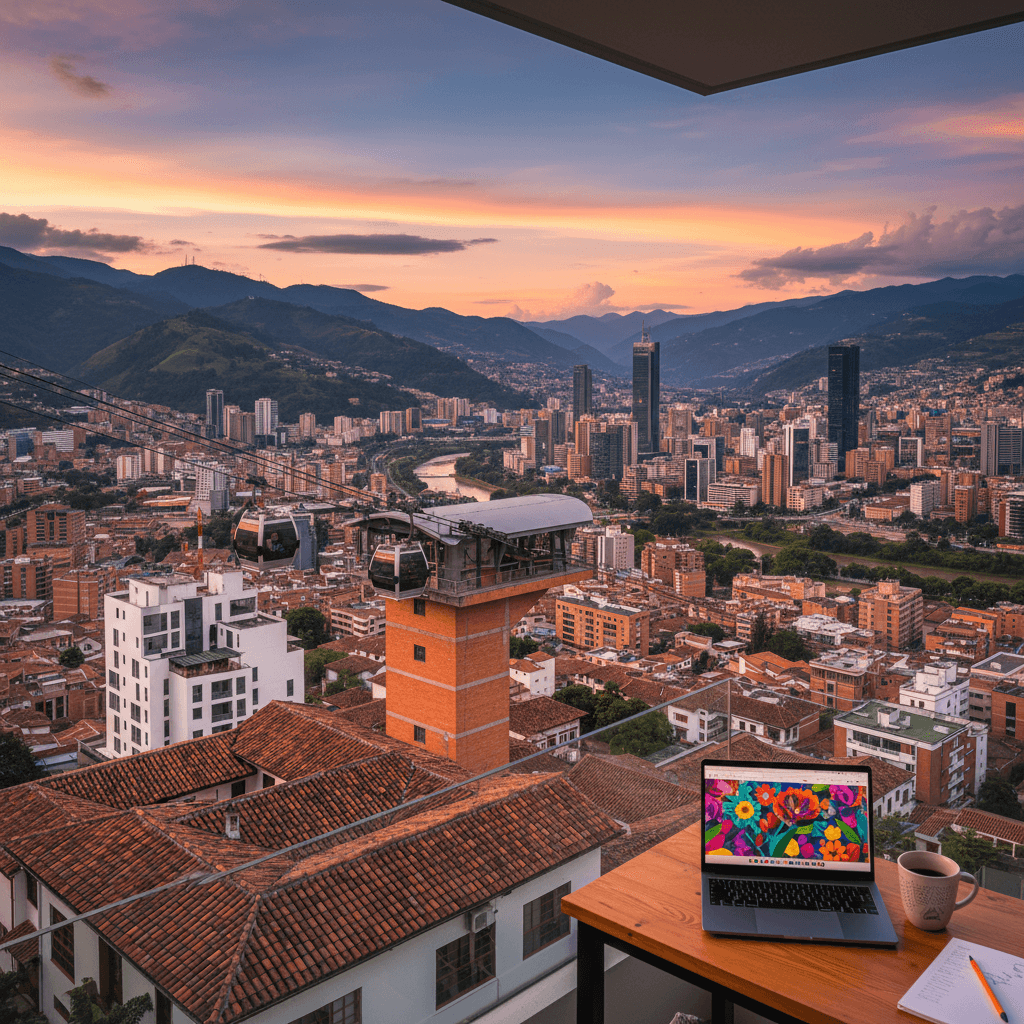
Medellín doesn't just feel like a city; it feels like a comeback story you're invited to join. Nestled in a deep Andean valley, the first thing you'll notice is the verticality of it all, with orange brick buildings climbing up lush green mountainsides. The air stays at a steady 72 to 82°F year round, earning its nickname while keeping your wardrobe simple. It’s a place where modern infrastructure, like the spotless metro and cable cars, sits right alongside old school street vendors selling $2 arepas.
The vibe is a calibrated mix of high energy and "paisa" hospitality. You'll find yourself working from a world class cafe in the morning and dancing salsa in a crowded bar by midnight. While the city has moved far past its turbulent history, it retains an edge that keeps it authentic. Most nomads find the community here is one of the strongest in the world; it’s nearly impossible to spend a week in the city without being invited to a language exchange, a rooftop meetup, or a weekend trip to the colorful town of Guatapé.
The Financial Reality
Living here allows for a lifestyle that would cost triple in the States or Europe. You can live well on $1,500 a month, but if your budget is closer to $3,500, you’re looking at luxury penthouses and nightly fine dining. Most travelers recommend using Wise or Revolut for better exchange rates and sticking to Uber or DiDi for safe, cheap rides that rarely top $5.
- Budget Tier ($1,200 to $1,800): Shared housing in Laureles, plenty of street food, and metro commutes.
- Mid-range Tier ($2,000 to $3,000): A private 1BR apartment, frequent dining at spots like Carmen, and a dedicated desk at a coworking space.
- Comfortable Tier ($3,500+): High floor luxury rentals in El Poblado, daily Uber rides, and weekend excursions.
Where to Plant Your Flag
Choosing a neighborhood defines your Medellín experience. While El Poblado is the default, long term nomads often migrate west for a more local feel.
El Poblado (Provenza and Manila)
- Rent: $800 to $1,500 for a 1BR.
- The Vibe: The epicenter of nomad life. It’s hilly, leafy, and packed with specialty coffee shops like Pergamino.
- Pros: Best networking, walkable nightlife, and home to Selina and WeWork.
- Cons: It can be noisy and feels less like "real" Colombia.
Laureles
- Rent: $400 to $800 for a 1BR.
- The Vibe: Flat, residential, and incredibly walkable. It’s where you’ll find parks full of seniors playing chess and students from the nearby university.
- Pros: Authentic food, cheaper prices, and a more relaxed pace.
- Cons: Fewer people speak English and the "nomad buzz" is quieter.
Productivity and Connection
Internet is generally excellent, with fiber optic speeds hitting 100 Mbps in most modern apartments. If you need a professional setup, Selina Medellín offers a hybrid hostel and coworking environment for about $15 a day. For those who prefer a cafe culture, Velatropa or La Casa Redonda are favorites for their reliable WiFi and strong coffee.
Safety is a common question, and the local rule is "no dar papaya," which basically means don't give anyone a reason to take your stuff. Stick to well lit areas in El Poblado or Laureles, keep your phone tucked away on the street, and use ride hailing apps instead of hailing taxis at night. If you need medical care, facilities like Hospital Pablo Tobón Uribe meet international standards, and you can get almost anything delivered to your door via the Rappi app.
The real magic of Medellín isn't the cheap coffee or the fast internet. It’s the way the city makes you feel like you’re part of its future. Whether you’re hiking in Arví Park or grabbing a $10 SIM card from a Tigo kiosk, there’s an underlying pulse of transformation that’s contagious.
The Price of Paradise
Medellin earned its nickname as the City of Eternal Spring for its weather, but for digital nomads, the real draw is the ability to live a high-end lifestyle on a fraction of a Western budget. You can comfortably navigate the city with $1,500 to $2,500 per month, though your choice of neighborhood will be the biggest variable in that equation.
Most travelers break their spending into three tiers. Budget nomads can get by on $1,200 to $1,800 by sharing housing and sticking to local spots. A mid-range budget of $2,000 to $3,000 secures a private apartment in a trendy area and frequent dinners out. If you're looking for luxury, $3,500 or more gets you a penthouse in El Poblado and high-end dining at spots like El Cielo.
Breaking Down the Monthly Bills
Housing is your primary expense, and prices have risen as the nomad community has grown. In El Poblado, expect to pay between $800 and $1,500 for a modern one-bedroom apartment. If you head over to the more traditional neighborhood of Laureles, those prices drop to a more manageable $400 to $800 for similar quality.
Day-to-day costs remain incredibly low compared to the U.S. or Europe:
- Street food: Empanadas or arepas for $2 to $4.
- Casual dining: A solid mid-range meal for $8 to $15.
- Coworking: Daily passes at Selina or WeWork average $10 to $15.
- Transport: Metro rides are roughly $0.70, while an Uber across town usually costs between $3 and $5.
Where to Plant Your Flag
Choosing a neighborhood is a trade-off between convenience and authenticity. Expats recommend starting in one area for a month before committing to a longer lease.
El Poblado
- Best For: First-timers, social butterflies, and nightlife.
- Rent: $800 to $1,500 for a 1BR.
- The Vibe: It is the heart of the nomad scene with the highest concentration of English speakers, cafes like Pergamino, and the famous nightlife of Provenza. It's safe and convenient but can be noisy and feels less like "real" Colombia.
Laureles
- Best For: Long-term stays and a local feel.
- Rent: $400 to $800 for a 1BR.
- The Vibe: Flat, walkable, and filled with trees. It's quieter than Poblado but still has a great coffee culture and plenty of parks. Most nomads find this the best balance for actual work-life productivity.
Envigado
- Best For: Families and budget-conscious travelers.
- Rent: $400 to $700 for a 1BR.
- The Vibe: Technically its own municipality, it feels like a peaceful suburb. It offers a more authentic residential experience while still being connected to the city by the metro.
Staying Connected and Productive
Reliable internet is the lifeblood of the city's remote work scene. Most apartments offer speeds between 30 and 100 Mbps, though nomads often keep a backup plan. For the most stable connection, head to WeWork Milla de Oro or Selina Medellin. If you prefer the cafe route, Velvet and La Casa Redonda are favorites for their strong WiFi and laptop-friendly policies.
For mobile data, don't rely on roaming. Pick up a local SIM from Tigo or Claro for about $15 a month with plenty of data. If you want to be online the second you land, an eSIM from Holafly is a popular, albeit slightly more expensive, alternative.
Practical Spending Tips
Cash is still king in many smaller shops, but you'll use cards for almost everything else. Use a fintech card like Wise or Revolut to avoid hefty bank fees at local ATMs like Banco de Bogota. When it comes to getting around, stick to ride-hailing apps like Uber, DiDi, or InDriver at night. During the day, the Metro is world-class and incredibly cheap. For groceries and pharmacy needs, download Rappi; it's the local "everything app" that will deliver almost anything to your door for a small fee.
For Social Nomads and Short-Term Seekers
If you want to be in the thick of the action, El Poblado is your home base. It's the most developed part of the city and where you'll find the highest concentration of English speakers. Most nomads gravitate toward the sub-neighborhoods of Manila and Provenza because they're packed with coworking spaces like Selina and WeWork Milla de Oro.
Living here isn't cheap by Colombian standards. Expect to pay between $800 and $1,500 for a 1BR apartment. While it's the safest area for walking, it can get loud at night, especially near Parque Lleras. It's perfect if you prioritize networking, high-speed fiber internet, and being steps away from world-class dining like Carmen or the coffee at Pergamino.
- Vibe: High-energy, international, and upscale.
- WiFi: Reliable 30 to 100 Mbps in most buildings.
- Networking: Constant meetups, language exchanges, and events at La Casa Redonda.
For Long-Term Expats and Remote Workers
Laureles is the top choice for those staying three months or longer. It offers a more authentic "barrio" feel without sacrificing creature comforts. The streets are flat and circular, making it one of the most walkable areas in Medellín. You'll find plenty of green space and local parks where people actually hang out.
Rent is significantly more affordable here, usually ranging from $400 to $800 for a quality apartment. While there's less "nomad buzz" than in Poblado, the local food scene is incredible and much cheaper. You can grab a traditional $2 arepa or a mid-range meal for under $10. It's a balanced lifestyle that feels like living in a real city rather than a tourist bubble.
- Best for: Lower cost of living and a local atmosphere.
- Transport: Easy access to the Metro at the Estadio or Suramericana stations.
- Safety: Very safe during the day, though travelers recommend taking an Uber or DiDi after dark.
For Families and Budget-Conscious Travelers
Envigado sits just south of El Poblado but feels like a different world. It has maintained its own identity as a separate municipality, offering a quiet, family-oriented environment. It's famously safe and clean, with a community-focused vibe that makes it great for those traveling with children.
Prices here are lower than the main nomad hubs, and you get more space for your money. The terrain is a bit hillier, so you might rely more on the $3 to $5 ride-hailing trips to get around. Families appreciate the proximity to quality healthcare at Clínica Medellín and the abundance of traditional markets where groceries are a bargain.
- Cost: Budget-friendly with 1BR rentals starting around $400.
- Food: Known for some of the best traditional "bandeja paisa" in the valley.
- Connectivity: Good residential internet, though you'll find fewer dedicated coworking offices.
For Solo Travelers and Explorers
If you're flying solo and want to see the "real" Medellín, consider staying near the Estadio area of Laureles or the quieter pockets of Manila. Solo travelers often prefer these spots because they're social but not overwhelming. You can easily jump on the $0.70 Metro to explore Comuna 13 or take a day trip to Guatapé for about $20.
Safety is the main priority for solo visitors. Stick to well-lit areas in the evenings and avoid flashing expensive phones or jewelry. Most solo expats recommend using Rappi for everything from pharmacy deliveries to groceries, and joining local Facebook groups like MDECommunity to find buddies for hiking in Arví Park.
- Socializing: Language exchanges at local cafes are the best way to meet locals.
- Budget: A comfortable solo life costs roughly $2,000 to $3,000 per month including a nice apartment and frequent dining out.
- Apps: Download Google Translate and InDriver before you arrive.
Connectivity and Speed
Medellín has evolved into a legitimate tech hub, and for the most part, the internet infrastructure reflects that. You can expect average speeds between 30 and 100 Mbps in most modern apartments and dedicated workspaces. While the fiber optic network is robust, public Wi-Fi in parks or plazas is notoriously spotty. Most nomads rely on a VPN like NordVPN to keep their data secure when jumping between cafe networks.
If you're staying for more than a week, skip the roaming charges and grab a local SIM card. Tigo and Claro are the heavy hitters here. You can pick up a starter kit at the airport or any major mall for about $10 to $20, which usually nets you a month of unlimited data. If you want to hit the ground running the second you land, Holafly offers eSIMs that provide instant high speed data without the hassle of physical cards.
Top Coworking Spaces
The coworking scene is concentrated primarily in El Poblado and Laureles, catering to different work styles and budgets. Whether you need a corporate environment or a social hostel vibe, you'll find a desk that fits.
- Selina Medellín: Located in the heart of the action, this is a hybrid hostel and coworking space. It costs about $10 to $15 per day and is the best spot for networking. It's often loud and social, making it perfect for those who want to mingle after their Zoom calls.
- WeWork Milla de Oro: For a more professional, air conditioned environment, this is the gold standard. Monthly memberships run between $200 and $300. It’s located in the upscale San Fernando Plaza area and offers the most reliable backup power systems in the city.
- La Casa Redonda: This is a favorite in Laureles for those who prefer a more local, relaxed aesthetic. It feels more like a creative studio than a corporate office, and the community here tends to be long term residents rather than weekend travelers.
Work-Friendly Cafes
If you don't want to commit to a daily pass, Medellín’s cafe culture is incredibly welcoming to laptops. Most owners won't mind you camping out for a few hours as long as you keep the coffee flowing. Just keep an eye on your gear; never leave your laptop unattended if you step away to the restroom.
- Pergamino: An iconic spot in El Poblado. The WiFi is strong, and the coffee is world class. It gets crowded by mid afternoon, so arrive early if you want a table with a power outlet.
- Velvet: Just a short walk from Pergamino, this Belgian inspired cafe has plenty of space and a quieter atmosphere that’s better for deep work.
- Café Cliché: A gem in Laureles that offers a cozy, residential vibe. It’s a great place to settle in with a laptop and an empanada while avoiding the tourist crowds of Provenza.
Practical Considerations
Power outages aren't a daily occurrence, but they do happen, especially during the heavier rain seasons in October and November. Most high end coworking spaces have backup generators, but if you're working from an Airbnb, it's smart to have your phone hotspot ready as a backup.
For those who need to take frequent calls, be aware that El Poblado is lively and loud. Street performers, traffic, and construction are part of the soundtrack. If your job requires absolute silence, you'll likely prefer a dedicated office at WeWork or a quieter apartment in the residential pockets of Envigado. Most nomads find that the blend of affordable high speed fiber and the abundance of caffeine makes Medellín one of the easiest cities in South America to stay productive.
Staying Safe in the City of Eternal Spring
Medellín has undergone a massive transformation over the last two decades, but it still requires a level of street smarts that you might not need in Lisbon or Chiang Mai. Most nomads spend their time in El Poblado or Laureles, which are generally safe for walking during the day. However, the local mantra is "no dar papaya"; essentially, don't give anyone a reason to take advantage of you. This means keeping your iPhone 15 out of sight while walking and leaving the expensive watch at home.
The safety profile changes quickly depending on the neighborhood. While Comuna 13 is a must visit for the murals and history, travelers recommend staying on the beaten path and avoiding the edges of the district after dark. Similarly, the downtown El Centro area is great for a daytime photo op at Plaza Botero, but it becomes quite sketchy once the shops close. If you're heading out for the night, always use ride hailing apps like Uber, DiDi, or InDriver. They usually cost between $3 and $5 for a cross town trip and provide a digital trail that street taxis don't.
Common sense goes a long way here. Most petty theft involves "snatch and grab" incidents from motorbikes, so keep your bag on the side away from the street. If you're using your phone for navigation, step into a cafe or shop to check your map rather than standing on a busy corner. If you ever find yourself in an emergency, dial 123 for police or ambulance services.
World Class Healthcare on a Budget
One of the biggest surprises for newcomers is the quality of medical care. Medellín is a hub for medical tourism in South America, and the facilities often rival those in the U.S. or Europe. Expats and long term nomads frequently head to Hospital Pablo Tobón Uribe or Clínica Medellín for specialist visits or emergencies. These hospitals meet international standards, and many doctors in the premium neighborhoods speak English.
Dealing with minor ailments is incredibly easy thanks to the Rappi app. You can have a pharmacist from Farmatodo deliver everything from antibiotics to high end skincare directly to your door in under 30 minutes. For routine checkups, a private consultation with a specialist usually costs between $40 and $70 out of pocket, which is a steal compared to Western prices.
Practical Health Tips for Nomads
- Tap Water: Unlike many other South American cities, the tap water in Medellín is generally safe to drink. However, if you have a sensitive stomach, most nomads stick to bottled water or use a filtered pitcher like a Brita.
- Health Insurance: While care is affordable, you'll still want a policy that covers major emergencies. Digital nomad favorites like SafetyWing or Genki are widely accepted for reimbursement.
- Altitude and Air: The city sits at about 5,000 feet, so you might feel a bit winded during your first few days. The air quality can also dip during the dry season, so keep that in mind if you have respiratory issues.
- Pharmacies: Look for the Droguería sign on almost every block. Pharmacists in Colombia can often provide medical advice and dispense medications that would require a prescription elsewhere.
Overall, as long as you stay aware of your surroundings and stick to reputable neighborhoods like Envigado or Manila, you'll find the city easy to navigate. The combination of high quality private hospitals and low costs makes it one of the best spots in Latin America for nomads who prioritize health and wellness.
The Pulse of the City: The Metro System
Medellín is famous for its Metro, and for good reason. It is the only city in Colombia with a rail system, and locals take immense pride in its cleanliness and efficiency. For about $0.70 per ride, you can zip from the north to the south of the valley. Most nomads find the El Poblado and San Antonio stations to be their primary hubs. The system also includes the iconic Metrocable lines, which aren't just for tourists; they are vital transit links for residents in the steeper hills like Santo Domingo.
To use the system, you'll want to grab a Civica card at any station. It makes boarding seamless and allows for easy transfers between the trains, trams, and cables. While it's generally safe, keep your bag in front of you during rush hour when the cars get packed. If you need to check a map or send a quick Slack message, stations like San Antonio offer free public WiFi.
Ride-Hailing and Taxis
While traditional yellow taxis are everywhere, most expats and digital nomads stick to ride-hailing apps for the added layer of safety and fixed pricing. Uber, DiDi, and InDriver are the heavy hitters here. A typical 15 minute trip between Laureles and El Poblado usually costs between $3 and $5.
- Uber: Best for ease of use and linked credit cards. Technically in a legal gray area, so your driver might ask you to sit in the front seat to blend in.
- DiDi: Often slightly cheaper than Uber and very popular with locals.
- InDriver: Unique because you negotiate the fare. You bid a price, and drivers accept or counter. Great for getting a deal if you know the standard rates.
For airport transfers from Jose Maria Cordova (MDE), expect to pay between $15 and $25. The drive takes about 45 minutes through the Túnel de Oriente. While you can catch a bus for much less, most travelers recommend an app based ride after a long flight for the door to door convenience.
On Two Wheels
Medellín is hilly, but the flatter sections of Laureles and the lower parts of El Poblado are great for cycling. The city's bike sharing program, EnCicla, is free for residents and long term visitors, though the registration process can be a bit bureaucratic for short term stays. For a quicker start, apps like Muvo offer electric scooter and bike rentals for around $1 per hour. Just be cautious; drivers in Medellín can be aggressive, so stick to the dedicated bike lanes whenever possible.
Walkability and Safety
Both Laureles and El Poblado are highly walkable within their own borders. In Provenza or Manila, you'll find everything from coworking spaces like Selina to cafes like Pergamino within a ten minute stroll. Laureles is particularly flat and leafy, making it a favorite for those who prefer a daily walk to the gym or grocery store.
When walking, the "No dar papaya" rule applies: don't show off your expensive tech or jewelry. Stick to well lit streets at night, and if you're heading home late from a bar in Parque Lleras, just call an Uber. It's a small price to pay for peace of mind.
Transport Cost Breakdown
- Metro Ride: $0.70
- Short Uber Trip: $3 to $5
- Airport Transfer: $15 to $25
- Scooter Rental: $1 per hour
- Monthly Transport Budget: Most nomads spend $80 to $120 depending on how often they leave their home neighborhood.
The Linguistic Landscape
While Medellín is a global hub for remote work, it remains a firmly Spanish-speaking city. You can easily get by with English in the trendy pockets of El Poblado, specifically around Provenza or Manila, where cafe staff and coworking managers are usually bilingual. However, once you step into more authentic neighborhoods like Laureles or Envigado, the English safety net disappears quickly.
Most nomads find that while they can survive with translation apps, the quality of their experience scales directly with their Spanish level. Paisas, the locals of Medellín, are incredibly proud of their dialect and are famously patient with learners. They speak with a relatively clear, melodic accent that makes it one of the best places in Latin America to practice. If you're serious about staying for a few months, consider a few weeks of classes at a local school like Toucan Spanish in El Poblado.
Key Phrases for Daily Life
You'll hear specific slang that defines the local culture. Mastering a few of these will immediately change how locals interact with you. Instead of a standard "Hola," try "Buenas" when entering a shop or boarding a bus. It's the universal greeting of choice here. Other helpful basics include:
- ¿Cuánto cuesta?: How much does it cost?
- La cuenta, por favor: The check, please.
- ¿Me regalas...?: Literally "Will you gift me...?", but used politely to ask for anything from a coffee to a napkin.
- ¡Qué chimba!: Local slang for "That's cool!" or "That's great!"
- Con gusto: You'll hear this instead of "de nada" for "you're welcome."
Digital Communication and Apps
Communication in Medellín happens almost exclusively on WhatsApp. Whether you're booking a hair appointment, ordering delivery from a local restaurant, or messaging a landlord on Facebook Marketplace, don't expect to use email or phone calls. If a business has a phone number listed, it's almost certainly a WhatsApp account.
For on-the-go translation, Google Translate is the gold standard. Expats recommend downloading the Spanish language pack for offline use, as cell service can be spotty inside some of the older, thick-walled concrete buildings in Laureles. If you're looking for community, the MDECommunity website and various Facebook groups like "Medellín Entrepreneurs & Digital Nomads" are the primary channels for networking and finding language exchange meetups.
Connectivity and Data
Staying connected is cheap and straightforward. You'll want a local SIM card to avoid roaming charges and to ensure you can use ride-hailing apps like Uber or DiDi safely. Travelers often suggest Tigo or Claro for the best coverage across the city. You can pick these up at the José María Córdova International Airport (MDE) or any major mall like El Tesoro.
- Local SIM Card: $10 to $20 per month for a generous data package.
- Holafly eSIM: A great option for instant high-speed data if your phone supports it, though usually more expensive than local physical SIMs.
- Public Wi-Fi: Available at major Metro stations like San Antonio and El Poblado, but it's often unreliable for actual work. Use a VPN like NordVPN if you're connecting to public networks in parks or plazas.
In coworking spaces like Selina or WeWork Milla de Oro, you'll find speeds between 30 and 100 Mbps, which is plenty for video calls. Most modern apartment rentals in the city now include high-speed fiber internet, but it's always smart to ask for a speed test screenshot before signing a mid-term lease.
The Eternal Spring Vibe
There is a reason why Medellín is nicknamed the City of Eternal Spring. You can pretty much pack the same suitcase whether you are visiting in January or July. The temperature stays remarkably consistent, usually hovering between 72°F and 82°F (22-28°C) during the day. When the sun goes down, it drops to a comfortable coolness that makes for perfect sleeping weather without needing heavy blankets.
Most nomads find the climate one of the biggest draws. You won't be dealing with the sweltering humidity of Cartagena or the bone chilling dampness that sometimes hits Bogotá. Instead, it is that rare "goldilocks" zone where you can wear a t-shirt all day but might want a light hoodie for an evening rooftop drink in El Poblado.
When to Plan Your Trip
While the temperature does not fluctuate much, the rainfall certainly does. If you want the best chance of clear skies for hiking in Arví Park or weekend trips to Guatapé, aim for the dry season from December to March. This is the peak window for travelers. The air is crisp, the city is lively, and you will get the most out of the outdoor cafe culture in neighborhoods like Laureles.
If you prefer a quieter vibe and do not mind a few afternoon downpours, the secondary dry window in July and August is also fantastic. This period coincides with the famous Feria de las Flores (Flower Festival), which is arguably the most iconic time to be in the city. Just be prepared for prices to spike and accommodation to fill up months in advance during the festival weeks.
Navigating the Rain
The rainy seasons typically fall between April and May, and again from October to November. October and November are generally considered the "wettest" months. However, rain in the Andes usually follows a predictable pattern. You will often have a beautiful, sunny morning followed by a heavy, theatrical tropical downpour in the late afternoon that lasts an hour or two.
Expats recommend simply planning your deep work sessions during these afternoon showers. Most coworking spaces like Selina or WeWork Milla de Oro have great infrastructure to handle the storms, though very heavy rain can occasionally lead to brief power flickers or spotty public Wi-Fi. It is always smart to have a local SIM from Tigo or Claro as a hotspot backup during a storm.
Practical Packing and Seasonal Tips
- December to March: This is the prime time for digital nomads. Expect plenty of sunshine and temperatures around 75-80°F. It is the best time for digital nomads who enjoy outdoor networking events and weekend excursions.
- April to May: The first rainy season. It is less crowded, and you can often find better deals on long term rentals in Envigado or Manila. Carry a light, packable rain jacket.
- August: The peak of the social calendar. If you are here for the Flower Festival, book your stay in El Poblado or Laureles early. Temperatures are perfect, but the city is at its busiest.
- October to November: The heaviest rain. While it rarely rains all day, the clouds can be persistent. This is a great time to focus on indoor activities, language exchanges, or exploring the city's world class gym and cafe scene.
Regardless of when you arrive, remember that Medellín is a valley city. The weather can change fast as clouds roll over the mountains. Most locals don't let a little rain stop their plans; they just duck into a cafe like Pergamino or Velvet, grab a coffee, and wait twenty minutes for the sun to come back out.
Living Costs and Budgeting
Medellín remains one of the most accessible hubs for remote workers, where a high quality of life doesn't require a Silicon Valley salary. Most nomads find that $1,500 to $2,500 per month covers a very comfortable lifestyle, including a modern apartment and frequent dining out. If you are looking for true luxury, $3,500+ gets you a penthouse in El Poblado and high end meals at places like El Cielo.
- Housing: Expect to pay $800 to $1,500 for a 1BR in Provenza or Manila. For better value, Laureles offers similar quality for $400 to $800.
- Food: Local street food like arepas and empanadas cost around $2. A mid range dinner at Carmen usually runs about $15 per person.
- Transport: Metro rides are a flat $0.70, while Uber or DiDi trips across town rarely exceed $5.
Choosing Your Neighborhood
Where you stay defines your experience. El Poblado is the default choice for first timers. It is packed with coworking spaces like Selina and WeWork Milla de Oro, and the nightlife in Provenza is legendary. It is the most English friendly part of town, though it can feel a bit like a tourist bubble and gets noisy on weekends.
Laureles is the top pick for long termers who want a more authentic, residential feel. It is flat, walkable, and full of leafy parks and local cafes. You will get more space for your money here, and while there is less "nomad buzz," the community is tight knit. If you want even lower prices and a family oriented vibe, Envigado is just south of Poblado and offers a great local food scene, though it is a bit further from the main action.
Internet and Connectivity
Speeds in apartments and dedicated workspaces usually range from 30 to 100 Mbps. While reliable, occasional power flickers can happen, so having a backup is smart. Public Wi-Fi is often spotty; travelers recommend using a VPN like NordVPN when connecting in parks or malls.
- Coworking: Selina Medellín is a hybrid hostel and workspace that costs $10 to $15 per day. La Casa Redonda is a favorite for those who prefer a cafe style environment.
- Mobile Data: Pick up a Tigo or Claro SIM card at the airport or a local mall for about $10 to $20 a month. For instant connectivity, Holafly eSIMs work well but are generally more expensive than local physical cards.
Safety and Health
The city is significantly safer than its reputation suggests, but petty theft remains a reality. Expats recommend keeping your phone tucked away while walking and avoiding flashy jewelry. El Poblado and Laureles are safe during the day, but you should use ride hailing apps like Uber or Cabify after dark rather than hailing taxis on the street.
For medical needs, Hospital Pablo Tobón Uribe and Clínica Medellín meet international standards. Pharmacies like Farmatodo are everywhere, and you can even have prescriptions delivered via the Rappi app. In case of an emergency, dial 123 for police or ambulance services.
Moving Around the Valley
The Metro system is the pride of the city. It is clean, efficient, and costs less than a dollar. Use it to beat the heavy afternoon traffic. For areas the train doesn't reach, Uber and DiDi are the most reliable ways to get around. If you are heading to the airport (MDE), it is a 45 minute drive that costs between $15 and $25.
Social Life and Etiquette
Networking is easy here. Join the MDECommunity or local Facebook groups to find language exchanges and meetups. When meeting locals, a polite "buenas" and a handshake go a long way. Tipping is straightforward; most restaurants add a 10% voluntary service charge to the bill. While Spanish is dominant, you can get by with English in the major nomad hubs, but learning basic phrases will drastically improve your experience once you leave the tourist areas.
Need visa and immigration info for Colombia?
🇨🇴 View Colombia Country GuideEasy Landing
Settle in, no stress