Medellín
🇨🇴 Colombia
The City of Eternal Spring
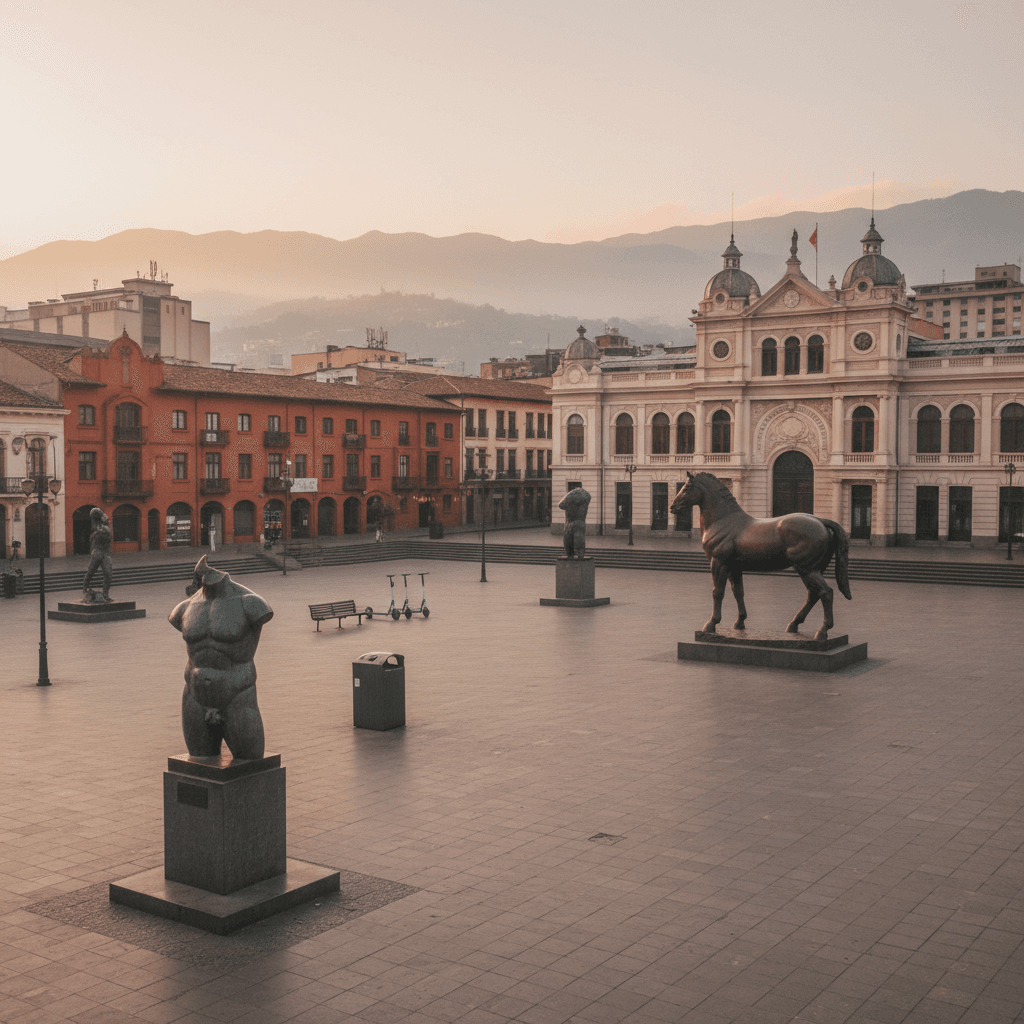
There is a specific feeling you get when you first step out of the Jose Maria Cordova airport and wind down the mountain road into the valley. The air is cool, the mountains are an impossibly deep green, and the skyline of Medellín looks like a sea of red brick and glass tucked into a bowl of jungle. It does not feel like a typical concrete jungle; it feels like a city that has been reclaimed by nature.
Most nomads come for the spring like weather, but they stay because of the energy. There is a palpable sense of pride here. Locals, or Paisas, are famously welcoming and will often go out of their way to help you find a bus stop or recommend a spot for bandeja paisa. It is a place that has undergone a massive transformation, moving away from its difficult history toward becoming a global leader in innovation and remote work.
The vibe varies wildly depending on where you drop your bags. You can spend your morning in a high tech coworking space like Indie Universe, your afternoon hiking to a waterfall, and your evening dancing salsa until 3:00 AM. It is a city that rewards curiosity and a bit of grit, especially if you are willing to learn some basic Spanish to connect with the people who make this place special.
What Makes It Unique
- The Topography: Unlike flat cities, Medellín is vertical. The Metrocable system isnt just transport; it is a way to see the city scale the mountains, offering views that would cost a fortune in New York or London for the price of a $1.00 ticket.
- The Social Fabric: You will find a tight knit community of entrepreneurs and creatives. Whether it is a Friday night meetup at Selina or a casual coffee at a local cafe in Laureles, it is remarkably easy to build a network here.
- Affordable Luxury: You can live a lifestyle that feels high end for $1,500 to $1,800 a month. This includes a modern apartment with floor to ceiling windows, daily meals out, and a dedicated desk at a premium space like WeWork Milla de Oro.
The Realities of the Ground
It is not all perfect, and any honest editor will tell you that. While the city is modern, you will still deal with the occasional internet hiccup or the noise of a neighbor’s party that goes on way too long. The language barrier is real; while you can get by in El Poblado with English, you will feel isolated in more authentic spots like Envigado if you do not have the basics down.
Safety is a common question. The city has come a long way, and areas like Comuna 13 have transformed into hubs of street art and music. However, you still need to keep your wits about you. Expats usually follow the local rule of not giving papaya, which basically means don't flash your iPhone 15 or expensive jewelry in public. Stick to the established neighborhoods and use apps like Uber or Cabify at night rather than hailing cabs on the street.
Cost of Living Breakdown
Your budget will stretch much further here than in North America or Europe, but prices in nomad hotspots are rising. Here is what to expect for a comfortable, mid range lifestyle:
- Housing: $600 to $900 for a nice 1BR in Laureles; $1,000 to $1,500 for a luxury high rise in El Poblado.
- Coworking: $150 to $250 per month for a dedicated desk with high speed fiber.
- Dining: $2 to $5 for a local lunch special (almuerzo del dia); $15 to $30 for a high end dinner with cocktails.
- Transport: $0.80 to $1.50 for the Metro; $4 to $7 for most cross city Uber rides.
The magic of Medellín is that it allows you to design whatever life you want. You can be the hustle culture entrepreneur in a glass tower or the slow traveling nomad drinking $1.00 coffee in a leafy park. It is a city that invites you to stay a little longer than you planned.
What to Expect for Your Monthly Budget
Medellín remains one of the most cost-effective hubs for remote workers who want a high quality of life without the price tag of Mexico City or Buenos Aires. Most digital nomads find they can live a very comfortable lifestyle on $1,200 to $1,800 USD per month. If you are looking to live large in a luxury penthouse in El Poblado, you might push toward $2,500 USD, but even then, you are getting far more value than you would in the States or Europe.
The Big Expense: Rent and Accommodation
Your housing costs will fluctuate wildly depending on which neighborhood you choose and how long you stay. Short-term Airbnb rentals in the "gringo" areas carry a significant premium, while those signing six-month leases will see much lower rates.
- El Poblado: This is the most expensive zone. Expect to pay between $600 and $1,500+ for a modern studio or one-bedroom apartment. You are paying for the proximity to the best cafes and the highest concentration of other nomads.
- Laureles and Envigado: These areas offer a more authentic vibe and better value. You can find high-quality apartments here for $400 to $800 per month.
- Utilities and Connectivity: If your rent isn't all-inclusive, budget about $50 to $120 for electricity, water, and high-speed fiber internet.
Eating Your Way Through the City
Food is where you can really save or splurge. Local "Menu del Dia" lunches (usually a soup, main, and juice) are a steal, while the international dining scene in Provenza rivals any major global city.
- Street Food and Local Spots: You can grab empanadas or a full local meal for $2 to $5.
- Mid-range Dining: A nice dinner at a trendy spot in Laureles or Envigado typically runs $8 to $15 per person.
- Upscale Restaurants: Even at the city's top-tier establishments, a high-end meal with drinks rarely exceeds $40.
- Groceries: If you cook at home and shop at local markets like Minorista, your weekly bill will be remarkably low. Imported goods at supermarkets like Carulla will cost about the same as they do back home.
Coworking and Connectivity Costs
Reliable internet is standard in most modern buildings, but many nomads prefer the community of a dedicated workspace. Monthly memberships at popular spots like Selina or WeWork range from $150 to $400 depending on whether you want a hot desk or a private office. If you are on a budget, smaller local spots like La Casa Redonda offer more flexible rates starting around $80 a month.
Getting Around
Medellín’s public transport is a point of pride for locals and incredibly cheap for visitors. The Metro and Metrocable systems cost roughly $0.80 to $1.50 per ride. For late nights or rainy days, ride-hailing apps are the way to go. Most 15-minute trips across town via Uber, DiDi, or InDriver will only set you back $3 to $6. For everything else, the Rappi app is a lifesaver, delivering anything from pharmacy items to a single coffee for a small delivery fee.
The Bottom Line
While prices have risen slightly as the city's popularity grows, Medellín still offers an "affordable luxury" lifestyle. You can enjoy a private apartment, daily meals out, a premium gym membership, and weekend trips to nearby towns like Guatapé while spending significantly less than $2,000 a month.
The Solo Traveler and Nightlife Seeker: El Poblado
If you want to be in the middle of the action, El Poblado is where you'll end up. It is the undisputed heart of the city's international scene. Most solo travelers head here first because it's the easiest place to meet people; you'll find at least four cafes and two coworking spaces within a 10 minute walk of almost any apartment.
The neighborhood is packed with high end restaurants, bars, and the famous nightlife around Parque Lleras and Provenza. While it's the most convenient area, it's also the most expensive. Expect to pay between $600 and $1,500+ for a studio or one bedroom apartment. It can feel a bit like a tourist bubble, but for those who value social proximity and English speaking amenities, it's the go to choice.
- Vibe: High energy, social, and modern.
- Work: Home to Selina Medellín and the premium WeWork Milla de Oro.
- Rent: The highest in the city, often priced in USD for short term stays.
The Long Term Nomad and Local Enthusiast: Laureles
Many nomads spend a month in Poblado and then move to Laureles for their second month. It feels like a real neighborhood rather than a tourist district. It's flatter and more walkable than the hilly streets of Poblado, characterized by circular streets and lush, tree lined boulevards. You'll get a much more authentic Colombian experience here without sacrificing the comforts of a good soy latte or a fast internet connection.
Living here is significantly more affordable, with comfortable apartments ranging from $400 to $800. You'll find plenty of local "corrientazo" lunch spots where a full meal costs $3 to $5, alongside trendy spots like La Casa Redonda for coworking. The nightlife is centered around La 70, which is more focused on salsa and reggaeton than the EDM clubs found across town.
- Vibe: Residential, traditional, and laid back.
- Work: Great local cafes and community focused spaces like Indie Universe.
- Pros: Better value for money and less crowded than the "Gringo Gulch."
The Balanced Expat and Families: Envigado
Technically its own municipality just south of Poblado, Envigado has become the premier choice for expats and families who want a quieter, safer atmosphere. It feels like a small town that happened to get swallowed by a big city. It has managed to keep its traditional charm, with a central plaza that still feels like the heart of the community.
For families, the streets are quieter and the pace is slower. You're still only a 15 to 20 minute Uber or Metro ride away from the chaos of Poblado, but you can retreat to a peaceful home at night. Rents are similar to Laureles, usually falling between $400 and $800 for a nice place. While there are fewer dedicated coworking spaces, the growing number of remote workers means cafes are very laptop friendly.
- Vibe: Peaceful, family friendly, and authentic.
- Safety: Generally considered one of the safest residential areas in the valley.
- Food: Known for some of the best traditional Antioquian food in the region.
The Logistics: Getting Around Your Neighborhood
Regardless of where you land, the city's infrastructure makes it easy to explore. The Metro system is the pride of the city, costing roughly $0.80 to $1.50 per ride. It's clean, efficient, and connects the major hubs quickly. For late nights or grocery hauls, everyone uses Uber, DiDi, or InDriver. If you're staying in Poblado or Laureles, you'll find yourself walking most of the time, but for everything else, the Rappi app is a lifesaver, delivering everything from pharmacy items to local street food directly to your door.
Connectivity and Speed
Medellín is built for remote work. You aren't going to spend your afternoons hunting for a signal here. In most modern apartments in El Poblado or Laureles, fiber optic is the standard. You can expect home speeds between 200 and 600 Mbps, which handles video calls and heavy uploads without breaking a sweat. The city average usually sits between 30 and 100 Mbps, so even if you're in a more residential area, you're likely fine.
Café culture is huge, but the WiFi can be hit or miss. Most coffee shops offer around 10 Mbps; enough for emails or Slack, but maybe not for a high stakes presentation. If you're working on the go, the 4G network is surprisingly robust. Claro and Tigo are the heavy hitters. You can grab a SIM card at the airport or any local mall and see speeds between 50 and 100 Mbps on your phone. If you prefer the digital route, Holafly offers eSIMs with unlimited data so you can skip the plastic chip entirely.
When you're out and about, the city provides free public WiFi at several major hubs. You'll find connectivity at Parque de los Deseos, the EPM Library in Belén, and major shopping centers like El Tesoro or Santafé. Even some Metro stations like San Antonio and El Poblado have hotspots if you need to check a map or call a ride.
Top Coworking Spaces
The coworking scene is concentrated primarily in El Poblado, but Laureles is catching up fast. Most spaces offer a mix of day passes, weekly rates, and monthly memberships ranging from $80 to over $400 depending on how many perks you want.
- Selina Medellín: This is the classic nomad headquarters. It’s a hybrid hostel and social club where the WiFi is rock solid and the networking happens naturally. It’s the best place to land if you’re new to the city and want to meet people immediately.
- WeWork Milla de Oro: Located in the upscale heart of the city, this is for those who need a corporate, polished environment. It has all the standard premium amenities you’d expect from the brand globally.
- Indie Universe: Nomads who deal with massive files or live streaming flock here. It’s widely known for having some of the fastest, most reliable internet speeds in Medellín.
- La Casa Redonda: This spot has a more community focused, local feel. They offer flexible day passes and weekly rates, making it a favorite for those who like to bounce between different environments.
- Solis Hotspot: A great "just in case" option. It’s reliable and often less crowded than the big name spots, perfect for deep work days.
Mobile Data and Setup
Getting connected is one of the first things you should do after landing. You have three main paths to stay online while moving through the city:
- Local SIM Cards: Head to a Claro or Tigo kiosk. You'll need your passport to register the card. They offer various prepaid packages that are extremely affordable.
- Digital Delivery: If you're staying in and need something fast, the Rappi App is your best friend. It’s the local "everything app" and can deliver tech accessories or pharmacy items right to your door.
- Backup Connectivity: If your apartment WiFi ever flickers, most nomads use their phone as a hotspot. The 4G coverage is consistent enough that it serves as a perfect fail-safe for important meetings.
Most nomads find that a combination of a high speed home connection and a $150 to $250 monthly coworking membership provides the best balance of productivity and social life. Whether you want a view of the mountains from a rooftop desk or a quiet corner in a library, the infrastructure here won't hold you back.
Keeping Your Wits in the City of Eternal Spring
Medellín has undergone a massive transformation, but it still requires a level of street smarts that you might not need in Lisbon or Chiang Mai. Most nomads feel perfectly comfortable in the main hubs, though everyone talks about the golden rule here: No dar papaya. It literally translates to "don't give papaya," but it means don't put yourself in a position where you can be taken advantage of. Don't flash your iPhone 15 on a street corner, keep your laptop tucked away until you're inside the cafe, and avoid wearing flashy jewelry in public.
The safety profile changes significantly by neighborhood. El Poblado and Envigado generally feel very secure, even after dark, thanks to a heavy private security presence and constant foot traffic. Laureles is also safe, but its residential layout means some streets get very quiet at night, which is when most petty thefts occur. If you're heading out to Comuna 13, it's best to go during the day and stick to the main tourist escalators where the community has built a solid safety network for visitors.
Solo travelers usually find that the biggest risks are late-night rides and "distraction" crimes. Expats recommend always using apps like Uber, DiDi, or InDriver rather than hailing a yellow taxi on the street, especially after a few drinks. These apps provide a digital paper trail and allow you to share your location with friends in real time.
Healthcare and Wellness
Colombia consistently ranks high for healthcare quality in Latin America, and Medellín is the country's medical capital. You'll find world class facilities that feel more like luxury hotels than hospitals. If you have an emergency or need a specialist, the city is equipped with modern technology and highly trained doctors, many of whom studied abroad and speak English.
For day to day health needs, the Rappi app is your best friend. You can have everything from ibuprofen to prescription refills delivered to your door in under 30 minutes. It’s incredibly efficient and often cheaper than walking into a pharmacy yourself. For more serious issues, nomads typically head to Hospital Pablo Tobón Uribe or Clinica El Rosario, both of which are known for handling international insurance well.
- Pharmacy Delivery: Use the Rappi app for 24/7 service.
- Emergency Services: Dial 123 for the general emergency line.
- Insurance: Most expats carry private international coverage like SafetyWing or World Nomads, which are widely accepted at private clinics.
- Tap Water: Unlike many other South American cities, the tap water in Medellín is generally considered safe to drink, though many nomads still prefer a Brita filter for taste.
Practical Safety Checklist
Before you head out for a night in Parque Lleras or Provenza, keep these tips in mind to stay off the radar of petty thieves. Most incidents are crimes of opportunity, so removing the opportunity is 90 percent of the battle.
- Keep your phone in your pocket: Only pull it out inside a shop or restaurant to check your map.
- Split your cash: Keep a small amount of pesos in one pocket for quick transactions and your main wallet or cards tucked away elsewhere.
- Drink Spike Awareness: Be extremely cautious with drinks from strangers in nightlife districts. Scopolamine incidents are rare but serious, so never leave your glass unattended.
- ATM Savvy: Only use ATMs located inside malls or banks. Avoid the standalone machines on the sidewalk, particularly after dark.
The Metro: Medellín's Crown Jewel
You can't talk about getting around this city without mentioning the Metro. It is the pride of the Paisas, and for good reason. It's clean, efficient, and surprisingly easy to navigate even if your Spanish is still a work in progress. Most nomads living in El Poblado or Laureles use it to hop between the main north, south hubs. A single ride will set you back between $0.80 and $1.50, making it the most budget friendly way to beat the valley traffic.
For a more scenic commute, the Metrocable lines connect to the hillside neighborhoods. While these were built for locals, they've become a favorite for expats looking to catch those famous valley views. If you're heading up to Parque Arví for a weekend hike, the cable car is your best friend.
Ride-Hailing and Apps
While traditional yellow taxis are everywhere, most digital nomads stick to apps for the added security and fixed pricing. Uber is the most familiar choice, though it technically operates in a legal gray area where drivers might ask you to sit in the front seat to look like a friend. If you want more options, download DiDi or InDriver. InDriver is popular because it lets you negotiate the fare with the driver before they pick you up.
- Uber: Reliable, familiar interface, and usually the cleanest cars.
- DiDi: Often slightly cheaper than Uber and has a massive fleet of drivers.
- InDriver: Great for those who like to haggle or during peak hours when other apps have surge pricing.
- Rappi: Not for transport, but you'll use it daily. It's the "everything app" for food, groceries, and even pharmacy runs when you don't feel like leaving the apartment.
Walkability and Neighborhood Vibes
Your walking experience depends entirely on your home base. If you're staying in El Poblado, life is incredibly convenient. Most modern apartments are within a 10 minute walk of at least four cafes and two coworking spaces like Selina or WeWork. Just be prepared for some hills; the neighborhood is built into a slope, so you'll get a decent leg workout just going to grab a coffee.
Laureles is the flat alternative. It's much more walkable in the traditional sense, with circular streets and plenty of shade from massive trees. It’s perfect if you prefer a neighborhood where you can stroll to the grocery store without breaking a sweat. Envigado feels more like a small town within the city, offering a relaxed pace but still keeping you within reach of the main metro line.
Cycling and Micro-Mobility
The city has been investing heavily in bike lanes, particularly in the flatter sections of the valley. You'll see plenty of locals and expats on electric scooters, which are handy for short trips that are too long to walk but too short for a taxi. Just keep your wits about you; Medellín traffic can be aggressive, and the hilly terrain in areas like El Tesoro or upper Poblado makes manual cycling a challenge for anyone who isn't a professional climber.
The Spanish Reality Check
If you're planning to drop into Medellín expecting everyone to speak English because it's a global nomad hub, you're in for a bit of a shock. While the staff at high end spots in El Poblado or the community managers at Selina will speak great English, the rest of the city operates almost entirely in Spanish. Most nomads find that while they can survive with hand gestures and Google Translate, the city only truly opens up once you learn the local tongue.
Paisa Spanish, the local dialect, is famous for being clear and relatively easy to understand compared to the faster Caribbean accents. Locals are incredibly patient and genuinely appreciate it when you try. Even a simple "Buenos días" or "Gracias" goes a long way in building rapport with your Uber driver or the person selling you empanadas on the street.
The Art of Being a "Paisa"
Communication in Medellín is deeply rooted in politeness. You'll hear the word "regáleme" (literally "gift me") constantly. It's how locals ask for things, like "Regáleme un café, por favor." It sounds formal to outsiders, but it's just the standard way to be polite. Travelers often say that the warmth of the people is the best part of the city, so expect long, friendly interactions rather than quick, transactional ones.
If you want to sound like a local, you'll need to get used to "Qué más?" (What's up?) and the ubiquitous "Listo" (Ready/Okay/Got it). These small linguistic flourishes help you blend in and move past the "tourist" label.
Essential Apps and Tools
Since the language barrier is one of the main things nomads struggle with here, you'll want to have your digital toolkit ready before you land. Most expats recommend these as your daily drivers:
- WhatsApp: This is the lifeblood of communication in Colombia. You'll use it to book hair appointments, talk to your landlord, and even order delivery from local shops.
- Google Translate: The camera feature is a lifesaver for reading menus or signs in more residential areas like Envigado.
- DeepL: Many remote workers prefer this for more nuanced translations when sending important messages to locals.
- Rappi: While it's a delivery app, it's also a great way to learn food vocabulary without the pressure of a face to face conversation.
Learning the Language Locally
Because Spanish is so primary, Medellín has a massive industry for language learners. You'll find plenty of schools in Laureles and Poblado that offer everything from intensive one on one sessions to casual group classes. If you're looking for something more social, keep an eye out for language exchanges, often called "intercambios."
These events usually happen at local bars or rooftop cafes. They're a favorite for solo travelers because they're a low pressure way to practice your Spanish with locals who want to practice their English. It's a win win that usually ends with new friends and a better understanding of where to find the best local spots.
Communication Logistics
To stay connected, you'll want a local SIM card immediately. Don't rely on your home roaming plan, as it'll likely be slow and expensive. You can pick up a card from Tigo or Claro at the airport or any major mall like El Tesoro or Santafé. If you're tech savvy, an eSIM from a provider like Holafly is a seamless way to get 4G data the second you touch down without hunting for a physical shop.
The City of Eternal Spring
Medellín earned its nickname for a reason. Sitting in the Aburrá Valley at about 5,000 feet of elevation, the city enjoys a climate that stays remarkably consistent. You can leave your heavy winter coats at home; most days feel like a perfect spring afternoon with temperatures hovering between 65°F and 82°F (18°C to 28°C).
The air is fresh, the mountains are perpetually green, and the weather encourages the outdoor lifestyle that nomads here love. Whether you're working from a balcony in El Poblado or walking to a cafe in Laureles, you rarely have to worry about extreme heat or biting cold. It's the kind of place where a light jacket or a hoodie is all you'll ever need for the cooler evenings.
Dry Season: December to March
If you're looking for the absolute best time to visit, aim for the window between December and March. This is the primary dry season. The skies are generally clearer, and the sun shines more reliably, making it the peak time for tourism and the digital nomad "high season."
- Vibe: The city is high energy. December is particularly special because of the Alumbrados Navideños, a massive Christmas light display along the river that draws people from all over the world.
- Social Scene: This is when the nomad community is most active. Expect coworking spaces like Selina or WeWork Milla de Oro to be at capacity and networking events to happen almost nightly.
- Prices: Since it's the most popular time, short term rentals in neighborhoods like El Poblado can spike. It's smart to book your Airbnb or coliving space at least two to three months in advance.
The Rainy Seasons: April to May & September to November
Medellín has two distinct rainy periods. October and November are traditionally the wettest months. However, don't let the "rainy season" label scare you off. In the Andes, rain usually comes in short, heavy bursts in the late afternoon or at night rather than lingering as a gray drizzle all day.
Expats often prefer these months because the city feels a bit more "local" and less crowded. The rain keeps the surrounding mountains looking incredibly lush and helps clear out any lingering smog in the valley. If you're on a tighter budget, you'll often find better deals on monthly apartment rentals during May or October.
The "Feria de las Flores" (August)
If there is one week you shouldn't miss, it's the Feria de las Flores (Flower Festival) in early August. The city explodes with parades, concerts, and the famous Silleteros, who carry massive, intricate flower arrangements on their backs. It's the ultimate display of Paisa culture.
While the weather in August is generally pleasant with moderate rainfall, the city gets incredibly busy. If you plan to be here during the festival, expect accommodation prices to double and transport like Uber or DiDi to take significantly longer due to road closures.
What to Pack
Because the weather is so stable, packing is straightforward. Most nomads recommend a "layering" strategy. During the day, shorts and t-shirts are fine for the valley floor, but the temperature drops quickly once the sun goes down or if you head up into the hills of Envigado.
- A sturdy umbrella: You'll need this regardless of the month. Tropical rain starts fast.
- Light layers: A denim jacket or a light sweater is perfect for evening rooftop drinks.
- Good walking shoes: Medellín is hilly, and you'll do a lot of walking in areas like Laureles.
- Sun protection: The high altitude means the sun is stronger than it feels, even on cloudy days.
Connectivity and Tech Setup
You won't have to worry about dropping off a Zoom call in most modern parts of the city. Fiber optic internet is the standard in El Poblado and Laureles, with speeds often hitting 200 to 600 Mbps. If you're working from a local cafe, expect a more modest 10 Mbps, which is fine for emails but maybe not for heavy video editing.
For mobile data, grab a SIM card from Claro or Tigo at the airport or any major mall. If you want to skip the plastic, an eSIM from Holafly works well. Most nomads use Claro for the widest coverage if they plan on taking weekend trips into the mountains. For a backup during those rare power flickers, Solis Hotspot is a popular choice among the remote crowd.
- Selina Medellin: The social heart of the nomad scene. It's half hostel, half coworking space, and the best place to find a community if you're new in town.
- WeWork Milla de Oro: Best for those who need a corporate, air-conditioned environment. It's located in the upscale Golden Mile area.
- Indie Universe: Known specifically for having some of the fastest, most reliable upload speeds in the city.
- La Casa Redonda: A more intimate, community-focused spot with flexible day passes starting around $15.
The Monthly Budget
Medellin allows for a high quality of life without the Manhattan price tag. A comfortable monthly budget usually falls between $1,200 and $1,800. If you're looking for "affordable luxury," you can get a high-end apartment with a view for about $1,000 to $1,500, while more modest studios in Laureles go for $400 to $800.
Neighborhood Cost Profiles
- El Poblado: The most expensive and tourist-heavy area. Expect to pay $600 to $1,500 for rent. Meals here range from $8 for a casual lunch to $40+ for fine dining.
- Laureles: A flat, walkable neighborhood with a local soul. Rent is cheaper, usually $400 to $800. You'll find plenty of traditional "menu del dia" options for $5.
- Envigado: A quiet, residential suburb that's increasingly popular with families. Rent is similar to Laureles, and it feels much safer and less "party-centric" than Poblado.
Getting Around the City
The Metro is the pride of Medellin. It's clean, efficient, and costs roughly $0.80 to $1.50 per trip. Don't miss a ride on the Metrocable; it's part of the public transit system but doubles as a cheap way to get incredible views of the valley. For late nights, stick to ride-hailing apps. Uber, DiDi, and InDriver are the standard choices. While Uber technically operates in a legal gray area, it's widely used and generally considered safer than hailing a random taxi on the street.
Download Rappi immediately. It's the "everything app" of Colombia. You can use it to order groceries, restaurant meals, or even medicine from a pharmacy delivered straight to your door. It's a lifesaver when you're deep in a work sprint and don't want to leave the apartment.
Safety and Health
The city has moved far past its old reputation, but you still need to be smart. Stick to well-lit, populated areas at night and don't "dar papaya," which is local slang for "don't give anyone a reason to take your stuff." This means keeping your phone tucked away while walking and not flashing expensive jewelry.
Healthcare is surprisingly high quality. While the search results don't list specific hospitals, the general consensus among expats is that private clinics in Medellin are world-class. For minor issues, Rappi can deliver over-the-counter meds, and most pharmacies have a pharmacist on-site who can give basic medical advice.
Need visa and immigration info for Colombia?
🇨🇴 View Colombia Country GuideEasy Landing
Settle in, no stress