Leipzig
🇩🇪 Germany
The New Creative Epicenter
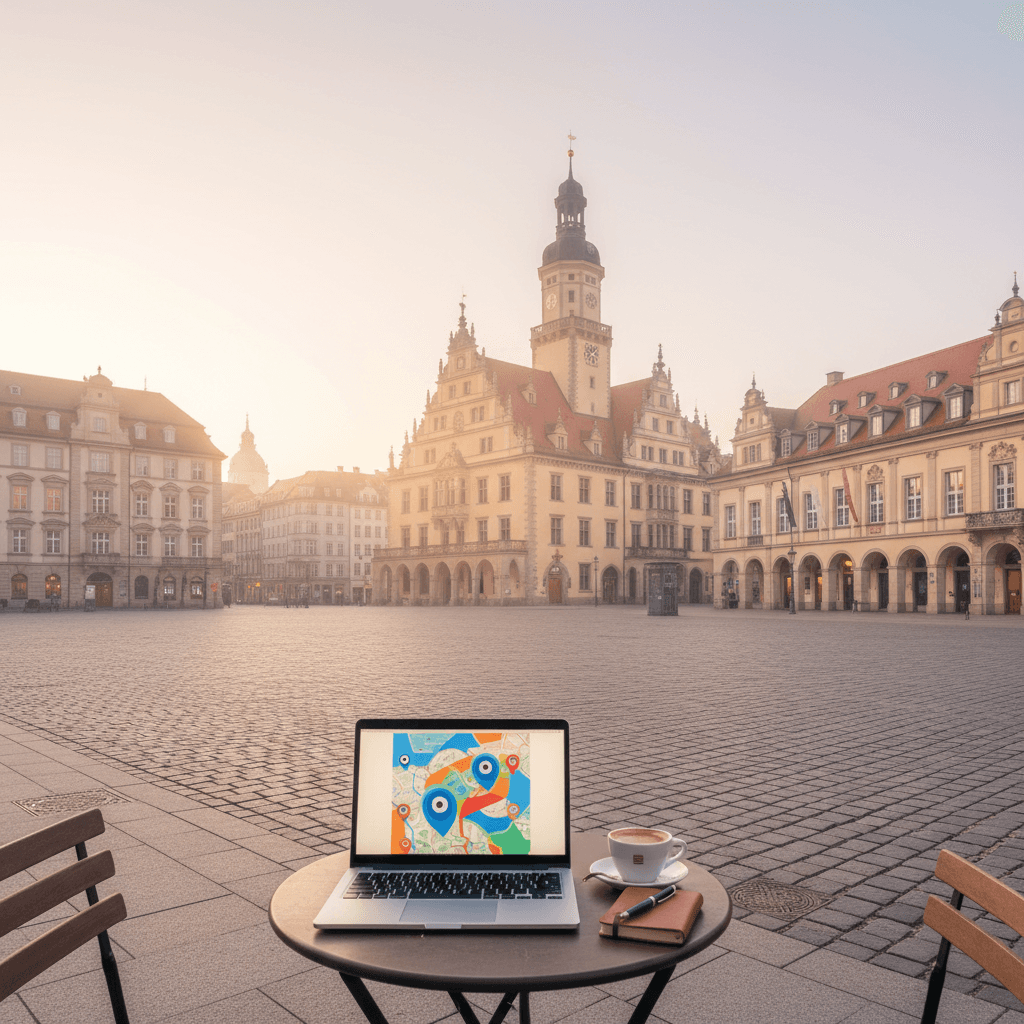
For years, people called Leipzig "Hypezig," a nickname that suggested it was just a cheaper, smaller version of Berlin. But that label has faded because the city has carved out a distinct identity that doesn't rely on being the next anything. It feels like a well kept secret that’s finally getting out. You’ll find a city that manages to be both deeply historical and unapologetically punk, where grand 19th-century architecture sits right next to converted industrial warehouses dripping with street art.
The pace here is noticeably slower than in the German capital. While Berlin can feel like a relentless hustle of networking and events, Leipzig offers room to breathe. It’s the kind of place where you can actually focus on a deep work project during the day and still find a world class techno club or a quiet canal side beer garden in the evening. Most nomads find the city’s compact nature a relief; you can cross the entire center on a bike in 15 minutes, making it one of the most livable hubs in Europe.
The Vibe: Art, Anarchy, and Industry
Leipzig’s personality is split into distinct, colorful pockets. In the west, Plagwitz and Lindenau are the creative engines. This is where you’ll spend your afternoons working from cafés like Kaffeeküche or exploring the Spinnerei, a massive former cotton mill turned into a gallery complex. The vibe here is industrial chic, with red brick buildings and the Karl-Heine-Kanal providing a scenic backdrop for post work strolls.
If you head south to Connewitz, the atmosphere shifts toward a gritty, alternative counterculture. It’s the heart of the city’s leftist and punk scenes, known for its activist spirit and legendary underground venues. Meanwhile, the Südvorstadt offers a more polished but equally lively energy, centered around the "KarLi" (Karl-Liebknecht-Straße), a stretch of road packed with outdoor seating, bars, and international eateries that stays busy until the early hours.
What It Costs to Live Here
While prices are rising across Germany, Leipzig remains remarkably accessible for remote workers. A solo nomad can live comfortably on a budget of €2,000 to €3,500 per month, depending on how much they value a central location or private office space.
- Budget Tier (€1,500 to €2,000): You’ll likely base yourself in up and coming areas like Reudnitz or Lindenau. Expect to pay €500 to €700 for a studio, eat €5 to €8 street food like Döner or Falafel, and use a €100 monthly transit pass.
- Mid-Range Tier (€2,000 to €2,800): This allows for a nicer apartment in Plagwitz or Südvorstadt at €700 to €1,000. You can enjoy regular sit down meals at €15 to €20 and a dedicated desk at a spot like Basislager Coworking.
- Comfortable Tier (€2,800 to €3,500+): You’ll be looking at premium flats in the Zentrum for €1,000 to €1,500, frequent fine dining, and private office setups.
The Nomad Experience
Expats often mention that while the community is smaller than in Munich or Berlin, it’s more tight knit. You won’t find a nomad meetup on every corner, but the people who are here tend to be more intentional about staying long term. One thing to keep in mind is that English proficiency is moderate. While you’ll get by fine in the university districts and tech hubs, some basic German goes a long way when dealing with local bureaucracy or smaller shops in the outer neighborhoods.
The city is also a paradise for those who love the outdoors. Between the massive Rosental park and the "New Lakeland" (Leipziger Neuseenland) just a short bike ride or tram trip away, it’s easy to escape the urban environment. It’s this balance of gritty urban culture and lush green space that makes Leipzig feel like a place where you can actually build a life, rather than just pass through as a tourist.
Practical Logistics
- Getting Around: The tram network is flawless, and a monthly pass usually runs between €80 and €100. Most locals prefer Nextbike for quick hops or just walking the pedestrian friendly city center.
- Connectivity: Internet is generally very stable. For coworking, Basislager and SAEKTL are the go to spots, with day passes starting around €20 and monthly memberships around €150 to €250.
- When to Go: Aim for June through August. The city comes alive with festivals like the Wave Gotik Treffen and endless canal side hangouts. Winters can be grey and biting, with temperatures hovering around 0 to 5°C.
The Bottom Line
Leipzig has earned its reputation as the affordable alternative to Berlin for a reason. While the capital's prices have skyrocketed, Leipzig remains a place where you can live well on a €2,000 to €3,500 monthly budget without constantly checking your banking app. Most nomads find they can maintain a high quality of life here for about 30% less than they would in Western German hubs like Munich or Hamburg.
For those on a tighter budget, it is entirely possible to get by on €1,500 to €2,000. This usually involves snagging a studio in up and coming areas like Reudnitz or Lindenau, sticking to the city's excellent street food, and using a standard €80 to €100 monthly transit pass. If you have €2,800 or more to spend, you are looking at a premium lifestyle with a sleek apartment in Zentrum and regular dinners at higher end bistros.
Housing and Rent
Rent will be your biggest expense, but the market is still relatively friendly compared to the rest of Europe. Prices fluctuate based on the neighborhood's "cool factor" and proximity to the city center.
- Reudnitz: A favorite for budget nomads. Expect to pay between €500 and €800 for a solid studio or small one bedroom.
- Plagwitz and Lindenau: The heart of the creative scene. These areas are in high demand, so expect prices between €700 and €1,100.
- Zentrum: If you want to be in the middle of the action with historic architecture at your doorstep, you'll likely pay €900 to €1,400 for a modern apartment.
- Südvorstadt: Popular with students and nightlife lovers, with mid range prices typically landing between €700 and €1,000.
Expats recommend using sites like WG-Gesucht if you are open to a shared flat, which is a great way to meet locals and slash your rent in half. For your own place, Immowelt or Immobilienscout24 are the standard tools of the trade.
Eating and Drinking
Leipzig's food scene is a mix of traditional Saxon hearty meals and a massive influx of vegan and international options. Street food is a lifesaver for the budget conscious; you can grab a filling Döner kebab or falafel for €5 to €8.
A typical lunch at a cafe in Plagwitz or a bistro in Südvorstadt will run you €12 to €20. If you are heading out for a nice dinner in the city center, expect to pay €30 to €50 per person including a drink. Grocery shopping at discounters like Aldi or Lidl is very affordable, while organic markets like Denns BioMarkt will noticeably bump up your weekly food bill.
Workspaces and Connectivity
The city is well equipped for remote work, and coworking desk prices are much lower than in Berlin. Basislager Coworking and SPINNEREI co.work are the top picks for community and reliable high speed internet. Monthly memberships usually fall between €100 and €300, while day passes are roughly €20 to €30.
If you prefer the cafe route, spots like Kaffeeküche offer a great atmosphere, though it's polite to keep the coffee orders coming if you're taking up a table. For a totally free option, the Bibliothek Leipzig provides quiet zones and decent WiFi. For mobile data, picking up a prepaid SIM from Vodafone or O2 at the Hauptbahnhof is easy, usually costing €10 to €20 for a generous data package.
Transport and Essentials
You don't need a car here. The tram and S-Bahn network is fantastic, and a monthly pass costs around €80 to €100. However, most locals and long term nomads prefer biking. You can rent a bike through Nextbike for a few euros or buy a used one for under €100 to save even more in the long run.
Don't forget the "hidden" costs of living in Germany. Health insurance is mandatory and starts around €250 per month for basic private coverage. If you are staying long term, you'll also need to factor in the Rundfunkbeitrag (radio tax), which is about €18 per month per household. It's a small price to pay for the infrastructure and safety the city provides.
For Nomads and Creatives: Plagwitz and Lindenau
If you are looking for the heart of Leipzig's "Hypezig" reputation, head west. Plagwitz is the city's creative engine, where old industrial warehouses have been reborn as art galleries and tech hubs. It is home to the Spinnerei, a massive former cotton mill that now houses studios and the SPINNEREI co.work space. The vibe here is gritty but polished enough for a productive afternoon at Kaffeeküche or a post work beer along the Karl Heine Kanal.
Lindenau sits right next door and serves as the more affordable, up and coming sibling to Plagwitz. It is a bit rougher around the edges but popular with budget conscious nomads who want to be near the action without the higher price tag. You will find plenty of multicultural eateries and community art spaces along the canal. Most nomads here find that a bike is their best friend, as the flat terrain makes it easy to zip between your studio and the Basislager Coworking hub.
- Plagwitz Rent: Expect to pay between €700 and €1,100 for a decent one bedroom.
- Lindenau Rent: Studios often start around €500 to €700.
- Atmosphere: Industrial, artsy, and bike friendly with a heavy focus on canal side living.
For Solo Travelers and Night Owls: Südvorstadt
Südvorstadt is the place to be if you want to walk out of your front door and straight into a bar. The neighborhood is anchored by the "KarLi" (Karl Liebknecht Strasse), a long stretch of road packed with pubs, outdoor seating, and late night kebab shops. Because of its proximity to the university, the crowd is young and the energy is high. It is the best spot for solo travelers who want to meet people quickly, as the social scene is built into every street corner.
While it is lively, it can get noisy on weekends. If you need total silence for deep work, look for an apartment on one of the side streets away from the main drag. For a quiet coffee and a laptop session, Café Grundmann offers a classic atmosphere that feels worlds away from the student dive bars nearby.
- Rent: Roughly €700 to €1,000 for a mid range apartment.
- Best for: Socializing, craft beer, and being in the center of the city's nightlife.
- Coworking: Many residents use SAEKTL or head north into the center for more options.
For Expats and Professionals: Zentrum and Zentrum-Süd
For those who prefer a more polished experience, the city center (Zentrum) is the most convenient choice. You are surrounded by Leipzig's historic architecture, high end shopping, and the main transport hub at the Hauptbahnhof. It is the most "international" part of the city, where you are most likely to find English speakers in shops and restaurants. Expats often choose this area for its proximity to major offices and the seamless transit connections to the airport.
South of the center, Zentrum-Süd offers a slightly quieter but equally elegant alternative. You get the benefit of being within walking distance of the Clara Zetkin Park, which is the city's green lung. It is a bit more expensive than the eastern or western districts, but the convenience and safety are hard to beat.
- Rent: Premium apartments range from €900 to €1,500.
- Pros: Highly walkable, safe, and close to the best fine dining and historic sites.
- Transport: Direct access to all tram lines and the S-Bahn.
For Families and Long-Term Residents: Gohlis
Gohlis is located north of the city center and feels like a different world. It is characterized by beautiful Wilhelminian style villas, quiet leafy streets, and a very high quality of life. Families prefer this area because it is peaceful and sits right next to the Rosental park and the Leipzig Zoo. It lacks the "edgy" vibe of the west, but it makes up for it with stability and space.
While it is further from the creative hubs, the tram gets you into the center in about 10 to 15 minutes. It is the ideal spot if you are moving with a partner or children and want a neighborhood that feels like a permanent home rather than a temporary landing pad.
- Rent: Generally €800 to €1,200 for larger family sized flats.
- Vibe: Quiet, historic, and very green.
- Cons: Fewer coworking spaces and a much quieter nightlife scene.
For Alternative Lifestyles: Connewitz
Connewitz is Leipzig's unapologetic counterculture heart. It is famous for its punk scene, leftist activism, and legendary clubs like Werk 2. If you prefer stickers on every lamp post and a community that marches to its own beat, you will love it here. It is not for everyone; the area has a rougher look and a very specific political atmosphere. However, for solo nomads looking for an authentic, non commercial experience, it is one of the most unique neighborhoods in Germany.
- Rent: Very affordable, though finding a spot can be competitive due to local demand.
- Highlights: Incredible live music venues and proximity to the southern forest trails.
- Note: Stick to the well lit main roads at night if you are unfamiliar with the area.
Connectivity and Speed
Germany has a reputation for lagging behind in the digital race, but Leipzig is a refreshing exception. Fiber optic connections are becoming the standard in most residential areas and commercial hubs. You can expect reliable download speeds between 50 Mbps and 250 Mbps in most coworking spaces and modern apartments. While public Wi-Fi exists in the city center, it is often spotty; most nomads rely on local SIM cards or dedicated workspaces for serious deep-work sessions.
For mobile data, you have three main networks: Telekom, Vodafone, and O2. Telekom offers the best coverage but comes with a premium price tag. Vodafone is a solid middle ground, while O2 is the budget favorite. Most expats pick up a prepaid SIM at the Hauptbahnhof (Central Station) for roughly €10 to €20, which typically nets you 10GB to 50GB of data. If you want to skip the retail kiosks, Holafly eSIMs are a popular shortcut for getting online the second you hop off the train.
Top Coworking Spaces
Leipzig’s coworking scene is smaller than Berlin’s, but it is significantly more affordable and less pretentious. You won't find yourself fighting for a chair here. Monthly memberships usually hover between €100 and €300, which is a steal compared to the €200+ starting prices in the capital.
- Basislager Coworking: Located near the city center, this is the heartbeat of the local startup scene. It is housed in a renovated printing house and offers a mix of open desks and private offices. It is known for its community events and high-speed fiber internet. Day passes usually run about €20.
- SPINNEREI co.work: Situated in the iconic Baumwollspinnerei art complex in Plagwitz, this space is perfect if you want to be surrounded by galleries and industrial history. It is less corporate and more creative, making it a favorite for designers and writers.
- SAEKTL: A modern, sleek option that caters to professionals who need a quiet environment. It is well-equipped with phone booths for calls and ergonomic furniture that your back will thank you for after an eight-hour shift.
Café Culture and Remote Work
If you prefer the hum of a coffee machine over a quiet office, Leipzig has plenty of laptop-friendly spots. The general rule in German cafés is to keep the orders flowing; if you are taking up a table for three hours, buy more than one espresso. Many owners are relaxed about remote workers as long as you aren't there during the busy lunch rush.
- Kaffeeküche: A cozy spot in the Südvorstadt neighborhood. It is popular with students and freelancers, offering great coffee and reliable Wi-Fi.
- Café Grundmann: A beautiful Art Deco café that feels like stepping back in time. While it is more of a traditional spot, it is a great place for light admin work or reading over a slice of cake.
- Bibliothek Leipzig: The public libraries are excellent resources. They offer free Wi-Fi and a focused, silent atmosphere. It is a great "zero-cost" coworking alternative if you are on a tight budget.
Practical Tips for Staying Online
Power outlets in older buildings in neighborhoods like Reudnitz or Lindenau can be sparse. It is a smart move to carry a small power strip or a long charging cable. Most nomads find that while English is common in the tech-heavy coworking spaces, having a translation app like DeepL handy is helpful when dealing with the fine print of a local internet contract or troubleshooting a router issue with a technician.
If you plan on staying long-term and renting your own flat, be aware that setting up home internet can take anywhere from two to four weeks. Many nomads use a mobile hotspot or a "GigaCube" from Vodafone as a bridge while waiting for a technician to activate their landline. This allows you to stay productive from day one without being tethered to a café.
Staying Safe in Leipzig
Leipzig is widely considered one of the safest cities in Germany. It lacks the frantic, sometimes gritty edge of Berlin, maintaining a calm atmosphere that makes it easy to relax, even if you are walking home late from a techno set in Plagwitz. Most nomads find they can carry a laptop bag through the city center without a second thought.
While violent crime is rare, petty theft is the main thing to watch for. Pickpockets tend to operate around the Zentrum, especially near the Hauptbahnhof (central station) and the crowded shopping streets during peak tourist seasons. Keep an eye on your gear in busy bars along the KarLi (Karl-Liebknecht-Straße) in Südvorstadt. If you are a cyclist, invest in a high quality U-lock. Bike theft is the most common nuisance here, so don't leave your wheels unsecured, even for a quick coffee run.
Regarding specific neighborhoods, Connewitz and parts of Lindenau have a more activist, counterculture vibe. You might see some graffiti and rougher edges, but these areas aren't dangerous. Just stick to well lit streets at night and follow the usual urban common sense. If you ever find yourself in an urgent situation, the emergency number for police is 110.
Healthcare Infrastructure
The German healthcare system is world class, and Leipzig is no exception. If you are moving here as an expat or on a freelance visa, health insurance isn't just a suggestion; it is a legal requirement. You'll likely choose between public (Gesetzliche Krankenversicherung) and private insurance, with monthly premiums typically starting around €250 depending on your age and income.
For digital nomads on shorter stays, travel insurance like SafetyWing or World Nomads is usually sufficient, but check that it meets the specific requirements if you are applying for a residence permit. Most doctors and specialists in the city center speak excellent English, though the reception staff at smaller clinics might prefer German. Using an app like Doctolib is a lifesaver for booking appointments online without having to navigate a phone call in German.
- Emergency Services: Dial 112 for fire and medical emergencies. This number works across the EU.
- Hospitals: The Leipzig University Hospital (Universitätsklinikum) is the primary facility for specialized care and emergencies.
- Pharmacies: Look for the big red "A" sign for an Apotheke. They are everywhere. For late night or Sunday needs, there is always a designated "emergency pharmacy" on duty in the city; you can find the current list posted in any pharmacy window or online.
- General Practitioners: Search for a "Hausarzt" for non-emergencies. Expect to pay around €50 to €100 for a private consultation if you aren't on a local insurance plan.
Practical Wellness Tips
Tap water in Leipzig is perfectly safe and actually tastes quite good, so skip the bottled water and use a refillable one. If you are visiting during the winter months, the lack of sunlight can be a bit of a shock to the system. Locals recommend taking Vitamin D supplements and making the most of the Clara-Zetkin-Park for a walk whenever the sun actually decides to show up.
For those who prioritize fitness, the city is incredibly bike friendly, which many residents use as their primary form of cardio. If you prefer a gym, chains like FitOne or McFit offer memberships starting around €20 to €30 a month, though they often require long term contracts. For more flexibility, look for boutique studios in Plagwitz that offer day passes or 10-class cards.
The Logistics of Getting Around
Leipzig is built for efficiency without the frantic energy you'll find in Berlin. It is a compact city where the infrastructure actually works, making it one of the easiest German hubs to navigate as a newcomer. Most nomads find that between the tram network and a decent pair of sneakers, they rarely need to set foot in a car.
Public Transit: The LVB Network
The city's public transport system, run by Leipziger Verkehrsbetriebe (LVB), is the backbone of local life. Trams are the stars here, gliding through the city center and reaching out into the creative pockets of Plagwitz and the student haunts of Südvorstadt. Buses fill in the gaps, and the S-Bahn (suburban train) is your best bet for longer hauls or getting to the airport.
- Monthly Pass: Expect to pay between €80 and €100 for a standard monthly ticket. This covers all trams and buses within the city zone.
- Short Trips: If you're just hopping a few stops, look for the "Kurzstrecke" tickets which are significantly cheaper than a full price single fare.
- Apps: Download the LeipzigMOVE app. It handles ticketing, route planning, and even links to bike sharing services so you don't have to fumble with coin machines at tram stops.
Two Wheels are Better Than Four
Leipzig is flat, which is a gift for anyone who prefers biking over the gym. The city is crisscrossed with dedicated bike lanes, and in many neighborhoods like Lindenau or Reudnitz, biking is often faster than taking the tram. Travelers often say the city feels designed for cyclists, especially with the green belt that allows you to ride through parks for miles without seeing a traffic light.
- Nextbike: This is the primary bike-sharing service. You'll see the silver bikes parked at hubs all over the city. Rentals usually start at €1 for an unlock plus roughly €0.10 per minute.
- Scooters: If you prefer electric, Voi and Tier operate throughout the central districts. They're great for that "last mile" trek from the tram station to your apartment.
Walking the Zentrum
The city center, or Zentrum, is almost entirely pedestrianized. It is a tight cluster of historic passages and squares that you can walk across in about 15 minutes. If you choose to live in Zentrum-Süd or near the Hauptbahnhof, you'll likely find that your daily commute consists of nothing more than a brisk walk past a few Bach statues and gothic churches.
Arrival and Departure
Getting into the city from Leipzig/Halle Airport (LEJ) is painless. The S-Bahn trains (S5 or S5X) run every 30 minutes and will drop you at the Hauptbahnhof, the massive central station, in about 20 minutes. A ticket for this journey usually costs between €3 and €5. For late-night arrivals, Uber and Bolt are active in the city, though they are generally more expensive than the highly reliable local taxi fleets.
Regional Connections
One of the biggest perks of Leipzig's location is how easy it is to leave for a weekend. The Hauptbahnhof is one of the largest rail terminals in Europe, and you can catch a high-speed ICE train to Berlin in about 1 hour or Dresden in just over 60 minutes. For budget-conscious nomads, the Deutschland-Ticket for €49 per month is a total game-changer, offering unlimited regional train travel across the entire country, though it doesn't cover the high-speed ICE lines.
The Language Gap
In Berlin, you can often go months without speaking a word of German. In Leipzig, that isn't the case. While the city is youthful and artsy, it's also deeply rooted in its East German heritage. Most nomads find that English proficiency is moderate at best. You'll have no trouble in central university districts or high-end hotels, but once you head into neighborhoods like Reudnitz or the industrial fringes of Lindenau, the language barrier becomes more noticeable.
Expats recommend learning the basics before you arrive. While younger locals in the creative hubs of Plagwitz usually speak excellent English, older residents and government officials often don't. If you're dealing with local bureaucracy or signing a lease, having a German-speaking friend or a translation app like DeepL is a lifesaver. Google Translate's camera feature is particularly handy for deciphering those dense, multi-syllabic German mailings you'll inevitably receive.
Social Etiquette and Communication Style
Leipzigers, like most Germans, value directness. Don't mistake their bluntness for rudeness; it's just a cultural preference for efficiency. When you enter a small shop or a bakery, it's standard to offer a clear Guten Tag (Good day) or a Hallo. When leaving, a polite Tschüss (Bye) or Auf Wiedersehen (Goodbye) goes a long way in building rapport with the locals.
In social settings, the vibe is relaxed but respectful. Handshakes are the standard greeting for new acquaintances. If you're working from a café like Kaffeeküche or Café Grundmann, keep your voice at a moderate level. The "loud digital nomad" on a Zoom call is a quick way to earn some stern looks from the locals trying to enjoy their coffee in peace.
Essential Phrases for Your First Week
You don't need to be fluent, but showing effort opens doors. Start with these basics to make your daily interactions smoother:
- Sprechen Sie Englisch? (Do you speak English?): Use this before launching into an English sentence. It's considered much more polite than assuming everyone knows your language.
- Entschuldigung (Excuse me): Perfect for getting someone's attention or navigating a crowded tram.
- Die Rechnung, bitte (The bill, please): Use this when you're ready to wrap up at a restaurant or bistro.
- Vielen Dank (Thank you very much): A versatile phrase that works everywhere from the grocery store to the coworking space.
Connecting with the International Community
Since the nomad scene here is smaller and less "plug and play" than in larger hubs, you'll need to be proactive. Most English speakers congregate at coworking spaces like Basislager Coworking or SAEKTL, where the staff and members are almost entirely bilingual. These spots often host community events that are great for networking without the pressure of a formal meetup.
Facebook groups and InterNations are the primary digital hangouts for the expat crowd. Look for groups like "Expats in Leipzig" to find local advice on everything from finding an English-speaking doctor to the best place for a Sunday brunch. If you're into the arts, spending time at Halle 14 or the Spinnerei complex in Plagwitz is a natural way to meet creative, English-speaking locals and internationals alike.
Practical Tools and Apps
To keep your communication seamless, make sure you have these installed:
- DeepL: Far more accurate for German nuances than other translation apps.
- Google Maps: Necessary for tram schedules, though the Leipzig MOVE app is the local gold standard for real-time transport updates.
- WhatsApp: This is the primary way everyone communicates in Germany, from your landlord to your new friends at the pub.
Seasonal Breakdown
Leipzig experiences a temperate continental climate that dictates the city's rhythm. You'll find distinct seasons here, each changing how the local creative scene operates and where people congregate. Most nomads find the city transforms completely between the deep winter and the peak of summer.
The Best Time: June to August
Summer is undeniably the prime window for being in Leipzig. The weather is warm and reliable, with average highs sitting around 24°C (75°F). This is when the city's "New Lakeland" (Leipziger Neuseenland) becomes the focal point for expats and locals alike. You can hop on a bike and reach Cospudener See in about 30 minutes from the center to swim or work from the lakeside cafes.
- Vibe: The city feels like one large outdoor living room. The Karl-Heine-Kanal in Plagwitz fills with kayaks, and the beer gardens in Südvorstadt stay packed until late.
- Events: This is the season for major festivals like the Wave-Gotik-Treffen, which brings a massive subculture crowd to the city, and various open-air techno events in industrial spaces.
- Practicality: While it's the peak season, Leipzig doesn't suffer from the same suffocating tourist crowds as Berlin or Munich. You'll still find space at coworking hubs like Basislager without a struggle.
The Shoulder Seasons: Spring and Autumn
Spring (April to May) is a favorite for long-term nomads. The parks like Clara-Zetkin-Park turn bright green, and the outdoor seating at Kaffeeküche starts to fill up. Temperatures are mild, usually between 12°C and 18°C, making it the best time for walking tours of the industrial architecture in Lindenau.
Autumn (September to November) is a different story. October and November are statistically the rainiest months. The city gets grey and moody, which actually suits the "Hypezig" aesthetic quite well. Most travelers say this is the time to hunker down in the libraries or the Spinnerei art complex to focus on deep work projects. Expect temperatures to drop quickly toward 5°C by late November.
The Winter Grind: December to February
Winter in Leipzig is cold and often overcast, with highs hovering around 3°C. Snow is possible but rarely stays on the ground for long. While the Christmas markets in the Zentrum are world-class and provide a great social outlet in December, January and February can feel isolating for solo nomads.
- Indoor Life: The focus shifts to the city's cozy cafe culture and indoor galleries. It's the cheapest time for short-term rentals, with some Airbnbs dropping prices by 20 percent.
- What to Wear: A heavy coat and waterproof boots are mandatory. The wind can be biting when you're waiting for a tram in Connewitz.
Quick Weather Stats
- Warmest Months: June, July, and August (Avg 24°C)
- Coldest Months: January and February (Avg 0°C to 3°C)
- Rainiest Period: October and November
- Peak Sunlight: June, with up to 16 hours of daylight
The Verdict for Nomads
If you're coming for a short stint of 1 to 3 months, aim for May through September. You'll get the best of the outdoor lifestyle and the most opportunities to network at canal-side meetups. If you're moving here for the long haul to take advantage of the low €2,000 monthly budget, arrive in late summer to get settled before the grey November weather hits. This gives you time to build a social circle at the local coworking spots before the city moves indoors for the winter.
Survival Basics
Leipzig is refreshingly straightforward compared to the bureaucratic maze of Berlin. You can handle most of your initial setup at the Hauptbahnhof, which acts as a central hub for everything from SIM cards to late night groceries. Pick up a prepaid SIM from Vodafone or O2 right at the station; expect to pay between €10 and €20 for a solid data package. If you prefer going digital immediately, Holafly eSIMs are the standard choice for nomads landing here.
For money, most expats stick with N26 or Revolut. While Germany is slowly embracing cards, Leipzig still has a soft spot for cash, especially in the punkier bars of Connewitz or smaller bakeries. Keep some euros on you for the €5 to €8 döner runs.
Getting Around the City
The city is flat and compact, making a bicycle your best friend. Most nomads use Nextbike for quick hops, which costs about €1 per unlock. If you're staying through the winter, the tram network is excellent. A monthly pass usually runs between €80 and €100 and covers all trams and buses. For late nights when you don't feel like biking, Uber and Bolt both operate here and are generally reliable.
Finding a Home
The housing market is tightening, but it hasn't reached the "hunger games" levels of Munich or Berlin yet. If you want the creative, warehouse vibe, look in Plagwitz or Lindenau. For a more polished, central experience, Zentrum-Süd is the way to go. Use these sites to hunt for flats:
- WG-Gesucht: The gold standard for finding shared flats or short term sublets.
- Immowelt: Better for long term, unfurnished apartments.
- Immobilienscout24: The largest platform, though competition here is highest.
Workspaces and Connectivity
Internet speeds are generally high, with fiber becoming the norm in renovated buildings. If you need a professional desk, Leipzig has some of the most affordable coworking rates in Western Europe, often €100 to €300 per month. Local favorites include:
- Basislager Coworking: Great for networking and startup energy.
- SPINNEREI co.work: Located in an old cotton mill, perfect if you need an artistic atmosphere.
- SAEKTL: A solid, no-nonsense spot for deep work.
If you prefer the cafe route, Kaffeeküche and Café Grundmann are welcoming to laptop users, provided you keep the coffee orders flowing. For total silence and free WiFi, the Bibliothek Leipzig is a reliable backup.
Health and Safety
Leipzig is remarkably safe, even late at night. You'll want to stay aware of your surroundings in the Zentrum nightlife zones to avoid pickpockets, but violent crime is very rare. If you have an emergency, dial 112. For everyday health needs, look for an Apotheke (pharmacy). Remember that health insurance is a legal requirement; most freelancers opt for private plans starting around €250 per month.
Local Etiquette
People here value directness. Don't take a blunt "no" as rudeness; it's just efficiency. Punctuality is a big deal, so if you're meeting a local for coffee, show up on time. Also, take recycling seriously. There are separate bins for paper, plastic, and organic waste, and your neighbors will likely notice if you mix them up. When it comes to language, you'll get by with English in the hipster bubbles of Plagwitz, but having a few German phrases like "Sprechen Sie Englisch?" will go a long way in more traditional neighborhoods.
Seasonal Reality
The best time to be here is June through August when temperatures hover around 24°C and the city feels like one giant outdoor festival. Conversely, October and November can be grey and rainy. If you're visiting during the winter, January is the coldest month, often dipping to 0°C, so bring a heavy coat if you're planning a winter residency.
Need visa and immigration info for Germany?
🇩🇪 View Germany Country GuideNomad Haven
Your home away from home