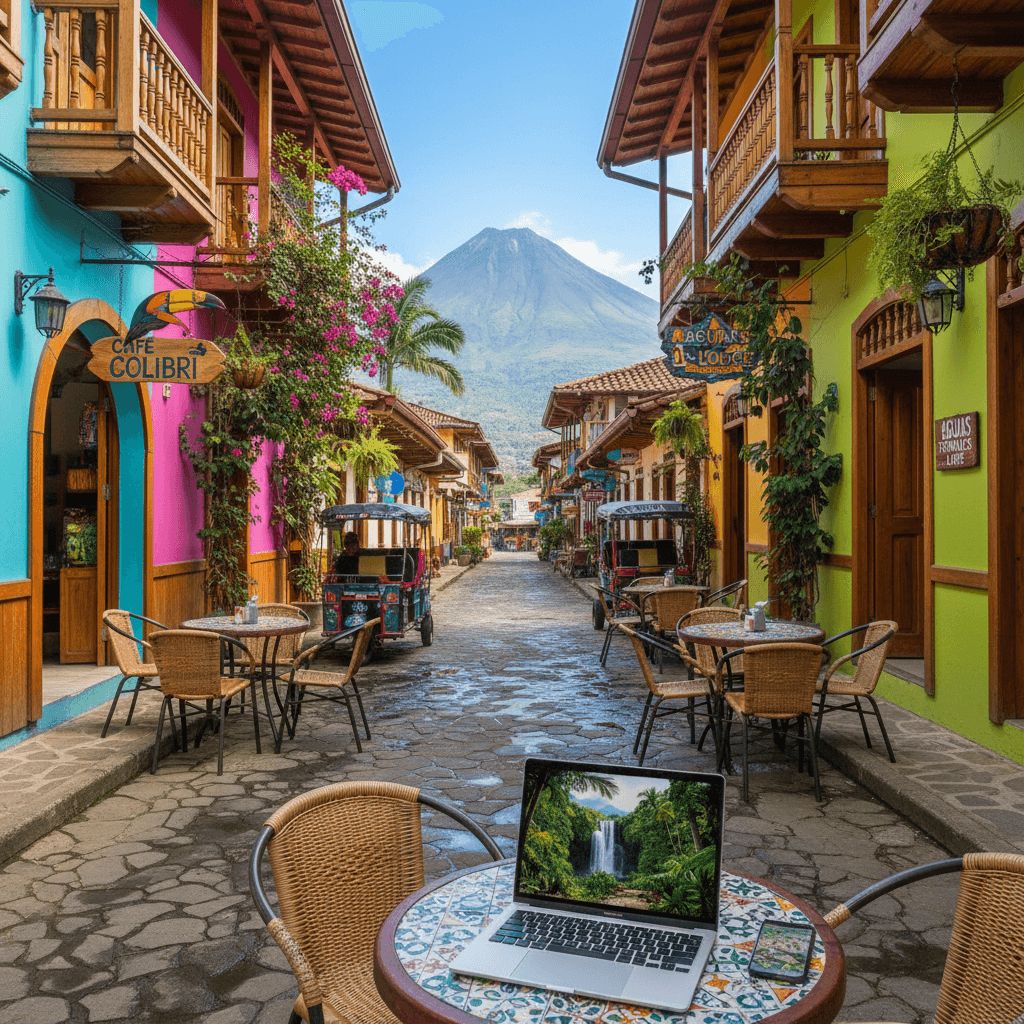
La Fortuna
🇨🇷 Costa Rica
The Pura Vida Pulse
La Fortuna isn't your typical digital nomad hub. While places like Santa Teresa or Nosara are defined by the Pacific surf, La Fortuna is defined by the colossal presence of the Arenal Volcano. Living here feels like being tucked into a deep green blanket of rainforest, where the morning alarm is often the guttural call of a howler monkey rather than a siren. It is a place of high contrast, where you can spend four hours on a grueling Zoom call and the next four soaking in a naturally heated river or hiking through lava fields.
The town itself is small, spanning just a few blocks centered around a leafy main square. It has a grounded, unpretentious energy that avoids the "sceney" feel of more established nomad spots. You'll find a community that prioritizes wellness and nature over late night parties. Most nomads come here for a few weeks to reset, finding that the combination of fresh mountain air and farm to table food does wonders for their productivity. However, be aware that the small town charm can start to feel a bit isolating if you stay longer than a month, as the nightlife is relatively quiet and the social circle is tight knit.
Cost of Living Breakdown
While Costa Rica is generally the most expensive country in Central America, La Fortuna offers solid value if you know where to look. You can live comfortably on a mid range budget of $2,500 per month, though budget conscious travelers can make it work for around $1,500 by sticking to local sodas and Tico style housing.
- Housing: A studio or one bedroom downtown near the main square typically runs between $500 and $800 per month. If you want those iconic volcano views or proximity to the hot springs, expect to pay $900 or more for a modern villa or high end Airbnb.
- Food and Drink: A traditional breakfast of gallo pinto at a local soda costs about $5 to $8. Dinner at a mid range farm to table spot like Don Juan Coffee and Chocolate Tour will be $10 to $20, while a high end meal at the hot springs resorts can reach $40.
- Transportation: Walking is free and easy downtown. For exploring the outskirts, scooters rent for about $20 per day. Local buses are cheap at $1 to $3, but they aren't always on time.
Where to Plant Your Roots
Choosing a neighborhood in La Fortuna is really a choice between convenience and seclusion. Since the town is so compact, your decision depends on whether you have your own wheels.
Downtown & El Burrito
- The Vibe: This is the functional heart of the town. It's walkable, social, and packed with cafes.
- Best For: Solo nomads who want to be near the action and the supermarket.
- Pros: High walkability, more affordable rentals, and easy access to the bus station.
- Cons: Can get noisy with tourist traffic and nightly rain on tin roofs.
Volcano & Lake Edges
- The Vibe: Lush, quiet, and visually stunning. This is where you go for the "jungle office" experience.
- Best For: Couples or families who value privacy and don't mind driving.
- Pros: Incredible views of Arenal, proximity to hiking trails, and cooler temperatures.
- Cons: Higher prices and zero walkability; you will need a car or scooter.
Connectivity and Workspace
Internet in La Fortuna has seen a massive upgrade recently. Most nomads find that download speeds of 10 Mbps are now standard in reputable rentals and hotels, which is plenty for video calls. If you need a guaranteed professional environment, Selina La Fortuna is the undisputed headquarters for the remote work crowd. A day pass costs between $10 and $20, giving you access to reliable WiFi, a community of other travelers, and a workspace with a jungle backdrop.
For mobile data, grab a SIM card from Kolbi or Claro at a pharmacy downtown. You can get a plan with plenty of data for about $10 to $20. Having a backup hotspot is always a smart move here, especially during the peak of the rainy season when the occasional power flicker can happen during a tropical downpour.
Safety and Local Life
La Fortuna is widely regarded as one of the safest destinations in the country. Violent crime is rare, and the community is exceptionally welcoming to foreigners. You should still use common sense, like not leaving your laptop visible in a car or walking alone on unlit roads late at night. For healthcare, there are several pharmacies downtown for minor issues and a local hospital for emergencies. For anything specialized, you'll likely need to take a 2.5 hour shuttle to San Jose.
The social life here revolves around the outdoors. Instead of meeting at a club, you'll likely make friends during a sunset dip in the El Salto swimming hole or over a craft beer at a local brewery. It’s a place that rewards those who wake up early to catch the volcano before the clouds roll in, embracing the slow, intentional pace of the Pura Vida lifestyle.
The Bottom Line
La Fortuna hasn't quite reached the price peaks of beach hubs like Nosara or Tamarindo, but it's no longer the dirt cheap backpacker stop it once was. You're paying for the view of Arenal and the convenience of being in the adventure capital of the country. Most solo nomads find they can live comfortably on a budget of $2,500 per month, while those prioritizing high end villas or frequent hot spring visits should plan for $4,000 or more.
If you're on a tighter leash, sticking to a $1,500 monthly budget is possible if you cook at home and find a Tico house rental away from the main tourist strip. Prices are rising as the digital nomad scene grows, especially for short term rentals located within walking distance of the town square.
Housing and Neighborhoods
The town is small, just a few blocks wide, which makes your choice of neighborhood mostly about whether you want a car or not. Most digital nomads gravitate toward the Downtown/El Burrito area because it's walkable to every cafe and bar in town. If you want to wake up to the volcano out your window, you'll need to look further out toward the edges of the national park.
- Downtown/El Burrito: This is the heart of the action. You'll find studios and one bedroom apartments for $500 to $800. It gets a bit noisy with the tourist traffic, but you won't need a vehicle.
- Arenal Volcano/Lake Edges: Best for those who want peace. Rents jump to $900 or more for smaller places, and you'll definitely need a scooter or car to get groceries.
- Selina La Fortuna: The primary nomad hub. Their CoLive program is popular for those who want an instant social life and reliable desks, though it can feel a bit like a party hostel on weekends.
Eating and Drinking
Your food budget depends entirely on how much you embrace the "Sodas." These small, family run restaurants serve up the local staple, gallo pinto, for about $5 to $8. It's the best way to keep your costs down while eating like a local.
- Mid-range Dining: Expect to pay $10 to $20 for a meal at farm to table spots like Don Juan.
- Upscale Experiences: Dinner at the higher end hot spring resorts will run you $25 to $40 per person.
- Groceries: Most expats recommend shopping at the local Super Christian for the best variety, though imported items carry a heavy price tag.
Connectivity and Coworking
Internet in La Fortuna has seen a massive upgrade recently. While 10 Mbps was once the ceiling, many rentals now offer much faster fiber optic connections. Still, power outages happen during heavy rains in the green season, so having a backup is smart.
Selina remains the gold standard for dedicated coworking. A day pass costs between $10 and $20 and gives you access to a community of other remote workers. For a more casual vibe, you'll find plenty of cafes downtown that are happy to let you work for the price of a few coffees, provided you aren't taking three hour video calls.
Getting Around
If you stay downtown, your feet are your best friend. For everything else, the costs add up. Uber isn't reliable here, so you'll be relying on official red taxis or shuttles. Many nomads rent a scooter for around $20 a day to explore the waterfall and hiking trails on their own schedule. If you're moving between cities, skip the slow public bus and book an Interbus shuttle for $20 to $50; it's faster and has AC.
Healthcare and Essentials
For everyday needs, you'll find plenty of pharmacies downtown that can handle minor issues. Hospital La Fortuna is available for emergencies, but for anything serious, you're looking at a 2.5 hour trip to San José. It's a safe town, though standard travel common sense applies at night. Pick up a Kolbi or Claro SIM card for about $15 at a local shop to ensure you have data when you're out exploring the jungle.
The Solo Nomad: Downtown and El Burrito
If you're arriving in La Fortuna solo, you'll want to stay within the few blocks that make up the town center or the adjacent El Burrito area. This is the heart of the action where everything is walkable. You can grab a $5 gallo pinto for breakfast and walk two minutes to a cafe to start your work day. Most nomads prefer this area because it eliminates the need for a car or expensive taxi rides to get to dinner or the grocery store.
The vibe here is social and convenient. You'll find plenty of other remote workers at local spots like Selina, which serves as the unofficial headquarters for the nomad community. While it can get a bit noisy with tourist traffic and local bars, the trade-off is easy access to reliable WiFi and the best selection of affordable studios. Expect to pay between $500 and $800 per month for a decent apartment in this central zone.
- Rent: $500 to $800 per month for a 1BR
- Coworking: Selina La Fortuna ($10 to $20 day pass)
- Local Vibe: Social, walkable, and lively
Deep Work and Long-Term Expats: The Volcano Edges
Expats who have been in town for a while often migrate toward the outskirts of town, heading toward the base of the Arenal Volcano or the edges of Lake Arenal. This is where you go for the views you see on postcards. It's significantly quieter than downtown, replaced by the sounds of howler monkeys and tropical birds. It's the ideal spot if your priority is a peaceful environment for deep work or if you're looking for a larger "Tico" style house with a yard.
You'll need a vehicle if you live out here. Scooters rent for about $20 a day, but most long-termers eventually buy a rugged vehicle or rely on shuttles like Interbus for trips into town. The properties here are more spread out and pricier, often starting around $900 for anything with a view. It's less of a "pop-in-for-coffee" lifestyle and more of a "stock-up-at-the-market-once-a-week" existence.
- Rent: $900+ per month
- Transport: Scooter or car highly recommended
- Pros: Stunning volcano views and proximity to hot springs
Families and Slow Travelers: Farm-to-Table Corridors
Families often find their rhythm in the residential pockets near the agricultural tours, such as the area around the Don Juan Coffee and Chocolate farm. These neighborhoods offer a more authentic look at Costa Rican life while remaining safe and accessible. There's more space for kids to run around, and you're close to educational activities like organic farming workshops and spice garden tours.
Living here feels like being part of a community rather than a tourist hub. You'll find smaller local sodas (traditional restaurants) where a full meal costs under $10. While you're further from the coworking spaces, the internet infrastructure has improved enough that most private rentals now offer the 10 Mbps speeds required for video calls. It's a balance of nature, education, and safety that suits those traveling with children.
- Dining: Mid-range farm-to-table meals for $10 to $20
- Safety: High; very welcoming local community
- Atmosphere: Educational, quiet, and family-oriented
The Short-Term Professional: Selina and Surroundings
If you're only in town for a week or two and need to hit the ground running, staying in the immediate vicinity of the Selina hostel is the smartest move. It's a dedicated nomad hub that takes the guesswork out of your stay. The CoLive program is popular here, providing a bed, a desk, and a built-in social circle. You'll spend your evenings at fire pits or joining group hikes to the volcano, which helps beat the isolation that some nomads feel in smaller towns.
The area is geared entirely toward the professional traveler. You can buy a local SIM card from Kolbi or Claro for about $15 at a nearby shop and be fully connected within an hour of arriving. While it can feel a bit like a "nomad bubble," it's the most efficient way to experience the Pura Vida lifestyle without sacrificing productivity.
- Connectivity: Best in town; dedicated backup power and high-speed lines
- Social: Nightly events and organized weekend adventures
- Cost: Mid-range to high depending on room type
Connectivity in the Jungle
For a town tucked away at the foot of a volcano, La Fortuna punches above its weight when it comes to staying connected. Gone are the days of crossing your fingers for a stable signal while the rain pours down. Most nomads find that the local infrastructure has caught up with the demand, making it entirely feasible to take Zoom calls with a view of the Arenal peak.
You can expect average speeds of 50-100 Mbps or higher for downloads and uploads in nomad spots. While that might sound modest compared to a high-tech hub like Seoul or Austin, it is remarkably reliable for a small Costa Rican town. It is more than enough for video conferencing, uploading documents, and streaming your favorite shows after a day of hiking.
If you need a backup or plan to work while exploring the outskirts near Lake Arenal, grab a local SIM card. Travelers recommend Kolbi or Claro for the best coverage in the Alajuela Province. You can pick these up at pharmacies or small shops downtown for about $10 to $20, which usually gets you a generous amount of data. Just make sure your phone is unlocked before you land.
The Coworking Scene
The social and professional heart of the nomad community is undoubtedly Selina La Fortuna. It is more than just a place to sit with a laptop; it is where the town’s remote workers congregate to network and swap travel tips. The setup is designed specifically for the digital lifestyle, featuring a dedicated coworking space with the most consistent WiFi in the area.
- Day Pass: Expect to pay between $10 and $20 depending on the season.
- Amenities: High-speed internet, ergonomic seating, and quiet zones for focused work.
- The Vibe: Very social. They host community events and fire pits, making it easy to meet people if you are traveling solo.
- CoLive Program: If you plan to stay for a month or more, their subscription model can save you a significant amount on both housing and desk space.
For those who prefer a more corporate-free environment, the "beachside-style" cafes in the town center are welcoming to laptop users. While they don't always have the dedicated silence of a coworking office, the atmosphere is relaxed and the coffee is world-class. Most restaurants and mid-range hotels around the main square now offer free WiFi as a standard amenity, though it is always polite to buy a few rounds of coffee if you are settling in for a long session.
Practical Remote Work Tips
Power outages can happen, especially during the peak of the rainy season from May to November. Most high-end hotels and dedicated coworking spaces have backup systems, but it is a good idea to keep your devices charged and have a hotspot ready just in case a tropical storm rolls through.
If you are looking for a quieter workspace, consider staying slightly outside the main downtown grid. Many Airbnb rentals and Tico houses near El Burrito or the edges of the national park have upgraded their private routers to attract long-term stays. Just be sure to ask for a speed test screenshot before you commit to a month-long lease. Expats often say that having your own dedicated router is the key to a stress-free work week in the rainforest.
The work-life balance here is the real draw. Most nomads structure their day to work early in the morning so they can head to the hot springs or hit the volcano trails by 2:00 PM. The town is compact enough that you can walk from a morning meeting at a cafe to a jungle trailhead in minutes, which is exactly why the "Pura Vida" lifestyle works so well for the remote crowd.
Staying Safe in the Shadow of Arenal
La Fortuna is widely considered one of the safest hubs in Costa Rica. It lacks the grit of San José or the transient chaos of some coastal party towns. Most nomads find the atmosphere here incredibly welcoming; the community is tight knit, and locals generally look out for the travelers who fuel the local economy. Violent crime is rare, and you'll likely feel comfortable walking through the main square at most hours.
That said, petty theft is the most common headache for expats. Most incidents involve opportunistic "smash and grabs" from rental cars parked at remote trailheads or unattended bags left on the banks of the El Salto swimming hole. Travelers often say the best defense is simply keeping your valuables out of sight. If you're heading out for a hike or a soak in the hot springs, leave your laptop and passport in your room safe.
While the town is walkable and well lit, it's smart to stay vigilant after dark if you're heading to the outskirts of town or the El Burrito area. Stick to the main roads where restaurants and bars are active. If you're staying further out toward the volcano or Lake Arenal, use a taxi or a pre-arranged shuttle at night rather than walking along unlit, sidewalk-free roads.
- Petty Theft Risk: Low to moderate; mostly vehicle break-ins at tourist sites.
- Solo Travel: Very safe for solo nomads, including women.
- Emergency Contacts: Dial 911 for general emergencies or 117 to reach the tourist police directly.
Healthcare and Medical Services
For a small town, La Fortuna is surprisingly well equipped for day to day health needs. You'll find several pharmacies, or "farmacias," clustered around the central park. These are great for minor ailments, and the pharmacists can often provide consultations and over the counter treatments for common tropical issues like stomach bugs or skin rashes.
If you need more than a bandage or a bottle of aspirin, the town has local clinics and the Ebais (public health center) for basic medical care. For urgent but non-life-threatening issues, there are private doctors who cater to the expat and nomad community, often speaking fluent English. Centro Médico Sanar La Fortuna or Fortuna Medical Center is available for emergencies. Expect to pay between $60 and $100 for a private consultation.
In the event of a serious medical emergency, you'll likely be stabilized locally and then transported. The nearest high-end, private hospitals with specialist equipment are in San José, which is about a 2.5 to 3 hour drive away. Most long term nomads recommend carrying international health insurance that covers emergency medical evacuation just in case.
- Pharmacies: Multiple locations downtown, usually open until 8:00 PM or 9:00 PM.
- Local Care: Centro Médico Sanar La Fortuna for basic diagnostics and emergencies.
- Advanced Care: CIMA or Clínica Bíblica in San José for surgeries or specialized treatment.
Environmental Safety
Living at the base of an active volcano sounds intense, but Arenal is currently in a "resting" phase. It hasn't had a major eruption since 2010. The government monitors seismic activity constantly, and there are clear evacuation routes marked throughout the town. Most residents don't give it a second thought, but it's good to be aware of your surroundings.
The more immediate "danger" is the terrain. If you're out hiking the lava fields or exploring the rainforest, stick to the marked trails. Tropical downpours can turn paths into mudslides quickly, especially during the peak rainy months of September and October. Also, keep a respectful distance from the wildlife; those howler monkeys sound terrifying, but they're harmless if you leave them alone. Snakes and spiders are present but rarely bother people who stay on the paths.
The Downtown Footprint
La Fortuna is surprisingly compact. If you choose to live near the central park or the main square, you can easily handle your daily errands on foot. Most of the banks, pharmacies, and popular sodas are clustered within a few blocks, making it one of the more walkable hubs for nomads in Costa Rica. It is the kind of place where you will run into the same people at the grocery store and the coffee shop every afternoon.
However, the walkability ends abruptly once you head toward the volcano or the hot springs. The main attractions are spread out along the roads leading out of town. While it is a beautiful walk, the tropical humidity and lack of consistent sidewalks on the outskirts make it less than ideal for a midday stroll with a laptop bag.
Shuttles and Inter-city Travel
Most nomads arriving from San Jose or Liberia skip the public bus system in favor of shared shuttles. While a public bus from San Jose is cheap at roughly $5 to $10, it is notoriously slow and unreliable for anyone on a tight work schedule. Most travelers opt for professional shuttle services like Interbus. These will set you back between $20 and $50, but they offer air conditioning and a direct route that saves you hours of transit time.
- San Jose to La Fortuna: Approximately 3 hours via shuttle ($50).
- Liberia to La Fortuna: Approximately 2 hours via shuttle ($40).
- Local Taxis: Readily available downtown; always ensure the driver uses the meter or agree on a price before getting in.
Two Wheels: Scooters and Bikes
If you want independence without the high cost of a car rental, renting a scooter is the move. It is the most efficient way to reach the trailheads at Arenal Volcano National Park or the various hot springs without relying on tour operators. Expect to pay around $20 per day for a reliable scooter. Just be mindful of the sudden tropical downpours; keep a poncho in the seat compartment at all times.
Bicycles are also available for rent for similar prices, but they are better suited for leisure than actual commuting. The terrain gets hilly quickly as you move toward Lake Arenal, so unless you are looking for a serious workout before your 9-to-5, stick to something with a motor.
Public Buses and Ride-Hailing
Don't count on Uber or other ride-hailing apps here. While they might show up on your phone, the availability is extremely limited and inconsistent. The local bus system is fine for a budget-conscious day trip to the lake, with fares usually between $1 and $3, but the schedules are more of a suggestion than a rule. If you have a meeting or a deadline, a local taxi or a pre-booked shuttle is a much safer bet.
Practical Transport Tips
- Download Offline Maps: Cell service can be spotty once you get into the denser rainforest areas near the volcano.
- Walk During Daylight: The town is safe, but the roads are dark and narrow at night. If you are staying at a rental outside the main downtown grid, take a taxi after sunset.
- Book Shuttles Early: During the peak dry season from January to March, shuttles fill up days in advance.
The Language Landscape
Spanish is the official language in La Fortuna, but you will find that English is incredibly prevalent. Because the town is a primary hub for adventure tourism and a growing digital nomad population, almost everyone working in restaurants, hotels, and tour agencies speaks English fluently. You can easily get by in the downtown core without knowing much Spanish, though locals always appreciate the effort when you try.
The local dialect is famous for its warmth. You will hear the phrase Pura Vida dozens of times a day. It translates literally to pure life, but it functions as a hello, a goodbye, a way to say everything is great, or even a way to shrug off a minor problem. It is the backbone of the communication style here; relaxed, friendly, and rarely rushed.
Staying Connected
While the jungle setting might make you worry about your Zoom calls, La Fortuna has caught up quickly. Most nomads find that fiber optic internet is becoming the standard in downtown rentals and dedicated workspaces. You can expect speeds around 50-100 Mbps or higher in most cafes and mid-range hotels with fiber optic, which is enough for standard remote work.
- Selina La Fortuna: This is the go to spot for reliable WiFi. They offer dedicated coworking spaces with stable connections and a community of other remote workers. Day passes available (check current pricing on site).
- Red Frog Coffee: A popular spot downtown where you can grab a local brew and use their WiFi for a few hours of light work.
- Local Cafes: Many small eateries around the main square offer free WiFi, though these are better for checking emails than taking heavy video calls.
Mobile Data and SIM Cards
Do not rely on your home country's roaming plan, as it will likely be slow and expensive. Instead, grab a local SIM card as soon as you arrive. You can find these at pharmacies downtown or small electronics shops. The two main providers are Kolbi and Claro.
Most travelers recommend Kolbi for better coverage if you plan on hiking deep into the Arenal Volcano National Park or heading out toward Lake Arenal. You can get an unlimited data package for roughly $10 to $20 per month. Just make sure your phone is unlocked before you land. If you prefer a digital setup, Airalo or similar eSIM apps work well here, though they are often more expensive than a physical local card.
Practical Communication Tips
While English gets you through the day, having a few tools on your phone makes life easier when you venture outside the tourist bubble or deal with local landlords. Download Google Translate and make sure to download the Spanish dictionary for offline use. It is helpful for translating menus at smaller sodas (local diners) or reading lease agreements.
WhatsApp is the primary way people communicate in Costa Rica. Whether you are booking a shuttle with Interbus, ordering food, or messaging a new friend from a hike, you will need it. Most local businesses list their WhatsApp number on their front door or Facebook page rather than a traditional website.
Key Phrases to Know
- Pura Vida: The all purpose greeting and philosophy.
- ¿Cuánto cuesta?: How much does it cost? Useful at the weekly farmers markets.
- Tico / Tica: What Costa Ricans call themselves.
- Una soda, por favor: Used when looking for the affordable, family run restaurants where you can find a $7 casado.
Overall, communication in La Fortuna is low stress. The combination of high English proficiency among locals and the widespread availability of high speed internet at nomad hubs like Selina makes it one of the easiest places in Central America to plug in and start working immediately.
The Tropical Rhythm
La Fortuna doesn't follow the standard four season calendar. Instead, your life here will be dictated by the balance between sun and tropical downpours. The temperature stays remarkably consistent, hovering between 75°F and 85°F throughout the year. It's humid, lush, and exactly what you'd expect from a town sitting at the foot of a volcano in the rainforest.
Most nomads aim for the dry season, which runs from December through April. This is when you'll get the clearest views of Arenal Volcano and the most reliable weather for hiking the 1968 Trail or swimming at the base of the La Fortuna Waterfall. Expect blue skies and plenty of sunshine, but keep in mind that this is also peak tourism season. Prices for short term rentals and shuttles tend to spike, and the downtown core feels much more crowded.
Navigating the Rainy Season
The "green season" kicks off in May and lasts through November. Don't let the name scare you off; it rarely rains all day. Usually, you'll have bright, sunny mornings perfect for getting your deep work done at Selina, followed by heavy, predictable afternoon showers. It's actually a favorite time for long term expats because the landscape turns an electric green and the dust from the backroads settles.
If you're looking to save money, this is the time to visit. You can often find better deals on monthly stays in the El Burrito neighborhood or more secluded spots near Lake Arenal. Just be wary of October. This is typically the wettest month of the year, and the persistent rain can make the unpaved roads around the volcano a bit of a muddy mess for scooters.
Best Months for Digital Nomads
For the best balance of weather and community, January through March is the sweet spot. The town is alive, the trails are dry, and the outdoor social scene is at its peak. If you prefer a quieter vibe and lower costs, June and July are excellent "shoulder" months. You'll deal with some rain, but the tourist crowds thin out and the hot springs feel even better when there's a light mist in the air.
- High Season (Dec to Apr): Best for outdoor adventure, volcano visibility, and meeting other travelers. Expect higher prices and more foot traffic downtown.
- Green Season (May to Nov): Best for budget conscious nomads and those who enjoy a slower pace. The jungle is at its most beautiful, though you'll need a waterproof laptop bag.
- Peak Rain (October): The quietest month. Great for hunkering down and focusing on a big project, but outdoor activities frequently get rained out.
What to Pack for the Climate
Because the humidity is high, clothes take forever to air dry. Travelers often recommend bringing moisture wicking fabrics rather than heavy cotton. You'll want a solid rain shell even in the dry season, as the volcano creates its own microclimate. For your workspace, a surge protector is a smart move, as tropical storms can occasionally cause brief power flickers in the more rural areas outside the main town square.
Most nomads find that a light sweater is enough for the evenings, especially if you're staying at a higher elevation near the lake where the breeze picks up. During the day, it's standard tropical attire. Just remember that if you're hitting the coworking space, the air conditioning can be surprisingly chilly compared to the 80°F heat outside.
Connectivity and Workspace
Internet reliability in La Fortuna has improved significantly over the last few years. While you might still encounter a brief flicker during a heavy tropical downpour, the town now supports a steady 10 Mbps download and upload speed in most central locations. This makes it a viable spot for video calls and remote work, though it's always smart to have a backup plan.
Most nomads gravitate toward Selina La Fortuna. It is the undisputed hub for the remote work community, offering a dedicated coworking space with jungle views and a solid community vibe. A day pass usually runs between $10 and $20. If you prefer a more casual setup, several cafes around the main square are laptop friendly, though they lack the ergonomic chairs and quiet zones of a dedicated office.
For mobile data, grab a SIM card from Kolbi or Claro. You can find these at local pharmacies or small shops downtown for about $10 to $20, which typically includes a generous amount of data. Coverage is excellent in town but can get spotty as you head deeper toward the base of the volcano or out toward Lake Arenal.
Cost of Living Breakdown
La Fortuna is relatively affordable compared to North American or European cities, but it is a major tourist destination, so prices can creep up. Most nomads find they can live comfortably on a monthly budget of $2,500, while those on a tighter string can manage on $1,500 by sticking to local sodas and shared housing.
Downtown (El Burrito)
- Rent: $500 to $800 for a studio or one bedroom apartment.
- Food: $5 to $8 for a traditional Gallo Pinto or Casado at a local soda.
- Vibe: Highly walkable, close to bars, and the best spot for solo travelers.
Arenal Volcano & Lake Edges
- Rent: $900+ for modern villas or houses with a view.
- Food: $25 to $40 for upscale dinners at hot spring resorts.
- Vibe: Quiet and scenic, but you will absolutely need a car or scooter to get around.
Getting Around
The downtown core is just a few blocks wide, so you can easily handle your daily errands on foot. However, the best hikes and hot springs are several miles outside of town. Public buses exist but are notoriously slow and infrequent, usually costing $1 to $3 per ride.
Most nomads recommend renting a scooter for about $20 a day if you want independence. For moving between cities, skip the public bus and book a shuttle like Interbus. It costs between $20 and $50 but saves you hours of transit time and drops you right at your door. If you are arriving from San Jose, expect a 3 hour drive that costs roughly $50 via shared shuttle.
Safety and Health
This is one of the safest regions in Costa Rica. Violent crime is extremely rare, though you should still be mindful of petty theft. Don't leave your laptop or bag unattended on a cafe table while you go to the restroom. If you need medical attention, downtown pharmacies are well stocked for minor issues. For emergencies, Hospital La Fortuna provides basic care, but for anything serious, you will likely be transported to San Jose.
Climate and Timing
The weather is tropical and humid, staying between 75°F and 85°F year round. The dry season runs from December to April and is the most popular time to visit, offering clear views of the volcano. The rainy season peaks in October. While the rain makes the rainforest incredibly lush, the daily downpours can be intense, so bring a high quality waterproof jacket and a dry bag for your electronics.
Language and Social Life
Spanish is the official language, but because of the steady stream of international visitors, English is widely spoken in shops and restaurants. Learning a few phrases goes a long way; Pura Vida is the universal greeting and works for hello, goodbye, and thank you. Social life revolves around the Selina fire pits, weekend hikes, and farm to table tours like the Don Juan Coffee and Chocolate Tour. It is a small town, so you will likely start recognizing the same faces at the local bars within your first week.
Need visa and immigration info for Costa Rica?
🇨🇷 View Costa Rica Country GuideHidden Gem
Worth the effort