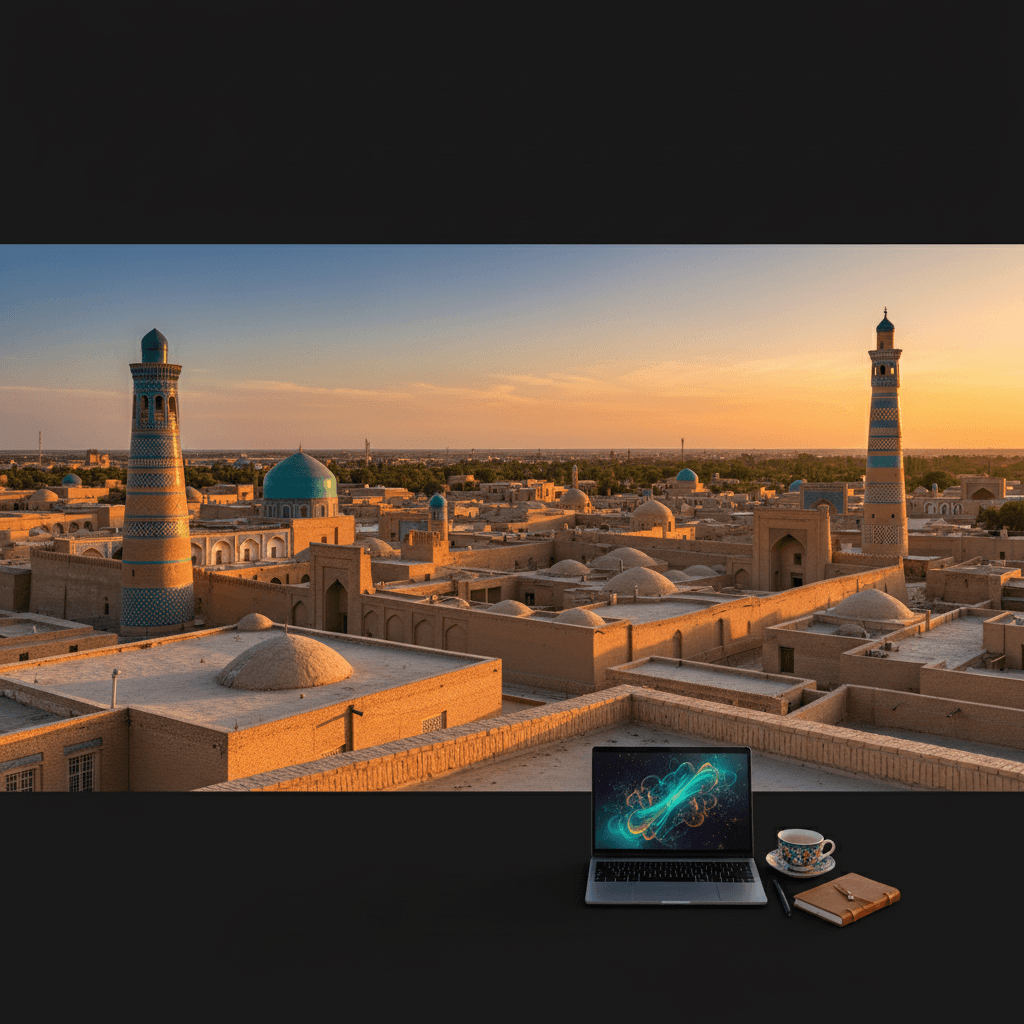
Khiva
🇺🇿 Uzbekistan
The Living Museum Vibe
Stepping into Khiva feels less like a city break and more like walking onto a film set where the production designer forgot to pack up. While Samarkand is grand and Bukhara is scholarly, Khiva is intimate. It is a compact, sand colored fortress that glows orange at sunset. For a nomad, the vibe is undeniably slow. You aren't here for the networking events or the high speed infrastructure; you're here to work from a rooftop terrace overlooking 14th century minarets while the smell of wood fired bread wafts up from the street below.
The city is split into two worlds. Ichan-Kala is the walled inner city, a UNESCO site where history is literally your neighbor. Outside the walls lies Dishan-Kala, the "new" town that feels more like a standard Central Asian Soviet footprint. Most travelers find that Khiva’s magic is concentrated in its silence. It is a remote desert outpost, meaning it lacks the frantic energy of Tashkent. It is the kind of place where you stop checking your watch and start measuring time by the call to prayer or the movement of shadows across the mud brick walls.
Cost of Living
Khiva is incredibly affordable, though you'll pay a slight premium to stay within the ancient walls. Since there isn't a massive nomad scene, prices haven't been inflated by "digital nomad" marketing. You're mostly paying local or tourist rates, which are both low by global standards.
- Monthly Rent: Expect to pay between $200 and $400 for a room in a high quality guesthouse or a small apartment. If you want to wake up inside the Ichan-Kala, you'll likely be staying in a family run boutique hotel rather than a traditional long term rental.
- Dining: A hearty plate of Plov or Shivit Oshi (green dill noodles) at a local spot costs about $2 to $5. Dinner at a nicer tourist focused restaurant with a view will run you $10 to $15.
- Local Transport: Taxis around town are cheap, usually $1 to $3. Most of your time will be spent on foot since the historic center is entirely pedestrian.
The Neighborhood Breakdown
Khiva isn't a sprawling metropolis, so your choice of neighborhood is really a choice between "inside the walls" or "outside the walls."
Ichan-Kala (Inner City)
- Rent: $300 to $500 per month (mostly guesthouses).
- Pros: Everything is walkable; you are surrounded by stunning architecture; safest area for solo travelers.
- Cons: Can feel like a tourist bubble; prices for groceries and snacks are higher than the outer town.
Dishan-Kala (Outer City)
- Rent: $200 to $350 per month.
- Pros: More authentic local life; cheaper markets; quieter at night away from tour groups.
- Cons: Less "magical" scenery; requires a short taxi or a long walk to get to the main sights.
Connectivity and Work Life
This is where the "adventure" part of desert nomadism kicks in. You won't find a WeWork or even a dedicated coworking space in Khiva. Most nomads rely on hotel WiFi, which can be hit or miss. The smart move is to buy a local SIM card from Ucell or Beeline for about $5 to $10. Mobile data is surprisingly reliable, often reaching 20 to 50 Mbps, which is plenty for Zoom calls if you tether to your laptop.
Cafe culture for working is still in its infancy. You won't find many people with laptops in the tea houses. Instead, look for restaurants with courtyards or hotel terraces. The lack of a formal community means you'll need to be self motivated, but the upside is the total lack of distractions.
Practicalities: Weather and Language
Timing is everything in the desert. If you come in July, the 45°C (113°F) heat will melt your productivity. The sweet spots are September to October and March to May. During these months, the air is crisp, the sky is a deep blue, and the temperatures are perfect for exploring. Winters are biting cold and many tourist facilities simply shut down.
Language can be a hurdle. Uzbek and Russian are the main tongues. While younger guides in the Ichan-Kala speak English, you'll want Google Translate with the Uzbek offline pack for the bazaars and taxis. Learning a few words like Rahmat (thank you) goes a long way with the locals, who are famously hospitable but often shy with foreigners.
Safety and Health
Khiva is exceptionally safe. You can walk through the Ichan-Kala at 11:00 PM without a second thought. Crime against tourists is nearly non-existent. For healthcare, there are basic clinics in the new town, but for anything serious, you'd need to head to Urgench or fly back to Tashkent. Always carry cash, specifically Uzbek Som, as many smaller shops and guesthouses won't take cards, though ATMs are becoming more common near the West Gate.
Budgeting for the Silk Road
Living in Khiva feels like stepping into a time capsule, but your bank account won't feel the ancient sting. It is easily one of the most affordable stops on the Silk Road, provided you don't mind a lifestyle that favors slow tea sessions over high speed infrastructure. Since there isn't a massive nomad scene here yet, you won't find "digital nomad" surcharges on your rent or coffee. Instead, you'll pay local prices that are strikingly low compared to Western Europe or even Southeast Asian hubs.
Most solo travelers can live comfortably on $1,500 to $2,000 a month. This mid range budget covers a private room in a high quality guesthouse, eating out at decent restaurants daily, and plenty of regional travel. If you are on a tighter leash, a budget of $800 to $1,200 is doable if you stick to shared guesthouses and survive on a steady diet of local plov and street shashlik.
Monthly Cost Breakdown
- Housing: Expect to pay between $200 and $400 for a studio or a room in a traditional guesthouse. Prices climb slightly if you insist on staying inside the historic walls of Ichan-Kala.
- Meals: A plate of plov or street food costs about $2 to $5. A meal at a mid range sit down restaurant usually lands between $5 and $10. Even the upscale tourist spots rarely exceed $25 for a full spread.
- Transport: Taxis around town are a bargain at $1 to $3 per ride. If you are arriving from Bukhara, the 8 to 9 hour train journey costs roughly $10 to $20.
- Connectivity: A local SIM card from Ucell or Beeline with 20GB of data costs about $5 to $10.
Where to Set Up Base
Choosing a neighborhood in Khiva is a choice between living inside the museum or just outside its gates. There are no dedicated expat enclaves, so your choice depends on how much "old world" charm you can handle daily.
Ichan-Kala (Walled Old Town)
- The Vibe: Pure history. You are surrounded by 12th century monuments and winding alleys.
- Rent: $300 to $500 for boutique guesthouses.
- Pros: Everything is walkable; you are seconds away from the best cafes and sites.
- Cons: It gets crowded with tour groups during the day and prices for basic goods are slightly inflated.
Dishan-Kala (Outer New Town)
- The Vibe: A more authentic look at modern Uzbek life. It is quieter and lacks the "theme park" feel of the inner city.
- Rent: $200 to $350 for local apartments.
- Pros: Better access to local markets and much cheaper long term housing.
- Cons: You will need to take a taxi to get to the historical center; English speakers are much harder to find here.
Practical Realities: Tech and Money
Don't expect to find a WeWork here. Khiva lacks dedicated coworking spaces, so most nomads work from their guesthouses or quiet corners of cafes in Ichan-Kala. WiFi can be hit or miss, so travelers recommend buying a local SIM and using your phone as a hotspot. Mobile speeds usually hover between 20 and 50 Mbps, which is plenty for Zoom calls but maybe not for heavy video editing.
Cash is still king in Khiva. While you'll find ATMs in Ichan-Kala that accept Visa and Mastercard, they sometimes run out of bills. It is smart to carry USD or EUR to exchange at local shops or banks. For managing your funds, Wise and Revolut work well for ATM withdrawals, but always keep a stash of Uzbek Som for small purchases at the bazaar.
When to Visit
The weather dictates your quality of life here. Spring (March to May) and Fall (September to October) are the sweet spots with temperatures between 15°C and 30°C. Avoid the summer at all costs; 45°C heat makes midday work or exploration impossible. Winter is bone chillingly cold, and many hotels actually shut down during the off season.
Solo Travelers and Culture Seekers: Ichan-Kala
If you are coming to Khiva, you are likely here for the Ichan-Kala. This is the walled inner city, a massive open air museum where almost every building dates back centuries. For solo travelers, this is the only place to stay. You are right in the heart of the action, surrounded by the iconic turquoise tiles of the Kalta Minor Minaret and the winding mud brick alleys that make this city famous.
Living here feels like stepping back into a medieval Silk Road outpost. It is entirely walkable, and you will find the best concentration of guesthouses and rooftop cafes within these walls. The trade off is that it is the most touristy part of town. Prices for meals and souvenirs are higher here than outside the gates, and it can get crowded when tour groups arrive in the mid morning.
- Rent: $300 to $500 per month for a private room in a traditional guesthouse.
- Vibe: Historical immersion, very safe, and highly social for meeting other travelers.
- Top Spot: Grab a coffee at Terrassa Cafe for the best view of the city walls at sunset.
Digital Nomads and Remote Workers: The Inner Wall Fringe
Khiva does not have a formal nomad scene or dedicated coworking spaces. If you need to get work done, your best bet is to find a guesthouse just inside or immediately outside the Ichan-Kala gates. Most nomads find that hotel WiFi is hit or miss, so you will want to pick up a local SIM card from Ucell or Beeline. You can usually get 20GB of data for about $5 to $10, which is reliable enough for tethering.
The pace of life here is slow. It is a place for deep work rather than networking. You won't find trendy cafes with ergonomic chairs, but you will find quiet courtyards and plenty of tea. Most remote workers stay for 3 to 5 days before heading back to the better infrastructure in Tashkent.
- Work Setup: No coworking spaces exist; use Yandex Go to find larger hotels with lobby WiFi if your guesthouse fails.
- Costs: A mid range daily budget of $50 to $70 covers a nice room, solid meals, and plenty of green tea.
- Connectivity: Expect speeds between 20 and 50 Mbps on mobile data.
Expats and Long Term Residents: Dishan-Kala
The "outer city" or Dishan-Kala is where the actual life of Khiva happens. This area sits outside the main fortress walls and is where you will find the local markets, schools, and hospitals. It is significantly cheaper than the tourist center, but it lacks the aesthetic charm of the old town. Expats who choose Khiva over the capital usually do so for the extreme quiet and the low cost of living.
You will find more authentic prices at the local bazaars here. A plate of plov or shashlik will only set you back about $2 to $4. However, English is rarely spoken once you leave the tourist zone, so having Google Translate with an offline Uzbek or Russian pack is a requirement.
- Rent: $200 to $350 for a basic apartment or local house rental.
- Amenities: Access to the main bazaars and the 103 emergency services.
- Transport: Yandex Go rides around this area usually cost between $1 and $3.
Families: Central Dishan-Kala
Khiva is a safe environment for families, with almost zero violent crime. However, the lack of modern playgrounds, international schools, or western style supermarkets makes it a tough sell for a long term stay. Families visiting the city usually stick to the areas immediately surrounding the North Gate of the Ichan-Kala. This provides a balance of easy access to the historical sites and proximity to the more modern pharmacies and shops in the outer city.
- Healthcare: Basic clinics are available for minor issues, but anything serious requires a trip to Urgench or a flight to Tashkent.
- Activities: Beyond the ruins, families often take day trips to the ancient desert fortresses located about an hour outside the city.
- Best Time to Visit: Stick to April, May, September, or October. Summer temperatures regularly hit 40°C (104°F), which is brutal for kids.
The Digital Landscape
Working from Khiva requires a shift in mindset. You aren't going to find glass-walled coworking hubs or ergonomic chairs here. This is a place where you trade modern office infrastructure for the chance to send emails from a 14th-century courtyard. Most travelers find that while the city is stunning, the internet situation requires some DIY effort. Most guesthouses inside the Ichan-Kala offer WiFi, but it often struggles with thick mud-brick walls and ancient wiring.
Speeds usually hover between 10 and 20 Mbps on a good day. If you have a high-stakes Zoom call, don't rely on the hotel router. The local hack is to use your phone as a mobile hotspot. Uzbekistan has made huge strides in mobile data, and you can generally pull 30 to 50 Mbps on a 4G connection if you're positioned correctly. Just keep your phone near a window.
Connectivity and SIM Cards
Pick up a local SIM as soon as you can. It's the only way to ensure you stay online while exploring the winding alleys of the old city. Ucell and Beeline are the most reliable providers in the Khorezm region. You'll need your passport to register, and a plan with 20GB of data will only set you back about $5 to $10. If you prefer to hit the ground running, Airalo or Nomad eSIM work well here, though you should double-check that your specific plan allows for data tethering before you buy.
Where to Work
Since there are no dedicated coworking spaces in Khiva, your "office" will likely be a mix of hotel terraces and cafes. The cafe culture is more about tea and conversation than laptops, but staff are generally relaxed if you stick around for an hour or two. Most nomads congregate in the Ichan-Kala because that's where the reliable power outlets and English-speaking service are located.
- Terrassa Cafe: Probably the most iconic spot to work. The views of the Kalta Minor Minaret are unbeatable. It can get breezy and bright, so bring a screen glare protector.
- Khiva Moon: A bit more tucked away, this spot offers a quieter atmosphere that's better for deep focus. The tea is excellent and the staff won't hover while you're typing.
- Zerafshan: Located in an old madrasah, it has high ceilings and a cool interior that provides a welcome break from the afternoon heat. The WiFi is hit-or-miss, so bring your hotspot.
Practical Work Tips
Power outages aren't frequent, but they do happen, especially during the peak summer heat when everyone is running air conditioning. Keep your devices charged. If you're planning a long-term stay, you might find the infrastructure in the Dishan-Kala (the outer town) slightly more stable, but you'll lose the atmosphere of the walled city.
Digital nomads often find that Khiva is best enjoyed as a "sprint" location. It's perfect for 3 to 5 days of focused work in a surreal environment before heading back to Tashkent for better bandwidth and community. There isn't much of a nomad scene here yet, so don't expect to network at the local coffee shop. You'll mostly be meeting group tourists and the occasional intrepid backpacker.
Summary of Costs & Tech
- Local SIM (20GB): $5 to $10
- Average Mobile Speed: 30 to 50 Mbps
- Day Pass at Coworking: N/A (None available)
- Coffee/Tea in Ichan-Kala: $2 to $4
- Required Apps: Yandex Go for taxis and Google Translate with the Uzbek offline pack.
Staying Safe in the Desert Fortress
Khiva is remarkably safe, even by the high standards of Uzbekistan. Because the heart of the city, Ichan-Kala, is a walled pedestrian zone, you aren't dealing with heavy traffic or the aggressive street crime found in larger global hubs. Most travelers feel comfortable walking the narrow alleys late at night, as the local community is tight knit and very protective of the city's reputation.
Pickpocketing is rare but can happen near the West Gate or around the main bazaars when tour groups bottle up the walkways. Keep your phone and wallet secure in these crowds. Outside the walls in Dishan-Kala, the vibe is more local and less polished, but still generally secure. The biggest "danger" you'll likely face is the uneven 18th century brickwork underfoot; keep an eye on your step after dark as street lighting can be patchy. The Juma Mosque (10th century, rebuilt 1788-89) is remarkable for its 210 columns supporting the roof, taken from ancient structures dating from the 12th to 15th centuries.
- Police: Dial 102. You'll see "Tourist Police" officers in green uniforms around the major monuments; they usually speak some English and are very helpful.
- Common Scams: There aren't many. Occasionally, a taxi driver at the Urgench Airport might quote an inflated price, so aim for $10 to $20 for the 30km trip to Khiva.
- Solo Travel: Women traveling alone generally report feeling respected, though you might get some curious questions about your marital status from friendly locals.
Healthcare Realities
While the history in Khiva is world class, the medical infrastructure is basic. For minor ailments like a stomach bug or a cold, you'll find several pharmacies, or Dorixona, in the newer parts of town. They stock essentials, but brands will be Russian or local, so bring a translated list of active ingredients or use an offline translation app to communicate with the pharmacist.
If you face a serious medical emergency, Khiva isn't the place to be. Local clinics in the Dishan-Kala area can handle simple stitches or basic diagnostics, but anything complex requires a trip to Tashkent, which has modern private hospitals like Akfa Medline. Most expats and long term nomads keep a robust first aid kit on hand and ensure their travel insurance includes medical evacuation to the capital or home.
- Emergency Services: Dial 103 for an ambulance.
- Water Safety: Do not drink the tap water here. The mineral content is high and it can be hard on the stomach. Stick to bottled water, which is cheap and available at every small shop for about $0.50.
- Dust and Heat: The desert air is incredibly dry. Nomads often struggle with sinus issues or dehydration during the 40°C+ summer months. Carry saline spray and drink more water than you think you need.
Practical Tips for Peace of Mind
Since Khiva is remote, it pays to be prepared. There are a few ATMs inside the Ichan-Kala walls that accept Visa and Mastercard, but they frequently run out of cash or go offline. Expats recommend carrying a backup stash of crisp, clean USD or EUR bills. You can exchange these at most hotel desks or official exchange booths if the machines fail you.
For digital security, the internet can be spotty. If you're working remotely, don't rely on guesthouse WiFi for sensitive tasks. Most nomads buy a local SIM from Ucell or Beeline for about $10 to ensure a stable LTE connection for banking or private calls. It's a small price to pay for staying connected in the middle of the Kyzylkum Desert.
Navigating the Silk Road Museum
Khiva is a tale of two cities, but for most travelers and the occasional nomad, life revolves almost entirely around the Ichan-Kala. This walled inner fortress is where you'll spend 90% of your time. It is effectively a pedestrian zone, meaning your own two feet are your primary mode of transport. The alleys are narrow, winding, and paved with uneven stone, so leave the dress shoes in your luggage and stick to sturdy sneakers.
Walking the entire length of the old city takes maybe 15 to 20 minutes, but you'll likely stop every few feet to stare at a minaret or duck into a workshop. It is one of the few places in Central Asia where you can truly ditch the maps and just wander without the stress of traffic or noise. If you are staying outside the walls in the Dishan-Kala (the outer "new" town), you might want a lift to the West Gate, especially when the desert sun starts beating down.
Ride-Hailing and Taxis
When you need to cover more ground or head to the train station, Yandex Go is your best friend. It functions exactly like Uber or Bolt. It is reliable, transparent with pricing, and saves you from the inevitable haggling matches with street side drivers. Most short trips around the city periphery will cost you between $1 and $3.
If you decide to hail a car the old-fashioned way, always agree on the price before you sit down. Local drivers are generally friendly, but they know a tourist when they see one. There are no scooters or bike rental schemes here yet; the terrain and the heat don't really lend themselves to cycling for most of the year.
Arriving and Departing
Khiva is remote, sitting way out in the western desert of Uzbekistan. Most people arrive via Urgench Airport (UGC), which is about 30 kilometers away. A taxi from the airport to the Ichan-Kala gates should run you about $10 to $20 depending on your bargaining skills, though Yandex often offers a better rate if you have a local SIM card ready to go.
The train is the most atmospheric way to arrive. The journey from Bukhara takes about 8 to 9 hours across the Kyzylkum Desert. Tickets usually cost between $10 and $20. It is a slow, scenic crawl that feels like a rite of passage for anyone exploring the Silk Road. The Khiva train station is modern and located just a short $2 taxi ride from the old town walls.
Day Trips and Desert Fortresses
If you want to explore the ancient Khorezm desert fortresses like Toprak-Kala or Ayaz-Kala, you'll need to arrange a private driver or join a small group tour. There is no reliable public transport to these remote ruins. Most guesthouses in the Ichan-Kala can organize a car for the day. Expect to pay around $40 to $60 for a full day trip, which is often shared between three or four people to keep costs down.
- Yandex Go: The essential app for local rides.
- Urgench Airport Transfer: 30-minute drive, roughly $10-$20.
- Train to Bukhara: 8-9 hours, scenic but slow, $15 average.
- Walking: The only way to see the Ichan-Kala properly.
Practical Transit Tips
While the city is safe, the Dishan-Kala can feel quite dark at night due to limited street lighting. If you are heading back to an apartment outside the walls after dinner, stick to the main roads or just call a Yandex. Also, keep in mind that during the peak summer months of June through August, the heat makes walking between 11:00 AM and 5:00 PM nearly impossible. Plan your movements for the early morning or the golden evening hours when the temperature drops and the city glows.
The Linguistic Landscape
In Khiva, your ears will mostly pick up the rhythmic, Turkic sounds of Uzbek and the occasional Russian, which remains the lingua franca for older generations and business dealings. While the Ichan-Kala is a magnet for international travelers, English proficiency hasn't fully trickled down to the local level yet. You'll find that museum guides and hotel staff speak it well enough, but once you step into a local teahouse or a market in Dishan-Kala, you'll be relying on smiles, gestures, and a few key phrases.
The local dialect in the Khorezm region has its own unique flavor, but standard Uzbek will get you everywhere. Most nomads find that learning a handful of words goes a long way in breaking the ice. Start with "Salom" for hello, "Rahmat" for thank you, and "Qancha?" when you're haggling for a silk carpet or a bowl of shivit oshi. If you speak even a tiny bit of Russian, you'll find it incredibly helpful for navigating technical things like SIM card registration or negotiating a taxi ride to Urgench.
Digital Tools and Translation
Since English isn't a given, Google Translate is your best friend here. Make sure you download the Uzbek and Russian offline packs before you head into the desert, as data can be spotty when you're wandering the deep alleys of the old city. The app's camera feature is a lifesaver for translating menus that don't have pictures or for reading signs at the smaller pharmacies.
- Google Translate: Essential for daily interactions and reading menus.
- Yandex Go: Even though the interface is in English, you'll often need to message drivers. Having a few pre-written Russian phrases for "I am at the West Gate" can save a lot of confusion.
- Telegram: This is the primary way people communicate in Uzbekistan. If you're trying to reach a guesthouse owner or a local guide, they'll likely ask for your Telegram handle.
Communication Etiquette
Communication in Khiva is deeply rooted in hospitality and respect, especially toward elders. When you enter a shop or a home, a formal greeting is expected. It's not just about the words; it's about the pace. People here aren't in a rush. If you're trying to get something done, like fixing a Wi-Fi issue at your guesthouse, a polite and patient approach works much better than being blunt.
In the Ichan-Kala, you'll meet plenty of polyglot guides who can jump between five different languages, but don't expect that same level of fluency at the local bazaars. Travelers often say that the lack of a shared language doesn't stop the locals from being incredibly helpful. You might end up sharing a pot of tea with someone where the entire "conversation" consists of photos on your phone and a lot of nodding. It's part of the slow, immersive charm that makes this city feel different from the modern bustle of Tashkent.
Practical Connectivity
To keep those translation apps running, you'll need a local SIM. Expats usually recommend Ucell or Beeline for the best coverage in the Khorezm region. You can pick one up for about $5 to $10 for a 20GB plan. You'll need your passport to register the card at an official office. If you prefer an eSIM, Airalo or Nomad eSIM work well for data, but double check that your phone supports hotspotting if you plan to tether your laptop for work, as hotel Wi-Fi inside the ancient walls can be frustratingly inconsistent.
The Perfect Window
Timing your stay in Khiva is everything. Because it sits deep in the Xorazm Region, surrounded by the Kyzylkum Desert, the climate doesn't do "mild" very well. You're either looking at blistering sun or a biting, dry chill. To actually enjoy working from a courtyard in the Ichan-Kala, you want to aim for the shoulder seasons.
Spring (March to May) is when the city wakes up. Temperatures sit comfortably between 15°C and 30°C. By April, the desert wind loses its edge, making it the best time for long walks along the fortress walls. You'll see more tour groups during this window, but the air is clear and the light is perfect for photography.
Fall (September to October) is widely considered the gold standard for Khiva. The summer heat breaks in early September, leaving you with consistent 20°C to 30°C days. Travelers often say this is the most reliable time for clear skies and manageable outdoor temperatures. If you're planning to spend a month here to focus on a project, this is your best bet for comfort.
The Seasons to Skip
Summer in Khiva is a test of endurance. From June through August, the mercury regularly hits 35°C to 45°C. The sun reflects off the mud-brick walls of the old town, creating a literal oven effect. Most nomads find the midday heat impossible for anything other than sitting directly under an air conditioning unit. If you do visit then, expect to do all your exploring before 9:00 AM or after 8:00 PM.
Winter (November to February) brings a different kind of challenge. Temperatures hover between 0°C and 10°C, but frequently dip well below freezing at night. Khiva becomes a ghost town. Many boutique hotels and restaurants inside the Ichan-Kala shut down for the season, and the drafty traditional architecture isn't always great at holding heat. While the sight of local minarets dusted in snow is beautiful, the lack of infrastructure makes it a tough sell for a long-term stay.
Climate Quick Facts
- Hottest Month: July (Average high of 38°C+)
- Coldest Month: January (Average low of -5°C)
- Rainfall: Extremely low year-round; you'll rarely need an umbrella.
- Peak Tourist Season: May and September.
What to Pack
Since the air is bone-dry, hydration and sun protection are more important than rain gear. Even in the "perfect" months of May or September, the sun is intense. Expats recommend keeping a high-SPF sunscreen and a reusable water bottle handy at all times.
Respecting local customs is also a factor in your wardrobe. While Uzbekistan is relatively relaxed, Khiva is a traditional pocket. Light, breathable linens are your best friend; they keep you cool in the 30°C heat while keeping you modest enough to enter mosques or mausoleums without a second thought. If you're visiting in the fall, bring layers. The desert loses heat rapidly once the sun goes down, and a 25°C afternoon can easily turn into a 10°C evening.
Getting Settled
Khiva is a time capsule, but living here requires a bit of old school grit. Most visitors stick to Ichan-Kala, the walled inner city. It is incredibly walkable and puts every major minaret and mosque at your doorstep. If you are staying longer than a few days, Dishan-Kala, the area just outside the walls, offers a more authentic look at modern Uzbek life with lower prices and actual grocery stores.
Expats usually find that the nomad infrastructure is thin. You won't find a dedicated coworking space here. Instead, you'll be tethering from your phone in guesthouse courtyards or small cafes. Ucell and Beeline are the go to providers for SIM cards. You can pick one up for about $5 to $10 for a 20GB data pack, but you must bring your passport to an official office to register it.
Cost of Living
Your budget goes a long way in Khiva, though the lack of long term rentals means you will likely be staying in guesthouses or boutique hotels. Prices are generally lower than Tashkent, though tourist menus in the old city carry a premium.
- Budget ($800 to $1,200/month): Staying in a basic guesthouse, eating plov and shashlik at local spots, and using trains for travel.
- Mid-range ($1,500 to $2,000/month): A private room in a high quality hotel, mixed dining at tourist restaurants, and frequent Yandex rides.
- Comfortable ($2,500+/month): Top tier historic hotels, upscale dining, and private desert fortress tours.
Connectivity and Work
Internet speeds generally hover between 20 and 50 Mbps on mobile networks. While sufficient for video calls, the connection can be spotty inside the thick mud brick walls of ancient buildings. Most nomads recommend using an eSIM like Airalo as a backup, but a local physical SIM is more reliable for heavy lifting. Since there are no coworking hubs, Terrassa Cafe is a popular spot for its views, though you should expect to rely on your own hotspot.
Getting Around
If you are staying in Ichan-Kala, your feet are your primary mode of transport. The streets are narrow, winding, and largely car free. For trips further out or to reach the Urgench Airport about 30km away, download Yandex Go. It works just like Uber and prevents the need to haggle with drivers. A ride across town usually costs between $1 and $3. For the long haul, the 8 to 9 hour train from Bukhara is a scenic, slow burn through the desert that costs roughly $10 to $20.
Eating and Socializing
The social scene revolves around tea and heavy plates of carbohydrates. Plov is the staple, and a filling meal at a local bazaar will only set you back about $2 to $5. In the evenings, the city gets quiet quickly. There is no real nightlife or club scene here; instead, people gather in tea houses or hotel restaurants. To meet others, travelers often join Facebook groups like Expats in Uzbekistan today or link up with people during day trips to the nearby desert fortresses.
Health and Safety
Khiva is remarkably safe, even for solo travelers at night. Violent crime is almost non existent in the tourist zones. For health issues, pharmacies in Dishan-Kala stock the basics, but for anything serious, you will need to head to Tashkent. In an emergency, dial 103 for an ambulance or 102 for police.
When to Go
The weather is the biggest factor in your quality of life. Spring (March to May) and Fall (September to October) are the sweet spots with temperatures between 15°C and 30°C. Summer is punishing, often soaring above 40°C, which makes midday work or exploration nearly impossible. Winter is cold and many tourist focused businesses simply shut down for the season.
Local Customs
While Khiva is relaxed, it is still a conservative environment. Dress modestly when entering mosques by covering your shoulders and knees, and always remove your shoes at the door. Cash is still king here. While there are ATMs in Ichan-Kala, they can run out of bills; carrying USD or EUR to exchange at local shops is a smart move. Most nationalities get 30 days visa free, making it easy to drop in for a month of focused, historical immersion.
Need visa and immigration info for Uzbekistan?
🇺🇿 View Uzbekistan Country GuideOff the Radar
Pioneer territory