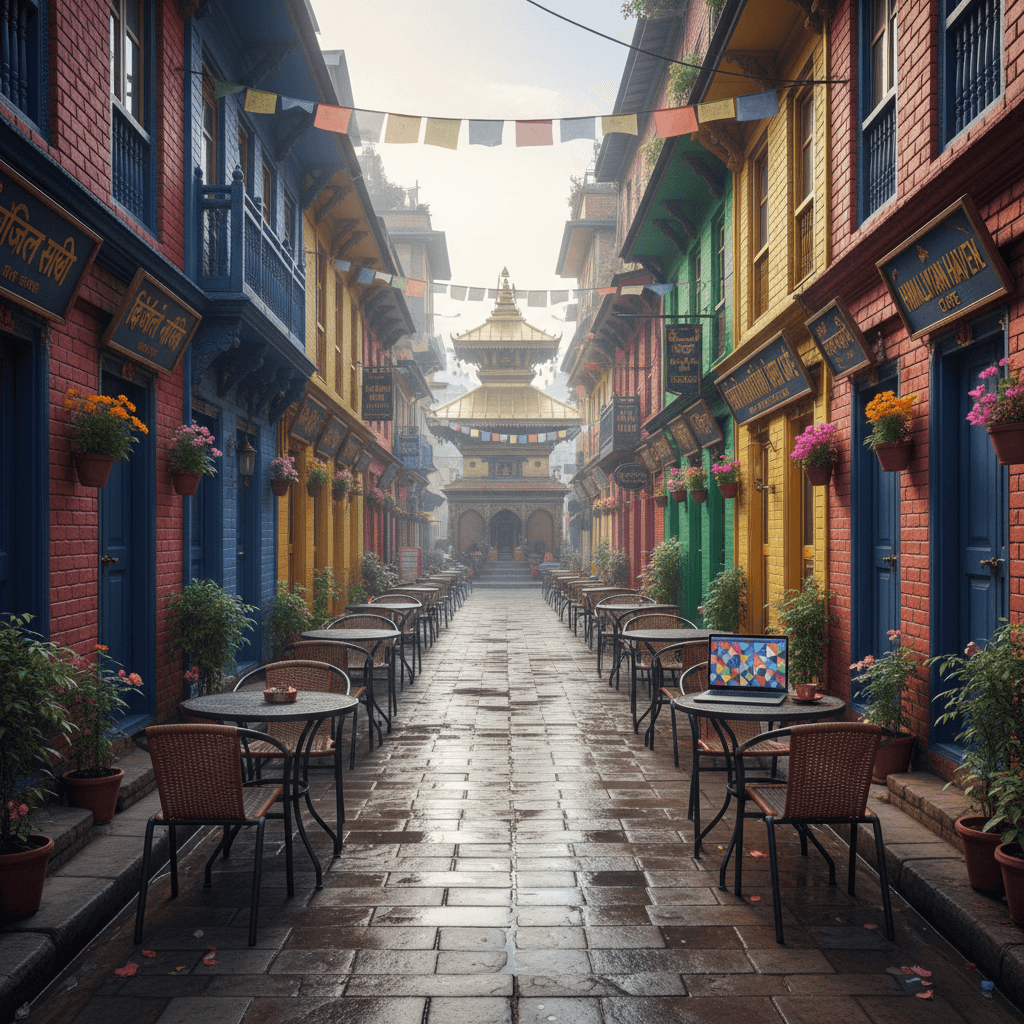
Kathmandu
🇳🇵 Nepal
The Spiritual Squeeze
Kathmandu isn't a city you visit for a polished, high speed lifestyle. It is a sensory overload that feels like stepping back three centuries while simultaneously being surrounded by modern trekking gear and exhaust fumes. You come here for the energy. It is a place where prayer flags flutter over tangled power lines, and the smell of incense frequently loses the battle against motorcycle exhaust. Most nomads find that the city demands a trade off: you sacrifice top tier infrastructure for a raw, spiritually charged atmosphere that you simply won't find in places like Chiang Mai or Lisbon.
The vibe is undeniably chaotic but deeply grounding. One minute you are dodging a holy cow in a narrow alleyway, and the next you are sitting in a quiet courtyard sipping Himalayan coffee. It is a basecamp for the soul. Whether you are prepping for a trek in the Langtang Valley or exploring the ancient Newari architecture of Durbar Square, the city keeps you on your toes. It is loud, dusty, and sometimes frustrating, but it is also incredibly affordable and welcoming.
The Cost of Living Breakdown
Your dollar goes a long way here, making it a haven for budget conscious remote workers. While you won't find many luxury high rises, your monthly burn will be significantly lower than almost anywhere else in Asia.
- Budget Tier: Under $700 per month. This covers a basic guesthouse, plenty of street food like momos for $1 to $2, and local transport.
- Mid-Range Tier: $800 to $1,200 per month. This is the sweet spot for most nomads, allowing for a decent apartment in Thamel, regular cafe visits, and better dining options.
- Comfortable Tier: $1,500+ per month. This buys you a premium furnished space, upscale meals reaching $20 or more, and frequent private transport.
Where to Plant Your Flag
Choosing a neighborhood in Kathmandu is about balancing convenience with your tolerance for noise. Most nomads gravitate toward one of three main pockets.
Thamel
- The Vibe: The undisputed heart of the nomad and traveler scene. It is a maze of shops, gear stores, and bars.
- Pros: Everything is walkable, the nightlife is the best in the city, and it is packed with laptop friendly cafes.
- Cons: It is incredibly touristy and the constant hum of scooters can be exhausting.
Kamalpokhari
- The Vibe: A more professional, slightly quieter alternative to the Thamel madness.
- Pros: Home to Rem.work HQ, the city's premier coworking space. It feels more like a "real" city neighborhood.
- Cons: Fewer Western style cafes and less of a social "backpacker" buzz.
Garden of Dreams Area
- The Vibe: A literal oasis on the edge of Thamel.
- Pros: It is the best place for a quiet meeting or a focused afternoon of work in a neoclassical garden setting.
- Cons: Not a residential area, so you'll likely just commute here for the day.
The Digital Infrastructure Reality Check
If your job requires 4K video streaming or zero latency gaming, Kathmandu will test your patience. WiFi speeds generally hover around 8 to 10 Mbps. While the cafe culture in Thamel is strong, power outages and spotty connections are part of the experience. Most successful nomads rely on a local SIM from NTC or Ncell as a backup. For serious work, Rem.work HQ is the go to spot, offering stable desks and reliable power for roughly $100 to $200 a month.
Getting around is an adventure in itself. You'll likely use moto taxis for quick trips, which usually cost between $2 and $5. The public buses and microbuses are dirt cheap but notoriously confusing for newcomers. Walking is your best bet within Thamel, though you'll need to stay alert to avoid the mirrors of passing bikes.
The best time to visit is from October to May, when the skies are clear and the mountain views are sharp. Avoid the monsoon season from June to August unless you enjoy heavy rain and an air quality index that can occasionally spike to 192. Despite the dust and the slow internet, the community here is tight knit. Groups like Digital Nomads Nepal organize meetups, ensuring you're never truly alone in the chaos.
The Monthly Breakdown
Kathmandu is one of the few global capitals where a high quality of life doesn't require a high salary. While the infrastructure can feel a bit rough around the edges, your dollar stretches incredibly far here. Most nomads find that a monthly budget of $800 to $1,200 allows for a comfortable lifestyle that includes a private apartment in a central area, daily cafe visits, and plenty of weekend trips into the valley.
If you are on a strict budget, you can easily get by on less than $700 a month by staying in basic guesthouses and sticking to local eateries. On the other end of the spectrum, $1,500 or more gets you a premium experience with a luxury furnished apartment, high end dining, and private transport for city hops.
Housing and Neighborhoods
Where you stay determines your daily rhythm. Most short term arrivals head straight for Thamel, while those staying a few months often look toward the quieter pockets of Kamalpokhari or the nearby historic city of Lalitpur.
- Thamel: This is the nomad ground zero. You can find a studio or one bedroom apartment for $300 to $500 per month. It is packed with cafes and trekking shops, though the narrow streets can get crowded with scooters.
- Kamalpokhari: A more professional vibe preferred by remote teams. It is home to Rem.work HQ and offers a bit more breathing room than the tourist center.
- Lalitpur (Patan): Just across the river, many expats prefer this area for its slower pace and traditional Newari architecture. Prices are comparable to Thamel but the atmosphere is more residential.
Eating and Drinking
Food is where you'll see the biggest savings. Street food like momos (dumplings) or a plate of dal bhat will only set you back $1 to $2. If you prefer sitting down in a mid range cafe in Thamel, expect to pay between $5 and $10 for a full meal and a coffee.
Upscale dining at top tier hotels or boutique restaurants usually starts around $20. Alcohol is relatively expensive due to high taxes; a local beer might cost nearly as much as your lunch. For grocery shoppers, local markets are incredibly cheap for produce, though imported Western goods carry a significant markup.
Connectivity and Workspace
You have to be strategic about work here. Home WiFi is often hit or miss, usually hovering around 8 to 10 Mbps. Most serious nomads invest in a coworking membership to ensure they don't drop off a Zoom call during a power fluctuation.
- Rem.work HQ: Located in Kamalpokhari, this is the gold standard for the city. It offers high speed internet and 24/7 security for $100 to $200 a month.
- Cafe Culture: Thamel is full of laptop friendly spots, though you should always check the speed before ordering your first latte.
- Mobile Data: Pick up a SIM card from Ncell or NTC at the airport. Data is affordable and often more reliable than guesthouse WiFi for hotspotting in a pinch.
Transport and Extras
Getting around the city is an adventure in itself. Public buses are cheap but can be overwhelming for newcomers. Most nomads rely on moto taxis, which typically cost between $2 and $5 for a cross town trip. If you are heading to the airport or moving luggage, a standard taxi to Thamel takes about 45 minutes and costs a bit more.
Don't forget to budget for sightseeing. Entry fees for major cultural sites like Swayambhunath or Durbar Square are usually around $7.50 for foreigners. If you plan on trekking, gear rentals and permits will be your biggest "extra" expense, though even these are quite reasonable compared to Alpine or Andean equivalents.
The Nomad Hub: Thamel
If you're landing in Kathmandu with a laptop and a thirst for chaos, Thamel is your basecamp. It's the undisputed heart of the nomad scene, where narrow alleys are packed with trekking shops, incense-heavy bookstores, and rooftop cafes. You'll find the highest concentration of English speakers and international food here, making it the easiest place to integrate quickly.
Most nomads aim for the northern or western edges of Thamel to escape the heaviest street noise. Rent for a decent studio or a one bedroom apartment typically runs between $300 and $500 per month. While the streets are often a tangle of scooters and pedestrians, parts of the neighborhood have been pedestrianized, offering a rare bit of breathing room. It's the best spot for networking, as you'll likely bump into other remote workers at local coffee shops or gear stores preparing for a trek.
- Best for: Social butterflies, first timers, and short term stays.
- Work vibes: Strong cafe culture with laptop friendly spots, though WiFi can be hit or miss at 8 to 10 Mbps.
- Local perks: Everything is walkable; you can buy a down jacket, grab a wood fired pizza, and book a flight to Pokhara within two blocks.
The Professional Pocket: Kamalpokhari
Expats and remote teams who need a more stable environment often gravitate toward Kamalpokhari. It's just a short distance from the city center but feels significantly more grounded and less "touristy" than Thamel. This area is home to Rem.work HQ, which is widely considered the gold standard for coworking in the city. For about $100 to $200 a month, you get 24/7 security and, more importantly, the kind of reliable high speed internet that's hard to find in guesthouses.
Living here means you're closer to the business pulse of the city. You'll find more modern apartment buildings and fewer souvenir hawkers. It's a solid choice if you're planning to stay for several months and want a routine that doesn't involve dodging tour groups every time you step out for milk.
- Best for: Long term expats and serious remote workers.
- Housing: More traditional apartment rentals rather than guest houses.
- Atmosphere: Urban and functional; less "spiritual" than the temple districts but much more productive.
Quiet Retreats: Garden of Dreams & Beyond
Solo travelers looking for a moment of sanity often spend their days near the Garden of Dreams. While it's a public park rather than a residential neighborhood, the immediate perimeter offers a middle ground between the madness of Thamel and the grit of the city. It's a tranquil spot for outdoor meetings or just reading through a project brief away from the honking horns.
For those who find the city center too intense, the neighboring areas of Lalitpur (Patan) are popular for longer stays. While technically a separate city within the valley, Patan is where you'll find a more sophisticated expat crowd, historic Newari architecture, and a slower pace of life. It's a bit further from the main nomad meetups, but the cultural immersion is much deeper.
- Best for: Introverts and culture seekers.
- Cost: Similar to Thamel, though high end furnished rentals can push your budget toward $1,500.
- Commute: Expect to spend $2 to $5 on moto taxis like Pathao or Tootle to get back into the Thamel action.
Living Costs by Neighborhood
Your budget in Kathmandu depends heavily on how much "Western" comfort you require. Street food like momos or dal bhat will only set you back $1 to $2, while a meal at a trendy Thamel bistro is closer to $10.
- Thamel Budget: $800 to $1,200 for a comfortable mid range lifestyle including a private room and frequent dining out.
- Kamalpokhari Professional: $1,000+ when factoring in premium coworking memberships and modern amenities.
- Lalitpur/Patan Long Stay: $700 to $1,000 for those who live more like locals in traditional neighborhoods.
Connectivity Realities
Working from Kathmandu requires a bit of a shift in expectations. While the city is spiritually rich, its digital infrastructure can be temperamental. Most nomads find average WiFi speeds hover around 8 to 10 Mbps. It is enough for emails, Slack, and the occasional Zoom call, but you will likely face lag during high bandwidth tasks. Power stability has improved significantly over the years, but it is still wise to stay somewhere with a backup generator or an inverter.
Local SIM cards are your best friend here. Travelers recommend picking up an Ncell or NTC card immediately upon arrival at the airport or in Thamel. Data is incredibly cheap, and having a 4G hotspot as a backup will save your skin when a cafe's router decides to take a nap. Expect to pay just a few dollars for several gigabytes of data.
Top Coworking Spaces
If you have a deadline looming or a series of important meetings, skip the cafes and head to a dedicated workspace. These spots offer the most reliable internet and a professional community that is hard to find in the chaotic streets of the city center.
- Digital Nomads Nepal: More than just a desk, this group acts as a community hub. They often host events and meetups, making it the best place to find your tribe if you are feeling isolated in the Thamel backpacker bubble.
- Workation Hubs: Various boutique guesthouses in the Thamel and Lalitpur areas are starting to market themselves specifically to remote workers, often bundling a room with a dedicated desk and "guaranteed" uptime.
Laptop Friendly Cafes
Thamel is the heart of the cafe scene. While it can be noisy, many spots have embraced the laptop culture. Most nomads recommend scouting for places with "Power Backup" signs. You will pay about $2 to $4 for a solid coffee, and most owners are happy to let you linger for a few hours if you keep ordering.
For a change of pace, the Garden of Dreams is a tranquil spot for light admin work or reading. It is a public garden rather than a cafe, but the quiet atmosphere is a rare luxury in a city where honking horns are the default soundtrack. Just keep in mind that you will need to pay an entry fee of about $7.50 to get in.
Logistics and Costs
Living and working here is remarkably affordable, which offsets the occasional technical hiccup. A monthly budget of $800 to $1,200 allows for a comfortable lifestyle, including a private apartment in Thamel and daily cafe visits. If you are on a strict budget, you can easily get by on less than $700 by sticking to local guesthouses and street food.
- Coworking Day Pass: Expect to pay $10 to $15 for a drop in.
- Monthly Desk: Prices start around $100 for basic access.
- Coffee: A local latte costs roughly $2.50.
- Mobile Data: Large data bundles are usually under $10.
Expats often recommend living in Thamel for the convenience of having everything within walking distance, but if you value peace and a more modern environment, look for housing in quieter pockets of the city. These areas are often just a short moto taxi ride away, usually costing between $2 and $5, and can put you closer to more reliable infrastructure.
General Safety and Street Smarts
Kathmandu is generally a safe place for nomads, but it requires a different kind of awareness than you might use in Lisbon or Chiang Mai. Violent crime is rare, though petty theft and pickpocketing can happen in crowded spots like Thamel or the markets around Asan. Most nomads feel comfortable walking around during the day, but it is smart to avoid unlit or isolated backstreets after dark. If you are staying in Thamel, the streets stay lively late into the night, making it one of the safer zones for solo travelers.
The biggest safety risk in the city isn't people; it is the traffic. Kathmandu's roads are a chaotic mix of scooters, microbuses, and pedestrians. Sidewalks are often non-existent or blocked, forcing you to walk in the street. Always keep your eyes up and your headphones off when moving through the city. If you are hiring a moto taxi for a $2 to $5 ride, make sure you are comfortable with the driver's pace, as lane splitting is the norm here.
Pollution is another factor to keep on your radar. The air quality can get quite poor, especially during the dry winter months when the AQI can hit 192. Many long term expats wear masks while walking or riding scooters to filter out dust and exhaust. If you have respiratory issues, you might find the city air challenging during the peak of the dry season.
Healthcare and Medical Services
Healthcare in Kathmandu is a mixed bag. While public facilities can be overcrowded and underfunded, there are several private clinics and hospitals that cater specifically to expats and tourists. These facilities usually have English speaking staff and provide a much higher standard of care. If you need a consultation or basic treatment, look for clinics in the Lalitpur area or near the embassies, as these are where most nomads go for reliable service.
Pharmacies are everywhere in the city, and you can get many over the counter medications without a prescription. However, for anything serious, it is better to head to a reputable hospital. Quality can be basic compared to Western standards, so having robust travel insurance that covers medical evacuation is a must if you plan on trekking in the Langtang region or other remote areas nearby.
- Emergency Contact: Dial 100 for police and 102 for ambulance services.
- Water Safety: Never drink the tap water. Even locals avoid it. Stick to bottled or filtered water, and be cautious with ice in smaller street stalls.
- Vaccinations: Most travelers ensure they are up to date on Typhoid and Hepatitis A before arriving, given the food and water conditions.
Staying Healthy on the Ground
The "Kathmandu Belly" is a rite of passage for many, but you can usually avoid it by being picky about where you eat. Stick to busy spots in Thamel where the turnover of food is high. While street food is tempting at $1 or $2 a pop, make sure the food is cooked fresh in front of you. If you do get sick, local pharmacists are very experienced in recommending the right antibiotics or rehydration salts to get you back at your laptop quickly.
Digital nomads often find that the physical environment is the hardest part of staying healthy. Between the high altitude of the valley and the dust, it is easy to feel fatigued. Expats recommend taking it slow for your first week and staying hydrated. If you are working out of Rem.work HQ or other central spots, take advantage of the filtered water dispensers and try to spend your weekends in the Garden of Dreams or nearby Nagarkot to give your lungs a break from the city center smog.
The Art of the Chaos
Moving through Kathmandu is an sensory experience you won't soon forget. The streets are a tangled web of ancient history and modern urgency, where the sound of temple bells competes with the constant hum of scooters and the occasional lowing of a cow. It is chaotic, yes, but there is a rhythm to it once you settle in.
Ride Hailing and Moto-Taxis
For most nomads, the easiest way to get from point A to point B is on two wheels. While the research doesn't name specific apps, the local ecosystem relies heavily on moto-taxis to bypass the heavy traffic that plagues the main arteries. You can expect to pay between $2 and $5 for a typical cross-city ride. It is fast, exhilarating, and by far the most efficient way to reach a meeting at Rem.work HQ or a dinner spot in Thamel.
Public Transport: The Local Experience
If you are feeling adventurous, the city is served by a network of buses and microbuses. These are incredibly cheap, often costing just a few cents, but they are not for the faint of heart. They are usually packed to the rafters, lack air conditioning, and follow routes that aren't always clear to newcomers. Most expats stick to these only when they have plenty of time and a high tolerance for being squeezed in with the locals.
Walking and Pedestrian Zones
Thamel is the primary hub for the nomad community, and its narrow streets are largely pedestrianized. This makes it one of the few areas where you can actually enjoy a stroll without dodging a bumper every five seconds. You'll find trekking gear shops, cafes, and guesthouses all within a 15 minute walk. Outside of Thamel, however, sidewalks are often non-existent or blocked, so keep your wits about you and watch your step.
Airport Transfers
When you first land, ignore the aggressive touts and head to the prepaid taxi counter inside the terminal. A ride from the airport to Thamel or Kamalpokhari usually takes 30 to 45 minutes depending on the time of day. Expect to pay a fixed rate that ensures you aren't haggling over your luggage while jet-lagged. If your guesthouse offers a pickup, take it; it's often the smoothest way to enter the city.
Rentals and Long-Term Options
If you're staying for a month or more, you might consider renting your own scooter. You can find rental shops scattered throughout Thamel. This gives you the freedom to explore the wider valley, including trips to Patan or Bhaktapur, without negotiating with drivers every time. Just be aware that the air quality can be tough, with an AQI often hitting 192 during the dry season, so a high-quality face mask is a standard part of the local "commuter uniform."
Key Transport Tips
- Offline Maps: Always download a local map on Google Maps. The winding alleys of the old city are a labyrinth that can confuse even the best navigators.
- Small Change: Keep a stash of small Nepalese Rupee notes. Drivers rarely have change for large bills, and it makes the end of your ride much smoother.
- Timing: Avoid traveling during peak morning and evening rush hours. A trip that takes 10 minutes at noon can easily take 40 minutes at 5:00 PM.
- Safety: If you're on a moto-taxi, ensure the driver provides a helmet. The traffic is unpredictable, and safety standards are lower than what you might be used to in Europe or North America.
The Linguistic Landscape
While Nepali is the national language, you'll find that getting by in Kathmandu is surprisingly straightforward for English speakers. In the nomad hubs of Thamel and around the Garden of Dreams, English proficiency is quite high. Most shopkeepers, trekking guides, and cafe staff speak it fluently enough to handle everything from price negotiations to complex coffee orders. If you venture into the more traditional Newari areas of Bhaktapur or Patan, the older generation might stick to Nepali or local dialects, but younger locals almost always bridge the gap with English.
The city's communication style is generally polite and indirect. You'll notice the word "Namaste" used for everything from hello to goodbye, accompanied by a slight bow with palms pressed together. It's more than just a greeting; it’s a sign of respect that goes a long way with the locals. While you can survive entirely on English, learning a few phrases in Nepali will instantly change the vibe of your interactions at the local markets.
- Namaste: Hello / I bow to the divine in you
- Dhanyabaad: Thank you
- Mitho chha: It is delicious (great for street food stalls)
- Hunchha: Okay / Yes
- Paisa kati ho?: How much is it?
Staying Connected
Reliable internet is the biggest hurdle for remote workers here. Most guesthouses and cafes claim to have "high speed" WiFi, but in reality, you're often looking at speeds between 8 and 10 Mbps. Power outages used to be a major issue, but the grid has stabilized significantly. Still, most seasoned nomads don't rely on hotel WiFi alone. They head to dedicated coworking spaces where the connection is managed and stable enough for video calls.
Your first priority after landing should be a local SIM card. You can pick one up right at the airport or at various small shops in Thamel for about $1 to $2. The two main providers are Ncell and NTC. Ncell is generally preferred by expats for its better data packages and slightly more reliable 4G coverage within the city. Expect to pay around $10 to $15 for a generous monthly data plan. Having a local number is also helpful for using local logistics and staying in touch with new contacts via WhatsApp, which is the primary way people communicate here.
Digital Tools and Apps
Kathmandu is a city where digital tools help manage the physical chaos. While you won't find Uber or Grab here, locals and expats rely heavily on homegrown apps to get around and stay fed. Since the streets don't always follow a logical grid and addresses can be vague, these apps are your lifeline.
- Pathao or InDrive: These are the go-to apps for moto-taxis and cars. A quick ride across town usually costs between $2 and $5. It saves you the headache of haggling with taxi drivers who often refuse to use the meter.
- Foodmandu: The local version of UberEats. It’s perfect for those nights when the pollution is high or you’re deep into a work sprint and don't want to navigate the Thamel crowds.
- Google Translate: Essential for reading menus in smaller "bhattis" (local eateries) or translating signs. The camera feature is particularly handy for printed Nepali script.
- WhatsApp: This is the default for everything from booking a trek to messaging your landlord. Don't bother with SMS or standard phone calls.
Social Integration
The nomad community in Kathmandu is smaller and more tight-knit than in places like Chiang Mai or Canggu. Most people meet through the Digital Nomads Nepal network or by hanging out at laptop friendly cafes in Thamel. Because the city can feel overwhelming at first, these social hubs are where you'll get the best "boots on the ground" advice. If you're looking for a more professional environment to network, local coworking spaces host occasional events and meetups that bring together local entrepreneurs and international remote workers.
Communication isn't just about the words you use; it's about the pace. Things often move slower here than you might be used to. Whether it's waiting for a meal or waiting for a technician to fix a router, a patient and friendly approach will always get you better results than showing frustration. Most travelers find that once they settle into the local rhythm, the "chaotic" communication style becomes part of the city's charm.
Timing Your Stay
Timing a trip to Kathmandu is all about balancing clear mountain views with air quality and rain. Most nomads find the sweet spot falls between October and May. During these months, the weather is dry and mild, making it much easier to focus on work without the constant distraction of heavy downpours or the intense humidity that defines the summer months.
The peak season kicks off in October and November. You'll find the sky is scrubbed clean by the departing monsoon, offering those iconic Himalayan views that make the city's chaotic energy worth it. Expect daytime temperatures around 21°C (70°F), which is perfect for working from a rooftop cafe in Thamel without breaking a sweat.
The Monsoon and Air Quality
If you're planning to visit between June and August, be prepared for the monsoon. It's hot, wet, and humid, with temperatures often feeling like 27°C to 31°C (81°F to 88°F). While the rain brings out a lush green in the surrounding valley, the humidity can make the city feel heavy, and the streets often turn into muddy obstacle courses.
Pollution is a real factor here, especially during the drier winter months of December and January. The Air Quality Index (AQI) has been known to hit 192 or higher during these times. While the days are sunny and crisp, a haze often hangs over the valley. If you have sensitive lungs, you might find yourself wearing a mask or sticking to coworking spaces like Rem.work HQ that have better indoor environments.
Season by Season Breakdown
- Spring (March to May): This is the second best window for a visit. The rhododendrons are blooming in the hills, and the weather is warm but not yet stifling. It's a popular time for digital nomads who want to mix their work week with weekend treks to Nagarkot or Langtang.
- Autumn (October to November): The gold standard. You get the best visibility, the most comfortable temperatures, and a festive atmosphere as many major Hindu festivals fall during this period.
- Winter (December to February): Expect chilly nights where temperatures can drop significantly. Most budget guesthouses don't have central heating, so you'll be relying on space heaters and heavy blankets. On the plus side, the daytime sun is usually bright and warm.
- Summer/Monsoon (June to August): Frequent power cuts can happen during heavy storms, though most decent coworking spaces and mid-range hotels have backup generators. It's the cheapest time to be in the city, but the least productive for those who hate the heat.
Practical Planning Tips
If you're coming for the trekking-meets-work lifestyle, aim for April or October. These months offer the most stable conditions for both your WiFi connection and your hiking boots. Travelers often say that even in the "best" months, you should pack layers. The temperature swing between a sunny afternoon in a Thamel garden and a midnight walk back to your apartment can be surprisingly sharp.
Keep in mind that while the weather is predictable, the infrastructure can be temperamental. High winds or heavy rain during the monsoon can occasionally mess with the already inconsistent 8 to 10 Mbps internet speeds. Always have a local SIM card from Ncell or NTC as a hotspot backup, regardless of which season you choose to visit.
Visa and Logistics
Most remote workers currently enter Nepal on a standard tourist visa. These are easily obtained on arrival at Tribhuvan International Airport for 15, 30, or 90 days. You can extend these up to 150 days per calendar year at the Immigration Office. Keep some crisp US Dollars on hand for the initial fee to avoid any issues with card readers at the border.
For your phone, grab a SIM card immediately at the airport or in Thamel. Ncell and NTC are the primary providers. Data is cheap, and you will need it as a backup for when the local WiFi inevitably dips below its 8 to 10 Mbps average. Most nomads find that having a mobile hotspot is the only way to stay sane during video calls.
Money and Costs
Kathmandu is one of the most budget friendly hubs in Asia. You can live comfortably on $800 to $1,200 a month without feeling like you are pinching pennies. ATMs are everywhere in Thamel and near the Durbar Squares, but they often charge a fee per transaction. Using Wise or Revolut helps manage exchange rates, though cash is still king for street food and small shops.
- Studio Apartment (Thamel): $300 to $500 per month
- Coworking Desk: $100 to $200 per month
- Local Meal: $1 to $2
- Mid-range Dinner: $5 to $10
- Temple Entry Fees: Approximately $7.50
Connectivity and Workspace
The internet in Kathmandu is getting better, but it is still a gamble. Power outages and "maintenance" are part of the experience. Serious professionals head to Rem.work HQ in Kamalpokhari. It is the gold standard for nomads in the city, providing 24/7 access, stable high speed lines, and a professional community that is hard to find in the more touristy guest houses.
If you prefer the cafe circuit, Thamel is packed with spots that welcome laptops. Just look for the places with "Power Backup" signs. The vibe is social and collaborative, and you will likely meet other travelers planning treks to Nagarkot or Langtang over their morning coffee.
Getting Around
The streets are a chaotic mix of scooters, cows, and microbuses. For daily travel, download local ride hailing apps or flag down a moto taxi. A typical ride across town will set you back $2 to $5. While Thamel is largely pedestrianized and easy to walk, you will want a mask for the dust and pollution when venturing further out. Taxis from the airport to the city center usually take about 30 to 45 minutes depending on the notorious Kathmandu traffic.
Health and Safety
Kathmandu is generally safe for solo travelers, though petty theft can happen in crowded markets. The biggest risks are actually the traffic and the air quality. If you have sensitive lungs, visit during the dry season from October to May and avoid the peak monsoon months of June through September when the humidity and AQI can be grueling. For medical needs, skip the local clinics and head to the expat focused hospitals like CIWEC for international standards of care.
Community and Social Life
It is easy to find your tribe here. Join the Digital Nomads Nepal group for meetups and events. Most social life revolves around Thamel's bars or weekend trips to the valley. For a quiet afternoon, nomads recommend the Garden of Dreams; it is a walled oasis where you can actually hear yourself think and get some light work done away from the scooter horns.
Need visa and immigration info for Nepal?
🇳🇵 View Nepal Country GuideHidden Gem
Worth the effort