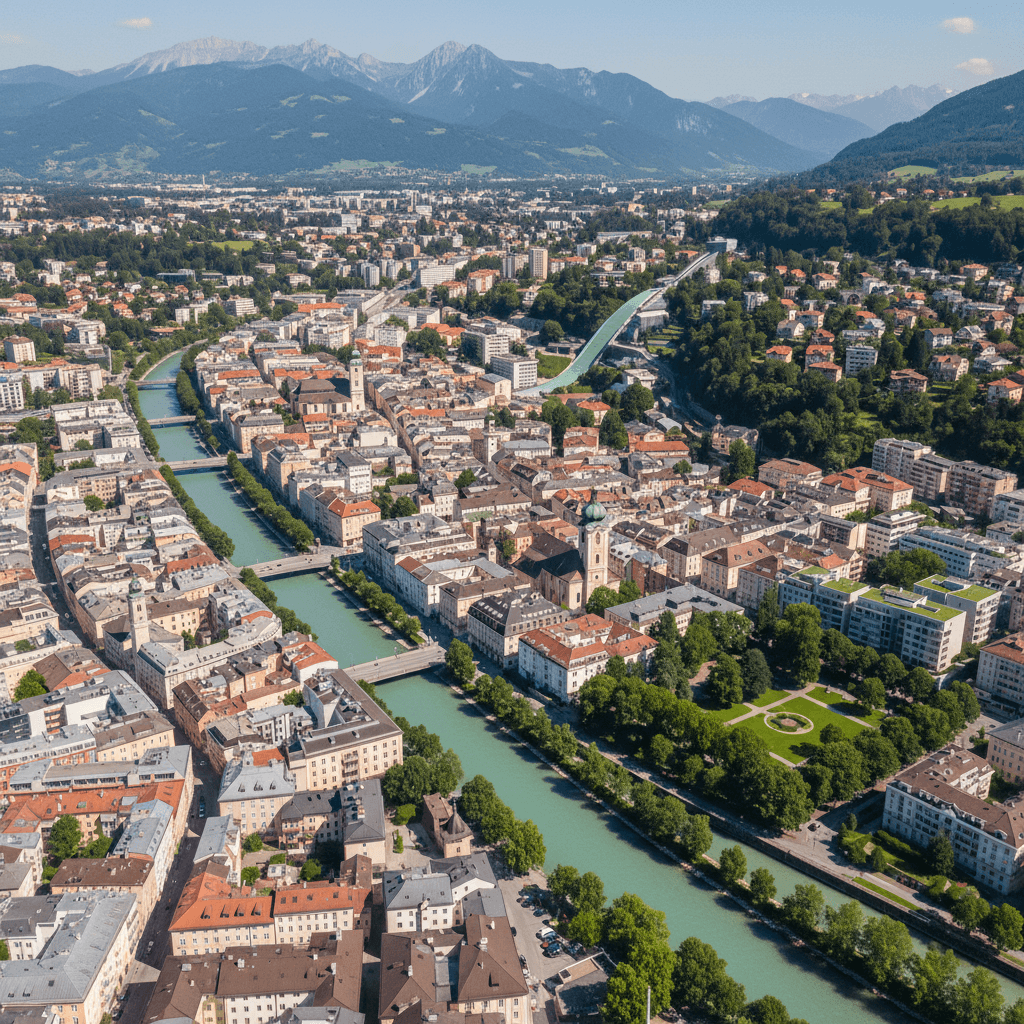
Innsbruck
🇦🇹 Austria
The Urban-Alpine Paradox
Innsbruck is one of the few places on earth where you can take a conference call in a 15th-century Baroque cafe and be standing on a jagged limestone peak at 2,300 meters less than thirty minutes later. It doesn't feel like a typical mountain town, nor does it feel like a frantic metropolitan hub. Instead, it occupies a unique middle ground nomads often call the "Vertical City."
The geography defines the lifestyle here. Because the city is squeezed into a narrow valley by the towering Nordkette range, the culture is forced upward. You'll see locals boarding the Hungerburgbahn funicular in full ski gear right next to professionals in business suits. It’s a place where the workday often ends at 4:00 PM so everyone can catch the last light on the trails or slopes.
The Vibe: Imperial Meets Outdoorsy
The atmosphere is a blend of Habsburg-era grandeur and modern, high-tech athleticism. Walking down Maria-Theresien-Strasse, you're surrounded by pastel-colored facades and the famous Golden Roof, but the people sitting at the outdoor tables are usually wearing Patagonia or Mammut. It’s polished but rugged.
The pace of life is noticeably slower than in Vienna. There’s a Tyrolean "Gemütlichkeit" (coziness) that prioritizes fresh air and social connection over the corporate grind. Most nomads find the community welcoming, though it helps if you have a hobby that involves a carabiner or a pair of skis. It’s a "doing" city rather than just a "seeing" city.
What Sets It Apart
- The 20-Minute Rule: The Nordkette cable car leaves from the city center, meaning you can transition from your laptop to a mountain ridge faster than most Londoners can get across a single tube line.
- Compact Living: You can walk across the entire central district in about 30 minutes. Most residents rely on bicycles or the incredibly efficient tram system, making a car-free life not just possible, but preferable.
- University Energy: With a massive student population, the city stays youthful and avoids feeling like a dusty museum, despite its ancient architecture.
The Nomad Reality Check
While the scenery is world-class, Innsbruck isn't a 24-hour party town. The nightlife is cozy and centered around pubs and small clubs rather than massive warehouses. If you're coming from Berlin or London, you might find the "quiet hours" and Sunday store closures a bit of a culture shock.
The weather is also a major character in your daily life. Winters are long and can be grey in the valley, even when it’s sunny above the clouds. However, for those who thrive on seasonal shifts, the first heavy snowfall in December or the explosion of green in May provides a rhythmic beauty that most digital hubs lack.
Living Costs at a Glance
- Budget Nomad: Around €1,600 per month if you're savvy with shared housing and grocery shopping.
- Mid-Range Professional: Expect to spend roughly €3,170 for a private studio and frequent dining out.
- The "Comfort" Tier: Between €3,500 and €4,000 covers a premium apartment, a seasonal ski pass, and weekend trips across the border to Italy or Germany.
Ultimately, people come to Innsbruck because they’re tired of the "concrete jungle" version of remote work. They want the reliability of Austrian infrastructure, 100 Mbps internet, and safe streets, but they want it all served with a side of Alpine adrenaline. It’s a city that rewards those who actually get outside and use it.
The Cost of Living in Innsbruck
Innsbruck sits in a sweet spot for nomads. It isn't as pricey as Zurich or Munich, but it definitely feels more expensive than Lisbon or Bangkok. You’re paying for the convenience of being able to finish a Zoom call and be on a ski lift twenty minutes later. For a solo nomad, a monthly budget of $3,170 is a realistic mid-range target, though frugal travelers can squeeze by on $1,600 if they snag a room in a shared flat.
Accommodation: The Biggest Hurdle
Finding a place to live is the most challenging part of the Innsbruck experience. The market is tight because of the large student population. Airbnb prices are often inflated, so most expats recommend looking for sublets or long-term rentals once you arrive.
- Studio or 1-Bedroom Apartment: Expect to pay between €600 and €1,200 per month. Units near the Maria-Theresien Strasse command a premium for their views and central location.
- Shared Housing (WG): A room in a shared apartment usually runs €400 to €700. This is the gold standard for younger nomads and students.
- Where to look: Check ÖH Wohnen for student-style sublets or tap into local Facebook groups. Personal networks are huge here; if you know someone in Germany or Italy, ask them to check their connections.
Eating and Drinking
Groceries are relatively affordable if you shop at local chains like Hofer or Spar. Dining out is where the costs add up, though it's still reasonable compared to other Western European hubs.
- Street Food/Casual: A quick kebab or a slice of pizza will cost €5 to €10.
- Mid-range Sit-down: A solid dinner with a drink at a local gasthof usually lands between €12 and €20.
- Coffee: A cappuccino in a cafe on Maria-Theresien Strasse is about €4.
Transportation and Connectivity
The city is incredibly compact. Most nomads find they don't need a car at all. Walking and cycling are the primary ways to get around, and the public transit system is top-notch.
- Biking: This is the local favorite. Buying a used bike is the smartest investment you can make.
- Public Transit: The bus system is efficient and connects the city center directly to the Nordkette cable car. Just make sure you buy a ticket; the fine for getting caught without one is €60.
- Internet: Speeds are reliable, generally ranging from 46 Mbps to 114 Mbps. You won't have trouble with video calls or large uploads.
- Mobile Data: Pick up a prepaid SIM from providers like A1 or Magenta. They are affordable and offer excellent coverage even when you're halfway up a mountain.
Coworking and Remote Work
While Innsbruck doesn't have a massive "startup hub" feel, the infrastructure for remote work is solid. You'll find a growing community of digital nomads who gather at local cafes and shared spaces. While specific Innsbruck coworking prices vary, they generally align with European standards, similar to the €100 per month rates seen at spaces like Talent Garden in nearby Vienna.
Monthly Snapshot
- Budget Tier: $1,600 (Shared room, cooking at home, biking everywhere)
- Mid-Range Tier: $3,170 (Private studio, dining out a few times a week, regular cafe visits)
- Comfortable Tier: $3,500+ (Modern apartment, frequent mountain excursions, high-end dining)
For Digital Nomads: Altstadt & Maria-Theresien-Strasse
If you want to be in the thick of the action, the Altstadt (Old Town) and the area surrounding Maria-Theresien-Strasse are your best bets. This is where the iconic Golden Roof sits and where you'll find the highest density of cafes with reliable Wi-Fi. It's the most walkable part of the city, meaning you can ditch the bus pass entirely if you're staying central.
- The Vibe: Historic, lively, and incredibly photogenic. You'll be working from cafes like Haepinest, where the coffee is strong and the laptop culture is welcomed.
- Rent: Expect to pay between €900 and €1,200 for a furnished studio.
- Pros: Best mountain views from your "office" window and immediate access to the city's limited but fun nightlife.
- Cons: Tourist crowds can get thick during the peak ski season and summer months.
For Outdoor Enthusiasts: Hötting & Hungerburg
Expats who move to Innsbruck specifically for the mountains usually head north of the Inn River to Hötting. This neighborhood climbs up the slope toward the Nordkette range. It’s quieter than the center but keeps you within a 15 minute walk of the university district. If you want to be even higher up, Hungerburg offers a mountain village feel while remaining connected to the city via the Nordkette funicular.
- The Vibe: Residential, sporty, and steep. You'll see neighbors carrying skis or mountain bikes instead of briefcases.
- Rent: 1-bedroom apartments typically range from €800 to €1,100.
- Pros: You are literally steps away from the hiking trails and the ski lift. The air is fresher and the noise levels are much lower.
- Cons: Your legs will get a serious workout every time you walk home from the grocery store.
For Families: Pradl & Wilten
Pradl is a fantastic choice for those relocating with kids. It's home to the sprawling Rapoldi Park and offers a more traditional residential feel with wider streets and better access to schools. Wilten, located to the south, is another favorite. It has a slightly "hippie" soul with independent boutiques, local farmers' markets at Wiltener Platzl, and plenty of green space near the Bergisel ski jump.
- The Vibe: Family-oriented, authentic, and slightly more affordable than the tourist core.
- Rent: Larger 2 or 3-bedroom apartments can be found for €1,300 to €1,700.
- Pros: Flat terrain makes it easier to push a stroller or ride a bike. Great local parks and a more "local" community feel.
- Cons: It lacks the immediate "wow" factor of the medieval Old Town.
For Solo Travelers & Students: Saggen & Anpruggen
Saggen is often called the "Garden City" and is famous for its beautiful villas and quiet, tree-lined streets. It's popular with solo travelers and young professionals who want a polished, safe environment. On the flip side, Anpruggen (the colorful houses across the river) is one of the oldest and most charming parts of town, perfect for someone who wants a cozy, bohemian atmosphere.
- The Vibe: Sophisticated in Saggen; artsy and historical in Anpruggen.
- Rent: Shared housing (WG) rooms often go for €450 to €650, while small singles cost around €850.
- Pros: Saggen is very peaceful and close to the parklands along the river. Anpruggen puts you right next to the best riverside walks.
- Cons: Saggen can feel a bit sleeper at night; Anpruggen apartments are often in older buildings with steep, narrow stairs.
Practical Tips for Your Search
Finding a place in Innsbruck can be competitive because of the large student population. Most locals use ÖH Wohnen for sublets or Willhaben for long-term rentals. If you're only staying for a few months, look for "Zwischenmiete" (temporary sublets) to avoid the high fees and furniture costs of a standard lease. Most nomads find that a bicycle is the best way to get around, as you can cross the entire city in about 20 minutes regardless of which neighborhood you choose.
Connectivity and Speeds
Innsbruck might look like a medieval postcard, but its digital infrastructure is thoroughly modern. You won't struggle to find a signal here, even when you're halfway up a mountain. Most apartments and cafes offer speeds ranging from 46 Mbps to 114 Mbps, which is more than enough for seamless Zoom calls or uploading large files.
Mobile coverage is equally impressive. Austria has some of the best mobile networks in Europe, and 5G is widely available across the city center. If you're coming from outside the EU, grab a local SIM from providers like A1 or Magenta. They offer affordable prepaid plans that keep you connected while you're hiking the Nordkette.
Coworking Spaces
The coworking scene in Innsbruck is professional yet laid back, mirroring the city's work-life balance. While it doesn't have the sheer volume of spaces you'd find in Vienna, the options available are high quality and foster a tight-knit community of tech workers and mountain enthusiasts. Expect to pay around €100 to €250 per month for a hot desk, depending on the level of access you need.
- The Hub: Often cited as the go-to spot for locals and expats, these spaces provide the standard perks like high-speed fiber, ergonomic chairs, and bottomless coffee. It's the best place to meet other nomads who spend their lunch breaks at the climbing gym.
- Talent Garden (Regional Influence): While their flagship is in Vienna, the model of community-driven coworking has influenced the local spots in Innsbruck. Look for spaces that offer daily passes if you're only in town for a week; these usually run about €20 to €30.
- Wirtschaftskammer (WKO) Spaces: Sometimes local business chambers or innovation hubs offer desk rentals that are surprisingly modern and well-equipped for serious deep work.
Café Culture for Remote Work
If you prefer the hum of a milk steamer over a quiet office, you're in luck. Innsbruck has a deeply rooted café culture where sitting with a laptop for a few hours is generally accepted, provided you keep the coffee orders coming. The views are the real selling point here; many spots along Maria-Theresien Strasse allow you to stare at the Alps while clearing your inbox.
- Central Cafes: The historic center is packed with spots that have reliable Wi-Fi. Look for the younger, student-heavy crowds if you want to blend in with a laptop.
- University District: Since Innsbruck is a major student hub, the cafes near the university are optimized for long study sessions and have plenty of power outlets.
- Mountain Huts: It sounds like a gimmick, but some of the lower-elevation huts have decent Wi-Fi. There is nothing quite like finishing a project at 2,000 meters before skiing back down to the city.
Practical Tips for Nomads
Austrians take their Sundays seriously. Almost everything, including some coworking spaces and most grocery stores, will be closed. Plan your heavy workdays for the week and keep your Sundays for the trails. Also, while Wi-Fi is common, some traditional Austrian "Kaffeehäuser" might prioritize conversation over laptops, so it's always polite to ask before you set up your workstation.
For a reliable backup, most nomads recommend having a mobile hotspot. The local data plans are cheap enough that it makes sense to have a secondary connection if you're planning to work from the more remote parts of the Tyrol region.
Safety in the Streets and the Peaks
Innsbruck is remarkably safe, even by high Austrian standards. It’s the kind of place where you’ll see locals leaving their bikes unlocked for a quick coffee run and solo travelers walking home comfortably at 2:00 AM. Violent crime is rare, and the city maintains a peaceful, orderly atmosphere that makes it a top choice for families and solo female nomads.
The real safety concerns here aren't related to pickpockets or "bad" neighborhoods, but rather the environment. Because the mountains are so accessible, it's easy to underestimate the terrain. Whether you're hiking the Nordkette or skiing in the Patcherkofel area, the weather can shift in minutes. Locals always recommend checking the Bergfex app for mountain-specific forecasts and never heading out on a trail without telling someone your route.
In the city center, stay aware of your surroundings in the crowded areas around the Golden Roof or during the Christmas markets, as these are the only spots where opportunistic petty theft might occur. Generally, there are no specific "no-go" zones to worry about; even the areas around the main train station (Hauptbahnhof) are well-lit and heavily patrolled.
Healthcare Infrastructure
The healthcare system in Tyrol is world-class, largely because the region is a global hub for sports medicine and orthopedic surgery. If you take a spill on the slopes, you're in the best possible hands. The Landeskrankenhaus Innsbruck (University Hospital) is the primary facility and handles everything from emergency trauma to routine specialist visits.
For day-to-day needs, you'll look for a "Hausarzt" (General Practitioner). Most doctors in Innsbruck speak excellent English, though the front desk staff at smaller clinics might prefer German. If you’re a nomad from the EU, your EHIC card covers most urgent care. For those from further afield, private insurance is a must. You'll usually pay upfront for a private consultation, which typically costs between €80 and €150, and then claim it back from your provider.
- Pharmacies: Look for the "Apotheke" sign with a red 'A'. They follow a strict rotation for 24-hour service (Bereitschaftsdienst). If your local shop is closed, a sign in the window will point you to the nearest open one.
- Emergency Numbers: Dial 133 for police, 144 for ambulance, and 140 for mountain rescue.
- Water and Air: The tap water comes straight from Alpine springs and is better than most bottled water. Air quality is generally excellent, though the valley can trap some smog during winter temperature inversions.
Practical Tips for Nomads
Expats often mention that the biggest hurdle isn't the quality of care, but the bureaucracy of the insurance system if you're staying long-term. If you're registering as a resident (Meldezettel), you'll likely need to sign up for ÖGK, the national social insurance. It’s a bit of paperwork, but it grants you access to a network of doctors with no out-of-pocket costs at the point of service.
For quick fixes like cold medicine or high-end sunblock for your glacier hikes, pharmacies are your only bet. Unlike in the US or UK, you won't find ibuprofen or aspirin in a grocery store; everything medicinal must go through a licensed pharmacist. Most are open Monday through Friday until 6:00 PM and Saturday mornings, so plan your supplies accordingly before the Sunday closures.
Getting Around the Capital of the Alps
Innsbruck is one of those rare cities where you can legitimately live without ever touching a steering wheel. The layout is remarkably compact; most nomads find that if they’re staying anywhere near the Altstadt or Maria-Theresien Strasse, their own two feet are the primary mode of transport. You can cross the main hub of the city center in about 30 minutes, making it easy to schedule back to back coffee meetings without worrying about transit delays.
The Lifeblood of the City: Buses and Trams
When your legs need a break or you're heading toward the outskirts, the IVB (Innsbrucker Verkehrsbetriebe) network is your best friend. The system is punctual and clean, with routes that snake through every major neighborhood and up into the surrounding peaks. It’s the easiest way to bridge the gap between your morning emails and an afternoon on the slopes.
- The Nordkette Connection: The "J" bus is a local favorite, whisking you from the city center directly to the base of the Nordkette cable car.
- Tickets and Fares: Single tickets around €3.00 (check IVB site), but if you're staying for a month or more, look into a monthly pass to save significant cash.
- The Fine Print: Don't try to "free ride." Ticket inspections are common, and getting caught without a valid ticket results in an immediate €60 fine.
Cycling Like a Local
While some parts of the city are still catching up on dedicated bike lanes, cycling remains the preferred way for expats and students to get around. It’s fast, cheap, and gives you that extra bit of Alpine air. If you aren't ready to buy a used bike from a local Facebook group, the city offers a bike-sharing program called Stadtrad.
You'll find these silver bikes at stations dotted across the city. The registration is simple through an app, and it’s perfect for those one-way trips when you don't want to worry about locking up your own gear. Just keep in mind that while the valley floor is flat, any detour toward the residential hills will give your quads a serious workout.
Arriving and Departing
Innsbruck Airport (INN) is located just 4km from the heart of the city. It’s one of the most scenic landings in the world, but it’s also incredibly functional for travelers. You don't need an expensive private shuttle to get to your accommodation.
- The F Bus: This line runs every 15 to 30 minutes and connects the airport directly to the Hauptbahnhof (Main Train Station) in about 20 minutes.
- Taxis: If you're carrying heavy luggage or ski gear, a taxi to the center will cost you roughly €15 to €25.
- Rail Links: For those coming in from Vienna, Munich, or Zurich, the Hauptbahnhof is centrally located and within walking distance of many popular nomad rentals.
Walking and Accessibility
The city center is largely pedestrianized, especially around the Golden Roof. This makes for a relaxed atmosphere where you aren't constantly dodging traffic. Most travelers say the best way to get a feel for the city's geography is to spend your first afternoon just wandering the Inn River banks. The paths are well-maintained, well-lit at night, and offer some of the best views of the colorful houses in Mariahilf across the water.
The Language Barrier
You'll find that getting by in Innsbruck is remarkably easy even if your German is non-existent. Because the city is a major hub for international tourism and home to a large university, English is widely spoken in the city center, hotels, and most restaurants. Most nomads find they can handle 90% of daily interactions, from ordering a Melange at a cafe to asking for directions, entirely in English.
That said, things shift slightly once you step off the beaten path or deal with officialdom. If you're heading into a smaller family-run bakery in a residential neighborhood or trying to navigate a lease agreement, having a translation app or a basic grasp of German becomes much more important. Locals appreciate the effort, even if it's just a simple greeting.
Tyrolean Dialect
Don't be surprised if the "High German" you learned in school sounds different here. The local dialect, Tirolerisch, is distinct. It’s characterized by a throaty "k" sound (often sounding like "ch") and a melodic lilt that can be tough for beginners to parse. You'll hear "Grüß Gott" far more often than the standard "Guten Tag." It’s the traditional way to say hello, and using it is a quick way to show you’ve settled in.
Expats recommend learning a few key local phrases to bridge the gap:
- Grüß Gott: The formal, standard greeting.
- Servus: An informal "hi" or "bye" used among friends and peers.
- Pfiat di: A local way to say goodbye.
- Danke/Bitte: Thank you and please, which go a long way in Austrian etiquette.
Communication for Remote Work
When it comes to the digital side of communication, Innsbruck is well-equipped. High-speed internet is the standard, with average speeds ranging from 46 Mbps to 114 Mbps. You won't struggle with video calls or large uploads in the city’s coworking spaces or the cafes along Maria-Theresien Strasse. Mobile coverage is also excellent, even as you head up the Nordkette cable car.
For staying connected on the go, most travelers recommend picking up a local prepaid SIM card. Providers like A1, Magenta, or Drei (confirm UPC removal if intended) offer affordable plans that you can grab at shops or even some supermarkets. These usually provide plenty of data for navigating mountain trails or checking Slack from a summit hut.
Social Etiquette and Integration
Austrians generally value directness and punctuality. If you’re meeting a local friend or a business contact, being five minutes early is considered "on time." In social settings, the vibe is relaxed but polite. While the "mountain culture" makes people more open than in the more formal streets of Vienna, there’s still a level of reservedness until you’ve met a few times.
If you're looking to practice your German or meet other English speakers, the digital nomad community here is growing. Regular meetups and events are common, often organized through Facebook groups or at local hubs. These are great places to find "language buddies" where you can trade English practice for German tips over a beer.
The Seasonal Cycle
Innsbruck follows a distinct four-season rhythm that dictates the city's personality. Because it sits in a deep valley surrounded by 3,000-meter peaks, the weather can be temperamental. Locals often joke that you can experience three seasons in a single afternoon, so the rule of thumb here is layers, regardless of the month.
Most nomads find the shoulder seasons of May to June and September to October to be the sweet spots. During these months, the air is crisp, the mountain trails are accessible, and the heavy crowds of ski tourists or summer sightseers haven't quite peaked. If you're here for the outdoor lifestyle without the premium price tag on short-term rentals, these windows are your best bet.
Winter: The High Season (December to March)
Winter is when Innsbruck truly shines, but it's also when the city is at its most expensive and crowded. Temperatures typically hover between -5°C and 4°C. Snow is a guarantee, often blanketing the colorful Altstadt (Old Town) in a scene that looks like a postcard from the 1800s.
- The Draw: World-class skiing and snowboarding at 13 different resorts via the Ski plus City pass. The Christmas markets in December are legendary, especially the one under the Golden Roof.
- The Downside: Daylight is scarce, often disappearing by 4:30 PM. If you suffer from seasonal blues, the mountain shadows can make the valley feel a bit claustrophobic during the deep winter months.
- Nomad Tip: Book your accommodation at least four months in advance if you plan to stay during January or February. Prices for Airbnbs can double during the peak ski weeks.
Spring: The Transition (April to June)
Spring is a bit of a wildcard. You might see locals skiing in the morning at the Stubai Glacier and drinking Aperol Spritz in short sleeves on Maria-Theresien Strasse by the afternoon. Temperatures climb to a comfortable 15°C to 20°C by June.
This is arguably the best time for hikers who don't mind a bit of mud. The lower elevation trails start to clear, and the alpine flowers begin to bloom. It's a quiet time in the city, making it easier to snag a prime table at a sidewalk café for a long afternoon of remote work.
Summer: Alpine Heat (July to August)
Summer in the Alps is surprisingly warm, with highs often reaching 25°C to 30°C. While it's rarely humid, the sun is incredibly intense at this altitude. Expect occasional, dramatic thunderstorms in the late afternoon that roll over the Nordkette range.
- The Vibe: The city feels alive. Public squares host outdoor concerts, and the nearby lakes like Lanser See become the primary social hubs.
- Activities: Rock climbing, mountain biking, and paragliding are the main draws. The lift systems stay open, giving you easy access to high-altitude breeze when the valley floor gets too hot.
Autumn: The Golden Window (September to October)
Many long-term expats consider autumn the finest time to be in Tyrol. The "Golden October" brings stable, clear weather and incredibly sharp visibility, which is perfect for photography or summiting peaks before the first snow hits. Temperatures stay mild, usually between 10°C and 18°C.
The tourist rush dies down significantly, and the city regains its local feel. It's the perfect time for a focused "workation" where you can grind through projects during the week and spend your weekends on quiet, leaf-strewn trails without the summer heat or winter slush.
Quick Climate Reference
- Coldest Months: January and February (Average -2°C)
- Warmest Months: July and August (Average 24°C)
- Rainiest Month: June, usually in the form of short, heavy afternoon bursts.
- Sunniest Months: August and September.
Connectivity and Power
You won't have to worry about dropping off a Zoom call here. Innsbruck's internet infrastructure is rock solid, with average speeds ranging from 46 Mbps to 114 Mbps. Most apartments and cafes come equipped with high speed fiber or reliable DSL. For those who need a backup, 5G coverage is excellent throughout the valley.
If you're looking for a mobile plan, skip the international roaming. Pick up a local prepaid SIM from providers like A1 or Magenta. You can find these at the airport or at shops along Maria-Theresien Strasse. Expect to pay around €10 to €20 for a generous data package that will keep you connected while you're hiking the Nordkette.
Coworking and Cafe Culture
While Innsbruck doesn't have the massive coworking hubs you'll find in Vienna, it has a functional and growing scene. Expect to pay roughly €100 to €150 per month for a hot desk. If you prefer the "laptop and a latte" route, the city center is packed with options. Most cafes on Maria-Theresien Strasse are nomad friendly, though it's polite to move on after a couple of hours during the busy lunch rush.
- Talent Garden: While their main flagship is in Vienna, their network influence means you'll find similar high standard setups in local satellite spaces with fast Wi-Fi and plenty of caffeine.
- The Cafe Scene: Look for spots with large windows facing the mountains. Working with a view of the Alps makes those spreadsheets much more bearable.
Getting Around the City
Innsbruck is incredibly compact. You can walk across the entire city center in about 30 minutes. Most locals and long term nomads rely on bicycles. It's the fastest way to get from a coworking space to the base of the cable car. If you're staying for a few months, check local Facebook groups or ÖH Wohnen for a cheap second hand bike.
The bus system is punctual and clean. It’s the primary way to reach the trailheads and ski lifts. Just don't try to ride for free; the fine for being caught without a ticket is €60, and inspectors do check. For a quick trip to the airport, which is only 4km away, a bus or a short taxi ride is your best bet.
Budgeting for the Alpine Life
Austria isn't cheap, but Innsbruck is more affordable than Zurich or Munich. A single person can live comfortably on $3,170 per month, though budget conscious nomads can scrape by on $1,600 if they snag a room in a shared flat.
- Shared Housing (WG): €400 to €700 per month. This is the best way to meet locals.
- Studio Apartments: €600 to €1,200 depending on how close you are to the Golden Roof.
- Daily Expenses: A casual lunch will run you €10, while a nice dinner with wine starts around €25.
Safety and Health
This is one of the safest cities in Europe. With a safety index of 75/100, walking home alone at night is rarely a concern. The air quality is superb, and the tap water is some of the best in the world, coming straight from Alpine springs. If you get sick, the healthcare system is top tier. Pharmacies, known as Apotheken, are easy to spot by their large red "A" signs and can help with minor ailments without a doctor's visit.
Need visa and immigration info for Austria?
🇦🇹 View Austria Country GuideHidden Gem
Worth the effort