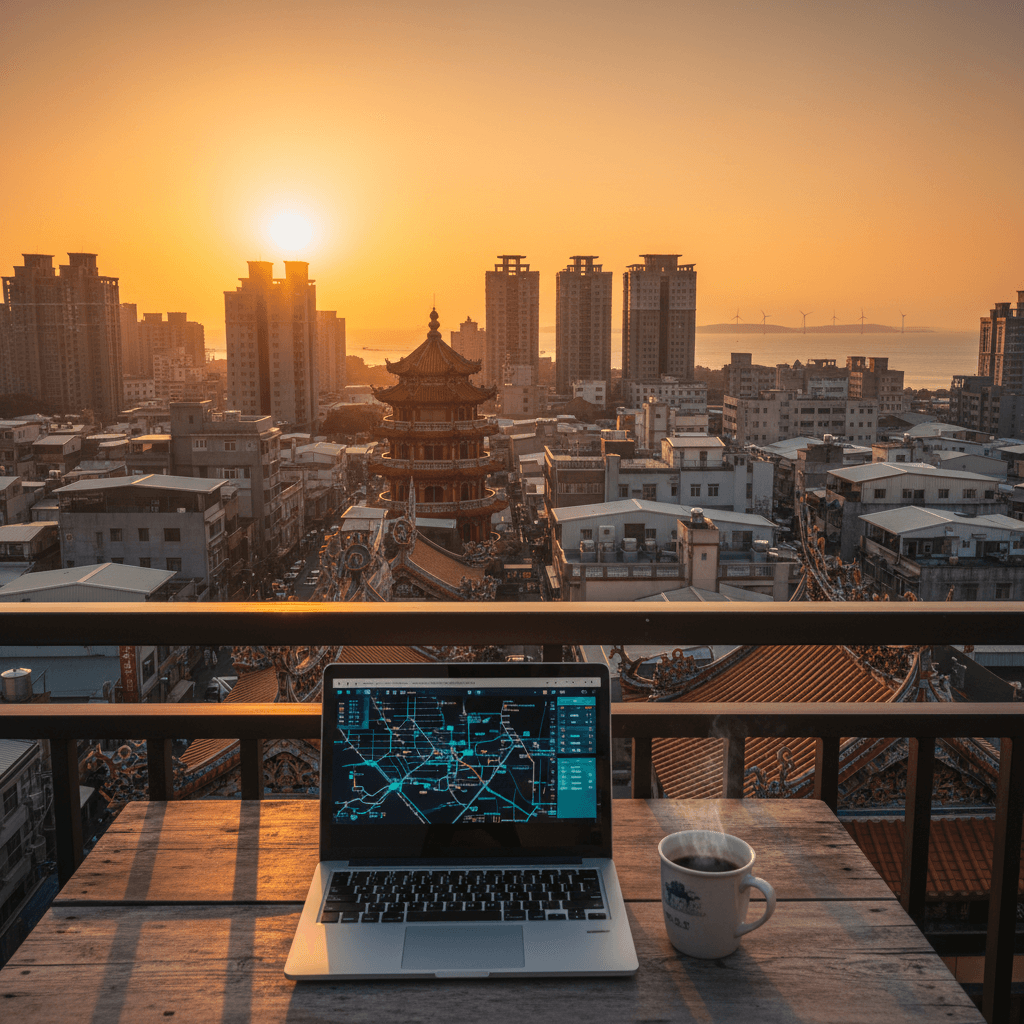
Hsinchu
🇹🇼 Taiwan
The Silicon Valley of the East with a Soul
Hsinchu is a city of sharp contrasts that somehow works. Most people know it as Taiwan's high tech powerhouse, home to the massive Science Park and the brains behind the world's semiconductors. Because of this, the city feels remarkably functional and efficient. Unlike the frantic, neon soaked energy of Taipei, Hsinchu has a grounded, industrious vibe that appeals to nomads who actually need to get work done without the constant distraction of a mega city.
The local nickname is the Windy City, and you will feel it. The strong gusts coming off the Taiwan Strait keep the air clearer than in many other Asian industrial hubs. Living here feels like being in a well kept secret; you get the modern infrastructure and high speed rail access of a first tier city, but with a pace that allows for long afternoons in quiet cafes and weekend escapes into the nearby mountains.
A Tech Hub with Deep Roots
Despite its reputation for glass office towers and innovation, Hsinchu is one of the oldest settlements in Northern Taiwan. You will find yourself walking past a futuristic research center one minute and a Qing era temple the next. The City God Temple area acts as the city's emotional and culinary heart, where the smell of incense mixes with the steam from centuries old food stalls. It is this blend of "old world" Hakka culture and "new world" engineering that gives the city its unique character.
Nomads often find that Hsinchu feels more "real" than the polished tourist districts of Taipei. It is a city built for people who live and work there, meaning the amenities are practical rather than performative. You will find plenty of highly educated locals, a strong coffee culture, and a level of safety that means you can leave your laptop on a cafe table while you grab a refill without a second thought.
The Digital Nomad Lifestyle
Life here is significantly more affordable than in the capital, but it lacks the dirt cheap prices of Chiang Mai or Da Nang. It is a middle ground destination for those who value stability, fast internet, and a high standard of living. Most expats and nomads gravitate toward the East District near the universities and the Science Park, where the density of laptop friendly cafes like Fika Fika is highest.
The social scene is driven by the tech industry and the local universities, creating a community that is intellectual and welcoming. While it is not a party town, the "after work" culture is thriving, centered around night markets and a growing craft beer scene. It is the kind of place where you come for a month to finish a project and end up staying for six because the quality of life is just so easy to maintain.
- The Vibe: Intellectual, windy, industrious, and surprisingly historic.
- The Crowd: Engineers, researchers, remote developers, and serious students.
- Best For: Nomads who want a quiet, safe home base with top tier infrastructure and easy access to nature.
- The Drawback: It can feel a bit "suburban" compared to Taipei, and the wind can be a genuine nuisance in the winter months.
What Sets Hsinchu Apart
What really distinguishes Hsinchu is its accessibility. You are a 30 minute High Speed Rail ride from the center of Taipei, yet you are also a short scooter trip away from 2,000 meter high tea farms and rugged hiking trails in the backcountry. It offers a "best of both worlds" scenario that few other cities in Taiwan can match. You get the professional environment of a global tech capital without the claustrophobia of a concrete jungle.
The Bottom Line
Hsinchu isn't the cheapest spot in Southeast Asia, but it offers a high quality of life for a fraction of what you'd pay in Taipei. Expect to spend between $800 and $1,300 USD per month. If you're living like a local and sticking to shared housing, you can easily stay at the lower end of that range. If you want a modern studio near the Science Park, your budget will lean toward the higher side.
Monthly Housing Costs
Rent is your biggest variable here. Most digital nomads and tech workers look for spots in the East District or near the Hsinchu High Speed Rail station in Zhubei. While the market moves fast, these are the general price points you'll encounter:
- Shared Apartments: You can find decent rooms in shared flats for NT$3,500 to NT$6,000 ($120 to $200 USD). These are popular with students and younger expats.
- Private Studios: A modern, "ready to move in" studio in a newer building usually starts around NT$12,000 to NT$18,000 ($370 to $550 USD).
- Luxury Apartments: High end units near the tech hubs can go for NT$25,000+ ($770+ USD), often featuring gyms and 24 hour security.
Feeding Your Hustle
Eating out is a way of life in Taiwan. You'll likely find that cooking at home isn't actually much cheaper than hitting the local spots. The City God Temple Night Market is a staple for affordable, high quality meals.
- Cheap Eats: A bowl of pork rice or local noodles at a street stall will set you back about NT$50 to NT$100 ($1.50 to $3 USD).
- Mid-Range Dining: A solid meal at a sit down restaurant or a trendy cafe usually costs between NT$250 and NT$500 ($8 to $16 USD).
- Coffee Culture: Hsinchu has a massive specialty coffee scene. A latte at a place like Fika Fika Café or a local boutique roaster is around NT$120 to NT$180 ($4 to $6 USD).
Transport and Connectivity
Getting around is remarkably cheap, which helps offset the cost of housing. The city is compact enough that many nomads just use the bike share system for everything.
- Public Transit: A single bus trip is a flat NT$15 ($0.50 USD).
- YouBike: The city's bike share is everywhere. It starts at NT$10 ($0.30 USD) for 30 minutes. It's often the fastest way to get between cafes.
- Data: Mobile internet is fast and reliable. Expect to pay around NT$400 to NT$600 ($12 to $19 USD) for a monthly unlimited 4G or 5G plan from providers like Chunghwa Telecom.
Working Remotely
While dedicated coworking spaces exist, Hsinchu is famous for its "work from cafe" culture. You'll see plenty of people with laptops in almost every coffee shop with a plug. Some nomads prefer the quiet of public libraries, which offer free, high speed internet. If you do want a dedicated desk, some tech focused hubs offer daily rates, though many nomads find the local cafes provide a better social atmosphere for free.
Visa and Paperwork
The new Digital Nomad Visitor Visa launched in January 2025 is a game changer. It allows you to stay for initially up to 90 days, extendable to 180 days (or up to 2 years with further extensions). You'll need to show proof of remote work and meet financial requirements, but it's a much more stable option than the old "visa run" routine. For those looking to stay longer, the Taiwan Gold Card remains the gold standard for high earners in the tech space.
The Digital Nomad: East District (Near the Train Station)
If you want to be where the action is, the East District around the Hsinchu Train Station is your best bet. It is the heart of the city, packed with independent cafes and the most accessible public transport. This area feels the most urban and provides that classic Taiwan mix of old alleys and new convenience stores. Most nomads find the convenience of being able to walk to a dozen different work spots more than makes up for the slightly older building stock.
- Rent: NT$12,000 to NT$18,000 for a decent studio apartment.
- Vibe: High energy, walkable, and close to the City God Temple night market for cheap dinners.
- Best for: Short to mid term stays where you do not want to own a scooter.
The Career Expat: Zhubei City
Technically just across the river, Zhubei is where the tech money flows. It is a planned city with wide sidewalks, massive parks, and brand new high rise apartments. Expats working in the Science Park often choose Zhubei because it feels more modern and less chaotic than the old city center. You will find higher end Western dining options and gyms here, though you will definitely want a scooter or a car to get around.
- Rent: NT$22,000 to NT$35,000 for a modern two bedroom unit.
- Vibe: Polished, quiet, and residential with plenty of green space.
- Best for: Long term stays and those who prefer a "suburban luxury" lifestyle.
The Budget Traveler: North District
The North District offers a more traditional Taiwanese experience. It is home to many of the city's historic sites and feels a bit more lived in. Prices here are generally lower than the shiny towers of Zhubei or the central East District. You will find plenty of shared housing options and older apartments that are perfect if you are trying to keep your monthly burn low. It is also the gateway to the Nanliao Harbor if you need a coastal breeze.
- Rent: NT$8,000 to NT$12,000 for a room in a shared flat or an older studio.
- Vibe: Authentic, gritty in a charming way, and very affordable food.
- Best for: Solo travelers on a budget and anyone wanting to dive into local culture.
Families and Long Termers: Near Tsing Hua & Chiao Tung Universities
The area surrounding the two major universities is a sweet spot for families. It sits between the Science Park and the city center, offering a younger, academic atmosphere. There are plenty of bookstores, affordable student eateries, and better air quality than the very center of town. The proximity to the university campuses provides great spots for morning runs or taking kids to play.
- Rent: NT$15,000 to NT$25,000 for family sized apartments.
- Vibe: Intellectual, relaxed, and very safe.
- Best for: Families and those looking for a stable, community oriented environment.
Hsinchu is not a massive metropolis, so no matter where you land, you are rarely more than a 20 minute ride from the other side of town. Most expats recommend starting in the East District to get your bearings before committing to a long term lease in the quieter corners of Zhubei or the North.
Digital Infrastructure
Hsinchu isn't called the Silicon Valley of Taiwan for nothing. The city is the backbone of the global semiconductor industry, and that tech-first DNA trickles down into the everyday internet experience. You'll find 5G coverage is nearly universal across the city center and the Hsinchu Science Park area. Even in the older residential pockets of the East District, speeds rarely dip below 100 Mbps on standard fiber connections.
Most nomads skip the hassle of contract broadband and stick to local SIM cards. Chunghwa Telecom is the gold standard for reliability, especially if you plan on heading into the nearby mountains on weekends. FarEasTone and Taiwan Mobile are also solid contenders, often offering slightly cheaper unlimited data plans for around NT$500 to NT$900 per month. You can pick these up at the airport or any branded shop in town with your passport. If you prefer the convenience of an eSIM, Airalo and Holafly work perfectly here, though they usually cost a bit more than a local physical SIM.
Coworking Spaces
While Hsinchu doesn't have the massive variety of coworking hubs you'll find in Taipei, the spots that do exist are professional and cater heavily to the tech crowd. Most spaces are concentrated near the Hsinchu Science Park or the High-Speed Rail (HSR) station in Zhubei.
- The One (Zhubei): A sleek, modern option favored by commuters who want to stay close to the HSR station. High-speed fiber and ergonomic chairs are the standard here.
- Public Libraries: For a budget-friendly day, the Hsinchu City Library branches offer free desks and quiet zones. They're reliable for deep work, though you'll need to use your own hotspot if the public WiFi gets crowded.
The Café Culture
Hsinchu really shines in its "laptop-friendly" café scene. The city is full of engineers and students, so sitting with a MacBook for four hours is culturally expected rather than frowned upon. Many independent shops even provide power outlets at almost every table.
The streets around National Tsing Hua University are packed with spots where a latte costs around NT$120 to NT$160 and the internet is consistently stable. These areas are ideal for nomads who need a bright atmosphere and a reliable connection for video calls.
Just keep an eye on the "time limit" signs. While many places are unlimited on weekdays, some popular spots in the East District might cap your stay at 2 or 3 hours during busy weekend shifts. Always check for a small sign on the menu or the counter before you get too settled in.
Practical Connectivity Tips
Public WiFi is surprisingly robust through the iTaiwan network. You can register for an account at major transit hubs or visitor centers, which gives you free access to hotspots at train stations, government buildings, and some parks. It's not fast enough for heavy uploads, but it's a lifesaver for checking maps or sending messages when you're between cafés.
If you're staying long-term, look for apartments that already have Home WiFi included in the rent. Most modern studios in the Guangfu Road area come pre-wired with high-speed lines, saving you the headache of setting up a local utility account. Expect to pay about NT$600 to NT$1,000 if you have to foot the bill yourself for a private 300 Mbps line.
Personal Safety and Daily Life
Hsinchu is remarkably safe, even by Taiwan's high standards. You'll quickly notice a culture of extreme trust; it's common to see people leave their laptops unattended in a cafe while they grab a refill or use the restroom. Pickpocketing and violent crime are virtually non-existent here. Most nomads find they can walk through any neighborhood at 3:00 AM without a second thought.
The biggest safety concern you'll actually face is the traffic. Hsinchu is famously windy, hence its nickname The Windy City, and navigating the narrow streets on a scooter during a gust can be tricky. Pedestrians don't always have the right of way in practice, so keep your eyes peeled when crossing streets in older districts like the area around the City God Temple.
The Healthcare System
Taiwan's healthcare is world-class and surprisingly affordable. While short-term nomads won't qualify for the National Health Insurance (NHI) right away, paying out-of-pocket is still cheaper than most private insurance co-pays in the West. A standard consultation with a specialist usually runs between $15 and $30 USD.
For high-quality care with English-speaking staff, most expats head to Hsinchu Cathy General Hospital or the National Taiwan University Hospital (NTUH) Hsinchu Branch. These facilities are modern and use advanced technology. If you have a minor ailment like a cold or a skin rash, look for the small neighborhood clinics marked with a blue and white "NHI" logo. They're everywhere, and you can usually walk in without an appointment.
Pharmacies and Emergency Care
Pharmacies, or "Yaoju," are easy to spot by their green cross signs. Chain stores like Watsons or Cosmed are great for over-the-counter basics, but for specific medications, you'll want a dedicated local pharmacy. Pharmacists in the city center often speak enough English to help you find what you need. Many medications that require a prescription in other countries can be bought over the counter here, though it's always better to consult a doctor first.
- Emergency Services: Dial 119 for fire or ambulance and 110 for police.
- English Support: The Foreign Affairs Police in Hsinchu can assist with non-emergency legal or safety issues.
- 24-Hour Clinics: Most major hospitals have 24-hour emergency rooms that operate efficiently.
Natural Hazards
Since you're in Taiwan, you need to be prepared for earthquakes and typhoons. Hsinchu's buildings are built to strict seismic codes, especially near the Science Park, so there is little reason to panic during a minor tremor. During typhoon season, which typically runs from July to September, the government might announce "typhoon days" where offices and schools close. Local apps like Taiwan Weather (from the CWA) provide real-time alerts in English and are a must-download for anyone staying longer than a week.
Health and Wellness Tips
The air quality in Hsinchu is generally better than in Taipei or Kaohsiung, but it can dip during the winter months. Many locals use the AirVisual app to check AQI levels before heading out for a run. For exercise, the Hsinchu County Second Sports Center offers affordable gym passes and swimming facilities for around $2 to $5 USD per visit, making it easy to stay active without a long-term contract.
The Logistics of the Windy City
Hsinchu isn't as massive as Taipei, but it's spread out enough that you'll need a strategy to get from your apartment to that third specialty coffee shop of the day. The city layout is a mix of tight, historic alleys near the center and wide, suburban boulevards out toward the Science Park. Most nomads find that while the public transit is functional, true freedom in Hsinchu usually involves two wheels.
Public Transit and the YouBike Habit
The backbone of local travel for short stays is the YouBike system. You'll see these bright yellow and white bikes docked at almost every major intersection and park. It's incredibly cheap, starting at about NT$10 (roughly $0.30 USD) for the first 30 minutes. If you're just zip-lining between a coworking spot and a lunch place, this is usually faster than waiting for a bus.
For longer hauls, the city bus network covers the main arteries. A single fare is a flat NT$15 (about $0.50 USD). You'll want to grab an EasyCard or iPASS at any 7-Eleven or FamilyMart. You just tap on and off, and these cards also work for the trains and even small purchases at convenience stores. It beats fumbling for coins every time you board.
The Scooter Lifestyle
If you're staying for more than a month, do what the locals do: get a scooter. It's the definitive way to explore the coast or the nearby foothills without being tethered to a schedule. You can find rental shops near the Hsinchu Railway Station. Expect to pay around NT$400 to NT$600 per day for a short term rental, though you can often negotiate monthly rates if you have a local license or a valid International Driving Permit.
Parking for scooters is abundant, but car parking is a different story. If you decide to rent a car for a weekend trip to the mountains, be prepared to pay for parking garages in the city center. It's convenient for group trips, but for daily digital nomad life, a car is usually more of a headache than it's worth.
Regional Connections
Hsinchu is a major stop on Taiwan's western transit corridor, which makes weekend trips effortless. You have two main hubs:
- Hsinchu Railway Station: This is the gorgeous, Japanese-era building in the city center. It handles the TRA (regular trains), which are perfect for reaching nearby spots like Zhubei or taking a slower, scenic trip to Taichung.
- Hsinchu HSR Station: Located in the Liujia district (about 15-20 minutes from downtown), the High-Speed Rail is a game changer. You can reach Taipei in about 30 minutes or head all the way south to Kaohsiung in under 90 minutes.
Getting In from the Airport
Most nomads arrive at Taoyuan International Airport (TPE). You have a few solid choices to get to Hsinchu:
- The HSR Route: Take the airport MRT to the Taoyuan HSR station, then hop on a southbound train to Hsinchu. It's fast and costs around NT$150 ($4.50 USD) for the train portion.
- Private Transfer: If you're carrying a lot of gear or several suitcases, a pre-booked car or a taxi will run you between NT$1,200 and NT$1,600. It's a 45-60 minute drive depending on the infamous Hsinchu traffic.
- Direct Bus: There are occasional airport buses that drop you near the city center, which is the most budget-friendly way to go if you aren't in a rush.
Navigation Apps
Don't bother with anything fancy; Google Maps is surprisingly accurate for bus timings and walking routes in Hsinchu. For the HSR, download the T-EX Mobile Ticketing app. It lets you buy tickets on your phone and scan a QR code at the gate, saving you from standing in line during the Sunday evening rush when everyone is heading back to the city.
The Language Landscape
In Hsinchu, you'll find a linguistic mix that reflects its status as the Silicon Valley of the East. While Mandarin Chinese is the primary language for business and daily life, the city has a deep Hakka heritage. You'll often hear Hakka dialects in the older districts or at the traditional markets near the City God Temple. Because of the massive influx of international tech talent at the Science Park, English proficiency is generally higher here than in more rural parts of Taiwan, though it still trails behind Taipei.
Most younger professionals and university students speak decent English, and you'll have no trouble in high-end hotels or modern cafes. However, the "real" Hsinchu happens in the small noodle shops and local hardware stores where English is rare. Don't let that intimidate you; locals are famously patient and will often go out of their way to help you via charades or pointing.
Navigating Daily Interactions
The tech-heavy population means that many signs in the city center and transit hubs are bilingual. Menus in modern restaurants usually have English translations, but your best friend in the traditional night markets will be Google Lens. Use the live camera translation feature to decipher handwritten signs for oyster omelets or braised pork rice. Most nomads also rely on Waygo or Pleco for quick character lookups when the optical translation gets a bit wonky.
If you're planning to stay for a few months, learning a few basic phrases goes a long way. While everyone understands "Hello," starting a conversation with "Ni hao" (Mandarin) or even the Hakka greeting "An-zii-heo" will earn you immediate respect and likely a bigger portion of food.
- Nǐ hǎo: Hello
- Xièxie: Thank you
- Bù yòng: I don't need it (useful for declining bags or receipts)
- Tíng: Stop (useful for taxis)
- Mǎidān: The bill, please
Communication Apps & Staying Connected
In Taiwan, Line is the undisputed king of communication. Whether you're booking a hair appointment, talking to a landlord, or joining a local nomad meetup, it happens on Line. If you try to use WhatsApp or Messenger for local business, you'll likely get a slow response or none at all. Download it as soon as you land and set up a local account.
For data, the infrastructure is world class. You'll find 5G coverage almost everywhere in the city. While you can grab an eSIM from providers like Airalo or Holafly for convenience, they're often more expensive than local options. If your phone is unlocked, head to a Chunghwa Telecom or Taiwan Mobile shop with your passport. You can get an unlimited data SIM for 30 days for around NT$400 to NT$600. The speeds are reliable enough that many nomads use their phone hotspots as a backup for Zoom calls when the cafe WiFi gets crowded.
The Social Barrier
Taiwanese culture is polite and somewhat reserved. People won't usually strike up a conversation with a stranger out of the blue. However, the tech community in Hsinchu is quite active on Facebook Groups and Meetup.com. Look for groups like "Hsinchu International Meetup" or "Expats in Hsinchu" to find social circles where English is the lingua franca. If you're working from cafes near National Tsing Hua University, you'll see plenty of other people with laptops, making it a natural spot to network with the local creative and tech crowd.
Survival of the Windiest
Hsinchu isn't nicknamed the Windy City for nothing. Because of its unique geography, the city acts like a funnel for the monsoon winds. If you're here during the winter months, you'll feel those gusts deep in your bones. It's not just a breeze; it's the kind of wind that turns umbrellas inside out and makes a 15 degree Celsius day feel like 5 degrees. Most nomads find that a high quality windbreaker is the most important item in their suitcase.
The climate is humid subtropical, which means you're looking at hot, sticky summers and mild, damp winters. If you're sensitive to humidity, the months of June through August can be a bit of a slog. Temperatures frequently hover around 32 to 34 degrees Celsius, and the air feels thick enough to drink. However, this is also when the city is at its brightest and the surrounding mountains are most accessible for weekend escapes.
The Sweet Spot: October to December
If you have the flexibility to choose your arrival date, aim for the autumn. From October through December, the oppressive summer heat breaks, but the biting winter winds haven't quite reached their peak yet. You'll get plenty of clear, blue sky days with temperatures sitting comfortably between 20 and 26 degrees Celsius. It is the perfect window for exploring the old Qing era streets or hiking up in the nearby tea farms without breaking a sweat.
Spring, specifically March and April, is another solid contender. The flowers are blooming and the weather is pleasant, though you'll have to contend with more frequent rain showers. It's a bit of a gamble, but the lush green scenery in the nearby hills usually makes the occasional drizzle worth it.
The Rainy Realities
Rain in Hsinchu comes in two main flavors: the plum rain season and typhoon season. The plum rains usually hit in May and June. It's not usually a torrential downpour, but rather a persistent, grey dampness that lasts for weeks. It's the least favorite time of year for digital nomads who rely on scooters to get around.
Typhoon season typically runs from July through September. While Hsinchu is somewhat protected by the mountains, a direct hit will shut the city down. Schools and offices close, and everyone stays inside with a stash of snacks and bottled water. Travelers often say these "typhoon days" are actually a cozy way to catch up on deep work, provided the power stays on.
Seasonal Planning at a Glance
- Peak Summer (June to August): Hot, humid, and occasional typhoons. Great for beach trips but prepare to sweat.
- The Golden Window (October to December): Dry, cool, and sunny. This is the best time for long term stays.
- The Deep Winter (January to February): Cold winds and grey skies. You'll need layers and a sturdy jacket.
- The Wet Spring (March to May): Unpredictable rain but beautiful greenery. Pack a high quality raincoat.
Expats recommend checking the Central Weather Administration app daily. Because of the coastal location, the weather can shift in an hour. Even on a sunny morning, locals will tell you to keep a light jacket in your scooter seat because that Hsinchu wind waits for no one.
Visas and Staying Legal
Taiwan recently made things a lot easier for remote workers with the Digital Nomad Visitor Visa launched in January 2025. This allows you to stay for up to 90 days initially, extendable once for another 90 days (total 180 days), provided you can prove you have remote work and meet the financial requirements. If you're looking for something more permanent, the Gold Card remains the gold standard, but for most nomads passing through Hsinchu, the 180 day option is the sweet spot. You'll need to get your paperwork in order before arrival to make the most of it.
Money and Connectivity
While Hsinchu is the tech capital, cash is still king in many smaller eateries and night markets. You'll want to carry a mix of physical NT$ and a reliable travel card. For data, don't rely solely on airport WiFi. Most nomads grab an eSIM from providers like Airalo or Holafly before landing, but if you want a local number for food delivery apps, head to a Chunghwa Telecom shop downtown with your passport. They have the best coverage if you plan on heading into the nearby mountains on weekends.
Getting Around
Hsinchu isn't as sprawling as Taipei, but it's not exactly a walking city either. The wind here is legendary, so keep that in mind if you're planning to cycle. The public bus system is cheap at about NT$15 per ride, but the real local way to move is by scooter. If you have an international driving permit, renting a scooter is the most efficient way to hop between cafes and the Science Park. For quick trips, the YouBike share stations are everywhere and cost around NT$10 for a 30 minute ride.
Health and Safety
This is easily one of the safest cities you'll ever live in. You can walk home at 2:00 AM without a second thought, and people often leave their laptops unattended in cafes while they grab a refill. If you do get sick, the healthcare system is top tier. Most doctors speak excellent English, especially those near the university hospitals. Pharmacies are easy to spot by their green cross signs, and you can get most basic meds over the counter without a fuss.
Day Trip Escapes
One of the best parts of basing yourself in Hsinchu is how fast you can disappear into nature. When the city feels too industrial, locals head to the Eighteen Peaks Mountain for a quick hike or take a longer trip out to the high altitude tea farms. These mountain areas sit at about 2,000 meters and offer a massive temperature drop, which is a lifesaver during the humid summer months. If you're craving the ocean, the coast is just a short scooter ride west, though the beaches are more for windsurfing than sunbathing.
Local Logistics
- Convenience Stores: 7-Eleven and FamilyMart are your command centers. You can pay utility bills, ship packages, and even print documents there 24/7.
- Apps to Download: Get Line for communicating with locals and Uber Eats or Foodpanda for late night cravings. Google Maps is generally accurate for bus timings.
- Power Plugs: Taiwan uses the same two prong flat plugs as the US and Canada, running at 110V.
- Trash: Follow the music. Garbage trucks play classical music (usually Beethoven) when they're coming. You have to bring your trash out to the truck yourself, as there are very few public bins on the streets.
Need visa and immigration info for Taiwan?
🇹🇼 View Taiwan Country GuideEasy Landing
Settle in, no stress