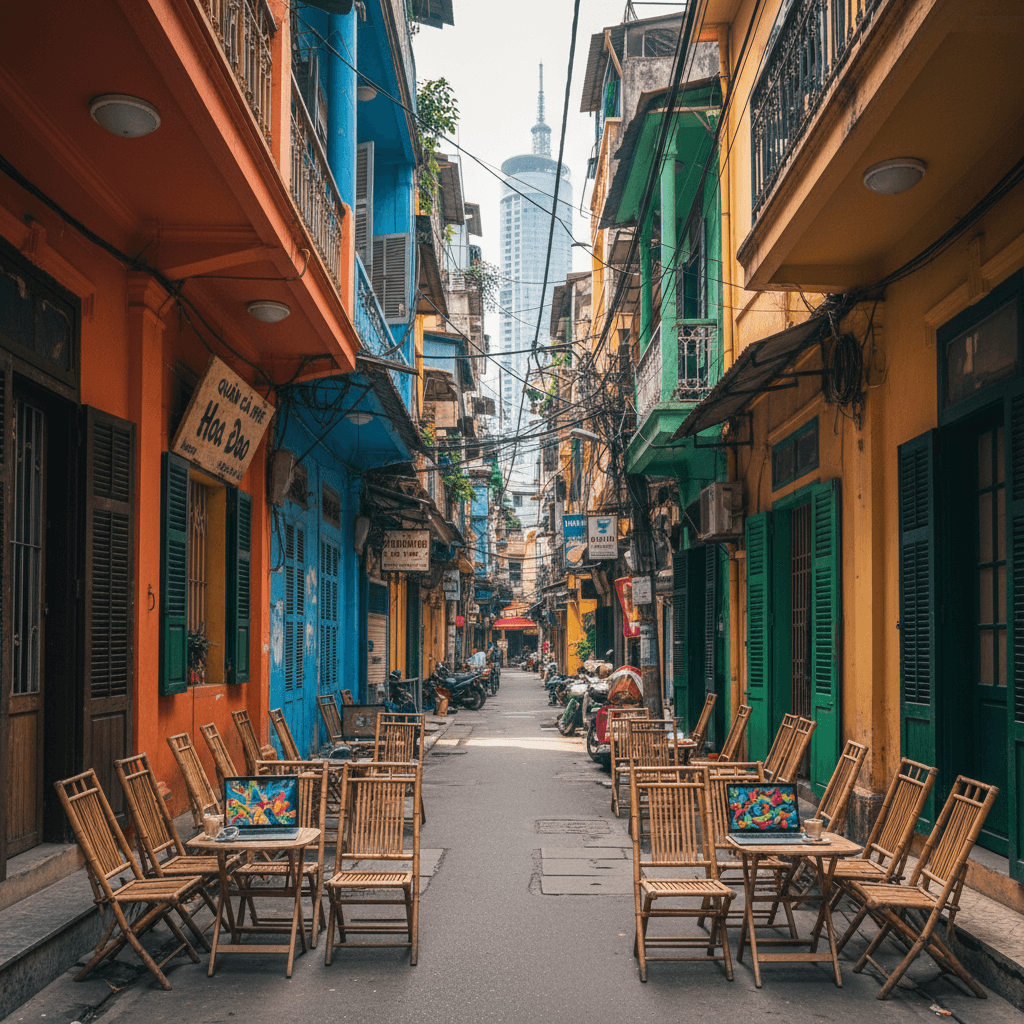
Hoi An
🇻🇳 Vietnam
The Intentional Pace of the Ancient Town
Hoi An isn't your typical digital nomad hub. While places like Chiang Mai or Bali feel like they were built for the laptop-and-latte crowd, Hoi An feels like a centuries-old village that just happens to have 240 Mbps fiber optic cables running through its rice paddies. It is a place for people who want to trade the frantic energy of Saigon or Hanoi for a slower, more intentional way of living.
The magic here lies in the contrast. You might spend your morning on a video call from a high-tech cafe like Hub Hoi An, then spend your afternoon cycling past water buffalo to reach An Bang Beach. It is a town that encourages you to actually look up from your screen. The air smells like incense and woodsmoke, and the visual landscape is dominated by mustard-yellow merchant houses rather than glass skyscrapers.
The Vibe: Heritage Meets High Speed
Expats here often describe the lifestyle as "deliberate." You aren't fighting traffic or rushing between meetings. Instead, the community gathers around the thriving cafe culture. Places like Nourish or Sound of Silence aren't just work spots; they are where you meet the same group of remote workers every Tuesday for breakfast bowls and networking. It is small enough that you'll start recognizing faces within a week, which makes it one of the easiest places in Vietnam to find a genuine sense of belonging.
Of course, it isn't all lanterns and lotus ponds. The Old Town can get claustrophobic when the tour buses arrive in the late afternoon, and the humidity in the summer months is no joke. During the rainy season, you might even find yourself wading through a few inches of water in certain streets. But for those who don't mind a bit of seasonal flooding and a lack of late-night clubs, the trade-off is a high quality of life for a remarkably low price.
Cost of Living Breakdown
Your money goes incredibly far here, especially if you move just ten minutes outside the tourist center. Most nomads find they can live a very comfortable life on $1,200 to $1,500 per month without ever looking at a price tag.
- Budgeting for Rent: You can snag a basic studio for $180 to $300, while a modern 1-bedroom apartment in a popular area like Cam Chau usually runs between $350 and $600. If you want a full house with a garden, expect to pay $800 to $1,000.
- Eating Out: Street food like Cao Lau or a Banh Mi from the famous stalls will cost you $1 to $3. A mid-range dinner with drinks at a spot like Good Eats usually lands around $10.
- Daily Commute: Most people rent a scooter for about $5 a day or use the Grab app. A quick bike ride across town via Grab costs roughly 28,000 VND, which is just over a dollar.
Choosing Your Neighborhood
Where you park your suitcase depends on whether you want the sound of waves or the view of a rice field. Each pocket of the city has a distinct personality.
Cam Chau
- The Vibe: The sweet spot for long-termers. It sits right between the beach and the town center.
- Pros: Home to the best coworking cafes, authentic local markets, and plenty of green space.
- Cons: You'll definitely need a bike or scooter to get around.
An Bang Beach
- The Vibe: Laid-back, sandy, and slightly more international.
- Pros: You can walk to the ocean in two minutes and enjoy a massive selection of Western-style cafes.
- Cons: Prices are higher here, and it gets loud with domestic tourists on the weekends.
Tan An
- The Vibe: Purely residential and very local.
- Pros: The most affordable rent in the city and the best place to find "real" Vietnamese life.
- Cons: Fewer people speak English, and there are fewer "laptop-friendly" cafes nearby.
Hoi An is a rare destination that manages to be both a UNESCO museum and a functional, modern base for remote work. It is a city that asks you to slow down, and most nomads find that once they arrive, they stay much longer than they originally planned.
The Bottom Line
Hoi An is one of those rare spots where you can live a high-quality life without burning through your savings. While prices in Vietnam are rising, this town remains significantly cheaper than Da Nang or Ho Chi Minh City. Most nomads find they can live comfortably here for a fraction of what they’d spend in Bali or Thailand.
Your biggest variable will be housing. If you’re willing to live like a local in neighborhoods like Tan An or Cam Pho, your money goes incredibly far. If you want a villa with a pool near An Bang Beach, expect to pay a premium. Regardless of your budget, the value for money here is hard to beat, especially when you factor in the world-class food and reliable infrastructure.
Monthly Rent by Neighborhood
Housing is affordable, but the market moves fast. Most expats recommend booking a guesthouse for your first week and scouting apartments in person to negotiate better long-term rates.
- Outside the Center (Tan An/Cam Pho): You can find modern studios or 1-bedroom apartments for $180 to $300 per month. These areas feel more "real" and less catered to tourists.
- Central & Modern Areas (Cam Chau): This is the sweet spot for many remote workers. Expect to pay $350 to $600 for a nice 1-bedroom with good natural light and reliable AC.
- Large Houses & Villas: If you’re traveling with a group or family, 2 to 3-bedroom houses generally run between $450 and $1,000 depending on how close they are to the water.
Daily Food & Drink
You can eat like royalty on a budget here. The local street food scene is legendary, and even the "expensive" spots are reasonable by Western standards.
- Street Food: Local staples like Banh Mi, Pho, or Cao Lau usually cost between $1 and $3. It’s fresh, fast, and often the best meal you’ll have all day.
- Mid-Range Dining: A nice dinner at a sit-down restaurant with a drink will typically set you back $5 to $12.
- High-End Experiences: If you’re celebrating at places like Mango Room or The Hoianian, expect to spend $15 to $30 per person.
Connectivity & Transportation
Staying connected is cheap and easy. Most nomads skip the $10 daily fee at coworking spaces and just work from cafes like Sound of Silence or Nourish. The WiFi in town is surprisingly punchy, often hitting speeds over 240 Mbps.
- SIM Cards: Grab a Viettel or VinaPhone card. You’ll pay about $12 to $20 for a month of heavy data (4GB to 6GB daily).
- Getting Around: Download the Grab app immediately. A quick bike ride across town costs about 28,000 VND ($1.10).
- Scooter Rentals: If you prefer your own wheels, monthly rentals can be negotiated down from the daily $4 to $6 rate.
Estimated Monthly Budgets
These totals include rent, food, transport, and a bit of fun. They don't include major medical emergencies or expensive shopping trips for custom-tailored suits.
- The Budget Nomad ($700 to $900): You’re staying in a local guesthouse, eating mostly street food, and doing your deep work in laptop-friendly cafes.
- The Mid-Range Lifestyle ($1,000 to $1,500): This gets you a private, modern apartment in Cam Chau, a mix of local and international dining, and plenty of weekend trips.
- The Comfortable Expat ($1,500 to $2,000+): You’ll have a high-end apartment or small villa, eat out at top-tier restaurants daily, and likely use a dedicated desk at Hub Hoi An.
For Digital Nomads: Cam Chau
If you're coming to Hoi An to actually get work done, Cam Chau is the sweet spot. It sits perfectly between the beach and the Old Town, meaning you're never more than a ten minute bike ride from either. Most nomads gravitate here because the WiFi is reliable and the views of the rice paddies are exactly what you pictured when you booked your flight.
The neighborhood is home to Hub Hoi An, the main coworking space in town where people actually network. If you prefer the cafe culture, Nourish and Good Eats are the go-to spots for smoothie bowls and ergonomic-ish seating. You get a much more "lived-in" feel here compared to the tourist center.
- Monthly Rent: $350 to $600 for a modern 1BR apartment.
- Vibe: Productive, green, and social.
- Top Spot: Nourish for the vegan food and upstairs work area.
For Long-Term Expats: Tan An
Expats who have been in Hoi An for a year or more often migrate to Tan An. It's a residential area that feels like a real Vietnamese neighborhood rather than a resort town. You won't find many souvenir shops here, but you will find the best local prices on groceries and long-term villa rentals.
Living here means you're about a 25 minute walk or a five minute scooter ride from the Ancient Town. It’s significantly quieter at night, which is a huge plus if you’re trying to avoid the karaoke and lantern crowds. Bonte is the neighborhood's standout cafe, offering a great environment for deep work without the tourist prices.
- Monthly Rent: $180 to $300 for a simple studio; $450 to $800 for a 2BR house.
- Vibe: Authentic, quiet, and budget-friendly.
- Top Spot: Bonte Cafe for excellent coffee and a local atmosphere.
For Solo Travelers: Old Town (Ancient Town) & Cam Pho
If it's your first time in the city and you want to be in the middle of the action, stick to the Old Town or its western neighbor, Cam Pho. This is where you'll find the iconic yellow walls and the night market. Everything is walkable, which is great if you haven't worked up the nerve to rent a scooter yet.
Cam Pho is slightly better for the budget-conscious solo traveler. It's just a few blocks away from the UNESCO heritage sites but the prices for a bowl of Cao Lau or a Banh Mi drop by half. You'll find plenty of social hostels and guesthouses here where it's easy to meet people for a drink by the river.
- Daily Cost: $25 to $50 including a guesthouse and dining out.
- Vibe: Energetic, photogenic, and very touristy.
- Top Spot: Dingo Deli for a reliable sandwich and fast WiFi.
For Families and Slow Travelers: An Bang Beach
An Bang has evolved from a sleepy fishing village into a full-blown community. It’s the best choice if you want to wake up, walk to the sand, and have a Western-style breakfast. The community here is very tight-knit, and you'll often see the same faces at the beach clubs every afternoon.
While it’s a bit more expensive than the inland neighborhoods, the lifestyle is hard to beat. The air is cleaner, and the ocean breeze helps during the humid summer months. Just be aware that weekends get crowded with day-trippers from Da Nang, so Sundays might be your day to head into the countryside.
- Monthly Rent: $500 to $1,000+ for beach-adjacent villas.
- Vibe: Relaxed, coastal, and family-friendly.
- Top Spot: Sound of Silence for coffee with a direct view of the ocean.
Connectivity in the Lantern City
Hoi An might feel like a step back in time with its mustard yellow walls and wooden shutters, but its digital infrastructure is surprisingly modern. You won't struggle with 241 Mbps download speeds here. Whether you're uploading large video files or jumping on back-to-back Zoom calls, the fiber optic networks in most local villas and cafes are more than up to the task.
Most nomads here skip the formal office environment. The town has perfected the "cafe culture" for remote work, where the price of admission is usually just a $2 coconut coffee. Because the heat can get intense mid-afternoon, you'll see most people migrate from breezy outdoor spots to air-conditioned cafes between 1:00 PM and 4:00 PM.
Top Spots to Work
- Hub Hoi An: This is the only true dedicated coworking space in town. It's tucked away in the rice paddies of Cam Chau, offering a mix of an indoor A/C "quiet room" and a social garden area. It's the best place to meet other nomads, especially since they host regular community lunches and meetups. Expect to pay about $10 for a day pass.
- Sound of Silence: Located near An Bang Beach, this is a favorite for early birds. The WiFi is solid, and you can work with your toes almost in the sand. It’s perfect for deep work sessions before the afternoon heat kicks in.
- Nourish: A bright, plant-filled vegan cafe that feels like a slice of Bali. They have a dedicated upstairs area for laptops, plenty of power outlets, and some of the best healthy bowls in town.
- Bonte: Situated in Tan An, this architectural gem is a bit of a local secret. It’s incredibly quiet, has great A/C, and the minimalist design helps with focus.
- Dingo Deli: If you need a western-style desk and a reliable high-speed WiFi (100+ Mbps) connection, this is a staple. It’s popular with expat parents because of the play area, but it’s large enough that you can find a quiet corner to knock out a few hours of work.
Mobile Data and SIM Cards
Don't rely solely on cafe WiFi. Power outages are rare but do happen, especially during the rainy season. Having a local SIM card with a generous data plan is your safety net. You can pick these up at the airport in Da Nang, but you'll save about $3 if you wait until you get into Hoi An town to visit an official telecom shop.
Top Provider Options:
- Viettel: Generally considered the best coverage if you plan on exploring the marble mountains or rural outskirts. You can get 5GB of daily data for 30 days for roughly $13 to $14.
- Vinaphone: Great for heavy users. They often have packages with 6GB per day and 500 minutes of local calls for around $20.
- MobiFone: A solid budget choice, offering 4GB daily for about $12 for a 20-day stint.
If your phone supports it, grabbing an eSIM before you land is the most convenient move, though you'll pay a slight premium for the ease of not swapping physical cards. Most long-termers prefer Viettel for its consistency across the country.
Practical Tips for Remote Workers
While the internet is fast, the power outlets in older buildings can sometimes be loose. It’s smart to carry a small universal adapter or a power strip if you have multiple devices. Also, keep an eye on the weather; during the peak of the rainy season, the Old Town can flood. If you're staying in that area, you might find yourself wading to your favorite coffee shop, so many nomads choose to live in Cam Chau or Tan An where the ground is higher and the WiFi stays dry.
Staying Safe in the Lantern City
Hoi An is one of the safest hubs in Southeast Asia for solo travelers and digital nomads. While larger cities like Ho Chi Minh City have a reputation for phone snatching, the vibe here is much more relaxed. You can generally walk home late at night through the rice paddies or the Old Town without feeling on edge.
The most common annoyance is petty theft in high traffic areas. Keep an eye on your bag at the Central Market and don't leave your phone sitting on the edge of a table while working at a street-side cafe. Most expats recommend using a crossbody bag and keeping your bike locked, though even bike theft is relatively rare compared to Western standards.
Traffic is your biggest daily risk. While the Old Town is pedestrian-only at certain times, the surrounding roads are a chaotic mix of scooters and wandering tourists. If you're renting a motorbike for the first time, take it slow on the backroads of Cam Chau before hitting the main road to Da Nang. Most nomads find that wearing a high quality helmet and staying predictable is the best way to stay out of trouble.
Healthcare and Hospitals
For a small town, Hoi An has solid medical infrastructure. If you deal with a minor illness or a "Hoi An belly" incident, you'll find pharmacies on almost every corner. Most pharmacists speak enough English to help with basic meds, and many are open until 9:00 PM or 10:00 PM.
For anything serious, Vinmec Da Nang International Hospital (30-45 minute drive) is the gold standard, JCI-accredited with English-speaking doctors. It's clean, modern, and used to dealing with expats and insurance claims.
- Hoi An Pacific Hospital: A primary option in the town center for quick consultations and local care.
- Emergency Services: Dial 115 for an ambulance, though in many cases, taking a GrabCar to a major hospital is faster.
If you need specialized care or a major procedure, many long-term residents make the 45 minute drive to Da Nang. The facilities there are even more robust, and it's close enough for a day trip if you just need a specific specialist or a second opinion.
Health Tips for Long Stays
The heat is no joke, especially from May to August. Dehydration and heat exhaustion send more travelers to the clinic than anything else. Expats suggest carrying an insulated water bottle and sticking to bottled or filtered water; never drink from the tap.
Mosquitoes can be a nuisance, particularly near the rice fields in Cam Thanh or during the rainy season. While malaria isn't a major concern in town, Dengue fever pops up occasionally. Use repellent if you're sitting outdoors at dusk, especially at garden cafes like Hub Hoi An.
Before you fly in, make sure your routine vaccinations are current. Most doctors suggest being up to date on Tetanus, Typhoid, and Hepatitis A. If you're planning on staying for several months and exploring the rural outskirts, some travelers also opt for the Japanese Encephalitis series.
The Grab Ecosystem
In Hoi An, your phone is your best friend for transit. Download the Grab app as soon as you land. It's the local equivalent of Uber and works flawlessly for both cars and motorbikes. If you're traveling solo, GrabBike is the fastest way to zip through traffic and costs about 28,000 VND ($1.10) for a trip between the Old Town and An Bang Beach. For groups or rainy days, a GrabCar from the airport in Da Nang to your Hoi An rental usually runs around 300,000 VND ($12) or more depending on the vehicle size.
Two Wheels: Bicycles and Scooters
Most expats and long-term nomads eventually rent their own wheels. Bicycles are the classic choice here; the terrain is flat and the pace is slow enough that you won't feel out of place pedaling to a cafe. Many homestays provide them for free, or you can rent one for a couple of dollars a day. It's the best way to explore the rice paddies in Cam Chau or the vegetable gardens of Tra Que.
For more range, a scooter is the standard nomad move. You can rent a reliable 125cc bike for 100,000 to 150,000 VND ($4 to $6) per day. If you're staying for a month or more, talk to the local shops about a long-term rate; you can often get this down significantly. Just keep in mind that while Hoi An is quieter than Saigon, the traffic still follows its own set of unwritten rules. Always wear a helmet, and make sure your travel insurance covers you for riding.
Navigating the Old Town
The UNESCO Ancient Town is a pedestrian-heavy zone. During specific hours of the day, motorized vehicles are actually banned from the core streets. This makes it one of the few places in Vietnam where you can walk without constantly looking over your shoulder for a stray motorbike. It's highly walkable, but it gets humid. Most people find that a mix of walking the historic center and taking a quick Grab back to their accommodation is the best strategy to avoid melting in the heat.
Regional Connections
If you're on a tight budget and want to head into Da Nang for a day trip or a supply run, look for Bus Route 01. It runs every 20 to 30 minutes from 5:30 AM to 5:50 PM. It's the cheapest way to move between cities, though it takes longer than a private car. For a more comfortable experience, many nomads use "Hoi An Express" or similar shuttle services that offer door-to-door transfers to the airport or nearby coastal spots.
Transit Tips for Nomads
- Pre-book Airport Transfers: While Grab is great, booking a car through Klook or your hotel before you land at Da Nang International Airport (DAD) can save you the hassle of haggling or waiting in a long queue.
- Parking Fees: If you ride your own scooter to the Old Town, expect to pay a small fee (usually 5,000 to 10,000 VND) to local attendants who watch the bike for you.
- Rainy Season Prep: From October to December, the streets can flood. During this time, high-clearance SUVs or even local boats become the primary way to get around certain parts of the Old Town.
The Local Lingo
In Hoi An, you will find a linguistic landscape that is surprisingly easy to manage, provided you stay within the main hubs. Because the town relies heavily on tourism and a growing expat population, English is widely spoken in the Old Town, An Bang Beach, and popular nomad haunts like Hub Hoi An. Most cafe owners and restaurant staff can handle complex orders and dietary requests without much trouble.
That said, once you wander into the residential pockets of Tan An or the local markets, English proficiency drops off quickly. Learning a few basic Vietnamese phrases goes a long way here. Locals genuinely appreciate the effort, even if your tones are slightly off. It often turns a standard transaction into a friendly conversation, and you might even find yourself getting the "local price" at the vegetable stalls.
Essential Apps for Communication
Technology bridges the gap when words fail. You should have these apps downloaded before you land:
- Google Translate: The camera feature is a lifesaver for reading menus in smaller alleys or deciphering labels at the grocery store.
- Grab: This is your lifeline for transport. The app allows you to message drivers in English, and it automatically translates their Vietnamese replies for you.
- Zalo: This is the WhatsApp of Vietnam. If you are renting an apartment long term or dealing with local landlords and handymen, they will almost certainly ask for your Zalo. It is the standard for business and social communication.
Data and Connectivity
Staying connected is rarely an issue. You can pick up a physical SIM or set up an eSIM easily. While airport kiosks are convenient, you will save about $2 to $3 by waiting until you get into town to visit an official carrier store. Viettel is the gold standard for coverage if you plan on taking weekend trips into the mountains, usually costing around $9 to $14 for heavy data plans (e.g., 5GB daily). MobiFone and VinaPhone are solid alternatives that often offer better deals for shorter stays, ranging from $12 to $20 depending on your daily gigabyte needs.
Most nomads find the WiFi in Hoi An to be exceptionally stable. Speeds frequently hit 240 Mbps in modern apartments and dedicated workspaces. If you are working from a cafe, it is polite to buy a coffee or a meal, but you will rarely find a place that limits your session time or charges for the connection.
Cultural Nuances and Etiquette
Communication in Hoi An is as much about body language as it is about words. The Vietnamese culture values "saving face," so keeping a calm and polite demeanor is vital, even if there is a misunderstanding with a bill or a booking. Raising your voice or showing visible frustration is usually counterproductive.
When it comes to bargaining, it is expected in the markets but not in air conditioned shops or restaurants. Expats recommend keeping negotiations lighthearted. Aim for a price that feels fair to both parties rather than trying to squeeze every last VND out of the transaction. A smile and a "Cam on" (thank you) go much further than a hard bargain.
Socializing and Community
If you are looking to meet people, the communication style is very open. There are several active Facebook groups and Zalo chats dedicated to the Hoi An expat community where people organize everything from football matches to beach cleanups. Because the town is small, you will likely start recognizing faces within your first week. It is a tight knit environment where word of mouth is the best way to find out about pop up events or the best new coffee spots.
The Two Seasons
Hoi An operates on a distinct binary: the dry season and the wet season. If you are planning a stint here, your experience will be dictated almost entirely by which half of the year you choose. Most nomads aim for the window between February and April, when the humidity is low and the temperatures sit comfortably in the mid-70s to low 80s Fahrenheit.
The dry season kicks off in February and runs through August. Early on, the weather is mild and perfect for cycling through the rice paddies in Cam Chau. By May, the heat starts to crank up. From June to August, expect temperatures to regularly hit 95°F (35°C) with high humidity. During these months, you will likely find yourself working from air-conditioned spots like Hub Hoi An or Bonte during the day and only venture out to An Bang Beach after 4:00 PM when the sun loses its bite.
The Rainy Season and Flooding
The wet season typically begins in September and lasts through January. This is not just a light afternoon sprinkle; it is heavy, persistent monsoon rain. October and November are the peak of this season, and they come with a specific quirk: flooding. Because of its position on the Thu Bon River, the Old Town frequently floods during these months. It is common to see shopkeepers moving their inventory to second floors while tourists take boat rides through what used to be streets.
Expats usually recommend avoiding long-term leases during this peak rainy window unless you enjoy the "moody" aesthetic and don't mind getting your feet wet. On the plus side, accommodation prices drop significantly, and the tourist crowds in the Ancient Town virtually disappear.
When to Visit for the Best Experience
- Best Overall: February to May. This is the sweet spot. You get clear skies, manageable heat, and the best conditions for both beach days and cafe hopping.
- Best for Budget: September to January. If you can handle the rain, you can snag high-end villas in areas like Tan An for a fraction of their usual price. Just bring a high-quality raincoat and a waterproof bag for your laptop.
- Hottest Months: June to August. Great for beach lovers, but tough for anyone who isn't a fan of constant sweating. You will rely heavily on your AC unit during these months.
The Lunar Calendar Factor
Regardless of the month, try to time your stay to catch the Full Moon Lantern Festival. Every month on the 14th day of the lunar calendar, the Old Town switches off its electric lights and glows entirely by silk lanterns. It is undeniably touristy, but it is one of those local traditions that even long-term residents still find beautiful. Just be prepared for the crowds to double for that single night.
One final tip for the winter months: December and January can actually get surprisingly chilly, with lows reaching 64°F (18°C). Since many local houses are built for ventilation rather than insulation, you might find yourself wishing you had packed a light sweater or a hoodie for those early morning scooter rides to get coffee.
Connectivity and Digital Infrastructure
Hoi An might look like a sleepy ancient town, but its internet speeds tell a different story. Most nomads are surprised to find fiber optic connections averaging 240 Mbps, making video calls and heavy uploads a breeze. You won't struggle for a signal here, as almost every homestay and cafe provides reliable WiFi for free.
For mobile data, skip the overpriced kiosks at the airport and head to a local shop in town. Viettel is the local favorite for coverage, especially if you plan on exploring the rural outskirts. A monthly plan with 5GB of daily data usually costs between $15 and $18. If you need a backup, VinaPhone offers similar packages with generous app calling minutes for around $20.
Coworking and the Cafe Scene
While dedicated coworking spaces exist, the local culture leans heavily toward "cafe hopping." Most remote workers find they can be just as productive with a coconut coffee and a view of the rice paddies. If you do need a professional environment, Hub Hoi An is the primary community anchor. It sits right in the fields of Cam Chau and offers air-conditioned rooms or garden seating for about $10 a day.
For a more casual workday, expats frequent these spots:
- Sound of Silence: Located near An Bang Beach, it has great views and plenty of outlets.
- Nourish: A vegan-friendly hub with a dedicated upstairs work area that stays quiet during the lunch rush.
- Bonte: A modern space in Tan An that feels more like a library than a coffee shop, perfect for deep focus.
- Dingo Deli: A reliable spot near the Old Town with comfortable chairs and Western-style comfort food.
Healthcare and Safety
Hoi An is incredibly safe, even for solo travelers late at night. The biggest risk you'll face is likely a slippery tile during the rainy season or a cheeky tailor overcharging you for a suit. Keep an eye on your phone in the crowded night market, but otherwise, you can relax. If you get sick, Vinmec International Hospital is the gold standard in the area. It is a JCI-accredited facility with English-speaking doctors. For minor issues, local pharmacies are everywhere and can provide most over-the-counter medications without a fuss. In a real pinch, the emergency number is 115.
Getting Around Town
The town is small enough that you can get almost anywhere in 15 minutes. Walking is great for the Old Town, but for everything else, you will want wheels. The Grab app is your best friend here. A GrabBike from the center to the beach costs about 28,000 VND ($1.10), while a car to the Da Nang airport usually runs around 300,000 VND ($12).
If you prefer independence, renting a scooter is the way to go. Expect to pay between $4 and $6 per day, though you can negotiate a monthly rate of $80 to $100 if you are staying long-term. Just be mindful of the local traffic flow; it looks chaotic, but there is a predictable rhythm to it. For a slower pace, many homestays provide bicycles for free, which are perfect for pedaling through the rice paddies in Cam Chau.
Budgeting for Your Stay
Your bank account will go a long way here. A budget nomad can live comfortably on $700 to $900 a month by eating local street food and staying in a guesthouse. If you want a modern one-bedroom apartment and frequent dinners at mid-range restaurants, aim for a budget of $1,200 to $1,500. Even at the high end, $2,000 a month buys a luxury lifestyle with a private pool and upscale dining every night.
Monthly Living Costs
- Studio Apartment: $180 to $350
- Mid-range 2-Bedroom: $450 to $800
- Local Meal (Cao Lau or Banh Mi): $1 to $3
- Western Dinner with Drinks: $12 to $20
- Monthly Scooter Rental: $80 to $100
Need visa and immigration info for Vietnam?
🇻🇳 View Vietnam Country GuideEasy Landing
Settle in, no stress