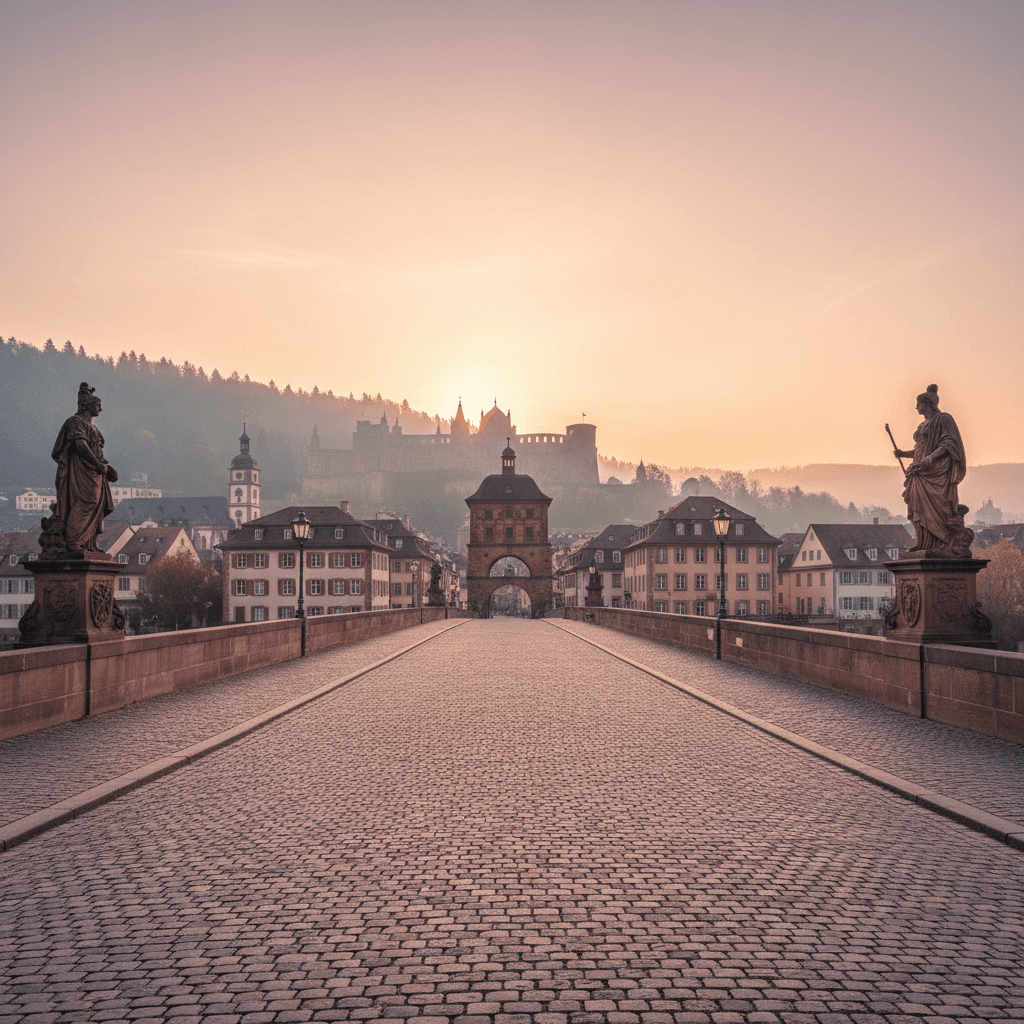
Heidelberg
🇩🇪 Germany
Heidelberg is often dismissed by the fast moving travel circuit as a mere photo op, a place to hop off a bus, snap a picture of a ruined castle, and leave. But for those of us who stay longer, the city reveals itself as a brainy, riverside sanctuary that feels worlds apart from the gritty, techno fueled energy of Berlin or the corporate polish of Frankfurt. It is a place where the air feels a little sharper and the pace of life follows the steady, rhythmic flow of the Neckar River.
The vibe here is defined by a curious mix of high intellect and deep tradition. Home to Germany oldest university, the city is packed with students and researchers, giving it a youthful pulse that keeps the historic Altstadt from feeling like a museum. You will find yourself working in a cafe next to a PhD student scribbling in a notebook, only to step outside and see a 15th century stone bridge glowing under the afternoon sun. It is an academic town at its heart, which means people generally respect your space, the Wi-Fi is reliable, and there is a quiet appreciation for the "life of the mind."
Physically, the city is a masterpiece of Romanticism. Because it was largely spared from the bombings of World War II, the baroque architecture is the real deal. Walking through the narrow, cobbled alleys of the Altstadt feels intimate rather than claustrophobic. Deep green hills rise up steeply on both sides of the river, creating a natural amphitheater that makes the city feel tucked away from the rest of the world. It is the kind of place where you actually want to take a lunch break just to walk across the Alte Brücke or hike up the Philosophenweg to clear your head.
The Nomad Perspective
- The Pace: It is slower than a metropolis but more sophisticated than a village. It is perfect if you are in a "deep work" phase of a project.
- The Community: You won't find a massive digital nomad "scene" with organized meetups every night. Instead, you'll integrate with the local expat and academic community in craft beer bars or along the riverbanks.
- The Language: Since every third person seems to be a student or professor, English is spoken almost everywhere. You can get by easily, though a "Guten Tag" goes a long way with the locals.
The emotional experience of Heidelberg is one of groundedness. There is a specific type of contentment found in the Neckarwiese, the massive riverside park where everyone gathers during the summer. You'll see groups of friends grilling, slackliners between trees, and nomads with laptops sitting on blankets. It lacks the frantic "fear of missing out" that haunts larger cities. In Heidelberg, you aren't chasing the next big thing; you are enjoying the fact that the best things, like a cold Heidelberger 1603 lager by the water, have stayed the same for centuries.
Expect to feel a bit like a local scholar. You will likely develop a routine involving a specific bakery in Neuenheim or a favorite corner in a library. It is a city that rewards the slow traveler, the one who stays long enough to see the fog lift off the castle ruins in the morning and realizes that this "day trip" destination is actually a remarkably easy place to call home.
The Price of Academic Charm
Heidelberg carries a bit of a premium compared to other mid sized German cities. Since it is a world famous university hub and a major tourist draw, you are competing with both wealthy students and seasonal visitors for space. Most nomads find that while it is cheaper than Munich, it is noticeably pricier than nearby cities like Mannheim or Karlsruhe. You should budget around €1,800 to €2,500 per month to live comfortably without constantly checking your banking app.
Rent is your biggest hurdle. The market is tight, and short term furnished apartments are in high demand. If you want to be in the heart of the action, expect to pay for the privilege. Many expats recommend looking slightly outside the historic center to get more square footage for your Euro.
Monthly Budget Breakdown
- Furnished Studio in Altstadt or Weststadt: €1,100 to €1,600
- Private Room in a Shared Flat (WG): €550 to €850
- Monthly Grocery Bill: €300 to €450
- Coworking Hot Desk: €200 to €300
- Monthly Transit Pass (Deutschlandticket): €49
Neighborhood Price Points
Where you plant your laptop changes your overhead significantly. The Altstadt is beautiful but serves as a tourist magnet with prices to match. Weststadt and Neuenheim are the most desirable residential spots, offering a mix of historic villas and trendy cafes, though they are rarely "cheap."
Altstadt (Old Town)
- Rent: High. Expect €1,400+ for a decent one bedroom.
- Dining: Pricey. Tourist menus average €18 to €25 for a main course.
Weststadt
- Rent: Moderate to High. A favorite for young professionals, usually €1,200 to €1,500 for a flat.
- Dining: Reasonable. Plenty of local bistros where a meal costs €12 to €16.
Bahnstadt
- Rent: High. This is the newer, eco friendly district. Modern studios go for €1,300.
- Dining: Mid range. Lots of modern chains and healthy bowl spots.
Eating and Drinking
Eating out doesn't have to break you if you follow the student crowd. Heidelberg is a university town after all. You can grab a Döner kebab or a Falafel wrap for about €7 to €9 at places like Memo Gulet on Hauptstrasse. A local beer at a traditional spot like Brauhaus Vetter will set you back about €5, while a flat white at a specialty shop like Coffee Nerd costs around €4.50.
Groceries are where you can save the most. If you shop at discount supermarkets like Aldi or Lidl, you can keep your weekly bill under €70. If you prefer organic shops like Alnatura, expect that to jump by 40 percent. Most travelers suggest hitting the weekly markets at Friedrich Ebert Platz for fresh produce, though it is more about the experience than the savings.
Connectivity and Work
For those not working from home, coworking spaces like Breidenbach Studios or the Business Center at the main station offer various memberships. A day pass usually lands around €25. If you prefer the cafe route, you will only be out the price of a few coffees, but keep in mind that some smaller German cafes still have a "no laptops" policy during peak lunch hours.
Transport is a win for your wallet. The city is extremely walkable and bike friendly. Most nomads just buy a used bike for €80 on Kleinanzeigen and sell it when they leave. If you need the tram, the €49 Deutschlandticket is the gold standard, giving you unlimited regional travel across the entire country.
For the Dedicated Nomad: Altstadt and Bergheim
If you want to step out of your front door and feel like you are on a movie set, the Altstadt is the place to be. It is the historic heart of the city, packed with cobblestone streets and views of the castle. Most nomads gravitate toward the area around Unterer Faulpelz or near the Marstall for the energy. Since this is a university town, the vibe is young and lively despite the ancient buildings. You will find plenty of cafes with decent Wi-Fi, though the actual apartment stock is often older and may have quirky heating or slow internet connections.
For a more functional work life, Bergheim is the smarter choice. It is just west of the old town and serves as the city's modern hub. This is where you will find DAI Heidelberg, a cultural center that doubles as a great spot to get work done, and Design Offices, which is the go to coworking space for professionals. Bergheim is flatter, more bike friendly, and puts you right next to the main train station for weekend trips to Frankfurt or Stuttgart.
- Altstadt Rent: Expect to pay €950 to €1,300 for a small one bedroom.
- Bergheim Rent: Prices range from €850 to €1,150 for a modern studio.
- The Vibe: Historic charm in the Altstadt; urban convenience in Bergheim.
For Long Term Expats: Weststadt
Weststadt is arguably the most beautiful residential neighborhood in the city. It is famous for its Wilhelminian style architecture and tree lined streets. Expats love it because it feels like a real community rather than a tourist zone. You are close enough to walk to the center, but far enough away to avoid the crowds that swarm the Hauptstrasse on Saturdays. The Wilhelmsplatz hosts a fantastic weekly market where locals buy their produce and catch up over coffee.
The apartments here have high ceilings and original hardwood floors, which means they get snapped up fast. You will need a solid Schufa (credit report) and a bit of patience to land a spot here. It is the kind of place where people actually know their neighbors, and you will find plenty of bilingual locals and international professionals living side by side.
- Average Rent: €1,100 to €1,500 for a decent two room apartment.
- Grocery Access: Excellent, with several Rewe and Alnatura locations nearby.
- Commute: A quick 5 minute tram ride or 10 minute walk to the city center.
For Families: Neuenheim
Neuenheim sits on the north bank of the Neckar river and is the city's most prestigious address. For families, it is unbeatable. You have the Neckarwiese, a massive riverside park where kids can run free while you grill or lounge in the sun. The neighborhood is quiet, safe, and home to some of the best schools and kindergartens in the region. The Neuenheimer Marktplatz is the soul of the district, offering high end bakeries and organic shops.
Be prepared for the price tag, though. This is the most expensive part of Heidelberg. You are paying for the proximity to the river, the quiet nights, and the easy access to the Heiligenberg hiking trails. It is less about the nightlife and more about leisurely Sunday brunches and bike rides along the water.
- Family Housing: Large apartments or houses can run €1,800 to €2,500+ per month.
- Perks: Immediate access to the river park and the Philosophenweg trail.
- Atmosphere: Upscale, quiet, and very green.
For Solo Travelers and Students: Bahnstadt
If you want everything to be brand new, Bahnstadt is your spot. It is one of the largest passive house settlements in the world, meaning the buildings are incredibly energy efficient. It feels a bit like a city of the future. While it lacks the soul of the Altstadt, it makes up for it with modern amenities, fast fiber optic internet, and a high concentration of young singles and researchers. It is home to B10, a popular spot for craft beer and socializing.
Solo travelers often prefer this area because the apartment complexes are designed for modern living, often including bike storage and communal spaces. It is also right behind the main station, making it the most convenient location for anyone who plans on exploring the rest of Germany by rail.
- Modern Studio Rent: Roughly €800 to €1,000 including utilities.
- Connectivity: The best internet speeds in the city are found here.
- Dining: Plenty of quick, healthy options like Hans im Glück and local poke bowl spots.
Connectivity and Speed
Heidelberg might feel like a medieval fairytale, but the infrastructure is pure modern Germany. You can expect reliable fiber connections in most central apartments and cafes, with average download speeds hovering around 100 Mbps. If you are staying in the Altstadt, the thick stone walls of historic buildings can sometimes mess with your Wi-Fi signal, so it is always smart to check the router placement before signing a short term lease.
For mobile data, grab a local SIM card from providers like Telekom or Vodafone. Telekom generally has the best coverage if you plan on hiking up to the Konigstuhl or exploring the surrounding Odenwald forest. A prepaid plan with 20GB of data usually costs around 20 EUR. Most of the city center is covered by 5G, so tethering your laptop for a quick Zoom call by the Neckar river is usually seamless.
Coworking Spaces
The coworking scene here is smaller than in Berlin, but it is high quality and caters to a mix of tech startups and academic researchers. DAI Heidelberg (Deutsch-Amerikanisches Institut) is a local favorite. It is not a traditional corporate coworking hub; it feels more like a creative library. They offer a quiet workspace in the heart of the city for a very low daily fee, often around 5 EUR to 10 EUR, which is a steal for nomads on a budget.
If you need a more professional setup with ergonomic chairs and meeting rooms, Business Development Center (BDC) in the Pattonville area is the go to spot. It is located in the Heidelberg Innovation Park and attracts a serious professional crowd. Day passes here usually run about 25 EUR, while a monthly dedicated desk will set you back roughly 300 EUR. It is a bit further from the historic center, but the tram lines make the commute quick and painless.
- DAI Heidelberg: Best for quiet, library style focus. Located in the Weststadt.
- BDC Heidelberg: Best for networking with tech founders and startups.
- Spaces (Poststrasse): A more corporate, reliable option near the main train station with flexible membership tiers.
Laptop Friendly Cafes
Heidelberg is a university town, which means students are everywhere with their laptops. However, the popular spots in the Altstadt can get crowded and some have "no laptop" policies during the busy lunch rush or on weekends. Coffee Nerd, which recently relocated to a new space on Sophienstraße, is the gold standard for digital nomads. The coffee is world class, the Wi-Fi is fast, and the staff won't glare at you for staying a couple of hours. Just be sure to buy a fresh drink every hour or so to keep things fair.
Another solid option is Panteon. It has a more relaxed, spacious vibe and is generally more welcoming to remote workers than the tourist traps on the Hauptstrasse. If you find yourself in the Bergheim neighborhood, Yolanda is a great spot with plenty of power outlets and a local, neighborhood feel. Most nomads find that as long as you avoid the peak tourist hours between 12:00 PM and 2:00 PM, you can easily find a corner to work from for the price of a 4.50 EUR flat white.
Practical Tips for Remote Work
Germany still has a bit of a love affair with cash, but most coworking spaces and modern cafes in Heidelberg accept cards. Always keep a few 5 EUR or 10 EUR notes on you just in case. If you need to print documents or scan a contract, head to one of the many "Copy Shops" near the University Library in the Altstadt. They are cheap, efficient, and used to dealing with international students.
Public Wi-Fi is available through the Heidelberg4you network in many public squares and government buildings. It is fine for checking Google Maps or sending a quick Slack message, but it is not secure or fast enough for a full day of work. Stick to your own hotspot or a dedicated coworking space for anything involving sensitive data or video calls.
Staying Safe in the University City
Heidelberg is widely considered one of the safest cities in Germany. Because a huge chunk of the population consists of students and researchers at the university, the vibe stays intellectual and generally calm. You can walk through the Altstadt or along the Neckarwiese at night without much worry. Most nomads find that the biggest risk is actually bicycle theft, which is rampant. If you buy a bike to get around, invest in a high quality U-lock and never leave it outside overnight in the Hauptbahnhof area.
While violent crime is rare, you should stay alert in the area around the main train station after dark. Like any major transit hub, it attracts a few sketchy characters. Pickpocketing can occasionally happen in the crowded tourist stretches of the Hauptstrasse, especially during the Christmas Market season when everyone is distracted by mulled wine. Just keep your bag zipped and you will be fine.
- Emergency Number (Police): 110
- Emergency Number (Ambulance/Fire): 112
- Non-emergency Police Station: Schlossberg 1, located right near the castle.
Navigating the Healthcare System
You are in one of the best places in the world to get sick. Heidelberg University Hospital is a global leader in medicine, and the city is packed with specialists. If you have an EHIC card from the EU or a private expat insurance policy like SafetyWing or Feather, you will find the process straightforward. Most doctors speak excellent English, so you do not need to worry about a language barrier when explaining your symptoms.
For minor issues, look for a "Hausarzt" (General Practitioner). You usually need to call ahead for a "Termin" (appointment), but many offices have "Akutsprechstunde" in the morning where you can wait for a walk in slot. If it is the weekend and you have a non-life-threatening issue, do not go to the ER. Instead, look for the "Bereitschaftspraxis" at the University Hospital on Alte Bergheimer Strasse. It is specifically for after hours care that cannot wait until Monday.
Pharmacies and Prescriptions
Pharmacies, marked by a big red "A" for Apotheke, are on almost every corner in the Altstadt and Bergheim. They are not like American drugstores; they only sell health related items. If you need medicine on a Sunday, check the door of any pharmacy. They rotate "Notdienst" (emergency service) and will post a sign showing which nearby location is open 24 hours that day.
- Standard Co-pay: Usually 5 to 10 Euros for prescribed meds if you have German public insurance.
- Doctor Visit (Private/No Insurance): Expect to pay between 40 and 80 Euros for a basic consultation.
- University Hospital (Uniklinikum): Located in the Neuenheimer Feld campus, this is where you go for specialized care.
Water and Environment
The tap water in Heidelberg is perfectly safe to drink and tastes great, though it is quite "hard" with high calcium content. You will notice limescale buildup in your kettle within a week. Most locals use a Brita filter to soften the taste. In the summer, the Neckar river looks tempting, but stick to the banks. While the water quality has improved, swimming in the river through the city center is generally discouraged due to boat traffic and currents.
If you are hiking in the hills around the Heiligenberg or the Konigstuhl, be aware of ticks during the spring and summer. They can carry Lyme disease or FSME. Expats recommend wearing long socks if you are trekking through high grass and doing a quick check once you get home.
The Logistics of Getting Around
Heidelberg is famously compact, and you will find that your own two feet are often the best way to get from a morning coffee in the Altstadt to a deep work session at a local cafe. The city is divided by the Neckar River, with the historic center sitting on the south bank and the more modern, residential districts like Neuenheim and Handschuhsheim to the north. Most nomads find that they rarely need a car, and in the narrow, cobblestone streets of the old town, a vehicle is more of a liability than an asset.
The city operates on a zone based transit system managed by the RNV. For most of your daily life, you will be traveling within Zone 125. If you are staying for a month or more, skip the single tickets and look into the Deutschland-Ticket. It costs 63 EUR per month and gives you unlimited access to all local buses, trams, and regional trains across the entire country. It is a game changer for weekend trips to nearby spots like Mannheim or Speyer.
Trams and Buses
The tram network is the backbone of Heidelberg transit. Lines 5, 21, 22, 23, and 26 connect the main train station (Hauptbahnhof) to the rest of the city. Trams run frequently, usually every 10 to 20 minutes during the day. If you are heading to the university campus or the tech labs in Neuenheimer Feld, the tram is your best bet.
- Single Ticket (Adult): 3.00 EUR
- Day Ticket (24 hours): 7.50 EUR
- Short Trip (up to 3 stops): 1.90 EUR
- Payment: Use the eVRN app or the ticket machines at major stops. Most machines accept cards, but keep some coins handy for older models.
The Bike Culture
Heidelberg is a cycling city through and through. The paths along the Neckar are flat and well maintained, making the commute from the Weststadt to the city center a breeze. Expats recommend using nextbike, the local bike sharing program. You will see the silver and blue bikes parked at hubs over town. If you link your account to a local university ID or certain transit passes, you might even get the first 30 minutes for free.
For those staying longer, check out the Radhof or local Facebook groups like "Heidelberg Buy and Sell" to pick up a used "Bahnhofsrad" (station bike) for around 60 to 100 EUR. Just make sure you invest in a heavy duty lock, as bike theft is the most common petty crime in the city.
Trains and Regional Travel
The Hauptbahnhof is located slightly west of the city center. From here, you can catch the S-Bahn lines S1, S2, S3, or S4. These are perfect for exploring the Rhine-Neckar region. Travelers often head to Schwetzingen to see the palace gardens or Weinheim for its quaint market square. If you are looking to go further afield, the ICE (InterCity Express) trains connect you to Frankfurt Airport in about 50 to 60 minutes, making international departures relatively painless.
Taxis and Ride Sharing
Uber does operate in Heidelberg, but it is often just a way to hail a traditional taxi rather than a private driver. Expect to pay at least 15 to 20 EUR for a short cross town trip. If you find yourself out late after the trams stop running (usually around 1:00 AM on weekdays), look for the Moonliner night buses or use the fips shuttle service, which is an on demand van that you can book via an app for a small surcharge over the standard transit fare.
Navigating the Altstadt
The Hauptstrasse is one of the longest pedestrian zones in Europe. No bikes are allowed during peak shopping hours, and no cars are allowed at all. If you need to get to the Bergbahn (funicular) to visit the castle, it is a pleasant 15 minute walk from the Bismarckplatz transit hub. The funicular itself is a separate experience; a ticket including castle entry starts at 9 EUR and takes you up to the Molkenkur station for the best views of the valley.
The Local Lingo
You can get by in Heidelberg with English alone, but you'll have a much deeper experience if you pick up some German. Since it's a major university town, the student population is generally fluent in English, and you won't have trouble ordering a coffee at Coffee Nerds or asking for directions near the Alte Brücke. However, dealing with the local Bürgeramt or signing a long term lease usually requires a bit more linguistic effort or a very helpful German friend.
The local dialect is Kurpfälzisch. It sounds a bit softer than the harsh High German you might hear in the north. You'll hear locals say "Alla gut" which translates roughly to "alright then" or "okay." It's the catch-all phrase for ending a conversation or agreeing to a plan. If you want to impress the crowd at Destille, try using it when you're heading out for the night.
Communication Etiquette
Germans in Heidelberg value directness. It isn't rudeness; it's efficiency. When you're emailing a potential landlord or a coworking space like Business Development Center Heidelberg, keep your messages clear and skip the excessive small talk. They appreciate when you get straight to the point.
Socially, the rules shift slightly. In a Biergarten like Vetter's Alt Heidelberger Brauhaus, it's common to share long wooden tables with strangers. A quick "Is this seat free?" is all the intro you need. Once you're seated, a simple nod or a "Prost" when your drinks arrive is the standard social glue. Most nomads find that while locals are reserved at first, they're incredibly loyal once you've broken the ice.
Staying Connected
Internet speeds in the city center are generally excellent, often hitting 100 Mbps or higher in modern apartments. If you're staying in the older parts of Altstadt, the thick stone walls can sometimes mess with your Wi-Fi signal, so check the router placement before you commit to a monthly rental. Most expats recommend getting a local SIM card immediately to avoid roaming charges and to access public hotspots.
- Telekom: Generally offers the best coverage and speeds but is the most expensive option. Expect to pay around €40 for a solid monthly plan.
- Vodafone: A great middle ground with reliable 5G in the city. Plans usually hover around €25 to €30.
- Aldi Talk: The budget favorite for nomads. You can grab a starter kit for about €10 and top it up as needed at any Aldi supermarket.
- O2: Good for city dwellers, though the signal can drop if you head out into the Odenwald forest for a hike.
Digital Tools and Apps
To navigate the city like a local, you'll want a few specific apps on your phone. VRN Ticket is the go-to for public transport around the Rhine-Neckar metro area. It's much easier than wrestling with the ticket machines at the Bismarckplatz hub. For food, Lieferando is the dominant delivery service, though walking to a local bakery is always the better move.
If you're struggling with the language, DeepL is far superior to Google Translate for German. It captures the nuances of the grammar much better, which is helpful when you're trying to decipher a complex rental contract or a letter from the utility company. Most travelers also suggest joining the Expats in Heidelberg Facebook group. It's an active community where you can get quick answers about local bureaucracy or find out which cafes have the most reliable power outlets for a long afternoon of work.
One final tip: keep some cash on you. While the "cash is king" mentality is slowly fading in Germany, plenty of smaller cafes and traditional shops in Neuenheim still have a €10 minimum for card payments, or they might not take international credit cards at all. Having a €20 note tucked in your phone case will save you from an awkward walk to the nearest ATM.
The Seasonal Sweet Spot
Heidelberg is one of the warmest corners of Germany, tucked into the Rhine Rift Valley. While Berlin is shivering in the dark, this city usually stays a few degrees milder. Most nomads aim for the window between late May and September. This is when the city truly breathes. The Neckarwiese, a massive riverside park, becomes the unofficial living room for the entire town. You can grab a crate of Rothaus beer, find a patch of grass, and work on your laptop until the sun sets around 9:30 PM in June.
The heat peaks in July and August, with temperatures often hitting 28 to 32 degrees Celsius. It gets humid, and because German apartments rarely have air conditioning, those afternoons can be brutal if your Airbnb is on a top floor in the Altstadt. If you are sensitive to heat, look for a place in Weststadt; the high ceilings and thick stone walls of the Wilhelminian style buildings keep things much cooler.
Autumn and the University Buzz
September and October are arguably the best months for a medium term stay. The chaos of summer tourists thins out, and the university crowd returns, which flips the switch on the city's energy. The Odenwald forest, which hugs the city, turns into a wall of orange and red. It is perfect hiking weather, usually hovering around 15 to 18 degrees Celsius. You will find that the cafes along Untere Strasse start moving their tables inside, but the vibe stays lively as the student population of 30,000 settles back in for the semester.
Surviving the Grey Months
Winter in Heidelberg is a mixed bag. November is notoriously grey and rainy, with daylight disappearing by 4:30 PM. It is the hardest time to be here if you rely on outdoor activities for your mental health. However, the city transforms in December. The Christmas markets take over the Altstadt squares, specifically Universitätsplatz and Kornmarkt. It is less about shopping and more about the social ritual of meeting for Glühwein after work. Expect to pay about 4 to 5 Euros for a mug, plus a small deposit for the glass.
January and February are the quietest months. Snow is rare and usually turns to slush within hours. Temperatures hover between -2 and 5 degrees Celsius. If you are here during this time, you will want a membership at a coworking space like DAI or Business Development Center Heidelberg just to get out of the house and avoid the winter blues. The city feels private and local during this stretch, which some expats prefer for deep work phases.
The Spring Awakening
Spring arrives earlier here than in Munich or Hamburg. By late March, the almond blossoms start popping up along the Philosophenweg. It is a transitional time where you might get a 20 degree sunny day followed by a week of rain. Most locals wait until mid April to swap their heavy coats for light jackets. If you are planning a three month stint, starting in April allows you to see the city wake up without the peak season price hikes on short term rentals.
- Peak Season: June to August (Warm, crowded, expensive housing)
- Shoulder Season: May, September, October (Best balance of weather and local life)
- Off Peak: November to March (Cold, grey, but great for cozy cafe culture)
- Average Summer High: 26 degrees Celsius
- Average Winter Low: -1 degree Celsius
Getting Around the Neckar Valley
Heidelberg is incredibly compact, so your primary mode of transport will likely be your own two feet or a sturdy bicycle. The city is famous for being bike friendly, and most locals use the dedicated lanes to zip between the Altstadt and the university buildings in Neuenheim. You can grab a rental through the nextbike app for a few euros an hour, or check out Radhof near the main station if you are staying long enough to justify a used purchase.
For longer distances, the VRN (Verkehrsverbund Rhein Neckar) network of trams and buses is reliable and frequent. A single trip within the city zone costs 2.70 EUR, but if you are here for a month, the Deutschland-Ticket for 63 EUR is the smartest move. It gives you unlimited regional travel across all of Germany, which is perfect for those weekend trips to the Black Forest or the vineyards of the Palatinate region.
Staying Connected and Productive
While Germany has a reputation for lagging behind on digitization, Heidelberg is a university town, so the infrastructure is better than average. Most cafes in the Altstadt are laptop friendly during weekday mornings, but they tend to get crowded and "laptop-free" on weekends. Coffee Nerd is a favorite for deep work sessions, though the seating is limited. For a more professional setup, DAI (Deutsch-Amerikanisches Institut) offers a quiet library atmosphere with solid Wi-Fi for a small fee.
If you need a dedicated coworking desk, Business Development Center Heidelberg in the Bahnstadt district is the go-to spot. Expect to pay around 25 EUR for a day pass or 250 EUR for a monthly hot desk. The internet speeds here are consistently high, usually hitting 100 Mbps or more, which is a relief if you have heavy video calls.
Budgeting for the University Life
Heidelberg isn't the cheapest city in Germany, mostly because of the high demand for student housing. You should budget at least 1,100 EUR to 1,500 EUR per month for a decent studio or a room in a shared flat (WG). Groceries are affordable if you stick to Aldi or Lidl, where a weekly shop for one person usually lands around 50 EUR to 70 EUR.
- Monthly Rent (Studio): 900 EUR to 1,200 EUR
- Dinner for two with wine: 60 EUR
- Pint of local beer: 4.50 EUR
- Monthly Gym Membership: 35 EUR to 50 EUR
Language and Local Etiquette
You can get by with English in the university areas and the main tourist stretches of the Hauptstrasse. However, the locals appreciate it when you try a bit of German. A simple "Guten Tag" or "Danke" goes a long way. If you are looking to stay long term, the Volkshochschule (VHS) offers intensive German courses that are much cheaper than private language schools, often costing around 200 EUR for a multi week module.
Sundays are strictly for resting. Almost all supermarkets and shops close down, so make sure your fridge is stocked by Saturday night. Most expats spend their Sundays hiking the Philosophenweg or grabbing a coffee at Papi in Neuenheim, which is one of the few places that stays lively throughout the weekend.
Safety and Health
Heidelberg is exceptionally safe, even late at night. The main thing to watch out for is bike theft, so invest in a high quality U-lock if you buy a cycle. For healthcare, the University Hospital Heidelberg is world renowned. If you are an expat, ensure you have private insurance like Feather or TK if you are employed locally, as German bureaucracy is very strict about health coverage proof for residency permits.
Need visa and immigration info for Germany?
🇩🇪 View Germany Country GuideNomad Haven
Your home away from home