Hanoi
🇻🇳 Vietnam
The Authentic Nomad Frontier
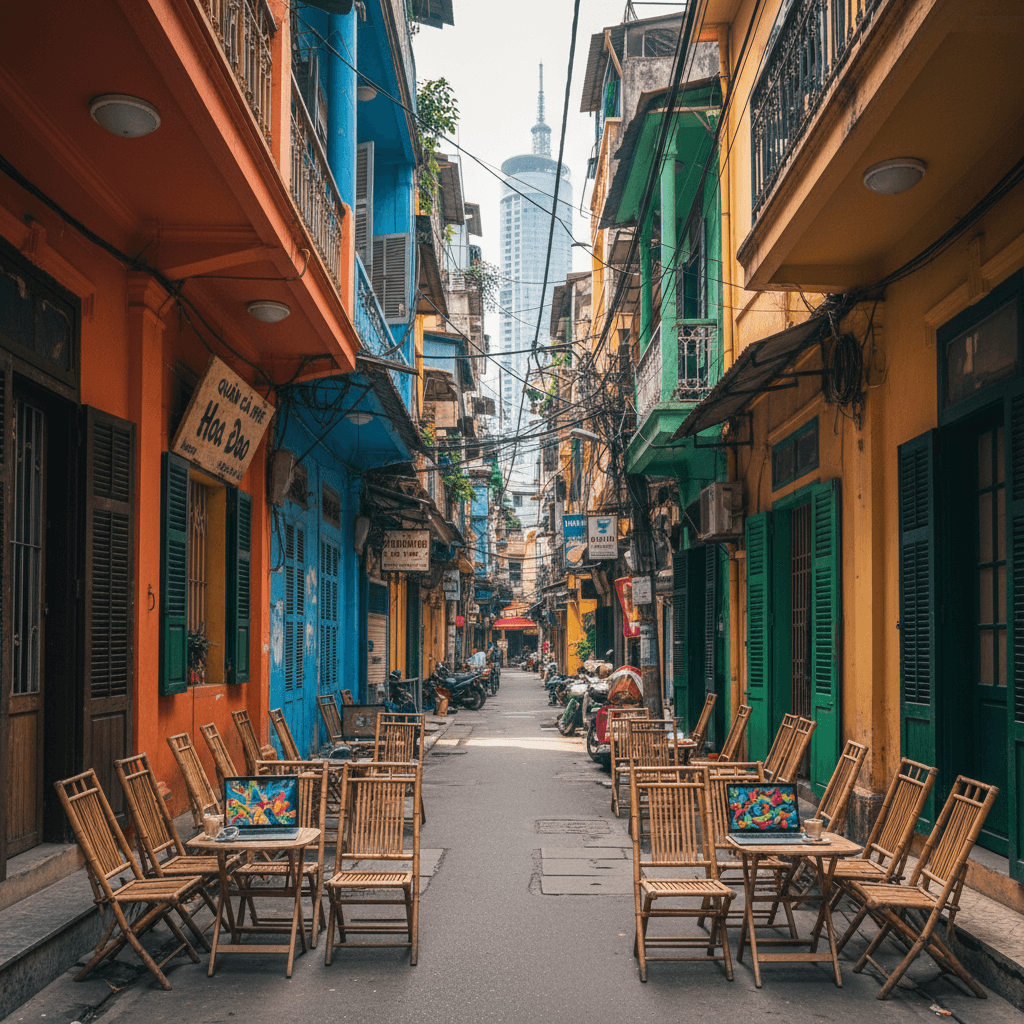
Hanoi doesn't try to impress you. Unlike the polished nomad bubbles of Bali or Chiang Mai, this city functions on its own terms. It is a place where 1,000 years of history collide with a relentless, modern energy. You'll find yourself sitting on a plastic stool at $1.50 per bowl of phở, watching a stream of motorbikes carry everything from family refrigerators to floral arrangements, all while connected to some of the fastest WiFi in Southeast Asia.
Most nomads find that Hanoi offers a rare balance. It’s affordable enough to live well on a modest budget, but developed enough that you aren't constantly fighting the infrastructure. It feels real. You aren't just living in a tourist enclave; you're part of a neighborhood where the lady selling bún chả knows your face after three days. The humidity can be brutal in the summer and the traffic is legendary for its chaos, but there is a rhythmic flow to the city that becomes addictive once you learn how to cross the street without flinching.
Breaking Down the Cost of Living
Your money goes incredibly far here. Whether you are living on a shoestring or looking for a high end lifestyle, the city scales to your needs. A comfortable mid range life usually sits between $1,000 and $1,500 USD per month, covering a private studio, eating out daily, and plenty of weekend trips.
- Budget Tier ($600 to $900): You'll likely stay in a shared house or a local studio in areas like Đống Đa, eat primarily street food for $1 to $3 a meal, and use the public bus system which costs less than $0.10 per ride.
- Mid Range Tier ($1,000 to $1,500): This is the sweet spot. You can afford a modern studio in Cầu Giấy or a small apartment in Tây Hồ for $350 to $500, mix in Western meals for $8 to $12, and use Grab bikes for daily transport.
- Comfortable Tier ($1,500 to $2,500+): You're looking at premium apartments with lake views in Tây Hồ starting at $600, high end dining, a full time coworking membership at ClickSpace, and frequent weekend escapes to Sapa or Ha Long Bay.
Where to Plant Your Flag
Each neighborhood has a distinct personality. Choosing the right one determines your entire experience of the city.
Tây Hồ (West Lake)
- The Vibe: The expat heart of Hanoi. It’s quieter, greener, and centered around the massive lake.
- Rent: $500 to $900+ for quality apartments.
- Best For: Wellness seekers, families, and anyone who needs a break from the city center’s noise.
Cầu Giấy & Yên Hòa
- The Vibe: The new digital nomad frontier. It’s modern, full of university students, and packed with high rise offices.
- Rent: $170 to $450 for studios and basic apartments.
- Best For: Remote workers looking for the best value and modern facilities.
Hoàn Kiếm (The Old Quarter)
- The Vibe: Pure, unfiltered Hanoi. Intense, loud, and incredibly walkable.
- Rent: $300+ for small, often older spaces.
- Best For: Short term stays and those who want to be in the middle of the action and nightlife.
Ba Đình
- The Vibe: The diplomatic quarter. It's clean, formal, and home to many embassies.
- Rent: $250 to $700 depending on the street.
- Best For: Residents who want a central location that isn't as frantic as the Old Quarter.
The Work Culture
Hanoi is a paradise for café workers. The local coffee culture is massive, and it’s perfectly normal to spend four hours on a laptop in a shop like Cong Caphe or The Hanoi Social Club. WiFi speeds of 30 to 100 Mbps are the standard, not the exception. If you need a professional environment, ClickSpace in Tây Hồ is the go to for networking, while the Toong chain offers sleek, corporate style spaces across the city.
The city’s soul is found in the "Hanoi Minute," that moment when you stop working, grab an iced coconut coffee, and just watch the world move. It’s a city that challenges your senses but rewards your curiosity with a depth of culture you won't find in more "curated" nomad hubs.
The Bottom Line on Budgets
Hanoi remains one of the most affordable digital nomad hubs in Southeast Asia. You can live a high quality life here for a fraction of the cost of Western cities, or even compared to regional neighbors like Singapore or Bangkok. Most nomads find that a monthly budget of $1,000 to $1,500 covers a comfortable private studio, daily cafe visits, and plenty of dining out.
If you're on a tighter grind, you can get by on $700 to $900 by sticking to local neighborhoods and street food. On the flip side, $2,000 a month buys a luxury lifestyle with a high end apartment in West Lake and frequent weekend trips to Sapa or Ha Long Bay.
Where You'll Be Staying
Rent is your biggest variable. Prices fluctuate based on how "international" the neighborhood feels. Here is what you can expect to pay for a monthly rental:
Tây Hồ (West Lake)
- The Vibe: The expat heart of the city. It is quieter, greener, and full of lakefront views.
- Typical Rent: $500 to $800 for a quality one bedroom apartment.
- Best For: Those who want yoga studios, Western grocery stores, and a break from the city's chaos.
Cầu Giấy & Yên Hòa
- The Vibe: The modern face of Hanoi. It is a hub for tech workers and students, offering a more "local professional" feel.
- Typical Rent: $250 to $450 for a modern mini studio.
- Best For: Budget conscious nomads who want fast internet and newer buildings without the "tourist tax."
Hoàn Kiếm (Old Quarter)
- The Vibe: The historic center. It is loud, crowded, and incredibly atmospheric.
- Typical Rent: $350 to $550, though spaces are often smaller and older.
- Best For: Short term stays where you want to be steps away from the best street food and nightlife.
Eating and Drinking
Food is where Hanoi really shines for your wallet. You can eat like a king for the price of a coffee back home. Street food staples like Phở or Bún Chả usually cost between $1.50 and $3.00. If you prefer sitting in an air conditioned restaurant with an English menu, expect to pay $5 to $10 per meal.
Grocery shopping is cheap if you stick to local markets for produce. A month of basic groceries usually runs around $35. However, if you crave imported cheeses or wines at stores like L's Place, your bill will spike quickly. A local Bia Hoi (fresh beer) on a street corner is about $0.50, while a craft beer at a taproom will be closer to $4 or $6.
Transport and Tech
Don't bother with a car. Most expats use Grab (the local version of Uber). A GrabBike typically costs 25,000-35,000 VND ($1-1.40 USD) for a cross-town trip, while a car is around $3 to $5. If you're brave enough to drive yourself, you can rent a scooter for about $45 to $60 per month.
For work, data is incredibly cheap. A local Viettel SIM card with 5GB of daily data costs about $10 a month. If you need a dedicated office environment, coworking spaces are professional and plentiful:
- ClickSpace Hanoi: A nomad favorite in West Lake, costing roughly $99 for a monthly pass.
- Toong: A sleek, corporate style chain with multiple locations for around $80 to $120 a month.
- Cafes: Many nomads skip the office entirely. Places like The Hanoi Social Club or Lá Cafe have great WiFi and won't mind if you linger for hours over a $1.50 coconut coffee.
Hidden Costs
Keep a small buffer for Visa extensions and electricity. While water is negligible, running your AC 24/7 during the humid summer months can add $50 to $80 to your monthly housing bill. Most nomads also recommend getting a local gym membership, which ranges from $20 for a basic local spot to $60 for a high end fitness center with a pool.
Tây Hồ: The Nomad and Wellness Hub
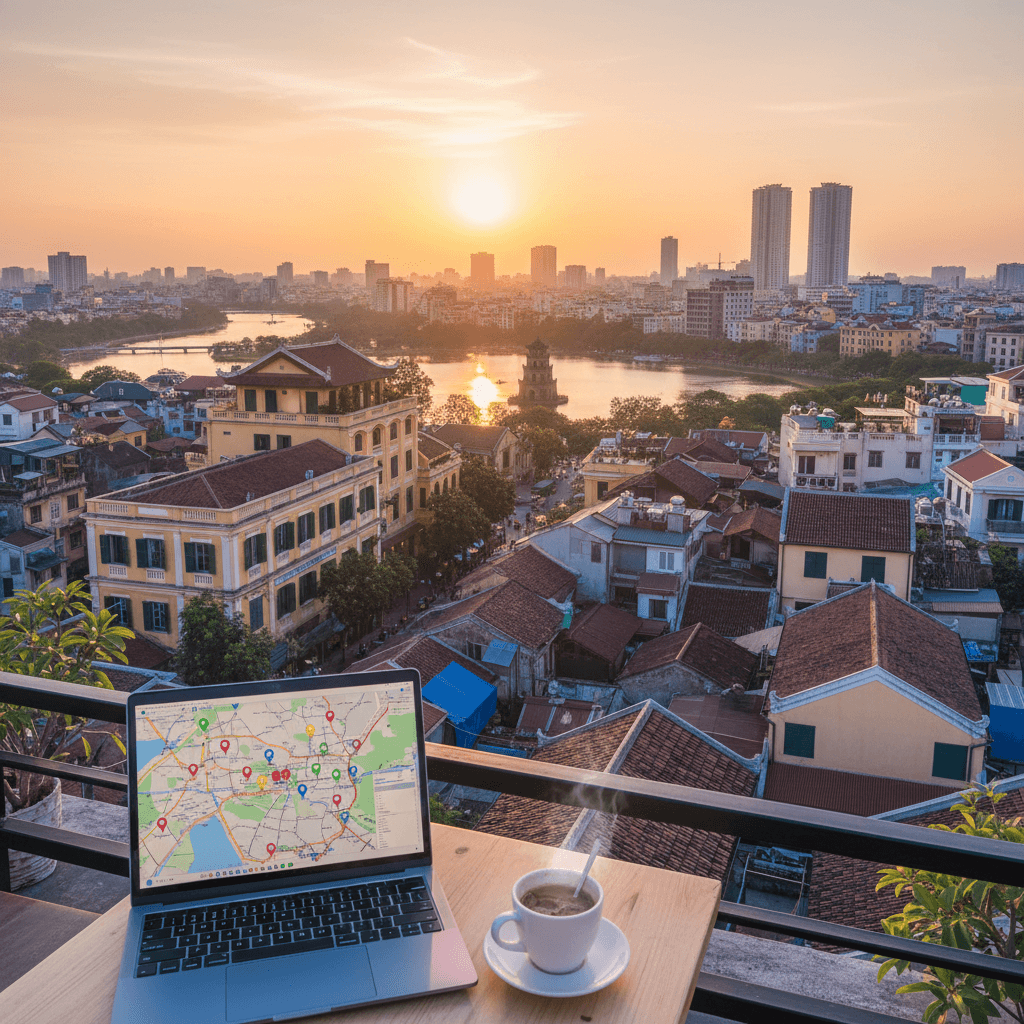
If you're planning to stay in Hanoi for more than a few weeks, Tây Hồ (West Lake) is likely where you'll end up. It's the undisputed headquarters for the city's remote work community. The vibe here is significantly more relaxed than the rest of the city, with wider streets and actual breeze coming off the lake.
Most nomads gravitate toward the Quảng An area. It's packed with lakeside cafés where nobody will glance twice at your laptop. You'll find a high concentration of yoga studios, vegan eateries, and craft beer bars. The infrastructure is built for foreigners, so English is spoken almost everywhere, and the gyms are top tier.
- Typical Rent: Expect to pay $500 to $800 for a high quality studio or a one bedroom apartment with a view.
- Best For: Creative professionals, wellness seekers, and anyone who needs a western comfort "buffer" from the city's chaos.
- Top Spot: The Hanoi Social Club or ClickSpace for those days when you need a dedicated desk and a community of like minded workers.
Cầu Giấy and Yên Hòa: The Value Seekers
For those who find Tây Hồ too "bubbly" or expensive, Cầu Giấy and the surrounding Yên Hòa area are the smart alternatives. This is where the modern Hanoi lives. It’s a district of high rises, wide boulevards, and a massive student population from the nearby universities. This keeps the energy high and the prices low.
You won't find many tourists here, but you will find excellent WiFi and modern apartment buildings that offer much better value for your money. It’s a bit of a commute to the historic center, but the local food scene is authentic and incredibly cheap.
- Typical Rent: Modern mini studios range from $170 to $250, while full apartments rarely top $500.
- Best For: Budget conscious nomads and long termers who want a local feel without sacrificing modern amenities.
- Top Spot: Nia Coffee is a favorite for deep work sessions due to its reliable internet and quiet atmosphere.
Ba Đình and Ngọc Hà: The Expat and Diplomat Choice
Ba Đình is the city's administrative heart. It’s home to the embassies, the Ho Chi Minh Mausoleum, and many international schools. Consequently, it feels more orderly and "grown up" than the Old Quarter. Expats with families often choose this area because it’s quieter and safer for walking.
Ngọc Hà is a particularly charming pocket within the district. It’s a maze of small alleys and gardens that feels like a village tucked inside a metropolis. It’s central enough that you can get anywhere in 10 to 15 minutes by Grab, but private enough that you can actually hear the birds in the morning.
- Typical Rent: Studios go for $250 to $330, while larger family homes can reach $900 or more.
- Best For: Families, diplomats, and expats who want a quiet, professional environment.
- Top Spot: Lá Cafe is a beautiful spot for a morning coffee before heading to a coworking space like Toong.
Hoàn Kiếm and the Old Quarter: Solo Travelers and Short Stays
If it's your first time in Hanoi and you're only staying for a week or two, stay in Hoàn Kiếm. It's the sensory overload everyone talks about. The streets are organized by trade, the footpaths are non existent because they're covered in motorbikes, and the street food is legendary. It’s the soul of the city.
Living here long term is a challenge. The apartments are often older, darker, and noisier. However, for a solo traveler looking to meet people, there is no better place. You're steps away from Bia Hoi Corner and the weekend walking street around the lake.
- Typical Rent: Small, central apartments start around $300, but you're paying for the location, not the square footage.
- Best For: Solo travelers, backpackers, and anyone who wants to be in the middle of the action.
- Top Spot: Grab a coconut coffee at Cong Caphe and soak in the view of the St. Joseph’s Cathedral.
Long Biên: The Riverside Escape
Just across the Red River, Long Biên offers a glimpse of what Hanoi is becoming. It’s full of new developments like Việt Hưng that emphasize green space and air quality. It feels worlds away from the smog of the center. While the expat community is smaller here, it's growing quickly as people look for more "breathable" neighborhoods.
- Typical Rent: Mid range prices for modern, spacious units, often $400 to $600 for high end complexes.
- Best For: Nature lovers and those who don't mind a 20 minute commute for the sake of peace and quiet.
- Top Spot: The riverbanks near the Long Biên Bridge are perfect for sunset walks.
Connectivity and Speed
Hanoi is a powerhouse for remote work, and you won't struggle to find a stable connection. Most cafes and apartments provide speeds between 30 Mbps and 100 Mbps as a standard. Unlike some neighboring countries where you might hunt for a "work-friendly" spot, Hanoi's local culture revolves around sitting in coffee shops for hours. You'll see students, entrepreneurs, and developers parked with laptops everywhere from the Old Quarter to the quiet alleys of Ba Dinh.
The city's infrastructure is reliable, though it's smart to have a backup during the occasional rainy season power flicker. Most nomads find that a 4G or 5G tethering setup is more than enough to handle high resolution Zoom calls if the house WiFi dips. You'll rarely find a cafe that doesn't offer their password for free with a $1.50 coffee.
Top Coworking Spaces
If you need a dedicated desk or a professional environment to escape the humidity, Hanoi has several high quality hubs. These spots are great for networking with the local startup scene and other expats.
- ClickSpace Hanoi: Located in the heart of the expat district, this is the gold standard for many. It costs roughly $99 USD per month and features private booths, meeting rooms, and a very active community. It feels more like a clubhouse than a corporate office.
- Toong: This is Vietnam's premier coworking chain with multiple locations across the city. It's sleek, professional, and offers 24/7 access for members at around 2,500,000-4,000,000 VND ($100-160 USD) per month. It's the best choice if you need a polished space to meet clients.
- Enouvo Space: A solid, community focused option that balances a quiet work environment with social events.
- IoT Coworking: Often cited by developers and tech nomads for its reliable hardware setup and no nonsense atmosphere.
The Cafe Office Culture
Hanoi is arguably one of the best cafe hopping cities in the world. Vietnamese coffee is strong, cheap, and the seating is often designed for long stays. Most expats recommend these specific spots for a productive afternoon:
- The Hanoi Social Club: A three story colonial villa with an eclectic vibe. It's a favorite for its international menu and quiet nooks, though it gets lively on Tuesday nights for live music.
- Kim Coffee Garden: Known for having massive amounts of space and very reliable WiFi. It's rarely too loud for deep focus work.
- Cong Caphe: This is a famous local chain with a "Vietcong chic" aesthetic. Their iced coconut coffee is legendary, and while the smaller locations can be cramped, the larger ones are great for an hour or two of emails.
- Nia Coffee: A beautiful, airy space with plenty of greenery that helps keep things cool during the summer heat.
Mobile Data and SIM Cards
Don't leave the airport without a local SIM. While you can buy them in the city, the kiosks at Noi Bai International Airport are open 24/7 and have staff who can set everything up in minutes. Viettel is the most trusted provider with the best coverage if you plan on taking trips to Sa Pa or Ha Giang.
A standard tourist SIM from Viettel usually costs between $7 and $11 USD and provides 5GB to 6GB of daily data for up to 15 days. If your phone supports it, grab an eSIM from providers like GIGAGO or Airalo before you land. It's an instant activation via QR code and saves you the hassle of swapping physical cards. For long term stays, you can top up your Viettel balance at any convenience store like Circle K or WinMart for just a few dollars a month.
Street Safety and Common Scams
Hanoi is remarkably safe compared to many Western capitals. You can walk through most neighborhoods at 2:00 AM without feeling a sense of dread, but you still need to keep your wits about you. Petty theft, specifically phone snatching by passing motorbikes, is the most common issue. If you're using Google Maps to find a cafe in the Old Quarter, step back from the curb and hold your phone with both hands.
Scams are usually low stakes but annoying. You'll likely encounter the "shoe shine" guys who point at your sneakers and claim they're falling apart. Before you know it, they've applied glue and are demanding 500,000 VND ($20 USD). Firmly say "No" and keep walking. Similarly, if someone places a bamboo pole with fruit baskets on your shoulder for a photo, expect to pay for the privilege. Stick to the Grab app for transport to avoid the "broken meter" trick sometimes used by independent taxis.
The Real Danger: Traffic
The biggest threat to your well being isn't crime; it's the 5 million motorbikes. Crossing the street in Hanoi is a rite of passage. The secret is to walk at a slow, steady pace and let the drivers predict your movement. Do not stop suddenly or run. They will flow around you like water around a stone. If you decide to rent a bike yourself, wear a helmet and realize that traffic laws are more like gentle suggestions here. If you aren't an experienced rider, stick to Grab bikes where a professional handles the chaos for about $1 to $2 USD per trip.
Hospitals and Medical Care
Hanoi's healthcare has seen a massive upgrade recently. While public hospitals like Bach Mai are excellent for trauma, they are often crowded and have significant language barriers. Most expats and nomads head to international private hospitals where the staff speaks English or French and the facilities feel familiar.
- Saint Paul General Hospital: A long standing private option that meets international standards and is popular with the diplomatic community.
- Vinmec International Hospital: Located in the Times City area, this is high end healthcare. It looks more like a five star hotel than a clinic and features cutting edge technology.
- Family Medical Practice: Located near the Kim Ma area, this is often the first stop for expats for routine checkups, vaccinations, or minor illnesses.
- Raffles Medical: Another reliable international clinic with a strong reputation for Western style service.
Pharmacies and Prescriptions
You'll find a "Nha Thuoc" (pharmacy) on almost every street corner. Most basic medications, from antibiotics to birth control, are available over the counter without a prescription. However, counterfeit medicine can occasionally be an issue at tiny local stalls. For peace of mind, use reputable chains like Pharmacity or Long Chau. They are brightly lit, well stocked, and usually have at least one pharmacist who speaks basic English.
Environmental Health
Air quality is a genuine concern in Hanoi, particularly during the winter months from November to February. It's common to see AQI levels climb above 150. Most long term nomads invest in a Xiaomi air purifier for their apartment (around $100 USD) and wear an N95 mask on high pollution days. Also, don't drink the tap water. Even locals boil it, but as a visitor, you're better off buying 19 liter jugs of purified water for about 50,000 VND ($2 USD) delivered to your door.
The Art of the Street Cross
Hanoi's traffic is legendary, but don't let the sea of motorbikes intimidate you. The secret to crossing the street is simple: walk at a slow, steady pace and don't make sudden movements. Drivers will predict your path and flow around you like water around a stone. Most expats find that once they find their rhythm, the chaos actually has a predictable logic to it.
Ride-Hailing: Your Best Friend
Forget trying to haggle with street taxis. Download Grab before you even leave the airport. It's the regional equivalent of Uber and works flawlessly for both cars and motorbikes. If you're traveling solo, GrabBike is the fastest way to slice through rush hour traffic, and it typically costs 25,000-35,000 VND ($1-1.40 USD) for a cross-town trip.
- GrabCar: Best for rainy days or when you need AC. A 3km trip typically runs 40,000 to 60,000 VND ($1.60 to $2.40).
- Xanh SM: A newer, local competitor using a fleet of electric VinFast cars and bikes. They're often cleaner, quieter, and have very professional drivers.
- Be: Another reliable alternative app that locals often use to compare prices during peak hours.
Two Wheels or Four?
Many long-term nomads eventually rent their own motorbike to get total freedom. You can find monthly rentals for around $40 to $60 USD. However, only take this on if you're a confident rider. The narrow alleys of the Old Quarter and the high-speed bridges over the Red River aren't the places to learn. If you'd rather stay on the ground, the city bus system is incredibly cheap at less than 2,000 VND ($0.08) per ride, though it's less popular with expats because the apps are so affordable.
Walking and the Sidewalk Culture
In neighborhoods like Hoan Kiem, walking is the best way to soak in the atmosphere, but keep in mind that sidewalks in Hanoi aren't always for walking. They serve as parking lots for motorbikes, outdoor dining rooms for phở stalls, and living rooms for locals. You'll often find yourself walking on the edge of the road. On weekends, the area around Hoan Kiem Lake turns into a massive pedestrian zone, which is a welcome break from the engine noise.
Getting to and from Noi Bai (HAN)
When you land, you've got three main choices to get into the city center, which is about 45 minutes away:
- The 86 Bus: This is the "orange bus" and it's a favorite for budget travelers. It costs 45,000 VND ($1.80 USD), has dedicated luggage space, and drops off near the Old Quarter and the central train station.
- Grab: Expect to pay around 250,000 to 350,000 VND ($10 to $14) plus a small airport exit toll.
- Private Transfer: Many hotels in Tay Ho or the Old Quarter can arrange a driver for about $15 to $20 USD, which is worth the peace of mind if you're arriving late at night with heavy bags.
Key Transport Tips
- Avoid "unmetered" taxis: If you must use a street taxi, stick to Mai Linh (green) or Taxi Group (white with red/blue stripes).
- Peak Hours: Traffic peaks from 7:30 AM to 9:00 AM and 5:00 PM to 6:30 PM. During these times, a 5km trip can easily take 40 minutes.
- Google Maps: It's quite accurate for bus routes and walking, but always double-check the "motorbike" toggle for more realistic travel times.
While Hanoi is a tech forward city with blazing fast fiber optic internet, the linguistic landscape is a bit more nuanced. You won't struggle to order a cà phê muối or find your way to a coworking space, but building a deep life here requires a bit of strategy and a few key apps on your home screen.
The English Proficiency Reality
In the digital nomad hubs like Tây Hồ or Cầu Giấy, you'll find that most cafe staff and younger locals speak decent to fluent English. It's the same story in the Old Quarter, where the tourism industry ensures you can get by with zero Vietnamese. However, once you step into the local wet markets or smaller ngõ (alleys) in Đống Đa, English proficiency drops off significantly.
Most nomads find that the older generation rarely speaks English, having grown up when Russian or French were the secondary languages of choice. If you're dealing with a landlord or a mechanic, keep your sentences short and simple. Vietnamese is a tonal language with six different tones, so even if you think you're saying a word correctly, a slight pitch shift can change the meaning entirely. Don't be discouraged if a local looks confused when you try a phrase; they aren't being rude, the tones are just that specific.
Essential Tools for Your Pocket
You shouldn't try to survive Hanoi without Google Translate. The camera feature is a lifesaver for translating menus that don't have pictures or reading utility bills. Many expats also use Microsoft Translator as a backup for its offline capabilities.
For getting around, Grab is your best friend. The app allows you to book bikes and cars without ever having to speak to the driver. You can input your exact destination, see the price upfront (usually 20,000 to 60,000 VND for short trips), and message the driver through an in app translator. This eliminates the "foreigner tax" and the stress of explaining directions in a language you don't speak.
The Social Etiquette of Communication
Vietnamese culture is deeply rooted in hierarchy and respect, which is reflected in their language. While you won't be expected to master the complex system of pronouns based on age and status, a few polite basics go a long way. Use Cảm ơn (thank you) and Xin chào (hello) liberally. When paying for street food or handing over your passport, use both hands. It's a small gesture of respect that locals genuinely appreciate.
Hanoians are generally direct but polite. If you are working from a cafe like The Hanoi Social Club or Lá Cafe, you'll notice the atmosphere is social but respectful of space. If you need to get a server's attention, a raised hand and a polite "Em ơi!" (pronounced like "em oy") is the standard way to call someone younger than you, which covers most service staff.
Staying Connected
Communication isn't just about talking; it's about data. The first thing you should do after landing at Noi Bai International Airport is grab a local SIM. Viettel is the gold standard for coverage, especially if you plan on taking weekend trips to Sapa or Ha Giang. You can get a physical SIM or an eSIM for about $10 to $15 USD that provides 5GB to 6GB of daily data. This ensures you're never stranded without a translation app or a map.
For professional networking and meeting other nomads, Facebook Groups are still the primary way people communicate in Hanoi. Join groups like Hanoi Massive or Tây Hồ Confessions to find apartment listings, gear for sale, or community events. Most coworking spaces like ClickSpace also use Zalo, the local messaging app, for quick updates and community chats. It's worth downloading if you plan on staying for more than a month.
A City of Four Seasons
Unlike the south of Vietnam where it's just hot or hotter, Hanoi actually has four distinct seasons. This catches a lot of people off guard. You might arrive in January expecting tropical sun and find yourself buying a North Face jacket because it's 12°C (54°F) and drizzling. The humidity makes the cold feel like it's getting into your bones, and since many older apartments don't have heating, you'll be working from cafes just to stay warm.
The summer months from May to August are the opposite extreme. Temperatures regularly hit 35°C to 40°C (95°F to 104°F) with high humidity. This is also the rainy season, so expect sudden, heavy downpours in the afternoons. Most nomads during this time adopt a siesta lifestyle: work early, stay inside with the AC during the midday heat, and head out after 6:00 PM when the city finally cools down and comes to life.
The Sweet Spots: Autumn and Spring
If you have the flexibility to choose your dates, aim for September to November or March to April. Autumn is arguably the best time to be in the city. The air is crisp, the sky is often blue, and the famous milkwood pine flowers start blooming, giving the streets a specific scent locals are very nostalgic about. It's the perfect weather for walking around Hoan Kiem Lake or sitting on a plastic stool for hours without sweating through your shirt.
Spring is also pleasant but comes with the Tet (Lunar New Year) caveat. Tet usually falls in late January or February. While it's a beautiful time to see the flower markets, the city effectively shuts down for a week. Shops close, prices for transport spike, and the streets become eerily quiet as everyone heads back to their home provinces. If you're looking for a productive work month, avoid arriving right at Tet.
Air Quality Considerations
It's important to be realistic about the air quality, which is at its worst during the winter months from December to February. A combination of agricultural burning in surrounding provinces and temperature inversions often traps smog over the city. Many long term expats keep an eye on the IQAir app and invest in a good air purifier for their bedroom. If you have respiratory issues, you'll definitely want to visit during the summer or autumn when the rain and wind keep the air much clearer.
When to Visit Based on Your Style
- For the best weather: October and November. You'll get mild temperatures, low rainfall, and clear skies.
- For the budget traveler: May to September. It's hot and rainy, but you can often find better deals on long term rentals as it's the low season for traditional tourism.
- For the cultural experience: Late January or February for Tet, though be prepared for high prices and limited services.
- For the nature lover: September. This is the best time to use Hanoi as a base for trips to Sapa or Ha Giang, as the rice terraces are at their most vibrant yellow before the harvest.
Seasonal Packing Essentials
If you're coming in the winter, bring layers. A light puffer jacket and a hoodie are mandatory. For the summer, breathable linen is your best friend. Regardless of when you arrive, a sturdy pair of shoes is better than flip flops for navigating the uneven sidewalks and the occasional puddle. Don't worry if you forget something; you can find almost anything at the local markets or malls like Vincom Mega Mall, though Western sizes can sometimes be a challenge to track down in smaller boutiques.
Getting Connected
Hanoi is a dream for anyone who needs to stay online. You'll find that even the smallest street side cafe usually has a better connection than most apartments in Europe. Expect speeds around 30 to 100 Mbps in most places. If you want a dedicated office environment, ClickSpace in the West Lake area is the gold standard for nomads. It costs about $99 USD a month and has the private booths you'll need for calls.
For a more local professional vibe, check out Toong. They have several locations across the city and offer 24/7 access. If you prefer working from cafes, The Hanoi Social Club is a classic choice with three floors of space, though it gets busy during their Tuesday night music sessions. Cong Caphe is also a reliable chain when you need a quick desk and a coconut coffee fix.
- Viettel eSIM: This is the most reliable network. You can grab a physical SIM at the airport for about $10 USD with 5GB of daily data, or set up an eSIM through apps like Airalo or GIGAGO before you land.
- Grab App: Download this immediately. It is the Uber of Southeast Asia and handles everything from motorbikes to grocery delivery.
Money and Budgeting
Your biggest expense will be housing, but even that is a bargain. A high end studio in Tay Ho with a lake view usually runs around $320 to $500 USD. If you are on a tighter budget, look toward Cau Giay where you can find modern mini studios for as low as $170 USD. Most expats find that $1,200 to $1,500 USD a month provides a very comfortable lifestyle including eating out daily and a coworking membership.
- Street food: Budget $1.50 for a bowl of pho or $1 for a banh mi.
- Sit down meals: A nice dinner at a mid range restaurant costs between $4 and $7 USD.
- Transport: A 2km Grab bike ride is usually around $1 USD. If you are brave enough to use the bus, it is less than $0.10 USD.
Navigating the City
The traffic is the first thing you'll notice. It looks like chaos, but there is a rhythm to it. When crossing the street, walk at a slow, steady pace. Don't stop or run; the motorbike riders will calculate your trajectory and move around you. Most nomads avoid driving themselves at first and stick to Grab bikes or cars to get around.
The city is divided into distinct hubs. Hoan Kiem is the historic heart but can be loud and touristy for long term stays. Tay Ho is where most expats settle because it is quieter, greener, and full of western style cafes. Ba Dinh is the diplomatic quarter, offering a more formal and quiet atmosphere with plenty of trees and wider roads.
Health and Safety
Hanoi is generally very safe, even late at night. Petty theft like phone snatching happens occasionally in crowded tourist areas, so keep your tech tucked away when you are near the street. The real "danger" is the air quality and the humidity. During the summer, the heat is intense, and in the winter, the humidity can make the cold feel much sharper.
If you get sick, head to Saint Paul Hospital or Viet Duc. These facilities have international standards and many doctors speak English. Most travelers find that private clinics are affordable enough to pay out of pocket for minor issues, but always keep your digital nomad insurance active for anything serious.
Local Etiquette
Vietnamese culture is welcoming but modest. When visiting temples or government buildings, cover your shoulders and knees. Learning a few words of Vietnamese goes a long way, especially "Xin Chao" (hello) and "Cam On" (thank you). While many younger people in the city speak English, having Google Translate downloaded for offline use is a lifesaver when dealing with landlords or market vendors.
Need visa and immigration info for Vietnam?
🇻🇳 View Vietnam Country GuideEasy Landing
Settle in, no stress