Gyeongju
🇰🇷 South Korea
The Silla Soul: A Museum Without Walls
Living in Gyeongju feels like you've stepped into a period drama where the sets never got taken down. Unlike the neon-soaked skyscrapers of Seoul or the gritty maritime energy of Busan, Gyeongju is defined by its horizon line. In the historic center, you won't see high-rises; instead, the skyline is dominated by the soft, grassy curves of Daereungwon Burial Mounds. It is a city that forces you to slow down, making it a sanctuary for nomads who are burnt out on the typical "hustle culture" of Asian megatips.
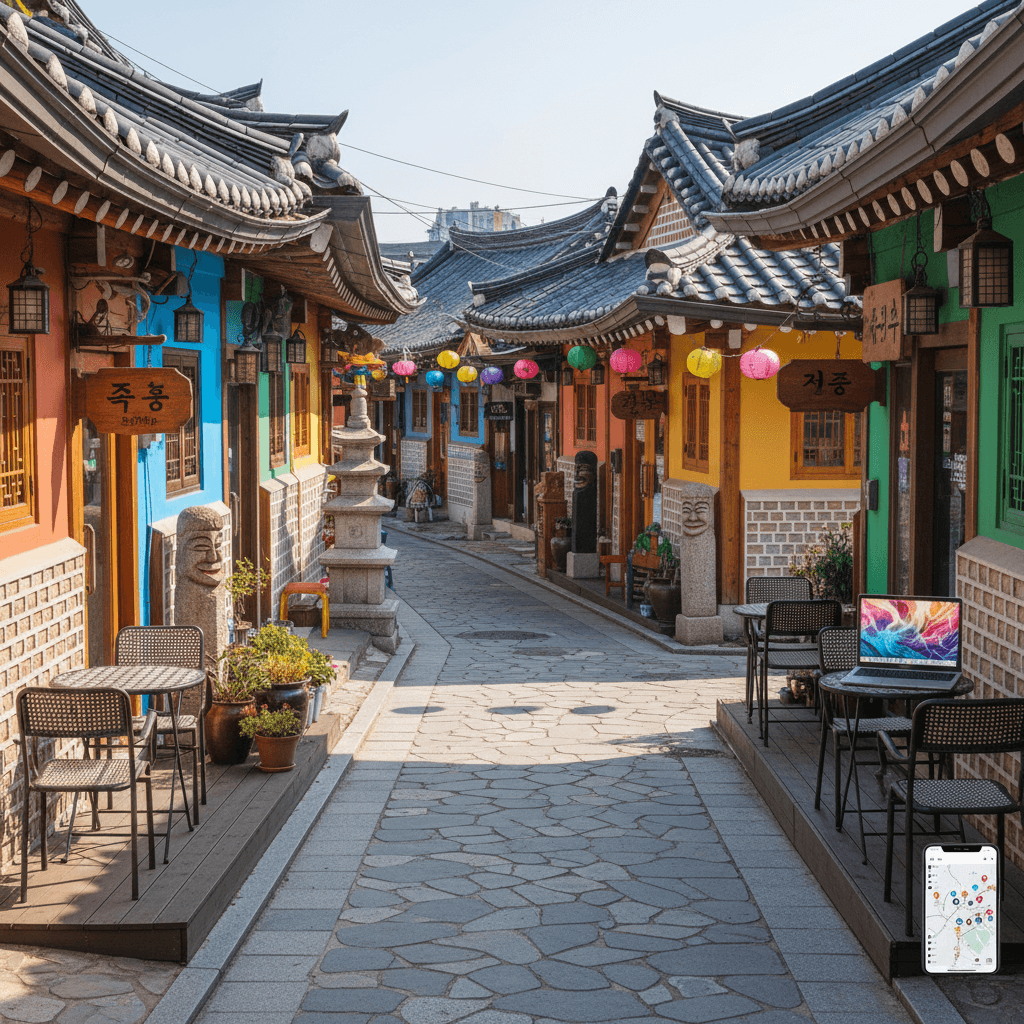
The vibe here is deeply meditative. You'll spend your mornings working from a renovated hanok (traditional house) cafe in Hwangnam-dong, and your golden hours cycling past lotus ponds and ancient astronomical observatories. It is a place of quiet productivity. While you won't find a massive nightlife scene or a high-octane social calendar, you will find a level of safety and serenity that is rare in the nomad world. Most travelers find that Gyeongju works best as a "deep work" retreat for one to two months rather than a permanent base.
The Cost of Living
Your won goes significantly further here than in the capital. You can live a very comfortable life on ₩2,200,000 to ₩3,000,000 per month, which covers a private studio, eating out frequently, and plenty of weekend exploration. Here is how the budget typically breaks down:
- Housing: A modern studio or one-bedroom apartment in central areas like Gyeongju Station ranges from ₩500,000 to ₩800,000. If you look toward the Bomun Lake outskirts, prices can drop to ₩400,000.
- Food: Local staples like kimbap or tteokbokki at Hwangnam Market cost between ₩3,000 and ₩7,000. A mid-range Korean BBQ dinner will run you about ₩20,000, while a high-end traditional course meal in a hanok starts around ₩40,000.
- Transportation: The city is incredibly bike-friendly. Renting a set of wheels for the day is about ₩10,000. Local buses are ₩1,200 per ride, and a monthly pass is roughly ₩50,000.
Where to Set Up Your Desk
Gyeongju doesn't have the big coworking chains like FastFive or WeWork. Instead, the "work" part of the nomad lifestyle happens in the city's spectacular cafe scene. The internet is blisteringly fast nationwide, and Gyeongju is no exception, with speeds often exceeding 100 Mbps.
- Hwangnam-dong: This is the heart of the action. It is packed with cafes that blend traditional architecture with high-speed Wi-Fi. It is the most walkable part of the city and perfect for solo travelers who want to be near the history.
- Bomun Tourist Complex: Located a bit further out by the lake, this area is pricier and more resort-focused. It is great if you want modern amenities and luxury hotels, but it lacks the authentic "old Korea" feel of the center.
- Bulguksa Area: For those seeking total isolation and proximity to the mountains. It is quiet and cheap, but you'll be reliant on buses to get to a grocery store or a variety of restaurants.
Practical Realities
Safety is a non-issue here. You can walk through the park at 2:00 AM without a second thought, and leaving your laptop on a cafe table while you grab a refill is standard practice. Healthcare is top-tier; Gyeongju Hospital has English-speaking staff for emergencies, and pharmacies are on almost every corner.
The biggest hurdle is the language. Outside of the main tourist sites, English proficiency is low. You will want Papago installed on your phone for translations and Kakao T for hailing taxis. If you're looking for a community, you might find the social scene a bit thin. Most nomads recommend joining Facebook groups like Digital Nomads Korea to connect with people in nearby Busan for weekend meetups. Gyeongju is for the nomad who is happy with their own company, a good book, and a bike to ride through the centuries.
The Budget Breakdown
Living in Gyeongju feels like a financial exhale compared to the intensity of Seoul. You can expect your monthly expenses to sit between ₩2 million and ₩3 million ($1,500 to $2,200 USD) for a comfortable lifestyle. While it isn't as dirt-cheap as rural Southeast Asia, the value for money is high considering the infrastructure and safety you get in return.
Rent is your biggest variable. In the heart of the action like Hwangnam-dong, a modern studio or a small one-bedroom apartment will run you ₩500,000 to ₩800,000. If you don't mind a short bus ride or bike commute, looking toward the outskirts or near Bomun Lake can drop those prices to around ₩400,000. Most nomads use apps like Zigbang or Dabang to scout listings, though Airbnb remains the easiest path for shorter stays.
Your daily spending tiers usually look like this:
- Budget (₩1.5M/month): Sticking to shared housing or older guesthouses, eating mostly street food like kimbap and tteokbokki for ₩3,000 to ₩7,000, and using the bus.
- Mid-range (₩2.2M/month): A private studio, a mix of cooking at home and hitting Korean BBQ spots where a meal costs ₩15,000 to ₩25,000, and plenty of cafe working sessions.
- Comfortable (₩3M+/month): A premium apartment, frequenting upscale hanok restaurants where dinners exceed ₩40,000, and taking taxis for most trips.
Connectivity and Workspace
You won't find a WeWork or a FastFive here. Gyeongju is a city of "work-from-cafe" enthusiasts. The internet is blisteringly fast, rarely dipping below 100 Mbps, so Zoom calls are never an issue. Local internet cafes near the Gyeongju National Museum or in the Bomun area charge about ₩2,000 per hour if you need a dedicated desk setup.
Most nomads prefer the local cafe culture. Many spots offer unlimited coffee refills or at least a very tolerant attitude toward someone sitting with a laptop for four hours. For data, grab a Holafly eSIM for about $20 to $50 a month, or visit a KT or SK Telecom shop near the station for a 20GB prepaid SIM for around ₩30,000.
Getting Around
The historic core is incredibly compact. Most people get by just fine on a bicycle, which you can rent for about ₩10,000 a day. It's the best way to see the royal mounds at Tumuli Park without dealing with traffic. For longer hauls, the bus system is reliable at ₩1,200 per ride, or you can grab a monthly pass for ₩50,000.
Taxis are affordable for quick hops across town. Use the Kakao T app to hail rides; the base fare starts around ₩3,000 and most cross-town trips stay under ₩6,000. If you're heading to Busan for a weekend of nightlife, the bus or train takes about 90 minutes and costs roughly ₩15,000.
Food and Social Life
Dining out is where Gyeongju shines. You can grab a massive bowl of bibimbap at Hwangnam Market for ₩8,000 or splurge on a traditional Silla-style banquet. The social scene is quiet, bordering on sleepy. There aren't many nomad-specific meetups, so travelers often join the Digital Nomads Korea Facebook group to see who is passing through the region.
If you're planning a long-term stay, keep in mind the 2025 digital nomad visa requirements. You'll need to prove an annual income of roughly ₩88 million. For most, a one or two month stint on a tourist entry is the sweet spot before the lack of big-city amenities starts to wear thin.
Hwangnam-dong: The Nomad’s Base
If you want to step out of your door and see 1,500 year old royal tombs instead of a convenience store, this is your spot. Hwangnam-dong is the cultural heartbeat of the city and where most remote workers settle. It’s walkable, bike-friendly, and packed with renovated hanoks that now serve as stylish cafes. Most nomads find the blend of ancient Silla history and modern coffee culture perfect for a deep-work retreat.
The vibe here is quiet and reflective. You won’t find a WeWork, but you’ll find plenty of "work-friendly" cafes with reliable 100 Mbps speeds. Travelers often say the lack of traditional coworking is actually a plus because it forces them to enjoy the scenery. Expect to pay ₩500,000 to ₩800,000 for a studio or a room in a traditional guesthouse. Just keep in mind that the weekend crowds can get thick near Hwangnidan-gil, so you’ll want a pair of noise-canceling headphones if you’re working on a Saturday afternoon.
- Rent: ₩500,000 to ₩800,000 per month
- Vibe: Historic, trendy, and highly walkable
- Best for: Digital nomads and solo travelers
Bomun Lake: Space for Families and Expats
For those moving with a family or anyone who needs more elbow room, the Bomun Tourist Complex is the go-to. It’s located a bit further out from the historic center, centered around a massive lake. It feels more like a resort district than a neighborhood, but it offers the modern amenities that the old town lacks. You’ll find larger apartments, better grocery stores, and plenty of green space for kids to run around.
Expats recommend this area because it’s easier to find modern housing with updated appliances. While it’s pricier than the city center, the trade-off is easy access to the Gyeongju World amusement park and the lake’s walking trails. Public transport is reliable here; a ₩1,200 bus ride gets you into the historic core in about 20 minutes. If you’re staying long-term, look for rentals on the Zigbang or Dabang apps, where you can find modern 1BR units for around ₩600,000.
- Rent: ₩400,000 to ₩700,000 per month
- Vibe: Modern, spacious, and family-oriented
- Best for: Expats and families
Bulguksa Foothills: The Soloist’s Retreat
If your goal is total isolation and peace, look toward the outskirts near Bulguksa Temple. This isn't a traditional neighborhood so much as a collection of rural stays and pension houses tucked into the mountains. It’s significantly cheaper than the city center, with some rural stays going for as low as ₩400,000 a month if you negotiate a long-term rate.
You’ll be far from the cafe scene, so you’ll need a local SIM like KT or SK Telecom to tether your data, as public Wi-Fi is spotty in the woods. Solo travelers who enjoy hiking and meditation thrive here. However, walkability is low. You’ll likely want to rent a scooter for about ₩20,000 a day or master the Kakao T app to call taxis for supply runs. It’s a bit of a trek, but the mountain air and the temple bells at dawn are hard to beat.
- Rent: ₩400,000 to ₩600,000 per month
- Vibe: Serene, rural, and isolated
- Best for: Solo travelers seeking quiet
Gyeongju Station Area: The Budget Core
For those watching their ₩2 million monthly budget closely, the area around the old Gyeongju Station (now a cultural space) offers the best value. It’s less "Instagrammable" than Hwangnam-dong, but it’s where the locals actually live and shop. You’ll find the best prices on street food here, with kimbap or tteokbokki at the local markets costing between ₩3,000 and ₩7,000.
This is the most practical place to stay if you plan on taking day trips. You’re close to the main bus hubs and the central market. While it lacks the "museum without walls" charm of the tomb parks, it’s the most functional part of the city. Most budget-conscious nomads stay in small studios here and bike ten minutes into the historic zones when they want to explore or find a nice cafe to work from.
- Rent: ₩450,000 to ₩650,000 per month
- Vibe: Practical, local, and affordable
- Best for: Budget-conscious travelers
Connectivity in the Museum Without Walls
You won't find the massive, multi floor coworking hubs like FastFive or WeWork that dominate the Seoul skyline here. Gyeongju operates at a different speed. However, the lack of dedicated corporate spaces doesn't mean you'll be struggling for a signal. South Korea's infrastructure is legendary, and Gyeongju is no exception. You can expect speeds of 100+ Mbps as a standard, even in the more traditional areas. Whether you're uploading video or hopping on a Zoom call from a renovated hanok, the connection is rarely the bottleneck.
Mobile Data and SIMs
Most nomads landing in Korea opt for an eSIM before they even clear customs. Holafly is a popular choice, offering unlimited data for roughly $20 to $50 a month depending on your stay. If you prefer a local physical SIM, head to a KT or SK Telecom storefront near Gyeongju Station. A prepaid card with 20GB of data usually runs about ₩30,000. Having a local number is helpful for apps like Kakao T, though many travelers find the data-only eSIM sufficient for a shorter stint.
The Cafe Working Culture
In Gyeongju, your "office" will almost certainly be a cafe. The city has a deep seated coffee culture where it's perfectly acceptable to camp out with a laptop for several hours. Many spots even offer unlimited refills if you're staying for the afternoon.
- Hwangnam-dong: This is the heart of the action. You'll find dozens of cafes tucked into traditional buildings. It's aesthetically stunning, but it gets crowded on weekends. Most nomads stick to the quieter side streets near Tumuli Park for a better workflow.
- Bomun Lake: If you need a more modern setting with reliable AC and large tables, the cafes around the tourist complex are your best bet. They're pricier but generally have more "work friendly" seating than the low tables found in historic tea houses.
- Internet Cafes (PC Bangs): If you need a high spec setup or just a cheap place to grind for an hour, local internet cafes near the Gyeongju National Museum charge around ₩2,000 per hour. They're geared toward gamers, but the speeds are unbeatable.
Digital Nomad Logistics
Living here requires a bit more self reliance than in the bigger cities. Since there isn't a central nomad hub to facilitate networking, most expats use Facebook groups like Digital Nomads Korea to find meetups in nearby Busan when they need a social fix. For daily logistics, you'll want a few specific apps on your phone to make life easier.
- Kakao T: The gold standard for hailing taxis. Since English isn't widely spoken, being able to pin your destination in the app is a lifesaver.
- Papago: This is the most accurate translation app for Korean. It handles nuances much better than other global competitors.
- Zigbang or Dabang: Use these to scout local apartment prices. A decent studio in a central area usually costs between ₩500,000 and ₩800,000 per month.
The Visa Reality
If you're looking to stay long term, you'll need to prove an annual income of at least twice South Korea’s GNI per capita (around ₩85-90 million). For those who meet the criteria, it allows for a year of residency with the option to extend. Most short term nomads simply utilize the 90 day tourist visa-free entry, which is plenty of time to soak in the Silla history while keeping up with your inbox.
Travelers often suggest a stay of one to two months. It's the perfect amount of time to enjoy the reflective pace before the lack of a dedicated coworking community starts to feel a bit isolating. If you value a quiet morning walk through ancient tombs before starting your workday, Gyeongju is hard to beat.
Gyeongju is widely considered one of the safest destinations in the world for remote workers. Because the city maintains a smaller, more traditional atmosphere compared to the frantic energy of Seoul, the pace of life is slower and crime is remarkably low. You can comfortably walk through the historic core or cycle past the royal tombs at night without a second thought. While petty theft is rare, it is still smart to keep an eye on your gear in the busier tourist pockets of Hwangnam-dong.
Staying Safe on the Streets
The city is exceptionally well lit, but if you are exploring the outskirts near Bulguksa Temple or the Bomun Lake area after dark, stick to the established paths. The most common "danger" you will face is likely a uneven stone walkway or a stray cyclist on the narrow alleys of the historic district. If you ever find yourself in a pinch, the local police are approachable and efficient. You can reach the police at 112 and fire or ambulance services at 119. For non-emergencies specifically tailored to visitors, the tourist police can be reached at 82-2-3780-0561; they usually have English speakers available to help with translations or minor disputes.
Healthcare Infrastructure
South Korea's healthcare system is world class, and Gyeongju is no exception. While it doesn't have the massive "medical city" complexes found in Busan, Gyeongju Hospital is a modern facility capable of handling most medical needs. It is the go-to spot for nomads who need urgent care, as they typically have staff members who can communicate in English during emergencies. For routine issues like a cold or a minor stomach bug, you don't need a hospital. Look for a local pharmacy (yak-guk), which are ubiquitous near Gyeongju Station and in central shopping areas. These are easily identified by a prominent green or red "P" or the Korean characters for pharmacy.
Practical Health Tips for Nomads
- Insurance: Most travelers use international providers like SafetyWing or World Nomads. If you are staying long term on the new digital nomad visa, you may eventually be required to integrate into the National Health Insurance (NHI) system.
- Language Gaps: Outside of the main hospitals, English proficiency among medical staff can be hit or miss. Download Papago before you go; it is much better at translating medical symptoms into Korean than other apps.
- Pharmacy Hours: Most pharmacies close by 8:00 PM or 9:00 PM, though some near major transit hubs stay open later.
- Water Safety: Tap water is technically safe to drink, but most locals and expats prefer using a filtered pitcher or buying bottled water, which is cheap and available at any CU or GS25 convenience store.
Air Quality and Environment
Like much of East Asia, Gyeongju can experience "yellow dust" or high fine dust (PM 2.5) levels, particularly in the spring months of March and April. Most nomads keep an eye on the AirVisual app. On high dust days, you will see locals wearing KF94 masks, which are sold at every convenience store for about ₩1,500. It is a good idea to follow suit if you have sensitive lungs or plan on spending the day biking between the Silla Dynasty sites.
Overall, your biggest health hurdle will likely be the summer humidity in July and August, where temperatures frequently hit 32°C. Stay hydrated, take advantage of the air-conditioned cafes near the Gyeongju National Museum, and you will find the city to be a very low-stress environment for maintaining your well-being.
The Logistics of the Living Museum
Moving through Gyeongju feels less like a commute and more like a slow stroll through an open air gallery. Because the city lacks a subway system, your daily rhythm will depend on your feet, two wheels, or the local bus network. Most nomads find the historic core incredibly compact, making it possible to base yourself in Hwangnam-dong and rarely need a motor for your daily coffee run or grocery trip.
Biking and Walking
Gyeongju is arguably the most bike friendly city in South Korea. The terrain is mostly flat, and the paths winding through Tumuli Park and toward the Gyeongju National Museum are wide and well maintained. You can rent a sturdy bicycle for about ₩10,000 per day, which is the preferred way for expats to explore the royal burial mounds without dealing with parking.
For those who prefer walking, the central areas are highly navigable. You can easily trek from the historic hanok villages to the central markets. Just keep an eye on the weather; while spring and fall are perfect for walking, the July and August monsoon season makes a bike or a long walk a humid, soggy challenge.
Public Buses and Shuttles
When you need to head further out, like to the Bomun Tourist Complex or the foothills of Bulguksa Temple, the bus system is your best bet. It is efficient and affordable at ₩1,200 per ride. If you are staying for a month or more, nomads recommend picking up a transit pass for roughly ₩50,000 to simplify your tap on, tap off life.
- Bus 10 and 11: These are the tourist staples. They run in a loop connecting the city center, Bulguksa, and Bomun Lake.
- Bus 700: This is the specialized route that links the Singyeongju KTX Station to the main tourist hubs.
Ride-Hailing and Scooters
Don't bother trying to hail a cab on the street in quieter neighborhoods. Everyone here uses Kakao T. It is the gold standard for ride-hailing in Korea. A short trip across town usually lands between ₩3,000 and ₩6,000. If you want something more agile, local shops rent motorized scooters for about ₩20,000 per day, though these are mostly used by weekenders and can be a bit overkill for the narrow alleys of the historic center.
Regional Connections
Getting into Gyeongju from other parts of Korea is straightforward, though you have two main options depending on your budget and speed requirements. The high speed KTX train stops at Singyeongju Station, which is about a 20 minute bus or taxi ride from the city center. If you are coming from Seoul, the trip takes about 3 hours.
- From Busan: Bus or train from Busan Station or Intercity Bus Terminal takes about 50 min to 1.5 hours.
- Intercity Buses: The Gyeongju Intercity Bus Terminal is centrally located and connects you to smaller nearby towns for a few thousand won.
Travelers often suggest that while the city is quiet, its proximity to Busan makes it easy to escape for a weekend of high energy nightlife before retreating back to the silence of the Silla tombs.
While South Korea is a global leader in connectivity, Gyeongju operates at a different frequency than the high octane energy of Seoul. You will find that Korean is the absolute authority here. Outside of major tourist hubs like the Gyeongju National Museum or the high end hotels around Bomun Lake, English proficiency is generally low. Most shop owners and restaurant staff in the historic Hwangnam-dong district will rely on gestures and basic phrases, though their hospitality is legendary.
The Digital Toolkit
You cannot survive Gyeongju effectively without Papago. While most travelers use Google Translate, Papago is the gold standard for Korean nuance and image translation. It is particularly handy for deciphering menus at traditional Silla style eateries where English translations are often clunky or nonexistent. For getting around, download Kakao T. It is the local equivalent of Uber and works seamlessly for summoning taxis, even if you don't speak a word of the language. Just make sure you have your destination's name in Hangul (Korean script) ready to show the driver.
Essential Phrases for Your Stay
Learning a few phonetic basics goes a long way in building rapport with locals. Start with these:
- Annyeonghaseyo: Hello (polite). Use this every time you enter a cafe or guesthouse.
- Gamsahamnida: Thank you. It is the most important word in your vocabulary here.
- Yeogi juseyo: "This, please." Use this while pointing at a menu item.
- Olmayeyo?: How much is it?
Communication Etiquette
Gyeongju is a city that values traditional manners. Nomads often find that a slight bow when greeting or thanking someone opens doors that English never could. When paying for your ₩8,000 bibimbap at Hwangnam Market, try to hand over your card or cash with both hands. It is a small gesture of respect that locals deeply appreciate. Also, keep your voice down on public buses; Gyeongju is a quiet town, and loud phone conversations are generally frowned upon in shared spaces.
Staying Connected
The language barrier is significantly lowered when you have a constant data connection. Most expats recommend picking up a KT or SK Telecom prepaid SIM card at Gyeongju Station for around ₩30,000. If you want to skip the physical kiosk, Holafly eSIMs are a popular choice for immediate unlimited data, usually costing between $20 and $50 depending on your stay length. You will find that even the smallest traditional tea houses offer 100+ Mbps Wi-Fi, making it easy to use translation apps on the fly.
Socializing and Networking
If you are looking for a "nomad scene," you won't find a centralized hub here like you would in Busan or Seoul. There are no major coworking chains like WeWork, so most social interaction happens in "work friendly" cafes. Travelers often say that the best way to meet people is to join regional Facebook groups like Digital Nomads Korea. If you need a break from the quiet, many nomads take the 1.5 hour bus or train to Busan for weekend meetups before returning to Gyeongju's more reflective pace.
The Digital Nomad Visa (Workcation Visa) requires proof of an annual income of roughly ₩88 million, which is quite high. If you are here on a standard tourist entry, you will find the 90 day window is more than enough to soak in the history. Just remember that in Gyeongju, patience is as important as your data plan. The city moves slower, and the language barrier is just part of the immersion.
The Sweet Spot: When to Book Your Stay
Timing your arrival in Gyeongju is the difference between working from a sun-drenched cafe overlooking ancient tombs and being trapped indoors by a relentless monsoon. Most nomads agree that April to May and September to October are the golden windows. During these months, temperatures hover comfortably between 20°C and 25°C, making it easy to bike between Bulguksa Temple and your workspace without breaking a sweat.
Spring brings the famous cherry blossoms, usually peaking in early April. It's visually stunning but expect the historic core around Hwangnam-dong to get crowded with weekenders from Seoul. If you prefer a quieter vibe for deep work, the autumn foliage in October is just as spectacular. The air is crisp, the humidity drops, and the royal burial mounds in Tumuli Park turn a deep, weathered gold.
Survival Guide: Summer and Winter
If you're planning a mid-year stay, be ready for the heat. July and August are notoriously hot and humid, with temperatures often climbing above 32°C. This is also monsoon season. You'll deal with heavy downpours and the occasional typhoon, which can put a dampener on exploring the outdoor "museum without walls." Most travelers recommend sticking to indoor museum cafes or well-air-conditioned spots near the Gyeongju National Museum during these months.
Winter, from December to February, is a different beast. It's biting cold and dry, with lows dipping to -5°C. While the sight of snow dusting the traditional hanok roofs is beautiful, the city gets very quiet. Since Gyeongju lacks the high-energy indoor nightlife of Busan or Seoul, those short, freezing days can feel a bit isolating if you're traveling solo. However, if you're on a budget, this is when you'll find the best deals on long-term guesthouse stays.
Seasonal Checklist for Nomads
- Spring (March-May): Best for outdoor "cafe hopping" and biking. Pack light layers and book accommodation early if you're arriving during the cherry blossom peak in April.
- Summer (June-August): High humidity and heavy rain. You'll want a place with a strong AC unit. Use the Papago app to check local weather alerts for heavy rain or typhoons.
- Fall (September-November): Ideal for hiking around Namsan Mountain. The weather is stable, dry, and perfect for sunset views over Donggung Palace.
- Winter (December-February): Quiet and cold. Many nomads find this the best time for deep focus, provided they stay near the city center where amenities remain open.
The Cost of Comfort
While the weather dictates your mood, your budget dictates your stay. Gyeongju is significantly more affordable than the capital. Expats living in the region suggest a monthly budget of ₩2,000,000 to ₩3,000,000 to live well. You can find a decent studio in the central districts for ₩500,000 to ₩800,000, while a meal of street food like kimbap or tteokbokki will only set you back about ₩3,000 to ₩7,000.
If you're eyeing the digital nomad visa, keep in mind the steep income requirement of roughly ₩88,000,000 per year. For those just passing through on a tourist visa, the city is a low-stress environment where your money goes much further than it would in Seoul. Just remember to pack for the season; a heavy parka for January or a sturdy umbrella for July are non-negotiable items in this part of the peninsula.
The Nomad Lifestyle in Gyeongju
Living in Gyeongju feels like taking a deep breath. While Seoul is a frantic sprint, this city is a slow, methodical walk through history. Most nomads find that the lack of high-rise office buildings and massive coworking chains actually boosts their focus. You won't find a WeWork here, but the cafe culture is elite. Local spots near the Gyeongju National Museum or around Bomun Lake offer lightning-fast internet and a "stay as long as you like" attitude that makes them perfect makeshift offices.
The social scene is quieter than what you'll find in Busan or Seoul. There aren't many dedicated nomad meetups, so travelers often join regional Facebook groups like Digital Nomads Korea to find community. If you need a night of clubbing or a massive expat crowd, you'll likely want to hop on a bus to Busan for the weekend. Gyeongju is for the season of your life where you want to get work done, ride a bike past ancient tombs, and enjoy a ₩3,000 plate of street food in peace.
Cost of Living Breakdown
Your money goes significantly further here than in the capital. A comfortable monthly budget usually sits between ₩2 million and ₩3 million ($1,500 to $2,200 USD). This covers a private studio, plenty of dining out, and your transport costs.
- Budget Tier (₩1.5M): Shared housing or modest guesthouses, heavy reliance on street food like tteokbokki and kimbap (₩3,000 to ₩7,000 per meal), and local buses.
- Mid-Range Tier (₩2.2M): A private studio in a central area, a mix of home cooking and Korean BBQ dinners (₩15,000 to ₩25,000), and frequent cafe work sessions.
- Comfortable Tier (₩3M+): A modern apartment near Bomun Lake, frequenting upscale hanok restaurants (₩40,000+), and using taxis or rented scooters for daily transit.
Where to Set Up Base
Choosing a neighborhood in Gyeongju is about balancing convenience with the "museum without walls" experience. The city is compact, so you're never truly isolated, but each pocket has a different energy.
Hwangnam-dong
- Best for: Nomads and solo travelers who want to be in the heart of the action.
- Rent: ₩500,000 to ₩800,000 for a studio or guesthouse stay.
- The Vibe: You're right next to Tumuli Park. It's walkable, filled with aesthetic cafes, and has the most "authentic" feel, though tourist crowds can get thick on weekends.
Bomun Tourist Complex
- Best for: Families or those who prefer modern amenities and lakeside views.
- Rent: ₩400,000 to ₩600,000 for outskirts apartments, though hotels are pricier.
- The Vibe: It feels like a resort town. It's less "old world" but offers better access to large grocery stores and wide, paved walking paths.
Connectivity and Logistics
South Korea's internet is legendary, and Gyeongju is no exception. You can expect speeds of 100+ Mbps in almost any cafe. If you need a dedicated desk, look for local internet cafes (PC Bangs) which cost about ₩2,000 per hour. For mobile data, most nomads pick up a Holafly eSIM for around $20 to $50 a month, or a local KT/SK Telecom prepaid SIM for ₩30,000 which includes 20GB of data.
Getting around is simple. The historic core is incredibly bike-friendly; you can rent a bike for ₩10,000 a day and see almost every major site. For longer trips, the Kakao T app is the standard for hailing taxis, with base fares starting around ₩3,000. If you're heading to Seoul, the KTX high-speed train will get you there in about 3 hours.
Practical Essentials
- Visa Requirements: If you're eyeing the official Digital Nomad Visa, be aware it requires proof of an annual income around ₩88 million.
- Banking: Expats recommend using Wise or KakaoBank once you have your local registration, though most major shops and restaurants accept international credit cards.
- Language: English isn't widely spoken outside of major tourist sites. Download Papago for translations; it's far more accurate for Korean than Google Translate.
- Best Time to Visit: Aim for April to May for cherry blossoms or September to October for the fall colors. Avoid July and August unless you enjoy extreme humidity and monsoon rains.
Need visa and immigration info for South Korea?
🇰🇷 View South Korea Country GuideHidden Gem
Worth the effort