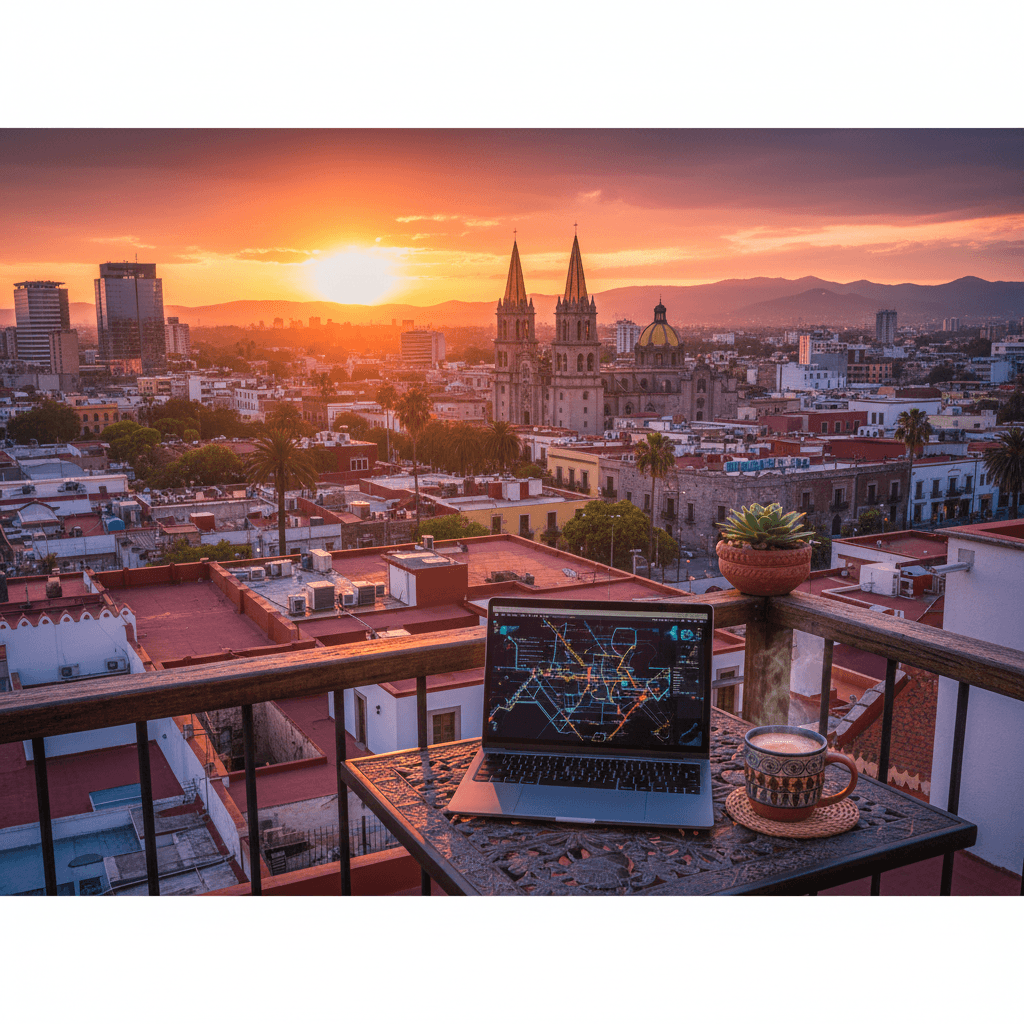
Guadalajara
🇲🇽 Mexico
The Silicon Valley of Mexico with a Soul
Guadalajara is where Mexico's future crashes into its past. While Mexico City gets the global headlines, Tapatíos (as locals are called) have quietly built a tech powerhouse that feels more like a collection of villages than a concrete jungle. It's the birthplace of mariachi and tequila, but today you're just as likely to hear the hum of a startup pitch as you are the strum of a guitar.
The vibe here is noticeably slower than the capital. People actually stop to talk to you. The city doesn't demand your attention; it invites you to sit in a park with a $2 torta ahogada and watch the afternoon light hit the pink stone of the Cathedral. Nomads often come for a week and stay for three months because the cost of living is roughly 20% lower than Mexico City, yet the fiber internet is just as fast.
Where to Plant Your Flag
Choosing a neighborhood defines your experience here. Most remote workers gravitate toward the western side of the city where the infrastructure is most reliable.
- Colonia Americana: This is the undisputed heart of the nomad scene. It's walkable, filled with street art, and centered around Avenida Chapultepec. You'll find the best concentration of third wave coffee shops and nightlife here, though it can get loud on weekends.
- Providencia: If you want manicured parks, high end gyms, and a sense of "luxury" safety, this is the spot. It feels modern and polished, though you'll lose some of that gritty Mexican charm.
- Santa Tere: For those on a tighter budget who want an authentic local life. It's famous for its massive traditional market and incredible street food, though you'll need better Spanish skills to navigate daily life here.
- Chapalita: A leafy, residential neighborhood that feels like a quiet suburb but stays walkable. It’s popular with families and long term expats who want peace and quiet without being isolated.
The Daily Grind and Digital Life
Work culture in Guadalajara is thriving. You'll see locals and foreigners alike camped out at The House Cafe or Nevermind. Fiber optic internet is the standard in most modern apartments, usually hitting speeds between 50 and 200 Mbps. If you're renting an older place in Santa Tere, always ask for a speed test before signing, as some older buildings still struggle with signal penetration.
Coworking is affordable compared to US or European standards. A day pass at Workósfera will run you about $10, while a dedicated desk at Colabora usually costs around $100 to $150 per month. Most spaces host weekly mixers or hackathons, making it easy to plug into the local tech community.
Monthly Budget Breakdown
Your wallet goes a long way here, especially if you eat like a local. Tacos at Mercado Libertad cost about $1 to $3, while a high end dinner in Providencia might hit $30. Here is what to expect for monthly expenses:
- Budget ($1,200 to $1,800): A modest studio in Santa Tere, plenty of street food, and using the $0.50 light rail or buses to get around.
- Mid-range ($1,800 to $2,500): A nice 1BR in Colonia Americana, frequent $3 to $5 Uber rides, a coworking membership, and eating out at mid-tier cafes daily.
- Comfortable ($2,500 to $3,500): A luxury apartment in Andares or Providencia, upscale dining, and weekend trips to Tequila or Lake Chapala.
Navigating the City
Public transit is the city's Achilles' heel. The light rail is clean but limited in reach, and buses can be confusing for newcomers. Most nomads simply rely on Uber or Didi. Rides are plentiful and rarely cost more than $5 within the city center. For short hops, the Muvo app offers scooters and bikes for about $1 per hour.
Safety is a common question. While the state of Jalisco has its challenges, the central neighborhoods frequented by nomads are generally safe during the day. Petty theft happens, so keep your phone tucked away while walking. Stick to well lit areas in Americana and Providencia at night, and you'll find the city is much more welcoming than the news headlines suggest.
When to Go
The best time to visit is the dry season from November to May. The weather is spectacular, with daytime highs around 24 to 28°C and cool, crisp evenings. Avoid the summer months if you hate humidity; June through October brings heavy afternoon rain that can turn the streets into small rivers, though the lightning storms over the valley are a sight to behold.
The Price of the Tapatío Lifestyle
Guadalajara sits in a sweet spot for nomads who want the big city energy of Mexico City without the eye watering rent prices. It's significantly more affordable than the capital, yet it keeps you plugged into a sophisticated tech ecosystem. Most people find they can live a high quality life here for about $1,800 to $2,500 a month, which covers a nice apartment in a trendy area, daily cafe visits, and plenty of weekend trips to Tequila or Lake Chapala.
If you're on a tighter budget, sticking to $1,200 to $1,800 is doable if you shop at local markets like Santa Tere and use the light rail. On the flip side, if you want a luxury high rise in Andares with a private gym and upscale dining every night, you'll want to budget closer to $3,500.
Monthly Budget Estimates
- Budget Tier ($1,200 to $1,800): Best for those sharing a flat or living in Santa Tere. Includes street food meals for $2, bus commutes, and basic groceries.
- Mid-Range Tier ($1,800 to $2,500): The standard nomad experience. Covers a private 1BR in Colonia Americana, daily coworking at Nevermind, frequent Uber rides, and dining out at spots like The House Cafe.
- Comfortable Tier ($2,500 to $3,500): Includes luxury rentals in Providencia, premium coworking desks, and high end dinners in Zapopan.
Housing and Neighborhoods
Rent is your biggest variable. Most nomads gravitate toward Colonia Americana because it's walkable and packed with coffee shops. You'll pay a premium here, with studios ranging from $400 to $700 and 1BR apartments hitting $600 to $1,000. It's noisy, but you're in the heart of the action.
For a quieter, more polished vibe, look at Providencia. It's safer and greener, though you'll need a higher budget as rents often start at $700. If you want a more authentic, "local" feel that's easy on the wallet, Santa Tere or Chapalita offer great value. In these areas, you can often snag a decent place for $300 to $500, though you might be further from the main coworking hubs.
Food, Drink, and Socializing
Eating out is one of the best parts of living here. You can grab a couple of tacos or a torta ahogada at Mercado Libertad for under $3. If you prefer working from a cafe, a flat white and a light lunch will usually set you back about $8 to $12. Even upscale dinners in the trendy districts rarely cross the $30 mark per person unless you're ordering top shelf tequila.
The social scene is centered around Avenida Chapultepec. It's the go to spot for bars and live music. Most nomads find that a night out with drinks and snacks costs around $20 to $40, depending on how many craft beers or cocktails you're ordering.
Connectivity and Transport
Reliable internet is a non negotiable, and Guadalajara delivers. Fiber connections are common, typically offering 50 to 200 Mbps. A monthly pass at a dedicated coworking space like Workósfera or Colabora costs between $100 and $200. If you're working from home, always ask your landlord for a Speedtest screenshot before signing a lease.
Getting around is cheap but can be frustrating. The public buses and light rail are only $0.50 per ride, but they're often crowded. Most expats and nomads rely on Uber or Didi, where a typical cross town ride costs between $2 and $5. For a local SIM card, Telcel is the reliable choice; you can get a 50GB data package for about $20 a month, which is plenty for tethering in a pinch.
Practical Essentials
- Healthcare: High quality care is available at places like Hospital Puerta de Hierro. A standard doctor's visit is affordable, and pharmacies like Farmacias Similares offer cheap generics.
- Groceries: Expect to spend $200 to $400 a month. Shopping at local mercados is significantly cheaper than the high end supermarkets like City Market.
- Tipping: A 10% to 15% tip is standard in restaurants.
The Nomad Hub: Colonia Americana
If you want to be in the thick of it, this is where you land. Colonia Americana is the heartbeat of the city for remote workers, recently recognized globally for its blend of mansion-lined streets and edgy, creative energy. It is incredibly walkable, centered around the Avenida Chapultepec strip where coffee shops turn into mezcal bars after sunset.
- Rent: Expect to pay $600 to $1,000 for a 1BR. It is the most expensive area for what you get, but you are paying for the lifestyle.
- Vibe: Street art, craft breweries, and a high density of English speakers.
- Best for: Working from Nevermind or Workósfera during the day and hitting a speakeasy at night.
- The Downside: It gets loud on weekends. If you are sensitive to noise, look for a spot a few blocks away from Chapultepec.
The Professional Expat Choice: Providencia
Providencia feels like the polished, grown up version of the city. It is where you go if you want tree lined streets, high end gym memberships, and manicured parks. Many expats who have been in Mexico for a while move here to escape the grit of the city center while keeping access to the best dining in town.
- Rent: Prices for modern 1BR apartments range from $700 to $1,200.
- Vibe: Corporate but lush. It is home to many of the "Silicon Valley of Mexico" tech workers.
- Best for: Jogging in Bosque Los Colomos and dining at upscale spots along Punto Sao Paulo.
- The Downside: It lacks that "old Mexico" feel. You could be in almost any modern global city here.
Families and Long-Termers: Chapalita
Chapalita is often described as a garden colony. It has a distinct suburban feel but remains surprisingly walkable, which is a rarity in Guadalajara. It is a favorite for families or nomads who want a quiet home base without being isolated from the action.
- Rent: Very reasonable, often $300 to $500 for older, spacious units.
- Vibe: Relaxed and residential with a local, community focused atmosphere.
- Best for: Sunday morning walks to the local rotunda for art markets and coffee at The House Cafe.
- The Downside: It is on the outskirts. You will rely on Uber or Didi (usually $3 to $5) to get to the nightlife in Americana.
Budget Solo Travelers: Santa Tere
For those who want an authentic experience without the "nomad bubble" markup, Santa Teresita (or Santa Tere) is the move. It is a traditional barrio that has remained largely resistant to gentrification, though it is only a 15 minute walk from the trendy cafes of Americana.
- Rent: You can find basic studios for $300 to $500.
- Vibe: Gritty, bustling, and unpretentious. The streets are filled with workshops and family owned cantinas.
- Best for: Eating $1 to $3 tacos at the local market and living like a local.
- The Downside: The infrastructure is older. You will want to verify the internet speed with your landlord before signing anything, as fiber isn't as guaranteed here as it is in Providencia.
Upscale Living: Zapopan and Andares
If your budget is flexible and you prefer luxury towers over historic architecture, the Andares area in Zapopan is the peak of Guadalajara luxury. It is essentially a city within a city, built around one of the most high end shopping malls in Latin America.
- Rent: Luxury apartments start at $1,200 and can go much higher.
- Vibe: Ultra modern, safe, and exclusive.
- Best for: High security, premium coworking spaces like Colabora, and easy access to international brands.
- The Downside: It is very car dependent. Walking isn't really an option here, and you will spend a lot of time in traffic if you try to visit the historic center.
The Silicon Valley of Mexico
Guadalajara earned its tech reputation for a reason. While Mexico City gets more global press, GDL is where the real engineering happens, thanks to a heavy presence from giants like Intel and Oracle. For nomads, this translates to some of the most reliable infrastructure in the country. You can expect fiber optic speeds averaging 50 to 200 Mbps in most modern apartments and coworking hubs. Even on the go, 4G and 5G coverage is solid, with mobile speeds hitting around 58 Mbps, making tethering a viable backup during power flickers.
The city's work culture is a mix of high-energy startup vibes and traditional Mexican hospitality. Most nomads find the pace here more manageable than the capital. You'll see locals and expats alike parked in cafés for hours, though it's good form to keep the coffee and snacks flowing if you're taking up a table. If you need a dedicated setup, the coworking scene is mature, professional, and significantly cheaper than what you'd find in the U.S. or Europe.
Top Coworking Spaces
- Nevermind: Located in the heart of the action, this is the gold standard for many. It's known for high-speed reliability and a community that actually talks to each other. Monthly private offices or dedicated desks range from $150 to $300.
- Workósfera: A great pick if you aren't ready to commit to a full month. Their day passes are roughly $10, giving you access to a mix of open desks and private nooks in an environment that feels more like a creative studio than a corporate office.
- Colabora: This is the budget-friendly choice for long-term stays. At around $100 a month, it's one of the best values in the city and frequently hosts workshops that help you network with local entrepreneurs.
Laptop-Friendly Cafés
If you prefer the hum of a coffee shop, The House Cafe is a local favorite. The WiFi is steady, the brunch is excellent, and the staff won't hover if you're there for a long session. Just remember to tip well, usually 10 to 15 percent, to keep the nomadic reputation in good standing. Colonia Americana is packed with similar spots where you can find a corner, plug in, and work for the price of a few lattes.
Connectivity Tips and Setup
Don't just take a landlord's word for it when booking an Airbnb or a long-term rental. Always ask for a current Speedtest screenshot before signing anything. While fiber is common in Colonia Americana and Providencia, older buildings in Santa Tere might still be catching up.
- SIM Cards: Grab a Telcel or AT&T SIM as soon as you land. You can find them at the airport or any OXXO convenience store. A 50GB data package will run you about $20 a month.
- Backup Power: While the grid is generally stable, summer rainstorms can cause brief outages. A decent power bank for your phone and a fully charged laptop should get you through most hiccups.
- Digital Tools: Most expats rely on Wise or Revolut for managing pesos without getting crushed by bank fees. For local communication, WhatsApp is non-negotiable; everyone from your landlord to your taco guy uses it.
Ultimately, Guadalajara offers a professional environment without the sterile feel of a typical tech hub. You can finish a deep-work session at a high-end coworking space and be eating $1 tacos at Mercado Libertad or watching a Lucha Libre match twenty minutes later. It's that balance of world-class connectivity and authentic local life that keeps the nomad community growing.
Staying Safe in the City
Guadalajara feels significantly more relaxed than the frantic energy of Mexico City, but it requires the same level of urban awareness. Most nomads stick to Colonia Americana and Providencia, where the streets are walkable and the vibe is generally secure. While the city has a reputation for cartel activity, these issues rarely touch the expat or tourist circles. You're far more likely to deal with petty theft if you leave a laptop unattended at a cafe or a phone on a table while dining outdoors.
Avoid wandering into the outskirts or unfamiliar residential zones at night, especially alone. Stick to well lit areas like Avenida Chapultepec after dark. If you're headed home late, don't rely on the public buses. Use Uber or Didi instead. These rides usually cost between $2 and $5 and provide a digital trail that adds a layer of security you won't get with street taxis.
Local authorities provide a specific Tourist Police line at 073 for non emergencies. For anything urgent, the national emergency number is 911. Most residents suggest keeping a low profile, avoiding flashy jewelry, and using ATMs inside banks or malls rather than those on the street.
Healthcare and Medical Services
The quality of medical care in Guadalajara is excellent, often rivaling international standards at a fraction of the price. Many nomads actually travel here specifically for dental work or minor surgeries. Hospital Puerta de Hierro is the gold standard for private care, featuring English speaking staff and modern equipment. Hospital Real San Jose is another top tier option frequently recommended by the expat community in Zapopan.
For minor ailments like a cold or a stomach bug, you don't need a full hospital visit. Look for a Farmacia Similares or Farmacia del Ahorro. These often have a small doctor's office attached where a consultation costs about $2 to $5. They can write prescriptions on the spot that you can fill immediately at the counter.
- Emergency Number: 911
- Tourist Assistance: 073
- Top Hospital: Hospital Puerta de Hierro
- Pharmacy Consultation: $2 to $5
Practical Wellness Tips
The most common health issue for newcomers is "Moctezuma's Revenge." Even if you're eating at high end spots in Providencia, avoid the tap water entirely. Stick to bottled water, which is cheap and available at every Oxxo. Most locals even use purified water to brush their teeth, though that's a personal preference based on your stomach's sensitivity.
If you're planning to stay long term, getting a local insurance plan or a nomad specific policy is a smart move. While out of pocket costs for a standard doctor's visit might only be $30 to $50, a major hospital stay can climb quickly. Always keep a digital copy of your insurance card and a list of local emergency contacts on your phone.
Common Costs for Health & Safety
- Private GP Visit: $30 to $60
- Specialist Consultation: $50 to $90
- Antibiotics: $10 to $20
- Monthly Health Insurance (Local): $60 to $120
The Ride-Share Reliance
While Guadalajara is Mexico's second largest city, its public transportation system hasn't quite kept pace with its "Silicon Valley" reputation. Most nomads find the bus network confusing and the light rail lines somewhat limited in reach. Unless you're living and working strictly within the historic center, you'll likely spend a lot of time in an Uber or Didi. These apps are ubiquitous, safe, and surprisingly affordable; a typical cross-town trip usually costs between $2 and $5.
If you're arriving from the airport (GDL), expect a 30 to 45 minute ride to central neighborhoods like Colonia Americana. An Uber will set you back about $15 to $25 depending on the time of day. While there are airport taxis, the apps are generally more transparent with pricing and easier to manage with a suitcase in tow.
Walkability and Two-Wheeled Living
The city is a tale of two layouts. In neighborhoods like Colonia Americana and the historic Centro, the grid system is a dream for pedestrians. You can easily spend an entire week without ever needing a car if you stick to the cafes around Avenida Chapultepec. The streets are lined with trees and street art, though you should keep an eye on the uneven pavement.
For those who want to move a bit faster, Muvo is the go-to app for electric scooters and bikes. They cost roughly $1 per hour and are perfect for ziping between coworking spaces like Nevermind or Workósfera. Just be cautious on the busier avenues; Guadalajara drivers can be aggressive, and bike lanes are still a work in progress in many districts.
Public Transit: Light Rail and Buses
If you're on a budget or want to live like a local, the light rail (Tren Ligero) and buses are incredibly cheap at about $0.50 per ride. The light rail is clean and efficient, particularly Line 3, which connects the historic center with Zapopan. It's a great way to avoid the notorious Guadalajara traffic during rush hour. Most expats recommend getting a rechargeable transit card for about $20 a month if you plan on using the system daily.
- Uber/Didi: The most reliable way to get around at night or for longer distances.
- Light Rail: Best for bypassing traffic between the center and Zapopan.
- Walking: Highly recommended in Colonia Americana, Santa Tere, and Chapalita.
- Scooters: Use Muvo for short, fun trips in the flatter parts of the city.
Navigation Tips for Newcomers
Traffic here can be brutal, especially on Fridays or when it rains. The rainy season from June to October often brings heavy afternoon downpours that can turn streets into small rivers and double your Uber fare. If you see clouds gathering around 4:00 PM, it's usually a good idea to stay put at your favorite cafe for an hour until the storm passes.
For day trips to places like Tlaquepaque to see the mariachis or the tequila distilleries in the valley, local buses are an option for around $5, but many nomads prefer splitting an Uber with friends for the convenience. It's a small price to pay for door to door service in a city that's constantly on the move.
The Language Landscape
Spanish is the heartbeat of Guadalajara. While the city has earned its reputation as Mexico's Silicon Valley, don't expect English to be the default everywhere you go. In neighborhoods like Colonia Americana and Providencia, you'll find that staff at specialty coffee shops like The House Cafe or coworkers at Nevermind usually speak enough English to make things easy. Estimates suggest English proficiency sits around 50% to 70% in these nomad-heavy bubbles.
Step outside the upscale zones and into local markets like Mercado Libertad, and the situation changes. Here, Spanish is non-negotiable. The local dialect is clear but carries a specific regional flavor; you might even notice some "vosotros" influences that aren't as common in other parts of Mexico. Most nomads find that while they can survive with the basics, learning the local rhythm makes daily life much smoother.
Digital Essentials and Apps
Technology bridges the communication gap when your vocabulary fails. Most expats recommend downloading the Google Translate offline Spanish dictionary immediately. It's a lifesaver for translating menus or reading signs in Santa Tere when your data signal dips. For longer stays, Duolingo or Babbel are standard for getting the hang of grammar, but nothing beats real-world practice at a local "intercambio" (language exchange) event.
For navigating the city and ordering food, Uber and Didi are the primary tools. These apps remove the need for complex verbal directions or haggling over prices, which can be stressful if your Spanish is shaky. For data, Telcel is the local favorite for reliability. You can grab a SIM for about $10 and load it with 50GB of data for roughly $20 a month, ensuring you always have a translation tool in your pocket.
Key Phrases for Daily Life
Mexicans are famously polite, and Guadalajara is no exception. Using formal greetings and "please" goes a long way. You'll hear "Mande?" used frequently, which is a local way of saying "Excuse me?" or "What was that?" when someone didn't hear you. Here are the basics you'll use every day:
- ¿Cuánto cuesta?: How much does it cost? (Vital for street tacos and markets).
- La cuenta, por favor: The check, please.
- ¿Habla inglés?: Do you speak English? (Always ask this before launching into English).
- Con permiso: Excuse me (Used when walking through a crowd or leaving a table).
- ¿Dónde está el baño?: Where is the bathroom?
Social Integration
If you want to move beyond "Turista" status, look for community events. Workósfera and Colabora often host workshops and networking nights where the crowd is a mix of locals and internationals. These are the best spots to practice Spanish in a low-pressure environment. Most travelers say that Tapatíos (Guadalajara locals) are incredibly patient with learners; they appreciate the effort even if your conjugation is a mess.
Keep in mind that business hours can be fluid. The "siesta" culture isn't as rigid as in Spain, but some smaller shops might close in the mid-afternoon. If you're trying to call a business and no one picks up between 2:00 PM and 4:00 PM, they're likely out for a long lunch. Adjusting your communication expectations to this slower pace will save you a lot of frustration.
The Sweet Spot: November to May
If you're looking for that perfect "eternal spring" vibe, plan your arrival between November and May. This is the dry season, and it's when Guadalajara really shines for the remote work crowd. You can expect daily highs ranging from 20°C to 28°C (68°F to 82°F), which is ideal for working from the outdoor patio at The House Cafe or taking a walking meeting through the mural lined streets of Colonia Americana.
The humidity stays low during these months, and the sky is almost always a crisp, clear blue. Even in the "dead of winter" in January, daytime temperatures hover around 24°C. You might want a light jacket for the evenings when it drops to about 10°C, but you'll never have to worry about snow or biting winds. It's the ultimate escape for nomads fleeing northern winters.
The Rainy Season: June to October
Things shift dramatically once June hits. This kicks off the rainy season, which lasts through October. While the temperatures actually peak in May and June (sometimes hitting 30°C or higher), the humidity climbs right along with them. Expect about 15 to 20 rainy days per month during this window.
The rain in Guadalajara usually follows a predictable pattern: hot, sticky afternoons followed by intense, theatrical thunderstorms in the late evening. Most nomads find this manageable since the rain rarely lasts all day, but the sudden downpours can turn the streets into small rivers quickly. If you're staying in a more "authentic" neighborhood like Santa Tere, the drainage can be hit or miss, so keep an umbrella and some waterproof shoes handy.
Timing Your Trip Around the Vibe
Beyond just the thermometer, specific months offer different social experiences. Expats and long term travelers often recommend timing your stay to catch the city's best events:
- October: This is arguably the most energetic month. The Fiestas de Octubre bring a month long schedule of concerts, fairgrounds, and cultural events. The weather is just starting to cool down, and the rain begins to taper off.
- November: The International Book Fair (FIL) happens late in the month. It's the second largest in the world, and the city fills up with intellectuals, artists, and a very international crowd.
- March and April: These are warm but not the hottest months. If you don't have AC in your Airbnb, you'll likely spend your afternoons hiding out in air conditioned coworking spaces like Nevermind or Colabora.
What to Pack
Because Guadalajara sits at a high altitude, the sun is stronger than you might expect. Even on cooler days in February, you'll want high quality sunscreen. Most locals dress "city smart" rather than "beach casual," so leave the flip flops for Puerto Vallarta. A versatile wardrobe of breathable linens for the day and a solid hoodie or denim jacket for the 12°C nights will serve you well year round.
One final tip for the rainy season: check your potential apartment's "waterproofing" in reviews. Older buildings in the center can get musty during July and August. If you're sensitive to humidity, sticking to the modern high rises in Providencia or Zapopan during the summer months is a smarter bet for your comfort and your electronics.
Guadalajara feels like a city that finally figured out how to balance its history with its future. While Mexico City gets all the headlines, nomads are increasingly heading here for a lifestyle that is about 20% cheaper and significantly more manageable. It is the kind of place where you can spend your morning on a fiber-optic connection and your afternoon at a chaotic lucha libre match or a quiet tequila tasting.
Budgeting for the City
Your monthly burn rate depends heavily on how much you value a view in Zapopan versus a gritty studio in Santa Tere. Most mid-range nomads find that $1,800 to $2,500 USD covers a comfortable life including a modern one-bedroom, daily cafe visits, and frequent Ubers.
- Budget ($1,200 to $1,800): Focus on neighborhoods like Santa Tere or Chapalita. You will be eating $2 tortas at Mercado Libertad and using the light rail.
- Mid-range ($1,800 to $2,500): This gets you into a nice spot in Colonia Americana or Providencia, with a $150 monthly coworking membership and regular dinners out.
- Comfortable ($2,500 to $3,500+): Expect luxury high-rises in Andares, upscale dining in Providencia, and weekend trips to Tequila or Lake Chapala.
Where to Set Up Base
Choosing a neighborhood is the most important decision you will make here. Each zone has a distinct personality that dictates your daily routine.
- Colonia Americana: This is the nomad epicenter. It is walkable, filled with street art, and centered around the nightlife of Avenida Chapultepec. Expect to pay $600 to $1,000 for a one-bedroom. It can get noisy on weekends, so pick a side street.
- Providencia: The posh, polished choice. It feels safer and more corporate, with plenty of parks and high-end gyms. It lacks the "old Mexico" soul of Americana but makes up for it in convenience.
- Chapalita: A favorite for long-term expats and families. It is leafy, quiet, and surprisingly walkable, though you will need an Uber to get to the main nightlife hubs.
- Santa Tere: The place for those who want an authentic experience. It is unpolished and loud, but the street food is some of the best in the city, and rent is a steal at $300 to $500.
Connectivity and Coworking
The "Silicon Valley of Mexico" moniker is not just marketing. Fiber internet is standard in most modern apartments, usually hitting 50 to 200 Mbps. However, always ask your landlord for a Speedtest screenshot before signing anything, as older buildings in the center can have spotty wiring.
For a dedicated workspace, Nevermind is the gold standard for community and speed. Workósfera offers a more flexible vibe with $10 day passes, while Colabora is great if you are looking for a more affordable monthly desk around $100. If you prefer working from cafes, The House Cafe is a nomad staple; just remember to tip well if you are taking up a table for four hours.
Getting Around
The public bus system is a bit of a puzzle for newcomers, so most nomads rely on Uber or Didi. Rides across town usually cost between $2 and $5. The city is surprisingly walkable if you stay within the "bubble" of Americana and the historic center, but the sprawl of Zapopan requires wheels.
For your phone, grab a Telcel SIM card at any OXXO or the airport. For about $20, you can get a 50GB data package that works reliably across the city. Most people use WhatsApp for everything, from booking a hair appointment to chatting with their landlord.
Health and Safety
Stick to the well-lit, populated areas of Americana, Providencia, and the Centro, and you will likely find Guadalajara as safe as any major US city. Petty theft is the main concern; keep your phone off the table at outdoor cafes. If you need medical care, Hospital Puerta de Hierro is world-class and familiar with international insurance. For minor issues, Farmacias Similares are on every corner and offer cheap consultations with on-site doctors.
Weather and Timing
The "eternal spring" weather is best from November to May. This is the dry season, with temperatures hovering around 24 to 28 degrees Celsius. The rainy season hits from June to October; expect heavy afternoon downpours that can occasionally flood streets in the lower parts of the city. If you can, time your visit for the Fiestas de Octubre or the Feria Internacional del Libro to see the city at its most energetic.
Need visa and immigration info for Mexico?
🇲🇽 View Mexico Country GuideNomad Haven
Your home away from home