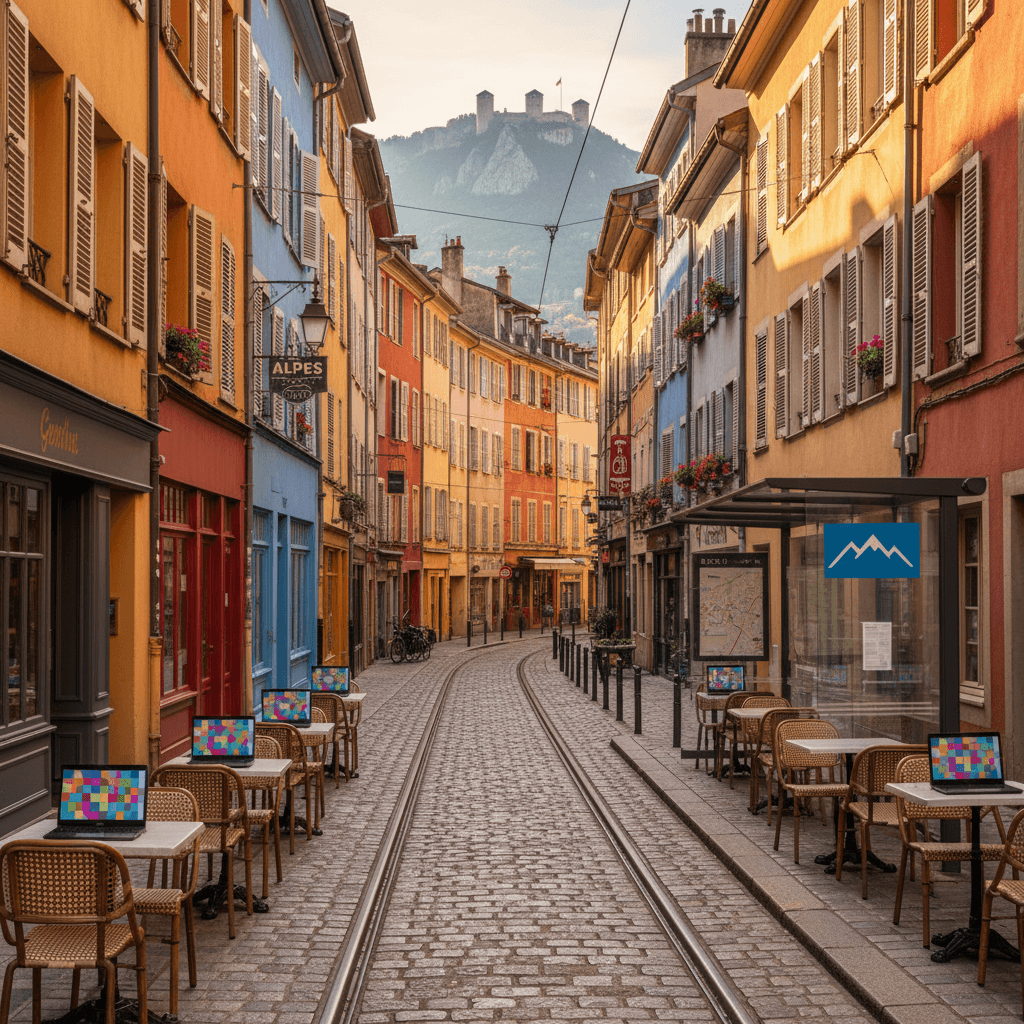
Grenoble
🇫🇷 France
The Silicon Valley of the Alps
Grenoble is a city that dares you to look up. Hemmed in by the Belledonne, Chartreuse, and Vercors massifs, you're never more than a few minutes away from a jagged skyline. It’s a place where the morning commute might involve a tram ride through a high-tech research corridor, while your weekend involves a cable car ascent to the Bastille fortress for a panoramic view of the Isère valley. It doesn't feel like a typical French postcard town; it’s grittier, younger, and far more innovative.
Often called the Silicon Valley of the Alps, Grenoble is a magnet for engineers, researchers, and students. About one-third of the population is tied to the universities or tech giants like STMicroelectronics. This creates a unique energy: it’s intellectual and forward-thinking, yet deeply rooted in the rugged, outdoorsy lifestyle of the mountains. You’ll see people in business casual carrying bouldering pads, or students debating physics over a round of Chartreuse liqueur.
The Nomad Experience
For digital nomads, Grenoble is a bit of a wildcard. It isn't a "plug and play" destination like Lisbon or Bali. The nomad infrastructure is still developing, though the city’s average internet speed of around 150-300 Mbps ensures a smooth experience for those handling heavy video uploads. The urban core is increasingly wired with fiber, and the cost of living is significantly more manageable than Paris, even if a solo nomad budget still hovers around $3,300 per month.
- The Draw: Unbeatable access to skiing and hiking, a youthful atmosphere, and a world-class R&D ecosystem.
- The Friction: Mediocre public Wi-Fi in some areas, a sense of "winter isolation" if you aren't a fan of the cold, and a language barrier that remains high outside of tech circles.
- The Vibe: Relaxed but purposeful. People work hard during the week but disappear into the peaks the moment Friday afternoon hits.
Where to Plant Your Flag
The city is compact and walkable, but your choice of neighborhood dictates your daily rhythm. Most nomads gravitate toward the center to stay close to the action.
Hyper-Centre
- Rent: Expect to pay €900 or more for a central one-bedroom apartment.
- The Vibe: This is the heartbeat of Grenoble. It’s packed with cafes, bookstores, and the best nightlife. It’s perfect for solo travelers who want to be steps away from a morning espresso at places like Le Pain Quotidien or a late-night drink in the Place de Berulle.
Europole
- Rent: Similar to the center, often €850 to €1,100 for modern studios.
- The Vibe: Located right behind the train station, this is the professional hub. It’s sleek and modern but can feel a bit soulless after 6:00 PM. It’s the best spot if you need to be near coworking spaces like Wojo or the major tech offices.
Championnet
- Rent: Roughly €800 to €1,000 for mid-range spots.
- The Vibe: Often described as the "Soho" of Grenoble, this area is trendy and residential. It’s full of independent boutiques and artisanal bakeries. It’s a favorite for expats who want a more "local" feel without sacrificing the convenience of the city center.
Practical Realities
Living here means embracing the French pace of life. Sundays are quiet, and shops will close. You'll want to download RAPIDeSIM for reliable data as soon as you land, and get a TAG pass for the tram system, which costs about €60 monthly. While English is common in the Europole district, learning basic phrases like "Où est le WiFi?" will go a long way in the smaller bounchons around the city.
Ultimately, Grenoble is for the nomad who wants more than just a desk and a beach. It’s for the person who wants to spend their lunch break staring at snow-capped peaks and their evenings engaging with some of the brightest minds in Europe. It’s a city that rewards those who trade the "laptop on the beach" cliché for a pair of hiking boots and a solid espresso.
The Bottom Line on Budget
Living in the "Silicon Valley of the Alps" isn't exactly cheap, but it offers a significant discount compared to the eye watering prices of Paris. Most solo nomads find that a monthly budget between €2,500 and €3,300 hits the sweet spot for a mid range lifestyle. This covers a private apartment, plenty of meals out, and a dedicated desk at a coworking space. If you are on a tighter budget, you can squeeze by on €1,800 to €2,500 by opting for shared housing and sticking to the city's excellent street food scene.
For those who want the full "Comfortable" experience, expect to spend €3,500 or more. This allows for a premium apartment in the Hyper-Centre, frequent weekend ski trips, and dining at the city's better bistros without constantly checking your banking app.
Monthly Cost Breakdown
- Housing (1BR Apartment): €600 to €1,200 depending on proximity to the tram lines.
- Coworking Desk: €250 to €500 for a hot desk or dedicated spot.
- Groceries and Dining: €400 to €700. A mid range dinner usually runs €15 to €25, while a quick crepe or kebab is €5 to €10.
- Transport: €50 to €60 for a monthly TAG pass.
- Utilities and Mobile: €150 to €200, including high speed fiber if you're in a modern building.
Where to Plant Your Flag
Your monthly burn rate depends heavily on which neighborhood you call home. The city is compact, but the vibe and price tags shift quickly between districts.
Hyper-Centre
- Rent: €900+ for a decent one bedroom.
- The Vibe: This is the heartbeat of Grenoble. You'll be steps away from the best cafes and the Bastille cable car. It's the most convenient spot for solo travelers who want to be near the action, though you'll pay a premium for the location.
Europole
- Rent: €800 to €1,100.
- The Vibe: Located right behind the train station, this is the business and tech hub. It's modern and efficient with great transport links, making it a favorite for expats working in research. It can feel a bit sterile after dark, but it's very practical for focused work.
Île Verte
- Rent: €750 to €1,000.
- The Vibe: A quieter, greener residential area that's popular with families and long term expats. It offers a more authentic local feel and better value for your money if you don't mind a short tram ride to reach the city center.
Practical Money Tips
To keep costs down, nomads often recommend using Revolut or N26 for daily transactions to avoid bank fees. For stays longer than a month, skip the tourist rentals and look for 30 day plus stays on Blueground or local listings on Leboncoin.fr. If you're a cyclist, grab a VéloCité rental for just €3 a day; the city is remarkably flat despite the surrounding peaks, and it’s often faster than the tram.
When it comes to connectivity, don't rely solely on cafe WiFi, which can be hit or miss. Most professionals head to Wojo or La Cordée for reliable speeds. If you need data the second you land, grab a RAPIDeSIM to stay connected while you hunt for a local Orange or Free fiber connection.
For Solo Nomads: Hyper-Centre
If you want to be where the action is, the Hyper-Centre is your best bet. This is the heartbeat of Grenoble, packed with 17th-century architecture, pedestrian-only cobblestone streets, and a high density of cafes where you can actually get work done. Most nomads gravitate toward the area around Place Grenette and Place de Verdun because everything is walkable and the energy stays high even on weeknights.
- The Vibe: Energetic, historic, and social. You'll find plenty of English speakers and students here.
- Estimated Rent: Expect to pay around €900 to €1,200 for a decent one-bedroom apartment.
- Workspace: Check out La Cordée for a community-focused coworking environment or grab a table at one of the larger cafes near the Victor Hugo tram stop if you just need a few hours of WiFi.
- Pros: You're steps away from the best bars and the "Telferique" cable car to the Bastille.
- Cons: It can get noisy at night, and rent is the highest in the city.
For Career-Focused Expats: Europole
Located just behind the main train station, Europole is the city's sleek business district. It's the "Silicon Valley" hub where you'll find the World Trade Center and major tech firms. It lacks the old-world charm of the center, but it makes up for it with modern infrastructure and proximity to the high-speed TGV lines to Paris and Lyon.
- The Vibe: Professional, quiet, and efficient. It's less about the "alpine lifestyle" and more about the "tech career."
- Estimated Rent: Modern studios and apartments usually run between €800 and €1,100.
- Connectivity: This area often has the most reliable fiber optic connections in the city, which is a major plus given Grenoble's sometimes spotty average speeds.
- Pros: Excellent transport links and very close to the Wojo coworking spaces.
- Cons: It feels a bit deserted on weekends and lacks the cozy "neighborhood" feel.
For Families: Île Verte and Championnet
Expats moving with kids usually look toward Île Verte or the Championnet district. Île Verte is a "green island" tucked into a bend of the Isère river. It's incredibly peaceful, filled with parks, and feels like a small village despite being minutes from the center. Championnet is often called the "SoHo" of Grenoble; it's trendy and upscale but maintains a residential soul with local boutiques and organic markets.
- The Vibe: Sophisticated, leafy, and community-oriented.
- Estimated Rent: Larger family apartments range from €1,300 to €1,800.
- Daily Life: You'll spend your Saturdays at the Halles Sainte-Claire market or walking along the river.
- Pros: Safe streets, better access to schools, and much less "tourist" noise.
- Cons: There is very little "nomad" infrastructure like dedicated coworking spots here; you'll likely be working from home.
For Budget-Conscious Travelers: Saint-Bruno
If you're looking to keep costs down while staying close to the center, Saint-Bruno is the go-to. It's a multicultural, bohemian area with a legendary daily market that is the cheapest place in town for fresh produce. It's a bit grittier than the Hyper-Centre, but it has a lot of character and a growing number of artist studios.
- The Vibe: Diverse, artsy, and unpretentious.
- Estimated Rent: Shared housing or "colocations" can be found for as low as €500, while private 1BRs sit around €700.
- Social Life: Great for cheap eats and craft beer bars that don't charge "center" prices.
- Pros: Very affordable and has a strong sense of local community.
- Cons: Some streets can feel a bit rough around the edges late at night.
Where to Avoid
Most travelers and expats suggest steering clear of the outer southern suburbs like Villeneuve or Fontaine for long-term stays. While the rent is tempting, these areas can feel isolated from the mountain culture and tech hubs that make Grenoble worth visiting. They also lack the safety and walkability found in the central rings.
Connectivity and Speed
While Grenoble markets itself as the Silicon Valley of the Alps, the reality of the internet infrastructure is highly efficient for remote workers. On paper, the city averages around 150-300 Mbps with fiber widely available, which is on par with the lightning-fast fiber of Paris or Lyon. If you're staying in a modern apartment in the Europole district or the Hyper-Centre, you'll likely have access to fiber through providers like Free or Orange, where speeds can easily hit 100 Mbps or more.
For mobile data, nomads generally skip the hassle of local contracts and opt for an eSIM. RAPIDeSIM is the go-to for most travelers here, providing reliable 4G and 5G coverage across the valley. If you're planning to work from a van or a mountain cabin on the weekends, Orange typically offers the best signal penetration once you head into the Belledonne or Chartreuse ranges.
Top Coworking Spaces
Grenoble's coworking scene is shaped more by its tech and research industry than by a traditional "digital nomad" vibe. You'll find plenty of serious professionals in these spaces, which makes for a productive, if slightly more corporate, environment. Prices generally range from €250 to €500 per month for a dedicated desk.
- Wojo: Located near the train station in the Europole district, this is the most polished option in the city. It's massive, modern, and popular with expats who need high-end meeting rooms and reliable ergonomics.
- La Cordée: This is the local favorite for a more community-focused atmosphere. It's less "office" and more "social hub," making it the best place to meet locals and other remote workers. They often host events that help break the ice if your French is still a work in progress.
The Laptop-Friendly Cafe Scene
The French aren't always keen on people camping out with laptops in small, independent bistros, especially during the lunch rush between 12:00 PM and 2:00 PM. However, Grenoble's large student population has forced a bit of flexibility in the local culture. The Hyper-Centre is your best bet for finding a corner to work in for a few hours.
- Starbucks: It’s the predictable choice, but the WiFi is consistent and the staff won't nudge you to leave. It’s a reliable fallback when your Airbnb’s connection fluctuates.
- Columbus Café & Co: A French chain that’s usually quite welcoming to the laptop crowd. The coffee is decent, and the atmosphere is lively enough to provide good background noise.
- Kai-Iwi Cafe: Located near the center, this spot has a more modern, international feel. Expats recommend it for a morning session with a flat white, though it gets crowded quickly on weekends.
Practical Work-Life Tips
The city's rhythm can be a hurdle if you're used to a 24/7 lifestyle. Sundays are genuinely quiet; many cafes and even some coworking access points might be closed or have limited hours. Most nomads find that the best strategy is to front-load their work week from Monday to Thursday, leaving Friday afternoons open to catch a bus or the funicular into the mountains.
If you're struggling to meet people, don't rely on the coworking spaces alone. The tech community here is active on Meetup.com and various Facebook expat groups. Since the nomad infrastructure is still developing, you'll often have to be the one to initiate a "work-from-cafe" afternoon or a post-work drink in the Championnet neighborhood.
Safety in the Streets
Grenoble generally feels like a safe, manageable alpine city, especially when compared to the grit of larger hubs like Paris or Marseille. Most nomads find the city center, particularly the Hyper-Centre and the student districts, perfectly fine for walking around at night. The vibe is youthful and academic, which keeps the streets lively well into the evening.
That said, it isn't without its rougher edges. Expats often recommend staying alert if you're heading into the outer suburbs or specific areas like Villeneuve late at night, where petty crime and social tension are more common. Standard city rules apply here: keep your phone tucked away in crowded tram cars and don't leave your laptop unattended in a cafe while you grab a second espresso. If you're staying in the Europole business district, it can feel a bit deserted after work hours, so stick to well lit main roads.
For any immediate trouble, you should know the local emergency numbers. Dial 112 for general European emergency services, 17 for the police, or 15 for the SAMU (medical emergencies). Most locals are helpful, though your interactions will go much smoother if you lead with a polite Bonjour.
Healthcare and Hospitals
The quality of medical care in Grenoble is exceptional. As a major research and tech hub, the city hosts top tier facilities like the CHU Grenoble Alpes. This is a massive teaching hospital known for its specialized departments and high standards of care. You'll find that many doctors in these larger facilities speak decent English, though having a translation app like DeepL handy for specific medical terminology is a smart move.
If you need a routine checkup or a non emergency consultation, use the Doctolib app. It’s the gold standard in France for booking appointments. You can filter for practitioners who speak English, which takes the stress out of the experience. Expect to pay around €25 to €30 for a standard GP visit if you're paying out of pocket.
Pharmacies and Prescriptions
You can't miss French pharmacies; just look for the bright, blinking green neon crosses. They are everywhere in Grenoble, from the Place Grenette to the quiet corners of Championnet. Pharmacists in France are highly trained and can often give medical advice for minor ailments like a cold or a sprain, saving you a trip to the doctor.
- Pharmacy Hours: Most are open from 9:00 AM to 7:00 PM, but they usually close for a lunch break and are often shut on Sundays.
- After-Hours: Look for the Pharmacie de Garde (on-call pharmacy) posted on the door of any closed pharmacy for 24/7 access.
- Common Costs: Over the counter basics like paracetamol or Ibuprofen are inexpensive, usually under €5.
Insurance Requirements
If you're planning to stay long term on a Self-Employed or Visitor visa, having comprehensive health insurance is a non negotiable requirement. For shorter stays, nomads typically rely on providers like SafetyWing or World Nomads. Once you become a legal resident and have been in France for more than three months, you may be eligible to apply for PUMa (Protection Universelle Maladie) to access the state healthcare system, though the paperwork can be a marathon. Until then, keep your private policy active to cover any mountain sports injuries, especially if you're hitting the slopes in nearby Chamrousse.
The Alpine Commute: Trams and Two Wheels
Grenoble is remarkably flat for a city tucked into the mountains, making it a dream for anyone who prefers human powered transport. The city's crown jewel is the TAG network, a sleek system of five tram lines and dozens of bus routes that connect the tech hubs to the historic center. You won't need a car here; in fact, driving through the narrow streets of the Hyper-Centre is more of a headache than it's worth.
Most nomads living in the central districts find that a monthly pass, costing between €50 and €60, is the best investment for rainy days or winter commutes. The trams are frequent, clean, and run until around 1:00 AM on weekends. If you're just visiting for a few days, a single ticket is about €1.70, but always remember to validate your ticket on the platform before boarding to avoid a hefty fine from the roaming inspectors.
Cycling the "Capital of the Alps"
Because the valley floor is so level, Grenoble has become one of France's most bike friendly cities. Locals swear by Mvélo+ (formerly Metrovelo), those iconic yellow bikes you'll see parked everywhere. You can rent them by the day for about €3 or grab a long term lease if you're staying for the season. The city is crisscrossed with dedicated bike lanes, and the Isère River paths offer a scenic, car free route for your morning commute.
If you're heading uphill toward the universities or the foothills, electric scooters are a popular alternative. Apps like Tier or Dott operate throughout the metro area. Just keep in mind that while the city is flat, the minute you head toward a trailhead, the incline gets serious fast.
Ride-Hailing and Regional Links
While Uber is available, it's not as ubiquitous as it is in Paris or Lyon. You might wait 10 to 15 minutes for a ride during peak hours. For longer trips or weekend getaways to the ski slopes, BlaBlaCar is the local favorite. It's a carpooling app where you can snag a seat in someone's car for a fraction of the price of a train ticket. It's also a great way to practice your French with locals.
For getting out of town, Grenoble Station (Gare de Grenoble) is your gateway to the rest of Europe. High speed TGV trains can whisk you to Lyon in about 1 hour or Paris in 3 hours. If you're flying in, the Grenoble Alpes Isère Airport (GNB) is about 40 minutes away by shuttle, with tickets typically costing around €10. However, many expats prefer flying into Lyon (LYS) and taking the FlixBus or BlaBlaCar Bus directly to Grenoble's central bus station, as the flight options are much more frequent.
Reaching the Heights
You can't talk about getting around Grenoble without mentioning the "Bubbles." The Téléphérique de la Bastille is the world's first urban cable car, and it's more than just a tourist attraction. It takes you from the riverbank up to the Bastille Fortress in minutes. While it's a bit pricey for a daily commute, it's the fastest way to get a panoramic view of the Belledonne, Chartreuse, and Vercors ranges before hitting the mountain trails.
- TAG Monthly Pass: €50 to €60
- Mvélo+ Day Rental: €3
- Airport Shuttle: €10
- Single Tram Ticket: €1.70
- TGV to Paris: Starts around €45 if booked in advance
Most nomads find that a combination of the tram for daily errands and a sturdy bike for exploring the riverfront is the perfect setup. Just make sure to invest in a heavy duty lock; bike theft is one of the few common nuisances in an otherwise very safe city.
The Language Landscape
In the "Silicon Valley of the Alps," your experience with language will depend heavily on which bubble you're floating in. Because of the massive student population and the presence of tech giants like STMicroelectronics, English is common in research labs, university cafes, and modern coworking spots. However, once you step off the campus or out of the tech hubs, French remains the undisputed king of the streets.
Most nomads find that while younger locals and tech professionals speak decent English, daily life requires a basic grasp of French. You'll need it for everything from navigating a lease on Leboncoin to ordering a €15 lunch special at a local bistro. Expats often remark that the "French wall" is real; if you don't lead with a polite Bonjour, you might find locals less than helpful. It's not about fluency, it's about the effort.
Essential Communication Tools
Don't rely on your home data plan to get you through. The city’s average internet speed is around 150-300 Mbps, making it easy to stay connected while navigating the winding streets of the Hyper-Centre. Travelers recommend these essentials:
- RAPIDeSIM: Local expats suggest grabbing a high speed eSIM for instant data. It's much easier than hunting down a physical boutique when you first land.
- DeepL: While Google Translate is fine, many long term residents prefer DeepL for more accurate, natural sounding French translations, especially for emails or official texts.
- WhatsApp: This is the standard for social organizing. Whether you're joining a weekend hiking group or a nomad meetup, you'll likely be added to a WhatsApp thread.
Social Dynamics and Networking
Grenoble isn't quite the social whirlwind that Paris or Lyon can be. The vibe is more focused on outdoor pursuits and R&D. Because there isn't a massive, dedicated nomad infrastructure, you have to be intentional about meeting people. Most networking happens in specific "third places" where the tech and international crowds congregate.
- Coworking Communities: Look for spots like Wojo or La Cordée. These aren't just desks; they're the best places to find people who speak your language, both literally and professionally. Monthly memberships usually run between €250 and €500.
- The Tech Scene: If you're in software or engineering, keep an eye on Meetup.com for local tech talks. These are often held in English or a mix of both languages.
- The Student Influence: With one third of the population being students, areas like the Hyper-Centre have a younger, more international feel. Bars here are your best bet for finding English speakers after 8:00 PM.
Key Phrases for the Alpine Nomad
You don't need to be a linguist, but memorizing a few specific phrases will make your life significantly easier. Beyond the standard greetings, keep these in your back pocket:
- Où est le WiFi? (Where is the WiFi?): Useful in the smaller, traditional cafes that don't always post the password.
- Je travaille à distance (I work remotely): Helpful when explaining why you've been sitting in a cafe with a laptop for three hours.
- La bise (The cheek kiss): Not a phrase, but a vital piece of non-verbal communication. In social settings, expect two kisses on the cheek. If you're in a professional tech setting, a firm handshake is still the standard.
Sundays in Grenoble are famously quiet. Most shops close, and the city slows down. This is the perfect time to practice your "mountain language." Locals head to the peaks, and being able to exchange a friendly Bonjour on a hiking trail near the Bastille will do more for your social integration than any language app ever could.
The Alpine Rhythm
Grenoble sits in a geographic bowl, surrounded by three massive mountain ranges: the Chartreuse, Vercors, and Belledonne. Because of this, the weather is more dramatic than what you'll find in Lyon or Paris. The city experience changes completely depending on when you arrive, shifting from a sun-drenched outdoor hub to a cozy, snow-capped tech base.
Summer: Peak Season for Explorers
From June to September, the city is at its best for anyone who prioritizes work-life balance. Temperatures usually hover between 20°C and 25°C, though heatwaves can occasionally push the mercury higher. Because the city is flat and located in a valley, it can feel quite humid during July and August.
Expats and nomads flock to the Bastille cable car during these months to catch the breeze at higher altitudes. Most hikers recommend hitting the trails in the Vercors early in the morning before the afternoon sun peaks. If you're working remotely, this is the time to utilize the outdoor seating at cafes in the Hyper-Centre, though you'll want to check the WiFi strength beforehand as it's famously hit-or-miss.
- Pros: Long daylight hours, perfect hiking conditions, lively festivals.
- Cons: Occasional heat traps in the valley, higher prices for short-term rentals.
Winter: The Ski Nomad's Paradise
If you're here for the slopes, December through February is your window. Temperatures average between 0°C and 5°C, and while it doesn't always snow heavily in the city center, the surrounding peaks stay white for months. It’s a quiet time in the city, perfect for deep-focus work at spots like Wojo or La Cordée.
Travelers often find the winter isolation a bit tough if they aren't into winter sports. The days are short, and the valley can get a bit gray. However, the proximity to world-class skiing just 45 minutes away makes it a top choice for "ski-mads" who work in the mornings and hit the night slopes or weekend runs at Chamrousse.
- Average Winter Temp: 2°C to 7°C
- Essential Gear: High-quality thermal layers and waterproof boots for slushy city streets.
Shoulder Seasons: Spring and Fall
Spring (April to May) and Fall (October to November) are the unpredictable wildcards. Spring brings beautiful blooms to Île Verte, but it's also the rainiest period. You'll see locals carrying umbrellas and light jackets as the weather can flip from sunny to a downpour in twenty minutes.
October is a favorite for many long-term expats. The "Silicon Valley of the Alps" turns a deep orange, and the air gets crisp but stay comfortable enough for city walking. It's also when the student population (about one-third of the city) returns, bringing a surge of energy back to the bars and coworking spaces after the quiet summer break.
Best Time for Your Budget
If you're watching your wallet, aim for late September or October. The summer tourist crowds have thinned, and the "back to school" rush for apartments has settled. You can often find better deals on mid-range housing in areas like Championnet before the winter ski season kicks in and drives up demand for short-term mountain access bases.
- Budget Window: October to November
- Peak Pricing: July, August, and late December
Connectivity and Gear
Internet speeds in Grenoble can be a mixed bag. While the city average hovers around 23 Mbps, you'll find much faster fiber connections in modern apartments and tech hubs. Most nomads skip the physical SIM cards and grab a RAPIDeSIM for immediate data upon arrival. If you're staying long term, Free or Orange are the go-to providers for home fiber.
For a dedicated desk, Wojo provides reliable infrastructure. If you prefer a local vibe with more networking, check out La Cordée. It's a favorite among the local tech crowd and offers a more communal atmosphere than the corporate chains. Expect to pay between €250 and €500 per month for a full time spot.
Money and Budgeting
Living in the "Silicon Valley of the Alps" isn't exactly cheap, but it's a bargain compared to Paris. A solo nomad should budget roughly €2,500 to €3,300 per month for a comfortable mid range lifestyle. This covers a central apartment, coworking fees, and plenty of weekend trips to the slopes.
- Budget Tier (€1,800 to €2,500): Focuses on shared housing at €500, local markets for groceries, and using the tram system exclusively.
- Mid Range Tier (€2,500 to €3,300): Includes a private one bedroom apartment for around €900, a coworking membership, and dining out a few times a week.
- Comfortable Tier (€3,500+): Covers a premium flat in Hyper Centre for €1,200, frequent fine dining, and car rentals for mountain excursions.
For banking, stick with Revolut or N26 for daily spending to avoid exchange fees. However, if you're signing a formal lease, many landlords still insist on a traditional French bank account. In that case, BNP Paribas or Société Générale are the standard choices.
Navigation and Safety
Grenoble is incredibly flat, making it a dream for cyclists. The VéloCité rental program is your best friend here; it costs about €3 per day. For longer distances, the TAG tram and bus network is efficient and costs roughly €60 for a monthly pass. If you're heading to the mountains, the funicular is the iconic way to reach the Bastille fortress for a quick sunset hike.
Safety is rarely an issue in the city center, though expats generally suggest avoiding the Villeneuve area late at night. For healthcare, the CHU Grenoble Alpes is a world class facility. Just remember that 112 is the universal emergency number, while 15 connects you directly to the SAMU ambulance service.
Bureaucracy and Logistics
France doesn't have a specific digital nomad visa for 2025 or 2026. Most remote workers enter on a Self Employed (Libéral) visa or a Long Stay Visitor visa. Be careful with the visitor version, though; as of June 2025, rules have tightened regarding working for foreign employers while on that specific permit. Always check the latest requirements for the Talent Passport if you work in tech, as Grenoble's R&D scene makes this a viable path for many.
When searching for a place to stay, Blueground is excellent for 30 day plus stays without the headache of a French guarantor. For more local deals, Leboncoin is the standard, though you'll need a decent grasp of French to negotiate. Most shops close on Sundays, so get your grocery shopping done by Saturday afternoon to avoid an empty fridge.
Need visa and immigration info for France?
🇫🇷 View France Country GuideHidden Gem
Worth the effort