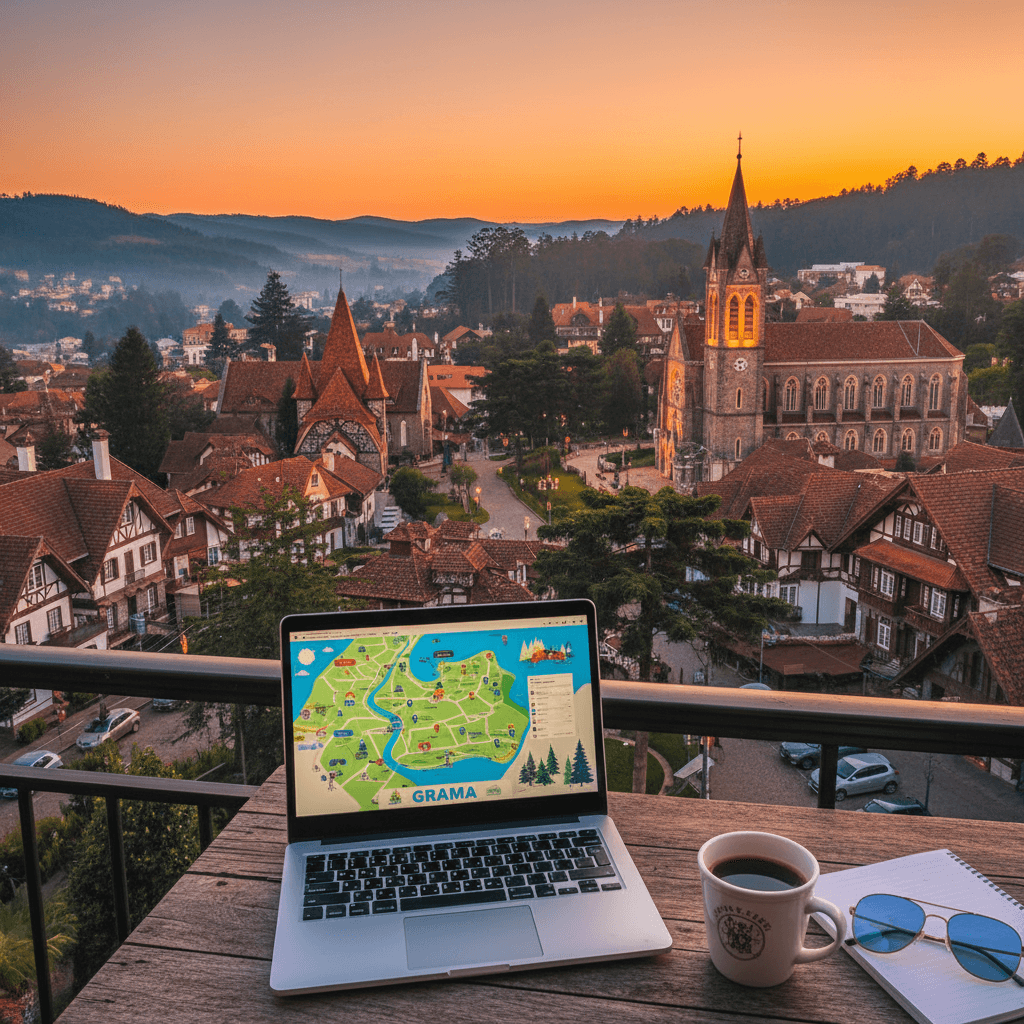
Gramado
🇧🇷 Brazil
The Alpine Soul of Brazil
Stepping into Gramado feels like a glitch in the geography of South America. Tucked away in the Serra Gaúcha mountains, this town swaps the typical Brazilian beach aesthetic for half timbered Bavarian architecture, manicured hydrangea hedges, and a climate that actually requires a heavy coat. It is curated, romantic, and undeniably touristy, functioning more like a high end mountain resort than a gritty urban center. For nomads, it is the ultimate "slow down" destination where the air is crisp and the pace is dictated by the length of a fondue dinner.
The vibe here is polished and safe. You won't find the chaotic energy of São Paulo or the bohemian grit of Rio. Instead, you get the Rota Romântica, a stretch of German heritage that makes you feel like you've been dropped into a quiet corner of Europe, only with better coffee and warmer hospitality. It is a place for deep focus work during the week and exploring mist covered pine forests on the weekends.
The Nomad Reality Check
While the scenery is top tier, Gramado isn't a plug and play nomad hub like Florianópolis. There isn't a massive Slack community or a dedicated coworking space on every corner. Most remote workers here are solo flyers or couples looking for a month of mountain air rather than a year long base. You will be trading a bustling expat scene for high speed fiber optic internet in a cozy apartment and some of the best safety ratings in the country.
- The Draw: Incredible safety, European aesthetics, and a break from the tropical heat.
- The Drawback: It gets crowded during the Natal Luz (Christmas) festival, and prices for short term rentals can spike significantly during peak winter months.
- The Workaround: Stick to the shoulder seasons like April to May or September to October to avoid the tourist crush and secure better rates.
Where to Plant Your Laptop
Choosing a neighborhood in Gramado changes your experience entirely. If you want to be in the thick of it, the City Centre near Rua Coberta is the move. You'll be steps away from cafes like Sophis Katz or the chocolate shops that line the main drag. It is walkable and vibrant, though it can get noisy on weekends. Expect to pay R$2,500 to R$4,000 for a decent studio here.
For a more "resident" feel, Planalto is the local favorite. It is home to Lago Negro, a stunning black water lake surrounded by trees imported from the Black Forest. It is quieter, greener, and perfect for morning runs, with mid range apartments hovering between R$3,000 and R$5,000. If you have a car or don't mind a longer Uber ride, the Avenida das Hortênsias corridor toward Canela offers more space and modern builds, though it feels less like a neighborhood and more like a scenic highway.
The Cost of High Altitude Living
Gramado is one of the more expensive corners of Brazil, largely because it is a premier domestic vacation spot. Your budget will depend heavily on your dining habits. A casual meal or street food like an empanada on Rua Coberta might only set you back R$15 to R$20, but a full churrasco experience or a traditional German feast will easily top R$100 per person.
- Budget Nomad: R$5,000 to R$7,000 per month. This covers a modest room, cooking at home, and using the local bus system.
- Mid Range: R$8,000 to R$12,000 per month. This gets you a private 1BR in a good area, frequent dining out, and regular Uber trips.
- Comfortable/High End: R$15,000+ per month. This is the "vacation mode" budget, allowing for luxury stays and weekend trips to nearby vineyards.
Logistics and Connectivity
The internet is surprisingly reliable. Most modern apartments come with 50 to 100Mbps connections, and while there aren't many formal coworking spaces, the cafe culture is laptop friendly. If the home WiFi fails, grab a table at a cafe on Rua Coberta; most have plenty of outlets and decent speeds. For mobile data, grab an eSIM from Claro or Vivo for about R$50 a month to stay connected while hiking in the surrounding parks.
Getting around is straightforward. The town center is highly walkable, but for everything else, Uber is the standard. If you're coming from the international airport in Porto Alegre, the bus takes about 3 hours and costs roughly R$100. It is a scenic climb into the mountains, setting the tone for a stay that feels worlds away from the rest of Brazil.
The Price of the "Mini-Europe" Experience
Gramado isn't your typical budget-friendly Brazilian destination. Because it functions as a premier mountain retreat for wealthy domestic travelers, you'll find the cost of living mirrors its upscale, European aesthetic. It's significantly more expensive than regional hubs like Porto Alegre, especially during the winter peak in July or the Natal Luz Christmas festival. Most nomads find they need a budget at least 20% to 30% higher here than in coastal spots like Florianópolis.
For a solo nomad, a comfortable lifestyle usually sits between R$8,000 and R$12,000 per month. If you're looking to keep costs down, you can manage on R$5,000 to R$7,000 by sharing a flat further from the center and sticking to local lunch specials. At the top end, those staying in the hotel corridor and dining at high-end steakhouse churrascarias should prepare to spend R$15,000 or more.
Housing and Neighborhoods
Rent will be your biggest hurdle. Short-term rentals are geared toward tourists, so "nomad-friendly" monthly rates can be hard to find without some negotiation. Expats recommend looking in the shoulder seasons of April or September to snag better deals.
- City Centre: This is the heart of the action near Rua Coberta. It's incredibly walkable but the loudest and priciest. Expect to pay R$2,500 to R$4,000 for a basic studio, while premium apartments can easily top R$5,000.
- Planalto: Located near the scenic Lago Negro, this is where you'll find nomads who value quiet mornings and lake walks. It's a bit more residential and slightly cheaper for mid-range 1BR units, usually around R$3,000 to R$5,000.
- Bavária: If you're traveling with family or want a peaceful, suburban feel, this neighborhood is ideal. It's calm and leafy, though you'll likely want a car or a dedicated Uber budget to get to the main shops.
Dining and Groceries
Eating out is a highlight of the Serra Gaúcha, but the bills add up fast. A meal at a mid-range restaurant typically costs between R$40 and R$60. If you're treating yourself to a full rodízio at a famous churrascaria, expect to pay R$100 per person or more.
For those on a budget, street food like empanadas or local pastries on Rua Coberta will run you R$10 to R$20. Savvy residents do their heavy shopping at supermarkets like Rissul to avoid the "tourist tax" found in the smaller convenience stores in the center. A monthly grocery bill for one person usually averages around R$1,200 to R$1,800 depending on how much imported German chocolate you cave in and buy.
Connectivity and Logistics
While Gramado lacks a dedicated, big-name coworking space, the cafe culture is strong. You'll see people working from laptop-friendly spots along Rua Coberta where speeds hit 50 to 100Mbps. For reliable mobile data, travelers often pick up a Vivo or Claro eSIM for about R$50 a month.
Getting around is simple but can be pricey if you aren't walking. Public buses from Porto Alegre cost around R$100, but an Uber for that same three-hour journey will set you back R$200 or more. Within the city, Uber is the most convenient way to reach attractions like Snowland or the Gramado Zoo, with most short trips staying under R$25.
The Practical Bottom Line
- Monthly Rent (1BR): R$3,000 to R$5,000
- Coworking (Cafe/Shared): R$500 to R$1,000
- Daily Food (Mid-range): R$80 to R$120
- Local SIM (10GB+): R$50
Solo Nomads and Remote Workers
If you're heading to Gramado to get work done while staying close to the action, the City Centre is your best bet. This is the heart of the "Bavarian" experience, centered around Rua Coberta and the Igreja Matriz São Pedro. It's the most walkable part of town, meaning you can ditch the car and hop between the various spots along the pedestrian street. You'll find reliable 100Mbps speeds in most central rentals, though you should expect to pay a premium for the convenience. Budget around R$2,500 to R$4,000 for a studio or one-bedroom in this area.
- Pros: Everything is reachable on foot; high concentration of cafes with power outlets; great for people-watching during breaks.
- Cons: It gets loud and crowded, especially during the Natal Luz festival or winter peaks; prices for groceries and quick bites are higher here.
Nature-Loving Expats
For those planning to stay a few months and who prioritize a morning run over a late-night drink, Planalto is the neighborhood of choice. Located near the iconic Lago Negro, this area feels more like a residential park than a tourist hub. It’s significantly quieter than the center but still feels safe and upscale. You can find mid-range apartments here for R$3,000 to R$5,000 a month. It’s a favorite for expats who want a "mini-Europe" lifestyle without the constant selfie-sticks. Just keep in mind that dining options are more limited, so you'll likely be cooking at home or taking a quick Uber to the center.
- Pros: Immediate access to walking trails and the lake; peaceful atmosphere; very safe for evening strolls.
- Cons: Requires a 20-minute walk or a short drive to reach major supermarkets and the main coworking-friendly cafes.
Families and Long-Term Residents
Bavária is widely considered the most prestigious residential pocket for families. It’s characterized by leafy streets, high-end homes, and a distinct lack of commercial noise. If you're moving with kids, this area provides the space and security you’re looking for, though you'll likely need a car to get around efficiently. Monthly rents for larger houses or upscale apartments often start at R$5,000 and go up quickly. It’s close enough to the center to be convenient but far enough to escape the "theme park" feel of the main tourist drag.
- Pros: Very low traffic; high-quality housing stock; plenty of green space.
- Cons: Not walkable for daily errands; almost no social scene for solo travelers.
Short-Term Travelers and Explorers
If your goal is to see as much of the Serra Gaúcha as possible in a week, look at the Avenida das Hortênsias corridor. This is the main artery connecting Gramado to its sister city, Canela. It’s lined with hotels and serviced apartments that cater to people who are constantly on the move. Staying here puts you halfway between Gramado’s shops and Canela’s Catedral de Pedra. Prices vary wildly depending on the level of luxury, but it’s a strategic spot if you plan on renting a car to hit the Rota Romântica or Snowland.
- Pros: Easy access to the highway; usually easier to find parking than in the City Centre; close to major attractions.
- Cons: It’s a busy road with constant traffic; lacks the charm of the smaller side streets.
Cost of Living Summary
- Budget Nomad: R$5,000 to R$7,000 per month. Focuses on shared housing, local buses, and R$15 empanadas from street vendors.
- Mid-Range Professional: R$8,000 to R$12,000 per month. Covers a private 1BR in Planalto, frequent Uber rides, and dining at local bistros where a meal costs about R$50.
- Comfortable/Luxury: R$15,000+ per month. Includes high-end rentals in Bavária, frequenting upscale churrascarias at R$100+ per person, and full-time car rentals.
Connectivity and Speed
You won't find the lightning fast fiber networks of São Paulo here, but Gramado's internet is surprisingly resilient for a mountain town. Most modern rentals and hotels in the center offer speeds between 50Mbps and 100Mbps. It's plenty for Zoom calls or uploading content, though you might see a dip during the peak festival seasons in July or December when the tourist crowds put a strain on the local infrastructure.
Mobile data is your best safety net. Local nomads swear by Vivo or Claro for the best coverage in the Serra Gaúcha region. You can grab a local SIM or an eSIM for around R$50 per month, which usually includes a generous data package. If you're planning to work from the more remote villas in neighborhoods like Bavária, having a backup hotspot is a smart move since the thick stone walls of the European style buildings can sometimes mess with your signal.
The Coworking Scene
If you're looking for a dedicated, glass walled coworking hub with networking events and free flowing kombucha, you might be disappointed. Gramado hasn't quite caught up to the "nomad hub" status of places like Florianópolis. There aren't many traditional coworking spaces within the city limits yet. Most remote workers here either set up shop in their apartments or head to the bigger hubs in Porto Alegre if they need a professional office environment for a few days.
That said, the "work from cafe" culture is alive and well, especially around Rua Coberta. It’s the heart of the social scene and surprisingly laptop friendly during the quieter morning hours. You'll find plenty of spots with reliable Wi-Fi and power outlets, provided you're okay with the occasional sound of a tourist group passing by.
Top Places to Work
- Rua Coberta Cafes: Several spots along this sheltered pedestrian street offer decent Wi-Fi and a front row seat to the city's Bavarian charm. It’s best for light admin work or emails rather than deep focus sessions.
- Hotel Lobbies: Since Gramado is a hotel heavy town, many of the upscale lobbies in the Planalto neighborhood are used to people lingering with laptops. They usually have the most stable connections in the city.
Practical Tips for Remote Workers
The lack of a formal nomad community means you'll have to be a bit more proactive. Most expats and long term travelers connect through broader Brazil Digital Nomad groups on Facebook or WhatsApp. If you're staying for a month or more, it's worth asking your host for a speed test screenshot before you book, especially if you're looking at properties further out toward the Avenida das Hortênsias corridor.
Keep in mind that while the "mini Europe" vibe is great for focus, the city gets incredibly busy during events like Natal Luz. During these times, finding a quiet corner in a cafe becomes a challenge, and prices for everything, including data boosters, can creep up. If you need absolute silence and high speed reliability, stick to the residential pockets of Planalto or Bavária where the tourist foot traffic is minimal.
A Safe Haven in the Serra Gaúcha
Gramado is arguably one of the safest spots you'll find in Brazil. While cities like Rio or São Paulo require a constant level of "street smarts," Gramado feels more like a quiet European village. You can generally walk around the City Centre or Planalto after dark without looking over your shoulder. The heavy tourist presence and the local economy's dependence on visitors mean there is a significant, yet discreet, police presence that keeps petty crime like pickpocketing remarkably low.
That said, don't let the Bavarian architecture lull you into total complacency. While the central tourist zones are very secure, travelers suggest staying alert if you wander into unlit outskirts or less-developed residential areas late at night. Stick to well-traveled paths like Rua Coberta or the main stretches of Avenida das Hortênsias, and you'll likely never have an issue. If you do run into trouble, the emergency number for the police is 190.
Healthcare and Medical Services
For minor ailments or day-to-day health needs, you'll find plenty of well-stocked pharmacies (farmácias) clustered around the Igreja Matriz São Pedro. These are great for grabbing over-the-counter meds or basic first-aid supplies. Most pharmacists are helpful, though you'll definitely want a translation app handy if your Portuguese is rusty, as English fluency is hit-or-miss.
If you need more serious medical attention, Gramado has local clinics capable of handling basic emergencies and routine check-ups. However, for specialized care or major procedures, most expats and long-term travelers head to Porto Alegre. It is about a 2.5 to 3-hour drive away but houses some of the best private hospitals in Southern Brazil. If you're staying for more than a few weeks, having a private health insurance plan that covers the Unimed network is highly recommended, as it's the most widely accepted private provider in the region.
Emergency Contacts
- SAMU (Ambulance): Dial 192
- Military Police: Dial 190
- Fire Department: Dial 193
Practical Safety Tips for Nomads
The biggest "danger" in Gramado isn't crime; it's the weather and the roads. If you're visiting during the winter months of June through August, temperatures can drop below freezing. Sudden frost can make the winding mountain roads of the Rota Romântica slippery. If you're renting a car to explore nearby Canela or the local vineyards, drive cautiously, especially during the foggy early mornings common in the mountains.
For those working remotely from cafes, it's generally safe to have your laptop out in public spaces around the City Centre. You'll see plenty of people doing the same in the chocolate shops and cafes along the main drag. Just follow the standard rule of thumb: don't leave your gear unattended while you go to the counter or the restroom. Use Uber for late-night trips if you're staying further out in Bavária; it's affordable, tracked, and more convenient than hunting for a local bus after hours.
The Foothold: Arriving from Porto Alegre
Since Gramado doesn't have its own airport, your journey begins at Porto Alegre (POA). Most nomads opt for the bus, which is surprisingly comfortable and reliable. You can catch a shuttle directly from the airport or head to the main terminal; the ride takes about 2.5 to 3 hours and costs roughly R$100. It's a scenic climb into the mountains, so try to snag a window seat.
If you're carrying a lot of gear or arriving late, Uber is an option, but it'll cost you. Expect to pay R$200 or more for the one way trip. Some travelers prefer hiring a private transfer for a bit more peace of mind, though the bus system is so efficient that it's rarely necessary unless you're traveling in a large group.
Mastering the City Center on Foot
Once you're settled in the City Centre near Rua Coberta, you can ditch the wheels. This area is highly walkable and designed for pedestrians. You'll find that the Igreja Matriz São Pedro and the main shops are all within a 10 to 15 minute radius. The sidewalks are well maintained, which is a nice change of pace if you've been navigating the more chaotic streets of Rio or São Paulo.
Walking is the best way to soak in the Bavarian architecture, though the crowds can get thick during the Christmas season or the film festival. If you're staying in Planalto, it's a pleasant, slightly longer stroll to the center, but you'll appreciate the quiet streets and the proximity to the jogging paths around Lago Negro.
Wheels for the Serra Gaúcha
While the center is walkable, Gramado is part of a larger mountain circuit. To really see the region, you'll want a car. Many expats recommend renting a vehicle at the Porto Alegre airport for the duration of your stay. This gives you the freedom to hit the Avenida das Hortênsias corridor or drive the 8km to Canela to see the Catedral de Pedra without relying on tour buses.
If you aren't keen on driving, Uber works well within the city limits for short hops. A quick ride from the center to a restaurant in the Bavária neighborhood usually runs around R$15 to R$25. Just keep in mind that during peak tourist weekends, surge pricing kicks in and wait times can climb.
Alternative Ways to Move
For a more relaxed pace, you can find bike rentals near the major parks. It's a popular way to explore the area around Lago Negro, though the hilly terrain toward the edges of town might give your legs a workout. There isn't a robust scooter sharing scene here like you'd find in larger Brazilian hubs, so don't count on finding an e-scooter on every corner.
- Bus to Porto Alegre: R$100, departs frequently from the main terminal.
- Uber within town: R$15 to R$30 for most local trips.
- Car Rental: Best picked up at POA airport for better rates and selection.
- Walking: Primary mode for the City Centre and Planalto areas.
Most nomads find that a hybrid approach works best: walk the center for your daily coffee and coworking sessions, and save the ride hailing or rental car for weekend trips to the vineyards or the waterfalls in nearby parks.
The Portuguese Priority
In Gramado, Portuguese is the undisputed king. While the city's architecture looks like a Bavarian village, the language remains firmly Brazilian. You'll find that English proficiency is higher here than in the rural deep south, but it's still mostly confined to high-end hotel receptions and major tourist hubs like Snowland or the ticket offices at Lago Negro.
Most nomads find that daily life requires at least a baseline level of Portuguese. If you're heading to a local bakery in the Bavária neighborhood or trying to negotiate a longer stay with a landlord, don't expect them to speak English. Brazilians are famously patient and will usually try to understand you through a mix of gestures and smiles, but having a few phrases ready goes a long way.
Essential Phrases for Daily Life
- "Tudo bem?": The universal "How's it going?" or "Everything good?" Use it constantly.
- "Quanto custa?": How much does it cost? Vital for the boutiques on Rua Coberta.
- "A conta, por favor": The bill, please.
- "Você fala inglês?": Do you speak English? It's polite to ask before diving into English.
- "Obrigado" (male) / "Obrigada" (female): Thank you.
Digital Tools and Translation
Expats recommend downloading the Google Translate offline Portuguese pack immediately. Cell service is generally strong in the city center, but if you're out hiking near Canela or driving the Rota Romântica, you might hit dead zones where live translation won't work.
For texting, WhatsApp is the only app that matters. Whether you're booking a table at a local churrascaria or messaging a host about a rental in Planalto, it happens on "Zap." If you don't have a local number yet, you can usually get by with an eSIM from Claro or Vivo for about R$50 a month, which keeps your data running for translation apps and messaging.
The Cultural Nuance
Communication in the Serra Gaúcha is a bit more formal than in Rio or Salvador. The local "Gaúcho" culture prides itself on politeness and a slightly more reserved, traditional approach. When you enter a shop or a cafe, a "Bom dia" (Good morning) or "Boa tarde" (Good afternoon) isn't just a courtesy; it's expected. Skipping the greeting to jump straight to your order can come across as brusque.
If you're planning to stay for more than a week or two, consider a few sessions with a tutor or using an app like Duolingo or Pimsleur before you arrive. While you can survive on "Portunhol" (a mix of Portuguese and Spanish), locals truly appreciate the effort of learning their specific vocabulary. Since there isn't a massive established nomad community to retreat into, your social life will depend heavily on your ability to chat with the locals at the Rua Coberta cafes.
The Seasonal Vibe
Gramado doesn't feel like the rest of Brazil. Tucked away in the Serra Gaúcha mountains, it trades tropical humidity for a cool, subtropical climate that actually sees frost in the winter. Most nomads find the weather a refreshing break from the sweltering heat of Rio or the Northeast, especially if you're looking for a place where you can actually wear a sweater and enjoy a glass of local red wine by a fireplace.
The city operates on a heavy event calendar, which dictates both the crowd levels and the price of your Airbnb. If you're planning a stay, you need to time it based on whether you want the festive "mini-Europe" energy or a quiet mountain retreat to focus on deep work.
Best Months for Nomads
The sweet spots for a productive, comfortable stay are April to May and September to October. During these shoulder seasons, the weather is mild and relatively dry, with temperatures hovering between 14°C and 22°C. You'll avoid the massive tourist surges that clog the cafes on Rua Coberta, and you'll have a much easier time finding mid-range housing in neighborhoods like Planalto without paying peak holiday premiums.
- Autumn (March to May): Expect crisp air and beautiful foliage. It's the best time for hiking in nearby Caracol State Park without the summer rain.
- Spring (September to November): The flowers are in full bloom along the Rota Romântica. It's scenic, quiet, and perfect for afternoon laptop sessions at a sidewalk cafe.
Winter and the Holiday Peak
Winter runs from June to August, and this is when Gramado gets busy. Temperatures can dip toward 0°C at night, and while snow is rare, the frost is real. Brazilians flock here for the "winter experience," so expect prices for short-term rentals to jump by 20% to 30%. If you enjoy a cozy, crowded atmosphere and don't mind paying R$100 or more for a high-end dinner, it's a unique time to be here.
The biggest outlier is the annual Natal Luz festival typically runs from late October to mid-January, drawing huge crowds. While the city is stunningly decorated, it becomes incredibly crowded. For a nomad, this is often the "worst" time to visit because the local infrastructure, from Uber wait times to WiFi stability in public spots, gets pushed to its limit.
Rainy Season Reality
The wettest months usually fall between November and March. While it's warmer, with highs reaching 28°C, the humidity and frequent downpours can make walking between the City Centre and your apartment a bit of a chore. If you're staying during this window, you'll definitely want a place in the City Centre or near Avenida das Hortênsias so you aren't reliant on long walks or catching an Uber in the rain.
Cheat Sheet: When to Go
- For the best weather: April and May. It's dry, cool, and manageable.
- For the lowest prices: Late January to March (after the Christmas rush) or August.
- For the festive experience: December, but book your "pousada" or apartment at least three months in advance.
- For nature and hiking: September and October.
Most travelers find that a two-week stay is the "Goldilocks" duration for Gramado. It gives you enough time to experience the German bakeries and mountain parks without getting frustrated by the lack of a dedicated nomad community or the high cost of living compared to other Brazilian hubs.
The Logistics of Living in "Mini-Europe"
Gramado feels like a slice of Bavaria dropped into the Brazilian mountains. It's safe, incredibly clean, and organized. However, it's a destination designed for tourism rather than the typical digital nomad hustle. You won't find a massive expat community here like you would in Florianópolis, so expect a quieter, more solitary working experience. Most people visit for a few days, but if you're staying longer, you'll need to adapt to the town's relaxed, vacation-oriented pace.
Recommended Neighborhoods
Choosing where to stay depends on whether you want to be in the middle of the action or tucked away in the pines. Most nomads find the City Centre near Rua Coberta best for short stays because it's walkable and close to the best cafes. Just be ready for the crowds and noise during festival seasons.
- Planalto: This is the sweet spot for longer stays. It's near Lago Negro, offering a peaceful atmosphere with scenic walks, though you'll have fewer dining options within a five minute walk.
- Bavária: A quiet, residential neighborhood that lives up to its name with themed architecture. It's great for families or those who want total silence, but you'll likely want a car or a bike to get around.
- Avenida das Hortênsias Corridor: This stretch connects Gramado to the neighboring town of Canela. It's packed with hotels and attractions like the Catedral de Pedra, but it's less of a community and more of a transit hub.
Monthly Cost of Living
Gramado is one of the pricier spots in Brazil due to its status as a premier domestic vacation destination. Prices can spike by 20% to 30% during the winter peak in July or the Christmas festival season.
- Budget (R$5,000 to R$7,000): This covers a modest room or studio outside the immediate center, eating street food like empanadas for R$15, and using local buses.
- Mid-range (R$8,000 to R$12,000): This gets you a nice 1BR apartment in Planalto, a mix of cooking at home and dining out at mid-range spots where meals run R$40 to R$60, and occasional Ubers.
- Comfortable (R$15,000+): For those staying in high end hotels or upscale apartments in the center and frequenting the famous churrascarias, where a full dinner can easily top R$100 per person.
Internet and Remote Work
While there aren't many dedicated coworking spaces in town, the cafe culture is strong. You'll find reliable WiFi in most spots along Rua Coberta. Speeds generally range from 50Mbps to 100Mbps, which is plenty for video calls. For a more stable setup, expats recommend getting a local SIM card from Claro or Vivo. An unlimited data plan usually costs around R$50 per month and serves as a vital backup if your rental's WiFi flutters.
Getting Around
The town center is very walkable, but the surrounding Serra Gaúcha region is best explored on four wheels. There is no local airport, so you'll likely arrive via Porto Alegre. The bus ride takes about 2.5 to 3 hours and costs roughly R$100. An Uber from the airport is more convenient but will set you back R$200 or more. Once you're in town, you can rent bikes near Lago Negro for local exploring, but a rental car is the way to go for day trips to Canela or the Rota Romântica.
Health and Safety
Safety is one of Gramado's biggest selling points. It's significantly safer than Brazil's major metros, and you can generally walk around at night without worry. For healthcare, there are plenty of pharmacies near Igreja Matriz São Pedro. For anything serious, you'll likely head to the high quality hospitals in Porto Alegre. In an emergency, dial 192 for an ambulance or 190 for the police.
Weather and Timing
The mountain climate is a major draw. Summers (December to February) stay mild around 20°C to 28°C, while winters (June to August) can get chilly, often dropping to 10°C with occasional frost. If you want to avoid the heaviest rain and the biggest crowds, aim for April to May or September to October. These shoulder seasons offer the best balance of dry weather and manageable prices.
Need visa and immigration info for Brazil?
🇧🇷 View Brazil Country GuideHidden Gem
Worth the effort