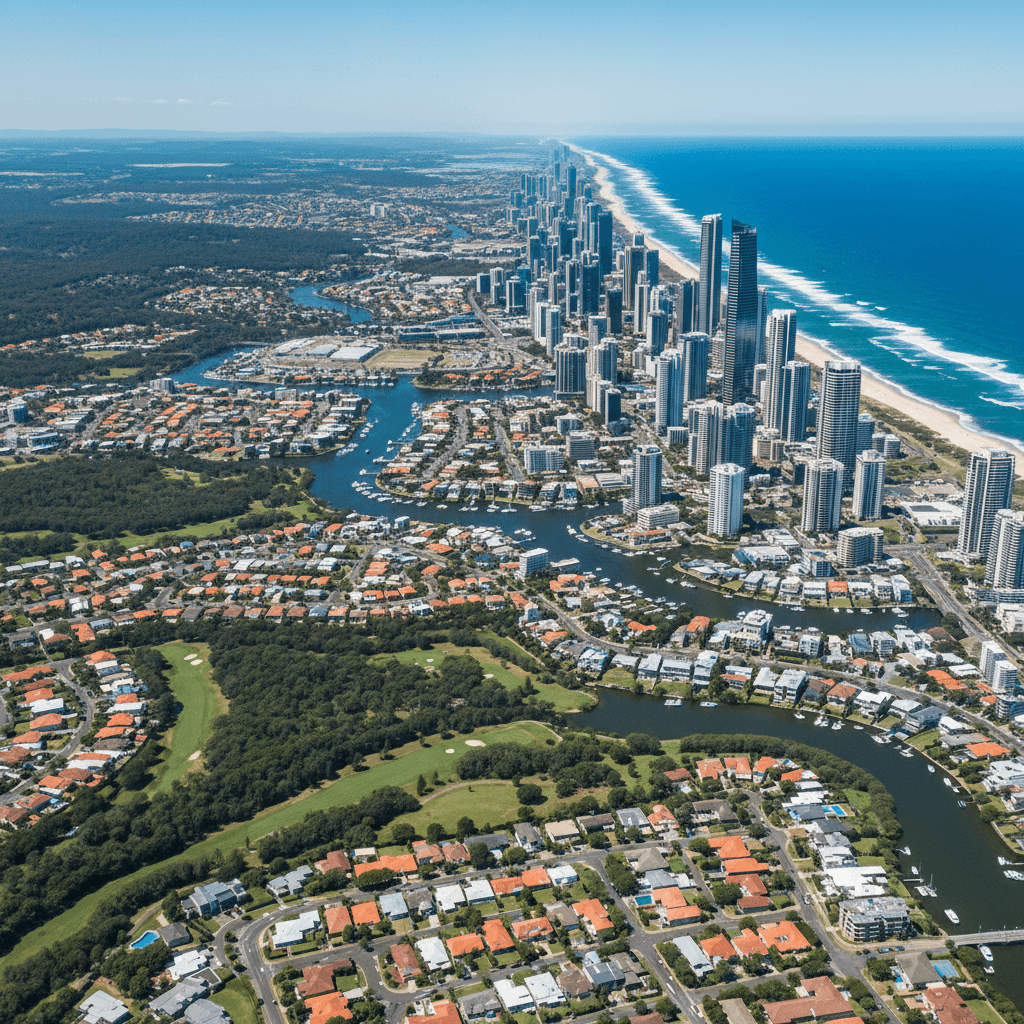
Gold Coast
🇦🇺 Australia
The Surf-Work Balance, Perfected
Gold Coast isn't just a city; it's a 70 kilometer stretch of golden sand and turquoise water that's managed to build a skyscraper skyline right on the edge of the Pacific. Most nomads arrive thinking it's just a tourist playground, but they stay because it's one of the few places where you can actually maintain a high-performance career while living a barefoot lifestyle. It feels like a mix of Miami's glitz and Southern California's surf culture, all wrapped in that famously blunt and friendly Australian attitude.
The rhythm here is dictated by the sun and the swell. You'll see CEOs in business shirts grabbing a coffee next to surfers still dripping from a 6:00 AM session at Snapper Rocks. It's a place where "morning person" isn't a personality trait, it's a requirement if you want to see the best of the day. By the time you sit down at a laptop in a Burleigh Heads cafe, you've likely already had a swim and a world class flat white. That's the emotional hook of the Goldie: it makes you feel like you've won at life before your first Zoom call starts.
The Neighborhood Breakdown
- Surfers Paradise & Broadbeach: This is the neon heart of the coast. It’s high energy, dense with high rise apartments, and packed with nightlife. It can feel a bit "touristy," but the convenience is hard to beat. You're steps away from the G:link light rail and endless hospitality jobs if you're on a working holiday visa.
- Burleigh Heads: This is the undisputed nomad favorite. It’s got a more sophisticated, organic vibe than Surfers. Think boutique breweries, hilltop sunsets at the pavilion, and a community that prioritizes wellness and creativity over the club scene.
- Coolangatta: Located right on the New South Wales border, "Cooly" is where things slow down. It’s a bit further from the main action, but it offers some of the best point breaks in the world and a nostalgic, old school beach town feel that’s becoming rare.
The Digital Nomad Reality
While the lifestyle is premium, the price tag reflects it. Australia isn't a "budget" destination like Southeast Asia, but the infrastructure makes up for the cost. You aren't fighting for a stable signal here. The internet is fast, reliable, and available in almost every beachfront cafe. Many nomads find that a monthly membership at professional spaces like CoSPACES is a solid investment for the networking alone.
The city has also become surprisingly affordable to traverse. Thanks to government subsidies, you can hop on a TransLink bus for as little as 0.50 AUD per zone. If you're exploring the coast daily, the Go Explore Card offers unlimited travel for just 1.50 AUD a day, which is practically unheard of in most developed cities. It makes the "urban sprawl" of the coast much easier to manage without needing a car.
Why It Stands Out
What sets the Gold Coast apart from Sydney or Melbourne is the lack of pretension. People here are genuinely happy to be here. There's a shared understanding that work is something you do so you can enjoy the outdoors. You’ll find yourself invited to a beach BBQ or a Sunday session at a surf club within weeks of arriving. The community is welcoming, the air is clean, and the lifestyle is addictive.
The main trade off is the seasonal crowd. During peak holiday periods, the central hubs can feel overwhelmed by "schoolies" and domestic tourists. Most long term expats learn to retreat to the northern suburbs or the lush hinterland during these weeks, returning to the coast once the peace settles back in. If you can handle the higher cost of living, you'll find a city that offers a level of safety, sunshine, and professional opportunity that's hard to find anywhere else in the Southern Hemisphere.
The Financial Reality
Living on the Gold Coast means paying for the privilege of waking up next to some of the world's best surf. While it's generally more affordable than Sydney or Melbourne, it's a significant step up in price from nomad hubs in Southeast Asia. Most expats find that a monthly budget of $3,500 to $4,500 AUD allows for a comfortable lifestyle including private accommodation, regular dining out, and a few weekend trips into the hinterland.
For those on a tighter leash, you can get by on less by using the surprisingly cheap public transport and sticking to local markets. The city has a tiered feel to it; you can spend $25 AUD on a fancy avocado toast in Burleigh Heads or grab a cheap takeaway and sit on the sand for free.
Housing and Neighborhoods
Rent is your biggest hurdle. Prices fluctuate based on how close you are to the sand and whether you're looking during the peak summer tourist season. Most nomads recommend looking for short term rentals in the cooler months to snag better deals.
- Surfers Paradise and Broadbeach: This is the high rise heart of the coast. It's crowded and touristy, but it's where the most flexible apartment rentals are located. Expect to pay a premium for the convenience of being walking distance to everything.
- Burleigh Heads: The local favorite. It has a more creative, community feel. It's harder to find short term housing here because everyone wants to stay, but the lifestyle payoff is huge.
- Coolangatta: Located right on the New South Wales border, this area is more laid back. It's perfect if you want to avoid the glitz of the central strip while keeping costs slightly lower.
Daily Expenses and Lifestyle
If you're working from cafes or coworking spaces, your daily spend will revolve around the city's elite coffee culture and fitness scene. Australians take their health seriously, so gym and surf costs are a standard part of the nomad budget here.
- Fitness: Monthly gym or yoga memberships usually run between $60 and $90 AUD.
- Surfing: A two hour group lesson costs about $75 AUD, while daily board rentals are roughly $60 AUD.
- Dining: A casual meal with a drink will set you back $25 to $40 AUD.
Transport and Connectivity
The Gold Coast is surprisingly easy to navigate without a car if you stay near the coast. The G:link light rail and TransLink bus system are efficient and incredibly cheap thanks to recent price caps. Most nomads use the Go Explore Card for seamless travel.
- Public Transit: Flat 50 cent fare for all journeys regardless of zone.
- Daily Cap: You can get unlimited daily travel for just $1.50 AUD using the Go Explore Card.
- Ride-Hailing: Use the DiDi app instead of traditional taxis; it is consistently the most budget friendly option for late night trips.
- Car Rentals: If you want to explore the rainforests, a week long rental averages about $35 AUD per day.
Internet reliability is rarely an issue. Most cafes offer high speed Wi-Fi that can handle video calls, though many nomads prefer the stability of a coworking space for heavy upload days. For mobile data, grab a local SIM card immediately upon arrival to avoid international roaming gouging.
Digital Nomads: Burleigh Heads
If you want the quintessential Gold Coast lifestyle without the tourist traps, Burleigh is the spot. Most nomads gravitate here for the mix of world class surf and a sophisticated cafe culture that actually welcomes laptops. It is less about the high rises and more about a relaxed, community driven atmosphere.
The internet is fast enough for video calls, and the vibe is perfect for those who want to surf at sunrise and hit their deadlines by noon. You will find plenty of remote workers setting up at beachfront cafes or utilizing the various boutique shared offices and creative hubs scattered throughout the suburb.
- Vibe: Chill, creative, and health conscious.
- Pros: Incredible surf breaks, walkable streets, and a growing community of entrepreneurs.
- Cons: Can get pricey and parking is notoriously difficult on weekends.
Expats and Professionals: Broadbeach
Broadbeach is the "grown up" version of the central coast. It sits just south of the main tourist hub but feels significantly more polished. Expats often choose this area because it balances urban convenience with a slightly slower pace than its northern neighbor. You are close to the G:link light rail, making it easy to commute without a car.
The dining scene here is excellent, ranging from casual brunch spots to high end restaurants. It is a practical choice for those on a Visitor Visa or Working Holiday Visa who want proximity to hospitality jobs and modern amenities. Rent is higher here, but you are paying for the convenience of having everything from groceries to the beach within a ten minute walk.
- Transport: Excellent access to the light rail with fares starting at 0.50 AUD.
- Lifestyle: Upscale dining, shopping at Pacific Fair, and clean, wide beaches.
- Community: High concentration of international residents and professionals.
Solo Travelers and Night Owls: Surfers Paradise
For those who want to be in the middle of the action, Surfers Paradise is the undisputed hub. It is loud, bright, and busy. Solo travelers often start here because it is the easiest place to meet people, find short term work, and access the city's main nightlife. There is a high density of hostels and apartment rentals, though you should expect crowds during peak seasons.
While some find it a bit too "touristy," the sheer volume of amenities is hard to beat. You have 24/7 convenience stores, endless bars, and the most consistent public transport links. If you are looking for a DiDi at 2:00 AM or a cheap meal, this is where you will find it.
- Cost: Varied, with plenty of budget friendly hostels and casual eats.
- Social: Huge nightlife scene and frequent organized nomad meetups.
- Activities: Easy access to surf lessons for about 75 AUD and daily board rentals for 60 AUD.
Budget Seekers and Slow Travelers: Coolangatta
Located at the southern tip of the coast, "Cooly" feels like a separate beach town rather than part of a major city. It is the best choice for travelers who want to escape the glitter and noise. Life here revolves entirely around the ocean, specifically the famous breaks at Snapper Rocks and Rainbow Bay.
The pace is significantly slower, and the cost of living can be more manageable if you look slightly inland. It is a favorite for long term travelers who want to live like a local. While it is further from the main coworking hubs, the local library and quiet cafes provide enough connectivity for most remote tasks.
- Vibe: Authentic, old school surf town.
- Best For: Serious surfers and those looking for a quiet, coastal retreat.
- Pro Tip: Grab a Go Explore Card for 1.50 AUD daily for unlimited travel if you need to head north into the city.
Students: Northern Suburbs
Areas like Southport and the northern suburbs are the go to for international students. Proximity to the universities means more affordable housing options and a diverse, young population. While it lacks the "toes in the sand" lifestyle of Burleigh or Coolangatta, it is the most practical area for those focusing on their studies while working part time.
- Rent: Generally more affordable than the beachfront strips.
- Convenience: High density of shopping centers and student services.
- Atmosphere: More suburban and functional than the southern beach suburbs.
Reliability and Speed
You won't have to worry about dropping off a Zoom call while the surf is pumping outside. Gold Coast infrastructure is modern and generally excellent, with high-speed NBN (National Broadband Network) fiber connections standard in most residential and commercial areas. Most nomads find that even basic home setups or cafe Wi-Fi provide enough bandwidth for heavy video editing or large file uploads.
Public libraries across the city are a great backup. They offer free, reliable internet and quiet zones if you're on a tight budget. If you're staying in areas like Surfers Paradise or Broadbeach, many public spaces also have city-funded Wi-Fi, though it's better for checking emails than doing a full day of work.
Top Coworking Spots
The coworking scene here is professional but keeps that coastal, relaxed energy. You'll find a mix of corporate types and creative freelancers sharing the same space.
- Regus Gold Coast: With multiple locations across the city, including Surfers Paradise and Varsity Lakes, this is a reliable choice for those seeking a professional environment. They offer a range of flexible workspace solutions and meeting rooms, making it a solid choice if you want to network and maintain a consistent routine.
- Local Hubs: Beyond the big names, you'll find smaller, boutique spaces in Burleigh Heads and Varsity Lakes. These often cater to the tech and surf industry crowds and offer day passes if you aren't ready to commit to a month.
- Beachfront Cafes: The "work from anywhere" culture is deeply ingrained here. It's common to see people with laptops at cafes in Burleigh or Coolangatta. Just be sure to pick a spot with some shade to avoid the screen glare from the midday sun.
Mobile Data and Connectivity
While the city has plenty of hotspots, having your own data is a must for working from the beach or while riding the G:link light rail. Australia's mobile networks are some of the fastest in the world. For the best coverage, especially if you plan on heading into the hinterland for a weekend hike, most expats recommend Telstra. They're usually the most expensive, but the coverage is unmatched.
If you're looking for better value, Optus and Vodafone have competitive prepaid plans. You can usually grab a SIM card at the airport or any local 7-Eleven. For those who prefer digital setups, providers like ZetSIM or other eSIM options are popular for getting connected the moment you touch down without hunting for a physical store.
Working Culture
The Gold Coast operates on a "work hard, play early" mentality. You'll see the cafes packed at 6:00 AM with people getting a coffee after a morning surf before heading to their desks. The local community is very welcoming to remote workers, and it's easy to find "laptop-friendly" spots that won't mind you staying for a few hours as long as you keep the flat whites coming.
Networking happens naturally here. Whether it's at a Friday afternoon drink at a coworking space or a casual meetup in Burleigh, you'll find it easy to connect with other digital nomads. The community is growing fast, and there's a collective effort to balance professional output with the outdoor lifestyle that brings everyone to Queensland in the first place.
Your Safety on the Coast
The Gold Coast is generally a very safe place to base yourself. Most nomads and expats find the atmosphere relaxed and the community welcoming. You won't feel a constant need to watch your back while working from a cafe or walking along the Esplanade at night.
That said, it is still a major urban center. Standard city smarts apply, especially around the nightlife hubs of Surfers Paradise and Broadbeach. These areas can get rowdy on Friday and Saturday nights when the bars let out. If you're out late, it's smarter to call a DiDi than to walk long distances alone through poorly lit streets. Most locals will tell you that while the crime rate is low, petty theft can happen if you leave your surfboard or laptop unattended on the beach while you go for a swim.
The Real Danger: The Ocean
For most visitors, the biggest safety risk isn't crime; it's the Pacific Ocean. The surf here is world class but powerful. Always swim between the red and yellow flags, which mark the areas patrolled by professional lifeguards. If you're new to surfing, stick to beginner friendly spots like Rainbow Bay or Greenmount in Coolangatta rather than charging straight into the heavy breaks at Snapper Rocks.
Healthcare Infrastructure
Australia has a high standard of medical care, and the Gold Coast is well served by both public and private facilities. You'll find several major hospitals in the region, including the Gold Coast University Hospital in Southport and Robina Hospital. These facilities are modern and equipped to handle everything from minor injuries to major emergencies.
If you need a non-urgent doctor's visit, look for a "GP" (General Practitioner) clinic. Many of these are located in shopping centers and coastal hubs like Burleigh Heads. Most clinics require an appointment, though some offer "walk in" services for a slightly higher fee.
Pharmacies and Prescriptions
Pharmacies, often called "Chemists" in Australia, are easy to find. Large chains like Chemist Warehouse usually offer the best prices on over the counter meds and toiletries. Many are open until 9:00 PM or later in the busier tourist precincts. If you have a specific prescription from home, bring a physical copy of the script and the original packaging, as Australian pharmacists are strict about dispensing regulated medications.
Emergency Contacts
If you find yourself in a serious situation, keep these numbers in mind:
- Emergency Services (Police, Fire, Ambulance): Dial 000. This is the universal emergency number in Australia.
- Non-Emergency Police: Dial 131 444 for reporting minor crimes like theft or property damage.
- Healthdirect: Dial 1800 022 222 for free 24/7 health advice from a registered nurse if you aren't sure if you need a hospital.
Insurance and Costs
Healthcare in Australia is expensive for those not covered by Medicare, the national insurance scheme. Since most nomads will be on a Visitor Visa or Working Holiday Visa, having robust travel or private health insurance is non negotiable. A standard GP consultation will typically set you back between 80 AUD and 120 AUD, and emergency room fees for non residents can run into the thousands. Always check if your home country has a reciprocal healthcare agreement with Australia, as this can sometimes offset the costs of essential treatments.
Navigating the Coast
Getting around the Gold Coast is surprisingly affordable if you stick to the coastal strip. The city uses a unified system called TransLink, which covers buses and the light rail. One thing you'll notice quickly is that many buses don't accept paper tickets anymore. You'll want to grab a Go Explore Card as soon as you land. It’s an absolute steal for a major Australian city.
The star of the show is the G:link light rail. It’s a sleek, reliable tram that runs right along the Gold Coast Highway, connecting the major hubs of Surfers Paradise and Broadbeach. It’s the easiest way to hop between your coworking space and the beach without worrying about traffic. Most buses and the light rail use the TransLink system with a flat 50 cent fare regardless of distance or zone.
Ridesharing and Driving
While Uber is available, most locals and long term nomads prefer DiDi. It’s the dominant ridesharing app here and almost always comes in cheaper than traditional taxis. It’s perfect for those late nights in Surfers Paradise when the trams are running less frequently.
If you're planning to head inland to explore the hiking trails in Lamington National Park or want to find a quiet surf break away from the crowds, you'll need your own wheels. Car rentals are quite reasonable if you book for a full week, often averaging around 35 AUD per day. Having a car is the only real way to experience the "green behind the gold" in the hinterland, as public transport gets sparse once you leave the coast.
Life on Two Wheels
The Gold Coast is incredibly flat along the shoreline, making it a dream for cyclists. There’s an extensive network of bicycle trails that run parallel to the ocean, stretching for kilometers. It’s the preferred way for nomads in Burleigh Heads or Coolangatta to get around. You can rent a decent bike for about 40 AUD a day, though if you're staying for a month or more, it’s often cheaper to buy a second hand cruiser and sell it before you leave.
Practical Transport Breakdown
- Go Explore Card: Best for unlimited bus and light rail travel.
- Light Rail (G:link): Best for Surfers Paradise and Broadbeach commuters.
- DiDi: The go to app for affordable ridesharing.
- Car Rental: Approximately 35 AUD daily for weekly rentals, best for hinterland trips.
- Bicycle Rental: Around 40 AUD per day for exploring the beach paths.
Most nomads find that they don't actually need a car for daily life if they stay in the central or southern beach suburbs. The combination of the G:link and a cheap bicycle covers 90 percent of your needs. Save the car rental for a weekend trek to the waterfalls or a run down to the Byron Bay area.
Getting by in English
English is the primary language on the Gold Coast, and you'll find it spoken everywhere from the high-rises of Surfers Paradise to the surf clubs in Coolangatta. While the Australian accent is famous, the local version on the Coast is generally clear and easy to understand. Most nomads find that locals are incredibly patient and happy to chat, especially if you're asking for directions or surf tips.
You won't need a translation app for daily life, but it's helpful to get used to the local speed of speech. Australians tend to shorten words and use slang frequently; if someone asks you to meet "this arvo" for a coffee, they just mean this afternoon. It's a casual environment where "no worries" is the standard response to almost everything.
The Local Lingo
While everyone speaks standard English, the Gold Coast has a specific vocabulary influenced by its surf and sun culture. Learning a few of these terms will help you blend in at the local beachfront cafes or during a networking session at The Commons.
- Brekkie: Breakfast. This is a big deal here, usually involving avocado toast and high-quality coffee.
- Sunnies: Sunglasses. You'll need these year-round; the glare off the Pacific is no joke.
- Boardies: Board shorts. Standard attire for most of the year.
- Thongs: Flip-flops. Don't be surprised if you see people wearing these into nice cafes or even some bars.
- The GC: How locals almost always refer to the Gold Coast.
Communication for Nomads
Since the Gold Coast is a major international tourism hub, hospitality staff are used to hearing a wide variety of accents. If English isn't your first language, you'll still find it easy to get things done. Most signage, menus, and official government documents are straightforward. For those looking to stay long-term on a Visitor Visa or Working Holiday Visa, being fluent in English is a major advantage for picking up local hospitality or service jobs in Broadbeach.
Digital nomads often report that the communication style here is direct but friendly. In a coworking setting, people are generally open to networking and quick to offer help. If you're working from a cafe, a simple "G'day" or "How's it going?" is the standard way to start a conversation with the person at the next table.
Staying Connected
While you won't need a translator, you will need a way to stay online. Most expats recommend grabbing a local SIM card immediately to handle daily logistics. Apps like DiDi are the go-to for getting around cheaply, and you'll want a local number for booking surf lessons or making dinner reservations in Burleigh Heads. Public transport through TransLink is also easy to manage via their app, which is entirely in English and very user-friendly.
The Sunshine State of Mind
Gold Coast lives up to its name with a climate that makes most other digital nomad hubs look gloomy. You are looking at a subtropical climate that delivers around 300 days of sunshine per year. This consistent weather is exactly why the local culture revolves around 5:00 AM surfs and late afternoon beach walks before logging back on for evening calls.
Summer runs from December to February. These months are hot, humid, and occasionally punctuated by dramatic afternoon thunderstorms. Temperatures usually sit between 21°C and 29°C (70°F to 84°F), though it can certainly spike higher. This is peak tourist season, so expect Surfers Paradise to be packed and accommodation prices to climb. If you don't mind the humidity, the ocean is like bathwater during this time.
Winter, from June to August, is arguably the best kept secret for remote workers. While the rest of the world thinks of winter as gray and biting, the Gold Coast stays sunny and dry with temperatures averaging 12°C to 21°C (54°F to 70°F). It is rarely "cold" by international standards, though you will want a light jacket for those early morning coffee runs. The humidity drops, the skies are crystal blue, and the whale watching season is in full swing.
When to Touch Down
If you have the flexibility to choose your arrival, aim for the "shoulder" seasons. Most expats and long term travelers recommend April to May or September to October. During these windows, you avoid the sweltering humidity of mid summer and the holiday crowds of the Christmas break. The weather is mild enough for shorts but comfortable enough to sit in a beachfront cafe without needing the aircon on full blast.
- Surfing Peak: Autumn (March to May) often brings the most consistent swells and cleaner breaks at Snapper Rocks and Burleigh.
- Whale Watching: Plan your stay between June and October to see humpbacks migrating along the coast.
- The Rain Factor: February is historically the wettest month. If you hate the rain, try to avoid booking your first month then.
Practical Seasonal Realities
One thing nomads often overlook is the "Schoolies" period in late November. This is when graduating high school students descend on Surfers Paradise for a week of heavy partying. Unless you are looking for a high energy festival vibe, most residents suggest heading to the quieter southern suburbs like Coolangatta or staying inland during this fortnight.
The outdoor lifestyle here means your schedule will likely shift with the sun. In the height of summer, the sun is up by 4:45 AM. You will find the beaches and cafes already full of people getting their exercise in before the workday starts. Conversely, because Queensland does not use Daylight Savings, the sun sets relatively early in the evening compared to Sydney or Melbourne. Most nomads find they become morning people within a week of arriving just to keep up with the local rhythm.
Regardless of when you visit, the UV index in Australia is exceptionally high. Even on a cloudy day in July, the sun can be brutal. Locals swear by the "slip, slop, slap" rule, and you will quickly learn that a good hat and high quality sunscreen are more important than a fancy laptop stand.
Visas and Legalities
Australia lacks a specific digital nomad visa, so you have to get a bit creative with your entry strategy. Most nomads opt for a Visitor Visa, which allows you to stay for up to 12 months. It is a solid choice for those testing the waters without committing to a long term move.
If you are under 35 and from an eligible country, the Working Holiday Visa is the gold standard. It lets you work locally to supplement your income while exploring the coast. Others arrive on Student or Work visas, but for pure remote work, the Visitor Visa is your primary path.
Staying Connected
The Gold Coast has shed its old reputation for slow internet. You will find reliable, high speed connections across the city, especially in the tech hubs and beachfront cafes. If you need a dedicated desk, spaces like Cohort Innovation Space in Southport or WOTSO in Varsity Lakes and Burleigh provide professional environments with flexible hot desk and permanent desk options.
Public libraries and local cafes are also surprisingly work friendly. You will often see nomads with laptops set up at beachfront spots in Burleigh Heads, balancing emails with surf checks. For mobile data, grab a local SIM card immediately upon arrival at the airport or a local shopping center to avoid roaming fees.
Getting Around the Coast
The public transport system is efficient and surprisingly affordable. The G:link light rail runs right through the heart of the tourist strip, connecting Surfers Paradise and Broadbeach. Most buses and the light rail use the TransLink system, where fares start as low as 0.50 AUD per zone.
- Go Explore Card: For 1.50 AUD a day, you get unlimited travel on buses and the light rail. It is much cheaper than buying individual tickets.
- Ride-Hailing: Skip the traditional taxis and download DiDi. It is consistently cheaper than other apps and very active in the coastal suburbs.
- Car Rentals: If you want to head into the hinterland or Lamington National Park, a car is a must. Weekly rentals average about 35 AUD per day.
- Bicycles: The city is flat and lined with paths. Daily rentals cost about 40 AUD, but if you are staying a month, buying a second hand bike is a better move.
Safety and Health
This is a very safe city with a strong community vibe. You can generally walk around most neighborhoods at night without worry, though it is smart to keep your wits about you in the high traffic nightlife areas of Surfers Paradise after dark. The crime rate is low, and locals are typically happy to point you in the right direction if you get lost.
Healthcare is world class, though as a nomad, you will likely be paying out of pocket or through your travel insurance. Keep your insurance details handy, as private clinics are the fastest way to see a doctor for non emergencies.
Budgeting and Costs
The Gold Coast is not Bali or Chiang Mai. You are paying for first world infrastructure and a high quality of life. Expect to pay 60 to 90 AUD for a monthly gym membership and about 75 AUD for a two hour surf lesson. While housing is cheaper than Sydney, it still takes up a large chunk of your budget, especially if you want to be within walking distance of the sand in Burleigh or Coolangatta.
Weekend Escapes
When you need a break from the screen, the options are endless. You can be in the rainforests of Lamington National Park in an hour or heading north to the Sunshine Coast for a change of scenery. Theme parks like SeaWorld and Wet'nWild are right in your backyard, but most nomads prefer the quieter hiking trails or diving trips out toward the reef.
Need visa and immigration info for Australia?
🇦🇺 View Australia Country GuideNomad Haven
Your home away from home