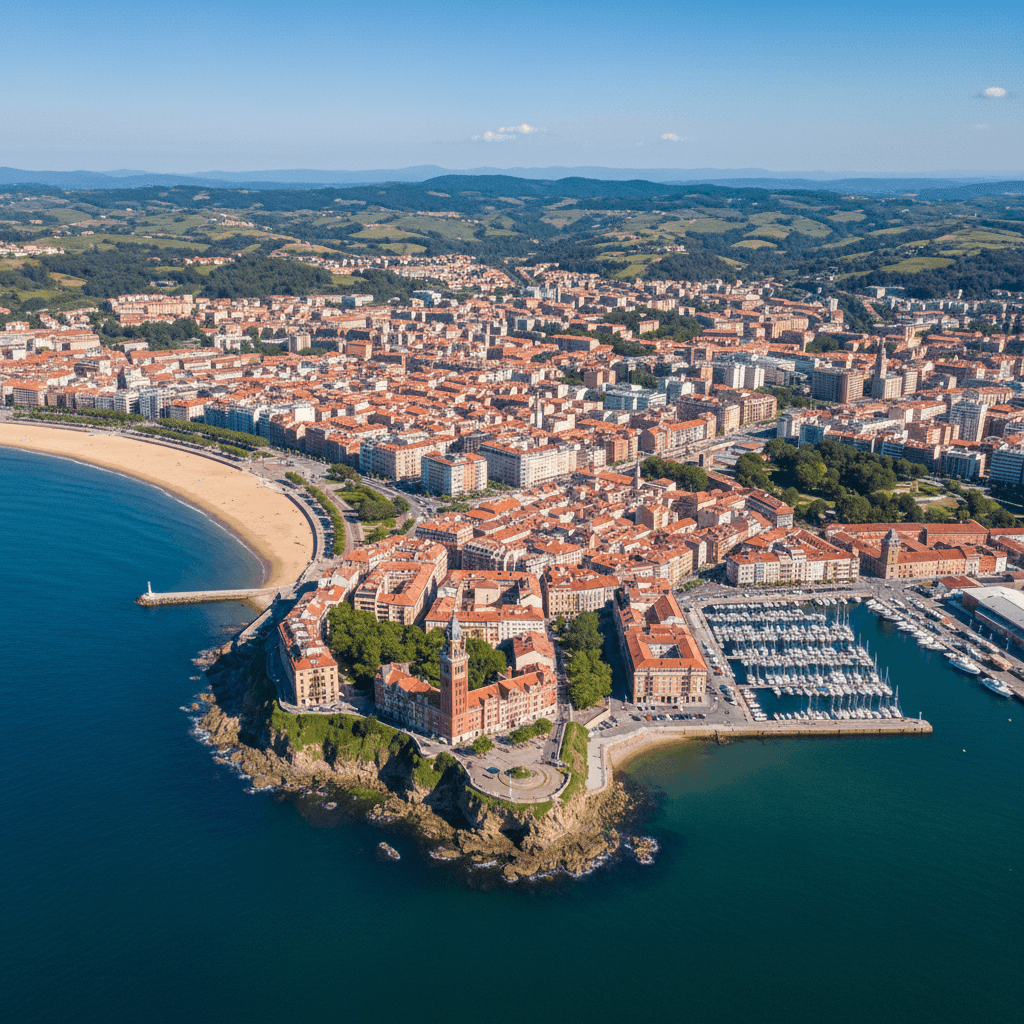
Gijón
🇪🇸 Spain
The Atlantic Soul of the North
If you are tired of the scorched pavement and tourist crowds of Madrid or Barcelona, Gijón is the breath of salty air you need. Located on the rugged coast of Asturias, this is a city that trades palm trees for cider houses and sweltering heat for a refreshing, misty Atlantic breeze. It is a place where industrial grit meets seaside elegance, creating a vibe that is unpretentious and deeply authentic.
Nomads who land here usually fall for the pace of life. It is slower than the Mediterranean hubs but carries a certain rugged energy. You will see locals surfing at Playa de San Lorenzo on their lunch breaks and then heading straight to a sidrería for a glass of local cider. The city does not try too hard to impress you, which is exactly why it usually does.
A Tale of Two Halves
The city is anchored by Cimadevilla, the old fishermen's quarter. It is a maze of narrow streets and stone houses perched on a peninsula. This is the heart of the social scene, where expats and locals gather at the Cuesta del Cholo to watch the sunset with a drink in hand. It feels like a village tucked inside a city.
Contrast that with the wide, sandy sweep of the main beach and the modern grid of the city center. Gijón offers a high quality of life without the "theme park" feel of Spain’s south. You are surrounded by the Picos de Europa mountains to the south and the Bay of Biscay to the north, making it a dream for anyone who works at a desk but lives for the outdoors.
The Nomad Reality
While Gijón is not yet a massive nomad hub, the community is growing steadily. You will find a solid infrastructure for remote work, but without the inflated "nomad prices" found elsewhere. The internet is fast, typically 300 Mbps to 1 Gbps via fiber, and the city is compact enough that you can walk almost everywhere.
The cost of living is one of the biggest draws. You can live a comfortable, middle class life here for significantly less than in Spain's major metros. Expect to pay around €650 to €900 for a nice one bedroom apartment in a central area, and a three course menú del día will usually set you back about €12 to €15.
What You Will Love (and What You Won't)
- The Food Scene: Asturias is the cider and cheese capital of Spain. The gastronomy is heavy, delicious, and incredibly affordable.
- The Greenery: You are in "Green Spain." The landscapes are lush and dramatic, perfect for weekend hiking or coastal drives.
- Authenticity: English is not as widely spoken as in Malaga or Alicante. You will need a bit of Spanish to get by, but the locals are famously friendly and patient.
- The Weather: This is the trade off. It rains. A lot. From October through March, expect grey skies and drizzle. However, the summers are glorious, rarely topping 25°C (77°F) while the rest of Spain is baking.
The Emotional Experience
Living in Gijón feels like being in on a well kept secret. There is a sense of groundedness here that is hard to find in more transient cities. You aren't just another tourist; you become part of the neighborhood fabric. It is the kind of place where the barista remembers your order by day three and the sound of the ocean is your constant background track. If you value community and nature over nightlife and high end shopping, Gijón will likely feel like home faster than you expect.
The Sweet Spot of Spanish Affordability
If you have spent any time tracking prices in Madrid or Barcelona lately, Gijon feels like a breath of fresh Atlantic air. While the Mediterranean coast has seen prices skyrocket, the capital of the Green Coast remains one of the most accessible seaside cities in Western Europe. You get the infrastructure of a major Spanish hub without the "tourist tax" found in the south.
Most nomads find that their Euros go significantly further here, especially when it comes to the quality of life. You can live a comfortable, middle class lifestyle on a budget that would barely cover a studio apartment in London or Paris. It is a place where you can afford to eat out regularly and enjoy the local cider culture without constantly checking your banking app.
Monthly Budget Breakdown
To live comfortably in Gijon, a single nomad should plan for a monthly spend between €1,400 and €1,900. This range covers a nice apartment in a central area like La Arena, plenty of social meals, and a dedicated desk at a local workspace. If you are more frugal and choose a room in a shared flat, you could easily drop that number below €1,100.
- One-bedroom apartment: €650 to €850 per month
- Room in a shared flat: €300 to €450 per month
- Utilities (Electricity, Water, Gas): €120 to €160 per month
- High speed fiber internet: €30 to €40 per month
- Coworking hot desk: €130 to €180 per month
Housing and Neighborhoods
Rent is your biggest variable. The neighborhood of Cimadevilla, the old fishermen's quarter, is charming but can be pricey and noisy. Many remote workers gravitate toward La Arena because it sits right on San Lorenzo Beach. You will pay a premium for sea views, but the convenience of surfing before your first Zoom call is hard to beat.
For better value, look toward Laviada or El Llano. These areas are just a ten minute walk from the center but offer much more competitive rates. Use platforms like Idealista or Fotocasa to gauge the market, but be ready to move fast. The rental market is not as cutthroat as Madrid, but good apartments in Gijon still disappear within days.
Food, Drink, and Social Life
This is where Gijon truly shines. The Asturian lifestyle revolves around the sidreria (cider house). A bottle of local cider usually costs around €3 and is meant to be shared. The Menu del Dia (menu of the day) is a sacred institution here. For €12 to €15, you will get a three course meal, bread, and wine. It is often cheaper than cooking for yourself.
- Espresso or Cafe con Leche: €1.40 to €1.80
- Pint of local craft beer: €4 to €5
- Dinner for two at a mid-range restaurant: €40 to €50
- Weekly groceries for one: €45 to €60
Transport and Connectivity
Gijon is an incredibly walkable city. Most nomads rarely use public transport because you can get from the western docks to the eastern cliffs in about 40 minutes on foot. If it is raining, the local bus network is reliable and cheap. A single ride is €1.50, but frequent users get a Tarjeta Ciudadana to drop that price significantly.
For weekend trips to the Picos de Europa mountains or neighboring Oviedo, the ALSA bus network and Cercanias trains are your best friends. A round trip to Oviedo costs less than €6. If you are flying in, the Asturias Airport (OVD) is about 40km away, with a shuttle bus costing €9 each way.
The Digital Nomad Visa Factor
Since Gijon is part of Spain, you can take advantage of the Spanish Digital Nomad Visa. To qualify in 2025, you generally need to prove an income of at least €2,849 per month (200% of the 2026 SMI). While the application requires some paperwork and health insurance, living in Gijon on that salary feels like true luxury compared to the struggle of making that amount work in a city like Ibiza or San Sebastian.
The Coastal Hustler: Cimadevilla
If you want to be in the thick of it, Cimadevilla is the place. This is the old fishermen quarter, a hilly peninsula that splits the city between the marina and the beach. It feels like a village within a city, full of narrow alleys and stone houses. Nomads gravitate here for the atmosphere and the proximity to the water.
- Vibe: Historic, social, and slightly gritty in a charming way.
- Rent: Expect to pay around €750 to €950 for a decent one bedroom apartment.
- Best for: Solo travelers who want to walk everywhere and be near the nightlife.
- Local Tip: Head to Cuesta de las Comedias for a cider after work. It is the heart of the social scene.
The Beachfront Professional: San Lorenzo and La Arena
For those who came to Gijon for the Atlantic breeze, La Arena is the top choice. It sits right against San Lorenzo beach. You can finish a Zoom call and be on the sand in three minutes. The area is packed with cafes that have reliable Wi-Fi, making it the unofficial headquarters for remote workers in the city.
- Vibe: Breezy, active, and very walkable.
- Rent: Prices stay around €800 to €1,100 depending on how close you are to the water.
- Best for: Digital nomads and surfers who want a view of the Bay of Biscay.
- Coworking: Many expats use spaces like The Shed or local cafes along the promenade.
The Long Term Expat: El Centro
The city center is where the infrastructure is most reliable. It is less about the beach and more about the shopping, the banks, and the main bus lines. It is surprisingly quiet at night compared to the old town, which makes it a favorite for people staying six months or longer who need a routine. You are never more than a ten minute walk from the harbor or the park.
- Vibe: Polished, convenient, and commercial.
- Rent: You can find modern flats for €850 to €1,200.
- Best for: Expats who prioritize high speed fiber internet and proximity to supermarkets like Mercadona.
- Food: This area has the highest density of menu del dia spots, usually costing around €12 to €15.
The Family Base: Viesques
If you have kids or just want green space, Viesques is the neighborhood of choice. It is further inland and feels more like a modern suburb. It is full of parks, wide sidewalks, and newer apartment complexes that often include pools or gyms. It is the quietest part of the city but still only a short bike ride from the center.
- Vibe: Residential, green, and peaceful.
- Rent: Larger three bedroom apartments go for €1,000 to €1,400.
- Best for: Families and slow travelers who want a local, non touristy experience.
- Transport: The local bus system is efficient here, with rides costing roughly €1.50.
The Budget Conscious: El Natahoyo
Located on the western side of the city near the Poniente beach, El Natahoyo is traditionally a working class area that is becoming more popular with younger arrivals. It is more affordable than the east side of town but still gives you easy access to the coast. It is a bit more industrial in parts, but the value for money is hard to beat.
- Vibe: Authentic, unpretentious, and evolving.
- Rent: You can often find apartments for €600 to €750.
- Best for: Budget travelers and those looking for a "real" Spanish neighborhood.
- Safety: Like most of Gijon, it is very safe, even late at night.
Connectivity and Speed
Spain is a global leader in fiber optic penetration, and Gijón is no exception. You won't struggle to find high speed internet here; even the older buildings in the Cimadevilla district usually have access to 300 Mbps or 600 Mbps fiber lines. Most apartments and Airbnbs come standard with these speeds, making video calls and heavy uploads a non issue.
Mobile data is equally reliable. The city has extensive 5G coverage from the major carriers like Movistar, Vodafone, and Orange. If you're looking for a local SIM, a prepaid plan with 50GB to 100GB of data typically costs between €15 and €20 per month. You can pick these up at shops along Calle Corrida. For those who prefer eSims, Airalo works perfectly well, though local physical SIMs offer much better value for longer stays.
Coworking Spaces in Gijón
Gijón has a growing professional community, particularly around the Parque Científico Tecnológico, but most nomads prefer staying closer to the city center and the beach. The coworking scene here is intimate and welcoming, lacking the corporate coldness found in larger hubs like Madrid.
- Almacén 39 Coworking: A versatile and well-regarded space that offers a professional yet creative environment. It is popular for its flexible options and central location, making it a reliable choice for those needing a dedicated desk or meeting facilities.
Laptop Friendly Cafes
While Gijón has a deep rooted coffee culture, it leans more toward social "café solo" breaks than all day laptop sessions. However, a few spots are welcoming to the remote work crowd as long as you're respectful during peak lunch hours.
Raw Coco Green Bar is a top pick for nomads. It has a modern, health conscious vibe, plenty of power outlets, and reliable Wi-Fi. It's one of the few places where seeing a laptop on the table doesn't feel out of place. Another solid option is CatLove Coffee, which serves some of the best specialty coffee in the city and has a relaxed atmosphere conducive to getting an hour or two of work done.
If you prefer a view, several spots along Playa de San Lorenzo offer Wi-Fi, but the glare from the Bay of Biscay and the midday crowds can make productivity a challenge. Stick to the side streets of the La Arena neighborhood for a quieter experience.
The Digital Nomad Visa Factor
If you're planning to make Gijón your base for more than 90 days, Spain's Digital Nomad Visa is the standard route. The process generally takes 1 to 3 months for approval. You'll need to prove a monthly income of roughly €2,849 (which is 200% of the Spanish minimum wage) and provide proof of private health insurance. Gijón is an excellent choice for this visa because your Euro goes much further here than in Barcelona, especially when it comes to rent and dining out.
Practical Tips for Remote Workers
Local life revolves around the "siesta" window. Many smaller shops and some local offices close between 14:00 and 17:00. While coworking spaces and larger cafes stay open, the city definitely hits a lull in the afternoon. It's the perfect time to head to the beach or grab a €12 Menú del Día at a local sidrería before diving back into your afternoon tasks. Public Wi-Fi is available in many plazas and public buildings through the "Gijon-WiFi" network, but it's better suited for checking maps than handling a Zoom call.
Staying Safe in the North
Gijón is arguably one of the safest coastal cities you will find in Spain. While residents in Madrid or Barcelona have to stay vigilant against pickpockets, the vibe here is much more relaxed. You can generally walk through the city center or along the San Lorenzo beach at 2:00 AM without a second thought. It is the kind of place where locals still leave their bikes leaned against a cafe wall while they grab a quick espresso.
That said, standard common sense still applies in busier spots. The Cimadevilla neighborhood, Gijón's old town, gets packed on weekend nights. While it is mostly just people enjoying cider and tapas, the narrow alleys can get crowded, so keep your phone in your front pocket. You won't find many "no-go" zones here, though some expats suggest being more aware of your surroundings around the Natahoyo industrial areas late at night simply because they are less populated and poorly lit compared to the city center.
If you run into any trouble, the local police (Policía Local) are very visible. You can reach emergency services by dialing 112. Most officers don't speak fluent English, so having a translation app ready or knowing basic phrases like "Me han robado" (I have been robbed) can be a lifesaver. For non-emergencies, the station on Calle San José is the main point of contact.
Healthcare and Wellness
Spain's healthcare system is world-class, and Gijón is no exception. If you are here on the Digital Nomad Visa, you are likely required to have private health insurance for your first year, but you will still be using the same high-quality facilities as the locals. The Hospital Universitario de Cabueñes is the primary public hospital, located on the eastern edge of the city. It handles most major emergencies and specialized treatments.
For day-to-day issues or private consultations, many nomads head to Hospital Jove or private clinics like Quirónsalud. A standard private consultation usually costs between €60 and €100 if you are paying out of pocket. If you just have a minor ailment like a cold or a surf-induced scrape, look for the green neon crosses of the Farmacias. They are everywhere. In Gijón, pharmacies rotate "Guardia" shifts, meaning there is always at least one open 24 hours a day in each district.
- Hospital de Cabueñes: Main public hospital for emergencies.
- Quirónsalud Gijón: Popular choice for those with private insurance like Sanitas or Mapfre.
- Emergency Number: 112 (Police, Fire, and Ambulance).
- Pharmacy Hours: Generally 9:30 AM to 1:30 PM and 4:30 PM to 8:00 PM; check the door of any pharmacy for the nearest 24-hour location.
Water and Environmental Safety
The tap water in Gijón is perfectly safe to drink and tastes much better than the mineral-heavy water you find on the Mediterranean coast. You can skip the plastic bottles and use a refillable one. The biggest safety concern for most visitors is actually the Bay of Biscay. The Atlantic can be rough, and the tides at San Lorenzo Beach are significant. Always check the flags before swimming; a red flag means the currents are dangerous and you must stay out of the water.
If you are planning to hike in the nearby Picos de Europa, keep in mind that the weather in Asturias changes in minutes. Even if it is 22°C and sunny in Gijón, the mountains can be foggy and cold. Always download offline maps and tell someone where you are going, as cell service can be spotty once you head inland toward the peaks.
Making Your Way Around Gijon
Gijon is one of those rare European cities where you can actually ditch the car and not regret it. Most of the action is concentrated along the coast, stretching from the old fishermen's quarter of Cimadevilla to the far end of San Lorenzo Beach. It is a flat, compact city that rewards anyone willing to move on two feet or two wheels.
The Local Bus Network (Gijon-Busa)
The city's bus system, operated by EMTUSA, is reliable and covers almost every corner of the municipality. You will recognize the buses by their bright red color. While the city center is walkable, you will want the bus to reach spots like the Laboral Ciudad de la Cultura or the Viesques neighborhood.
- Fares: Expect to pay around €1.25 for a one way trip if you pay in cash, or €0.38 with the Tarjeta Ciudadana.
- The Citizen Card (Tarjeta Ciudadana): Local nomads usually grab this card at a municipal office. It drops the price per journey significantly and allows for free transfers between lines for 45 minutes.
- Operating Hours: Most lines run from 7:00 AM to 11:00 PM. On weekends, the "Buho" (owl) night buses take over, keeping the city connected after the cider bars close.
Cycling and Micro-mobility
Gijon has made massive strides in bike infrastructure. There is a scenic cycling path that hugs the coastline, perfect for a morning commute if you are staying near Poniente. The city is mostly flat, so you won't break a sweat getting to a coworking space.
The municipal bike sharing service, Gijon-Bici, is a popular choice for quick hops. You can find stations scattered near the main plazas and the marina. If you prefer electric scooters, check local regulations as they are frequently updated regarding where you can park and ride, especially near the pedestrianized shopping streets around Calle Corrida.
Walking the City
Walking is the default mode of transport for most residents. You can walk from the Puerto Deportivo to the Piles River in about 20 to 25 minutes. The streets are safe, well lit, and usually full of people out for their "paseo" regardless of the weather. Just keep a light raincoat or an umbrella handy; the Asturian sky is famously unpredictable.
Taxis and Ridesharing
Taxis are plentiful and can be hailed on the street or found at designated ranks near the Plaza del Carmen or the bus station. They are metered and generally honest. While big rideshare apps have a smaller footprint here than in Madrid or Barcelona, local taxi apps like PideTaxi work well for booking a ride to the airport or a late night trip home.
Getting Out of Town
For trips beyond the city limits, you have two main options for public transit. The ALSA bus station is the primary hub for regional travel, with frequent departures to Oviedo and Aviles for about €2.50 to €5.00. It is often faster and more frequent than the train.
The Cercanias (regional train) station is located a bit further out from the center. It is a great, scenic way to reach the smaller coastal villages or the mountains. If you are heading to Asturias Airport (OVD), which is about 40km away, the dedicated airport bus departs every hour and costs approximately €9.00. It is a smooth 45 minute ride that drops you right at the terminal.
Monthly Transport Costs
- Occasional Rider: €20 to €30 per month using a rechargeable card.
- Daily Commuter: €40 to €50 per month if you are frequently heading to the outskirts or neighboring cities.
- Bike Rental: Many shops offer monthly rentals for around €60 if you want your own dedicated set of wheels.
The Linguistic Landscape
In Gijón, Spanish is the undisputed king of daily life. Unlike the tourist-saturated streets of Barcelona or the international hubs in Madrid, English is less of a default here. You'll find that while younger professionals and staff in high-end hotels usually speak some English, your local barista or the person selling you a bus ticket likely won't. This isn't a barrier so much as an invitation to slow down and practice the basics.
Most nomads find that a "survival" level of Spanish goes a long way. If you can order a café con leche and handle basic transactions, the locals are famously patient and friendly. They appreciate the effort, especially in neighborhood spots around Cimadevilla. It's a city where a smile and a few clumsy verbs will get you much further than speaking English loudly and slowly.
Asturian: The Local Flavor
You'll notice signs and menus featuring words that look like Spanish but feel slightly off. That's Asturianu (Asturian), the regional language. While almost everyone speaks standard Spanish (Castilian), there's a deep pride in the local tongue. You might hear people say puxa instead of "viva" or see sidrerías (cider houses) using regional spellings.
You don't need to learn Asturian to get by, but picking up a few local terms is a great way to bond with the community. If you're out for drinks, knowing that a culín is the small splash of cider poured into your glass will earn you some immediate respect from the locals.
Communication Apps and Staying Connected
Spain has some of the best fiber and 5G infrastructure in Europe, and Gijón is no exception. Most nomads rely on WhatsApp for everything. It's the primary way to talk to landlords, book a table at a restaurant, or organize a surf session at San Lorenzo beach. If you don't have it installed, you'll find yourself out of the loop very quickly.
For navigating the city, Google Maps is reliable for walking and the local bus system, though the Gijón Bus app is the go-to for real-time arrivals. If you're looking for language exchanges, check out Meetup or local Facebook groups like "Expats in Asturias." These groups are smaller than those in the south, but they're tight-knit and helpful for finding language tutors.
Practical Language Tips
- Google Translate: Download the Spanish offline dictionary. It's a lifesaver when you're in a basement cider bar with spotty reception.
- Meal Times: Learn the vocabulary for different times of day. Lunch (comida) is the big event around 2:00 PM, and dinner (cena) rarely happens before 8:30 PM or 9:00 PM.
- Local Greetings: A simple "Hola" or "Buenas" works for almost every situation when entering a shop or cafe.
- The "Cider" Rule: When you're at a sidrería, don't try to pour your own cider. If you need more, catch the waiter's eye and ask for "otro culín."
Language Schools and Learning
If you're staying for a few months, enrolling in a local school is the best way to bridge the communication gap. Prices for group classes usually hover around €10 to €15 per hour. Local language centers or private tutors found through Superprof are popular choices for nomads. Many expats recommend doing a morning intensive course so you can spend your afternoons working from a seaside cafe while practicing what you learned.
Ultimately, Gijón is a city that rewards the curious. It isn't a place where you can hide in an English-speaking bubble, and that's exactly why people love it. You'll leave with better Spanish and a much deeper connection to the local culture than you'd get in the more commercialized parts of Spain.
The Atlantic Rhythm
Unlike the sun drenched imagery of the Mediterranean south, Gijón marches to a cooler, Atlantic beat. It is part of Green Spain, a region where the landscapes stay lush because the rain actually shows up. You won't find the blistering 40°C heatwaves that paralyze Madrid or Seville here. Instead, Gijón offers a temperate escape that is perfect for nomads who prefer a light jacket over a sweat soaked t-shirt.
The local climate is officially oceanic. This means mild winters and summers that feel like a dream compared to the rest of the peninsula. Expect high humidity year round, which keeps the air feeling fresh but can make the winter chill bite a little harder than the thermometer suggests.
Summer: The Sweet Spot (June to August)
Summer is when Gijón truly shines. While the rest of Spain is hiding indoors under air conditioning, you will be out on San Lorenzo beach. Temperatures usually hover between 20°C and 25°C. It is rarely too hot to work from a terrace, and the evenings are long and breezy.
- The Draw: This is the season of "Semana Grande" in August, a massive festival with free concerts and fireworks that turns the city into a giant party.
- The Vibe: The city fills up with Spanish tourists escaping the southern heat. It is energetic, social, and the best time for surfing at Playa de Poniente.
- The Trade-off: Accommodation prices in neighborhoods like Cimadevilla can spike, and you will need to book your coliving space or Airbnb months in advance.
Autumn: The Cider Season (September to November)
September is a favorite for many long term nomads. The water is still warm enough for a dip, the crowds have thinned, and the light over the Bay of Biscay is spectacular. By October, the rain starts to pick up, and the city settles into a cozy, moody rhythm.
This is the prime time to explore the local "sidrerías." As the air cools down, there is nothing better than ducking into a wood paneled bar in the La Arena district to watch waiters pour cider from high above their heads. Rainfall averages about 90mm to 100mm per month during this window, so a solid waterproof shell is a non negotiable piece of gear.
Winter: The Quiet Grind (December to February)
Winter in Gijón is grey, wet, and surprisingly charming if you enjoy a "hygge" lifestyle. Temperatures rarely drop toward freezing, usually staying around 8°C to 13°C. It is not the frozen tundra, but the dampness means you will want a flat with decent heating, something that isn't always a guarantee in older Asturian buildings.
For focused work, this is the best time to be here. The distractions of the beach are gone, and the local coworking scene is filled with residents rather than transients. Just be prepared for the "orbayu," a persistent, fine Asturian drizzle that can last for days.
Spring: The Awakening (March to May)
Spring is unpredictable. You might get a week of glorious 20°C sunshine followed by three days of Atlantic storms. By May, the city begins to bloom, and the outdoor terraces start filling up again. It is a fantastic time for hikers; the nearby Picos de Europa mountains are losing their heavy snow caps, making for world class weekend trips just an hour away.
The Nomad Verdict
- Best for Surfers: September and October offer the most consistent swells and fewer crowds on the waves.
- Best for Socializing: July and August are unbeatable for meeting people, though your cost of living will rise.
- Best for Budget: November to March. You can often negotiate better monthly rates on housing when the summer tourists are long gone.
If you hate the rain, Gijón might test your patience. But if you value fresh air, green mountains, and a climate that actually lets you breathe while you work, aim for a landing date in late June. You will get the best of the weather and the full force of the city's summer energy.
Getting Started and Connectivity
Setting up your digital base in Gijón is relatively straightforward compared to the frantic pace of Madrid. You'll want to grab a local SIM card immediately to handle your data needs. Movistar and Vodafone have the most reliable coverage in the Asturias region, but Digi is a favorite for nomads on a budget due to their cheap prepaid bundles. Expect to pay around €15 to €20 for a solid monthly data plan.
Fiber optic internet is standard across the city center. Most apartments come equipped with speeds upwards of 300 Mbps, making video calls and heavy uploads a breeze. If you need a professional environment, several coworking spaces across the city offer flexible daily and weekly rates, usually starting around €15 for a day pass. For a more casual vibe, the cafes near San Lorenzo Beach have decent Wi-Fi, though they can get loud during the afternoon merienda hour.
The Cost of Living
One of the biggest draws of Gijón is the price tag. Your money goes significantly further here than in the south of Spain or the major Mediterranean hubs. Most nomads find they can live comfortably on a budget of €1,600 to €2,100 per month.
- One-bedroom apartment: Expect to pay between €650 and €850 depending on proximity to the water.
- Daily Menu (Menú del Día): A three course lunch with wine usually costs between €12 and €15.
- A glass of cider (Sidra): Around €3 for a bottle that is meant to be shared.
- Monthly utilities: Budget roughly €140 for electricity, heating, and water.
Moving Around the City
Gijón is a remarkably walkable city. You can get from the historic Cimadevilla district to the modern shops in the center in about fifteen minutes on foot. For longer trips, the local bus system, EMTUSA, is efficient and covers almost every corner of the municipality. A single ride is about €1.50, but frequent users should get a rechargeable transport card to bring that cost down.
If you want to explore the rugged Asturian coastline or visit nearby Oviedo, the Cercanías train is your best bet. It's cheap, scenic, and reliable. For those arriving from abroad, Asturias Airport (OVD) is about 40 kilometers away. An Alsa bus runs from the airport to the Gijón city center every hour and costs approximately €9.
Health and Safety
Spain's healthcare system is world class, and Gijón is no exception. Hospital de Cabueñes is the main public facility, but most nomads use private insurance like Sanitas or Adeslas to skip the queues. These policies are often a requirement for the Digital Nomad Visa and usually cost between €50 and €80 per month.
The city is incredibly safe, even late at night. You'll see families out in the plazas well past midnight during the summer. Standard precautions apply in crowded tourist spots like the Marina, but violent crime is almost unheard of here. Just keep an eye on your phone and wallet in busy cider bars.
Language and Local Customs
While younger people and those in the tech scene speak some English, Gijón isn't as international as Barcelona. You'll have a much better experience if you learn the basics of Spanish. Locals are patient and appreciate the effort. A simple "Hola" or "Gracias" goes a long way in the neighborhood shops.
Keep in mind the local schedule. Shops often close for a break between 2:00 PM and 5:00 PM, and dinner rarely starts before 9:00 PM. If you try to eat at 6:00 PM, you'll likely find most kitchens are closed. Adapt to the local rhythm, and you'll find the pace of life in Asturias is one of the most rewarding in Europe.
Need visa and immigration info for Spain?
🇪🇸 View Spain Country GuideEasy Landing
Settle in, no stress