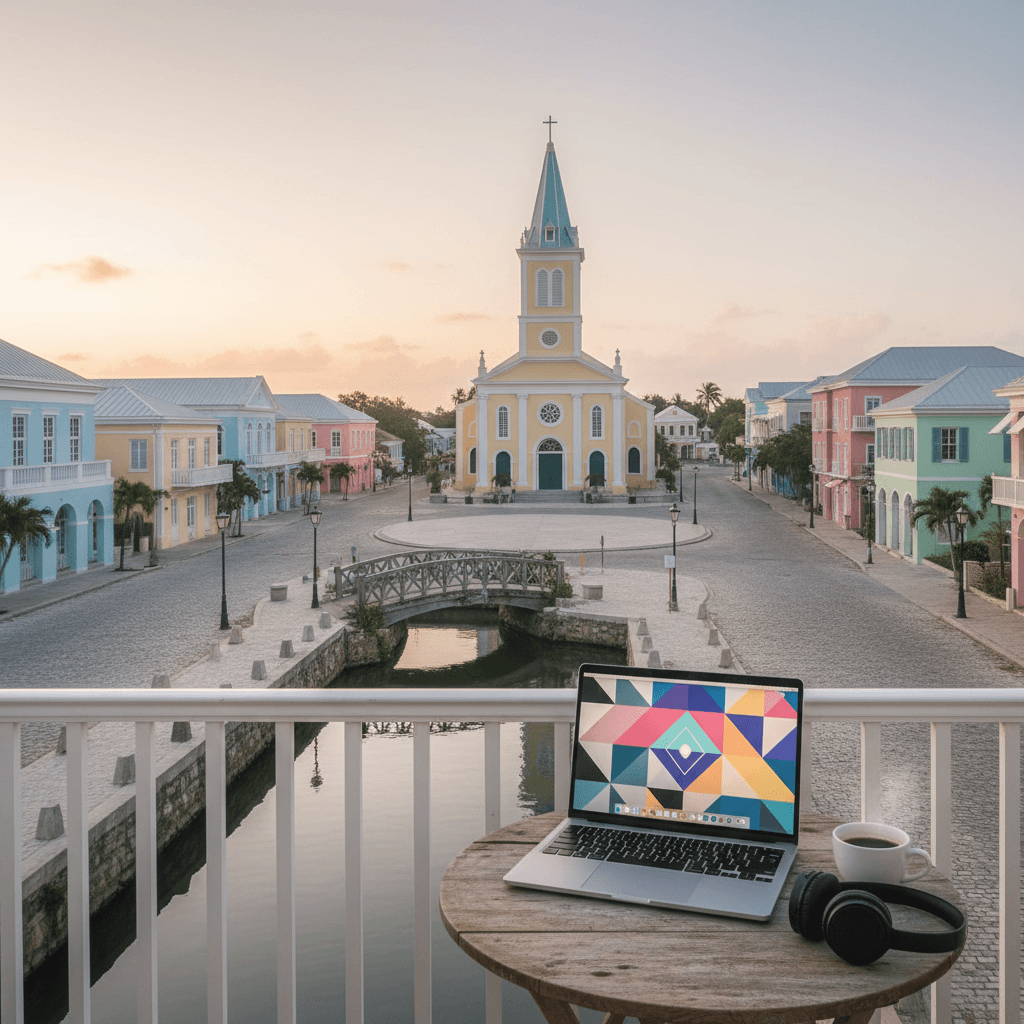
George Town
🇧🇸 Bahamas
The Rhythmic Slowdown
George Town isn't your typical digital nomad hub. While most remote workers flock to the high energy of Nassau, those who make it down to Great Exuma are looking for something else entirely. It is a place where the clock is replaced by the tide. You are trading the convenience of five coworking spaces and fiber optic speed for a life that feels deeply connected to the elements. The vibe is unapologetically laid back, defined by pastel hued homes, gin clear water, and a community that knows everyone by name.
Living here feels like being let in on a secret. You'll spend your mornings working from a shaded porch with a view of Elizabeth Harbour and your afternoons taking a water taxi to Stocking Island. It is quiet, rhythmic, and occasionally frustrating when the internet dips during a tropical storm, but the trade off is a level of natural peace that is hard to find anywhere else in the Caribbean.
The Cost of the Tropics
The Bahamas is notoriously expensive, and George Town is no exception. Almost everything is imported, so your grocery bill will likely give you a bit of sticker shock. Most nomads find they need a budget of at least $2,500 to $3,500 per month to live comfortably. While you won't find the $50 club covers of Nassau here, the costs add up in logistics and leisure.
- Budget (Approx. $2,000): This usually involves a shared rental or a modest studio further from the water, sticking to local fish fry stands for meals, and walking or biking instead of relying on $40 taxi rides.
- Mid range (Approx. $2,500 to $3,000): This gets you a private 1BR apartment in George Town, a mix of home cooking and mid range dining at spots like Shirley's Seafood, and perhaps a regular boat rental.
- Comfortable ($3,500+): At this level, you are looking at waterfront villas, frequent dinners at upscale resort restaurants, and the flexibility to island hop via private charter or frequent ferries.
Connectivity and Workspace
If you need a dedicated office with ergonomic chairs and free flowing espresso, stay in Nassau. George Town is for the self reliant nomad. There are no formal coworking spaces in town, so your "office" will be your rental's dining table or a quiet corner of a local cafe. Internet speeds generally hover between 50 and 90 Mbps, which is plenty for Zoom calls, though the Out Islands can be temperamental.
Expats recommend picking up a local SIM card from BTC or Aliv immediately upon arrival at the airport. These providers offer surprisingly strong mobile data coverage across the island, serving as a reliable backup when the house WiFi decides to take a siesta. For those who need a change of scenery, a few hotels allow nomads to work from their common areas if you are buying lunch or drinks.
The Neighborhood Breakdown
Great Exuma is small, but where you park your laptop matters. Most nomads stick close to George Town for the proximity to services, while others head further out for total seclusion.
George Town Proper
- Rent: $1,200 to $1,800 for a 1BR
- Vibe: The heart of the island. It is walkable, close to the grocery store, and provides the easiest access to the water taxis.
Little Exuma
- Rent: $1,000 to $1,500
- Vibe: Connected by a small bridge, this area is even slower and more rustic. It is home to the famous Tropic of Cancer Beach. You will absolutely need a car here.
Practicalities and Perks
The BEATS visa is the golden ticket for long term stays. It allows you to live and work remotely in the Bahamas for up to a year, and the online application process is relatively smooth, usually taking about 5 to 10 days to process. You will need proof of employment and health insurance, which is mandatory for all nomads.
Getting around is the main hurdle. There is no real public transit, so you will either become a regular with a local taxi driver or rent a car for about $60 to $80 a day. Most people find that a mix of walking within George Town and occasional rentals for island exploration works best. The weather is spectacular from December to April, with temperatures sitting around 80°F. Just keep an eye on the horizon during hurricane season from June to November, as the island takes storm prep very seriously.
The Price of Paradise
Living in George Town and the wider Bahamas comes with a "sunshine tax" that's hard to ignore. Since almost everything from avocados to gasoline is imported, your monthly burn rate will be significantly higher than in Southeast Asia or Latin America. Most single nomads find themselves spending between USD 2,000 and 3,500 per month depending on how often they trade local fish fry stands for resort dining.
The currency is pegged 1:1 with the US Dollar, and both are used interchangeably. While you won't have to do mental math at the register, you will need to budget carefully for logistics. Taxis are notoriously expensive, often costing USD 20 to 50 for a single trip, and there isn't a reliable ride-sharing app to rescue your wallet. If you're staying in George Town on Exuma, being within walking distance of the main settlement is a massive financial win.
Monthly Budget Tiers
Your lifestyle determines which version of the Bahamas you experience. Here is how the costs generally break down for a single professional:
The Budget Nomad
- Monthly Total: Approximately USD 2,000
- Housing: USD 800 for a shared rental or a modest guesthouse further from the water.
- Food: USD 300 by sticking to grocery stores and roadside "conch salad" stands.
- Transport: USD 200 for occasional taxis and local jitney buses in Nassau.
The Mid-Range Professional
- Monthly Total: Approximately USD 2,500
- Housing: USD 1,200 for a private 1BR apartment in George Town or a central Nassau studio.
- Food: USD 500 for a mix of home cooking and a few weekly dinners at mid-tier spots like Shirley’s at the Fish Fry.
- Workspace: USD 200 for a dedicated desk at a coworking hub in Nassau or high-speed home internet.
The High-End Expat
- Monthly Total: USD 3,500+
- Housing: USD 2,000+ for a luxury condo near Cable Beach or a waterfront villa in Great Exuma.
- Dining: USD 800 for frequenting upscale resort restaurants and cocktail bars.
- Leisure: USD 500 for weekend boat charters to the Cays or diving excursions.
Housing and Neighborhoods
Finding a place to stay usually involves scouring Booking.com or local Facebook groups. In George Town, rent is slightly more approachable than the capital, ranging from USD 800 to 1,500, though the inventory is much smaller. It is a trade-off: you get a slower, safer, and more rustic vibe in Exuma, but you sacrifice the convenience of Nassau’s infrastructure.
Nassau is the primary hub for anyone needing a "real" office environment. It hosts five coworking spaces where a monthly membership runs between USD 200 and 400. If you choose Nassau, stick to the tourist-friendly zones or gated communities. Areas like "Over-the-Hill" should be avoided after dark. For those who prioritize peace over productivity hubs, Eleuthera offers stunning natural beauty, but the WiFi can be temperamental and the rental market is lean.
Practical Survival Tips
To keep costs from spiraling, grab a local SIM card from BTC or Aliv immediately upon landing. Data packages are affordable and the coverage is surprisingly strong across the islands. For groceries, prepare for sticker shock at the checkout; expats recommend buying local produce whenever possible and bringing your favorite non-perishables from home.
If you plan on staying long-term, the BEATS visa is the way to go. It allows remote workers to live in the Bahamas for up to a year. You will need to prove you have a remote job and pay the permit fees once approved, but it's a straightforward process that takes about 5 to 10 days to clear. Just ensure you have solid health insurance before applying, as it is a mandatory requirement for the residency permit.
For the Social Nomad: Nassau (New Providence)
If you need a reliable desk and a community of peers, Nassau is your base. It is the only spot in the country where you will find dedicated coworking spaces, like those found around the downtown district. Most nomads gravitate toward the areas near Parliament Square or Prince George Wharf for the mix of historic charm and modern connectivity.
Nassau offers the strongest internet speeds, averaging around 66 Mbps, which is plenty for video calls and cloud work. You will pay for the convenience, though. A 1BR apartment in a decent area ranges from $1,200 to $2,000 per month. When you are off the clock, the social scene is active with clubs and upscale resort bars, though be prepared for weekend cover charges around $50 BSD. Stick to the tourist zones and well lit areas at night; locals and expats generally advise against wandering into non tourist neighborhoods like Over the Hill after dark.
For the Solo Adventurer: George Town (Great Exuma)
George Town is the choice for those who want to trade the office grind for a slower, rhythmic pace of life. It is far more rustic than Nassau, with pastel homes and a compact, walkable center. It is perfect for solo travelers who want to disappear into the scenery without the resort crowds. Life here revolves around the water and the local docks.
- Rent: Expect to pay between $800 and $1,500 for a rental, often booked via sites like Booking.com.
- Connectivity: WiFi is less stable here than in the capital. Most nomads rely on local SIM cards from providers like BTC or Aliv to stay connected.
- Vibe: Very safe and friendly. You will likely meet people at casual beach spots rather than organized networking events.
For Families: Grand Bahama
Grand Bahama strikes a balance between infrastructure and island living, making it a favorite for those traveling with children. It feels less like a tourist theme park and more like a functional community. You will find better access to healthcare and pharmacies here compared to the Out Islands, which is a major factor for parents.
The island is family friendly with plenty of space, though it lacks the high energy "paradise" aesthetic found in Exuma. Logistics are easier here; you can find larger homes for rent and the grocery stores are better stocked. Just keep in mind that public transport is nearly non existent, so you will likely need to factor in the cost of frequent taxis or a long term car rental.
For the Off-Grid Expat: Eleuthera
If your work is asynchronous and you don't mind a spotty connection, Eleuthera is the ultimate retreat. Expats here value privacy and natural beauty above all else. It is quiet, remote, and arguably has the best beaches in the archipelago. However, the cost of living remains high because almost everything is imported. Budget at least $2,500 a month for a mid range lifestyle. It is not for everyone, but for the nomad who wants to live the Pirates of the Caribbean aesthetic without the cruise ship crowds, it is unbeatable.
Practical Cost Breakdown
Regardless of where you land, the Bahamas is a $$$ destination. You are paying for the location and the ease of the GMT-5 timezone, which is a dream for US based remote workers. Here is how the monthly budget usually shakes out for a single professional:
- Budget Tier ($2,000): Shared housing in Nassau (approx $800), sticking to street food like $15 conch salad, and limited taxi use.
- Mid-Range Tier ($2,500): A private 1BR in George Town (approx $1,200), a mix of home cooking and mid range dining ($25 per meal), and a coworking membership.
- Comfortable Tier ($3,500+): Upscale Nassau rentals ($2,000+), frequent fine dining at resorts, and regular inter island day trips to the Cays.
Getting Online in the Out Islands
Working from George Town is a lesson in trade-offs. You're trading the high-speed infrastructure of Nassau for some of the most stunning turquoise views on the planet. While the Bahamas averages speeds between 56 and 97 Mbps, those numbers usually reflect the fiber connections in the capital. In George Town, you'll rely heavily on your accommodation's private network or your own mobile data.
Most rentals and small hotels in the area offer stable enough WiFi for standard Zoom calls and cloud-based tasks. However, the Out Islands are prone to occasional "island time" outages, especially during the rainy season from May to October. If your job involves heavy video rendering or massive data transfers, you'll want to verify the specific router setup with your host before booking.
For a reliable backup, pick up a local SIM card immediately. The two main providers are BTC and Aliv. You can find their kiosks at the airport or in small shops around town. Mobile coverage is surprisingly strong across Great Exuma, and tethering to your phone often provides a more consistent connection than public beach bars. Expect to pay around $30 to $50 for a decent monthly data package.
The Coworking Reality
If you're looking for a traditional coworking space with ergonomic chairs and networking mixers, you won't find it in George Town. All five of the country's dedicated coworking hubs are located in Nassau. Digital nomads in Exuma typically adopt a work-from-home model or set up shop at local cafes and resort lounges.
For those who need a professional environment for a few days, a quick flight or ferry to Nassau gives you access to spaces that charge roughly $20 per day or $200 per month. These spots mirror the "The Lab" model found in other Caribbean hubs, providing reliable backup power and high-speed fiber. In George Town, your "office" will likely be a shaded table at a beachside grill or your rental's patio.
Nomad Life and the BEATS Visa
The Bahamas has made it significantly easier to stay long-term through the Bahamas Extended Access Travel Stay (BEATS) program. This digital nomad visa is valid for one year and can be renewed for up to three years. The application moves quickly, often processed in 5 to 10 days, though you'll need to provide proof of remote employment and valid health insurance.
Living here isn't cheap, as almost everything is imported. A single professional should budget between $2,500 and $3,500 per month to live comfortably. While a 1BR in George Town might run you $1,200 to $1,500, your grocery bill will be the real shocker. Most nomads find that cooking at home and sticking to local spirits like Kalik or Sands beer helps keep the "paradise tax" manageable.
Top Spots for a Working Lunch
- Chat 'N' Chill: Located on Stocking Island, it's the iconic spot for a Sunday pig roast. Use your hotspot here for the ultimate "office" view, but don't expect quiet.
- Peace & Plenty Resort: A historic hotel in the heart of George Town. Their patio is a favorite for expats who need a central spot with decent WiFi and a reliable sandwich.
- Shirley’s at the Fish Fry: Great for a casual afternoon session with local seafood. It's more of a social hub, but the vibe is perfect for clearing out an inbox.
Connectivity Essentials
- Average Speed: 66 Mbps in Nassau; 30 to 50 Mbps in George Town.
- SIM Cards: BTC or Aliv; available at airports and pharmacies.
- Power: Standard US 110V plugs; bring a surge protector for your laptop.
- Best Time for Connectivity: December to April (outside of hurricane season).
Safety in George Town and Beyond
Living in George Town on Great Exuma feels worlds away from the frantic pace of most capital cities. The vibe here is remarkably safe and community focused. Most nomads find that the biggest "danger" is a flat tire on a remote road or staying out in the sun too long without hydration. It is the kind of place where people still wave as you drive by, and the local expat community is tight knit, often connecting through school groups or weekend beach meetups.
If you head to Nassau for the coworking scene or a weekend trip, the safety profile shifts slightly. While the resort areas and tourist hubs like Prince George Wharf are well patrolled, you should avoid non tourist neighborhoods at night, specifically areas like Over the Hill. Stick to the well lit, populated zones and you will likely have a trouble free experience. Travelers often say the Bahamas feels as welcoming as Barbados, provided you use the same common sense you would in any major international hub.
Emergency services are reached by dialing 911. While the police presence in Exuma is modest, the low crime rate reflects the island's laid back, rhythmic lifestyle. Just keep your valuables out of sight in your rental car and lock your doors at night, standard practice for any seasoned traveler.
Healthcare Infrastructure
The quality of healthcare you receive depends entirely on which island you are calling home. If you are based in Nassau or Grand Bahama, you have access to modern facilities, well stocked pharmacies, and specialized care. Princess Margaret Hospital in Nassau is the primary public facility, though many expats prefer private clinics for faster service. These urban centers have the infrastructure to handle most medical issues that might arise during your stay.
On the Out Islands like Exuma or Eleuthera, healthcare is much more basic. George Town has local clinics and pharmacies that can handle minor ailments, infections, or basic prescriptions, but they aren't equipped for major trauma or complex surgeries. In a serious medical emergency, you would likely be medevacked to Nassau or even Florida. Because of this, nomads usually recommend keeping a basic first aid kit and a supply of any regular medications on hand, as shipping things to the Out Islands can be slow and expensive.
Insurance and Requirements
One detail you cannot overlook is the insurance requirement for the BEATS nomad visa. To get approved for your one year stay, you must show proof of valid health insurance that covers you in the Bahamas. Even if you aren't on the official nomad visa and are just visiting for a few months, medical evacuation coverage is highly recommended given the archipelago's geography.
- Nassau Healthcare: Comprehensive hospitals and private specialists available.
- Exuma Healthcare: Local clinics for basic needs; emergency transport required for serious issues.
- Pharmacy Access: Easy to find in George Town and Nassau; prices are higher due to import costs.
- Mandatory Insurance: Required for the BEATS visa application.
Most nomads find that paying a bit extra for a premium international plan is worth the peace of mind. While the sun and sand are the main draw, having a clear plan for medical care allows you to actually relax into the slow, rhythmic pace of island life without worrying about the "what ifs."
The Reality of Island Transit
Moving around George Town and the wider Great Exuma area requires a shift in mindset. You won't find a grid of subways or a fleet of Ubers waiting around the corner. Instead, transportation here is a mix of DIY rentals, expensive private taxis, and the occasional water taxi. Most nomads find that while the settlement itself is walkable, seeing the best beaches or getting to a grocery store with a full stock requires some wheels.
Car Rentals and Scooters
If you're staying for more than a few days, a rental car is almost a requirement. Most expats recommend booking a vehicle as soon as you confirm your stay, as supply is limited on the island. Expect to pay between $70 and $100 per day for a basic sedan. Remember that in the Bahamas, you'll be driving on the left side of the road. The main Queen's Highway is a single two-lane road that runs the length of the island, so it’s hard to get lost, but watch out for potholes and roaming livestock.
- Daily Car Rental: $75 to $100
- Weekly Rate: $450 to $600
- Scooter Rentals: Usually around $50 per day, though these are better for short hops than long hauls on the highway.
Taxis and Private Transfers
Taxis are the primary way to get from Exuma International Airport (GGT) to George Town. A one-way trip usually costs between $20 and $40 depending on your exact destination and how much luggage you're hauling. There are no ride-hailing apps like Uber or Lyft here. You'll want to save a few taxi drivers' numbers in your phone once you find someone reliable. Most drivers are happy to act as a personal concierge for the right price, but costs add up quickly if you rely on them for every grocery run.
The Water Taxi to Stocking Island
Since George Town sits right on Elizabeth Harbour, some of your "commuting" might happen on the water. To get to the famous Chat 'N' Chill beach bar or the hiking trails on Stocking Island, you'll need the water taxi. These run regularly from the government dock in the center of town. A round-trip ticket usually costs about $15 to $20. It’s a ten-minute ride that offers some of the best views of the harbor's neon-blue water.
Walking George Town
If you manage to snag a rental right in the heart of George Town near Lake Victoria, you can handle your daily errands on foot. The settlement is compact, and you can walk between the straw market, the grocery store, and local spots like Eddie's Edgewater in about ten minutes. However, the tropical heat and humidity can make a mid-day walk brutal. Most travelers prefer to do their walking in the early morning or late afternoon when the breeze picks up.
Inter-Island Travel
If you need to head to Nassau for a coworking space or a more "urban" weekend, you have two main choices. Bahamasair and Western Air run daily flights that take about 40 minutes and usually cost between $150 and $250 round-trip. For a slower, more scenic route, the mail boat or seasonal ferries are options, though they are much less predictable. Most nomads stick to the short hops by plane to save time and avoid the rougher seas of the Exuma Sound.
Practical Transit Tips
- Gas Prices: Expect to pay significantly more than US mainland prices, often over $6 per gallon, as all fuel is imported.
- Bikes: Some Airbnbs and guest houses provide bicycles. They're great for George Town proper, but the Queen's Highway lacks a shoulder, making long-distance cycling feel a bit sketchy.
- Hitchhiking: It is surprisingly common and generally considered safe for locals and savvy travelers on the Out Islands, though you should always use common sense.
- Airport Arrival: Taxis wait outside for every arriving flight; there is no need to pre-book unless you have a massive group.
The Local Lingo
You won't have any trouble getting your point across in George Town. English is the official language, and everyone speaks it with high proficiency. For digital nomads, this is a massive perk; there's zero friction when you're negotiating a lease, ordering a coffee, or trying to explain a tech issue to a local service provider. You can leave the translation apps closed for this trip.
While the formal language is standard English, you'll mostly hear Bahamian Creole in daily life. It's a rhythmic, melodic dialect that blends English with African influences. It's perfectly intelligible to native English speakers once you tune your ear to the cadence. Locals appreciate it when you pick up on the local flavor, though you'll never be expected to speak it yourself.
Useful Phrases and Slang
The vibe in Exuma is incredibly friendly, and greetings are a big deal. A simple "Good morning" or "Good afternoon" goes a long way when you walk into a shop or pass someone on the street. If you want to sound a bit more like a local, you can use these common expressions:
- "What's the vibe?" or "Wassup?": The standard way to ask how things are going.
- "Switcha": What locals call fresh lemonade or limeade. You'll want plenty of this in the 90°F heat.
- "Potcake": The nickname for the local stray dogs you'll see around George Town. They're generally friendly and a staple of island life.
- "Bey": A versatile term used like "man" or "dude," applied to pretty much anyone regardless of gender.
Communication Logistics
Staying connected is straightforward, though the pace of infrastructure can be slower than what you're used to in the US or Europe. Most nomads head straight for a local SIM card to avoid roaming charges. The two main providers are BTC and Aliv. You can find their storefronts in George Town or pick up a card at the airport if you're flying through Nassau. Coverage is surprisingly strong across Great Exuma, though it can get spotty if you're out on a boat near the smaller cays.
For day to day communication with tour operators, landlords, or new friends you meet at Chat 'N' Chill, WhatsApp is the gold standard. Almost everyone uses it for business and social life. If you're looking to meet other expats or nomads, Facebook Groups are still the most active hubs for George Town. Look for local community boards to find out about pop up events or boat rallies.
Social Etiquette
Communication here is relaxed but polite. People in George Town take their time, so don't expect a "New York minute" response when you're out to dinner. If a server or shopkeeper seems slow, they aren't being rude; they're just on island time. Pushing or acting impatient is considered quite poor form. A smile and a bit of patience will get you much further than a demanding attitude.
When it comes to digital work, most locals understand the nomad lifestyle but might find it curious if you're glued to a laptop at a beach bar. If you need to take a loud Zoom call, it's better to stay in your rental. George Town's social spaces are built for conversation and taking in the view, not for high pressure business meetings.
The Sweet Spot: December to April
If you're looking for that postcard-perfect Bahamian weather, aim for the window between December and April. This is the dry season, where the humidity drops and the trade winds kick in to keep things comfortable. You'll see average temperatures hovering around 80°F (27°C), which is the goldilocks zone for working on a patio without your laptop overheating or your forehead breaking a sweat.
This is also when George Town and the surrounding Exuma cays truly come alive. Because the water is at its clearest, it's the best time for those mid-day snorkel breaks or boat trips to Stocking Island. Be aware that this is peak tourist season; prices for short-term rentals on sites like Booking.com will be at their highest, and you'll want to book your "BEATS" nomad visa well in advance to beat the winter rush.
The Shoulder Season: May and June
Many long-term nomads prefer the transition months of May and June. The islands start to get quieter as the spring break crowds thin out, and you can often find better deals on mid-range housing in George Town, sometimes dipping closer to $1,200 a month compared to peak winter rates. The water is warmer for swimming, though you'll start to see more frequent afternoon rain showers. These usually pass quickly, giving you a good excuse to hunker down in a cafe or finish up your deep-work tasks for the day.
The Storm Watch: August to October
If you're planning to be in the Bahamas during the late summer, you need to keep an eye on the horizon. August through October is the heart of hurricane season. While the islands have solid infrastructure to handle storms, the heat and humidity can be intense, often hitting 90°F (32°C) with very little breeze.
Expats who stay through the summer often mention that this is when the "island time" vibe slows down even further. Some local restaurants in George Town might close for renovations or staff holidays. If you're sensitive to heat or rely on a perfectly stable power grid for back-to-back Zoom calls, this might be the time to head north or stick to the more robust infrastructure in Nassau.
What to Pack for the Climate
- Lightweight Linens: Stick to breathable fabrics. The Bahamian sun is no joke, and you'll want coverage that doesn't trap heat.
- Tech Protection: High humidity can be tough on electronics. Bring a dry bag for your laptop if you plan on taking the ferry between islands or working near the beach.
- Rain Gear: A light, packable waterproof jacket is a must for the sudden tropical downpours that characterize the rainy season from May to October.
- Surge Protectors: While the power is generally reliable in the main hubs, tropical storms can cause flickers. Protecting your gear is a smart move.
Quick Weather Stats
- Hottest Months: July and August (88-90°F)
- Coolest Months: January and February (70-75°F)
- Rainiest Period: June and September/October
- Hurricane Season: Official dates are June 1st to November 30th
Most nomads find that the higher cost of living during the winter months is a fair trade-off for the near-perfect weather. There is something uniquely motivating about closing your laptop at 4:00 PM and walking straight into 75-degree turquoise water while the rest of the world is shoveling snow.
The Nomad Reality Check
Living in George Town or Nassau isn't your typical budget backpacker experience. The Bahamas is expensive, plain and simple. Most of what you'll eat and use is imported, so expect to pay a premium for the privilege of working from a turquoise shore. A single professional should budget between $2,500 and $3,500 USD per month to live comfortably. While you can scrape by on $2,000 by sticking to local fish fry stands and shared housing, it's a tight squeeze.
The infrastructure is a tale of two islands. Nassau is the functional heart, housing all five of the country's dedicated coworking spaces and the fastest internet speeds, averaging around 66 Mbps. George Town on Great Exuma is the choice for those who want a rhythmic, slow pace of life and don't mind the occasional WiFi hiccup. If your job requires constant high-bandwidth video calls, stay in Nassau or verify your Exuma rental has a dedicated Starlink or high-speed cable connection before booking.
Cost of Living Breakdown
Prices are pegged to the US Dollar, and both currencies are used interchangeably. Here is what your monthly ledger will likely look like:
Nassau (New Providence)
- Rent: $1,200 to $2,000 for a modern 1BR near downtown or the western districts.
- Coworking: $200 to $400 per month for a hot desk.
- Meals: $15 for street food like conch salad; $50+ for dinner at resort-area restaurants.
- Transport: $1.25 for a jitney (bus) ride; $20 to $40 for typical taxi trips.
George Town (Great Exuma)
- Rent: $800 to $1,500 for a cottage or apartment, though availability is much lower than in the capital.
- Meals: $20 to $35 for mid-range dining at local beach bars.
- Transport: Car rentals are almost a necessity here and can run $75 to $100 per day. Walking is only viable if you stay directly in the small settlement center.
Staying Connected and Productive
Don't rely on public WiFi. Grab a local SIM card from BTC or Aliv as soon as you land at Lynden Pindling International Airport. Coverage is surprisingly strong across the islands, and having a mobile hotspot is the best insurance policy against a local power outage. In Nassau, you'll find a small but tight-knit community of remote workers in shared offices that mirror the professional setups you'd find in the US or Europe.
If you're heading to the Out Islands like Eleuthera or Exuma, the "cafe culture" is non-existent. You won't find many baristas who are happy with you camping out for four hours with a laptop. Plan to work from your accommodation and save the beach bars for your "out of office" hours.
Safety and Health
George Town is incredibly safe and feels like a small town where everyone knows your name. Nassau requires more awareness. Stick to the tourist hubs and well-lit areas. Expats generally advise avoiding neighborhoods like Over-the-Hill after dark. For healthcare, Nassau is the only spot for serious medical needs, home to Princess Margaret Hospital. If you're based in the Out Islands, make sure your insurance covers emergency medical evacuation, as local clinics are only equipped for the basics.
The BEATS Visa
The Bahamas makes it easy to stay legally with the BEATS (Bahamas Extended Access Travel Stay) program. This digital nomad visa is valid for one year and can be renewed for up to three years. The application is handled online with a processing time of about 5 to 10 days. You'll need to provide proof of your remote employment and valid health insurance. Once approved, you pay the permit fees and you're set to work from the sand.
Getting Around
Nassau's jitneys are a cheap and colorful way to get around during the day, but they stop running around sunset. After that, you're at the mercy of taxis, which don't use meters. Always negotiate the price before you get in. In George Town, life happens on the water. You'll likely spend as much time on water taxis or rented skiffs heading to Stocking Island as you will on the road. For inter-island travel, the mail boats are a slow, authentic adventure, but most nomads stick to Bahamasair or local ferries for speed.
Need visa and immigration info for Bahamas?
🇧🇸 View Bahamas Country GuideOff the Radar
Pioneer territory