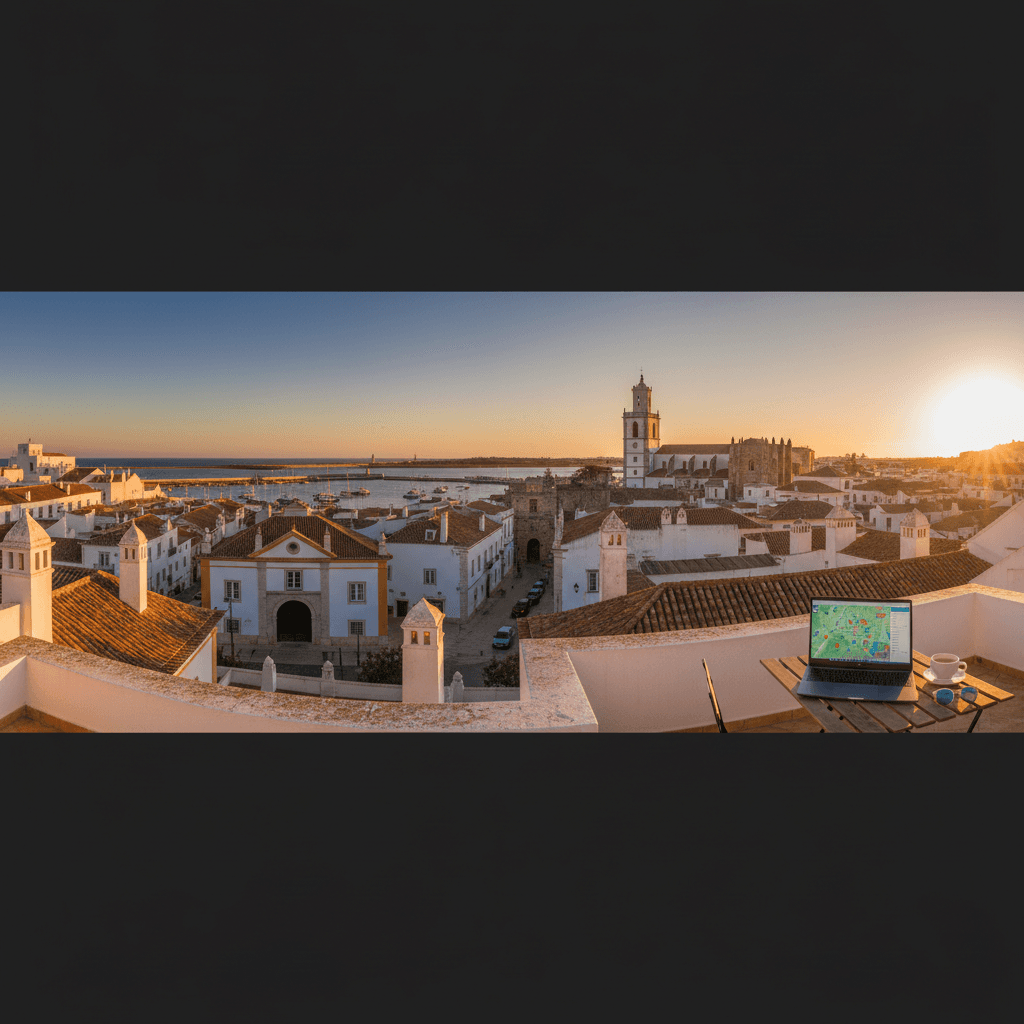
Faro
🇵🇹 Portugal
The Algarve Gateway Without the Gimmicks
Most travelers treat Faro as a 15 minute pitstop between the airport tarmac and a shuttle bus to Lagos or Albufeira. For the nomad community, that’s a massive oversight. Faro doesn’t feel like a manicured resort town; it feels like a lived in Portuguese city that just happens to have a massive lagoon and a beach attached to it. It’s the kind of place where you’ll see local fishermen hauling catches in the morning and tech workers opening Macbooks by noon.
The vibe here is noticeably slower than Lisbon and far more authentic than the western Algarve. You’ll find a compact, walkable center paved with traditional calcada stones and lined with orange trees. It’s sunny, affordable, and surprisingly easy to integrate into. While other spots in Portugal can feel like nomad bubbles, Faro keeps you grounded with its municipal markets and quiet plazas where the loudest sound is the clinking of espresso spoons.
The Daily Rhythm
Life in Faro usually revolves around the sun and the tides. Most nomads spend their mornings in the Centro Histórico, working from spots like Alandra Square or small cafes where the WiFi is snappy and the coffee is rarely more than €1.50. By mid afternoon, there’s a collective migration toward the water. Unlike cities where the beach is a mission to get to, Praia de Faro is just a quick bus ride on the Próximo line or a scenic ferry trip away.
Expats frequently mention the "Faro balance." You have the infrastructure of a regional capital, including reliable hospitals and high speed fiber internet, but the city limits are small enough that you’ll start recognizing your neighbors within a week. It’s a supportive environment for remote work, though you have to be prepared for the summer shift. Between July and August, the quiet streets fill with tourists, and the relaxed pace can feel a bit more frantic as prices at beach bars tick upward.
Cost of Living Breakdown
Faro remains one of the most accessible entries into the Portuguese lifestyle, especially if you’re looking to keep your monthly burn between €1,200 and €1,800. It’s significantly cheaper than the north, and your money goes much further on the basics.
- Budget Setup (€1,200): This usually involves a room in a shared apartment, heavy use of the municipal markets for fresh fish and produce, and sticking to local tascas where a meal costs €10.
- Mid-Range Setup (€1,500): A private 1BR apartment in the city center (averaging €800 to €1,200), dining out a few times a week, and a dedicated desk at a coworking space.
- Comfortable Setup (€1,800+): A modern apartment with a view, frequent dinners at upscale seafood spots, and weekend trips exploring the wider Algarve via car rentals.
Where to Plant Your Flag
Choosing a neighborhood in Faro is a choice between convenience and scenery. Most nomads stick to the core for the walkability, but the outskirts have their own draws.
Centro Histórico
- Best for: Solo nomads and anyone without a car.
- The Vibe: Historic, social, and busy. You’re steps away from every major cafe and the main bus terminal.
- The Trade-off: It can get noisy during summer festivals and tourist peaks.
Praia de Faro
- Best for: Surfers and beach lovers.
- The Vibe: Pure vacation energy. You wake up to the sound of the Atlantic.
- The Trade-off: You’re further from grocery stores and urban amenities; you’ll rely heavily on the bus or a scooter.
Near the Airport / Montenegro
- Best for: Short term stays and budget seekers.
- The Vibe: Residential and quiet. It’s where many locals live, so prices for long term rentals are often softer.
- The Trade-off: Lacks the charm of the old town; you’ll spend more time commuting to the center for social events.
Ultimately, Faro is for the nomad who wants the Algarve sunshine without the "theme park" feel of the coastal resorts. It’s a place where you can actually build a routine, join a language exchange, and feel like part of a community rather than just another face in the crowd.
The Bottom Line on Faro
Living in Faro offers a significant discount compared to the skyrocketing costs of Lisbon or Porto. Most digital nomads find they can maintain a high quality of life here for between €1,200 and €1,800 per month. It is the kind of place where you can afford the occasional seafood feast without checking your banking app immediately after. While summer tourism drives up short term prices, the year round cost of living remains one of the most attractive features of the Algarve capital.
Monthly Budget Tiers
- The Budget Nomad (€1,200): You will likely be looking at a room in a shared apartment or a modest studio further from the water. This budget relies on shopping at local municipal markets and keeping dining out to a minimum.
- The Mid-Range Professional (€1,500): This covers a private one bedroom apartment in the city center, a few weekly dinners at mid-range spots, and a dedicated desk at a coworking space like Alandra Square.
- The Comfortable Expat (€1,800+): At this level, you are looking at premium apartments with beach views or modern amenities, frequent dining at upscale seafood restaurants, and plenty of budget for weekend trips across the Algarve.
Housing and Neighborhoods
Rent is your biggest variable. In the Centro Histórico, expect to pay between €800 and €1,200 for a one bedroom apartment. These spots are walkable and put you right in the middle of the cafe culture, though they can get noisy when the summer crowds arrive. If you prefer a quieter, more local vibe, look near the Próximo bus routes or the airport area where prices dip slightly.
Living near Praia de Faro is tempting for the beach access, but keep in mind that amenities like grocery stores are thinner on the ground there. Most expats recommend staying central for the reliable fiber internet and then taking the bus to the beach when the sun hits.
Daily Expenses and Food
Eating out is a highlight here. A mid-range meal usually runs between €10 and €15 per person. If you want to save, head to the municipal markets early in the morning for fresh fish and produce. It is significantly cheaper than the supermarkets and the quality is far superior.
- Utilities: Budget around €100 per month for electricity and high speed home internet.
- Coworking: Flexible plans at local hubs generally cost between €100 and €200 per month.
- Transport: Faro is very walkable, so your transport costs might be near zero. When you do need to move, the Próximo bus system is efficient and affordable. For longer trips, Uber and Bolt are readily available.
- Connectivity: Skip the physical SIM card hunt at the airport. Most travelers now use an Airalo eSIM for instant data upon arrival.
Connectivity and Banking
Portugal is very tech forward. Most nomads use Wise or Revolut to handle daily transactions and avoid currency conversion fees. You will find that almost everywhere in the city center accepts card payments, though having a few Euros in cash for the smaller markets is a smart move. For finding long term rentals, locals often suggest checking platforms like Casas do Barlavento to find vetted listings that cater to the nomad community.
The City Center (Centro Histórico)
For most nomads and solo travelers, the Centro Histórico is the default choice. It is the heartbeat of Faro, where the cobblestone streets lead to a mix of centuries-old architecture and modern workspaces like Alandra Square. You can walk almost everywhere, from the local municipal market for fresh morning produce to the ferry docks for a quick island getaway.
- Best For: Digital nomads, solo travelers, and anyone who hates commuting.
- Rent: Expect to pay between €800 and €1,200 for a one bedroom apartment.
- Pros: High speed internet is standard in most rentals; you are steps away from the best cafes; the community of remote workers is concentrated here.
- Cons: It gets loud during the peak summer months of July and August when tourists crowd the main plazas.
Praia de Faro (The Beach Area)
If you came to the Algarve to wake up to the sound of the Atlantic, Praia de Faro is your spot. Located on a narrow peninsula, this area feels like a separate world from the urban center. It is connected to the city by a bridge and the Próximo bus line, making it accessible even if you don't have a car. Expats who live here year round often trade the convenience of big supermarkets for a slower, sun-soaked lifestyle.
- Best For: Families and travelers who prioritize nature over nightlife.
- Rent: Studios and small beach houses typically range from €900 to €1,300 depending on the view.
- Pros: Direct access to the sand; great for morning runs or surfing; cooler temperatures during heatwaves.
- Cons: Limited grocery options and fewer coworking spaces; the bus ride to the city takes about 20 minutes.
Montenegro and the Airport Perimeter
Located between the airport and the city, Montenegro is a residential hub that many expats call home. It lacks the historic charm of the old town, but it makes up for it with practical amenities. You'll find larger grocery stores, better parking, and more modern apartment complexes here. It is a strategic choice for those who plan on taking frequent weekend flights or want to be halfway between the beach and the office.
- Best For: Long term expats and short term nomads who need easy airport access.
- Rent: Slightly more affordable, with some setups starting around €800 for a comfortable apartment.
- Pros: Very quiet compared to the center; close to the Próximo bus routes; easier to find larger living spaces for families.
- Cons: You will likely need a bike or a Bolt account to get into the city center for social events.
Living Costs by Lifestyle
Faro remains significantly cheaper than Lisbon or Porto, which is why the nomad community is growing so quickly. Most people find they can live a very high quality life for under €1,800 a month. If you are on a tighter budget and stick to local markets and shared housing, you can get by on roughly €1,200.
- Budget Tier: €1,200 (Includes a room in a shared house and cooking most meals at home).
- Mid Range Tier: €1,500 (A private one bedroom apartment and eating out at local spots three times a week).
- Comfortable Tier: €1,800+ (A modern apartment with beach views, a dedicated desk at Alandra Square, and regular social dining).
Most travelers recommend using apps like Airalo for an eSIM the moment you land and Wise or Revolut for daily transactions. While English is widely spoken in the center and beach areas, learning a few phrases like "Quanto custa?" will go a long way when you're shopping at the local markets.
Connectivity and Speed
Portugal consistently ranks as one of the best countries in Europe for digital infrastructure, and Faro is no exception. Whether you are hunkered down in a 17th-century apartment in the Centro Histórico or working from a beachfront cafe at Praia de Faro, you can expect stable, high-speed fiber internet. Most rentals come equipped with speeds ranging from 100 Mbps to 500 Mbps, which is more than enough for seamless Zoom calls or uploading large files.
For mobile data, most nomads ditch the physical SIM card hunt and opt for an Airalo eSIM before they even touch down at Faro Airport. If you prefer a local provider, MEO and Vodafone offer reliable 4G and 5G coverage across the city and the surrounding lagoons. Expect to pay around €100 per month for a full utility package that includes high-speed home internet and a solid mobile data plan.
Top Coworking Spots
While Faro has a more relaxed pace than Lisbon, the professional scene is growing. The community is tight-knit, making it easy to network without the frantic energy of larger tech hubs. You will find that most spaces offer flexible daily, weekly, or monthly memberships to suit your travel schedule.
- Alandra Square: This is the gold standard for remote work in Faro. It is modern, bright, and specifically designed for the nomad lifestyle. They offer ergonomic seating, private call booths, and a community atmosphere that helps you transition from work to social life. Monthly hot desk plans typically range between €100 and €200.
- Local Libraries: If you are on a budget, the municipal libraries are quiet, free, and offer decent WiFi. They are a great fallback for deep work days when you don't need to take calls.
- Creative Hubs: Keep an eye out for smaller, grassroots spots near the marina where local entrepreneurs and expats often congregate. These spaces are less about corporate amenities and more about organic networking.
Laptop-Friendly Cafes
The cafe culture in Faro is welcoming to remote workers, provided you follow the unwritten rules of nomad etiquette. Most owners won't mind you staying for a few hours if you keep the coffee and snacks flowing. The city center is packed with spots that have reliable WiFi and outdoor seating for those sunny Algarve afternoons.
- Municipal Markets: While not a traditional office, the cafes around the markets are great for early risers who want to soak up the local energy before the midday heat kicks in.
Digital Nomad Community
The best part about Faro is the ease of meeting people. Since the city is compact and walkable, you will likely run into the same faces at Alandra Square or the local language exchanges. Expats and nomads frequently organize meetups via Facebook groups or WhatsApp chats, focusing on everything from weekend surf trips to sunset drinks by the Ria Formosa. It is a supportive environment where people prioritize work-life balance, taking full advantage of the April to June and September to October windows when the weather is perfect and the summer tourist crowds have thinned out.
Peace of Mind in the Algarve
Faro is consistently ranked as one of the safest cities for digital nomads in Southern Europe. Unlike the frantic energy of Lisbon or the gritty pockets of Porto, Faro maintains a small town atmosphere where locals look out for one another. Most expats feel perfectly comfortable walking through the Centro Histórico or the marina area late at night. The vibe here is fundamentally relaxed, and violent crime is nearly non-existent.
That said, being a tourist hub means you should still keep your wits about you. Petty theft, like pickpocketing, can happen during the peak summer months of July and August when the city swells with travelers. The most common advice from long term residents is to keep an eye on your tech at beachside cafes and avoid leaving valuables visible in your car if you are parking near Praia de Faro. There are no specific "no-go" zones to worry about, though the areas immediately surrounding the airport can feel a bit desolate after dark simply because they lack foot traffic.
Healthcare Infrastructure
Portugal’s healthcare system is high quality and reliable, and Faro serves as the medical hub for the entire Algarve region. This is a major perk of staying here versus a smaller village like Sagres. You have immediate access to specialized care without needing a long drive.
- Public vs. Private: The Centro Hospitalar Universitário do Algarve is the main public hospital. It provides excellent care but can have long wait times for non-emergencies. Most nomads prefer using private facilities like Hospital Particular do Algarve for faster service and more English speaking staff.
- Emergency Services: In any serious situation, dial 112. This is the EU-standard emergency number for police, fire, and ambulance services.
- Pharmacies (Farmácias): You’ll find these on almost every other block in the city center. Look for the illuminated green cross. Pharmacists in Portugal are highly trained and can often provide advice or over the counter remedies for minor ailments, saving you a trip to the doctor.
Practical Tips for Nomads
If you are staying long term on a D8 Digital Nomad Visa, you’ll eventually want to register for the public health system (SNS) to get your Número de Utente. This gives you access to heavily subsidized care. Until then, private insurance is a requirement for your visa and a practical necessity for daily life. Many expats use providers like SafetyWing or World Nomads, but local private insurance like CUF or Multicare is also popular if you plan to stay for a year or more.
For quick check-ups or prescriptions, most private consultations will cost you between €40 and €60 out of pocket if you don't have local insurance. It’s a small price to pay for the efficiency and peace of mind. Most doctors in the city center speak fluent English, so you won't need to worry about a language barrier when explaining your symptoms.
Water and Environment
The tap water in Faro is safe to drink, though it has a high mineral content that some people find tastes a bit "hard." Most nomads use a filter pitcher like a Brita or buy large jugs from the local Pingo Doce supermarket. During the summer, the heat can be intense, often hitting 30°C or higher. Dehydration is a more common health complaint among newcomers than any tropical disease or safety threat, so keep a reusable bottle with you when exploring the Ria Formosa.
Foot Power and the Compact Core
Faro is one of those rare European hubs where you can genuinely rely on your own two feet for about 90 percent of your daily life. The city center is incredibly compact, meaning your morning walk from a flat in the Centro Histórico to a desk at Alandra Square will likely take less than ten minutes. The cobblestone streets are charming but can be slick when wet, so most expats recommend ditching the formal shoes for something with a decent grip.
Most nomads find that living centrally eliminates the need for a car entirely. You can wander from the marina to the local markets or the main shopping strips without ever looking at a bus schedule. It is a slow paced way to live that fits the Algarve vibe perfectly.
Mastering the Próximo Bus Network
When you need to venture beyond the walkable core, the Próximo bus system is your primary lifeline. These bright buses are efficient and connect the city center to the airport and the beach areas with high frequency. If you are staying near the airport for cheaper rent, the Line 16 bus is the one you will get to know best; it runs regularly between the airport, the main bus station (Terminal Rodoviário), and Praia de Faro.
- Airport to Center: A single ticket on the Line 16 costs around €2-€3 and takes about 20 minutes.
- Beach Trips: The same bus continues to the beach, though it can get packed during the July and August peak season.
- Payment: You can usually buy tickets directly from the driver, but having small change makes the process much smoother for everyone.
Ride-Hailing and Taxis
For late nights or grocery hauls, Uber and Bolt are both active throughout Faro and the wider Algarve region. Prices are generally lower than what you would find in London or New York, with a cross town trip often costing between €5 and €8. During the summer months, surge pricing can kick in when the tourist crowds arrive, so it is smart to have both apps installed to compare rates. Traditional taxis are also available at marked stands near the marina and the airport, though they usually cost a bit more than the apps.
Regional Exploration
Faro serves as the central nervous system for the Algarve rail and bus networks. If you want to spend a weekend in Lagos or Tavira, the train station is a short walk from the marina. The regional trains are affordable and offer great coastal views, though they aren't exactly high speed. For those planning to explore the more rugged, "off the path" Atlantic beaches to the west, travelers often suggest renting a car for a day or two, as public transport to the smaller coves can be spotty.
Two Wheeled Transit
Cycling is popular along the flat coastal paths, especially around the Ria Formosa and the road leading to Praia de Faro. You will find several rental shops near the beach area and the harbor. While the city center is walkable, a bike is the best way to escape the summer heat and find a quiet spot on the sand away from the main bus stops. Just be mindful that bike lanes are still a work in progress in the older parts of town, so you will often be sharing the road with local traffic.
Arrival Essentials
To make your arrival seamless, skip the airport SIM card kiosks and set up an Airalo eSIM before you land. It gives you instant data for Google Maps and ride hailing apps the moment you touch down. Most nomads also suggest having a Revolut or Wise card ready to go; they work perfectly for the contactless readers on buses and in local cafes, helping you avoid the poor exchange rates at airport ATMs.
The Linguistic Landscape
You'll find that navigating Faro is remarkably straightforward if you speak English. Because it serves as the primary hub for the Algarve, most locals working in hospitality, transportation, and retail are highly proficient. Many nomads find they can handle everything from ordering a bica (espresso) at a local café to discussing lease terms with barely any Portuguese at all.
That said, Faro isn't just a tourist resort; it's a living university city. While younger residents and professionals in the Centro Histórico will switch to English the moment they hear your accent, older generations in the residential neighborhoods or at the municipal markets might only speak Portuguese. Learning the basics shows respect and usually results in better service and warmer smiles from the vendors selling fresh Atlantic fish.
Key Phrases for Your Toolkit
Dumping Google Translate for every interaction gets old fast. Expats recommend mastering a few core phrases to smooth over daily life. Keep in mind that European Portuguese sounds quite different from the Brazilian version you might hear on popular language apps; it’s more closed and rhythmic.
- Olá (Hello): The universal opener.
- Bom dia / Boa tarde (Good morning / Good afternoon): Use these before 1:00 PM and then until sunset.
- Obrigado (if you identify as male) or Obrigada (if you identify as female): The most important word in your vocabulary.
- Quanto custa? (How much does it cost?): Useful for those early morning trips to the market.
- A conta, por favor (The bill, please): Essential for ending your long lunches at the beach.
Digital Nomad Social Circles
Faro has a growing, tight-knit remote work community that makes meeting people easier than in the overwhelming crowds of Lisbon. Most social life for nomads revolves around Alandra Square, the city's premier coworking spot. It’s the unofficial headquarters for networking and finding out about weekend trips to the Ria Formosa islands.
If you’re looking to bridge the gap between the expat bubble and local life, keep an eye out for language exchange meetups. These are frequently organized in central cafes and are a low pressure way to practice your Portuguese while helping a local refine their English. Travelers often say these exchanges are the fastest way to find out about the best seafood spots that aren't listed on TripAdvisor.
Tech and Tools
While you can usually get by with gestures and English, having a few digital tools on your phone acts as a safety net. Most nomads in the Algarve rely on a few specific apps to stay connected:
- Airalo: This is the go to for many arrivals. You can set up an eSIM before you even land at Faro Airport, avoiding the hunt for a physical SIM card shop.
- Google Translate: Use the camera feature for translating menus at traditional tascas where English translations might be creative at best.
- WhatsApp: This is the primary mode of communication in Portugal. Whether you are messaging a landlord about an apartment or joining a nomad beach volleyball group, you’ll need it.
- Wise or Revolut: While not a language app, these are vital for the "financial language" of the city. Most places in Faro are tech friendly, and these cards offer the best exchange rates for local transactions.
Cultural Etiquette
Communication in Faro is as much about body language and timing as it is about words. Life moves at a slower pace here. Rushing a server or being overly demanding in a shop is considered rude. A polite "Com licença" (excuse me) goes a long way when moving through a crowded bus or market aisle. Most residents are incredibly welcoming to foreigners, provided you approach them with the same relaxed, friendly attitude that defines the Algarve lifestyle.
The Sweet Spot for Sun and Productivity
Faro is the sunniest corner of Portugal, boasting over 300 days of sunshine a year. For most nomads, the climate is a major selling point, but the timing of your arrival can drastically change your experience. While the sun is almost always out, the humidity and tourist density shift the city's vibe from a peaceful workspace to a crowded vacation hub depending on the month.
Peak Season: July and August
Summer in the Algarve is intense. Temperatures regularly hit 25°C to 30°C, and the heat can feel heavy if you aren't staying right on the water. This is when Faro is at its most crowded. Travelers often find that the city center loses its local charm as short term tourists flood the streets and prices for rentals spike. If you enjoy a high energy atmosphere and beach parties, you'll love it, but for focused deep work, the noise and heat can be a distraction.
The Golden Window: April to June and September to October
Most expats and long term nomads agree that the shoulder seasons are the best time to be in Faro. During these months, the weather is warm enough for afternoon swims at Praia de Faro but cool enough to walk through the historic center without breaking a sweat.
- Spring (April to June): Everything is green, the flowers are blooming, and the city feels fresh. You'll beat the summer crowds and find better deals on mid range housing.
- Autumn (September and October): The Atlantic water is at its warmest. The summer madness has faded, leaving a more authentic, community focused atmosphere at coworking hubs like Alandra Square.
Winter in the Algarve: November to February
Don't expect a tropical winter, but compared to Northern Europe or North America, Faro is a sanctuary. Daytime highs hover around 15°C to 20°C. You'll likely need a jacket for the evenings, and this is the only time of year you'll see significant rain.
The biggest challenge for nomads in winter isn't the outdoor temperature, but the indoor one. Many older buildings in the Centro Histórico lack central heating and proper insulation. Expats recommend checking if your apartment has a heat pump or a reliable space heater before signing a winter lease. On the plus side, this is when you'll find the most affordable rent, with some 1BR apartments dropping toward the €800 mark.
Quick Climate Snapshot
- Hottest Months: July and August (Highs of 30°C).
- Rainiest Period: November through January.
- Best Beach Weather: June to September.
- Digital Nomad Preference: May or September for the perfect balance of price, weather, and community events.
If you're planning your move, consider landing in late September. You'll catch the tail end of the beach season, avoid the peak tourist prices, and settle in just as the local nomad community starts hosting more indoor meetups and language exchanges.
Connectivity and Tech Essentials
Staying connected in Faro is straightforward. Most nomads skip the physical SIM card shops at the airport and download Airalo before landing. It gives you instant data so you can call a Bolt or check the Próximo bus schedule immediately. For banking, stick with Wise or Revolut. They're widely accepted, and you'll avoid the hefty conversion fees that local Portuguese banks sometimes tack on at ATMs.
The internet infrastructure is solid across the city center. You'll find Alandra Square to be the go to hub for serious work. It's modern, has reliable high speed fiber, and costs between €100 and €200 per month depending on how often you need a desk. If you prefer the "laptop and latte" lifestyle, the cafes in the Centro Histórico are generally welcoming, though it's polite to keep your sessions under two hours during the lunch rush.
Budgeting for the Algarve Life
Faro is significantly kinder to your wallet than Lisbon. A single person can live comfortably here on €1,500 to €1,800 a month. If you're on a tighter budget, you can make €1,200 work by cooking at home and choosing a room in a shared apartment.
- Housing: Expect to pay €800 to €1,200 for a central one bedroom apartment. Prices stay firm near the beach year round but can spike in the city center during summer.
- Dining: A mid range meal usually costs €10 to €15. For the best value, head to the municipal markets early in the morning for fresh fish and produce.
- Utilities: Budget about €100 for your monthly electricity and home internet bundle.
Navigating the Neighborhoods
Faro is compact, so your choice of neighborhood dictates your daily rhythm. Most remote workers choose the City Centre (Centro Histórico). It's entirely walkable, putting you minutes away from markets and the marina. The trade off is the noise; summer tourists can be loud on weekends.
If you want to wake up to the sound of the Atlantic, Praia de Faro is the spot. It's beautiful and sun soaked, but you'll be reliant on the bus to get into town for groceries or coworking. For those on a shorter stint, staying near the airport or along the main bus routes is practical. It's more affordable, though you'll miss out on the historic charm of the older districts.
Getting Around
You don't need a car if you stay central. The Próximo bus system is efficient and connects the airport, the city center, and the beaches for a few Euros. For late night trips or grocery hauls, Uber and Bolt are both active and affordable. If you're planning day trips to nearby towns like Lagos or Portimão, the regional train and bus networks are your best bet. Locals recommend booking these a day in advance during the peak months of July and August.
Language and Culture
While Portuguese is the official language, English proficiency is very high here. You won't struggle to order a coffee or negotiate a lease in English. That said, a little effort goes a long way. Use "Obrigado" (if you're male) or "Obrigada" (if you're female) for thank you, and "Olá" for hello.
The local culture is relaxed, but people value politeness. When shopping at the markets, a quick greeting before you start picking through the fruit is expected. If you're looking to meet people, keep an eye out for language exchange events and nomad meetups often organized through the Alandra Square community.
Weather and Timing
The "sweet spot" for Faro is April through June or September and October. The weather is warm, usually between 20°C and 25°C, and the crowds are manageable. Winters are mild, rarely dropping below 15°C, but this is when the rain hits. Avoid the peak of summer if you can; the heat and the influx of tourists can make the city feel overwhelmed.
Need visa and immigration info for Portugal?
🇵🇹 View Portugal Country GuideEasy Landing
Settle in, no stress