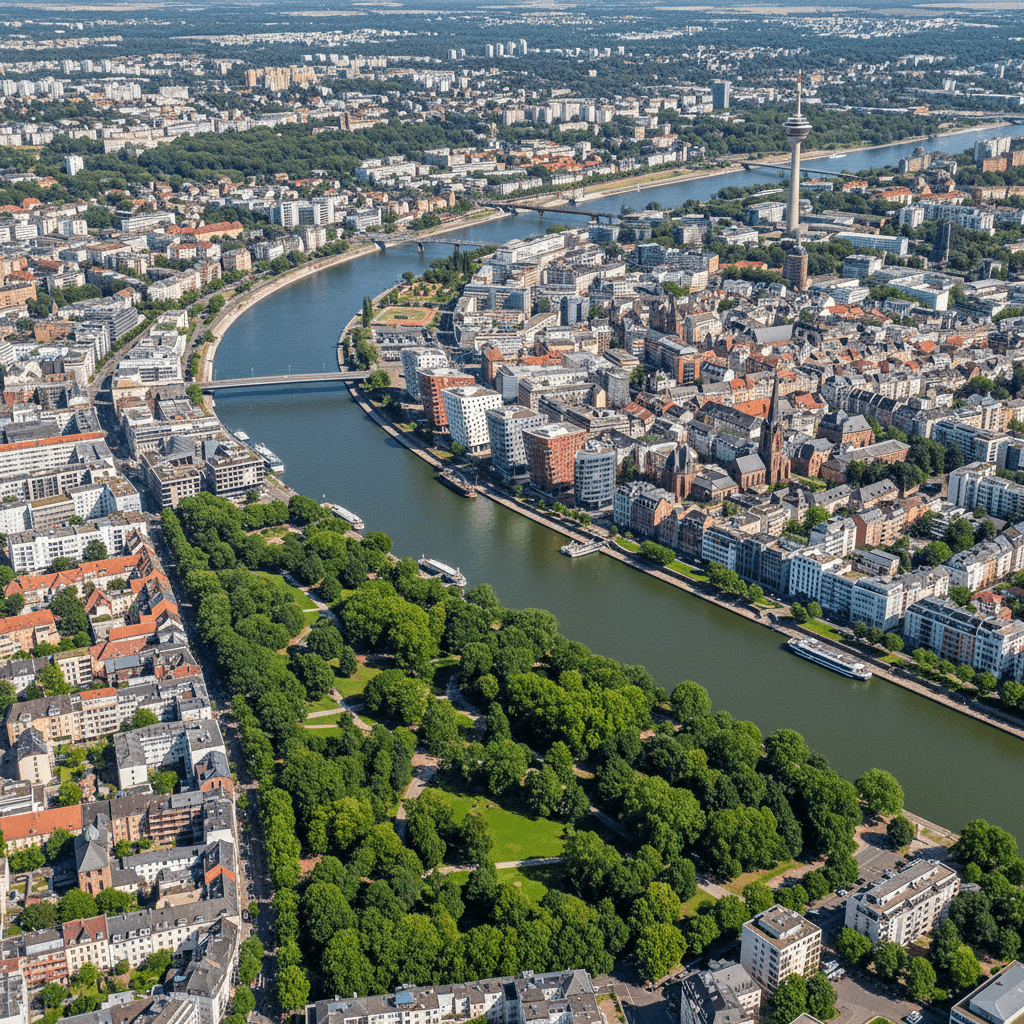
Düsseldorf
🇩🇪 Germany
A High-Design Alternative to the Berlin Chaos
Düsseldorf is the city for nomads who have outgrown the gritty, disorganized charm of Berlin and want something that actually works. It is polished, predictable, and surprisingly avant-garde. While much of Germany feels steeped in history, Düsseldorf feels like it is looking forward, anchored by a massive international expat community and a world-class art scene that keeps things from feeling too corporate.
The vibe here is "structured creativity." You will find yourself working from a sleek cafe in the morning and heading to an experimental electronic set at Salon des Amateurs by night. It is a city of contrasts: high-end fashion on the Königsallee meets the "longest bar in the world" in the Altstadt. For a digital nomad, the appeal lies in the efficiency. Everything is walkable or a short tram ride away, the internet is rock solid, and the proximity to other Rhine hubs like Cologne means you are never stuck in one bubble.
The Monthly Damage
Living here isn't cheap, but it is more manageable than Munich. You are paying for infrastructure and safety. Most nomads find they need a budget that reflects the city's professional leanings.
- Budget Tier: €1,500 to €2,000. This covers a room in a shared flat (WG), plenty of Currywurst or Imbiss street eats for €5 to €10, and a monthly transport pass.
- Mid-Range: €2,500 to €3,500. This is the sweet spot. You can snag a private studio in a cool neighborhood like Flingern for €800 to €1,200, eat out at mid-range spots for €20 to €25, and keep a coworking membership.
- Comfortable: €4,000+. This gets you a central apartment in the heart of the action, frequent high-end Japanese dining (some of the best in Europe), and regular Ubers or car-sharing.
Where to Plant Your Laptop
Choosing a neighborhood in Düsseldorf changes your experience entirely. The city is compact, so you can't really go wrong, but these spots are the nomad favorites:
Flingern
- The Vibe: The creative heart of the city. Think lofts, independent galleries, and the best coffee shops for working.
- Rent: Roughly €700 to €1,000 for a decent one-bedroom.
- Pros: Less touristy than the center, very artsy, great community feel.
Altstadt (Old Town)
- The Vibe: Pure energy. It is packed with bars and Rhine river views, making it perfect if you want to be in the middle of the noise.
- Rent: High demand and noisy, expect €900 to €1,200.
- Pros: Immediate access to nightlife and the riverfront.
Oberbilk
- The Vibe: Industrial and up-and-coming. It is a bit edgier and more diverse, attracting those on a tighter budget.
- Rent: Often under €800 for smaller spaces.
- Pros: The most affordable central-ish option with a growing number of "industrial chic" spots.
Connection and Productivity
You won't have to hunt for a signal here. Speeds typically range from 100 to 500 Mbps. While Germany can be traditional about "laptop-free" zones in smaller cafes, Düsseldorf's international crowd has made cafe working more acceptable. Just stick to the "order every 90 minutes" rule and keep your Zoom calls for the coworking space.
For a dedicated desk, expect to pay around €200 a month. If you are just passing through, use a Holafly or Jetpac eSIM to stay connected the second you land at DUS airport. The S-Bahn will get you to the city center in 20 minutes for about €10, which is much better than the €40 taxi ride.
The Social Landscape
Düsseldorf is famous for its Japanese community, the largest in Germany. This means the food scene is incredible, especially around Immermannstraße. Socializing often happens around art. Expats and nomads frequent the Julia Stoschek Collection for video art or meet up at the New Fall Festival. While the nomad scene is smaller than Berlin's, it is tight-knit. Use apps like InterNations or local Facebook groups to find the "Stammtisch" (regular meetups) where the real networking happens.
One thing to keep in mind: while you can get by with English in coworking spaces and the Altstadt, having a few German phrases like "Guten Tag" or "Die Rechnung, bitte" goes a long way. The locals are polite and efficient, and they appreciate it when you meet them halfway.
The Price of Precision
Düsseldorf isn't the cheapest stop on the nomad circuit, but you get what you pay for in terms of infrastructure and quality of life. It sits comfortably in the middle of the German cost spectrum; it's significantly more affordable than Munich's sky high prices, though you'll pay a premium compared to the gritty, budget friendly streets of Leipzig. Most digital nomads find that a monthly budget between €2,500 and €3,500 allows for a high quality of life without constantly checking their banking app.
The city's efficiency means your money goes toward actual lifestyle rather than solving logistical headaches. You're paying for reliable 500 Mbps internet, a public transport system that actually runs on time, and a remarkably safe environment for late night walks home from the studio.
Monthly Budget Breakdowns
Your total spend depends heavily on how much you value privacy and proximity to the Rhine. Here is how the tiers generally shake out for a thirty day stay:
- The Budget Tier (€1,500 to €2,000): This involves snagging a room in a shared flat (WG), sticking to legendary street food like Currywurst or Döner, and relying on the €49 Deutschland-Ticket for all your transport needs.
- The Mid-Range Tier (€2,500 to €3,500): This is the sweet spot for most professionals. It covers a private 1BR apartment in a creative neighborhood like Flingern, regular dinners at mid-range Japanese or Italian spots, a dedicated coworking desk, and the occasional Uber or Lime scooter rental.
- The Comfortable Tier (€4,000+): If you want a sleek studio in the Altstadt, nightly dining at high end sushi spots in Little Tokyo, and a premium coworking membership with all the bells and whistles, this is your ballpark.
Housing and Neighborhood Costs
Rent is your biggest hurdle. Short term furnished apartments are in high demand, so many nomads use platforms like WG-Gesucht to find sublets or Immowelt for longer stays. Prices fluctuate based on the vibe of the quarter.
Flingern (The Creative Choice)
- Rent for 1BR: €700 to €1,000
- The Vibe: This is where the designers and artists hang out. It’s slightly removed from the tourist center, offering a more authentic, neighborhood feel with plenty of independent cafes.
Altstadt (The Social Hub)
- Rent for Studio/1BR: €800 to €1,200
- The Vibe: You're in the heart of the action. It's loud and touristy, but you can walk to the Rhine in two minutes and have hundreds of bars at your doorstep.
Oberbilk (The Budget Alternative)
- Rent for 1BR: €700 to €950
- The Vibe: Gritty, industrial, and diverse. It’s becoming more popular with solo travelers looking to save on rent while staying close to the main train station.
Daily Expenses and Lifestyle
Eating out is a highlight here, especially given the city's massive Japanese community. You can grab a quick lunch at an Imbiss for €5 to €10, while a solid dinner with a glass of Altbier usually runs between €20 and €30. If you're heading to the high end spots in the MedienHafen, expect to pay €50 or more per person.
For your workspace, a hot desk at a local coworking hub typically starts around €200 per month. If you prefer the cafe route, a cappuccino will set you back about €4. Most local spots are happy to let you work for a few hours if you keep the coffee flowing and take your Zoom calls outside. For connectivity, expats recommend grabbing an eSIM from providers like Holafly or Jetpac to ensure you have unlimited data the moment you land at DUS airport.
Getting around is simple. A monthly pass for the Rheinbahn network costs between €50 and €80, but the city center is compact enough that many nomads just use Nextbike for a few Euros a day or simply walk. It’s a small price to pay for a city that offers such a balanced mix of professional stability and creative energy.
Flingern: The Nomad Gold Standard
If you're looking for that creative, industrial chic vibe without the Berlin price tag, Flingern is where you'll end up. It's the neighborhood of choice for the digital nomad crowd, filled with converted lofts, independent art galleries, and enough specialty coffee to keep you caffeinated through a product launch. The streets are lined with boutiques and small studios that give the area a distinct, village like feel despite being just a short tram ride from the city center.
- Rent: Expect to pay between €700 and €1,000 for a studio or one bedroom apartment.
- Vibe: Creative, artsy, and surprisingly quiet compared to the central districts.
- Top Spot: Grab a desk at one of the local coworking hubs for around €200 a month, or settle in at a cafe with your laptop, just remember to keep your calls outside to respect the local etiquette.
Altstadt: Best for Solo Travelers
Living in the Old Town means being at the heart of the action. It's famous for having the longest bar in the world, a dense network of over 250 pubs and bars packed into a few square blocks. For solo travelers who want an instant social life and Rhine river views, this is the place. You'll sacrifice peace and quiet for convenience, and the higher foot traffic means you'll pay a premium for the location.
- Rent: Central studios usually run between €800 and €1,200.
- Pros: Everything is walkable, the nightlife is unbeatable, and you're steps away from the Rhine promenade.
- Cons: It gets loud on weekends and can feel a bit touristy during peak seasons.
Uhlandstraße and Pempelfort: The Expat and Family Choice
Expats and those traveling with families often gravitate toward the area around Uhlandstraße and the adjacent Pempelfort district. It's greener, more residential, and feels more "settled" than the gritty edges of the city. You'll find plenty of parks for the kids and a high concentration of international schools and grocery stores that cater to a global palate. It's polished, safe, and very well connected by the Rheinbahn tram system.
- Cost of Living: Mid-range meals at local spots cost €15 to €25, while a monthly transit pass will set you back about €50 to €80.
- Atmosphere: Sophisticated and family friendly with plenty of green space.
- Practicality: High English proficiency in local shops, though learning a few German phrases like "Guten Tag" goes a long way with the neighbors.
Oberbilk: The Budget Frontier
For those keeping a close eye on their bank balance, Oberbilk is the emerging spot to watch. It has an industrial, edgier feel that reminds many of Neukölln in Berlin. While some parts can feel a bit rough around the edges at night, it's generally safe and offers the best value for money in terms of square footage. It's perfect for nomads who want to be near the main train station for quick trips to Cologne or Bonn.
- Budget: You can manage on €1,500 to €2,000 a month here if you're staying in shared housing and sticking to street food like €6 currywurst.
- Connectivity: Excellent. You're right by the main station, making airport runs to DUS simple via the S-Bahn for about €10.
- Safety: Stick to the main well lit streets after dark, but otherwise, it's a solid, affordable base for focused work.
Which Neighborhood Fits Your Budget?
- The Budget Tier (€1,500 to €2,000): Focus on Oberbilk. Use apps like WG-Gesucht to find shared flats and stick to the ubiquitous Imbiss stalls for cheap eats.
- The Mid-Range Tier (€2,500 to €3,500): Flingern or Pempelfort. This covers a private apartment, a dedicated coworking membership, and regular dinners at the city's famous Japanese restaurants.
- The Comfortable Tier (€4,000+): A high end studio in Altstadt or a modern loft in the MedienHafen. This allows for upscale dining, frequent Ubers, and premium gym memberships.
Connectivity and Speed
Düsseldorf doesn't suffer from the patchy infrastructure you might find in more rural parts of Germany. The city is a major corporate hub, so the fiber optic backbone is solid. You can generally expect internet speeds between 100 Mbps and 500 Mbps in most central apartments and professional spaces. It's reliable enough for heavy video conferencing and large file uploads without the jitter that plagues older networks.
For mobile data, skip the hassle of finding a physical shop and grab an eSIM before you land. Holafly and Jetpac are the go-to choices for nomads here because they offer unlimited data packages and allow for easy hotspotting. If you prefer a local physical SIM, O2 and Telekom have shops all over the city center, though you'll need your passport for registration. Many travelers find that apps like WhatsApp and Uber continue to function even if their primary data runs low, which is a nice safety net.
Coworking Spaces and Memberships
The coworking scene in Düsseldorf is more professional and sleek than the "scruffy-creative" vibe you get in Berlin. Expect polished interiors and a bit more of a corporate-creative crossover. Membership prices usually start around €200 per month for a hot desk, though daily passes are available if you're just passing through.
- Design Offices: They have multiple locations across the city, including ones near the main station and in the MedienHafen. It's very popular with local freelancers and offers a high-end, modern atmosphere.
- Factory Campus: Situated in a former industrial space in Lierenfeld, this is where you'll find the tech startups and a slightly more relaxed, community-focused environment.
- Ruby Workspace: Offering a boutique, design-led environment in central locations like the Carlsplatz area, this space is ideal for those who value a stylish atmosphere and high-end amenities.
Cafe Culture and Public Spaces
Working from cafes is common in Düsseldorf, but there's a specific etiquette to follow. Locals generally expect you to order a fresh coffee or snack every 90 to 120 minutes if you're taking up a table with a laptop. Most spots are happy to have you during the week, but they might ask you to tuck the computer away during the busy weekend brunch rush.
Flingern is the best neighborhood for cafe hopping. You'll find plenty of spots with reliable WiFi and a creative crowd. If you need a completely silent environment for deep work, the Stadtbüchereien Düsseldorf (the public library system) offers free WiFi and plenty of desk space. It's a great "zero-cost" alternative to a paid coworking space.
Practical Remote Work Tips
Public WiFi exists in the city center and in major parks, but it's often throttled or requires a cumbersome login process. It's fine for checking a map, but don't rely on it for a Zoom call. Most nomads recommend using a VPN, especially when jumping between open cafe networks.
One thing to keep in mind is the noise level. If you have an important meeting, avoid the cafes in Altstadt. The "longest bar in the world" stays loud throughout the day, and the cobblestone streets echo. Stick to the side streets of Flingern or Pempelfort for a quieter background. If you do work from a cafe, it's polite to take your calls outside to respect the German preference for a quiet dining environment.
Stay Secure on the Rhine
Düsseldorf is remarkably safe, even by high German standards. Most nomads find they can walk through the city center or along the Rhine embankment late at night without looking over their shoulder. It's the kind of place where the biggest risk is usually a cyclist ringing their bell because you've accidentally wandered into a bike lane.
While the overall crime rate is low, it's smart to stay aware in specific spots. The Altstadt gets rowdy on weekends when the "longest bar in the world" fills up with bachelor parties and tourists; keep an eye on your phone and wallet in crowded pubs. Some travelers suggest staying alert in parts of Oberbilk or near the main train station (Hauptbahnhof) late at night, as these areas can feel a bit edgier or industrial, though they aren't strictly dangerous.
If you find yourself in a bind, the emergency number is 112 for fire and medical or 110 for police. These numbers work from any phone, even without a local SIM. Most police officers in the city speak decent English and are generally approachable and professional.
World-Class Healthcare
The healthcare system here is a major selling point for expats looking for stability. Düsseldorf is a medical hub, home to the massive University Hospital Düsseldorf (UKD) and several specialized clinics. You're never far from high-quality care, and wait times for urgent issues are typically short.
For everyday health needs, look for an Apotheke. These pharmacies are everywhere, marked by a big red "A" sign. They aren't like American drugstores; you won't find snacks or magazines here, just medicine and expert advice. If you need a prescription or even just high-end sunblock on a Sunday, check the door of any pharmacy; they'll have a list posted of the local "Notdienst" (emergency pharmacy) open 24/7 on a rotating schedule.
- University Hospital (UKD): Best for emergencies and specialized specialist care.
- Marien Hospital: Centrally located and highly regarded by the expat community.
- 116 117: The non-emergency medical number for when you need a doctor after hours but it isn't a life-threatening situation.
Insurance Requirements
Germany is strict about health insurance. If you're applying for a freelancer or digital nomad visa, you'll need "incoming insurance" or a plan that meets specific German requirements. Standard travel insurance often won't cut it for residency permits.
Many nomads start with providers like Feather or Ottonova, which offer digital-first plans designed for expats that the local authorities actually accept. If you're just visiting for a few weeks, a standard global policy like SafetyWing is fine, but always keep a digital copy of your policy on your phone. Most doctors will expect payment upfront if you're using international private insurance, so keep your receipts for reimbursement.
Practical Wellness Tips
The tap water in Düsseldorf is perfectly safe to drink and often tastes better than bottled water. It's quite "hard" (high mineral content), so don't be surprised if your kettle gets some limescale buildup after a week. To stay healthy, do what the locals do: grab a bike. The city's flat terrain and extensive paths make it easy to stay active without trying. If you're feeling the winter blues during the gray months of January and February, expats recommend heading to one of the city's high-end saunas or thermal baths to recharge.
The Rheinbahn Network
Düsseldorf runs on an incredibly efficient grid managed by Rheinbahn. You'll mostly rely on the U-Bahn (subway), Straßenbahn (trams), and buses to get around. The system is punctual and clean, though it lacks the 24/7 chaos of Berlin. Most nomads pick up a monthly pass for €50 to €80, which covers all local transport and is a lifesaver if you're commuting from a quieter spot like Flingern into the city center.
For short hops, the tram is your best friend. It snakes through the major creative hubs and shopping districts, making it easy to hit a gallery in the morning and a coworking space by noon. If you're heading out late, keep an eye on the schedule; while service is frequent during the day, it thins out significantly after midnight on weekdays.
Two Wheels and Tech
If you prefer to stay above ground, the city is remarkably bike friendly. The Rhine embankment is a scenic, flat route that locals use for both exercise and commuting. You don't need to buy a bike immediately. Download the Nextbike or Lime apps to find rentals scattered across every street corner. Expect to pay about €1 to unlock and roughly €0.10 per minute thereafter.
Electric scooters are everywhere in the Altstadt and central districts. They're perfect for those "in-between" distances where it's too far to walk but too short for the U-Bahn. Just be careful with the cobblestones in the Old Town; they'll rattle your teeth if you aren't paying attention.
Ride-Hailing and Taxis
When the weather turns gray or you're heading home from a late session at Salon des Amateurs, ride-hailing apps are the way to go. Uber and Free Now are the dominant players here. A typical ride within the central ring usually costs between €10 and €20. Taxis are also plentiful but generally more expensive than app-based rides. Most drivers accept cards, but it's smart to ask before you hop in.
Getting to and from DUS
Düsseldorf Airport (DUS) is one of the best connected in Germany. You can reach the city center in about 20 to 30 minutes by taking the S-Bahn (specifically the S11 line). A ticket costs around €10, making it one of the cheapest airport transfers in Europe. If you're carrying heavy gear or arriving late, an Uber or taxi to the center will run you between €30 and €50 depending on traffic.
Regional Connectivity
One of the biggest perks of basing yourself here is the proximity to other hubs. The Deutsche Bahn (DB) trains are your gateway to the rest of the Rhineland. You can be in Cologne in just 20 minutes for a change of scenery or a different networking event. Nomads often use the DB Navigator app to book high speed ICE trains to Berlin or Frankfurt, which is much more relaxing than navigating the Autobahn.
Practical Transit Tips
- Validate your ticket: If you buy a paper ticket from a machine, make sure to stamp it in the orange or yellow boxes before boarding. Fines for "fare dodging" are steep and strictly enforced.
- Walk the core: The city center is surprisingly compact. You can walk from the luxury shops of Königsallee to the bars of the Altstadt in under 15 minutes.
- Download the apps: Keep Rheinbahn for local routes and DB Navigator for regional travel. They provide real time delay updates which are essential for planning your workday.
- The 49-Euro Ticket: If you plan to stay for at least a month and want to explore Germany, look into the Deutschland-Ticket. It's a monthly subscription that covers all local and regional transport nationwide.
The Reality of the Language Gap
Düsseldorf is a paradox. On one hand, it's a slick, international hub for business and fashion where you'll hear English at every high-end gallery and sushi bar. On the other hand, it hasn't quite reached the "English-first" bubble status of Berlin. While you'll manage just fine in coworking spaces and creative circles, German still dominates the day-to-day rhythm of the city.
Expats frequently mention that while basic service is usually available in English, the locals appreciate it when you make the first move in German. It's the difference between being treated like a passing tourist and being welcomed as a neighbor. If you're planning to stay for more than a month, learning the basics isn't just helpful; it's a social lubricant that opens doors in neighborhoods like Flingern or Oberbilk.
Digital Essentials for Communication
You won't need to hunt for physical SIM cards at the airport if you're prepared. Most nomads recommend grabbing an eSIM before you land. It saves you the headache of navigating German-only registration websites which often require a local address. These apps keep you connected for Uber or Free Now the moment you step off the S-Bahn.
- Holafly: Popular for unlimited data packages if you're planning to hotspot your laptop in the park.
- Jetpac: A solid choice for regional travel if you're frequently hopping on the train to Cologne or Bonn.
- DeepL: Since this is a German-founded company, their translations are often much more nuanced for local dialects than Google.
- WhatsApp: This is the non-negotiable standard for everything from booking a haircut to chatting with your landlord.
Navigation and Daily Interactions
When you're out and about, especially in the Altstadt, you'll find menus and signs are often bilingual. However, once you head into the more authentic "Imbiss" stalls for a €5-8 currywurst, English proficiency drops. Don't be surprised if the staff at smaller pharmacies or local post offices speak limited English. Having a translation app ready to go is a lifesaver for these specific interactions.
The city's creative scene, centered around spots like the Julia Stoschek Collection or the Salon des Amateurs, is very international. In these environments, English is the lingua franca. You'll find that networking events and nomad meetups found on Facebook or InterNations are almost exclusively conducted in English, making it easy to build a social circle even if your German is non-existent.
Useful Local Phrases
You don't need to be fluent, but mastering a few phrases goes a long way in the Rhineland. The locals are generally friendly but value directness and efficiency.
- Guten Tag: The standard "Hello" for any shop or cafe.
- Entschuldigung: Use this to get someone's attention or if you accidentally bump into someone on the U-Bahn.
- Wie viel kostet das?: "How much does this cost?" Most street food prices are clearly marked, but it's good for market stalls.
- Zahlen, bitte: "The bill, please." Necessary for those long afternoons working from a cafe.
- Sprechen Sie Englisch?: "Do you speak English?" Always ask this before launching into a full English sentence; it's considered more polite.
Overall, Düsseldorf is a "soft landing" city. You'll face some minor friction with bureaucracy or local shops, but the international community is large enough that you'll never feel truly stranded. Most nomads find that within two weeks, they've picked up enough of the local cadence to navigate the city with total confidence.
The Seasonal Cycle
Düsseldorf experiences a classic temperate climate, moderated slightly by its position along the Rhine. You'll find four distinct seasons here, each changing the city's workflow and social energy. Summers are mild and pleasant, rarely hitting the sweltering heat found in Southern Europe, while winters tend to be damp, gray, and chilly rather than bone-chillingly frozen.
Most nomads find the sweet spot for a visit falls between May and September. During these months, temperatures usually hover between 15°C and 25°C. This is when the city truly wakes up; the Rhine embankment becomes a massive outdoor lounge, and the "longest bar in the world" in Altstadt spills out onto the cobblestone streets. It is the ideal window for walking between meetings in Flingern or taking your laptop to a park without needing three layers of wool.
When to Book Your Stay
- Peak Season (June to August): Expect the best weather and the most crowded cafes. It is perfect for outdoor festivals and after-work drinks by the river, but short-term apartment prices in areas like Altstadt often spike.
- Shoulder Season (May and September): These are arguably the best months for productivity. The air is crisp, the light is great for creators, and the city feels energetic but less tourist-heavy. Prices for mid-range rentals are more stable.
- Off-Peak (November to March): It gets dark early and rains frequently. While the Christmas markets in December bring a temporary glow, January and February can feel a bit bleak. Temperatures stay around 0°C to 5°C, so you will spend most of your time in cozy cafes or coworking spaces.
Monthly Climate Breakdown
Düsseldorf is a year-round rain destination, so a high-quality waterproof jacket is a better investment than an umbrella that will just flip inside out in the Rhine wind. Peak rainfall often hits between October and March, making those months feel longer than they actually are.
Spring (March to May)
- Temperature: 5°C to 18°C
- Vibe: Cherry blossoms bloom, especially around the Japanese Quarter near the main station. It is a great time to secure a rental before the summer rush.
Summer (June to August)
- Temperature: 14°C to 25°C
- Vibe: Long days with sunset after 9:00 PM. Nomads often flock to the Rhine meadows (Rheinwiesen) for sunset beers or head to electronic music events like those hosted at Salon des Amateurs.
Autumn (September to November)
- Temperature: 8°C to 19°C
- Vibe: September is often "Golden October" territory with clear skies and falling leaves. By November, the gray sets in, and the city shifts toward indoor art exhibits and museum hopping.
Winter (December to February)
- Temperature: 0°C to 6°C
- Vibe: Quiet and focused. If you have a big project to finish, this is the time to hunker down in a Flingern loft. Snow is rare and usually turns to slush quickly, so keep your boots waterproof.
The Verdict for Digital Nomads
If you want the full Düsseldorf experience, arrive in late May. You will catch the start of the festival season, enjoy the best walking weather, and have enough time to settle into the local creative scene before the winter gloom arrives. If you are on a tighter budget, look for late September arrivals when the summer crowds thin out but the Rhine-side lifestyle is still in full swing.
The Vibe and What to Expect
Düsseldorf is the polished, creative cousin to Berlin's gritty chaos. It is a city that runs on efficiency and high-end design, making it a dream for nomads who value structure over spontaneity. You'll find a heavy emphasis on modern art and electronic music, anchored by a massive international expat community that keeps the city feeling global despite its manageable size.
Most nomads find the pace here perfectly balanced. It is walkable, the trains actually run on time, and the proximity to the Rhine river provides a natural breathing space for post-work walks. While it lacks the sheer volume of networking events you would find in Berlin, the quality of life is arguably higher for those who prefer a clean, safe, and predictable environment.
Cost of Living Breakdown
While cheaper than Munich, Düsseldorf is not a budget destination like Leipzig. You are paying for the convenience of a central European hub. Most expats recommend budgeting based on these tiers:
- Budget Tier: €1,500 to €2,000 per month. This covers a room in a shared apartment (WG), plenty of currywurst from local Imbiss stalls for €5 to €8, and relying on the tram system.
- Mid-Range: €2,500 to €3,500 per month. This is the sweet spot for most nomads. It allows for a private 1BR in a creative neighborhood like Flingern, regular mid-range dinners costing €15 to €25, and a dedicated coworking membership.
- Comfortable: €4,000+ per month. Expect a central studio in the Altstadt, frequent upscale dining, and plenty of weekend trips to nearby Cologne or Amsterdam.
Where to Set Up Base
Choosing the right neighborhood changes your experience entirely. The city is compact, but each pocket has a distinct personality.
Flingern
- Rent: €700 to €1,000 for a studio or 1BR.
- The Draw: This is the creative heart of the city. It is filled with independent cafes, lofts, and art galleries. It is quieter than the center but has a much more "local nomad" feel.
Altstadt (Old Town)
- Rent: €800 to €1,200 for central units.
- The Draw: You are in the middle of the action with the Rhine right at your doorstep. It is noisy and touristy, but if you want nightlife and immediate access to every train line, this is it.
Oberbilk
- Rent: €600 to €900 for budget-friendly spots.
- The Draw: An emerging, industrial-chic area. It is edgier and more affordable, though travelers often suggest sticking to the well-lit main streets after dark.
Internet and Productive Spaces
Reliability is the name of the game here. You can expect speeds between 100 and 500 Mbps in most central areas. While specific coworking brands change, you'll find plenty of international hubs with memberships starting around €200 per month.
If you prefer working from cafes, keep it low-profile. Order your €4 cappuccino, stay for a few hours, and take your calls outside. For data, skip the physical SIM cards and use apps like Holafly or Jetpac for an eSIM. It saves you the hassle of finding a shop and dealing with German registration laws. Most nomads find that even if they run out of high-speed data, apps like WhatsApp and Uber still function on these plans.
Getting Around
You don't need a car here. The Rheinbahn network of trams and U-Bahns is extensive. A monthly pass usually runs between €50 and €80. For quick trips, the city is littered with Lime scooters and Nextbike rentals that cost about €1 to unlock and €0.10 per minute.
Getting in from the airport (DUS) is painless. The S-Bahn takes about 20 to 30 minutes to reach the city center and costs roughly €10. If you are carrying heavy luggage, an Uber or Free Now ride will set you back €30 to €50 depending on the time of day.
Health and Safety
Düsseldorf is exceptionally safe. You can walk home at night in almost any central neighborhood without a second thought. If you do run into trouble, the EU-wide emergency number is 112. For minor health issues, look for an "Apotheke" (pharmacy). They are everywhere, though most close by early evening, so check for the designated "Notdienst" pharmacy if it is late at night.
Language and Social Life
German is the dominant language, and while English proficiency is high in the business districts, you'll find less of it on the street than you would in Berlin. Learning "Guten Tag" and "Wie viel kostet das?" goes a long way. To meet people, skip the tourist bars and head to art exhibits like the Julia Stoschek Collection or the legendary Salon des Amateurs for electronic music. The Japanese quarter near Immermannstraße is also a massive social hub, boasting some of the best sushi and ramen in Europe.
Need visa and immigration info for Germany?
🇩🇪 View Germany Country GuideNomad Haven
Your home away from home