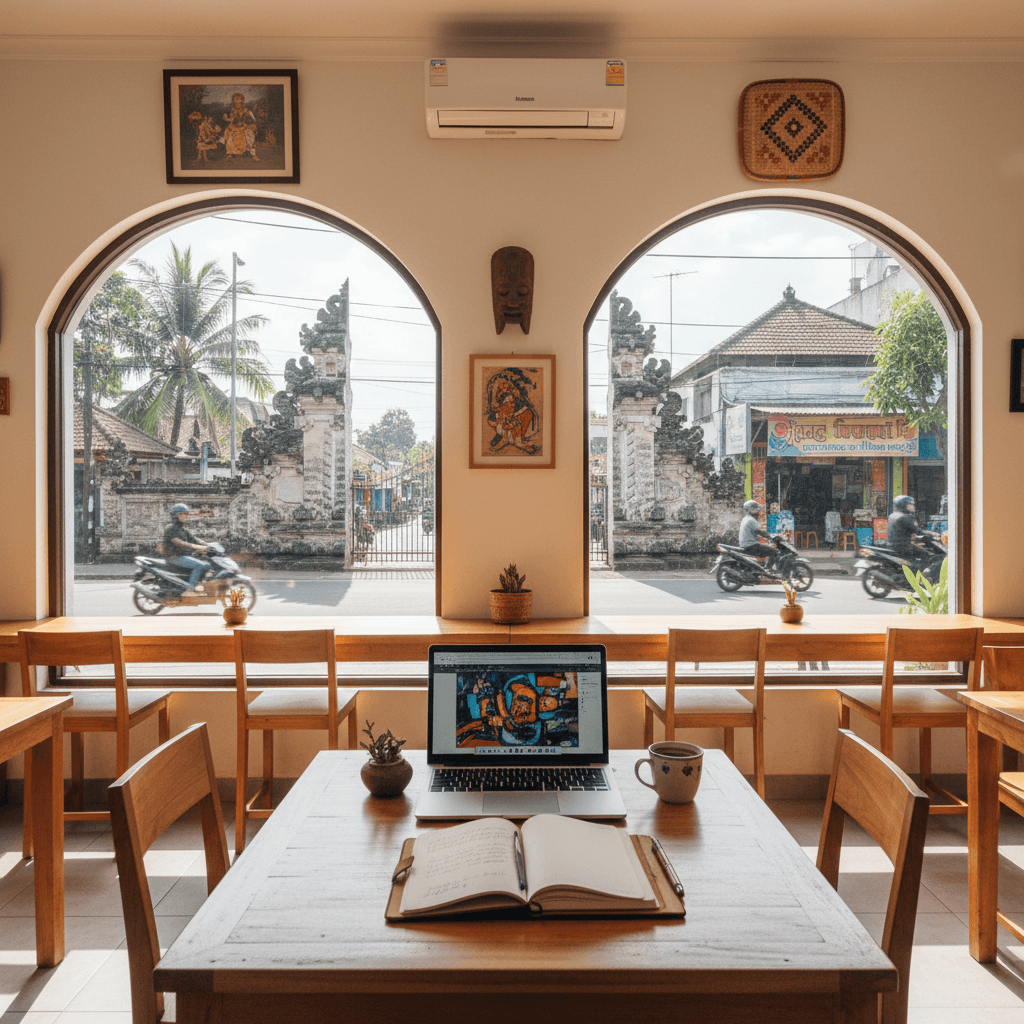
Denpasar
🇮🇩 Indonesia
The Authentic Heart of Bali
If you're looking for the neon lights of Kuta or the spiritual influencer crowds of Ubud, you won't find them here. Denpasar is the real Bali, a sprawling administrative hub where the incense from morning offerings mixes with motorbike exhaust and the smell of roasting satay. It's a place where life doesn't stop for the tourist season; it just keeps moving at its own steady, local pace.
Most nomads treat Denpasar as a gateway, but staying here offers a grounded experience that's increasingly rare on the island. You'll swap the "Eat Pray Love" aesthetic for Hindu temples that locals actually use and markets where prices aren't automatically doubled for foreigners. It’s less about the party and more about the integration, making it a favorite for those who want to stretch their budget without sacrificing the Balinese warmth.
A Budget-Friendly Reality
Living here is significantly cheaper than in the southern beach towns. A single nomad can live well on an average of $845 USD per month. Most expats find that their money goes surprisingly far once they move away from the coast.
- Budget Tier: You can get by on $500 to $700 a month if you're comfortable in a local studio outside the center (about 2.6 million IDR) and stick to street food warungs where a meal costs about 30,000 IDR.
- Mid-range Tier: For $800 to $1,200, you'll snag a nicer one bedroom in the city center for around 4.3 million IDR, eat at decent cafes, and keep a coworking membership.
- Comfortable Tier: At $1,500+, you're looking at upscale housing, frequent dinners at places like Over the Moon Cafe, and a top tier gym membership.
The Neighborhood Breakdown
Denpasar isn't a monolith. Where you plant your laptop changes your entire experience.
Sanur
- Best For: Nomads who want the beach without the chaos.
- The Vibe: It's quiet, walkable, and home to the new ICON Mall. You get a paved seaside path and a more mature expat crowd.
- The Trade-off: It's getting pricier and the traffic into the city center can be a headache.
Renon
- Best For: Serious work and a professional atmosphere.
- The Vibe: This is the green, leafy district home to government offices and wide boulevards. It's where you'll find Mitos Kopi and a heavy concentration of sleek cafes.
- The Trade-off: It feels more "urban" and less "tropical paradise."
Central Denpasar
- Best For: Deep cultural immersion and rock bottom prices.
- The Vibe: Traditional markets and historic sites. You're in the thick of it here.
- The Trade-off: High congestion and very few other expats.
The Work-Life Logistics
Internet speeds average around 10 Mbps, which is plenty for Slack and emails but might struggle with heavy 4K video uploads. For a rock solid connection, nomads head to Kumpul Coworking, where a hot desk goes for about $80-120 a month. If you prefer the beach with your coffee, Genius Cafe in Sanur is a popular choice for seaside remote work.
Getting around is a dance with chaos. Public transport is nearly non existent, though the Trans Metro Dewata bus is a steal at 4,000 IDR. Most people rely on the Gojek or Grab apps for $1 to $3 rides. If you rent a scooter for 50,000 IDR a day, wear a helmet; the traffic is fast, loud, and follows a logic that takes weeks to learn.
When to Go and What to Know
The weather is a steady 27 to 31°C year round, but the rain is the real deal. August is the dryest and most pleasant month to be here. Avoid January if you can, as the city gets drenched with over 300mm of rain, turning the streets into miniature rivers.
Socially, the scene is more low key than the rest of Bali. Join a board game night at Loko Cafe or check out a Nomads Giving Back meetup to find your tribe. People here are incredibly friendly, but learning basic phrases like "Terima kasih" (thank you) goes a long way. This isn't a city that caters to you; it's a city that invites you to join in, provided you're willing to navigate the traffic and the occasional power flicker to find its soul.
The Bottom Line
Denpasar is where you go when you want to dodge the "Bali Bubble" prices of Canggu or Uluwatu. It is the administrative heart of the island, which means it feels like a real Indonesian city rather than a tourist playground. Most nomads find they can live comfortably here on about $845 USD (roughly 13.5 million IDR) per month. This covers a decent place to sleep, plenty of outside meals, and a membership at a local workspace.
If you are on a strict budget, it is possible to get by on $500 to $700 USD. This involves living in a local-style studio outside the city center for about $160 USD and sticking to street food warungs where a meal costs about 30k IDR ($2 USD). On the flip side, a more "western" lifestyle with an upscale one bedroom apartment, gym memberships, and frequent cafe dining will push your budget toward $1,500 USD or more.
Breaking Down the Costs
- Housing: A one bedroom in the city center typically runs around 4.3 million IDR ($270 USD). If you head slightly further out, prices drop to 2.6 million IDR ($160 USD).
- Food: Street food is incredibly cheap at $2 USD per meal. A mid-range dinner for two at a sit-down restaurant averages 350k IDR ($22 USD).
- Transport: Most people rely on Gojek or Grab. A quick trip across town usually costs about $1 USD. If you prefer your own wheels, scooter rentals are roughly 50k IDR ($3 USD) per day.
- Connectivity: A hot desk at a professional space costs about $80-120 a month. For mobile data, grab a local Telkomsel SIM for $3 to $6 USD, which gets you up to 35GB of data.
Where to Plant Your Laptop
Your cost of living depends heavily on which neighborhood you pick. Sanur is the favorite for expats and nomads who want a beach nearby. It is walkable and home to the ICON Mall, though traffic is getting heavier and prices are creeping up. It is a quieter, more family-friendly vibe than the rest of the city.
Renon is the business district and a solid choice for solo travelers. It is packed with productive cafes like Mitos Kopi and Over the Moon. It feels more urban and professional, though the traffic during xrush hour is no joke. Central Denpasar is the cheapest option. It is great for authentic markets and culture, but you will deal with more congestion and fewer western-style amenities.
Practical Spending Tips
Skip the airport SIM cards; they are notoriously overpriced. Wait until you get into the city to buy your Telkomsel or Indosat plan. For daily expenses, the Gojek app is your best friend. You can use it for rides, food delivery, and even paying for groceries using their GoPay feature. Most nomads use Wise to transfer money into local accounts or to pay landlords directly to avoid high bank fees.
Healthcare is accessible and affordable compared to western standards. BIMC and Siloam Denpasar are the go-to hospitals for international standards. While basic check-ups won't break the bank, expats recommend having solid travel insurance for anything serious. For errands and shopping, local markets are great for produce, but stick to supermarkets for pantry staples if you want to avoid the "tourist tax" occasionally found in informal stalls.
The Coastal Retreat: Sanur
Sanur is the go-to for expats and families who want the Bali beach life without the chaotic party energy of the west coast. It feels more like a village than a city hub. You'll find a paved 5-kilometer boardwalk that's perfect for morning runs or cycling, and the water is calm enough for kids to swim safely. It's one of the few areas in Denpasar where you can actually walk to dinner instead of relying on a scooter.
The neighborhood has seen a recent upgrade with the opening of ICON Mall, providing high-end retail and reliable air conditioning. For healthcare, expats frequently recommend BIMC Hospital or Siloam, both of which are nearby and meet international standards. While the nightlife is quiet, the food scene is solid. You can grab a coffee at Genius Café right on the sand or head to the night market for affordable local satay.
- The Vibe: Relaxed, walkable, and community-oriented.
- Monthly Rent: Expect to pay around $400 to $600 for a decent villa or modern apartment.
- Best For: Families who need infrastructure and retirees seeking peace.
The Digital Hub: Renon
If you're a solo nomad looking to actually get work done, Renon is your best bet. This is the city's administrative heart, characterized by wide streets, green spaces like the Bajra Sandhi Monument park, and a massive concentration of laptop-friendly cafes. It feels much more "local" than Sanur, but it's polished and professional.
Nomads usually congregate at Kumpul Coworking, which is the gold standard for community and internet reliability in the city. When you aren't at a dedicated desk, cafes like Mitos Kopi and Over the Moon offer plenty of outlets and strong WiFi. The cost of living here is lower than the coast, with local warungs serving nasi goreng for $2, though there are plenty of mid-range spots where a meal costs about $11.
- The Vibe: Professional, central, and authentic.
- Monthly Rent: A 1BR in the city center averages $270.
- Best For: Remote workers who prioritize networking and fast internet over beach access.
The Budget Choice: Central Denpasar
Solo travelers and budget-conscious nomads often gravitate toward the city center. This is where you'll find the most "real" Balinese experience, far removed from the tourist bubbles. It's a maze of traditional markets like Pasar Badung and historic temples. Life here is fast-paced and the traffic can be a headache, so most residents rely heavily on Gojek or Grab to get around for about $1 to $3 per trip.
Living here means you're trading quiet streets for convenience and low prices. You can find basic studios for as little as $160 a month. While it's generally safe, it's wise to stay alert in crowded markets where pickpocketing can happen. It's the best spot if you want to be in the middle of everything and don't mind the urban hustle.
- The Vibe: High energy, traditional, and very affordable.
- Monthly Rent: Budget studios start around $160.
- Best For: Travelers on a shoestring who want deep cultural immersion.
Practical Living Specs
Regardless of where you land, your monthly budget will likely hover around $845 for a comfortable mid-range lifestyle. Most nomads find that a Telkomsel SIM card bought locally for about $6 provides better backup than relying solely on cafe WiFi, which can be inconsistent during tropical storms. If you're renting a scooter, expect to pay roughly $3 per day, but always wear a helmet; the local police are strict and the traffic is famously unpredictable.
Connectivity and Speed
Denpasar isn't exactly a high speed fiber hub compared to Singapore or Bangkok, but it holds its own for most remote work needs. You can expect average speeds around 25-30 Mbps, which handles Zoom calls and basic cloud uploads without much drama. However, power outages and spotty connections are part of the deal here. Most expats keep a local SIM card as a backup hotspot to stay online when the cafe WiFi decides to take a break.
For your phone, skip the overpriced kiosks at the airport. Head into town to grab a SIM from Telkomsel or Indosat. You'll usually pay between $10 to $20 USD for 25-35GB. It's reliable and easy to top up using the provider's app or at any local convenience store.
Top Coworking Spaces
If you need a dedicated desk and a community that isn't just tourists on laptops, Denpasar has a few solid anchors. These spaces are often quieter and more professional than the social clubs you find in Canggu.
- Kumpul Coworking: This is the go to spot for serious productivity. A monthly hot desk runs about $80-120 a month. It has a reputation for a strong community vibe and stable infrastructure, making it a favorite for those staying long term in the Renon area.
- Genius Café (Sanur): For those who prefer a view of the sand, this beachfront spot in Sanur blends a healthy restaurant vibe with a workspace. It's perfect if you want to work with your toes in the sand, though the sea breeze can be a challenge for video calls.
The Cafe Office Scene
The cafe culture in Denpasar is thriving, especially in the Renon and Sanur neighborhoods. Local spots are generally very welcoming to nomads as long as you keep the coffee flowing and don't hog a large table during the lunch rush.
- Mitos Kopi: Located in Renon, this is a staple for local nomads. It stays open from 8am to 9pm and is well equipped with power outlets. It's affordable, central, and has a focused atmosphere.
- Over the Moon Cafe: Another reliable choice with a great menu. It's a bit more relaxed, making it ideal for clearing out your inbox or doing some light creative work.
- Loko Cafe: While it's known for board game meetups, it's also a decent spot to get a few hours of work done in a casual setting.
Practical Tips for Working Remotely
Reliability is the biggest hurdle in Denpasar. While many cafes offer free WiFi, the quality varies wildly. Experienced nomads usually check the signal strength before ordering their first latte. If you're planning on staying in a local apartment or "kost," ask for a speed test screenshot before signing anything. Many budget rentals share a single router among several rooms, which can lead to frustrating slowdowns during peak evening hours.
If you're doing heavy lifting like video editing or large software builds, stick to Kumpul. The investment in a membership pays for itself in saved time and reduced stress. For everyone else, a mix of a Telkomsel eSIM and a rotating list of Renon cafes is usually enough to keep the engine running.
Personal Safety and Street Smarts
Denpasar feels significantly different from the neon lights of Kuta or the yoga retreats of Ubud. It is a working city where life moves to a local rhythm. Generally, you will feel safe walking around during the day, but the urban environment requires a bit more situational awareness than the sleepy beach towns nearby.
Pickpocketing and bag snatching occasionally happen in crowded areas like the Kumbasari Art Market or the busy bazaars of Central Denpasar. Keep your phone tucked away while walking near the road; "phone grabbing" by passing scooters is a known nuisance. Stick to well lit main roads if you are out after dark, and avoid walking alone in poorly lit alleys in the city center. Most nomads prefer using Gojek or Grab for late night transport rather than walking, as it is cheap and keeps you off the chaotic streets.
The biggest physical risk in Denpasar isn't crime; it is the traffic. The roads are a whirlwind of scooters, cars, and delivery trucks. If you rent a scooter, wearing a helmet is a non negotiable requirement for both safety and avoiding fines. Pedestrian infrastructure is hit or miss, so watch your step on uneven sidewalks and always look twice before crossing.
Healthcare Infrastructure
One of the perks of living in Denpasar is having access to the best medical facilities on the island. While smaller clinics exist throughout Bali, the capital is where you will find the heavy hitters. Expats and nomads typically head to Sanur or the bypass area for international standard care.
- BIMC Hospital: This is the gold standard for many foreigners. It offers 24 hour emergency services, Western trained staff, and excellent English communication.
- Siloam Hospitals Denpasar: A massive, modern facility that handles everything from routine checkups to specialized surgeries. It is known for having a wide range of specialists and diagnostic equipment.
- Kasih Ibu General Hospital: A reliable local favorite that provides high quality care at slightly more competitive prices than the dedicated international hospitals.
For minor ailments, pharmacies (known locally as Apotek) are everywhere. Kimia Farma is a trusted chain where you can find most basic medications. If you have a serious emergency, the local number is 112, but most nomads find it faster to call a hospital like BIMC directly for an ambulance.
Practical Health Tips
The tropical heat and humidity are no joke. Dehydration can sneak up on you, so keep a bottle of water handy at all times. Just make sure it is bottled or filtered; never drink the tap water here. Even when brushing your teeth, many travelers prefer using bottled water to avoid "Bali Belly."
If you are planning a long term stay, make sure your health insurance covers international facilities. A standard visit to BIMC or Siloam can get expensive quickly if you are paying out of pocket. Most nomads find that having a solid policy allows them to access these top tier hospitals without any stress over the final bill.
Emergency Contacts and Resources
- General Emergency: 112
- Ambulance: 118
- BIMC 24-Hour Emergency: +62 361 761263
- Siloam Hospital: +62 361 779900
The Daily Commute
Denpasar is the nerve center of Bali, which means traffic is part of the package. Unlike the coastal bubbles of Canggu or Uluwatu, this is a working city. You will see thousands of motorbikes weaving through intersections, especially during the morning and evening rush. Most nomads quickly realize that cars are a liability here; they get stuck in gridlock while bikes zip past.
If you are staying in Sanur, you can actually enjoy some rare walkability. The beachside path is perfect for a morning stroll or a bike ride. However, if you are based in Renon or Central Denpasar, you will need wheels. The sidewalks are often uneven or blocked by parked scooters, making walking a bit of a workout for your ankles.
Ride-Hailing Apps
Your phone is your best friend for getting around. Download Gojek and Grab immediately. These apps are the local lifelines for everything from bike taxis to food delivery. A quick trip across town on the back of a motorbike usually costs around 15,000 to 25,000 IDR, which is roughly $1 to $1.50. It is cheap, efficient, and honestly the fastest way to beat the heat.
- Gojek/Grab Bike: Best for solo travelers and beating traffic.
- Gojek/Grab Car: Better for groceries or rainy days, but expect to sit in traffic for twice as long.
- Blue Bird Taxi: The most reliable traditional taxi meter service, though usually pricier than the apps.
Renting Your Own Wheels
For total freedom, many expats rent a scooter long term. You can find a standard Honda Vario or Scoopy for about 50,000 IDR ($3) per day, but monthly rates are much better, often ranging from 800,000 to 1,200,000 IDR ($50 to $75). Always wear a helmet. Not only is it a safety necessity in the chaotic flow of traffic, but local police frequently stop foreigners without them.
Make sure you have an International Driving Permit (IDP) specifically for motorcycles. If you get pulled over without one, you will likely face a fine on the spot. If you are not confident on two wheels, Denpasar is not the place to learn. The intersections are busy and the rules of the road are more like suggestions.
Public Transit and Airport Links
Bali is not famous for public transport, but Denpasar actually has some of the best options on the island. The Trans Metro Dewata bus system is surprisingly clean and modern. A trip from the airport into the city costs 4,400 IDR for a full day unlimited pass. It is a great budget hack, though the routes are limited and it won't drop you at your doorstep.
When arriving at Ngurah Rai International Airport, you can use the official Grab lounge to book a ride, which saves you from haggling with the crowd of drivers at the exit. A private transfer or a high end Gojek car to Denpasar usually runs between 200,000 and 400,000 IDR ($13 to $25) depending on the time of day and how much luggage you have.
Navigation Tips
Google Maps is generally reliable, but it sometimes tries to send cars down narrow alleys meant only for bikes. Always double check the route if you are driving a car. Travelers often recommend keeping a small amount of cash in your pocket for parking fees, which are usually 2,000 IDR at most cafes and markets. Just look for the person with the orange vest and the whistle; they will help you park and pull out into traffic safely.
The Local Linguistic Landscape
In the heart of Denpasar, you'll find a linguistic mix that feels much more authentic than the polished English bubbles of Seminyak or Canggu. While Bahasa Indonesia is the national language and the primary way people communicate in business and government, the Balinese dialect is the soul of the city. You'll hear locals switching between the two effortlessly at the Pasar Badung market or while grabbing a coffee in Renon.
Don't expect everyone to be fluent in English here. While staff at international hospitals like BIMC or Siloam speak it well, and workers at popular spots like Kumpul Coworking are easy to communicate with, your local warung owner might only know the basics. Most nomads find that a little effort goes a long way. Learning a few phrases won't just help you order your 30,000 IDR nasi campur; it changes how locals perceive you, opening doors to better service and genuine smiles.
Must-Know Phrases
You don't need to be fluent, but having these phrases in your back pocket makes life smoother. Use Bahasa Indonesia for general daily interactions:
- Apa kabar? (How are you?)
- Terima kasih (Thank you)
- Sama-sama (You're welcome)
- Berapa harganya? (How much is this?)
- Bisa kurang? (Can you go lower? Useful for market haggling.)
- Permisi (Excuse me)
If you want to really impress the locals, try a couple of Balinese words. Saying Suksma instead of Terima kasih for "thank you" usually gets a great reaction. When someone says it to you, the reply is Mewali.
Digital Tools and Translation
Since English isn't a given in Central Denpasar, Google Translate is your best friend. Download the Indonesian language pack for offline use so you aren't stuck when the 10 Mbps Wi-Fi gets spotty. The camera feature is particularly handy for translating menus at smaller local eateries that don't have English versions.
For texting, WhatsApp is the undisputed king of communication in Bali. Whether you're messaging a landlord about a 4.3 million IDR apartment or coordinating a scooter delivery, it happens on WhatsApp. If you're using Gojek or Grab, the in-app chat has a built-in translation feature that works surprisingly well for talking to your driver.
Cultural Nuances and Non-Verbal Cues
Communication in Denpasar is about more than just words. It's a high-context culture where being polite and "saving face" matters. Avoid raising your voice or showing outward frustration, even when traffic is at a standstill. It's considered quite rude and rarely gets results.
Body language is just as important as what you say. Expats recommend these three rules to avoid accidental offense:
- Always use your right hand to give or receive money, documents, or food. The left hand is traditionally seen as unclean.
- Never point with your index finger; if you need to indicate a direction, use your thumb or a gentle wave of the hand.
- Keep your feet on the ground. Pointing the soles of your feet at someone or at a temple shrine is a major faux pas.
When visiting temples or government offices, the way you dress is a form of communication too. Wearing a sarong shows respect for local customs and usually results in a much warmer welcome from the community.
The Tropical Reality
Denpasar doesn't really do "four seasons." Instead, you're looking at a year round tropical climate where the thermometer stays glued between 27°C and 31°C (81°F to 88°F). The real differentiator for your work schedule and social life is the humidity and the rain. It’s the kind of heat that makes a midday walk to a cafe feel like a marathon, so most nomads plan their errands for early morning or after the sun dips.
Dry Season: The Nomad Sweet Spot
The window from May to October is widely considered the best time to plant your flag in Denpasar. The humidity drops to manageable levels, and the breeze picks up, especially in coastal spots like Sanur. You’ll get clear blue skies and reliable sunshine, which is vital if you're planning to commute by scooter or work from outdoor spots like Genius Café.
- August is statistically the driest month, making it the peak of the peak.
- Expect 1 to 11 rain days per month during this window, usually in the form of short, sharp bursts that clear up quickly.
- This is when the expat community is most active, with plenty of meetups at Loko Cafe or board game nights in Renon.
Wet Season: What to Expect
When November hits, the vibe shifts. The wet season runs through March, and it’s not just a light drizzle. We’re talking heavy, monsoon style downpours that can turn Denpasar’s already chaotic streets into small rivers. January is usually the wettest month, seeing upwards of 328mm of rain. Humidity spikes during this time, often sitting above 80 percent, which can make non air conditioned spaces feel pretty sticky.
Living here during the rains requires a bit of a strategy shift. You'll want to lean heavily on apps like Gojek or Grab for car rides rather than risking a scooter. It’s also the time when inconsistent power and internet can crop up during storms; having a backup Telkomsel SIM with a solid data plan is a must for anyone with tight deadlines.
Seasonal Breakdown
While the temperature is consistent, the monthly rainfall and "feel" of the city change significantly. Here is what the calendar looks like for a typical year:
Dry Season (May to October)
- Daily Highs: 29°C to 31°C
- Daily Lows: 22°C to 24°C
- Rainy Days: Very low; expect mostly sunny afternoons.
- Vibe: Best for outdoor exploring, beach days in Sanur, and scootering between neighborhoods.
Wet Season (November to April)
- Daily Highs: 30°C to 31°C
- Daily Lows: 23°C to 24°C
- Rainy Days: 16 to 20 days per month.
- Vibe: High humidity; expect heavy afternoon storms. Great for hunkering down in coworking spaces like Kumpul.
The Pro Perspective
If you want the best of both worlds, aim for the shoulder months of April or September. You’ll dodge the heaviest rains of January and the peak tourist crowds of August. Prices for monthly rentals in Central Denpasar or Renon often remain more stable than the coastal tourist hubs, but you'll still find better leverage for long term deals during the wetter months when demand dips slightly.
Regardless of when you arrive, the sun is intense. Most locals and seasoned expats avoid being on the road between 11:00 AM and 3:00 PM. If you're heading to a morning market or a meeting, do it early. By mid afternoon, you’ll want to be firmly planted in a cafe with strong AC and a cold coffee.
Managing Your Budget
Denpasar is a breath of fresh air for your wallet, especially if you're coming from the high prices of Canggu or Uluwatu. Most nomads find they can live quite well on about $845 USD a month. If you're on a tighter budget, you can get by on $500 to $700 by sticking to local warungs and finding a studio outside the city center for around 2.6 million IDR.
For a mid-range lifestyle, expect to spend between $800 and $1,200. This usually covers a nicer one-bedroom in the center for about 4.3 million IDR and regular visits to coworking spaces. If you want the full expat experience with upscale dining and a modern scooter, set aside $1,500 or more. A solid meal at a local spot costs roughly 30,000 IDR, while a nice dinner for two at a mid-range restaurant will run you about 350,000 IDR.
Where to Set Up Base
Choosing the right neighborhood changes your entire experience of the city. Expats and families often gravitate toward Sanur. It has a paved beachside path that’s actually walkable, the new ICON Mall for shopping, and reliable healthcare. It’s quieter than the south, though traffic is starting to creep up here too.
If you prefer a more professional, local vibe, look at Renon. It’s the administrative heart of the city, meaning it’s full of leafy streets and great cafes like Mitos Kopi. It’s affordable and central, but the urban bustle and traffic can be intense during rush hour. Central Denpasar is best for those who want to be immersed in Balinese markets and culture at a lower price point, though you’ll need to be more mindful of pickpockets in crowded areas.
Internet and Productive Spaces
Internet speeds average around 10 Mbps, which handles emails and basic calls fine but might struggle with heavy video editing. For serious work, nomads recommend Kumpul Coworking, where a hot desk goes for about $164 a month. If you prefer working with a sea breeze, Genius Café in Sanur is a favorite for its beachfront views and solid menu.
The cafe culture is strong here. Over the Moon Cafe and Mitos Kopi Renon are reliable spots with plenty of outlets and a work-friendly atmosphere. For mobile data, don't buy your SIM at the airport. Head into town and grab a Telkomsel or Indosat card for 50,000 to 100,000 IDR. You'll get plenty of data for the month for just a few dollars.
Getting Around the City
Traffic in Denpasar is chaotic; there’s no sugar-coating it. Most people rely on Gojek or Grab. A quick trip across town usually costs about $1 to $3. You can even use these apps for airport pickups now, which is much cheaper than the private drivers who might ask for 400,000 IDR. If you’re brave enough to rent a scooter, it’ll cost about 50,000 IDR a day. Always wear a helmet; the local police are active and the roads don't forgive mistakes.
Health and Safety
Denpasar is generally safe, but common sense goes a long way. Stick to well-lit streets at night and keep an eye on your phone and bag when you're in crowded markets. For medical needs, BIMC and Siloam Denpasar offer international standards and English-speaking staff. Pharmacies are easy to find for minor issues, but for emergencies, dial 112 or contact the hospitals directly.
Local Customs and Language
While you can get by with English in hotels and cafes, learning a few phrases in Bahasa Indonesia earns you a lot of respect. "Apa kabar?" for how are you and "Terima kasih" for thank you are great starters. Keep a few cultural rules in mind:
- Always wear a sarong when entering temples.
- Remove your shoes before entering someone's home or certain small shops.
- Use your right hand for giving or receiving items; the left hand is considered unclean.
- Avoid pointing your feet at people or touching anyone on the head.
Climate Realities
It’s tropical and humid year-round, usually hovering between 27°C and 31°C. The dry season from May to October is the most comfortable time to visit, with August being the driest month. If you visit during the wet season between November and March, expect heavy downpours, especially in January. The rain moves fast, but it can turn streets into small rivers in minutes, so keep a poncho in your scooter seat.
Need visa and immigration info for Indonesia?
🇮🇩 View Indonesia Country GuideHidden Gem
Worth the effort