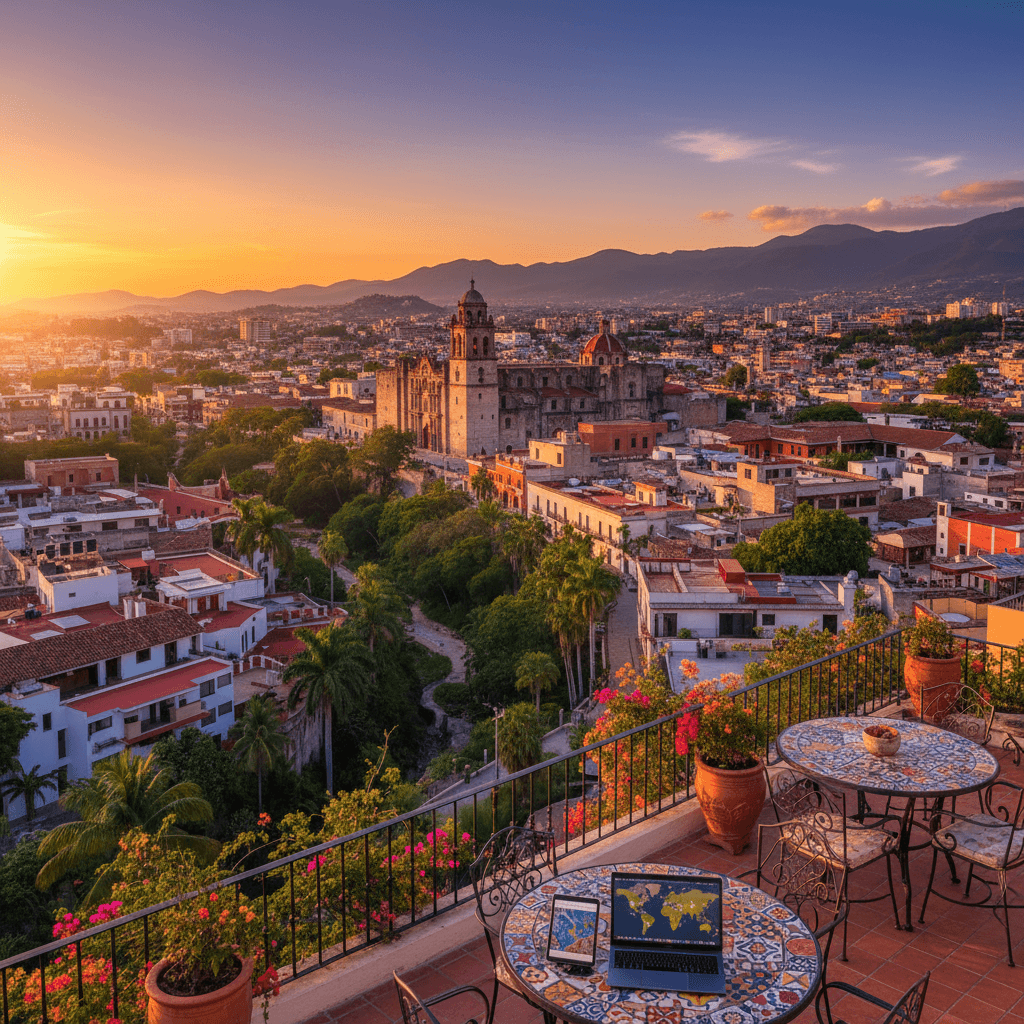
Cuernavaca
🇲🇽 Mexico
The Eternal Spring Experience
Cuernavaca carries a distinct, slightly nostalgic energy that sets it apart from the high energy of Mexico City or the beach party vibes of the coast. For decades, it was the preferred retreat for Hollywood stars and political heavyweights, and while that era of high glamour has faded into a more quiet, local dignity, the city remains a sanctuary. The climate is its biggest selling point; living here means enjoying a year round mildness that makes heavy coats or air conditioning feel unnecessary.
Most nomads find that Cuernavaca is a place for focused work rather than social networking. It lacks the shiny coworking hubs and laptop friendly cafes found in Roma Norte or Playa del Carmen. Instead, you get a slower pace of life, lush gardens like Jardín Borda, and a sense of being in a "real" Mexican city rather than a tourist bubble. It's the kind of place where you spend your mornings working from a colonial courtyard and your afternoons wandering through 16th century architecture.
Cost of Living
Your budget goes significantly further here than in Mexico's major nomad hubs. While prices are creeping up, you can still maintain a comfortable lifestyle for a fraction of what you would pay in the US or Europe.
- Budget Tier ($1,000 to $1,500): You can find a studio in the centro for $400 to $600. Eating like a local at street stalls costs $2 to $5 per meal, and using the local buses at $0.50 a ride keeps your overhead low.
- Mid Range ($1,500 to $2,500): A nice one bedroom in a safer residential area runs $600 to $900. Frequent use of Didi or Uber will add about $100 to your monthly total, and mid range dining costs roughly $8 to $15 per person.
- Comfortable ($2,500+): Upscale apartments with pools or garden views can top $1,000. You will be spending $20 to $40 on high end dinners and likely paying for a private office or premium internet setup.
Where to Plant Your Roots
Choosing a neighborhood in Cuernavaca depends on how much you value walkability versus quiet. Unlike the sprawling suburbs, the central areas keep you close to the action.
Centro (Downtown)
- The Vibe: Historical, busy, and walkable. You're steps away from the Cortés Palace and the best cafes.
- Pros: No car needed; easy access to museums and the most reliable internet spots.
- Cons: Can be noisy on weekends when the Mexico City crowds arrive; higher risk of petty crime in crowded spots.
Quaca and Surrounding Expats Zones
- The Vibe: Quiet, residential, and very affordable.
- Pros: You can find modern lofts for great prices; it's a peaceful environment for deep work.
- Cons: You'll rely on Didi for everything; a 10 minute ride to the centro costs about 150 MXN.
Connectivity and Logistics
Don't expect a dedicated coworking space on every corner. Most remote workers here set up in their apartments or find a favorite table at a local cafe in the centro. For mobile data, travelers recommend Airalo for a quick eSIM setup or Holafly if you need unlimited data. When it comes to getting around, Didi is the local favorite over Uber as it's often more affordable and has better availability. A typical 10 minute ride through town should cost you around 150 MXN.
If you're coming from Mexico City, the Pullman de Morelos bus is the gold standard. It’s a comfortable 1.5 hour ride that drops you right in the heart of the city. While the city feels safe during the day, expats generally advise against wandering into unfamiliar outskirts at night. Stick to the well lit central areas and use ride hailing apps after dark to keep things simple.
The social scene is low key. You won't find the organized nomad meetups typical of Guadalajara or Tulum. Instead, you'll meet people naturally at the weekend markets or through local interest groups. It's a city for those who want to integrate into a traditional Mexican environment rather than live in a digital nomad echo chamber.
The Price of Eternal Spring
Cuernavaca sits in a sweet spot for nomads who want the proximity of Mexico City without the suffocating price tag or the chaotic pace. It isn't a polished nomad hub like Playa del Carmen, so you won't find overpriced avocado toast on every corner. Instead, you'll find a city where your dollar stretches significantly further, especially if you're willing to live like a local. Most travelers find they can live comfortably here for about $1,500 to $2,500 USD per month, though budget-conscious solo travelers can easily get by on $1,200 if they stick to the affordable lofts in the outskirts.
The city's "faded glamour" means you're often getting high-end colonial architecture for mid-range prices. While it lacks the dedicated coworking infrastructure of larger cities, the low cost of daily essentials makes up for the DIY approach you'll need to take with your workspace. Expect to pay about $150 MXN (roughly $7.50 USD) for a 10-minute ride across town, and since many of the best attractions like Jardín Borda or the local plazas are inexpensive or free, your entertainment budget usually stays low.
Monthly Budget Breakdowns
Your lifestyle here depends largely on which neighborhood you choose and how often you're heading into Mexico City for the weekend. Here is how the costs typically shake out:
The Budget Nomad
- Total: $1,000 to $1,500 USD
- Housing: A modest studio in the Centro or a loft in areas like Quaca for $400 to $600.
- Food: Sticking to street food and local markets where meals run $2 to $5.
- Transport: Using local buses at $0.50 per ride and walking the Centro.
The Mid-Range Professional
- Total: $1,500 to $2,500 USD
- Housing: A nice one-bedroom in a secure area or a modern apartment for $600 to $900.
- Food: A mix of home cooking and mid-range restaurant meals at $8 to $15 per person.
- Transport: Frequent use of Didi or Uber, averaging about $100 a month.
The High-End Expat
- Total: $2,500+ USD
- Housing: An upscale home or luxury apartment with a pool for $1,000 or more.
- Food: Dining at the city's top-tier restaurants and historic haciendas for $20 to $40 per meal.
- Extras: Private drivers for trips to Mexico City and premium grocery imports.
Housing and Neighborhoods
The Centro is the go-to for anyone staying short-term. It's walkable, puts you right next to the Palace of Cortés, and has the highest concentration of cafes with decent WiFi. You'll pay a slight premium for the convenience, but you'll save on transport. If you're looking for something quieter and more residential, look toward the outskirts. Areas like Quaca are popular with long-term expats because you can find spacious lofts for much less than a cramped apartment in Mexico City.
Finding a place can be a bit old-school. While Airbnb is available, it's often more expensive than the local market. Many expats recommend connecting with local relocation consultants or checking community boards to find the best deals on colonial-style homes that haven't been listed on major international platforms yet.
Day-to-Day Expenses
Getting around is surprisingly affordable. Didi is the preferred ride-hailing app here, often beating Uber on price and availability. A typical cross-town trip rarely exceeds $150 MXN. For digital connectivity, don't rely on finding a coworking space; they are virtually non-existent. Most nomads use Airalo or Holafly for reliable mobile data and work from laptop-friendly cafes in the historic center.
Groceries and dining are where you'll see the most savings. Local markets are brimming with fresh produce thanks to the year-round growing season. Even if you eat out at trendy spots in the Centro, you're likely to spend half of what you would in Roma or Condesa. It's a serene, affordable environment that rewards those who don't need a pre-packaged nomad scene to be productive.
Solo Travelers and Short-Term Nomads
If you're landing in the City of Eternal Spring for a few weeks of deep work or exploration, Centro (Downtown) is your best bet. It's the most walkable part of the city, keeping you close to the colonial architecture of the Palace of Cortés and the lush terraces of Jardín Borda. You'll find the highest concentration of trendy cafes here, which serve as makeshift offices since dedicated coworking spaces are still hard to find in town.
The vibe in Centro is historical and lively, though it lacks the polished nomad infrastructure of Mexico City. You'll likely pay between $400 and $600 USD for a basic studio or room in this area. While it's great for daytime wandering, solo travelers should stick to well lit main streets after dark and keep an eye on belongings in crowded plazas. Most travelers use Didi to get around when they aren't on foot, as it's often more affordable and reliable than traditional taxis.
Expats and Long-Term Residents
For those planning to stay for several months or more, Jiutepec, Temixco, or other nearby residential areas offer a much quieter pace. These areas are popular with expats who want more space for their money. You can find modern, affordable lofts or larger apartments for $600 to $900 USD per month. It's a serene environment that feels worlds away from the weekend crowds that arrive from the capital.
Living here requires a bit more planning since you're not within walking distance of the main sights. A 10 minute ride into the center typically costs about 150 MXN (roughly $7.50 USD). Expats often recommend these neighborhoods for their privacy and security, though you'll find fewer international social meetups than you would in a hub like Guadalajara. It's a place for focused living and enjoying the year round 70 to 80 degree weather.
Families
Families usually gravitate toward the gated communities and leafy streets in the northern and eastern parts of the city. These neighborhoods provide a sense of suburban safety and often feature homes with private gardens or access to shared pools, taking full advantage of the mild climate. You'll find that Didi and Uber are essential for school runs and grocery trips, as the city's layout can be hilly and difficult to navigate with a stroller.
A comfortable lifestyle for a family, including a multi bedroom house and frequent dining out, usually starts at $2,500 USD per month. While there aren't many dedicated "nomad kids" groups, the local community is welcoming, and the abundance of free or low cost outdoor spaces like public parks and historical ruins makes it an affordable place to keep children entertained. For healthcare, most families rely on the high quality private clinics located near the city center or take the 1.5 hour bus ride to Mexico City for specialized care.
Practical Tips for Choosing Your Base
- Connectivity: Since there aren't many coworking hubs, check your Airbnb or rental's WiFi speed before booking. Most nomads use Airalo or Holafly for backup mobile data.
- Transportation: Download the Didi app as soon as you arrive. It's the primary way locals and visitors get around safely and cheaply.
- Arrival: Take the Pullman de Morelos bus directly from the Mexico City airport or the Tasqueña station. It's a comfortable, professional service that drops you right in the heart of Cuernavaca.
- Budgeting: Expect to spend $2 to $5 USD for street food meals and $15 to $30 USD for a nice dinner in a restored hacienda.
Connectivity and the Nomad Scene
If you're looking for the high energy digital nomad communities of Mexico City or Playa del Carmen, you won't find them here. Cuernavaca is a city of focused work and quiet afternoons. It's a place where you'll likely be working from your rental or a local cafe rather than a dedicated coworking hub. While the city doesn't have a massive infrastructure of nomad-specific spaces, the internet is generally reliable enough for video calls and remote management.
Expats and long term travelers usually rely on fiber optic connections in residential lofts or apartments. If you're booking a place in the Centro or the quieter outskirts like Quaca, always ask for a speed test. Most nomads find that while the city isn't a tech hub, the speeds are consistent with what you'd find in other mid sized Mexican cities, easily supporting standard remote work needs.
Coworking and Work-Friendly Cafes
Cuernavaca lacks the trendy, membership based coworking chains found in the capital. Instead, the "office" for most people here is a table at a local cafe in the historic center. The Centro district is your best bet for finding spots with decent WiFi and a table near a power outlet. You'll find a mix of artistic locals and the occasional expat tapping away on a laptop, but the vibe is much more "slow coffee" than "startup incubator."
Because there aren't many formal coworking offices, many travelers choose to stay in more upscale rentals that include a dedicated desk. If you need a professional environment for a day, some local hotels offer business centers, but these are often more corporate and less social than a traditional nomad space.
Mobile Data and SIM Cards
Staying connected while moving between the historic sites and your apartment is straightforward. Most travelers recommend skipping the hunt for a physical SIM card at a local shop and using an eSIM instead. It's a faster way to get data the moment you step off the bus from Mexico City.
- Airalo: This is the go to for nomads who want data without the hassle of changing their phone number. It's reliable for navigating the city and using ride hailing apps.
- Holafly: A solid choice if you need unlimited data for heavy usage, though it can be pricier than local options.
- Telcel: If you prefer a local physical SIM, you can find these at OXXO convenience stores everywhere. It's the most reliable network for coverage when you head out on day trips to the surrounding mountains.
Digital Nomad Practicalities
Since the nomad scene is smaller, you won't find many organized meetups or Slack channels dedicated to local remote workers. Most social interaction happens organically in the cafes or through local interest groups. To make the most of your time here, you'll want to have your digital toolkit ready before you arrive.
- Didi: This is the most popular ride hailing app in the city. It's generally cheaper than Uber, with a 10 minute ride across town costing around 150 MXN or $7.50 USD.
- Wise: Expats recommend using this for any local bank transfers or managing different currencies without high fees.
- Google Translate: Essential if your Spanish is rusty, as English proficiency is much lower here than in the coastal tourist hubs.
Living here is about the "Eternal Spring" lifestyle. You'll likely spend your mornings working on a terrace and your afternoons exploring Jardín Borda or the Cortés Palace. It’s a serene environment for those who are self disciplined and don't need a community manager to keep them productive.
Staying Safe in the City of Eternal Spring
Cuernavaca operates at a different speed than Mexico City. While the capital feels like a frantic tech hub, this city retains a slower, more traditional rhythm. Because it isn't a massive digital nomad hotspot like Playa del Carmen, you won't find the same level of "tourist bubble" security. However, most travelers find the Centro area and established residential zones perfectly manageable if they stick to common sense practices.
During the day, the historic center is lively and feels secure for exploring museums and cafes. Local expats suggest staying alert in crowded markets where petty theft can happen, but violent crime targeting foreigners is rare in the main districts. The biggest safety rule here is simple: don't wander into the outskirts or unfamiliar neighborhoods after dark. Stick to well lit areas where people are out dining and socializing.
For getting home at night, skip the street taxis. Most nomads and long term residents rely on Didi or Uber. Didi is particularly popular here and often slightly cheaper, with a 10 minute ride across town costing around 150 MXN. Using these apps provides a digital trail and a set price, which adds a necessary layer of security that traditional cabs lack.
Healthcare and Medical Facilities
While Cuernavaca is smaller than the capital, it serves as a major hub for the state of Morelos, meaning medical care is professional and accessible. You'll find high quality private hospitals that meet international standards. Many doctors in the private sector have trained abroad and speak English, though having a translation app like Google Translate handy for administrative staff is a smart move.
Pharmacies are on almost every corner in the Centro and Quaca areas. For minor issues, many pharmacies have an adjacent "consultorio" where a licensed doctor can see you for a nominal fee, usually under 100 MXN, and write basic prescriptions on the spot. It's an incredibly efficient system for things like sinus infections or stomach bugs.
- Emergency Services: Dial 911 for any immediate police, fire, or medical emergencies.
- Travel Insurance: Most nomads in Mexico use SafetyWing or similar providers to cover unexpected hospital stays or medical evacuations.
- Private Care: Look for private clinics if you need specialized care; they are vastly faster and more comfortable than public options.
Practical Tips for a Smooth Stay
Drinking tap water is a no go here. Always stick to bottled water or the large 20 liter "garrafones" that your landlord will likely help you order. For digital connectivity, don't rely solely on your home roaming plan. Pick up a local SIM or use an eSIM from Airalo or Holafly to ensure you have data for maps and ride hailing apps the moment you step off the Pullman de Morelos bus from the airport.
Since Cuernavaca doesn't have a dedicated "nomad" infrastructure of coworking spaces yet, your safety and productivity depend on your housing choice. Look for lofts or apartments in gated communities or secure buildings in the central areas. Having a reliable home base allows you to enjoy the colonial charm and lush gardens of the city without worrying about your gear.
Getting Around the City of Eternal Spring
Cuernavaca is a city built on hills and ravines, which means your choice of transport often depends on whether you are navigating the flat, historic core or heading out to the quieter residential hills. In the Centro, your own two feet are your best asset. The cobblestone streets and colonial architecture are best experienced slowly, and most of the primary historical sites like the Palace of Cortés and Jardín Borda are within a short walk of each other.
For trips that require wheels, ride-hailing apps are the standard for nomads and expats. While Uber operates here, Didi is often the preferred choice among locals and long term residents. It is generally more affordable and has a higher density of drivers in the area. A typical 10 minute ride from the outskirts into the city center will run you about 150 MXN, or roughly $7.50 USD. It is a reliable way to get home after dark when walking through unfamiliar neighborhoods is less advisable.
If you want a more local experience or are sticking to a tighter budget, the "rutas" (local micro-buses) crisscross the city for about $0.50 USD per ride. They can be crowded and a bit confusing for newcomers since they don't follow a posted digital schedule, but they are an efficient way to see how the city moves.
Arriving and Departing
Most nomads arrive in Cuernavaca via Mexico City, and the transit link between the two is remarkably smooth. The Pullman de Morelos bus line is the gold standard for this route. They run frequent, high quality coaches from both the Mexico City airport (AICM) and the Tasqueña southern bus terminal.
- Travel Time: Approximately 1.5 hours depending on the notorious Mexico City traffic.
- Booking: You can use the Busbud app to check schedules, though buying tickets at the station is usually easy enough.
- Arrival Points: The buses typically drop you at the Casino de la Selva or Centro stations, both of which are central enough to catch a quick Didi to your accommodation.
Navigation Tips for Nomads
Unlike Mexico City or Playa del Carmen, you won't find a fleet of electric scooters or bike-share docks on every corner. The terrain is a bit too rugged and the streets too narrow for a massive cycling infrastructure. Most people who live here long term rely on a mix of walking and Didi.
Connectivity is key for navigating, especially since Google Maps can sometimes struggle with the winding one-way streets in the hills. Most travelers recommend picking up an eSIM before landing. Airalo is a favorite for quick data setups, while Holafly is a solid alternative if you need larger data buckets for heavy map usage and remote work sessions in cafes.
Since the city isn't a massive international hub, don't expect everyone to speak English. Having Google Translate downloaded for offline use is a lifesaver when giving specific directions to a driver or trying to find a specific gate at the bus terminal. A little Spanish goes a long way here, especially when you're venturing outside the main tourist plazas.
Language and Communication
If you are coming from the tourist bubbles of Playa del Carmen or the international pockets of Mexico City, Cuernavaca will feel like a much more authentic immersion. Spanish is the undisputed primary language here. While you will find English speakers at major historical sites like the Palace of Cortés or among the staff at high end hotels, the city operates in Spanish. You can't rely on English for daily life like you might in the coastal hubs.
Most nomads find that a basic grasp of Spanish is necessary to navigate the local markets, talk to Didi drivers, or order at the smaller cafes in the Centro. If your Spanish is rusty, people are generally patient and appreciative of the effort. Keeping a translation app handy is a smart move for more complex interactions like discussing a rental agreement or visiting a pharmacy.
Key Phrases for Your Kit
- "¿Cuánto cuesta?" (How much does it cost?): Useful for street food and markets.
- "La cuenta, por favor" (The bill, please): Standard for finishing up at a cafe.
- "¿Dónde está...?" (Where is...?): For finding your way to spots like Jardín Borda.
- "Gracias" and "Con permiso": Simple politeness goes a long way in this more traditional, relaxed environment.
Connectivity and Data
Since Cuernavaca isn't a dedicated nomad hub with coworking spaces on every corner, your mobile data is your lifeline. Local WiFi in cafes can be hit or miss, so having a reliable backup is the best way to ensure you don't drop out of a Zoom call. Most expats recommend getting a local SIM or an eSIM before you arrive to avoid hunting for a shop on day one.
- Airalo: This is the go to for nomads who want an eSIM for data without the hassle of changing their phone number. It is perfect for short stays or your first week in town.
- Holafly: Another solid eSIM option if you need unlimited data and don't want to worry about topping up.
- Telcel: If you are staying longer than a month, it is worth visiting a local shop for a physical Telcel SIM. They have the best coverage across the state of Morelos.
Communication Apps
In Mexico, WhatsApp is the king of communication. You will use it for everything from booking a tour to messaging a landlord or confirming a reservation at a restaurant. If you don't have it installed, you will find it difficult to coordinate anything locally. For getting around, make sure you have Didi and Uber downloaded. While Didi is often cheaper, with rides around the city averaging 150 MXN, having both gives you the best chance of finding a driver during the busier weekend rush when Mexico City residents flock to the city.
For those planning to work from cafes in the Centro, look for spots that cater to the local university crowd or the artistic community. These are your best bets for finding stable internet, though you should always have a hotspot ready just in case. The pace here is slower, and the infrastructure reflects that; it is a place for focused, quiet work rather than high speed digital networking.
The City of Eternal Spring
There is a reason Cuernavaca earned its famous nickname. While the rest of the world deals with seasonal mood swings, this city maintains a steady, mild temperament that feels like a perpetual April afternoon. It is the kind of climate that allows bougainvillea to bloom year round and makes those colonial courtyards and hacienda gardens the center of daily life.
You can visit any time and find comfortable temperatures, but the sweet spot for nomads and long term travelers is typically October through May. During these months, the humidity is low, the skies are a crisp blue, and you can spend your entire workday on a patio without breaking a sweat or needing a heater.
The Seasonal Breakdown
- The Dry Season (November to April): This is arguably the best time to be here. Days are sunny and warm, usually hovering in the mid-70s to low 80s°F (24-28°C), while nights stay cool enough for a light sweater. It is the peak season for weekenders from Mexico City, so expect the Centro to get a bit livelier on Saturdays and Sundays.
- The Heat Spike (April and May): Just before the rains arrive, temperatures can climb into the high 80s or low 90s°F (32°C+). Because many older buildings and budget rentals lack air conditioning, this is the only time of year you might actually feel the heat.
- The Rainy Season (June to September): Don't let the "rainy" label scare you off. Like much of central Mexico, the rain usually follows a predictable pattern: beautiful, sunny mornings followed by a heavy downpour in the late afternoon or evening. It keeps the landscape lush and green, and it rarely disrupts a full day of exploration or work.
When to Visit for the Best Experience
If you are looking for a quiet environment to focus on a project, aim for the mid-week stretch during the winter months. You will find the city much calmer than on weekends when the capital's elite flock to their local villas. For those who want to see the city at its most festive, Semana Santa (Easter week) and Day of the Dead (late October/early November) bring a unique energy, though you should expect prices for short term rentals to spike during these windows.
Expats and long term residents often prefer the transition months of October and November. The rains have just ended, leaving the surrounding mountains incredibly green, but the air is starting to cool down. It is the perfect balance for hiking or spending long afternoons at Jardín Borda.
What to Pack
Cuernavaca is casual but slightly more traditional than a beach town. You will want layers. Even in the height of summer, the evening temperature can drop quickly. A light jacket or a denim shirt is a staple here. Since the Centro is filled with colonial cobblestones, leave the flimsy sandals for the coast and bring sturdy walking shoes or sneakers; your ankles will thank you after a day of walking to the Palace of Cortés.
If you are planning to stay in a local loft or a colonial era apartment, remember that these thick stone walls are great at keeping heat out, but they can get chilly at night during December and January. A pair of warm socks or a heavy hoodie for indoor use is a pro tip from nomads who have spent a winter here.
Making it Work in the City of Eternal Spring
Cuernavaca isn't your typical digital nomad hub. You won't find the same density of laptop-friendly cafes as you would in Mexico City or Playa del Carmen, but that's exactly why people come here. It's a place for deep work and a slower pace, where the spring-like weather stays mild year-round and the cost of living remains significantly lower than the coastal hotspots.
Most nomads find that while the infrastructure is a bit "faded glamour," the proximity to the capital makes it an easy transition. You can reach the heart of Cuernavaca from Mexico City in about 1.5 hours. Once you're here, life revolves around historic plazas and lush gardens rather than networking events.
Estimating Your Monthly Budget
Your pesos go a lot further here than in the Caribbean. While prices vary, these are the standard ranges for a comfortable stay in 2025.
- The Budget Tier ($1,000 to $1,500 USD): You can snag a studio in the Centro for $400 to $600. If you stick to street food at $2 to $5 per meal and use the local buses for $0.50 a ride, you'll live very well on a modest income.
- Mid-Range Living ($1,500 to $2,500 USD): This is the sweet spot for most remote workers. A nice one-bedroom in a secure area runs $600 to $900. You'll have plenty left over for mid-range dining at $10 to $15 a plate and frequent rideshare trips.
- High-End Comfort ($2,500+ USD): Upscale apartments or small villas can exceed $1,000. This budget allows for fine dining at $30 per person and private drivers if you prefer to skip the apps.
Where to Plant Your Roots
The city layout is hilly and winding, so your choice of neighborhood dictates your daily experience.
Centro (The Historic Core)
- The Vibe: Walkable, historic, and lively. You're steps away from the Cortés Palace and Jardín Borda.
- Pros: No car needed for daily life; easiest access to the few "laptop-friendly" cafes available.
- Cons: Can be noisy on weekends with tourists visiting from the capital.
The Outskirts (Quaca and Residential Zones)
- The Vibe: Quiet, green, and residential. This is where you'll find expats and families.
- Pros: More space for your money; peaceful environments for focused work.
- Cons: You'll be reliant on Didi or Uber to get anywhere. A 10-minute ride to the center usually costs around 150 MXN.
Connectivity and Workspace
Since dedicated coworking spaces are rare, most travelers rely on their home internet or settle into cafes in the Centro. While Mexico's national average speeds are reliable for video calls, always ask your host for a speed test before booking. For mobile data, travelers recommend using Airalo or Holafly to stay connected without hunting for a physical SIM card. If you need a local number, a Telcel SIM from any OXXO store is the standard move.
Getting Around and Staying Safe
The city is surprisingly easy to navigate if you have the right apps. Didi is often more popular and slightly cheaper than Uber here. For a more scenic route, the Cuernabus double-decker offers tours that help you get your bearings during your first week.
Safety is mostly about common sense. The Centro is generally safe during the day, but it's best to avoid wandering into unfamiliar outskirts after dark. Stick to the main plazas and well-lit streets. If you need medical care, there are several private hospitals that offer high-quality service, but it's smart to have SafetyWing or similar travel insurance to cover any unexpected bills.
Language and Social Life
Don't expect the high level of English you find in Cancun. You'll want the basics like "Hola," "Gracias," and "¿Cuánto cuesta?" to get by. Because there isn't a massive nomad scene, social life is more about meeting locals or joining hobbyist groups. The nightlife is low-key, focusing on relaxed dinners and mezcal bars rather than thumping clubs. It's a city that rewards those who are happy with their own company or who are willing to practice their Spanish with the neighbors.
Need visa and immigration info for Mexico?
🇲🇽 View Mexico Country GuideHidden Gem
Worth the effort