Corrientes
🇦🇷 Argentina
The Riverine Soul of the Argentine Northeast
If Buenos Aires is the frantic, late night heart of Argentina, Corrientes is its steady, rhythmic pulse. Perched on the banks of the massive Paraná River, this city trades the European grandeur of the capital for a subtropical, Guarani influenced soul. It is a place where the air stays humid, the pace remains slow, and the soundtrack is almost always chamamé, a local folk music that feels like a melancholic accordion hug.
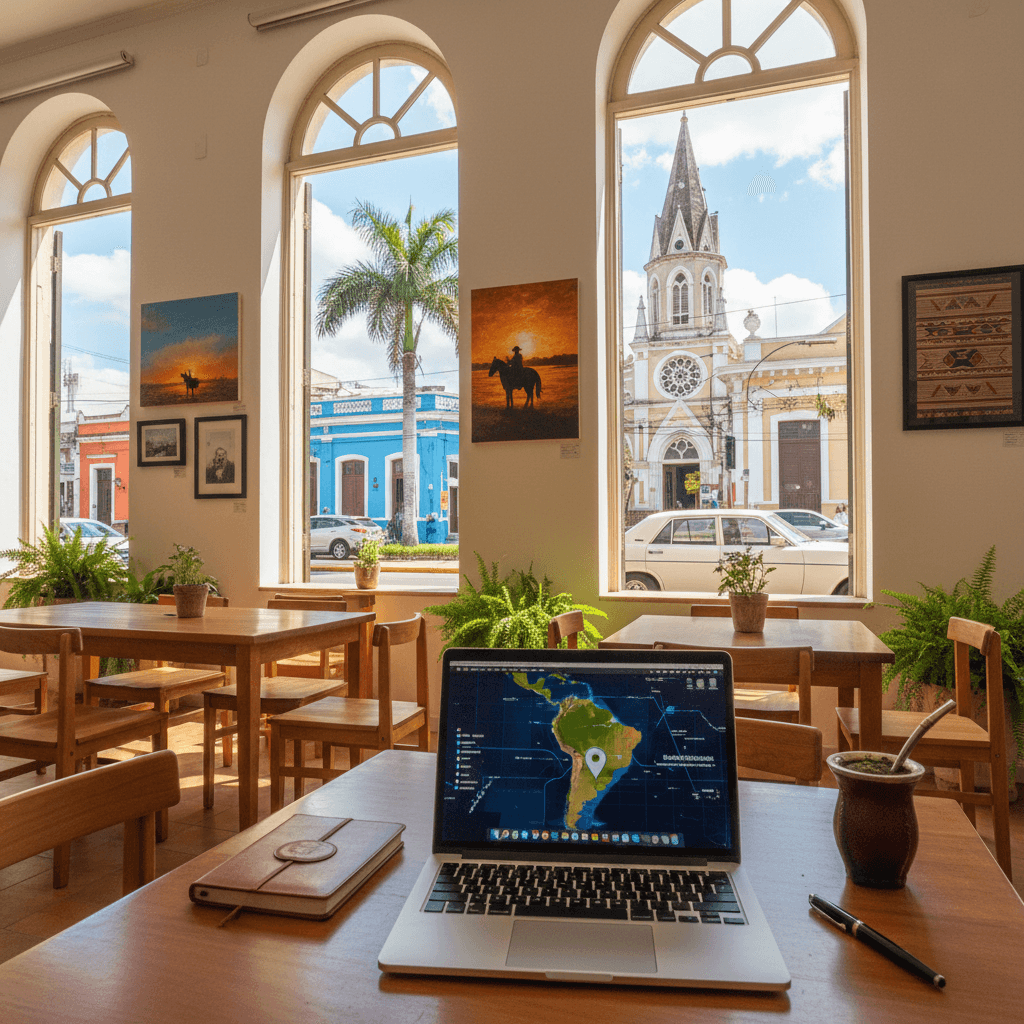
Living here feels different than the typical nomad circuit. You aren't surrounded by English speaking tech bros in every cafe. Instead, you'll find locals sipping mate on the Costanera, a beautiful riverside walkway that serves as the city's communal living room. It is a destination for the nomad who wants to disappear into authentic Argentine life, trade skyscrapers for sunsets over the water, and live comfortably on a fraction of a Western budget.
The Local Vibe
The personality of Corrientes is defined by the heat and the river. During the summer months of December through February, the city moves into a siesta culture by necessity as temperatures often climb toward 35°C (95°F). You'll learn to work early, hide during the afternoon, and emerge when the sun dips. The locals are famously warm and curious about foreigners, though you'll definitely need some Spanish to make friends here.
The "hates" are predictable for a city of this size. Infrastructure can be spotty; while fiber optic internet is increasingly common in the Centro, it isn't a guarantee in every Airbnb. You also won't find a massive network of dedicated coworking spaces. Most remote workers here post up in local cafes like those along Calle Junín or find a quiet corner in a riverside bar. It is a trade off: you lose the polished nomad amenities, but you gain a city that hasn't been "Disneyfied" for tourists.
Cost of Living Breakdown
Corrientes is significantly more affordable than Mendoza or Buenos Aires. Since the economy fluctuates, most nomads think in terms of USD value. You can live a very comfortable life here for $1,200 to $1,800 a month.
- Budget Nomad ($800-$1,200): You'll likely stay in a modest studio in Barrio San Roque or Centro for $200-$400. You'll eat plenty of street food like chipá (cheese bread) for $1-$2 and use the local bus system.
- Mid-Range ($1,200-$1,800): This gets you a nice one bedroom apartment for $300-$600, frequent dinners out featuring local surubí fish for $10-$15, and plenty of Uber rides.
- Comfortable ($1,800+): At this level, you're looking at upscale riverside living in Puerto Corrientes, high end dining for $30, and weekend trips to the Iberá Wetlands.
Where to Plant Your Laptop
The city doesn't have the distinct "nomad bubbles" you find in larger hubs, but neighborhoods have clear personalities. Most expats and travelers stick to the core areas for safety and reliability.
- Centro (Downtown): This is the functional heart of the city. It is walkable, packed with cafes, and close to the main shopping district on Calle Junín. It can be noisy, but it’s where the best Wi-Fi is usually found.
- Puerto Corrientes: The more affluent, scenic choice. It’s quieter and offers immediate access to the parks along the Paraná. It feels safer for late night walks, though you'll pay a premium for the view.
- Barrio San Roque: A more residential, gritty, and affordable option. It’s great if you want to stay long term and integrate with local families, but it lacks the "hip" factor of the riverside.
Connectivity and Logistics
Don't expect 500 Mbps as a standard. Most urban apartments offer 50-100 Mbps, which is plenty for Zoom calls and standard cloud work. For mobile backup, grab a Claro or Personal SIM card at any kiosk for about $15 a month. While there aren't many "official" coworking spaces, the cafe culture is strong. You'll see locals lingering over coffee for hours, so as long as you're ordering, nobody will mind you working from your laptop.
Getting around is simple. The city core is highly walkable. For longer distances, use Uber or InDriver, which are the go to apps for reliable rides. If you're arriving from the airport (CNQ), expect to pay roughly $10-$20 for a transfer to the city center. It’s a small, manageable ecosystem that rewards those who don't mind a little bit of "roughing it" in exchange for a truly unique Argentine experience.
The Peso Paradox
Living in Corrientes feels like a financial exhale compared to the steep prices of Buenos Aires or Mendoza. While Argentina deals with its share of economic volatility, those earning in USD or Euros will find their purchasing power stretches remarkably far here. It is one of those rare spots where you can maintain a high quality of life on a budget that would barely cover a parking spot in London or New York.
Expats usually find that Corrientes is roughly 20% to 30% cheaper than the capital. Because it is not a primary tourist hub, you aren't paying the "gringo tax" on every coffee or taxi ride. You are paying local prices for local life, which is the ultimate win for long term stays.
Monthly Budget Tiers
Your lifestyle determines your burn rate, but even at the high end, Corrientes remains incredibly accessible. Here is how the monthly math usually breaks down for a solo nomad:
The Budget Nomad
- Total Monthly Cost: $800 to $1,200
- Housing: A simple studio in the city center typically runs between $400 and $700.
- Food: Sticking to street food like chipá or empanadas, which cost $2 to $5 per meal.
- Transport: Using local buses and walking, keeping costs under $50.
- Work: Working from your apartment or free public spaces rather than paid desks.
The Mid-Range Professional
- Total Monthly Cost: $1,200 to $1,800
- Housing: A comfortable one bedroom apartment in a quiet suburb or near the river for $300 to $600.
- Food: A mix of home cooking and dining out at local parrillas, with mid-range meals averaging $8 to $15.
- Transport: Frequent use of ride-hailing apps like InDriver or Uber, totaling about $100.
- Work: A dedicated budget for cafe hopping or a shared workspace, around $100.
The Comfortable Expat
- Total Monthly Cost: $1,800+
- Housing: An upscale apartment in Puerto Corrientes with river views, starting at $600.
- Food: Regular dinners at high end spots like those serving surubí fish, with meals at $20 to $40.
- Transport: Private drivers or car rentals for weekend trips to the Iberá Wetlands.
- Work: Premium coworking setups and high speed private internet installations.
Daily Expenses and Local Hacks
To navigate the local economy, you will want to get comfortable with Mercado Pago. It is the go-to digital wallet for everything from grocery runs to paying your barber. Most nomads find it easier than carrying thick stacks of pesos, which can get bulky given the current exchange climate.
Groceries are a highlight here. Fresh produce from local markets is significantly cheaper than the imported goods in supermarkets. Expect to pay about $10 to $20 for a massive bag of seasonal fruit, vegetables, and local beef that would last a week. If you are a fan of mate, the local herb is practically a subsidized staple and costs very little.
When it comes to connectivity, don't rely solely on your home country's roaming. Grab a local SIM from Claro or Personal (formerly Telefonica) at any kiosk. A solid monthly data plan usually costs between $10 and $20, and it is much more reliable for hotspotting when you are working from the breezy Costanera riverwalk.
For housing, while Airbnb is the easiest entry point, savvy travelers often look to local Facebook groups or platforms like Olx for better long term rates. Just be sure to verify the internet speed before signing anything, as older buildings in the Centro district can sometimes have spotty wiring.
The Solo Nomad: Centro (Downtown)
If you want to be within walking distance of a decent caffeine fix and a stable Wi-Fi signal, Centro is your best bet. This is the city's heartbeat, where the colonial architecture meets the daily grind. It isn't the quietest corner of town, but you'll save a fortune on transport since the main hubs and the riverfront are right at your doorstep.
- Estimated Rent: $200 to $400 USD for a modest studio.
- Vibe: Fast paced for Corrientes standards, walkable, and convenient.
- Best for: Those who don't want to deal with bus schedules and prefer being near the few cafes that tolerate a laptop for three hours.
Most nomads here spend their afternoons at local spots along Junín pedestrian street. While there aren't dedicated coworking chains yet, the "work from cafe" culture is growing. Just keep an eye on your gear in crowded areas, though Corrientes generally feels much more relaxed than the frantic streets of Buenos Aires.
The Long-Term Expat: Puerto Corrientes & Costanera
Expats who've settled in for the long haul usually gravitate toward the river. The area near the port and along the Costanera General San Martín is where the city shows off its beauty. It’s scenic, breezy, and offers a much higher quality of life if you have the budget for it. You're trading the grit of the center for sunset views over the Paraná River.
- Estimated Rent: $400 to $700 USD for a modern one-bedroom with a view.
- Vibe: Upscale, breezy, and great for evening runs or "mate" sessions by the water.
- Best for: Remote professionals who prioritize environment and safety over being in the middle of the noise.
Living here means you'll likely use apps like InDriver or Uber to get around when you aren't strolling the riverbank. It’s the safest part of the city, and the proximity to the water makes the humid 35°C (95°F) summer days slightly more bearable.
Families and Slow Travelers: Camba Cuá
Located just south of the main downtown area, Camba Cuá is a favorite for families and travelers who want a residential feel without being isolated. It’s home to the city’s most famous park, Parque Camba Cuá, which is the local go-to for kids to run around while parents share a thermos of mate. It feels like a real neighborhood rather than a transient tourist zone.
- Estimated Rent: $350 to $600 USD for larger apartments or small houses.
- Vibe: Green, community-oriented, and rich in history.
- Best for: Families needing space and proximity to parks, or nomads who want a "local" experience.
The streets here are quieter, and you'll find more traditional grocery stores and bakeries. It’s a great spot to practice your Spanish, as English proficiency is quite low in this part of Argentina. You’ll find the locals are patient if you’re trying to learn the Rioplatense lingo.
Budget Seekers: Barrio San Roque
For those looking to stretch their USD as far as possible, San Roque offers a strictly residential experience. It’s further from the river and the nightlife, but the rents reflect that. It’s a no-frills neighborhood where you can find larger spaces for a fraction of the cost of a riverfront condo.
- Estimated Rent: $150 to $300 USD for basic housing.
- Vibe: Quiet, suburban, and very local.
- Best for: Budget-conscious travelers who don't mind a commute and want to stay away from the humid river air.
The downside here is the lack of "nomad infrastructure." You won't find many cafes with high-speed internet, so you'll need to ensure your home setup is solid before moving in. Claro or Personal mobile data usually holds up well here if the home Wi-Fi flickers, which can happen during summer storms between October and April.
Connectivity in the Corrientes Heat
Working from the edge of the Paraná River means trading the high tech infrastructure of Buenos Aires for a slower, more deliberate pace. In Corrientes, you aren't going to find a massive hub of glass fronted coworking spaces on every corner. Instead, the digital nomad life here revolves around residential fiber optics and the city's deeply ingrained cafe culture.
Most modern apartments in the Centro or near Puerto Corrientes offer stable fiber connections. You can generally expect speeds between 50 Mbps and 100 Mbps, which is plenty for seamless Zoom calls or pushing code. If you're staying in an older building or further out in Barrio San Roque, always ask for a speed test screenshot before booking. Infrastructure can be patchy once you leave the urban core.
Coworking and Work Friendly Cafes
While dedicated coworking spaces are rare in Corrientes compared to Mendoza or Cordoba, the city is catching up. Local professionals often use shared office setups or business centers that lack the "nomad" branding but provide the same reliability. Most visitors find that the local cafes are the heart of the remote work scene.
- The Cafe Scene: Look for spots along the Costanera. Working with a view of the river is the main draw here. Many cafes have decent WiFi, though they can get loud during the late afternoon "merienda" rush.
- The Library Option: Local libraries or university spaces sometimes provide a quiet, air conditioned refuge during the sweltering summer months.
Mobile Data and Backup Plans
You shouldn't rely solely on cafe WiFi. Local nomads recommend having a solid backup. Claro and Personal (Telecom) have the strongest 4G and 5G coverage throughout the city. You can pick up a SIM card at almost any "kiosco" for a few dollars. Data plans are incredibly affordable, usually costing between $10 and $20 USD per month for a generous allowance.
If you're planning to head out to the Iberá Wetlands for a weekend, don't expect to get much work done. Signal drops off significantly once you leave the city limits. Treat Corrientes as your base for heavy lifting and the surrounding nature reserves as your time to disconnect.
Practical Tech Tips
Power outages aren't frequent, but they can happen during the peak of summer when everyone's air conditioning is blasting. It's a good idea to keep your laptop and power banks charged. Most nomads use Mercado Pago for almost everything here. It's the local gold standard for digital payments, and you'll find it's often easier than dealing with physical cash for your daily coffee or lunch.
- SIM Cards: Available at kiosks; Claro is widely cited as having the best urban data speeds.
- Data Costs: Budget around $15 USD for a month of heavy mobile data usage.
- Hardware: Bring your own gear. Specialized electronics and laptop repairs are expensive and hard to find in Corrientes compared to the capital.
Keeping Your Cool in the Subtropics
Corrientes feels like a breath of fresh air compared to the frantic energy of Buenos Aires. It is a mid sized city where the locals actually take their siestas seriously, and that slower pace translates to a generally safer environment for remote workers. While you still need to keep your wits about you, the vibe here is more about community than anonymity.
Street Smarts and Safety
Most nomads find Corrientes significantly more relaxed than the capital. Violent crime is rare, but petty theft like phone snatching can happen if you are scrolling mindlessly on a street corner. The general rule is to keep your tech tucked away when you are walking between cafes. Expats recommend staying in well lit areas like the Costanera (the riverfront) or the Centro after dark. These spots stay active late into the night with families and joggers, making them the safest bets for a midnight stroll.
- Areas to watch: Stick to the riverside and the central grid. Avoid wandering into poorly lit residential outskirts like the deeper parts of Barrio San Roque alone at night.
- Emergency Numbers: Dial 101 for the police and 107 for an ambulance. Save these in your phone before you land.
- Transportation: Use apps like Uber or InDriver if you are headed home late. They provide a digital trail that street taxis don't, which adds an extra layer of security.
Healthcare and Medical Services
If you get a bout of traveler's tummy or need a prescription, you are in good hands. Argentina has a dual healthcare system, and while the public hospitals are free and accessible, they often involve long waits and basic facilities. For anything non urgent, nomads usually opt for private clinics where the care is high quality and very affordable if you are earning in USD.
Pharmacies are everywhere and are remarkably efficient. You will find a Farmacity or a local apothecary on almost every other block in the downtown core. Many common medications that require a strict prescription in the US or Europe are often available over the counter here, though it is always better to consult a doctor first.
Practical Health Tips
- Private Clinics: Look for private centers in the city center for the fastest service. Expect to pay between $20 and $40 USD for a private consultation if you don't have local insurance.
- Insurance: Most travelers carry international nomad insurance. Just keep your receipts, as you will usually pay out of pocket first and get reimbursed later.
- Tap Water: The water in Corrientes is generally considered safe to drink, but many expats stick to bottled or filtered water for the first week while their systems adjust to the local minerals.
- The Heat Factor: Between December and February, temperatures regularly hit 35°C (95°F) with high humidity. Heat exhaustion is a real risk, so stay hydrated and stay indoors during the peak sun hours of 2 PM to 5 PM.
Overall, your biggest medical concern in Corrientes will likely be mosquito bites during the humid rainy season from October to April. Grab a bottle of local repellent, known as "Off," at any kiosk. It is a small price to pay for enjoying those legendary riverside sunsets without getting eaten alive.
The Pulse of the Streets
Corrientes isn't a city where you'll be rushing through subway tunnels or dodging aggressive traffic. Life here moves at the steady, rhythmic pace of the Paraná River. Most of your daily movement will happen on foot, especially if you're staying in Centro or near the Costanera. The city is flat and manageable, though the humidity in January and February might make you reconsider a ten block walk in favor of an air conditioned ride.
For longer distances, the local bus system (colectivos) is your primary tool. You'll need a SUBE card, the same rechargeable plastic used in Buenos Aires. You can pick these up and top them off at small kiosks marked with the SUBE logo. Expect to pay around $0.50 to $0.80 USD per ride. While the routes cover most of the city, the schedules are more "suggestions" than hard rules, so give yourself a buffer if you're heading to a meeting.
Ride-Hailing and Taxis
While Uber has a presence in Argentina, its availability in Corrientes can be spotty compared to the capital. Many locals and expats rely on InDriver, where you can negotiate the fare before the driver arrives. It's a great way to skip the "foreigner tax" that sometimes happens with unmetered taxis.
- Radio Taxis: These are the most reliable for late night trips. You can call them or find them at designated stands near the main plazas.
- Pricing: A cross town trip rarely exceeds $5 to $8 USD, making it an affordable fallback when the sun is too intense.
Getting to and from the Airport
Doctor Fernando Piragine Niveyro International Airport (CNQ) is about 10 kilometers from the city center. It's a small, easy to navigate terminal. You won't find a train or a dedicated shuttle bus waiting for you, so plan your exit ahead of time.
Taxis and private transfers (remises) are the standard choice. A ride into the city center usually costs between $10 and $20 USD. If you're traveling light and want to save, you can walk out to the main road to catch a local bus, but most nomads find the convenience of a door to door taxi worth the small expense after a flight.
Cycling and Micromobility
Corrientes isn't exactly a cycling utopia yet. While the Costanera offers a beautiful, scenic stretch for a bike ride or a jog, the rest of the city lacks dedicated bike lanes. You won't find the sea of electric scooters that clutter the sidewalks of Palermo or Madrid.
If you want to cycle, it's best to treat it as a weekend leisure activity rather than a commute. Some local hostels and guesthouses offer bike rentals for about $10 USD a day. Keep your wits about you on the busier avenues, as drivers aren't always accustomed to sharing the lane with two wheels.
Regional Travel
One of the best parts of being in Corrientes is the proximity to Resistencia, the "City of Sculptures," just across the General Belgrano Bridge. Frequent inter city buses run between the two for a few dollars. For nature lovers, the Iberá Wetlands are a must. These trips usually require a private shuttle or a long distance bus from the main terminal (Terminal de Ómnibus), which is a short taxi ride from the city center. Expect 180 day stays to be the norm for those on the digital nomad visa, giving you plenty of time to explore these northern corridors.
The Guarani Influence
In Corrientes, you aren't just dealing with the standard Rioplatense Spanish you'd find in Buenos Aires. The city sits at a cultural crossroads where the indigenous Guarani heritage is woven into everyday speech. While Spanish is the primary language for business and government, you'll hear Guarani words sprinkled into casual conversations, especially when locals discuss nature, food, or traditional medicine. This creates a unique melodic cadence that's distinct from the sharp, Italian-influenced "sh" sounds of the capital.
Most nomads find that English proficiency is low here. Unlike the tourist-heavy hubs of Mendoza or Palermo, Corrientes doesn't cater to English speakers in its shops, cafes, or government offices. If you're planning to stay for more than a week, you'll need at least a functional "survival Spanish" level to handle groceries, lease negotiations, or ordering surubí at a riverside restaurant.
Communication Tools and Apps
Since English isn't a given, travelers often rely heavily on technology to bridge the gap. Digital nomads recommend the following setup for smooth communication:
- Google Translate: Download the Spanish offline pack. The "Conversation Mode" is a lifesaver when dealing with landlords or technicians who don't speak English.
- WhatsApp: This is the lifeblood of Argentina. You won't call a business; you'll message their WhatsApp. This includes booking a table, asking for a price, or talking to your Airbnb host.
- DeepL: For more formal emails or translating rental contracts, expats generally find DeepL's translations more natural than other AI tools.
Social Nuances and Etiquette
Communication in Corrientes is deeply social and rarely hurried. People here value a warm "Buen día" or "Buenas tardes" before launching into any request. It's considered slightly rude to get straight to the point without a brief exchange of pleasantries. If you're invited to share mate, it's a significant social gesture. Accept the drink, but remember the golden rule: don't move the straw (the bombilla) and only say "gracias" when you're finished and don't want any more.
The local dialect uses voseo, meaning they use "vos" instead of "tú" for "you." It changes the verb conjugations slightly, so don't be surprised if your classroom Spanish sounds a bit different than what you hear on the street. Expats recommend leaning into the local slang, or correntinismos, to build rapport with neighbors. Using words like "chamigo" (friend) can go a long way in breaking the ice.
Practical Language Barriers
Expect some friction in administrative settings. If you're visiting a public hospital or a police station to file a report, bring a Spanish-speaking friend or have your translation app ready. Most nomads find that younger people in university settings or high-end cafes might have a basic grasp of English, but for daily life in neighborhoods like Barrio San Roque, Spanish is your only currency. If you're serious about staying, consider a tutor or local exchange; the community is generally very patient with learners and will appreciate the effort to speak their tongue.
Embrace the Subtropical Rhythm
Corrientes doesn't do "mild" very often. Located in the far northeast of Argentina, the city is defined by a humid subtropical climate that dictates the local pace of life. If you're coming from cooler climates, you'll notice the air feels heavy and thick, especially as you get closer to the Paraná River. It's a place where the siesta isn't just a tradition, it's a survival strategy to escape the midday sun.
The Sweet Spot: May to September
For most digital nomads, the window between May and September is the absolute prime time to book an Airbnb. During these months, the intense humidity breaks, replaced by crisp, clear days with temperatures hovering between 10°C and 20°C (50°F to 68°F). It's perfect weather for working from a riverside cafe or taking a weekend trip to the nearby Iberá Wetlands without melting.
Expats living in the region often recommend this period because the rainfall drops significantly. You'll avoid the sudden, torrential downpours that can turn city streets into temporary streams. Pack a light jacket for the evenings, as the river breeze can make 12°C feel much cooler than it looks on paper.
The Summer Gauntlet: December to February
If you struggle with heat, you might want to avoid Corrientes during the peak summer months of December, January, and February. Temperatures frequently soar between 25°C and 35°C (77°F to 95°F), but the high humidity often pushes the "feels like" index much higher. This is the rainy season, characterized by dramatic thunderstorms that roll in quickly to cut the heat.
Travelers who brave the summer usually do so for one reason: Carnaval. Corrientes is the "National Capital of Carnaval," and the city explodes into a massive party in February. If you're here then, expect loud music, late nights, and a significant spike in short-term rental prices. Just make sure your apartment has a high-quality air conditioning unit (locally called "el split"), or you won't get much sleep or work done.
Seasonal Planning at a Glance
- Best for Outdoor Work: June to August. Low humidity and cool breezes make the Costanera (the riverfront walkway) the best office in the city.
- Best for Culture: January and February. You'll deal with the heat, but you'll experience the peak of Chamamé folk festivals and Carnaval.
- Worst for Productivity: January. Between the sweltering heat and the holiday slump, the city moves at a glacial pace.
- The Rainiest Months: October and April. These shoulder seasons see the most frequent rainfall, which can sometimes impact the stability of local Wi-Fi if there are power flickers.
What to Pack
Since the weather fluctuates from "steamy jungle" to "cool autumn," your wardrobe needs to be versatile. Locals tend to dress casually but neatly. You'll want breathable linen or cotton fabrics for the 80% humidity days. Don't forget a sturdy umbrella and high-quality mosquito repellent, especially if you plan on visiting the river at sunset or heading out to the wetlands. If you're visiting in the winter, a medium-weight sweater or denim jacket is usually enough to handle the coldest nights.
Connectivity and Tech Setup
Expect decent speeds if you stay within the city limits. Most apartment rentals provide fiber optic connections ranging from 50 to 100 Mbps, though you can find premium spots hitting 300 Mbps if you ask the right questions before booking. Mobile data is reliable enough for a hotspot backup; grab a SIM card from Claro or Movistar at any local kiosk for about $15 to $20 USD per month.
You won't find a massive selection of dedicated coworking spaces like you would in Buenos Aires. Most nomads here adopt the cafe culture. Look for spots along the Costanera or in the Centro district where the Wi-Fi is stable and the staff won't mind you lingering over a few coffees. Always check the speed on your phone before settling in, as some older buildings have thick walls that eat the signal.
Money and Budgeting
Corrientes is significantly easier on the wallet than the capital. If you're earning in USD, your purchasing power goes a long way. Digital nomads usually find they can live comfortably on $1,200 to $1,800 USD per month. This covers a nice apartment, frequent dining out, and weekend trips to the wetlands.
- Budget Lifestyle: $800 to $1,200 per month. This means a simple studio in San Roque, eating empanadas or street food for $3 to $5, and using the local bus system.
- Mid-Range Lifestyle: $1,200 to $1,800 per month. You'll get a modern one bedroom in the city center, eat at mid-range grills for $10 to $15, and use ride-hailing apps frequently.
- Upper Tier: $1,800+ per month. This gets you a riverside view in Puerto Corrientes and high-end dining featuring local surubí fish for $30.
Getting Around
The city core is highly walkable, especially around the riverfront. For longer distances, download InDriver or Cabify. Uber operates here but InDriver is often the go-to for locals. A typical trip across town rarely exceeds $5 to $8 USD. If you're arriving at Piragine Niveyro International Airport (CNQ), expect to pay around $15 for a taxi to the center.
Public buses are efficient but require a SUBE card, which you can load at most kiosks. Don't expect much in the way of bike lanes or scooter rentals; the infrastructure just isn't there yet, so stick to your feet or four wheels.
Health and Safety
Corrientes feels like a large town rather than a frantic city. It's generally safer than Buenos Aires or Rosario, but you should still keep your wits about you after dark in quieter neighborhoods. Stick to well lit areas in the Centro and Puerto districts. For healthcare, private clinics provide excellent service. If you have an emergency, dial 107 for an ambulance or 101 for police.
When to Visit
The weather is subtropical and can be punishingly humid. The best window is May through September, when the air is dry and temperatures sit between 10°C and 20°C (50°F to 68°F). Avoid January and February if you can; the heat often climbs past 35°C (95°F), making it difficult to do anything but sit near an air conditioner.
Local Protocol
People here are social and traditional. Dinners happen late, usually after 10:00 PM. If you're invited to share mate, it's a sign of acceptance. While the Argentina digital nomad visa is valid for 180 days and can be renewed, keep in mind that English proficiency is low here. You'll need at least basic Spanish to handle grocery runs or negotiate rent. Download Mercado Pago for local payments, as it's the standard for everything from coffee to rent.
Need visa and immigration info for Argentina?
🇦🇷 View Argentina Country GuideEasy Landing
Settle in, no stress