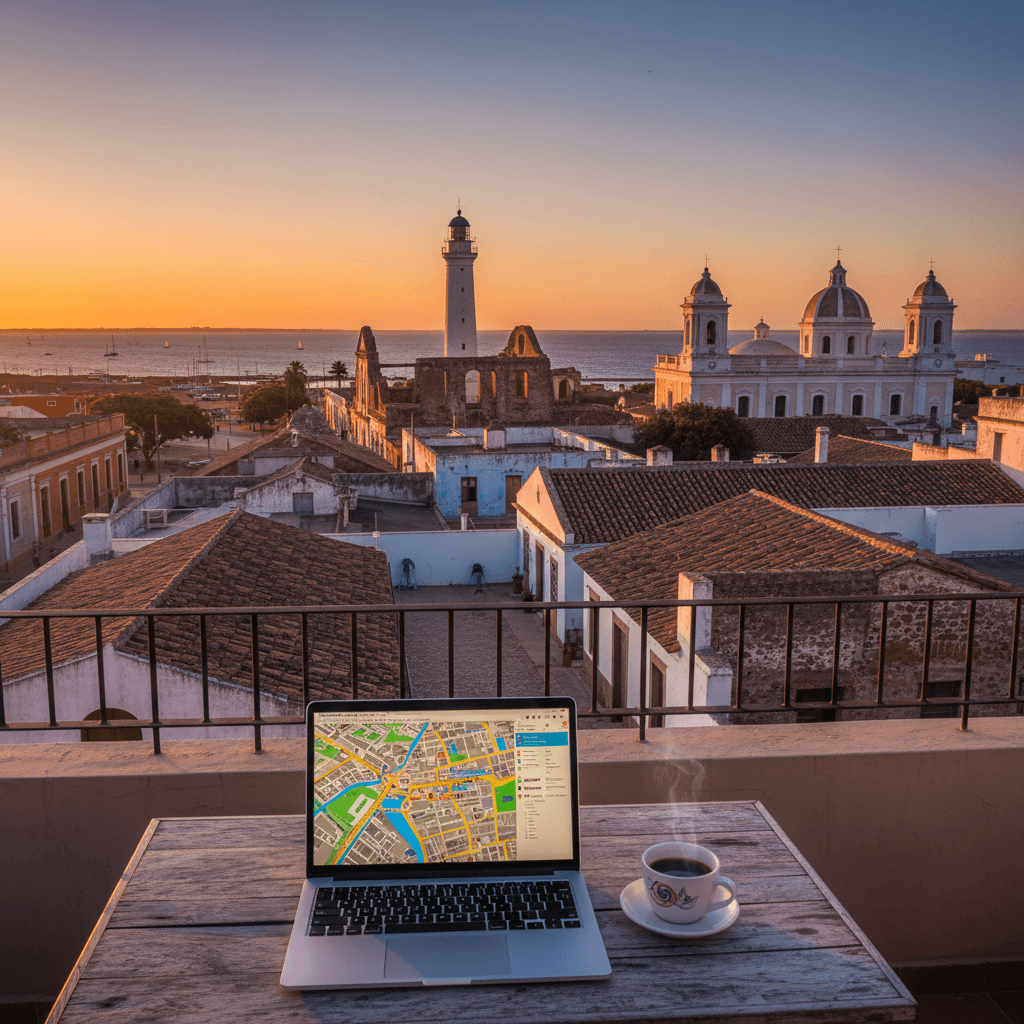
Colonia del Sacramento
🇺🇾 Uruguay
The Vibe: A Slow-Motion Sanctuary
Colonia del Sacramento feels like a collective deep breath. While neighboring Montevideo and Buenos Aires thrive on caffeine and chaos, Colonia operates on a different clock. It is a place where the sound of your own footsteps on 17th-century cobblestones is the primary soundtrack, and the "rush hour" consists of a few locals sipping mate on their porches. For digital nomads, the appeal isn't high-octane networking; it's the ability to actually hear yourself think.
The city is a rare architectural hybrid, wearing its history in the blend of Portuguese stone houses and Spanish brickwork. It lacks the gritty edge of most South American hubs, trading it for a safe, village-like atmosphere where you'll likely recognize half the people at the grocery store within a week. It’s the kind of place where you come for a weekend and end up staying for three months because you finally found a rhythm that doesn't involve burnout.
Living Costs & Logistics
Your bank account will breathe as easily as you do. Colonia is roughly 30% to 40% cheaper than Montevideo, making it a strategic base for those looking to stretch a remote salary without sacrificing quality of life. A solo nomad can live comfortably here on $1,580 USD per month, while those on a tighter budget can get by on roughly $1,100 USD if they opt for residential neighborhoods.
Neighborhood Breakdown
- Barrio Histórico: This is the UNESCO-listed heart of the city. It's incredibly charming with its ivy-covered walls and lanterns, but it’s the priciest area. You'll pay $500 to $800 USD for a one-bedroom apartment here. It gets busy with day-trippers on weekends, but the weekday mornings are magical.
- Waterfront (Playa Ferrando): A favorite for families and expats who want modern amenities. It’s quieter and closer to the beach, with rents ranging from $600 to $900 USD. It’s a 20-minute walk to the center, which is a plus if you want to separate your "home" life from the tourist zones.
- Real de San Carlos: The budget choice for long-termers. It’s a residential area where you can find studios for $300 to $500 USD. You’ll need a bike or the local bus to get into town, but the peace and quiet are unmatched.
The Digital Nomad Setup
Don't let the old-world aesthetic fool you. The internet is surprisingly robust. Fiber optic lines via Antel are the standard, usually delivering speeds between 50 and 100 Mbps. If your Airbnb’s WiFi fails, Colonia Cowork is the go-to spot for $12 USD a day. It has reliable AC and decent coffee, which is a necessity during the humid summer months.
When you need a change of scenery, the cafe culture is welcoming to laptops. You can post up at Café del Puerto or the iconic El Drugstore for a few hours. For mobile data, grab an Antel SIM for $10 USD or use the UPMobile eSIM app if you want unlimited data for about $15 USD a month. It’s seamless and keeps you connected while you’re wandering the Rambla.
Social Life & Safety
This isn't a party town. Nightlife usually peaks at a craft beer at Bar El Social or a late dinner at Lentillería El Galpón. Socializing happens in smaller, more intimate circles. Most nomads connect through the "Digital Nomads Colonia Uruguay" Facebook group or meet at the Sunday market on the Rambla. It’s a very safe environment, earning a 8.5/10 safety rating from the community. You can walk home at 2:00 AM in the historic district without looking over your shoulder.
The real beauty of Colonia is its proximity to everything else. If you start feeling "island fever" from the small-town life, the ferry to Buenos Aires takes just one hour and costs around $50 USD. You can dive into the big city madness for a night and be back in your quiet colonial sanctuary by Sunday afternoon.
The Price of Peace
Colonia del Sacramento is where your bank account finally gets a chance to breathe. While the rest of Uruguay can be surprisingly pricey, Colonia remains roughly 30% to 40% cheaper than Montevideo. It is a place where you can live comfortably on a mid-range budget of around $1,580 USD per month without feeling like you are constantly checking your balance.
Most solo nomads find they can manage on a tighter budget of $1,100 USD if they stick to local empanadas and residential neighborhoods. If you want a bit more luxury, like a waterfront apartment and frequent dinners at places like Charco Bistro, expect to spend closer to $2,050 USD. Prices are stable, making it a reliable spot for those planning a stay through 2026.
Where to Set Up Camp
Your monthly rent will be your biggest variable. The city is small, but the vibe shifts significantly depending on which street you call home.
- Barrio Histórico: This is the UNESCO-listed heart of the city. It is undeniably charming with its cobblestones and cafes, but you will pay for the privilege. Expect to spend $500 to $600 USD for a studio or one-bedroom. It gets a bit loud on weekends when the ferry crowds arrive.
- Waterfront / Playa Ferrando: If you want modern amenities and a view of the water, look here. It is quieter and popular with expat families. Rents go higher, usually between $600 and $900 USD, and you are looking at a 20 minute walk to reach the center.
- Real de San Carlos: For those staying long-term who want deep peace and quiet, this residential area offers the best value. You can find studios for $300 to $500 USD. You will likely need to use the local bus or a bike to get into town for social events.
Daily Expenses and Dining
Eating out is a highlight here, ranging from quick street bites to slow, multi-course affairs. A casual chivito or a couple of empanadas from a street stall will cost you $3 to $6 USD. A solid mid-range meal at a spot like Lentillería El Galpón usually lands around $15 USD per person. If you are celebrating at an upscale spot like El Drugstore, set aside $25 to $40 USD.
Getting around is cheap because you will mostly be on foot. The historic core is less than a kilometer across. When you do need wheels, a local bus ride is only $1 USD, and a taxi or an InDriver across town rarely exceeds $10 USD. Many nomads rent bikes from Colonia Bikes for $5 USD a day to explore the coastline.
Staying Connected
The internet infrastructure is surprisingly robust. Fiber optics through Antel are the standard, and you can expect speeds between 50 and 100 Mbps in most apartments. If you need a dedicated office environment, Colonia Cowork is the go-to spot for about $12 USD a day or $100 USD for the month. It has the reliable AC and coffee you need to get through a deep work session.
For mobile data, travelers recommend grabbing a prepaid SIM from an Antel or Claro kiosk for about $10 USD, which usually gets you 20GB of data. If you prefer the convenience of an eSIM, UPMobile offers unlimited monthly plans for around $15 USD, though speeds can vary compared to local physical cards.
Safety and Health
Safety is one of Colonia's biggest selling points. It carries a safety score of 8.5 out of 10, and it is perfectly normal to see people walking alone at night in the historic areas. While you should avoid unlit outskirts after dark, petty crime is rare. For medical needs, Hospital Colonia provides 24/7 emergency services and has English-speaking doctors on staff. Pharmacies like Farmacia Colonia are easy to find and stay open late for basic supplies.
For Nomads: Barrio Histórico
If you want to live inside a postcard, the Barrio Histórico is your best bet. This UNESCO-listed core is where you'll find those iconic cobblestone streets and the Portuguese-Spanish architectural mashup that defines the city. It is the most walkable part of town, meaning you can hit Colonia Cowork or local coworking options in under ten minutes on foot.
Most nomads aim for short-term Airbnbs here to soak up the atmosphere. You can expect to pay around $500 to $600 USD for a one-bedroom apartment. While it is the most expensive area, the convenience of having cafes like El Drugstore or Café del Puerto right outside your door for a 50 to 100 Mbps WiFi session is hard to beat. Just be prepared for some noise on Friday and Saturday nights when day-trippers from Buenos Aires fill the plazas.
For Expats and Long-Termers: Waterfront & Playa Ferrando
Expats who plan to stay for six months or more usually migrate toward the Waterfront or Playa Ferrando. This area feels much more modern and residential compared to the old town. You get direct access to the river beaches and the Rambla, which is the local go-to spot for sunset walks and drinking mate with friends.
The apartments here are often newer builds with better insulation for those damp July winters. Rent typically ranges from $600 to $900 USD for a comfortable place with a view. It is about a 20-minute walk or a quick $5 USD taxi ride to the city center, but the tradeoff is a much quieter environment and easier access to larger grocery stores. It is the sweet spot for those who want a "real life" feel rather than a vacation vibe.
For Families: Real de San Carlos
Families often find their rhythm in Real de San Carlos. Located a bit further north, this neighborhood is anchored by the historic bullring and surrounded by green spaces and parks. It is significantly quieter and safer for kids to run around, and you'll find more houses with yards here rather than cramped apartments.
The pace is slow, even by Uruguayan standards. You'll likely need to use the local bus for $1 USD or rent a scooter via the Muvo app to get into the historic center for social events. However, the proximity to Hospital Colonia and various pharmacies provides peace of mind for parents. It is a neighborhood where neighbors actually know each other, making it easier to integrate into the local community.
For Budget Solo Travelers: North of General Flores
If you are watching your "burn rate" or planning a deep-work retreat, look just north of the main drag, Avenida General Flores. This area isn't flashy, but it is incredibly practical. You can find basic studios for $300 to $500 USD, putting you within walking distance of the ferry terminal and the cheapest empanada spots in town.
Solo travelers often use this as a base because it is safe and central without the "tourist tax" of the historic district. You are close to Bar El Social for live music and Lentillería El Galpón for a $15 USD asado dinner. Since the city is so small, you never feel isolated, and you're only ever a few blocks away from a reliable Antel fiber connection. It is the best way to experience the city's 8.5/10 safety rating without overspending on rent.
- Barrio Histórico Rent: $500 to $600 USD
- Waterfront Rent: $600 to $900 USD
- Real de San Carlos Rent: $300 to $500 USD
- Daily Coworking: $10 to $15 USD
Digital Speed in a Slow Town
Colonia del Sacramento might feel like a step back in time, but its digital infrastructure is firmly in the present. Most nomads are pleasantly surprised by the reliability of the internet here. Thanks to Antel fiber optics, you can expect average speeds between 50 and 100 Mbps. It is common to see 80 Mbps in modern Airbnbs and even in some of the more established cafes in the historic district.
While the town is small, the connection is stable enough for video calls and heavy uploads. If you are staying in the Barrio Histórico, double check with your host that they have fiber installed, as some older stone buildings can occasionally struggle with signal penetration. For those who need a backup, Antel and Claro offer prepaid SIM cards for about $10 USD that come with 20GB of data. If you prefer an eSIM, UPMobile provides a 30 day unlimited plan for $15 USD that works right off your phone.
Top Coworking Spaces
Colonia does not have a massive coworking scene, but the town remains a popular destination for remote workers who often utilize the local cafes or their own accommodations to stay productive. While dedicated coworking hubs are limited, the tight-knit community of nomads often connects in the town's various laptop-friendly environments.
Laptop Friendly Cafes
If you prefer the hum of a coffee shop over a formal office, Colonia has a few reliable options. The cafe culture is welcoming, though it is polite to order a meal if you plan on staying for several hours. Travelers often recommend these spots for a solid 4 to 6 hour work session:
- El Drugstore: Known for its quirky decor, it has reliable WiFi and a great atmosphere for afternoon emails.
- Café del Puerto: A classic choice with plenty of seating and a steady connection. It is a favorite for those who want to watch the sunset while finishing up a project.
- Lentillería El Galpón: While primarily a restaurant, it is quiet during the off hours and offers a comfortable environment for light tasks.
Connectivity and Data Costs
Staying connected while walking between the cobblestone streets is affordable and straightforward. Most nomads find that a local SIM is the most cost effective way to stay online. Here is a quick breakdown of what to expect:
- Prepaid SIM (Antel/Claro): $10 USD for 20GB. You can pick these up at local kiosks or "telecentros."
- eSIM (UPMobile): $15 USD for 30 days of unlimited data. This is the easiest "set it and forget it" option.
- Airalo: A popular choice for those arriving from Buenos Aires who want data the second they step off the ferry, though it is usually pricier than local options.
Overall, the town offers a perfect balance for those who want to work hard in the morning and completely unplug by the afternoon. The lack of a frantic "hustle" culture means you can focus without the distractions found in larger hubs like Montevideo or Buenos Aires.
Peace of Mind on the Cobblestones
Colonia del Sacramento is easily one of the safest spots for digital nomads in South America. It carries a safety score of 8.5/10, and you'll feel that security the moment you step off the ferry. The vibe is significantly more relaxed than Montevideo or Buenos Aires; it's the kind of place where locals leave their front doors open and kids play in the plazas until dusk.
Most nomads report feeling perfectly comfortable walking home alone at night through the Barrio Histórico. The streets are well lit and there's a consistent, friendly police presence. Like any town, you should stick to the main areas after dark and avoid unlit outskirts, but petty crime like pickpocketing is remarkably rare here. If you do run into trouble, the emergency number is 911 for both police and ambulance services.
Navigating Healthcare
If you get sick or need a prescription filled, you aren't going to struggle. The city is home to Hospital Colonia, which provides 24/7 emergency care. Expats generally praise the facility for its quick response times and professional staff. While Spanish is the primary language, you can usually find English speaking doctors in the ER or through private consultations.
For minor issues, pharmacies are easy to find. Farmacia Colonia is a reliable go to and stays open late. You'll find that many over the counter medications are readily available, though it's always smart to have your specific prescriptions written down with their generic names to help the pharmacist.
Health & Safety Quick Stats
- Safety Score: 8.5/10
- Emergency Services: Dial 911
- Main Hospital: Hospital Colonia (24/7 ER)
- Pharmacy: Farmacia Colonia (Late night service)
- Tap Water: Generally safe to drink, though many nomads prefer bottled or filtered water for the taste.
Staying Connected and Secure
Digital security is just as important as physical safety when you're working remotely. The internet in Colonia is surprisingly robust, with Antel fiber providing speeds between 50 and 100 Mbps in most modern apartments and coworking spaces. If you're working from a cafe like El Drugstore or Café del Puerto, the connections are reliable enough for Zoom calls, though it's always wise to use a VPN on public networks.
For your phone, grab a prepaid SIM from an Antel or Claro kiosk for about $10 USD, which usually nets you around 20GB of data. If you prefer the convenience of an eSIM, UPMobile offers unlimited data for 30 days at $15 USD. Having a local number is helpful for using ride hailing apps like InDriver or Uber, which are safer and more transparent than hailing a random car on the street, especially for trips back to Real de San Carlos late at night.
Practical Advice for Solo Travelers
Solo nomads often find Colonia to be an easy "soft landing" in Uruguay. The community is tight knit, and you'll likely start recognizing faces at Colonia Cowork or Nomad Hub within your first week. While the nightlife is quiet, the social scene revolves around the Sunday Rambla market and local Facebook groups like "Digital Nomads Colonia Uruguay." It's a respectful environment where people look out for one another, making it an ideal base for those who prioritize a low stress lifestyle over big city chaos.
The Walkability Factor
Colonia is the kind of place where your primary mode of transport is a sturdy pair of walking shoes. The historic core, or Barrio Histórico, is almost entirely walkable; most of the cafes, plazas, and scenic viewpoints are packed into an area less than a kilometer wide. You'll spend a lot of time on uneven, centuries old Portuguese cobblestones, so leave the dress shoes in your luggage.
For those staying a bit further out in Real de San Carlos or near Playa Ferrando, the walk into the center takes about 20 minutes. It's a pleasant stroll along the waterfront, but if you're carrying groceries or it's a humid January afternoon, you'll probably want wheels.
Public Transit and Ride-Hailing
The local bus system is straightforward and cheap, with tickets costing around $1 USD per ride. It's reliable for getting across town, though most nomads find they only use it for specific errands outside the tourist zone. If you're heading further afield, the main bus terminal is the gateway to the rest of the country; a trip to Montevideo takes about 2.5 hours and costs roughly $20 USD.
For quick trips, Uber and InDriver are the go-to apps. They're reliable and surprisingly affordable, with most short jaunts within the city limits running between $3 and $7 USD. Traditional taxis are also available and usually congregate near the ferry terminal and the main plazas, typically charging $5 to $10 USD for local hops.
Two-Wheeled Exploration
Bicycles and scooters are the preferred way to see the coastline without breaking a sweat. Many expats recommend renting from Colonia Bikes, where a daily rental starts at $5 USD. It's the best way to reach the quieter beaches or the historic bullring in Real de San Carlos.
- Electric Scooters: You can check for scooter apps like Movo if available, which are perfect for a quick dash to a coworking space.
- Golf Carts: You'll see plenty of these for rent near the port. While they're popular with day-trippers from Buenos Aires, they're a bit pricey and overkill for long-term residents.
Arriving and Regional Connections
Most travelers arrive via the Buquebus or Colonia Express ferries from Buenos Aires. The terminal is centrally located, and you can easily walk to most Barrio Histórico accommodations from the pier. A one-way ferry ticket usually costs around $50 USD and takes about an hour.
If you're flying into Montevideo (MVD), you have two main options to reach Colonia:
- Public Bus: Frequent departures from the Tres Cruces station in Montevideo for $20 USD.
- Private Van: A more comfortable, door-to-door service that costs about $100 USD, which is a great value if you're traveling in a small group.
Transport Costs at a Glance
- Local Bus: $1 USD
- Uber/InDriver: $3 to $7 USD
- Bike Rental: $5 USD per day
- Ferry to Buenos Aires: $50 USD
- Bus to Montevideo: $20 USD
The Rioplatense Rhythm
In Colonia del Sacramento, language is part of the city's slow, melodic charm. You'll primarily hear Spanish spoken with the distinct Rioplatense accent, characterized by the "sh" sound for double Ls and Ys. While the historic district feels international, don't expect everyone to be fluent in English. Proficiency sits around 40% to 50% in tourist heavy spots like the Barrio Histórico, but it drops off quickly once you head toward residential areas like Real de San Carlos.
Most nomads find that while shopkeepers and waiters in the center can manage basic English, a little Spanish goes a long way. Locals are incredibly patient and appreciative when you try to speak their tongue. If you're coming from Buenos Aires, you'll find the accent identical, though the pace of speech in Colonia is notably more relaxed, mirroring the town's overall vibe.
Digital Communication and Connectivity
Staying connected is rarely a headache here. Uruguay has some of the best internet infrastructure in South America, and Colonia is no exception. Most apartments and cafes utilize Antel fiber, delivering reliable speeds between 50 Mbps and 100 Mbps. Travelers often recommend local coworking spaces like CoWork-Lab if they need a rock solid connection for video calls, with day rates averaging $10 to $12 USD.
- Antel or Claro: You can grab a physical prepaid SIM at local kiosks for about $5 USD, which usually includes 1-3GB of data.
- UPMobile or Airalo: If your phone supports eSIMs, these apps offer unlimited 30 day plans for roughly $15 USD, allowing you to skip the kiosk lines.
- Google Translate: Download the Spanish offline dictionary. It is a lifesaver when you are navigating menus at local spots like Lentillería El Galpón where English menus aren't always a given.
Social Nuances and Etiquette
Communication in Uruguay isn't just about words; it's about the rituals. You will see locals everywhere carrying a thermos and a mate gourd. If someone offers you a sip, it is a sign of welcome. Accepting is a great way to break the ice, even if the bitter herbal tea takes some getting used to. General politeness is expected, so always start your interactions with a "buen día" or "buenas tardes" before diving into a question.
Expats and long term nomads often congregate on Facebook groups like Digital Nomads Colonia Uruguay or use the InterNations app to coordinate meetups. Since the community is small, you will likely run into the same faces at the Sunday market on the Rambla. It is the kind of place where people remember your name after the second visit, making it easy to build a social circle despite the language barrier.
Essential Phrasebook for Nomads
You don't need to be fluent to get by, but having these phrases ready will make your daily life much smoother. Prices are often quoted in Uruguayan Pesos, but in the historic core, some upscale spots like Charco Bistro may show USD. Always clarify if you see a "$" sign without "UYU" next to it.
- ¿Cuál es la contraseña del WiFi? (What is the WiFi password?)
- ¿Aceptan tarjeta? (Do you accept cards? Many small kiosks are cash only.)
- La cuenta, por favor. (The bill, please. It is common to tip around 10%.)
- ¿Cuánto cuesta el viaje a Montevideo? (How much is the trip to Montevideo? Expect to pay about $20 USD for the bus.)
The Seasonal Sweet Spot
Colonia del Sacramento is a place that breathes with the seasons. Most nomads find the sweet spot for a visit falls between October and April. During these months, the humidity is manageable, the sun is out, and the cobblestone streets of the Barrio Histórico are lined with blooming jasmine. It is the ideal window for working from a sidewalk cafe like Café del Puerto without needing to hide from the cold.
The peak of summer hits in January. You can expect highs around 29°C (84°F) and lows of 21°C (70°F). While it is warm, the breeze coming off the Río de la Plata keeps things from feeling oppressive. This is when the city is at its liveliest, but keep in mind that prices for short term Airbnbs can spike as weekenders from Buenos Aires and Montevideo flock to the coast.
Winter Realities and Shoulder Seasons
If you are looking for total seclusion and the lowest possible rent, July is the quietest month. It gets chilly, with average highs of 15°C (59°F) and lows around 8°C (46°F). It is also the wettest time of year, averaging about 10 rainy days per month. The dampness can make the old stone buildings feel quite cold, so if you arrive in winter, check that your apartment has decent heating or a split AC unit.
The shoulder seasons of April to May and September to October are favorites for long term stays. The weather is mild, the tourist crowds thin out, and you can often negotiate better monthly rates in areas like Real de San Carlos. You will still want a light jacket for the evenings, but the days are usually bright and clear.
Planning Your Stay
Uruguay's climate is temperate, but the coastal wind is a real factor. Here is a quick look at what to expect throughout the year:
- Summer (December to February): Expect consistent sun and temperatures between 21°C and 29°C. This is the best time for beach afternoons at Playa Ferrando after you finish your deep work sessions.
- Autumn (March to May): Temperatures begin to drop to a comfortable 10°C to 22°C. The leaves change on the sycamore trees, making the historic center incredibly photogenic.
- Winter (June to August): The coldest period, with highs around 15°C and lows around 8°C. It is humid and grey, but the local cafes are cozy and the Colonia Cowork community stays active.
- Spring (September to November): A favorite for many expats. Temperatures bounce back to 12°C to 23°C and the city starts to wake up again.
Pack layers regardless of when you visit. Even in the heat of January, a sudden rain shower or the evening river breeze can make things feel much cooler than the thermometer suggests. If you hate the rain, try to avoid May through August, as the grey skies can get a bit repetitive if you are working from home alone.
Most travelers recommend timing your arrival for November or March. You get the best of the Uruguayan sun without the peak season crowds or the inflated holiday pricing. It is the perfect environment for a focused work sprint followed by a sunset walk along the Rambla.
The Bottom Line on Costs
Colonia is a breath of fresh air for your wallet, especially if you're coming from Montevideo or Buenos Aires. You can live comfortably here for around $1,580 USD a month. If you're tightening the belt, a solo nomad can get by on $1,100 USD by sticking to local studios and cooking at home.
Daily expenses are manageable. A quick empanada or a chivito on the street will set you back about $3 to $6 USD, while a nice dinner at a spot like El Drugstore ranges from $25 to $40 USD. Most nomads find the 30% to 40% savings compared to the capital makes it easy to justify a longer stay.
Where to Set Up Base
The city is compact, but your choice of neighborhood changes the vibe significantly. Most short term remote workers gravitate toward the Barrio Histórico. It's the UNESCO heart of the city with cobblestone streets and endless charm. You'll pay a premium here, with one bedroom apartments starting around $500 USD, and weekends can get loud with day trippers.
For a bit more peace, look at the Waterfront and Playa Ferrando area. It's popular with expat families because of the modern apartment blocks and beach access. Expect to pay between $600 and $900 USD for rent, and factor in a 20 minute walk to get to the center.
If you're on a strict budget, Real de San Carlos is the way to go. It's a quiet residential area where studios drop to the $300 to $500 USD range. It's further out, so you'll likely rely on the $1 USD local bus or the InDriver app to get around.
Internet and Productive Spaces
Uruguay has some of the best infrastructure in South America. You'll generally find Antel fiber connections pushing 50 to 100 Mbps in most apartments. If you need a dedicated desk, Colonia Cowork is the local favorite at $12 USD a day. It has reliable AC and strong coffee. Nomad Hub Colonia is another solid central option for $10 USD a day.
For cafe hopping, Café del Puerto and El Drugstore are welcoming to laptops. You can usually get a good four to six hour session in without any issues. For mobile data, grab an Antel SIM at a kiosk for $10 USD or use the UPMobile app for an unlimited 30 day eSIM at $15 USD.
Getting Around and Staying Safe
Colonia is incredibly safe, earning a safety score of 8.5 out of 10 from the community. Walking home at night in the historic center is common practice, though it's smart to stay in well lit areas on the outskirts. If you need a lift, Uber and InDriver are reliable and cheap, usually costing $3 to $7 USD for cross town trips.
- Bicycle Rentals: Colonia Bikes charges about $5 USD per day.
- Scooters: Use the Muvo app for $0.20 USD per minute.
- Ferry: The Buquebus to Buenos Aires takes an hour and costs roughly $50 USD.
- Montevideo Bus: A 2.5 hour ride for $20 USD.
Cultural Nuances
Spanish is the main language here, and while tourism staff speak English, proficiency drops to about 40% elsewhere. Use Google Translate's offline mode to help. Locals are warm but reserved. If someone offers you mate, it's a sign of trust; accept it and enjoy the ritual. A 10% tip is standard in restaurants, and a simple "buen día" goes a long way when entering a shop.
Weather Windows
The sweet spot for visiting is October through April. Summer peaks in January with highs of 29°C (84°F). Winter in July can get chilly and damp, with lows of 7°C (45°F), so pack layers if you're planning a mid year stay. Most nomads find the shoulder seasons of November and March provide the best balance of warm weather and thinner crowds.
Need visa and immigration info for Uruguay?
🇺🇾 View Uruguay Country GuideEasy Landing
Settle in, no stress