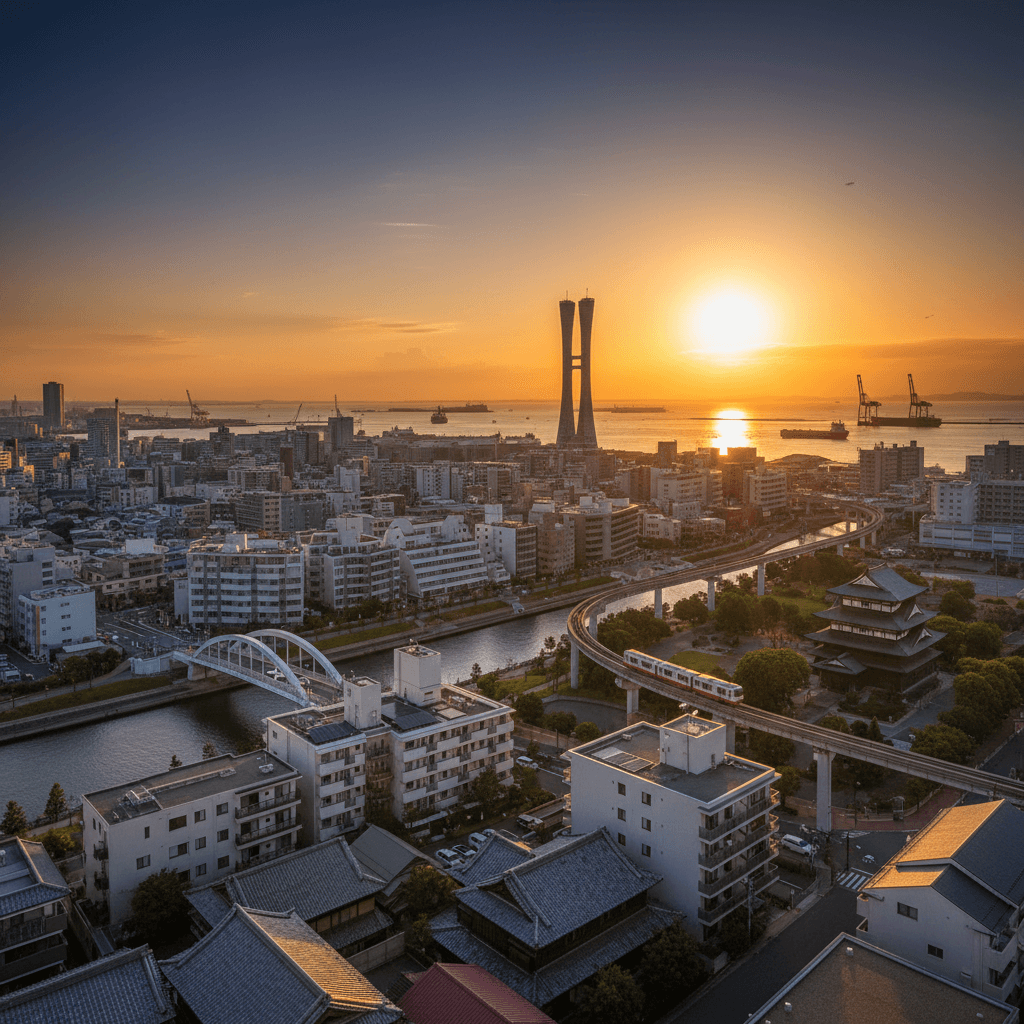
Chiba
🇯🇵 Japan
The Coastal Alternative to Tokyo's Chaos
If Tokyo is a high-speed processor running at maximum capacity, Chiba is the heat sink that keeps the system from crashing. Most travelers only see this prefecture through a train window on the Narita Express, but for nomads who want the convenience of the world's largest metropolis without the suffocating crowds, Chiba is a strategic masterstroke. It feels less like a tourist destination and more like a functional, breathable backyard where you can actually hear yourself think.
The vibe here is decidedly suburban-coastal. You'll find a landscape defined by wide sidewalks, salty Pacific breezes, and a pace of life that respects your focus. While Tokyo nomads are fighting for a stool in a cramped Shibuya cafe, you'll likely be spreading out in a spacious Starbucks in Makuhari or a local Doutor near Chiba Station. It is a place of "organized peace" where the infrastructure is just as flawless as the capital, but the physical space is significantly more generous.
The Nomad Experience: Productivity Meets the Pacific
Living here in 2025-2026 means leaning into a hybrid lifestyle. You aren't coming here for a massive, pre-packaged nomad community; you're coming here to build a routine. Expats often describe the experience as "Tokyo Lite." You get the 1 Gbps fiber internet and the 99% 5G coverage, but your morning walk might take you past a quiet shrine or a local seafood market rather than a neon-soaked skyscraper.
The emotional payoff is the lack of friction. Everything works. You can leave your MacBook on a table at a cafe to grab a refill without a second thought. Safety is a given, not a luxury. However, be prepared for a bit of a "social island" effect. Since Chiba doesn't have the density of international hubs like Shibuya or Shinjuku, you'll need to be proactive. Most nomads join the Japan Digital Nomad Association (JDNA) or hop on the JR Sobu Line for a 40-minute ride into Tokyo when they need a social fix.
Cost of Living Breakdown
Your yen goes much further here than it does across the Edo River. You can expect your total monthly overhead to be roughly 20% to 30% lower than in central Tokyo, mostly due to the massive difference in housing costs.
- Budget Tier (¥150,000 to ¥200,000): This covers a room in a shared house, plenty of FamilyMart or Lawson meals for ¥600, and a focus on local exploration.
- Mid-range Tier (¥250,000 to ¥350,000): The sweet spot for most. You'll get a modern studio apartment for ¥75,000, daily cafe sessions, and frequent dinners at mid-range izakayas.
- Comfortable Tier (¥400,000+): A spacious one-bedroom near the water, high-end sushi dinners, and a ¥30,000 monthly budget for coworking memberships in Tokyo.
Why Choose Chiba Over Tokyo?
The real draw is the balance of extremes. You have Tokyo Disneyland and the massive Makuhari Messe convention center for entertainment, but you also have the rugged Kujukuri Beach for surfing and the rolling hills of the Boso Peninsula for weekend hikes. It is a destination for the "deep work" phase of your journey. It is for the nomad who has already done the late nights in Roppongi and now wants a reliable base where they can hit their deadlines, save some money, and still be close enough to the action to never feel left out.
The language barrier is slightly higher here than in the heart of the capital, so keep Google Translate handy. But the locals are famously polite, and once you've mastered a simple "Sumimasen," you'll find the suburban hospitality far warmer than the hurried interactions of the city center.
The Price of Proximity
Living in Chiba feels like a strategic life hack for anyone who wants Tokyo access without the soul-crushing rent prices of Shibuya or Minato. Most nomads find their yen goes about 20% to 30% further here. You aren't just saving on floor space; you're getting a slower pace of life where the local grocery store isn't a luxury boutique. While Tokyo is currently seeing price hikes, Chiba remains a reliable refuge for mid-range budgets.
For a single person, a monthly budget of ¥250,000 to ¥350,000 provides a very comfortable lifestyle. This covers a private apartment, daily cafe visits, and plenty of weekend trips into the city. If you're willing to go the "share house" route and eat like a local at 7-Eleven or Lawson, you can scrape by on ¥150,000, though your social life might feel a bit lean.
Monthly Budget Tiers
- The Budget Nomad (¥150,000 to ¥200,000): Expect a room in a shared house or a tiny "1K" apartment further from Chiba Station. You'll be a regular at Sukiya for ¥500 beef bowls and using a bicycle as your primary transport.
- The Mid-Range Professional (¥250,000 to ¥350,000): This is the sweet spot. You'll afford a modern studio in Makuhari or central Chiba City, eat out at mid-range izakayas, and keep a dedicated desk at a coworking space.
- The High-End Expat (¥400,000+): This buys you a spacious 1BR or 2BR apartment, frequent dinners at upscale sushi spots, and enough left over for weekend getaways to the Boso Peninsula.
Rent and Housing
Rent is your biggest win in Chiba. In central Tokyo, a decent 1BR starts at ¥100,000 and goes up fast. In Chiba City, you can find comparable modern apartments for ¥60,000 to ¥90,000. If you look toward Kashiwa or the coastal suburbs, those prices drop even more. Most expats recommend looking for "Monthly Mansion" rentals or platforms like GaijinPot to avoid the "re禮金" (key money) and "敷金" (deposit) hurdles that can eat up four months of rent upfront.
Daily Expenses
Food costs are flexible. A quick lunch at a chain like Doutor or Starbucks will run you about ¥500 to ¥800. If you're hitting a mid-range restaurant for dinner, expect to pay between ¥1,500 and ¥3,000. Groceries are affordable if you stick to seasonal Japanese produce, but imported cheese or cereal will spike your bill quickly.
- Coffee: ¥400 to ¥600
- Beer at a bar: ¥600 to ¥900
- Gym membership: ¥8,000 to ¥12,000 per month
- Coworking day pass: ¥2,000 to ¥3,000
Transport and Connectivity
Public transport is non-negotiable and incredibly efficient. A Suica or Pasmo card is your best friend here. If you're commuting into Tokyo regularly, a monthly pass will cost around ¥10,000 to ¥15,000 depending on the distance. While the JR Sobu Line is a lifeline, it's also famously crowded during rush hour. For mobile data, nomads usually grab a SIM from Rakuten Mobile or IIJmio for roughly ¥2,000 to ¥4,000 a month, giving you enough juice to hot-spot during train rides.
Overall, Chiba offers a high standard of living for those who value space and sanity over being in the absolute center of the action. It's the kind of place where you can actually save money while still enjoying the best of Japanese urban life.
For Digital Nomads: Chiba City (Central)
If you need to be within striking distance of Tokyo but don't want to pay Shinjuku prices, the area around Chiba Station is your best bet. It's a major transport hub where the JR Sobu Line can get you into central Tokyo in about 40 minutes. The vibe is urban and efficient, though it lacks the frantic neon energy of the capital.
- Rent: Expect to pay between ¥60,000 and ¥90,000 for a decent studio apartment.
- Work spots: While dedicated coworking spaces are fewer than in Tokyo, nomads frequent Doutor Coffee or the Starbucks inside the Perie Chiba mall for reliable WiFi and power outlets.
- Vibe: Practical and convenient. You're close to the action without the 24/7 noise.
For Expats and Professionals: Makuhari (Bay Area)
Makuhari is the polished, modern face of the prefecture. It feels like a city of the future with wide boulevards, massive shopping complexes like Aeon Mall Makuhari New City, and high-rise apartments. Many expats choose this area because it hosts international businesses and the Makuhari Messe convention center, giving it a more international, English-friendly feel.
- Rent: Slightly higher for modern builds, ranging from ¥80,000 to ¥120,000 for 1BR units.
- Lifestyle: Very walkable with plenty of green space and views of Tokyo Bay. It's a corporate hub, so it feels quiet on weekends but busy during the work week.
- Connectivity: Great for those who travel often, as Narita Airport is easily accessible via the Keisei Bus or local trains.
For Families: Kashiwa and the Northern Suburbs
Expats with children often gravitate toward Kashiwa. It's frequently called the "Shibuya of the North," but that's a bit of an exaggeration; it's much more family-oriented. You get a lot more square footage for your yen here, and the proximity to parks and reputable schools makes it a top choice for long-term residents. The Tsukuba Express line provides a lightning-fast connection to Akihabara if you need to head into the city for meetings.
- Rent: Family-sized 2BR apartments usually start around ¥100,000.
- Perks: Plenty of "mama-cafes" and kid-friendly infrastructure. Kashiwanoha Park is a massive local favorite for afternoon outings.
- Social: A strong community of long-term foreign residents who appreciate the slower suburban pace.
For Solo Travelers and Nature Lovers: The Coastal Belt
If your version of a "best neighborhood" involves a surfboard rather than a subway pass, look toward the Pacific coast, specifically near Kujukuri Beach. This isn't a place for those who need a high-speed office environment, but it's perfect for a "work-cation" or a quiet month of focus. You'll definitely need a car or a sturdy bike to get around here, as public transit is sparse compared to the city center.
- Cost: Guesthouses and local rentals are very affordable, often under ¥50,000 a month if you're willing to go rustic.
- Environment: Relaxed, salt-of-the-earth, and famous for fresh seafood markets. It's the polar opposite of the Tokyo grind.
- Internet: 5G coverage is generally excellent even in rural spots, so a SoftBank or NTT Docomo mobile hotspot will be your best friend.
Connectivity and Speeds
You won't have to worry about the "spinning wheel of death" here. Chiba benefits from the same world class infrastructure as its neighbor, Tokyo. Fiber optic connections are the standard, with most residential areas and rentals hitting speeds between 100 Mbps and 1 Gbps. If you are staying in a modern apartment or a business hotel near Chiba Station, the latency is typically around 7ms, making it perfect for seamless video calls or heavy uploads.
Mobile data is equally robust. 5G coverage is nearly universal across the urban corridor from Urayasu to Chiba City. Most nomads grab a SIM card or eSIM from NTT Docomo or SoftBank at Narita Airport or a BIC Camera store. Expect to pay between ¥2,000 and ¥4,000 per month for a solid 20GB plan. If you want to save a bit, MVNOs like IIJmio or Rakuten Mobile are popular choices for those staying longer than a month.
Coworking Spaces in Chiba
While Chiba doesn't have the sheer volume of "laptop lifestyle" hubs found in Shibuya, it has a more practical, corporate leaning coworking scene that is often quieter and easier to get a seat in. You won't find many "digital nomad" mixers here, but you will find high productivity environments.
- Z-XY locations in nearby Chiba prefecture cities like Funabashi near JR Sobu Line: A very popular choice for remote workers in the region. It is designed for focus, with private booths and high speed WiFi. It is a convenient pit stop if you are commuting.
- BIZcomfort Chiba: A budget friendly local favorite. They offer 24/7 access plans which are a lifesaver if you are working on US or European time zones. Monthly memberships here often start around ¥10,000 to ¥20,000, significantly cheaper than Tokyo prices.
The Cafe Office Culture
Working from cafes is a common practice, but there is a specific etiquette to follow. Unlike some Western cities where you can buy one latte and sit for six hours, Japanese cafes often expect you to move on after 90 to 120 minutes during peak times. Look for the "WiFi Available" and "Outlet" stickers on the window before you head in.
- Starbucks (Chiba Station area): Reliable and familiar. The branch in the Perie Chiba mall is usually packed, so get there early if you need a plug.
- Doutor Coffee: The local staple. It is cheaper than Starbucks, with a coffee costing around ¥300 to ¥500. It is less "aesthetic" but very functional for a quick hour of emails.
Practical Workflow Tips
Public WiFi exists in most JR stations and 7-Eleven stores, but it is often spotty or requires a clunky login process. Most expats recommend carrying a Pocket WiFi device or using a dedicated hotspot from your phone as a backup.
One thing travelers often overlook is the "silence culture." If you have a day full of meetings, avoid working from open cafe areas. Even in coworking spaces, people tend to speak in whispers. If you have a loud presentation, book a "phone booth" or a private meeting room in advance to avoid the dreaded "shush" from the staff.
A Culture of Absolute Safety
If you're coming from North America or Europe, the safety levels in Chiba will feel like a superpower. It's one of those rare places where you can leave your $2,000 MacBook on a cafe table at Doutor while you use the restroom without a second thought. Street crime is virtually non-existent, and even late at night in urban centers like Chiba City or Makuhari, you'll see people walking home alone with total peace of mind.
The only real "danger" in Chiba is the occasional rowdy group near the nightlife hubs around Chiba Station, but even then, it's mostly just noise. For female solo travelers, Chiba is exceptionally secure. You'll find that the local culture is built on a foundation of mutual respect and social order that makes the transition for expats very smooth.
Navigating the Healthcare System
Japan's healthcare system is world-class, and Chiba benefits from being right next to Tokyo's medical infrastructure. If you're on the Digital Nomad Visa or a longer-term residency, you'll likely be part of the National Health Insurance system, which covers 70% of your costs. For short-term travelers, out-of-pocket costs are surprisingly reasonable compared to the US, though you should always carry private travel insurance.
In Chiba City, clinics are everywhere. Most are specialized, so you'll go to an "Internal Medicine" clinic for a cold rather than a general hospital. While English proficiency can be hit-or-miss in smaller suburban clinics, larger facilities like Chiba University Hospital have better resources for foreigners. Expats often recommend using the Himawari search tool or Google Translate to bridge the gap during consultations.
Pharmacies and Emergency Care
Drugstores like Matsumoto Kiyoshi or Welcia are on almost every corner. They carry everything from basic painkillers to high-end skincare, but be aware that dosages in Japan are often lower than what you might be used to back home. If you have specific prescription needs, bring a "Yunyu Kakunin-sho" (import certificate) for anything over a one-month supply.
- Emergency Services: Dial 119 for an ambulance or fire, and 110 for the police.
- English Support: Many nomads use the Japan Help Line for 24/7 assistance in English if they run into a medical snag.
- Payment: While many clinics are moving toward credit cards, smaller local doctors often still prefer cash, so keep a few 10,000 yen notes handy.
Environmental Awareness
Since Chiba is a coastal prefecture, you'll want to get familiar with the local alert systems. Your smartphone will automatically receive loud, distinct alerts for earthquakes or tsunamis. Don't panic when these go off; they're often just precautionary. Most modern apartments in areas like Kashiwa or Makuhari are built to the highest seismic standards, so you're in good hands.
During the summer months from June to August, the real health risk is heatstroke. The humidity in Chiba can be punishing. Locals stay hydrated with Pocari Sweat from the ubiquitous vending machines and spend the midday hours in air-conditioned coworking spaces or libraries to avoid the peak sun.
Getting Around Chiba
Chiba is a masterclass in Japanese efficiency, even if it feels a bit quieter than the neon-soaked streets of Tokyo. Most nomads find that once they have a Suica or Pasmo card loaded on their phone, the entire prefecture opens up. You can tap through ticket gates for trains, pay for your morning coffee at a 7-Eleven, and even settle the bill at many local izakayas without ever touching physical cash.
The Train Network
The JR Sobu Line is the backbone of life here. It connects Chiba City to Tokyo Station in about 40 minutes, making it easy to live in a cheaper suburb while commuting into the city for networking events. If you are staying in the Makuhari area, you will likely use the JR Keiyo Line, which runs along the coast and stops right at Tokyo Disneyland and Tokyo Station.
For something truly unique, the Chiba Urban Monorail is the world's longest suspended monorail system. It looks like something out of a sci-fi movie as it glides above the city streets. It is more than just a novelty; it is a practical way to get from Chiba Station to the sprawling Chiba Park or the Sports Center. Expect to pay around ¥200 to ¥500 per trip depending on the distance.
Airport Connections
One of the biggest perks of basing yourself in Chiba is the proximity to Narita International Airport (NRT). You are already in the same prefecture, so you can skip the long, expensive trek that Tokyo-based nomads have to endure. The Narita Express (N'EX) stops at Chiba Station, getting you to the terminal in about 30 minutes for roughly ¥1,200. Local trains are even cheaper, though they take a bit longer and can get crowded during rush hour.
Biking and Walking
Coastal areas like Makuhari and Inage-kaigan are remarkably flat and bike-friendly. Many expats recommend picking up a cheap "mamachari" (a sturdy, single-speed city bike) from a local shop for around ¥15,000. If you are only visiting, look for Hello Cycling ports. This app-based bike-sharing service is ubiquitous in Chiba City and allows you to rent electric bikes for about ¥130 per 15 minutes.
Walking is the default for daily errands. The neighborhoods are designed around train stations, so you will rarely find yourself more than a 10 or 15 minute walk from a grocery store or a pharmacy. Just keep in mind that sidewalks can get narrow in older residential pockets like Kashiwa, so stay alert for passing cyclists.
Taxis and Ride-Hailing
Uber exists in Japan, but it mostly functions as a way to hail licensed taxis rather than private cars. It is expensive. A short 10 minute ride can easily cost ¥2,000. Most locals use the GO app, which is the most reliable way to call a cab if you are stuck in a suburban area late at night after the trains stop running, usually around midnight.
- Suica/Pasmo Card: The only tool you really need for trains and buses.
- JR Sobu Line: Your primary link to central Tokyo.
- Hello Cycling: The best app for quick, electric bike rentals.
- GO App: The standard for calling taxis when you miss the last train.
Navigation Tips
Google Maps is incredibly accurate for train schedules, even telling you which platform to stand on and which car is closest to your exit. However, pay close attention to the labels: "Local" trains stop at every single station, while "Rapid" or "Commutation Rapid" skip smaller stops. If you accidentally hop on a Rapid train, you might find yourself zooming past your neighborhood at 100 kilometers per hour.
The Language Landscape
In Chiba, Japanese is the undisputed king. While you'll find English signage at major transit hubs like Chiba Station or near the Makuhari Messe convention center, day to day life requires a bit of linguistic legwork. Unlike central Tokyo neighborhoods like Minato or Shibuya, Chiba doesn't have a massive English speaking cushion. You'll likely find that convenience store clerks and local izakaya staff have limited English proficiency, though they're notoriously patient with foreigners.
Expats living in the suburban stretches of Kashiwa or Ichikawa often say that "survival Japanese" is your best friend here. Learning the basics isn't just about getting your coffee order right; it’s a sign of respect that opens doors to local social circles. Without it, your experience might feel a bit surface level. Most nomads find that the further you get from the JR Sobu Line, the less English you'll hear.
Digital Tools for the Modern Nomad
Since you probably won't become fluent overnight, technology fills the gaps. Most travelers rely heavily on Google Translate, specifically the camera feature for deciphering menus or grocery labels. For more nuanced conversations, DeepL is widely considered the gold standard for Japanese translation accuracy. It handles the context of the language much better than other apps, which is vital in a culture where so much is implied rather than stated.
For getting around the prefecture, Google Maps is reliable, but Japan Transit by Jorudan is the local favorite for navigating the complex train schedules. It helps you distinguish between local, rapid, and limited express trains, which can be the difference between a 40 minute commute and a 90 minute headache.
Key Phrases to Know
You don't need a degree in linguistics, but memorizing a handful of phrases will make your life significantly easier. Use these frequently to smooth over any awkwardness:
- Sumimasen: This is your Swiss Army Knife phrase. It means "Excuse me," "I'm sorry," and "Thank you" all at once. Use it to catch a waiter's attention or apologize for bumping someone on the train.
- Onegaishimasu: Used when asking for something, like "Kore (this) o onegaishimasu" when ordering food.
- Wakarimasen: "I don't understand." It’s better to be honest than to nod along and end up with the wrong train ticket.
- Eigo de daijoubu desu ka?: "Is English okay?" It’s a polite way to check if a staff member can switch languages.
Social Nuances and Communication Style
Communication in Chiba, and Japan at large, is often more about what isn't said. The concept of "Kuuki wo yomu" or reading the air is central to local interactions. People tend to be indirect to avoid confrontation. If a landlord or shopkeeper says something is "a bit difficult," they're usually giving you a polite "no."
Public behavior is also a form of communication. You'll notice the trains are eerily silent. Talking loudly on your phone or with friends is a quick way to mark yourself as an outsider. Most nomads find that mirroring the local volume and energy levels helps them blend in and receive better service. If you're looking for English speaking community events, your best bet is to join the Digital Nomad Japan Facebook group or look for "International Exchange" meetups in Chiba City, which usually happen once or twice a month at local community centers.
Learning the Language Locally
If you're staying for more than a month, consider taking a few classes. It’s a great way to meet people. Chiba City International Association (CCIA) offers very affordable Japanese lessons for residents, often priced around ¥500 to ¥1,000 per session. For a more intensive experience, you can find private tutors through platforms like Italki or Preply, where rates typically range from ¥2,500 to ¥5,000 per hour. Having a local tutor can also help you understand Chiba specific nuances, like local seafood names or regional festival customs.
Seasonal Breakdown
Chiba follows the standard Japanese four-season cycle, but its coastal position means you'll deal with a bit more humidity and wind than you might find in central Tokyo. Spring, from March to May, is arguably the most pleasant time for nomads to set up shop. Temperatures hover between 15°C and 22°C, making it perfect for working from a cafe terrace in Makuhari or taking your laptop to a park. The cherry blossoms usually peak in late March, though the crowds in Chiba's Inage Seaside Park are far more manageable than the madness at Tokyo's Ueno Park.
Summer, spanning June to August, is a different beast. It kicks off with the rainy season (tsuyu) in June, which brings consistent drizzle and high humidity. By July, the heat cranks up to 30°C or higher. If you aren't a fan of sweating through your shirt during a five-minute walk to the station, you'll want to stay indoors with the AC cranked. On the plus side, this is prime time for the surfing community near Kujukuri Beach, where the ocean breeze offers some relief.
Autumn arrives in September and lasts through November, offering a second "sweet spot" for travelers. The humidity drops, the leaves turn vibrant shades of red and orange, and the air gets crisp. Temperatures settle back into the 15°C to 20°C range. It’s the best time for hiking the Boso Peninsula or exploring the rural outskirts of the prefecture without the summer swarm of mosquitoes.
Winter, from December to February, is chilly but rarely brutal. Temperatures usually sit between 2°C and 10°C. Snow is rare in Chiba City, though you might see a dusting once or twice a year. The sky is often a clear, piercing blue, which makes for great visibility if you're heading to a high-rise coworking space to catch a glimpse of Mount Fuji in the distance.
When to Visit: Nomad Perspectives
- The Peak (March to May): Best for outdoor enthusiasts and those who want the classic Japan experience. Prices for monthly rentals and Airbnbs tend to spike during this window, especially around "Golden Week" at the end of April.
- The Value Play (September to November): You get the same great weather as spring but with slightly lower accommodation costs and fewer tourists. Many expats prefer this window for long-term stays.
- The Quiet Season (January to February): If you’re on a budget and don't mind the cold, this is when you'll find the best deals on housing. Just be prepared for shorter days and a more subdued social scene.
Key Considerations
If you're planning your trip around specific events, keep an eye on the late July and August festival calendar. While the heat is intense, the local matsuri (festivals) and massive fireworks displays over Chiba Port are legendary. For those sensitive to crowds, avoid visiting during Golden Week (late April/early May) or Obon (mid-August), as trains will be packed and many local businesses may close for the holidays.
Digital nomads usually find that October is the most productive month. The weather is stable, the "vacation" vibe of summer has faded, and the cafes aren't as crowded with students on break. It’s the ideal time to hunker down and get through a heavy workload before the year-end festivities begin.
Making the Move: Visas and Connectivity
Japan finally launched its digital nomad visa in 2024, but the ¥10 million annual income requirement is steep. Most travelers staying under six months still rely on the 90 day visa exemption. If you're planning a longer stint, look into the Certificate of Eligibility (COE) for specified activities or stick to the classic "visa run" to nearby Seoul or Taipei, though immigration is getting stricter about that move.
For your phone, don't bother with expensive roaming packages. Head straight to BIC Camera at Chiba Station and grab a travel SIM from IIJmio or Mobal. Expect to pay around ¥3,000 to ¥4,000 for a solid 20GB data plan. If you need a local number for bank accounts or official paperwork, Rakuten Mobile is the most expat friendly option, often accepting foreign credit cards that others reject.
Money and Budgeting
While Japan is famous for being cash heavy, Chiba is catching up. You'll need physical yen for small ramen shops and local festivals, but most konbini (convenience stores) and malls like Perie Chiba accept Apple Pay and credit cards. Use Wise to transfer money; it's the standard for nomads here because the exchange rates beat any local bank.
Monthly Budget Estimates:
- The Budget Nomad (¥150,000 to ¥200,000): You're staying in a share house in the suburbs, eating ¥600 meals from 7-Eleven or Lawson, and sticking to local JR lines.
- The Mid-Range Pro (¥250,000 to ¥350,000): This covers a private studio in Chiba City, daily cafe sessions at Doutor, and dinner out a few times a week.
- The High-End Expat (¥400,000+): You're living in a modern 1BR in Makuhari, using coworking spaces in Tokyo, and dining on high end sushi.
Getting Around Like a Local
Forget Uber; it's overpriced and mostly just calls a standard taxi. Download the GO app if you really need a car. Otherwise, your life revolves around the Suica or Pasmo card. You can add these to your iPhone wallet instantly. The JR Sobu Line is your lifeline to Tokyo, taking about 40 minutes to reach central hubs. For a unique commute, try the Chiba Urban Monorail; it's the world's longest suspended monorail system and offers a great view of the city skyline.
Work and Etiquette
Chiba doesn't have a massive dedicated coworking scene yet, so most nomads treat Starbucks as their office. It's perfectly acceptable to linger for a few hours if you've bought a coffee. Just keep your voice down. Japanese cafe culture is quiet; taking a loud Zoom call without headphones is a major faux pas. If you need a professional setup, a ¥2,000 day pass at WeWork in nearby Tokyo is worth the train ride.
Socially, the "no tipping" rule is absolute. Leaving money on the table will just result in a waiter chasing you down the street to return it. Learn a few phrases like Sumimasen (excuse me) and Arigatou (thank you). While English levels are lower here than in Shibuya, locals are incredibly patient with translation apps. If you're feeling isolated, join the Digital Nomad Japan Facebook group or look for Kizunaya share houses, which are great for meeting both locals and other foreigners.
Health and Safety
You can walk home at 3:00 AM in Chiba City without a second thought. It's common to see people leave their MacBook on a cafe table while they go to the restroom. Still, keep your wits about you in the nightlife areas around Sakaecho. For healthcare, Chiba University Hospital is top tier. If you need an English speaking doctor, you might have to hop on the train to Tokyo, but for basic issues, local pharmacies are everywhere and very helpful.
Need visa and immigration info for Japan?
🇯🇵 View Japan Country GuideEasy Landing
Settle in, no stress